
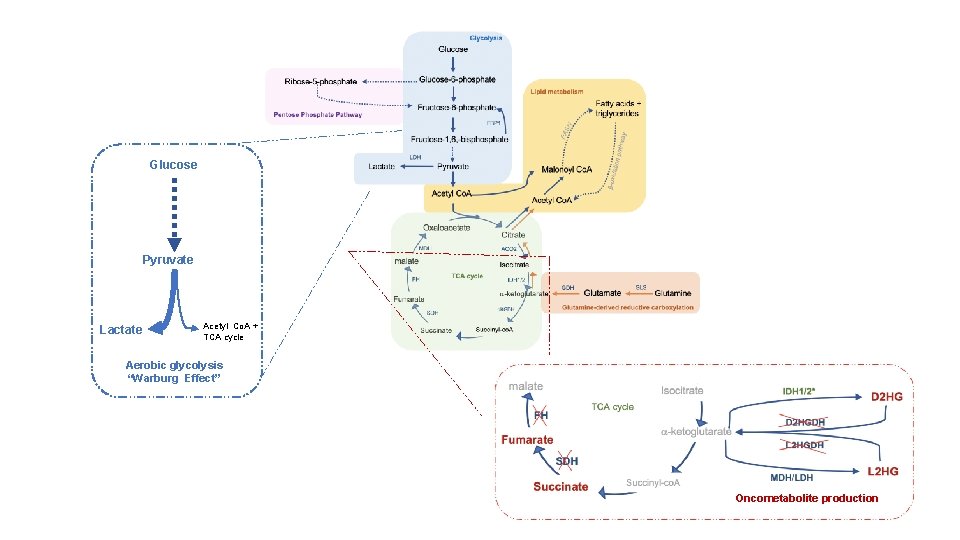
Glucose Pyruvate Lactate Acetyl Co A TCA cycle
- Slides: 3
Glucose Pyruvate Lactate Acetyl Co. A + TCA cycle Aerobic glycolysis “Warburg Effect” Oncometabolite production
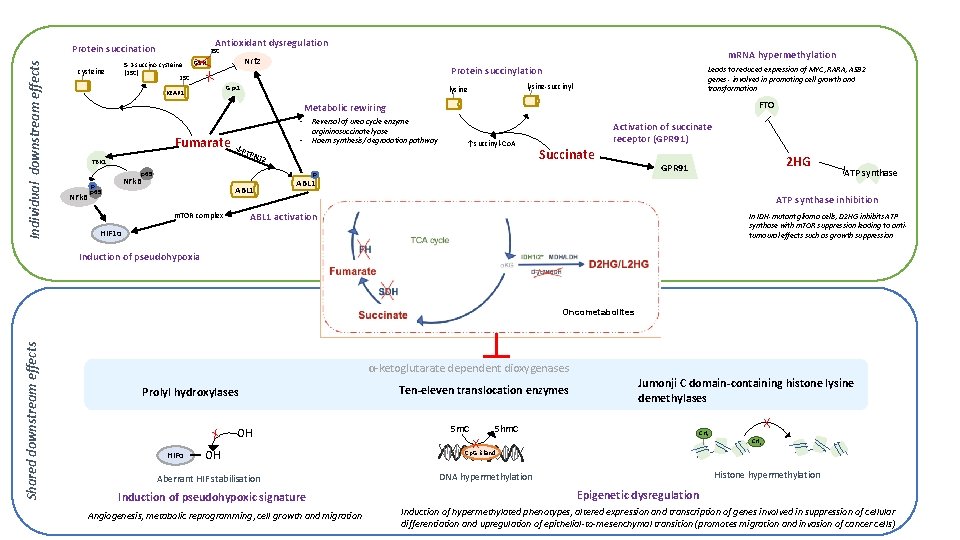
Antioxidant dysregulation Individual downstream effects Protein succination 2 SC cysteine m. RNA hypermethylation Nrf 2 GSH S-2 -succino-cysteine (2 SC) 2 SC Protein succinylation Gpx 1 KEAP 1 Leads to reduced expression of MYC, RARA, ASB 2 genes - involved in promoting cell growth and transformation lysine-succinyl lysine FTO Metabolic rewiring • Fumarate ↓P • TPN 12 TBK 1 p 65 NFk. B Reversal of urea cycle enzyme argininosuccinate lyase Haem synthesis/ degradation pathway ↑succinyl-Co. A Succinate p NFk. B p p 65 Activation of succinate receptor (GPR 91) ABL 1 2 HG GPR 91 ABL 1 ATP synthase inhibition ABL 1 activation m. TOR complex ATP synthase In IDH-mutant glioma cells, D 2 HG inhibits ATP synthase with m. TOR suppression leading to antitumoural effects such as growth suppression HIF 1α Induction of pseudohypoxia Oncometabolites Shared downstream effects Oncometabolites α-ketoglutarate dependent dioxygenases Prolyl hydroxylases OH HIFα OH Aberrant HIF stabilisation Induction of pseudohypoxic signature Angiogenesis, metabolic reprogramming, cell growth and migration Ten-eleven translocation enzymes 5 m. C Jumonji C domain-containing histone lysine demethylases 5 hm. C CH 3 Cp. G island Histone hypermethylation DNA hypermethylation Epigenetic dysregulation Induction of hypermethylated phenotypes, altered expression and transcription of genes involved in suppression of cellular differentiation and upregulation of epithelial-to-mesenchymal transition (promotes migration and invasion of cancer cells)
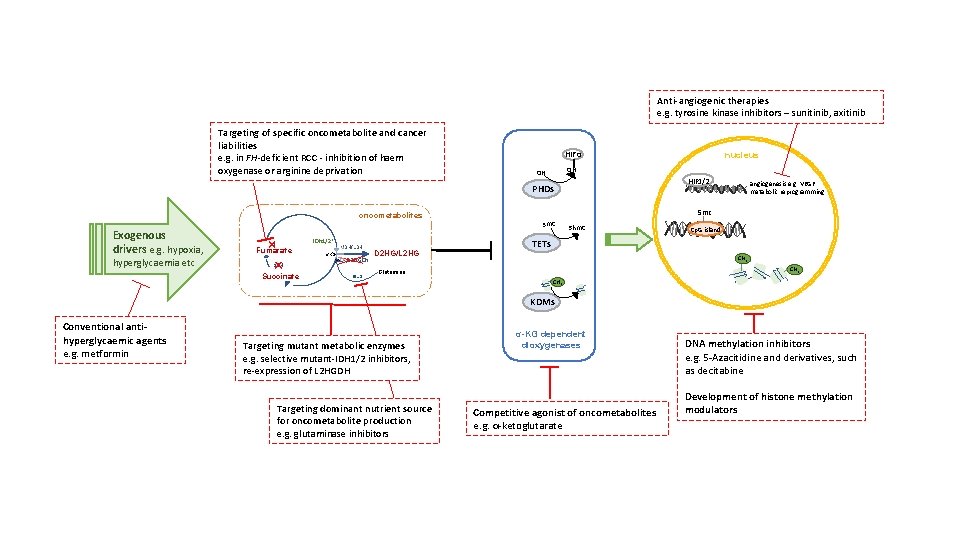
Anti-angiogenic therapies e. g. tyrosine kinase inhibitors – sunitinib, axitinib Targeting of specific oncometabolite and cancer liabilities e. g. in FH-deficient RCC - inhibition of haem oxygenase or arginine deprivation HIFα OH OH HIF 1/2 PHDs hyperglycaemia etc 5 m. C IDH 1/2* FH Fumarate SDH Succinate MDH/LDH αKG D-/L 2 HGDH GLS D 2 HG/L 2 HG angiogenesis e. g. VEGF metabolic reprogramming 5 mc oncometabolites Exogenous drivers e. g. hypoxia, nucleus 5 hm. C Cp. G island TETs CH 3 Glutamine CH 3 KDMs Conventional antihyperglycaemic agents e. g. metformin Targeting mutant metabolic enzymes e. g. selective mutant-IDH 1/2 inhibitors, re-expression of L 2 HGDH Targeting dominant nutrient source for oncometabolite production e. g. glutaminase inhibitors α-KG dependent dioxygenases Competitive agonist of oncometabolites e. g. α-ketoglutarate DNA methylation inhibitors e. g. 5 -Azacitidine and derivatives, such as decitabine Development of histone methylation modulators