
Glucose Homeostasis SBI 4 U Biology Why Glucose
Glucose Homeostasis SBI 4 U Biology
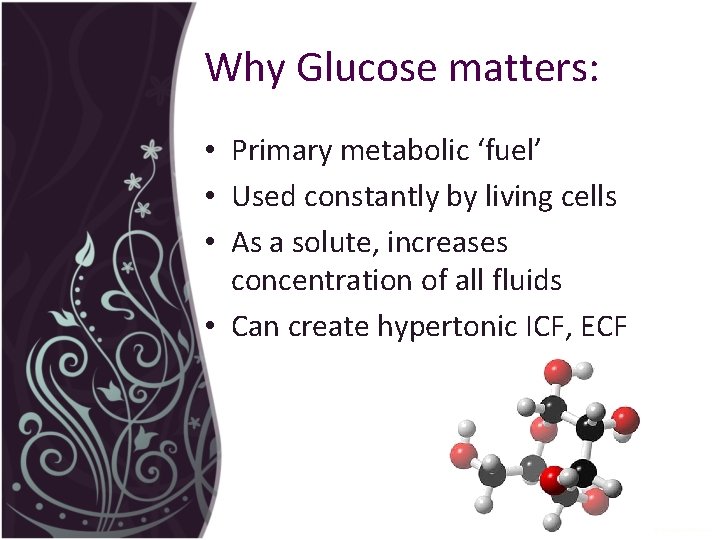
Why Glucose matters: • Primary metabolic ‘fuel’ • Used constantly by living cells • As a solute, increases concentration of all fluids • Can create hypertonic ICF, ECF
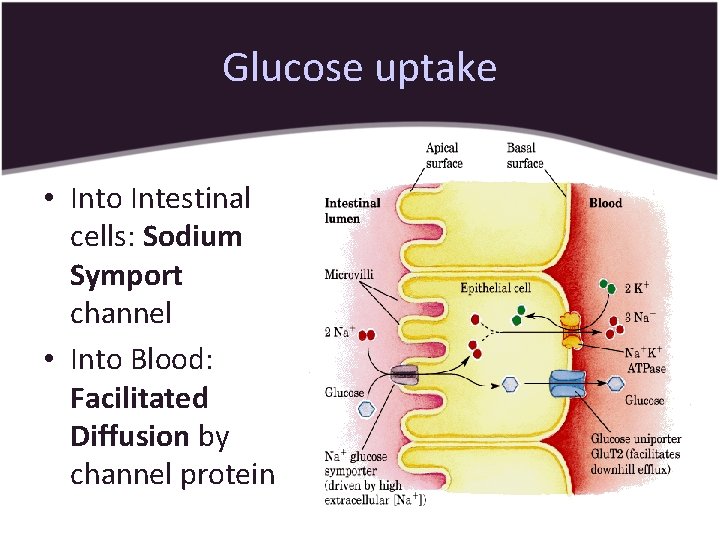
Glucose uptake • Into Intestinal cells: Sodium Symport channel • Into Blood: Facilitated Diffusion by channel protein
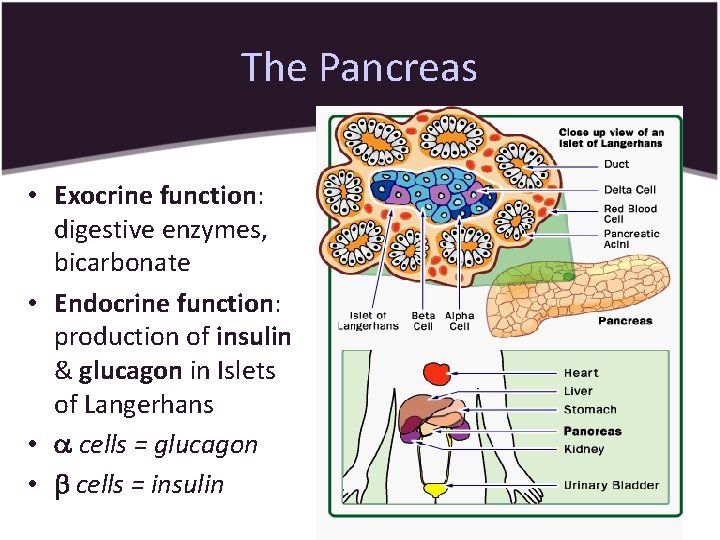
The Pancreas • Exocrine function: digestive enzymes, bicarbonate • Endocrine function: production of insulin & glucagon in Islets of Langerhans • a cells = glucagon • b cells = insulin
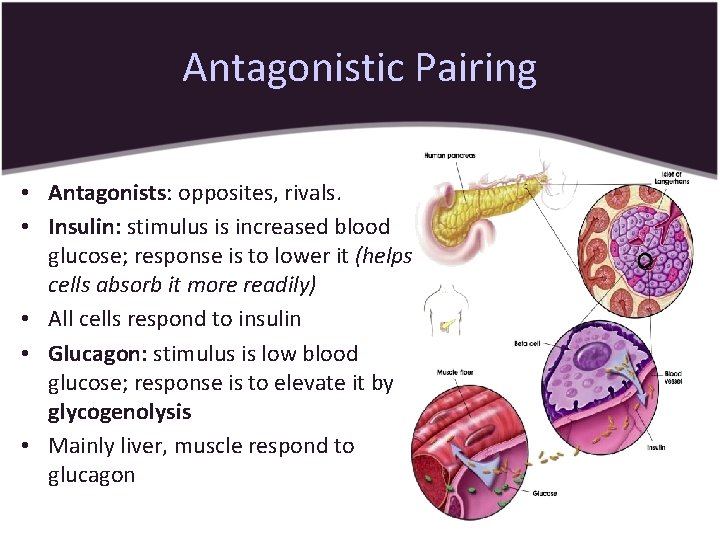
Antagonistic Pairing • Antagonists: opposites, rivals. • Insulin: stimulus is increased blood glucose; response is to lower it (helps cells absorb it more readily) • All cells respond to insulin • Glucagon: stimulus is low blood glucose; response is to elevate it by glycogenolysis • Mainly liver, muscle respond to glucagon
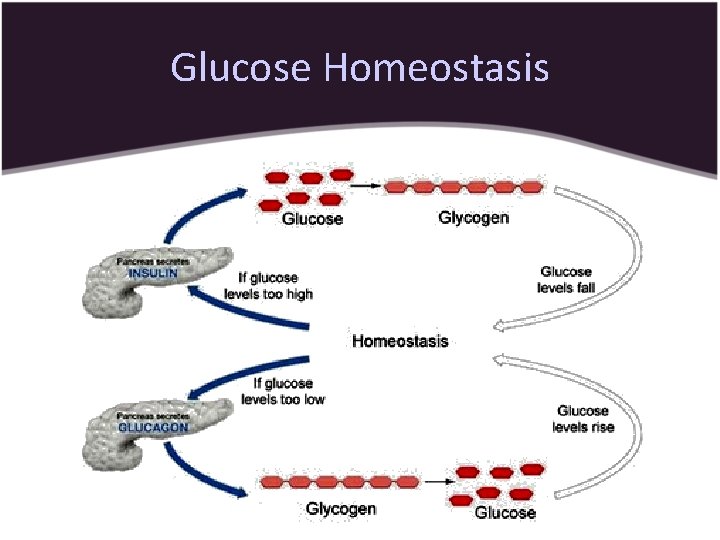
Glucose Homeostasis
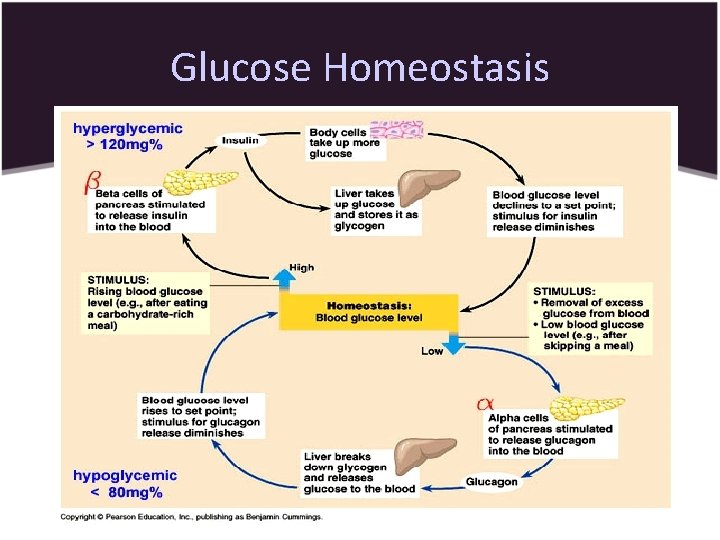
Glucose Homeostasis
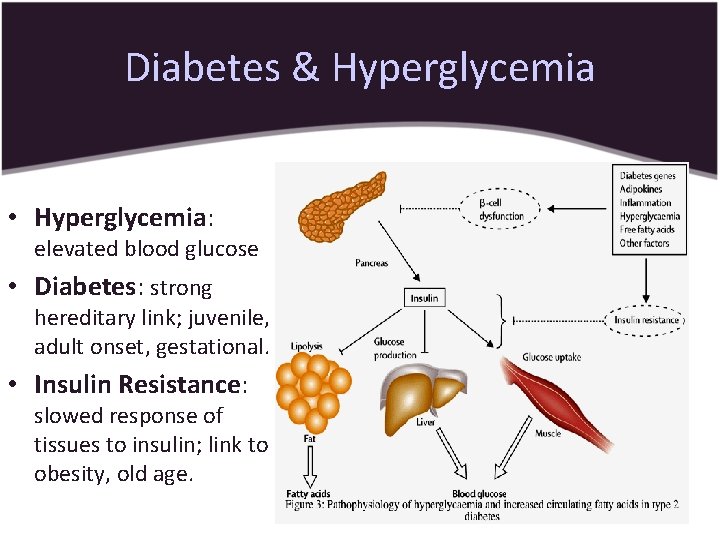
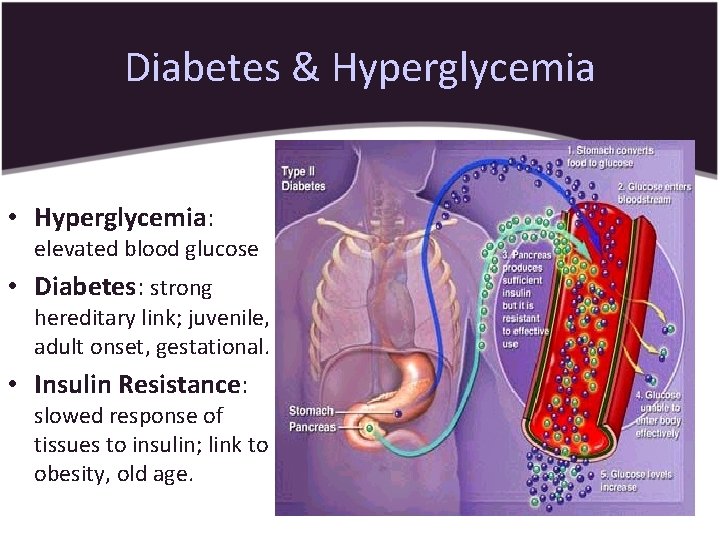
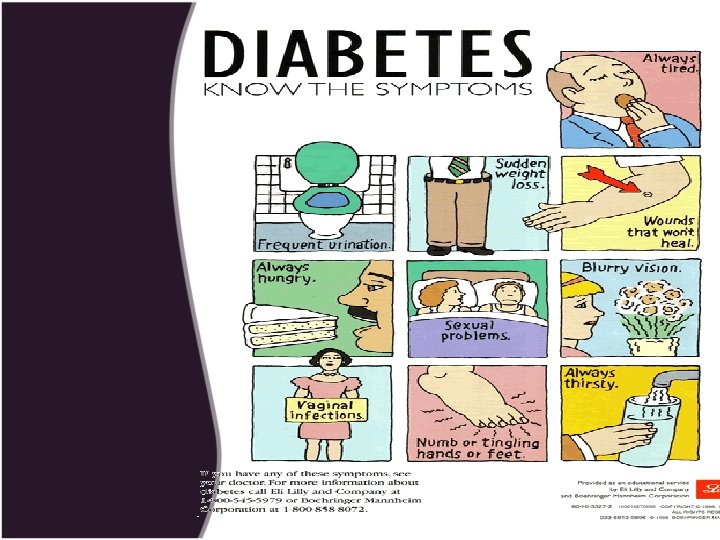
Diabetes & Hyperglycemia • Hyperglycemia: elevated blood glucose • Diabetes: strong hereditary link; juvenile, adult onset, gestational. • Insulin Resistance: slowed response of tissues to insulin; link to obesity, old age.
Diabetes & Hyperglycemia • Hyperglycemia: elevated blood glucose • Diabetes: strong hereditary link; juvenile, adult onset, gestational. • Insulin Resistance: slowed response of tissues to insulin; link to obesity, old age.
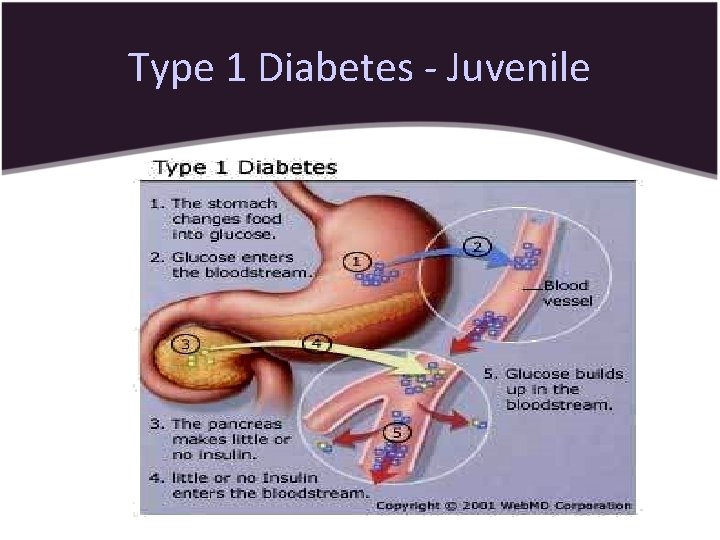
Type 1 Diabetes - Juvenile
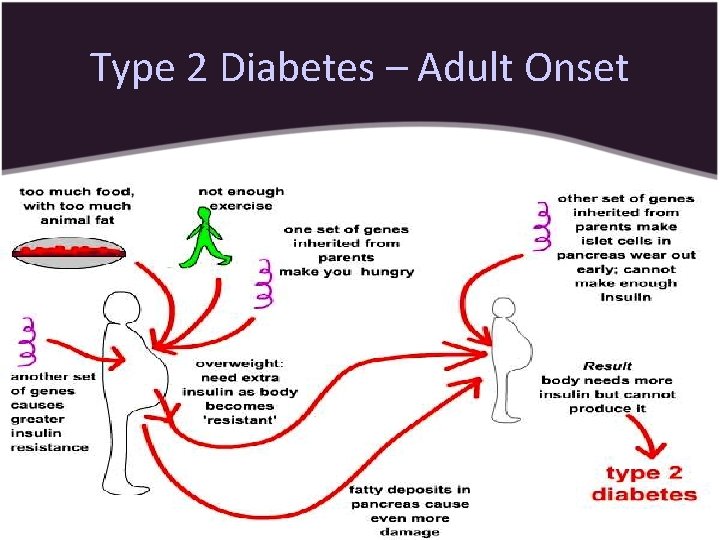
Type 2 Diabetes – Adult Onset
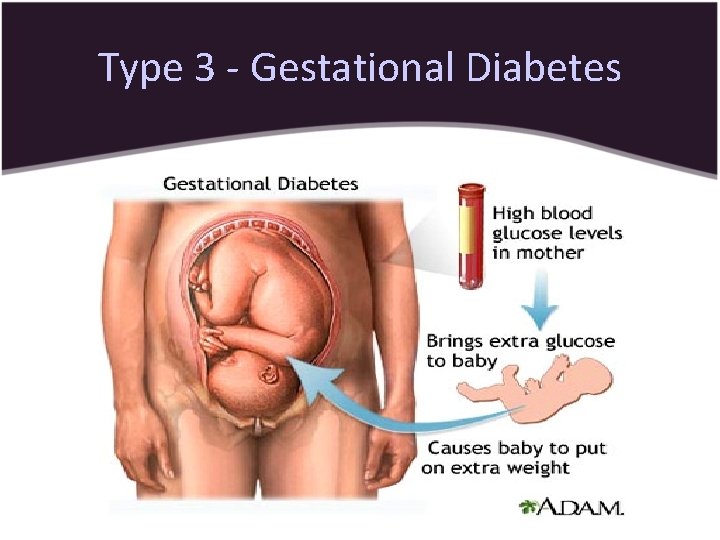
Type 3 - Gestational Diabetes
- Slides: 13