
GLOWING TOBACO PLANT CHROMOSOMAL THEORY OF INHERETANCE INDIRA
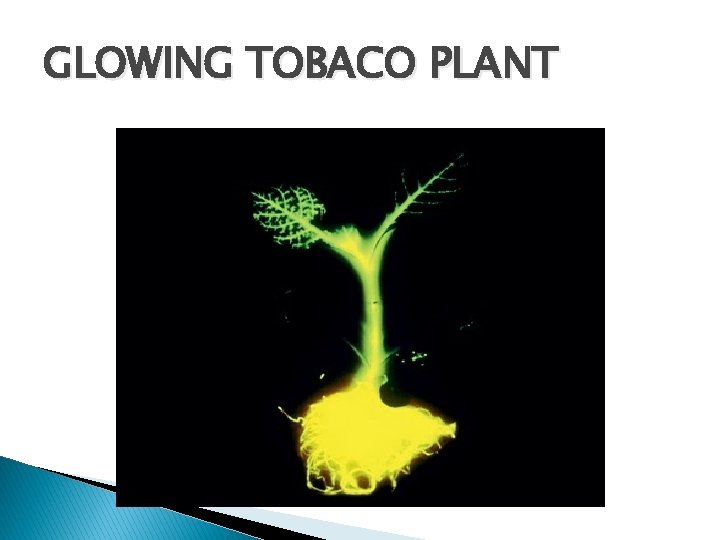
GLOWING TOBACO PLANT
CHROMOSOMAL THEORY OF INHERETANCE INDIRA. T. K PGT BIOLOGY K. V. NAD ALUVA
Gregor Johann Mendel July 20, 1822 – January 6, 1884
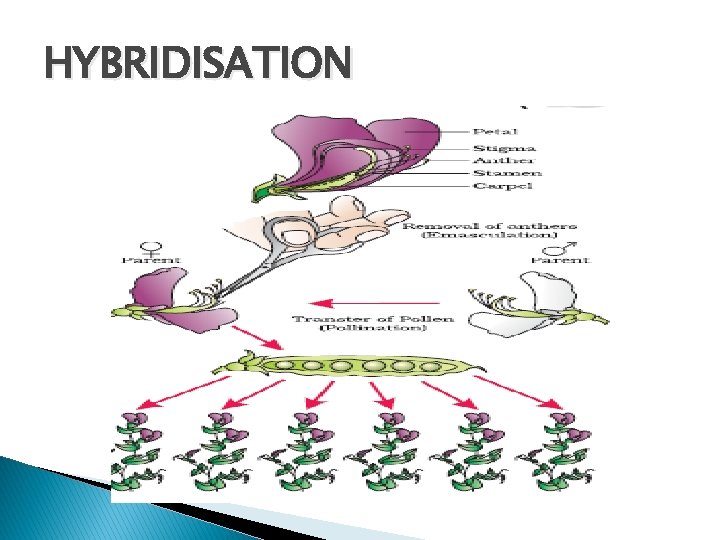
HYBRIDISATION
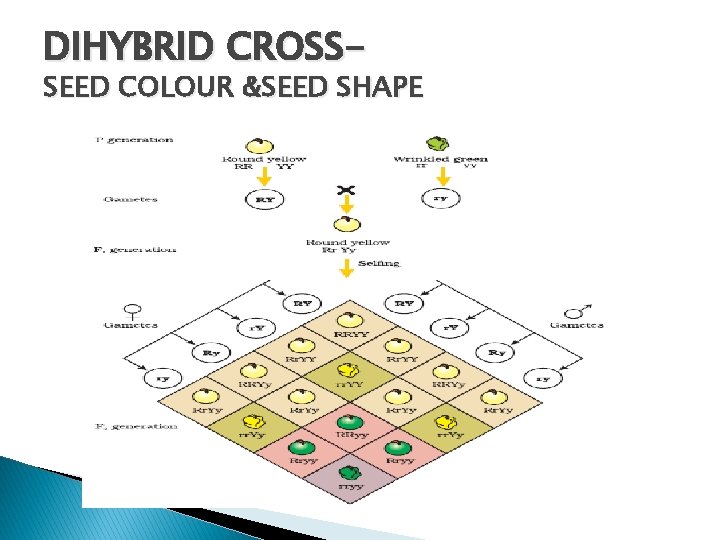
DIHYBRID CROSS- SEED COLOUR &SEED SHAPE
Mendel published his work on inheritance of characters in 1865 but it remained unrecognised till 1900. � � communication was not easy (as it is now) in those days and his work could not be widely publicised. The concept of genes (or factors, in Mendel’s words) as stable and discrete units that controlled the expression of traits was not accepted by his contemporaries. Mendel’s approach of using mathematics to explain biological phenomena was totally new and unacceptable to many of the biologists of his time. Mendel’s work suggested that factors (genes) were discrete units, he could not provide any physical proof for the existence of factors or say what they were made of.
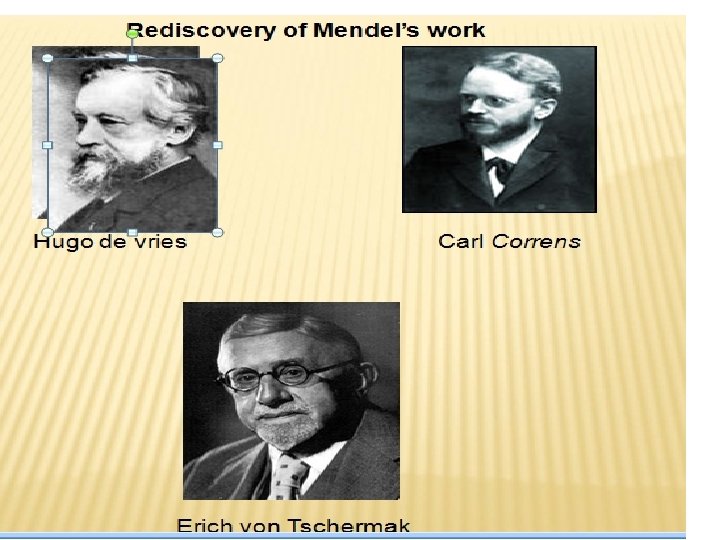
Rediscovery of Mendel’s experiment � In 1900, three Scientists (de Vries, Correns and Von Tschermak) independently rediscovered Mendel’s results on the inheritance of characters. � Also, by this time due to advancements in microscopy that scientists were able to carefully observe cell division. � This led to the discovery of structures in the nucleus that appeared to double and divide just before each cell division. These were called chromosomes (colored bodies, as they were visualised by staining).
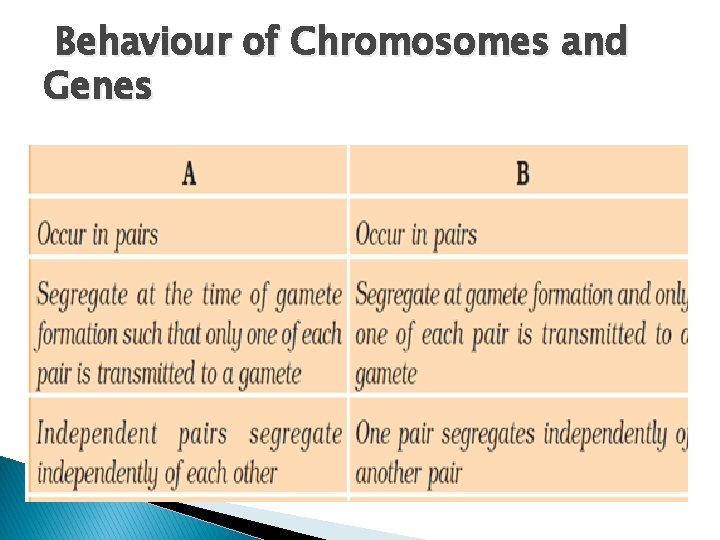
Behaviour of Chromosomes and Genes
Chromosomal theory of inheritance � Sutton and Boveri argued that the pairing and separation of a pair of chromosomes would lead to the segregation of a pair of factors they carried. Sutton united the knowledge of chromosomal segregation with Mendelian principles and called it the chromosomal theory of inheritance
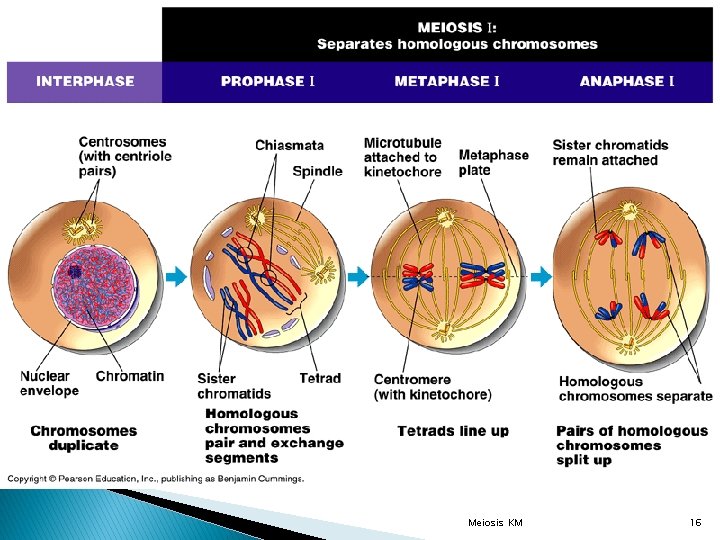
Meiosis � Meiosis is type of division in which a cell divide into four daughter cells. � Daughter cells differ from parent, and from each other. � Meiosis involves two divisions. � Meiosis I and II ◦ Meiosis I consist of – 1. Prophase –I, 2. Metaphase -I 3. Anaphase- I, 4. Telophase -I. ◦ Meiosis II consist of – 1. Prophase-II, 2. Metaphase -II 3. Anaphase- II, 4. Telophase -II. Meiosis KM 14
Meiosis creates genetic variation normal cell growth, mitosis produces daughter cells identical to parent cell (2 n to 2 n) � Meiosis results in genetic variation by shuffling of maternal and paternal chromosomes and crossing over. No daughter cells formed during meiosis are genetically identical to either mother or father During sexual reproduction, fusion of the unique haploid gametes produces truely unique offspring. � During Meiosis KM 15
Meiosis KM 16
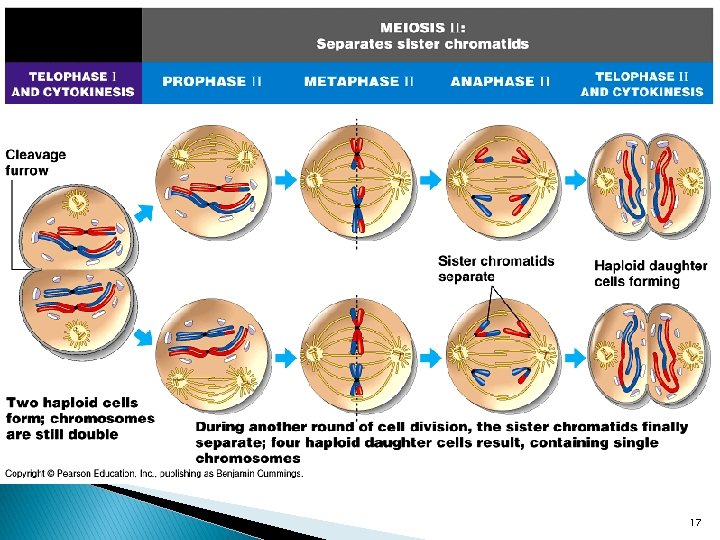
17
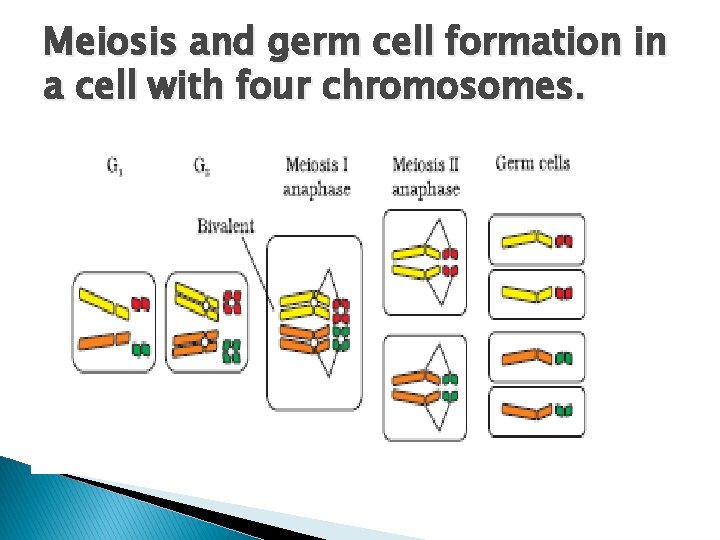
Meiosis and germ cell formation in a cell with four chromosomes.
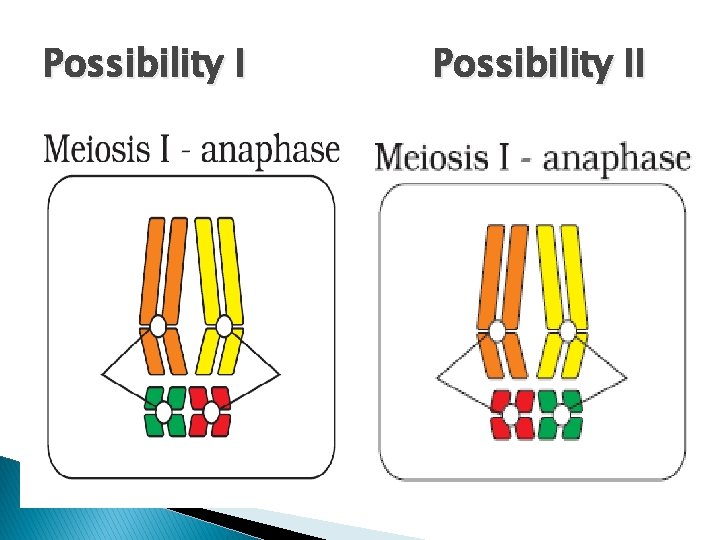
Possibility II
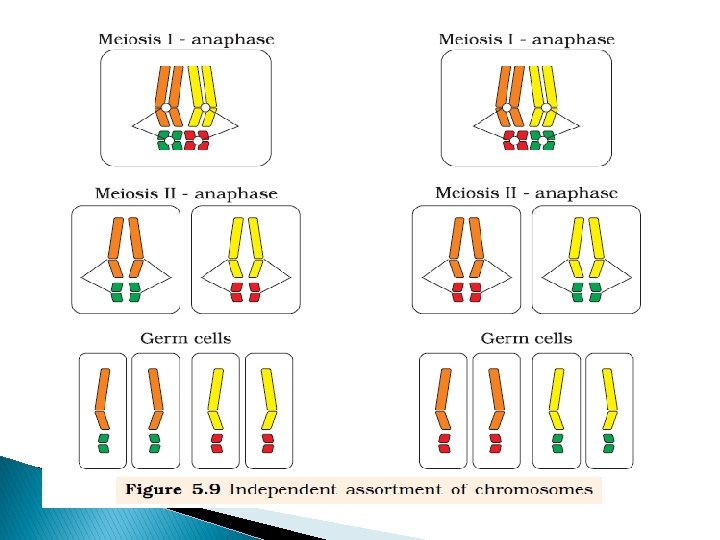
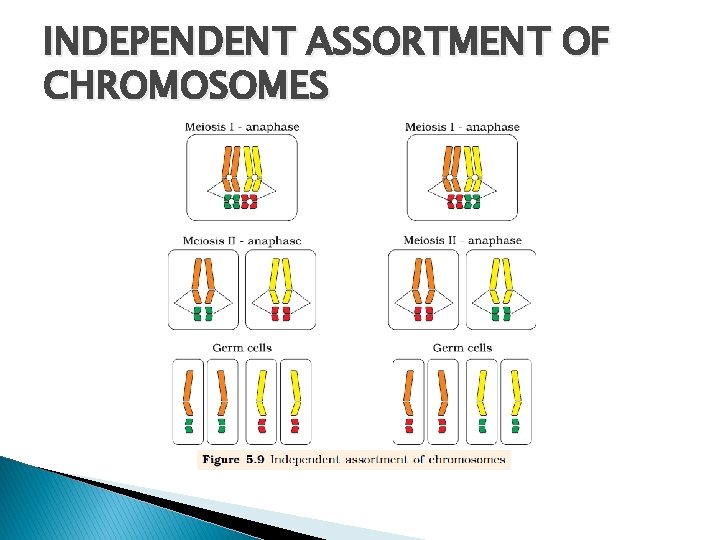
INDEPENDENT ASSORTMENT OF CHROMOSOMES
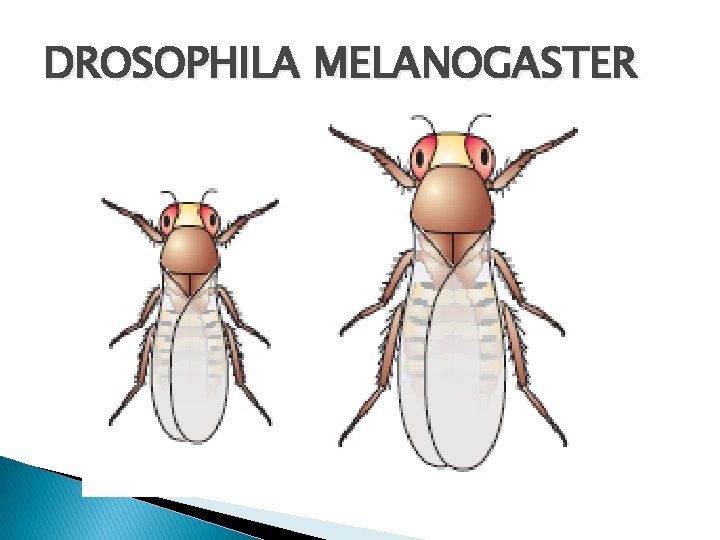
DROSOPHILA MELANOGASTER
Drosophila melanogaster � Morgan worked with the tiny fruit files, Drosophila melanogaster. � They could be grown on simple synthetic medium in the laboratory. � They complete their life cycle in about two weeks A single mating could produce a large number of progeny flies. � There was a clear differentiation of the sexes – the male and female flies are easily distinguishable. � It has many types of hereditary variations that can be seen with low power microscopes.
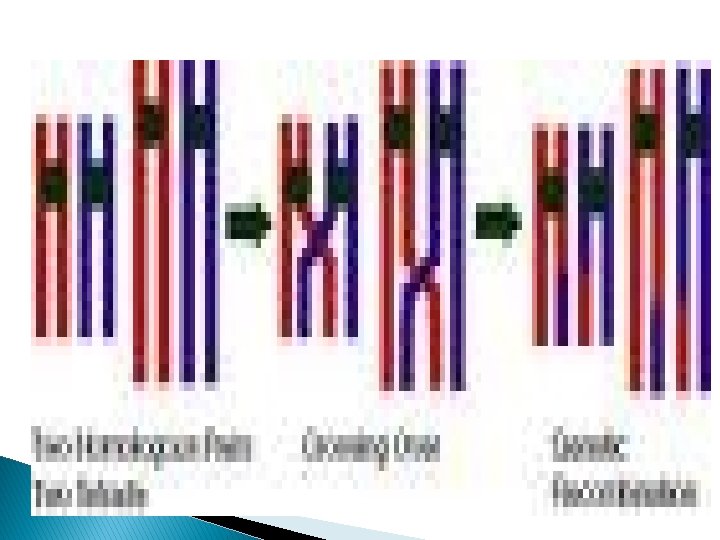
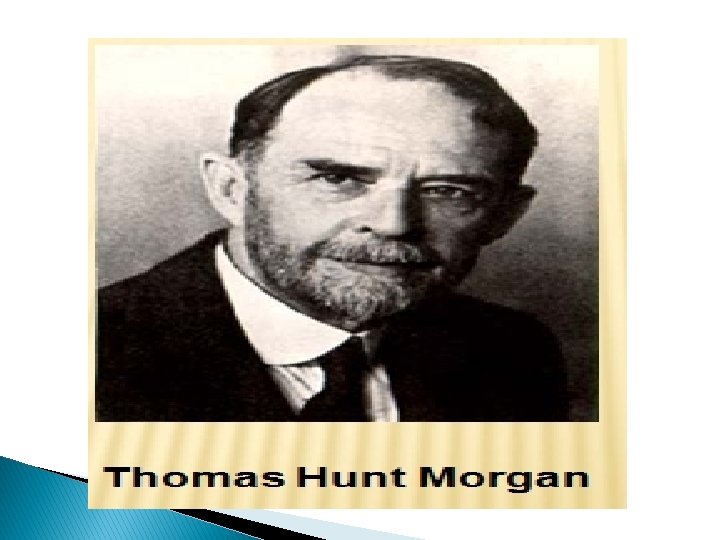
Linkage and Recombination Morgan and his group knew that the genes were located on the X Chromosome and saw quickly that when the two genes in a dihybrid cross were situated on the same chromosome, the proportion of parental gene combinations were much higher than the non-parental type. Morgan attributed this due to the physical association or linkage of the two genes and coined the term linkage to describe this physical association of genes on a chromosome and the term recombination to describe the generation of non-parental gene combinations.
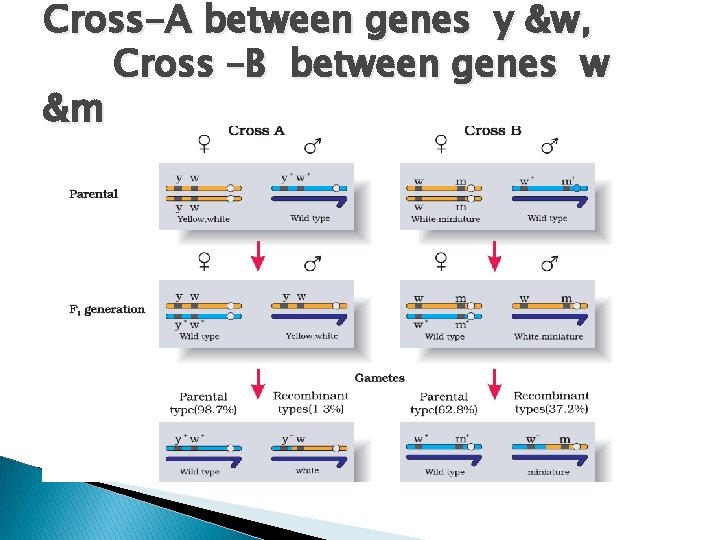
Cross-A between genes y &w, Cross –B between genes w &m
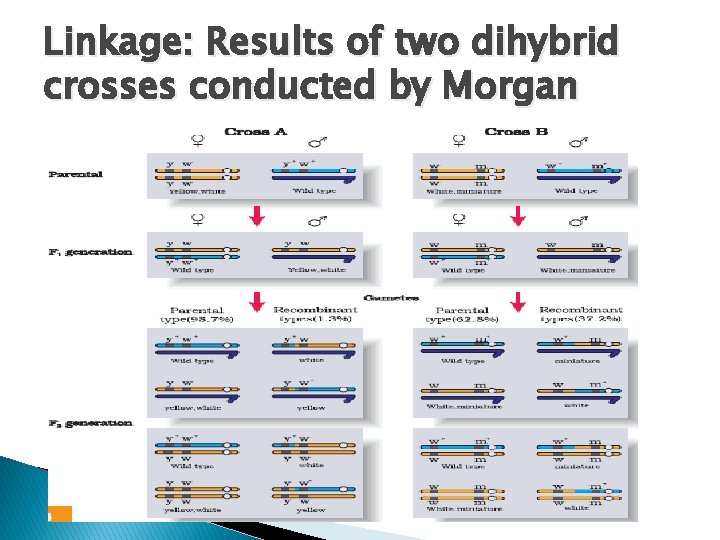
Linkage: Results of two dihybrid crosses conducted by Morgan
GENETIC MAP Alfred Sturtevant used the frequency of recombination between gene pairs on the same chromosome as a measure of the distance between genes and ‘mapped’ their position on the chromosome. The unit used for genetic map is centi Morgan (c. M). Today genetic maps are extensively used as a starting point in the sequencing of whole genomes as was done in the case of the Human Genome Sequencing Project. �
REVIEW QUESTIONS � 1. In a dihybrid cross, when would be the proportion of parental gene combinations be much higher than non parental types, as experimentally shown by Morgan and his group? � 2. Mendel published his work on inheritance of characters in 1865 but it remained unrecognised till 1900. Give reasons.
� 3. The chromosomal theory of inheretence was given by -----. � 4. Define linkage? � 5. What is meant by Genetic map? Name the unit that is used to locate genes in a chromosome? � 6. What are the advantage of using Drosophila for genetic experiments? � 7. Who rediscovered Mendel’s results on the inheritance of characters? � 8. What is meant by Human genome project?
Thank you
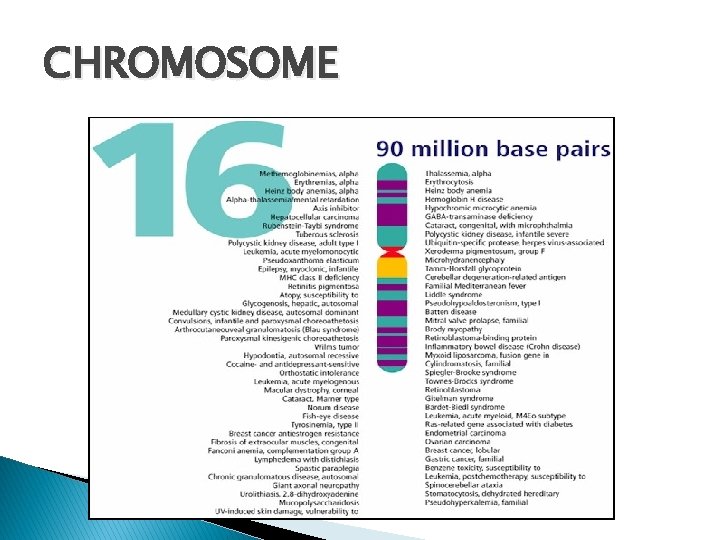
CHROMOSOME
SIBLINGS
- Slides: 35