
Glomeromycetes 1 u Phylum Glomeromycota symbionts that form
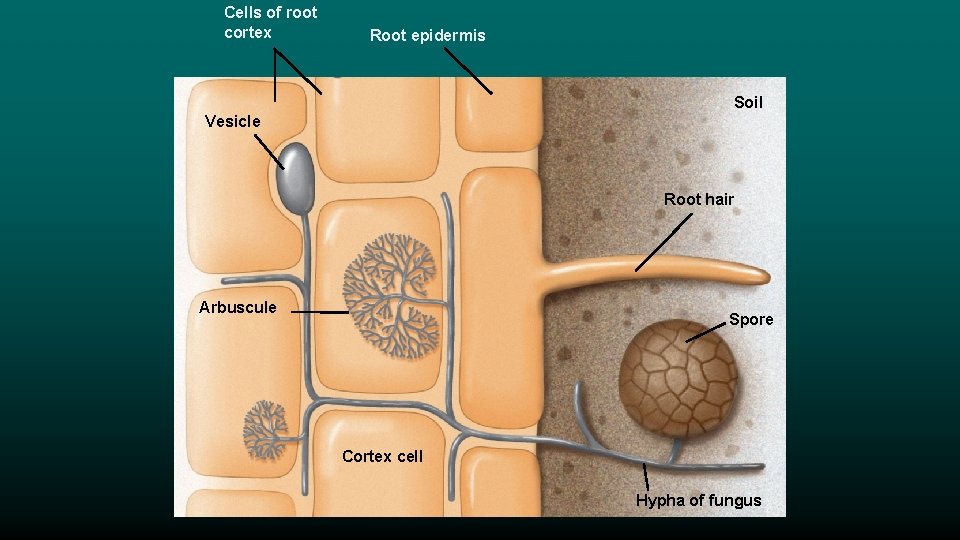
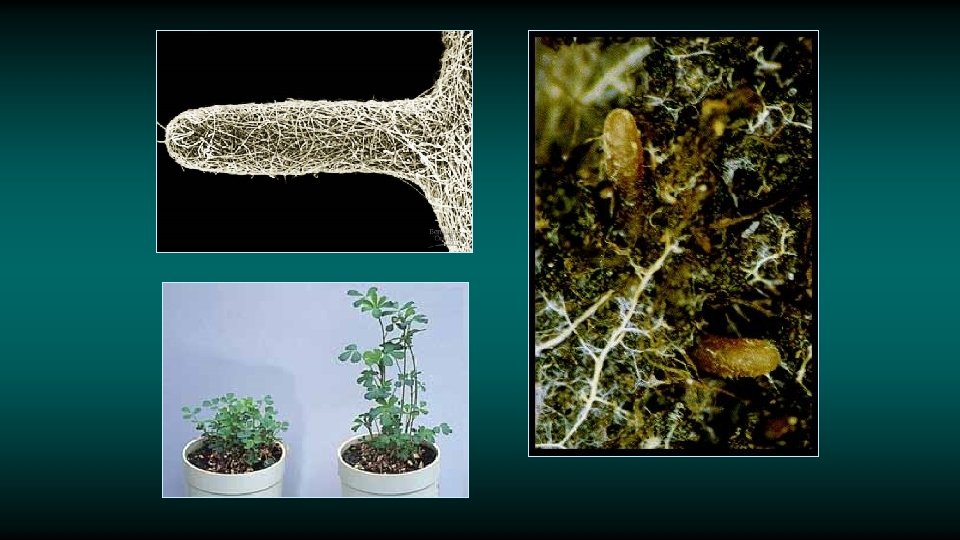
Glomeromycetes 1 u Phylum Glomeromycota – symbionts that form intracellular associations (mycorrhizae) with plant roots u Endomycorrhizal fungi – extend hyphae into root cells
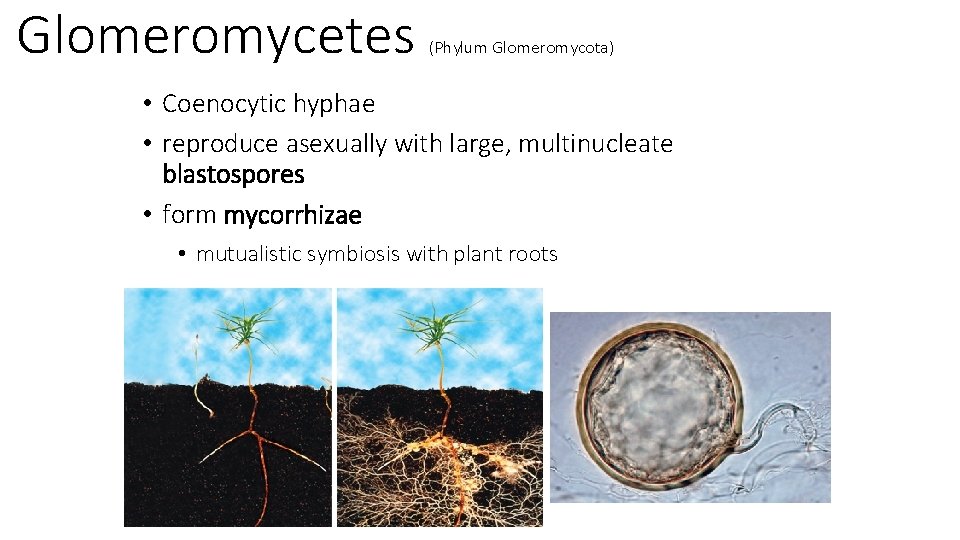
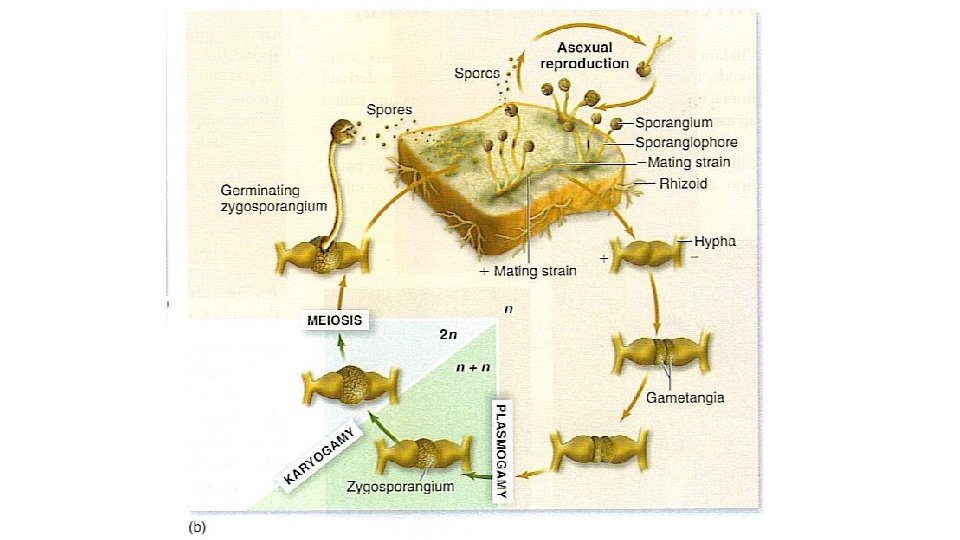
Glomeromycetes (Phylum Glomeromycota) • Coenocytic hyphae • reproduce asexually with large, multinucleate blastospores • form mycorrhizae • mutualistic symbiosis with plant roots
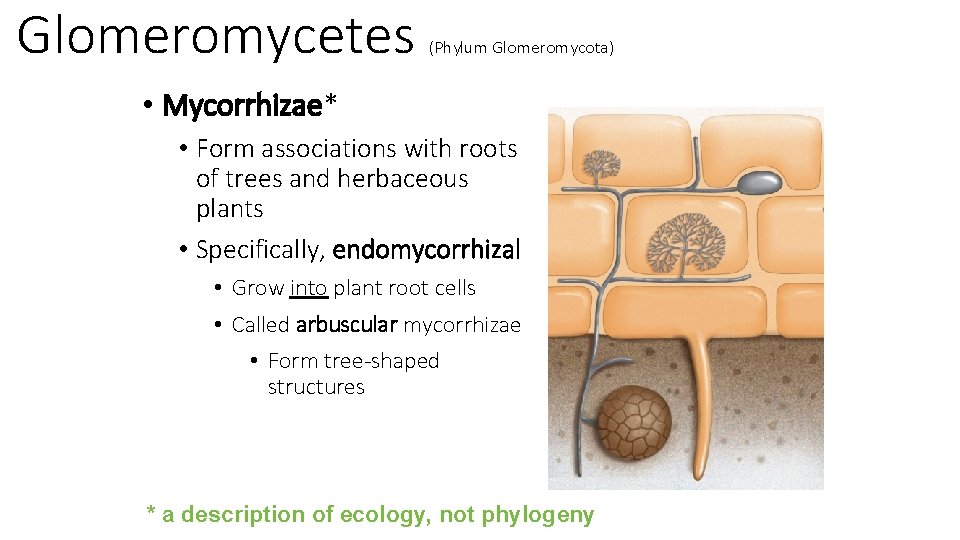
Glomeromycetes (Phylum Glomeromycota) • Mycorrhizae* • Form associations with roots of trees and herbaceous plants • Specifically, endomycorrhizal • Grow into plant root cells • Called arbuscular mycorrhizae • Form tree-shaped structures * a description of ecology, not phylogeny
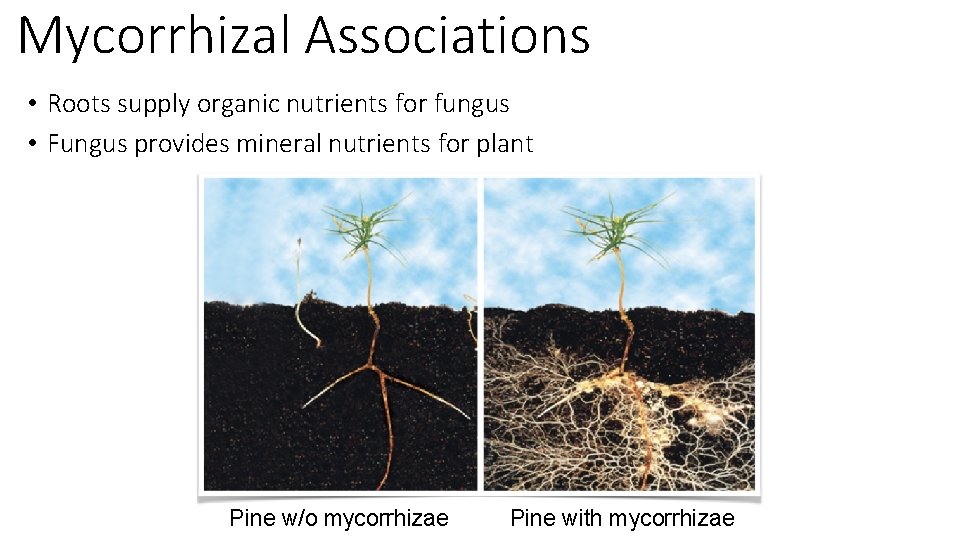
Mycorrhizal Associations • Roots supply organic nutrients for fungus • Fungus provides mineral nutrients for plant Pine w/o mycorrhizae Pine with mycorrhizae
Glomeromycetes 2 u Arbuscular mycorrhizae – most common endomycorrhizae – hyphae inside root cells form branched, tree-shaped structures (arbuscules) u Glomeromycetes – have coenocytic hyphae – reproduce asexually with large, multinucleate spores (blastospores)
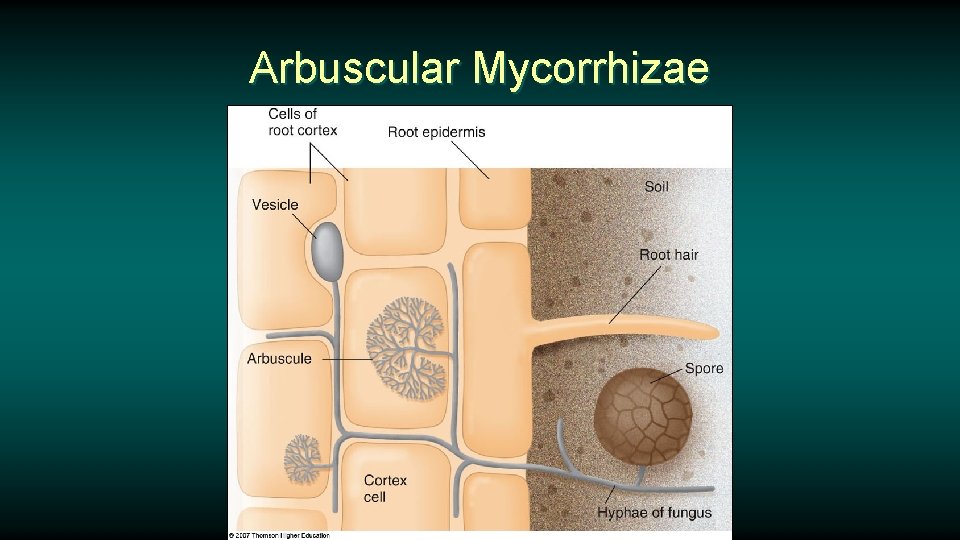
Arbuscular Mycorrhizae
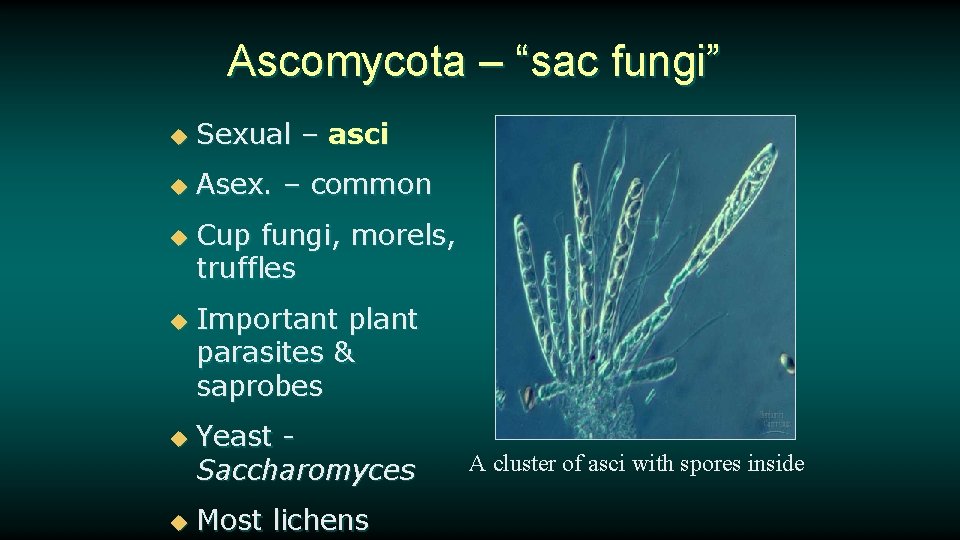
Ascomycota – “sac fungi” u Sexual – asci u Asex. – common u u Cup fungi, morels, truffles Important plant parasites & saprobes Yeast Saccharomyces Most lichens A cluster of asci with spores inside
Ascomycetes 1 u Produce asexual spores (conidia) u Produce sexual spores (ascospores) in asci u Asci line a fruiting body (ascocarp)
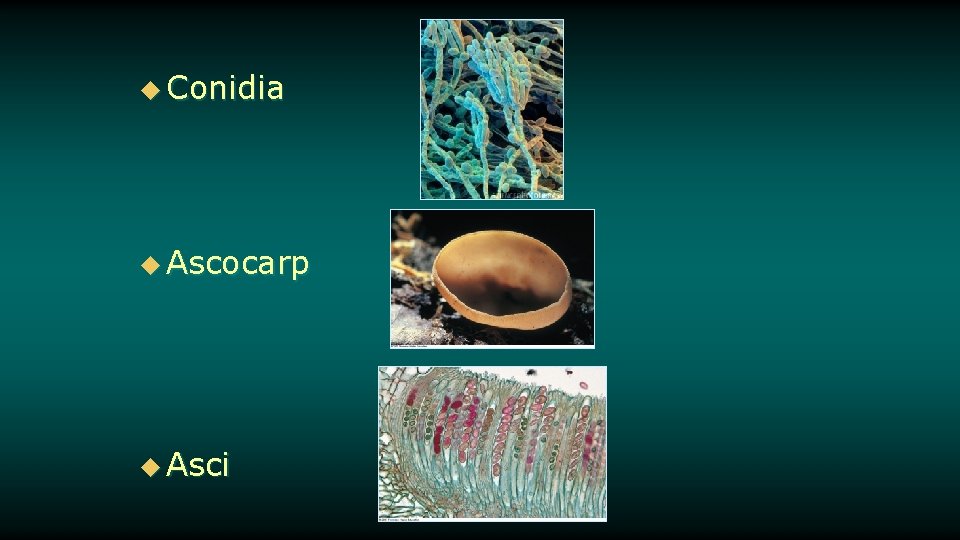
u Conidia u Ascocarp u Asci
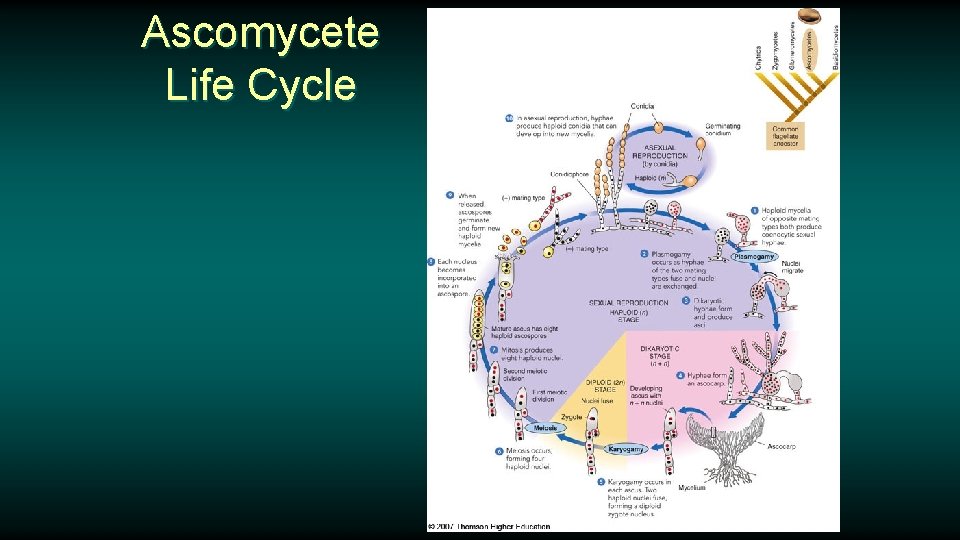
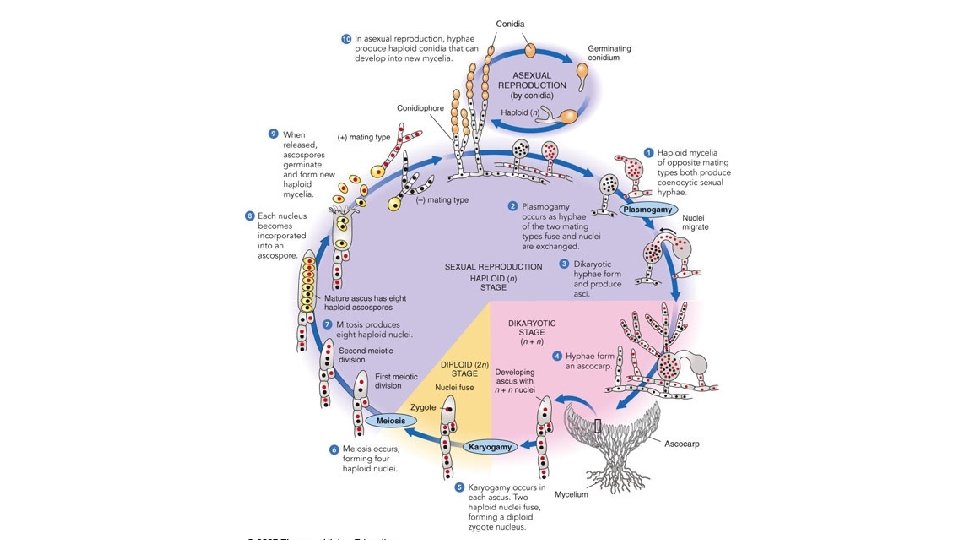
Ascomycete Life Cycle
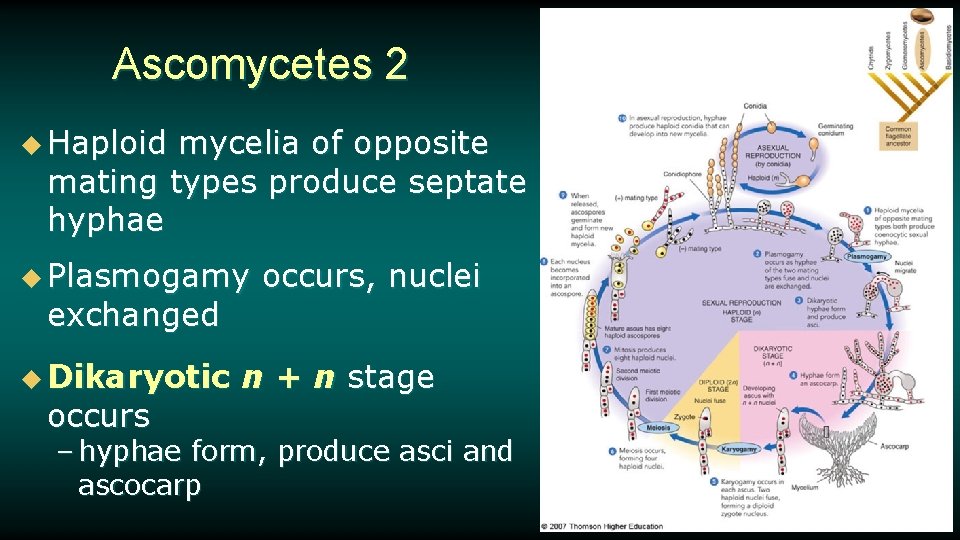
Ascomycetes 2 u Haploid mycelia of opposite mating types produce septate hyphae u Plasmogamy exchanged u Dikaryotic occurs, nuclei n + n stage – hyphae form, produce asci and ascocarp
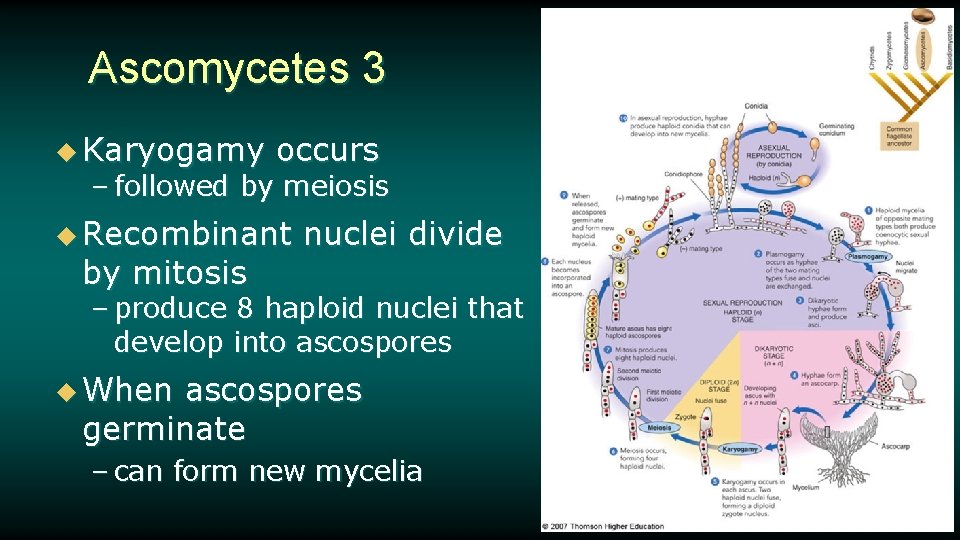
Ascomycetes 3 u Karyogamy occurs – followed by meiosis u Recombinant by mitosis nuclei divide – produce 8 haploid nuclei that develop into ascospores u When ascospores germinate – can form new mycelia
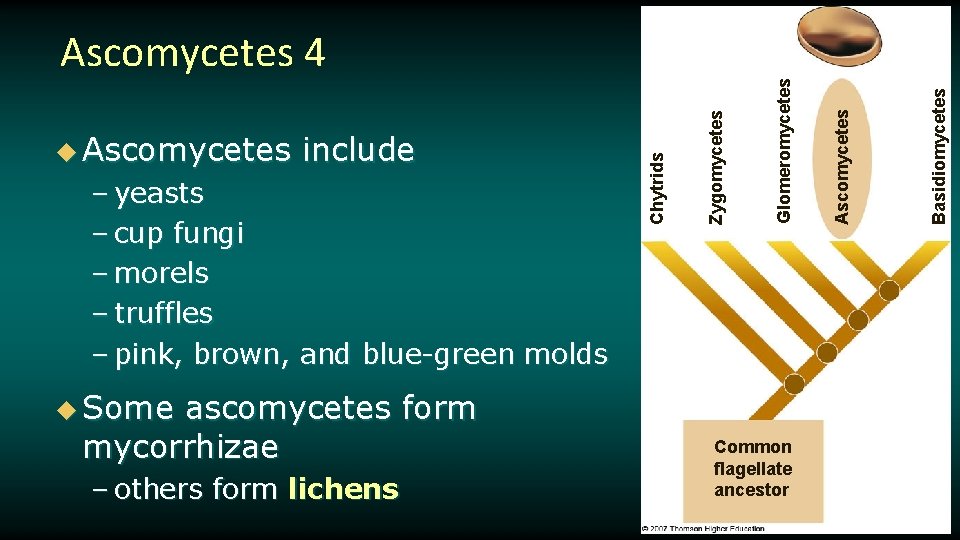
u Some ascomycetes form mycorrhizae – others form lichens Common flagellate ancestor Basidiomycetes Ascomycetes – yeasts – cup fungi – morels – truffles – pink, brown, and blue-green molds Glomeromycetes include Zygomycetes u Ascomycetes Chytrids Ascomycetes 4
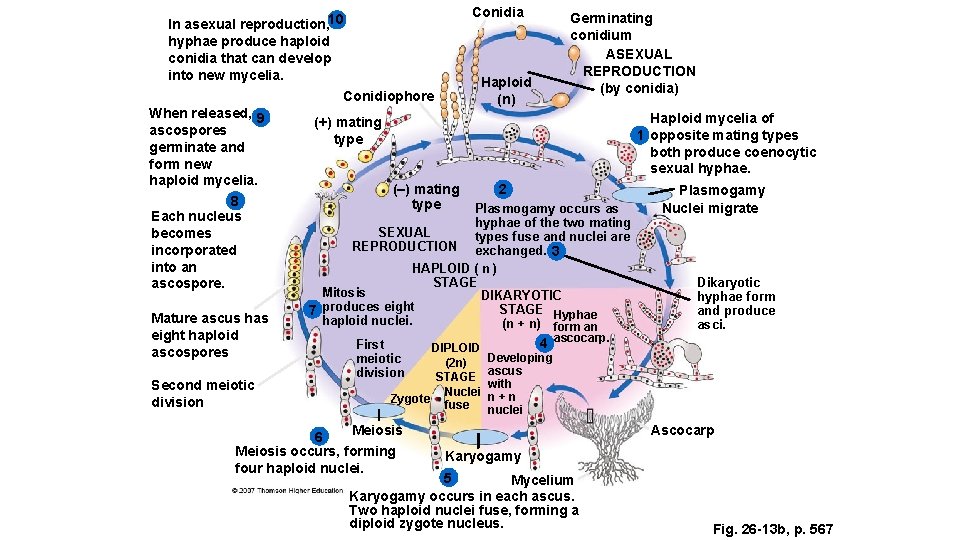
Conidia In asexual reproduction, 10 hyphae produce haploid conidia that can develop into new mycelia. Haploid (n) Conidiophore When released, 9 ascospores germinate and form new haploid mycelia. 8 Each nucleus becomes incorporated into an ascospore. Mature ascus has eight haploid ascospores Second meiotic division Germinating conidium ASEXUAL REPRODUCTION (by conidia) Haploid mycelia of 1 opposite mating types both produce coenocytic sexual hyphae. (+) mating type (–) mating type 2 Plasmogamy occurs as hyphae of the two mating SEXUAL types fuse and nuclei are REPRODUCTION exchanged. 3 HAPLOID ( n ) STAGE Mitosis DIKARYOTIC produces eight STAGE Hyphae 7 haploid nuclei. (n + n) form an First meiotic division DIPLOID (2 n) STAGE Nuclei Zygote fuse Meiosis 6 Meiosis occurs, forming four haploid nuclei. 4 ascocarp. Plasmogamy Nuclei migrate Dikaryotic hyphae form and produce asci. Developing ascus with n+n nuclei Ascocarp Karyogamy 5 Mycelium Karyogamy occurs in each ascus. Two haploid nuclei fuse, forming a diploid zygote nucleus. Fig. 26 -13 b, p. 567
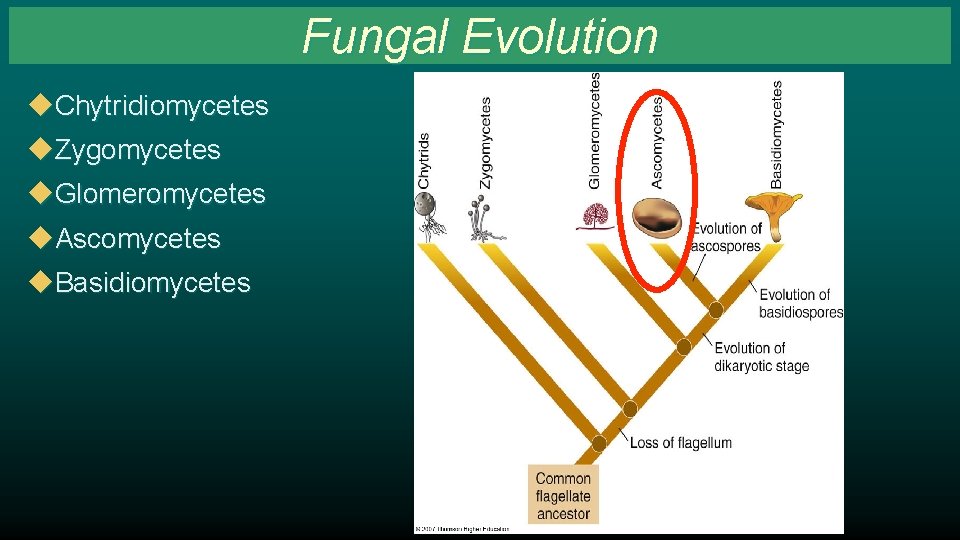
Fungal Evolution u. Chytridiomycetes u. Zygomycetes u. Glomeromycetes u. Ascomycetes u. Basidiomycetes
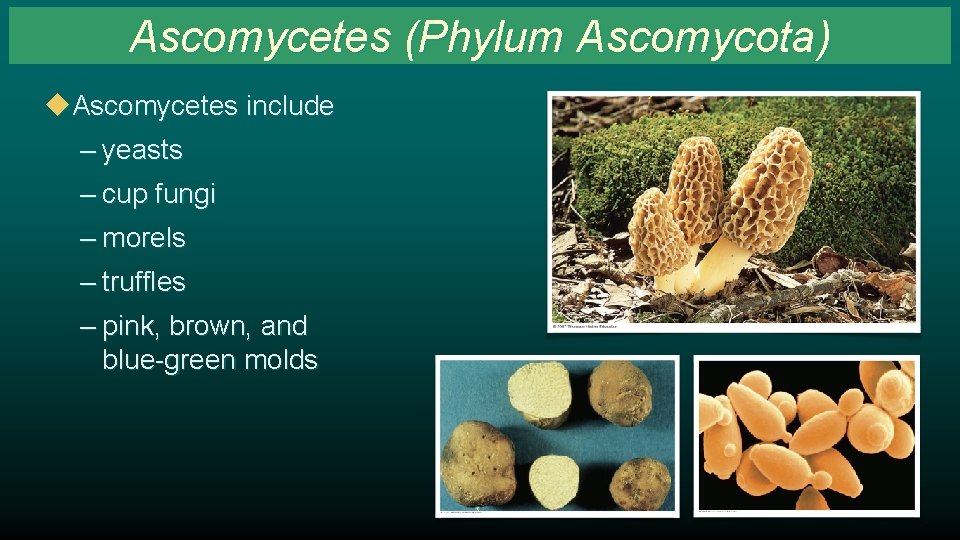
Ascomycetes (Phylum Ascomycota) u. Ascomycetes include – yeasts – cup fungi – morels – truffles – pink, brown, and blue-green molds
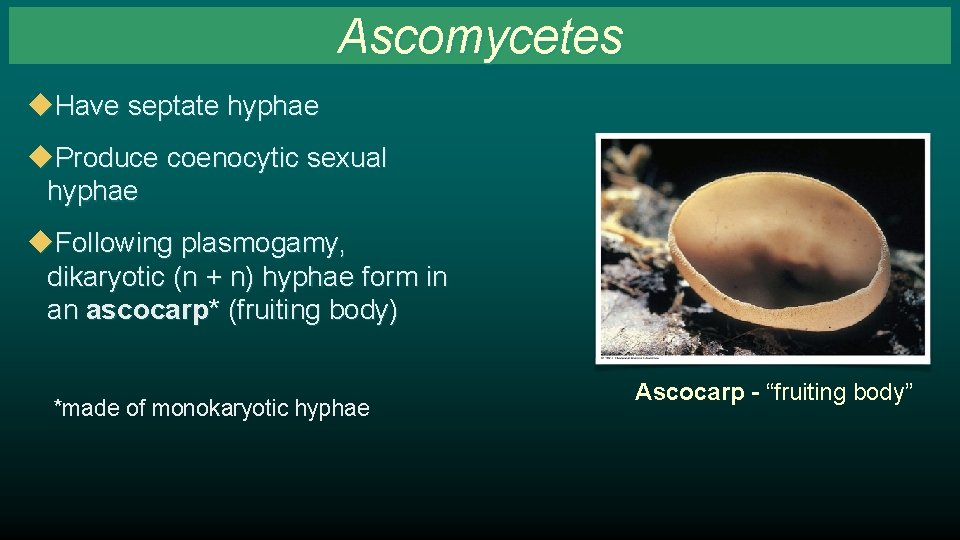
Ascomycetes u. Have septate hyphae u. Produce coenocytic sexual hyphae u. Following plasmogamy, dikaryotic (n + n) hyphae form in an ascocarp* (fruiting body) *made of monokaryotic hyphae Ascocarp - “fruiting body”
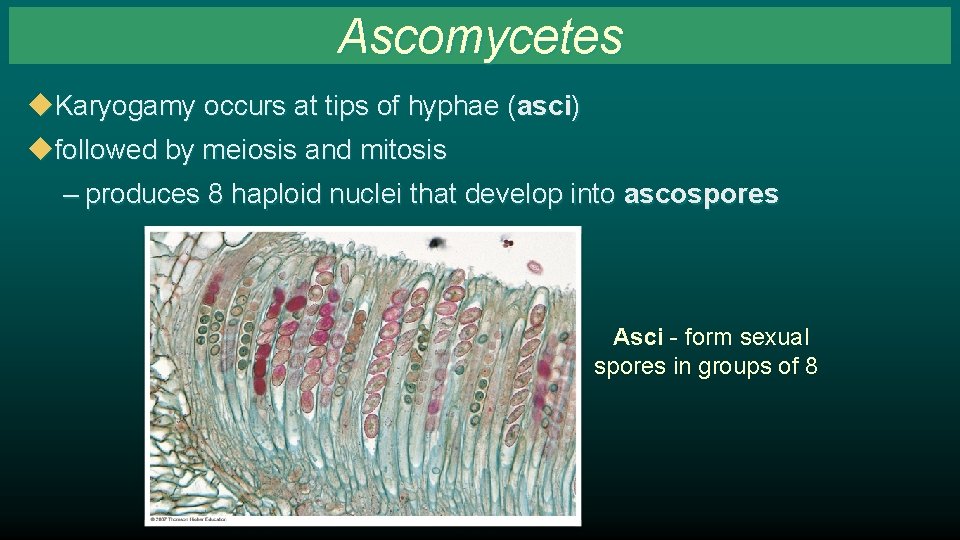
Ascomycetes u. Karyogamy occurs at tips of hyphae (asci) ufollowed by meiosis and mitosis – produces 8 haploid nuclei that develop into ascospores Asci - form sexual spores in groups of 8
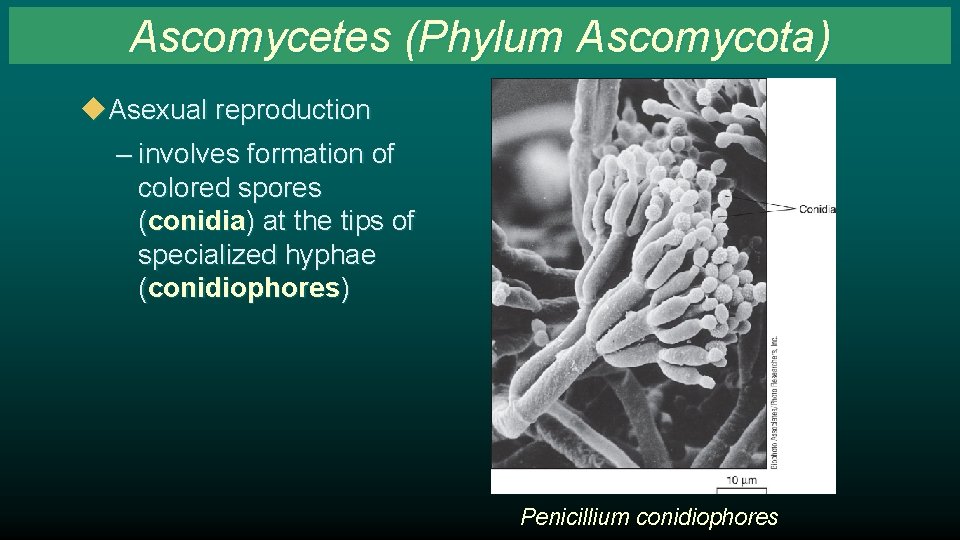
Ascomycetes (Phylum Ascomycota) u. Asexual reproduction – involves formation of colored spores (conidia) at the tips of specialized hyphae (conidiophores) Penicillium conidiophores
–Johnny Appleseed
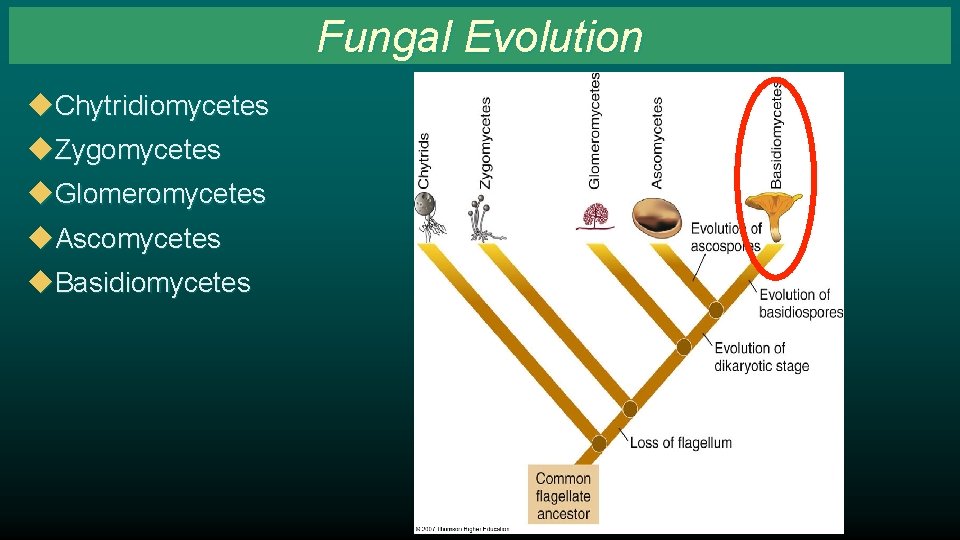
Fungal Evolution u. Chytridiomycetes u. Zygomycetes u. Glomeromycetes u. Ascomycetes u. Basidiomycetes
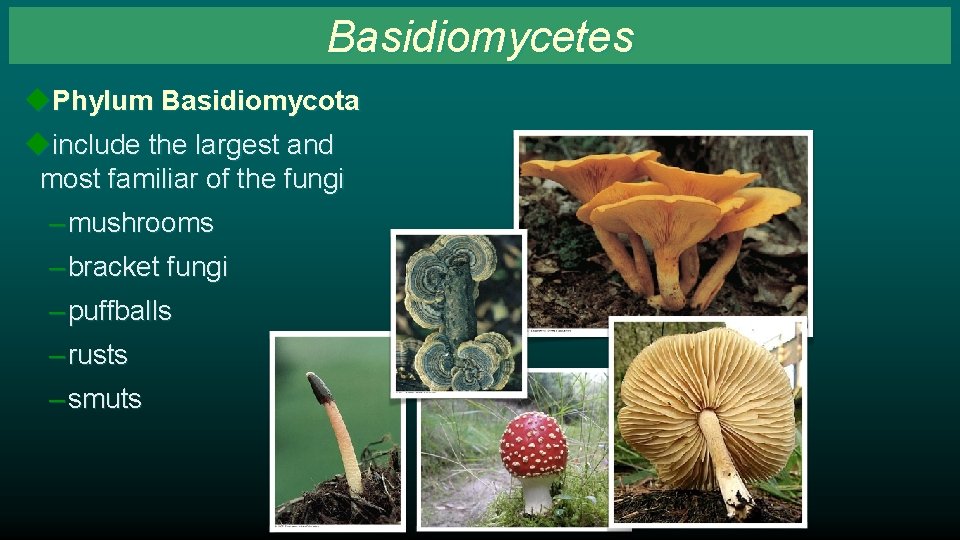
Basidiomycetes u. Phylum Basidiomycota uinclude the largest and most familiar of the fungi – mushrooms – bracket fungi – puffballs – rusts – smuts
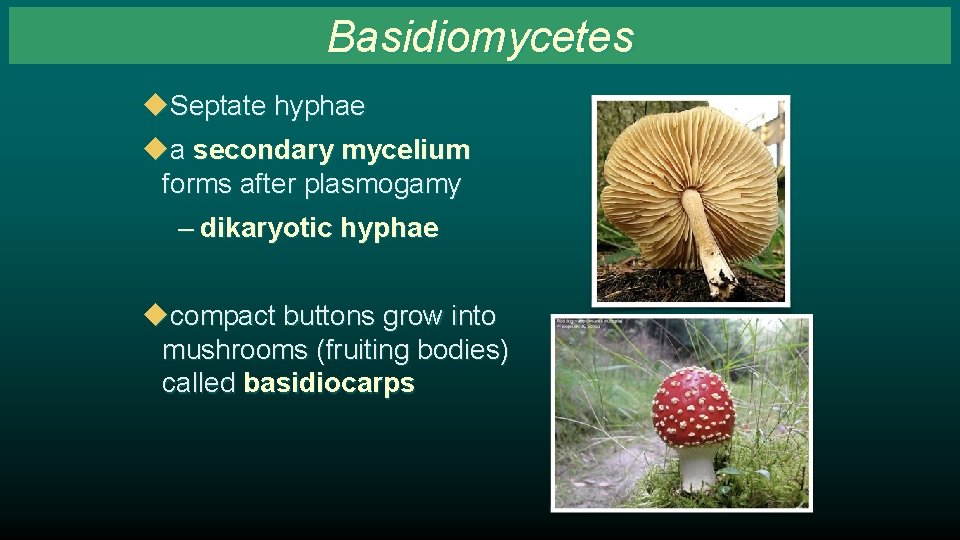
Basidiomycetes u. Septate hyphae ua secondary mycelium forms after plasmogamy – dikaryotic hyphae ucompact buttons grow into mushrooms (fruiting bodies) called basidiocarps
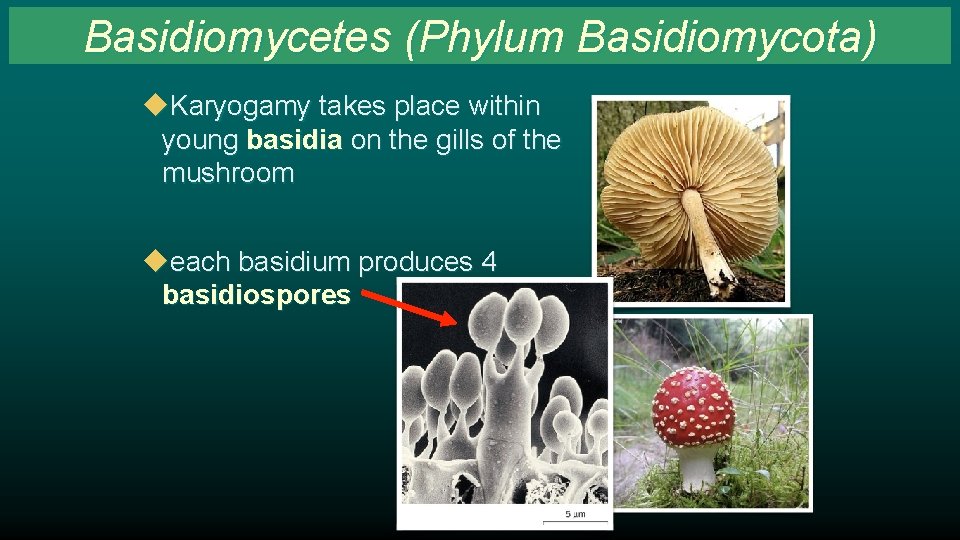
Basidiomycetes (Phylum Basidiomycota) u. Karyogamy takes place within young basidia on the gills of the mushroom ueach basidium produces 4 basidiospores
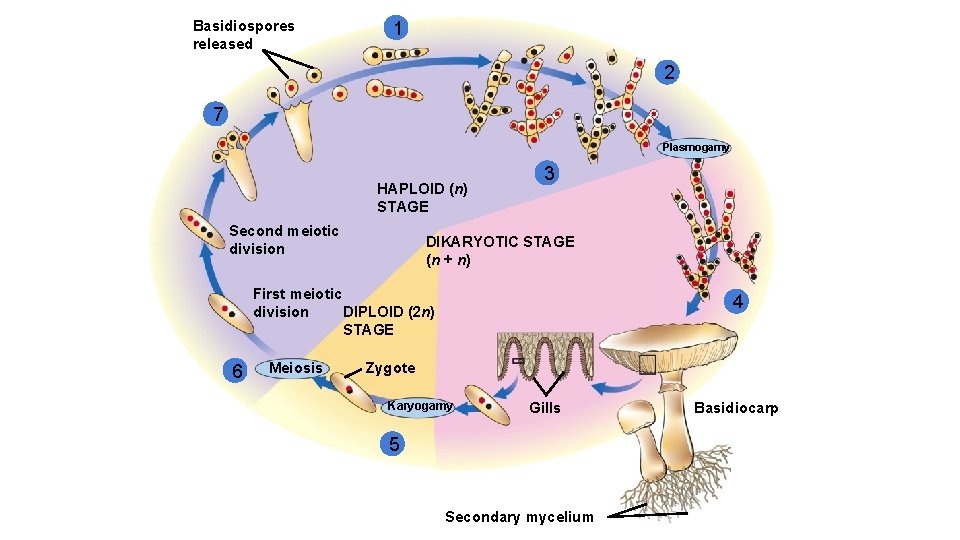
Basidiospores released 1 2 7 Plasmogamy HAPLOID (n) STAGE Second meiotic division 3 DIKARYOTIC STAGE (n + n) “Type a quote here. ” First meiotic DIPLOID (2 n) division STAGE 6 Meiosis 4 Zygote–Johnny Appleseed Karyogamy Gills 5 Secondary mycelium Basidiocarp
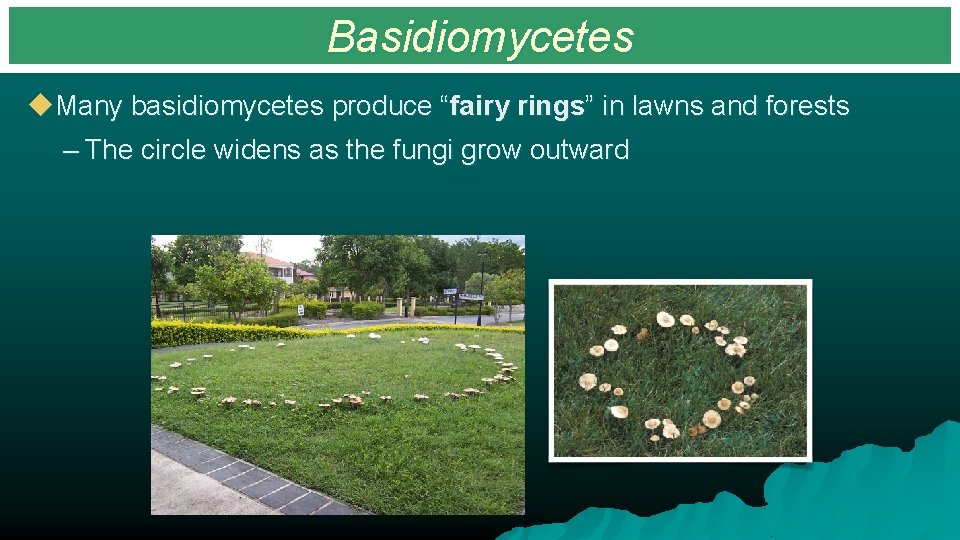
Basidiomycetes u. Many basidiomycetes produce “fairy rings” in lawns and forests – The circle widens as the fungi grow outward
Cells of root cortex Root epidermis Soil Vesicle Root hair “Type a quote here. ” Arbuscule Spore –Johnny Appleseed Cortex cell Hypha of fungus
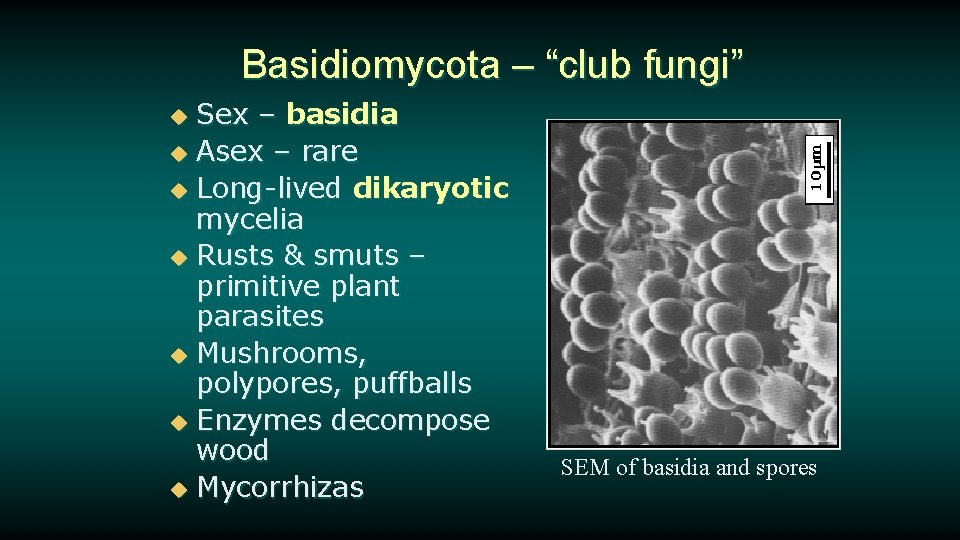
Basidiomycota – “club fungi” Sex – basidia u Asex – rare u Long-lived dikaryotic mycelia u Rusts & smuts – primitive plant parasites u Mushrooms, polypores, puffballs u Enzymes decompose wood u Mycorrhizas u SEM of basidia and spores
Basidiomycetes 1 u Produce sexual spores (basidiospores) – on outside of basidium u Basidia develop – on surface of gills in mushrooms – a type of basidiocarp (fruiting body) u Hyphae in this phylum have septa
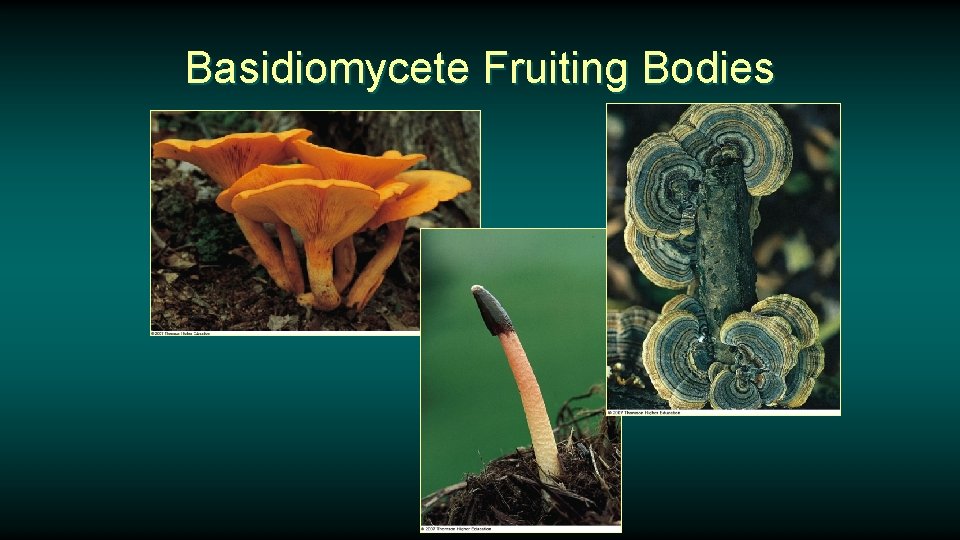
Basidiomycete Fruiting Bodies
Basidiomycetes 2 u Plasmogamy occurs – fusion of 2 hyphae of different mating types u Dikaryotic secondary mycelium forms u Basidiocarp develops – basidia form
Basidiomycetes 3 u Karyogamy occurs – producing diploid zygote nucleus u Meiosis produces 4 haploid nuclei – become basidiospores u When basidiospores germinate – form haploid primary mycelia
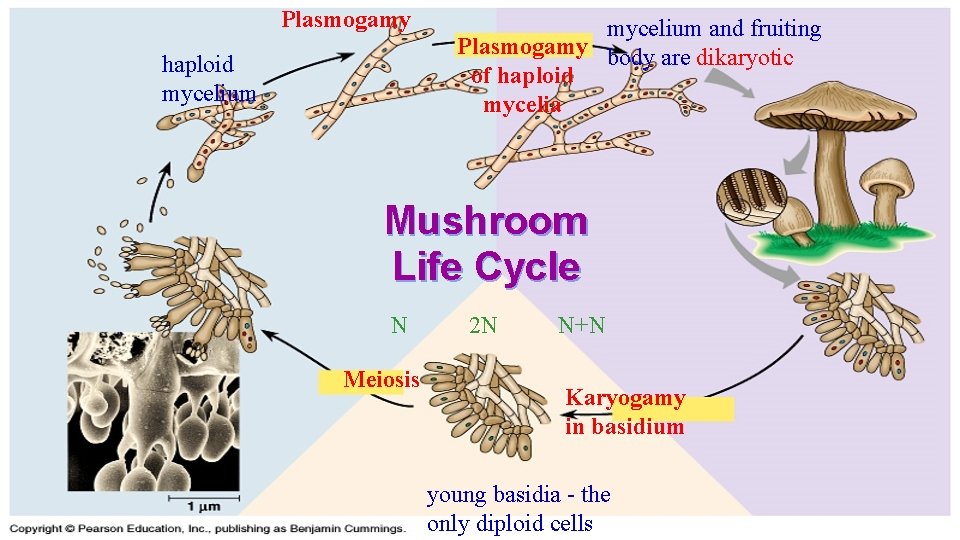
Plasmogamy haploid mycelium and fruiting Plasmogamy body are dikaryotic of haploid mycelia Mushroom Life Cycle N Meiosis 2 N N+N Karyogamy in basidium young basidia - the only diploid cells
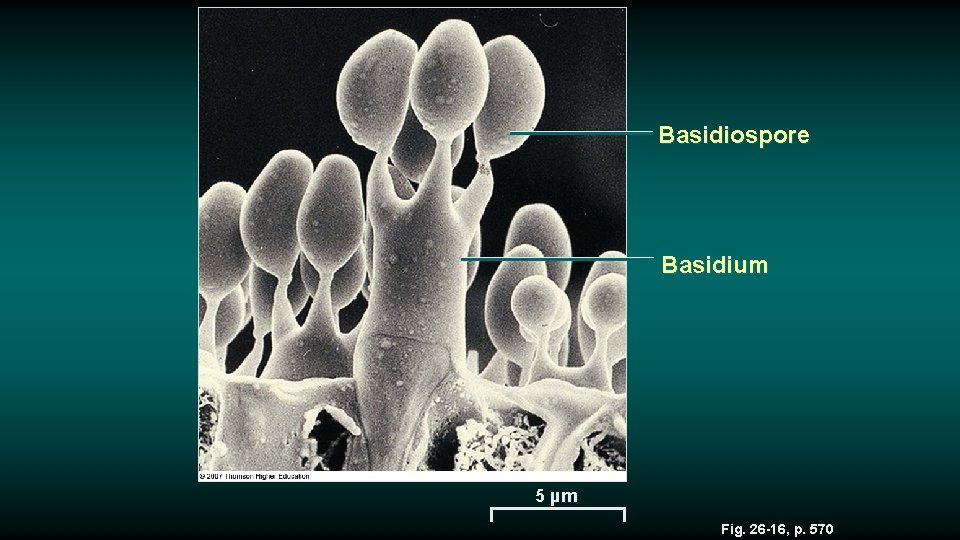
Basidiospore Basidium 5 µm Fig. 26 -16, p. 570
Basidiomycetes 4 u Basidiomycetes – mushrooms – puffballs – bracket fungi – rusts – smuts include
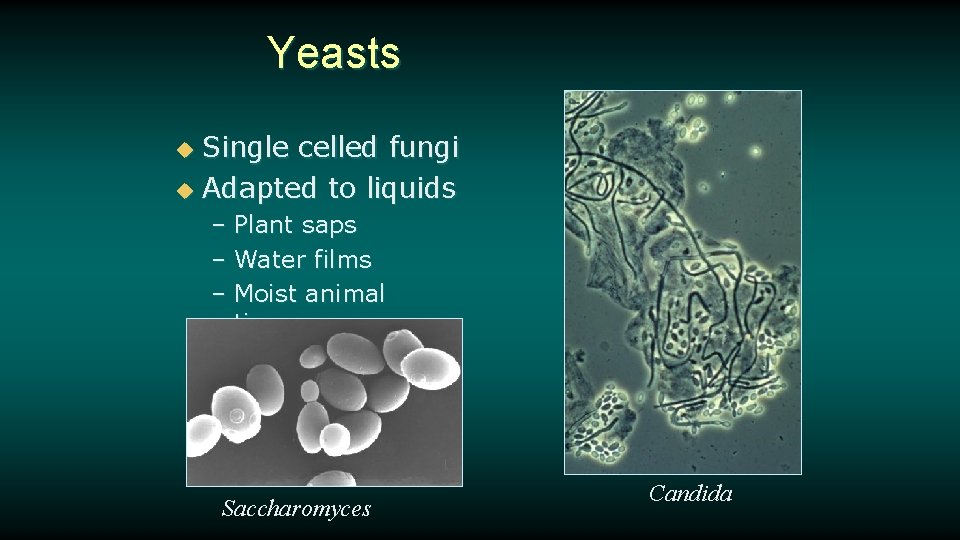
Yeasts Single celled fungi u Adapted to liquids u – Plant saps – Water films – Moist animal tissues Saccharomyces Candida
Fungal Ecology u Saprobes – Decomposers – Mostly of plants, some animals u Parasites – Harm host – Mostly on plants, some animals u Mutualists – Lichens – Mycorrhizas – Others
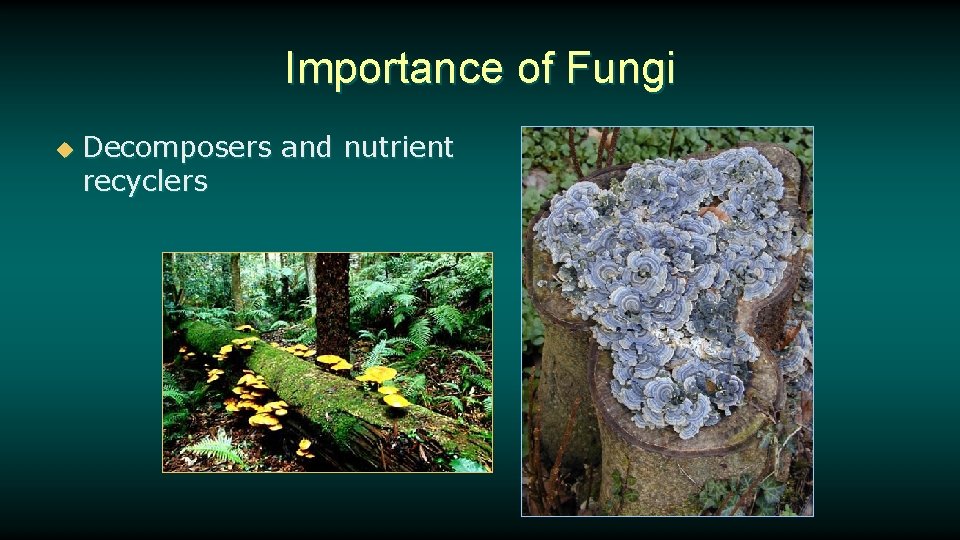
Importance of Fungi u Decomposers and nutrient recyclers
Importance of Fungi u Mutualists: organisms that are associated with each other to their mutual benefit – Most trees and prairie plants have fungi called mycorrhizae associated with their roots. u help the plants gather nutrients
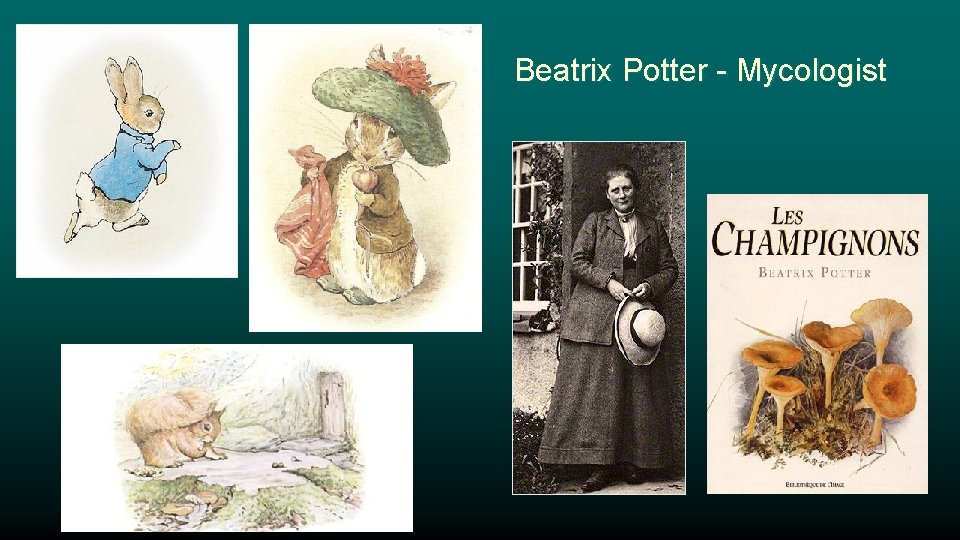
Beatrix Potter - Mycologist
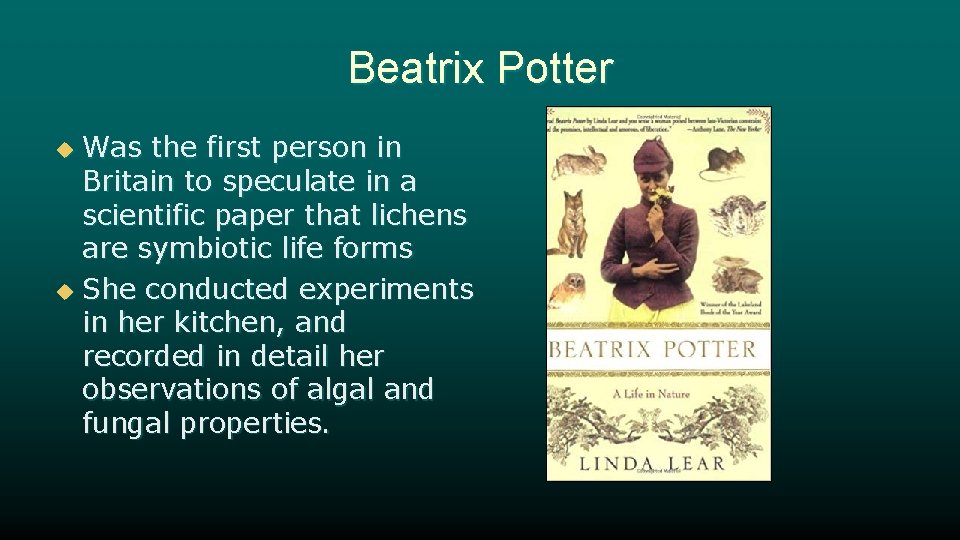
Beatrix Potter Was the first person in Britain to speculate in a scientific paper that lichens are symbiotic life forms u She conducted experiments in her kitchen, and recorded in detail her observations of algal and fungal properties. u
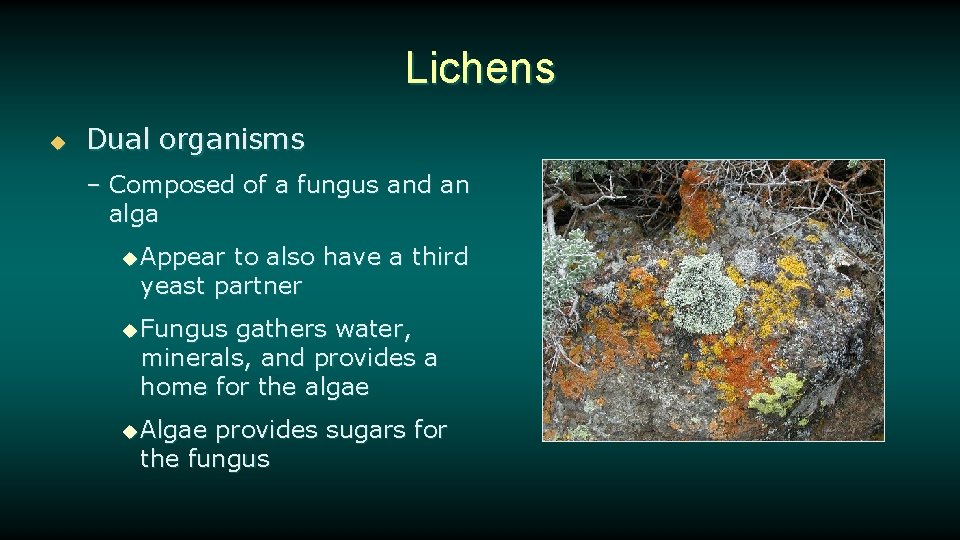
Lichens u Dual organisms – Composed of a fungus and an alga u Appear to also have a third yeast partner u Fungus gathers water, minerals, and provides a home for the algae u Algae provides sugars for the fungus
Commercial Uses for Fungi u Beer and wine are produced by fermentation usingle celled fungi called yeasts – Produce alcohol and carbon dioxide – Carbon dioxide from fermentation by yeast causes bread dough to rise u Foods – Mushrooms, corn smut (a favorite in Mexico)
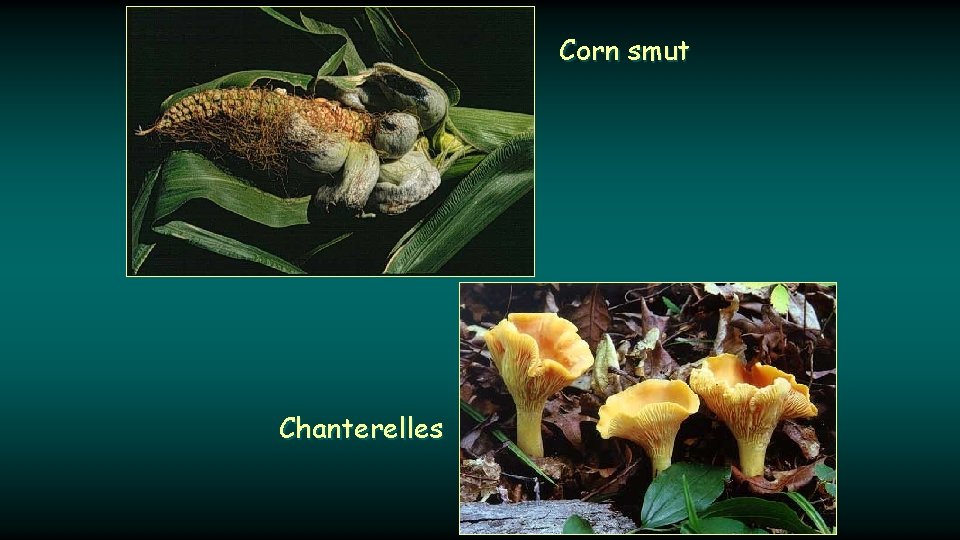
Corn smut Chanterelles
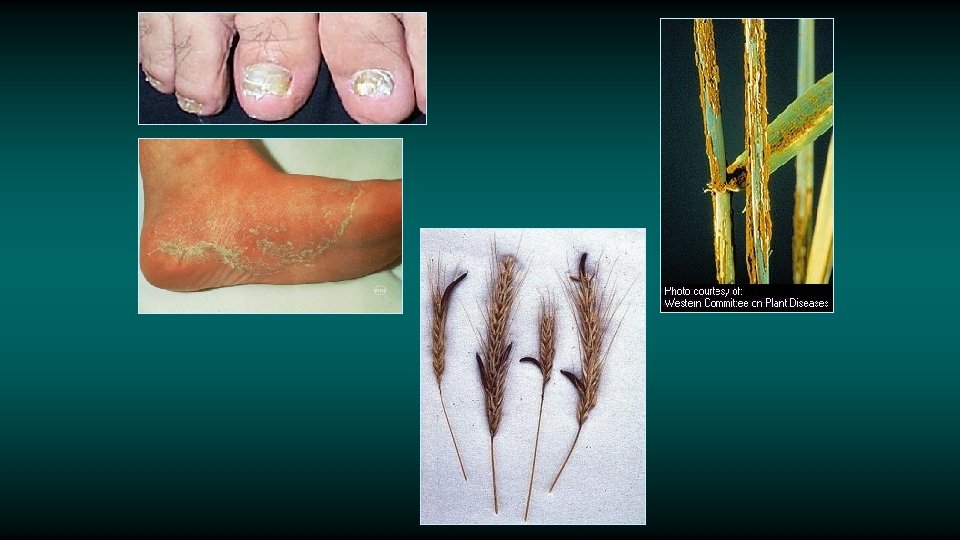
Problem Fungi u Some fungi are parasites of plants and animals – Athletes foot – Vaginal yeast infections, thrush – Rust on wheat plants – Ergot grows on rye seeds - produces LSD u May have been the culprit behind the accusations of witchcraft in 1620 Salem u Mildew in your shower (not a disease producer - just gross!)
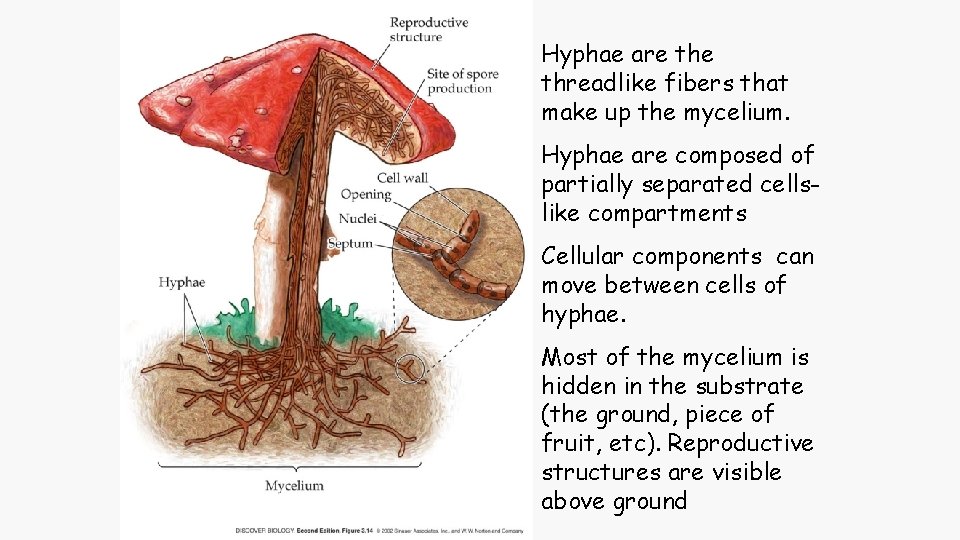
Hyphae are threadlike fibers that make up the mycelium. Hyphae are composed of partially separated cellslike compartments Cellular components can move between cells of hyphae. Most of the mycelium is hidden in the substrate (the ground, piece of fruit, etc). Reproductive structures are visible above ground
- Slides: 51