
Globular Proteins Hemoglobin Myoglobin Myoglobin monomer Single peptide
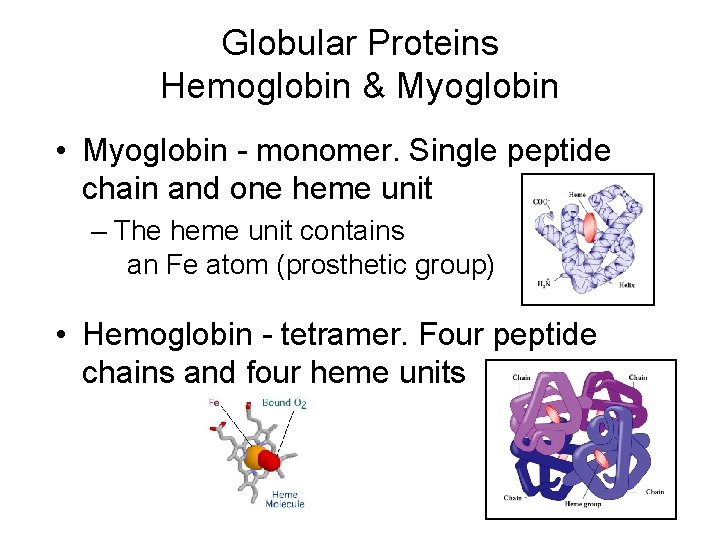
Globular Proteins Hemoglobin & Myoglobin • Myoglobin - monomer. Single peptide chain and one heme unit – The heme unit contains an Fe atom (prosthetic group) • Hemoglobin - tetramer. Four peptide chains and four heme units
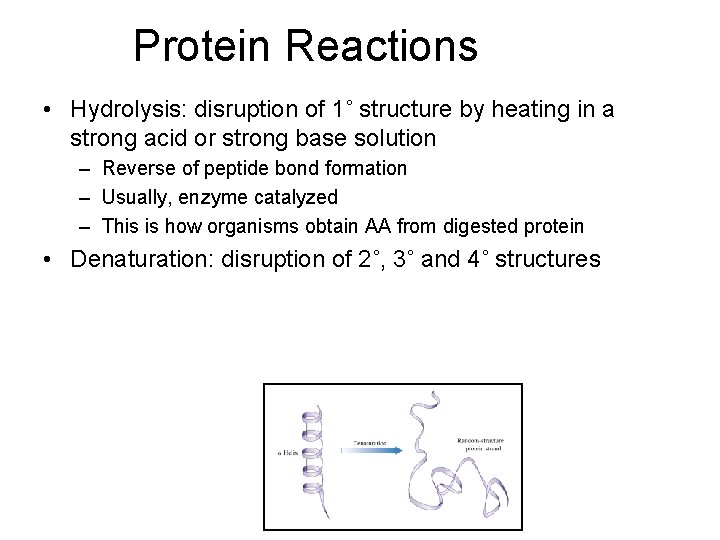
Protein Reactions • Hydrolysis: disruption of 1˚ structure by heating in a strong acid or strong base solution – Reverse of peptide bond formation – Usually, enzyme catalyzed – This is how organisms obtain AA from digested protein • Denaturation: disruption of 2˚, 3˚ and 4˚ structures
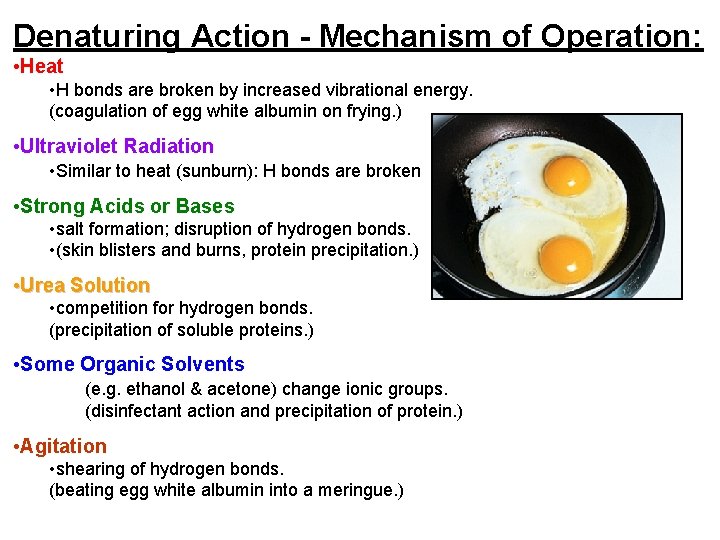
Denaturing Action - Mechanism of Operation: • Heat • H bonds are broken by increased vibrational energy. (coagulation of egg white albumin on frying. ) • Ultraviolet Radiation • Similar to heat (sunburn): H bonds are broken • Strong Acids or Bases • salt formation; disruption of hydrogen bonds. • (skin blisters and burns, protein precipitation. ) • Urea Solution • competition for hydrogen bonds. (precipitation of soluble proteins. ) • Some Organic Solvents (e. g. ethanol & acetone) change ionic groups. (disinfectant action and precipitation of protein. ) • Agitation • shearing of hydrogen bonds. (beating egg white albumin into a meringue. )
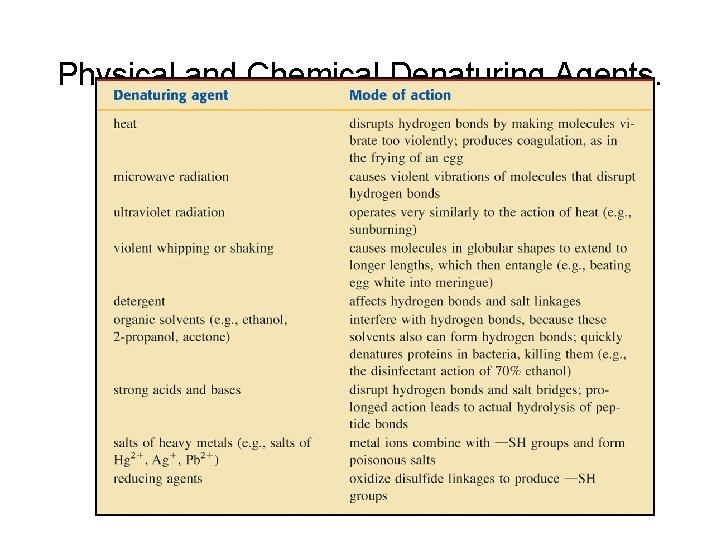
Physical and Chemical Denaturing Agents.

Denaturation & Human Hair
Conjugated Proteins • Proteins that contain prosthetic groups – Glycoproteins – Lipoproteins – Metalloproteins
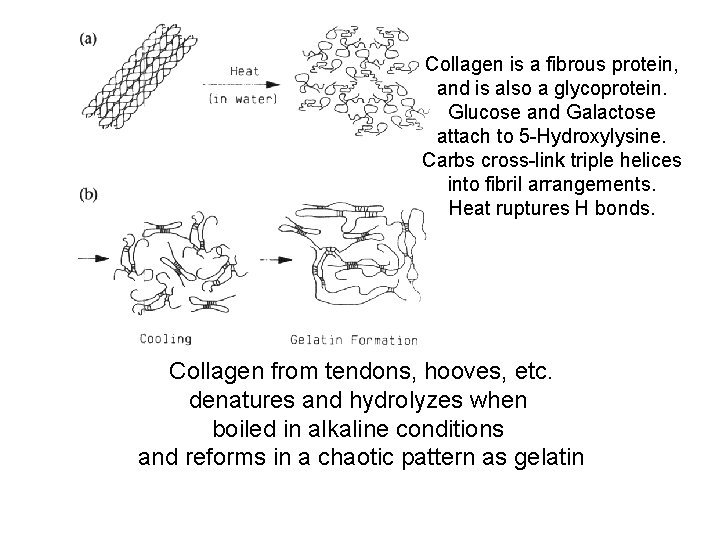
Collagen is a fibrous protein, and is also a glycoprotein. Glucose and Galactose attach to 5 -Hydroxylysine. Carbs cross-link triple helices into fibril arrangements. Heat ruptures H bonds. Collagen from tendons, hooves, etc. denatures and hydrolyzes when boiled in alkaline conditions and reforms in a chaotic pattern as gelatin
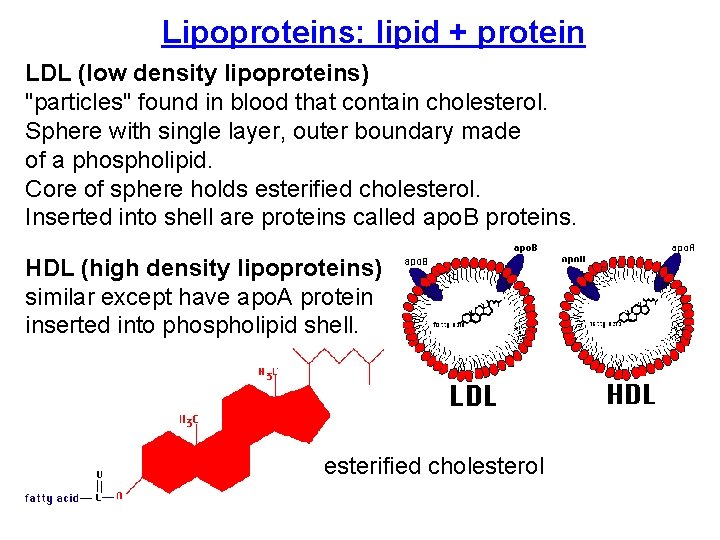
Lipoproteins: lipid + protein LDL (low density lipoproteins) "particles" found in blood that contain cholesterol. Sphere with single layer, outer boundary made of a phospholipid. Core of sphere holds esterified cholesterol. Inserted into shell are proteins called apo. B proteins. HDL (high density lipoproteins) similar except have apo. A protein inserted into phospholipid shell. esterified cholesterol
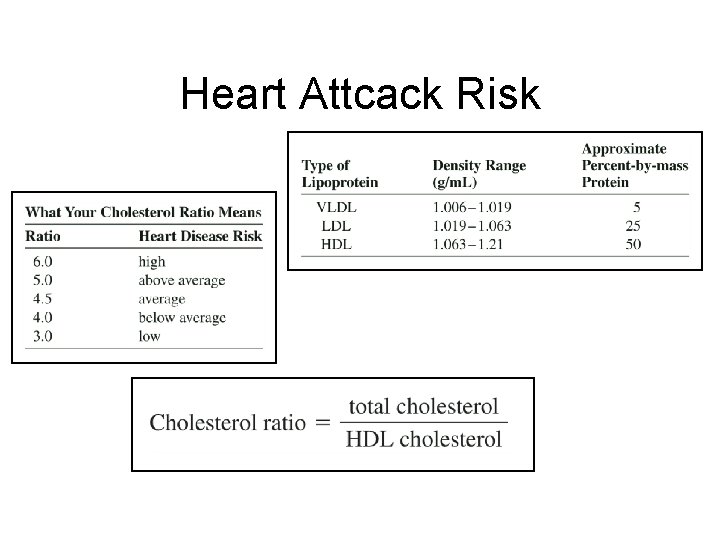
Heart Attcack Risk
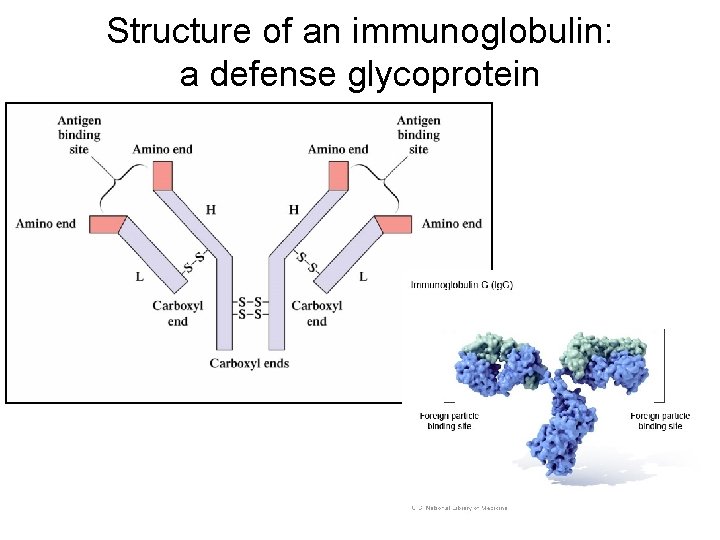
Structure of an immunoglobulin: a defense glycoprotein
Review – can you… Describe the biological role of various peptide hormones, neurotransmitters, & antioxidants Compare and contrast simple to conjugated, and fibrous to globular proteins Show products created from protein hydrolysis Compare and contrast physical and chemical denaturing agents, & how they denature proteins Explain the role and structural differences of glycoproteins and lipoproteins
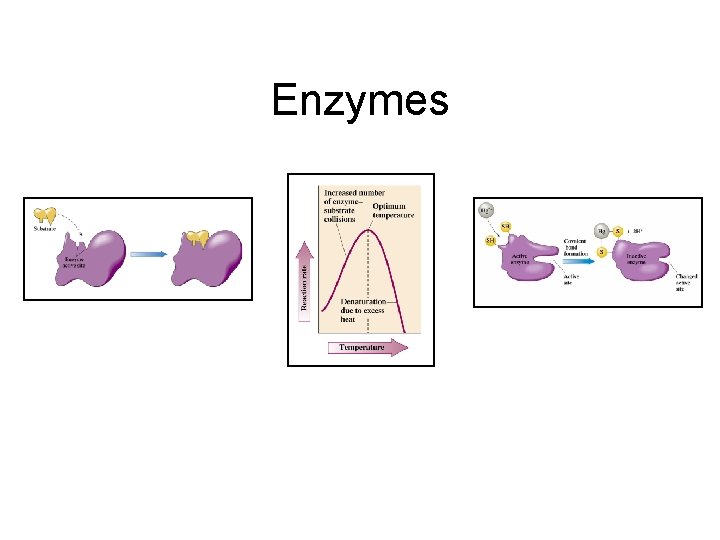
Enzymes
What is an enzyme? Enzymes are usually proteins – often globular proteins. They act as catalysts for biochemical reactions Can be described in terms of: primary, secondary, tertiary, and (sometimes) quaternary structures. Held together by: hydrogen bonds, disulfide bonds, bonds salt bridges, and hydrophobic interactions. Sound familiar?
Enzyme structure: 2 categories 1. Simple enzymes – composed of just protein 2. Conjugated enzyme – protein & non-protein Protein part = apoenzyme Non-protein part = cofactor (prosthetic group) Active enzymes usually involve "cofactors: " Sometimes inorganic ions, or Small organic molecules (a “coenzyme”) - many vitamins act as coenzymes Cofactors are often needed to complete the catalytically active structure of an enzyme.
Biochemical reactions need enzymes to occur. Why? What do enzymes do? Biochemistry takes place at ~ 37 o. C in aqueous environment. At typical laboratory reaction conditions, to hydrolyze (saponify) fats: Boil them with concentrated Na. OH for hours. Enzymes called lipases do the same thing (hydrolyze fats) at ~ 37 o. C without Na. OH and it takes minutes.
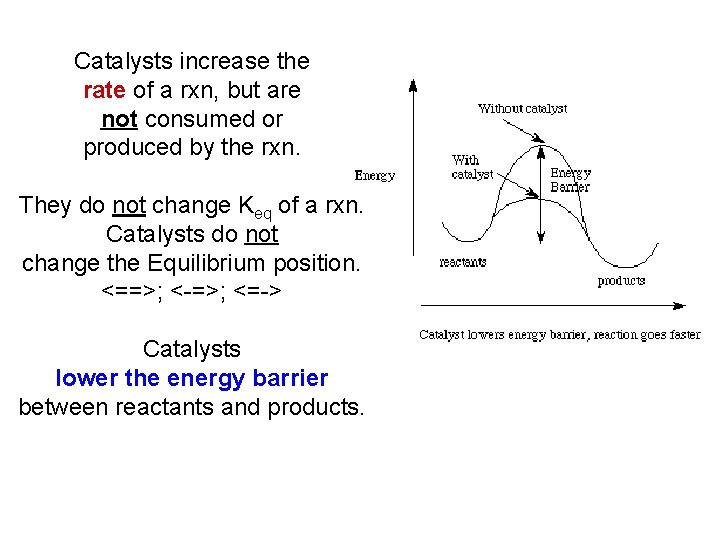
Catalysts increase the rate of a rxn, but are not consumed or produced by the rxn. They do not change Keq of a rxn. Catalysts do not change the Equilibrium position. <==>; <-=>; <=-> Catalysts lower the energy barrier between reactants and products.
Enzyme nomenclature An enzyme name describes its function: Suffix: –ase e. g. Protease, decarboxylase, ligase Older names may have the suffix: –in e. g. Pepsin, trypsin, subtilisin, thrombin
Prefix describes enzyme action (function): Prefix usually names the type of reaction the enzyme is involved in: Oxidoreductase = Redox reactions Hydrolase = Hydrolysis of bonds “Substrate” = chemical enzyme acts upon Specific substrate may also be in the name: Glucose oxidase Or (less frequently) only the substrate is in the name: Protease, lipase, lactase, etc.
- Slides: 20