
GLOBALTRAINING IMPLANON NXT Clinical Information and Training Workshop

GLOBALTRAINING IMPLANON NXT Clinical Information and Training Workshop 1
Welcome ► Welcome to the Clinical Information and Training Workshop for IMPLANON NXT™ (etonogestrel implant). This workshop is designed to provide you with an introduction to IMPLANON NXT. ► MSD recommends that all health care providers intending to insert IMPLANON NXT undertake training. As with all medical devices, training does not mean an individual registered health care provider is competent in insertion and removal procedures. As such, each health care provider must exercise his or her own independent judgment about their own competence prior to performing any insertion or removal procedure. ► MSD also recommends that you check with your relevant occupational association and insurer for requirements they may have before you insert or remove IMPLANON NXT. 2
Agenda ► ► ► Clinical Information Counseling Insertion Procedure and Practice Localization Before Removal Procedure and Practice Reinsertion Conclusion 3
Important Information ► ► Attending this training does not replace the need to consult the regulatory approved Prescribing Information regarding insertion, removal, and replacement instructions and other information for IMPLANON NXT™ (etonogestrel implant) These educational materials are provided for purposes of assisting in training health care providers in countries outside the United States on the insertion and removal procedures for IMPLANON NXT. They do not replace a review of the Prescribing Information, which should be reviewed prior to administering or removing the product 4

IMPLANON NXT™ (etonogestrel implant) ► Subdermal, long-acting hormonal contraceptive, effective for up to 3 years ► Progestagen-only implant preloaded in a disposable applicator ► IMPLANON NXT is radiopaque and comparable to IMPLANON™ (etonogestrel implant) ► Clinical trials with IMPLANON in 17 countries, including the United States ► Clinical trials with IMPLANON NXT in 6 countries 5
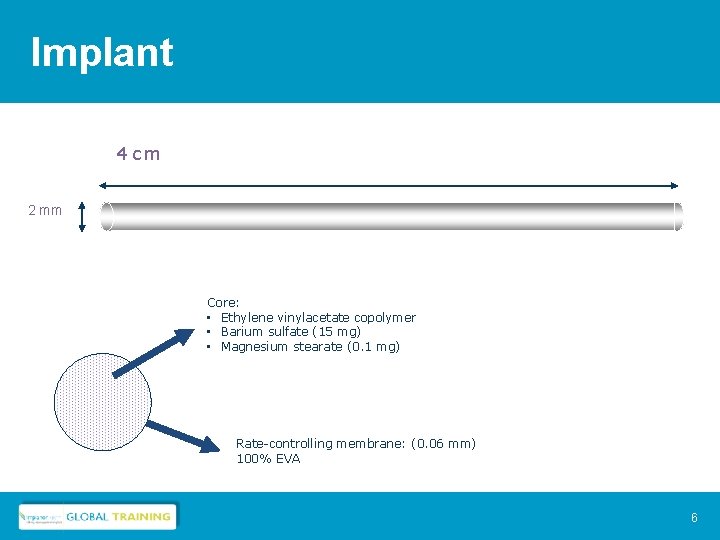
Implant 4 cm 2 mm Core: • Ethylene vinylacetate copolymer • Barium sulfate (15 mg) • Magnesium stearate (0. 1 mg) Rate-controlling membrane: (0. 06 mm) 100% EVA 6
Applicator for IMPLANON NXT™ (etonogestrel implant) ► Preloaded, sterile applicator ► Single use and disposable ► To be used only in accordance with instructions for insertion by health care providers authorized to carry out these procedures ► Inserters familiar with the applicator for IMPLANON™ (etonogestrel implant) need to familiarize themselves with the applicator for IMPLANON NXT 7

GLOBALTRAINING Clinical Information 8
Efficacy ► ► IMPLANON™ (etonogestrel implant) is over 99% effective 1 – The contraceptive effect of IMPLANON NXT™ (etonogestrel implant) is related to the plasma levels of etonogestrel, which are inversely related to body weight, and decrease with time after insertion. The clinical experience in heavier women in the third year of use is limited. It cannot be excluded that the contraceptive effect in these women during the third year of use may be lower than for women of normal weight. Health care providers (HCPs) may therefore consider earlier replacement of the implant in heavier women Medicines that reduce the efficacy of oral contraceptives reduce the efficacy of IMPLANON NXT as well 1. Graesslin O et al. Eur J Contracept Reprod Health Care. 2008; 13(S 1): 4– 12. 9
Mechanisms of Action ► ► Ovulation inhibition Changes in the viscosity of cervical mucus 10
Pharmacokinetics ► ► Etonogestrel is rapidly absorbed into the circulation after insertion Ovulation-inhibiting concentrations are reached within 1 day Maximum serum concentrations Days 1 to 13: 472 to 1270 pg/ml The release rate of the implant decreases with time – End of Year 1: ~200 pg/ml – End of Year 3: ~156 pg/ml 11
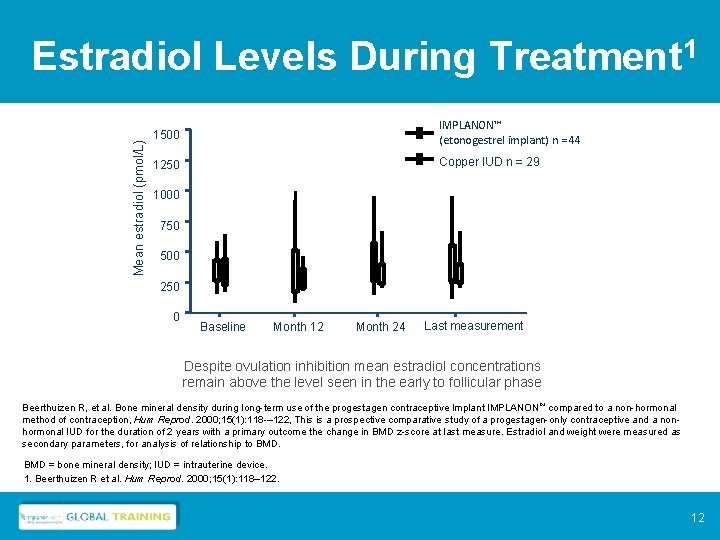
Mean estradiol (pmol/L) Estradiol Levels During Treatment 1 1500 IMPLANON™ (etonogestrel implant) n = 44 1250 Copper IUD n = 29 1000 750 500 250 0 Baseline Month 12 Month 24 Last measurement Despite ovulation inhibition mean estradiol concentrations remain above the level seen in the early to follicular phase Beerthuizen R, et al. Bone mineral density during long-term use of the progestagen contraceptive Implant IMPLANON™ compared to a non-hormonal method of contraception, Hum Reprod. 2000; 15(1): 118 -– 122, This is a prospective comparative study of a progestagen-only contraceptive and a nonhormonal IUD for the duration of 2 years with a primary outcome the change in BMD z-score at last measure. Estradiol and weight were measured as secondary parameters, for analysis of relationship to BMD = bone mineral density; IUD = intrauterine device. 1. Beerthuizen R et al. Hum Reprod. 2000; 15(1): 118– 122. 12
Bone Mineral Density 1 ► In a comparative study of IMPLANON™ (etonogestrel implant) (n=44) vs non-hormonal intrauterine device (IUD) users (n=29), bone density remained unaltered over 2 years with no detectable difference between the 2 groups (P>0. 05) Beerthuizen R et al. Bone mineral density (BMD) during long-term use of the progestagen contraceptive implant IMPLANON compared to a non-hormonal method of contraception. Hum Reprod. 2000; 15(1): 118– 122 for additional information. This is a prospective comparative study of a progestagen-only contraceptive and a non-hormonal IUD for the duration of 2 years with a primary outcome the change in BMD z-score at last measure. Estradiol and weight were measured as secondary parameters, for analysis of relationship to BMD. 1. Beerthuizen R et al. Hum Reprod. 2000; 15(1): 118– 122. 13
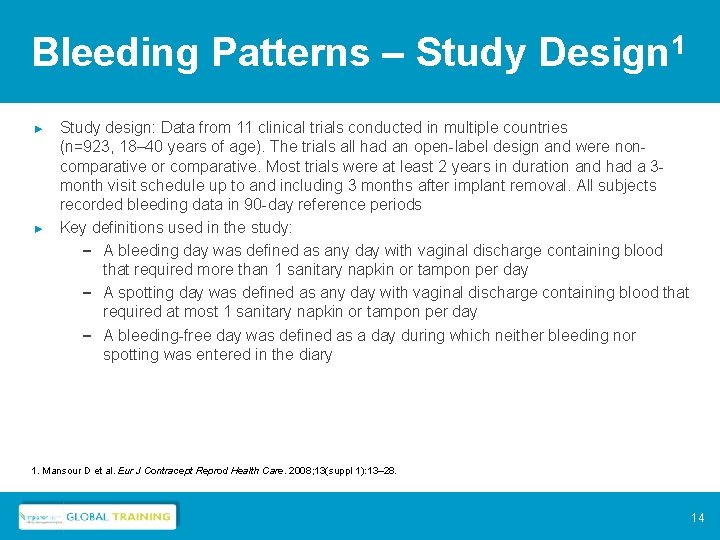
Bleeding Patterns – Study Design 1 ► ► Study design: Data from 11 clinical trials conducted in multiple countries (n=923, 18– 40 years of age). The trials all had an open-label design and were noncomparative or comparative. Most trials were at least 2 years in duration and had a 3 month visit schedule up to and including 3 months after implant removal. All subjects recorded bleeding data in 90 -day reference periods Key definitions used in the study: – A bleeding day was defined as any day with vaginal discharge containing blood that required more than 1 sanitary napkin or tampon per day – A spotting day was defined as any day with vaginal discharge containing blood that required at most 1 sanitary napkin or tampon per day – A bleeding-free day was defined as a day during which neither bleeding nor spotting was entered in the diary 1. Mansour D et al. Eur J Contracept Reprod Health Care. 2008; 13(suppl 1): 13– 28. 14
Bleeding Patterns ► During the use of IMPLANON NXT™ (etonogestrel implant), women are likely to have changes in their bleeding pattern ► Changes may relate to bleeding frequency (absent, less, more frequent, or continuous), intensity (reduced or increased), or duration Bleeding pattern experienced during the first 3 months is broadly predictive of future bleeding patterns for many women Amenorrhea was reported in about 1 of 5 women while another 1 of 5 women reported frequent and/or prolonged bleeding Information, counseling, and the use of a bleeding diary can improve the woman's acceptance of a bleeding pattern Evaluation of vaginal bleeding or absence may be indicated to exclude gynecological pathology or pregnancy on an ad-hoc basis ► ► 15
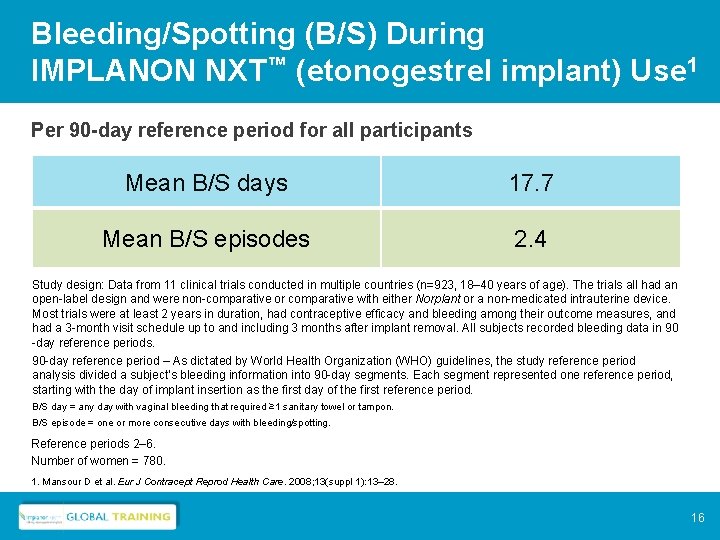
Bleeding/Spotting (B/S) During IMPLANON NXT™ (etonogestrel implant) Use 1 Per 90 -day reference period for all participants Mean B/S days 17. 7 Mean B/S episodes 2. 4 Study design: Data from 11 clinical trials conducted in multiple countries (n=923, 18– 40 years of age). The trials all had an open-label design and were non-comparative or comparative with either Norplant or a non-medicated intrauterine device. Most trials were at least 2 years in duration, had contraceptive efficacy and bleeding among their outcome measures, and had a 3 -month visit schedule up to and including 3 months after implant removal. All subjects recorded bleeding data in 90 -day reference periods. 90 -day reference period – As dictated by World Health Organization (WHO) guidelines, the study reference period analysis divided a subject’s bleeding information into 90 -day segments. Each segment represented one reference period, starting with the day of implant insertion as the first day of the first reference period. B/S day = any day with vaginal bleeding that required ≥ 1 sanitary towel or tampon. B/S episode = one or more consecutive days with bleeding/spotting. Reference periods 2– 6. Number of women = 780. 1. Mansour D et al. Eur J Contracept Reprod Health Care. 2008; 13(suppl 1): 13– 28. 16
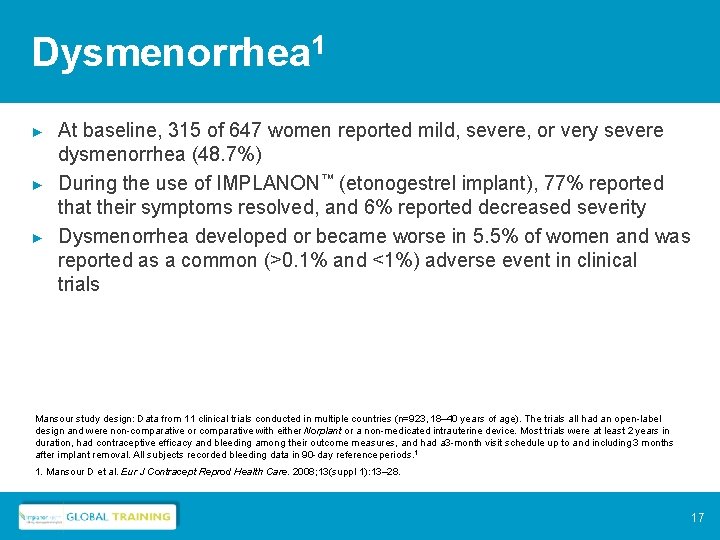
Dysmenorrhea 1 ► ► ► At baseline, 315 of 647 women reported mild, severe, or very severe dysmenorrhea (48. 7%) During the use of IMPLANON™ (etonogestrel implant), 77% reported that their symptoms resolved, and 6% reported decreased severity Dysmenorrhea developed or became worse in 5. 5% of women and was reported as a common (>0. 1% and <1%) adverse event in clinical trials Mansour study design: Data from 11 clinical trials conducted in multiple countries (n=923, 18– 40 years of age). The trials all had an open-label design and were non-comparative or comparative with either Norplant or a non-medicated intrauterine device. Most trials were at least 2 years in duration, had contraceptive efficacy and bleeding among their outcome measures, and had a 3 -month visit schedule up to and including 3 months after implant removal. All subjects recorded bleeding data in 90 -day reference periods. 1 1. Mansour D et al. Eur J Contracept Reprod Health Care. 2008; 13(suppl 1): 13– 28. 17
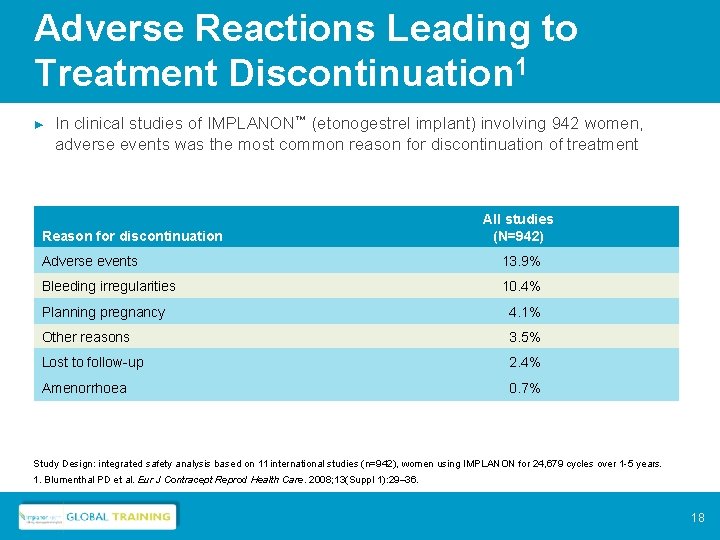
Adverse Reactions Leading to Treatment Discontinuation 1 ► In clinical studies of IMPLANON™ (etonogestrel implant) involving 942 women, adverse events was the most common reason for discontinuation of treatment Reason for discontinuation All studies (N=942) Adverse events 13. 9% Bleeding irregularities 10. 4% Planning pregnancy 4. 1% Other reasons 3. 5% Lost to follow-up 2. 4% Amenorrhoea 0. 7% Study Design: integrated safety analysis based on 11 international studies (n=942), women using IMPLANON for 24, 679 cycles over 1 -5 years. 1. Blumenthal PD et al. Eur J Contracept Reprod Health Care. 2008; 13(Suppl 1): 29– 36. 18
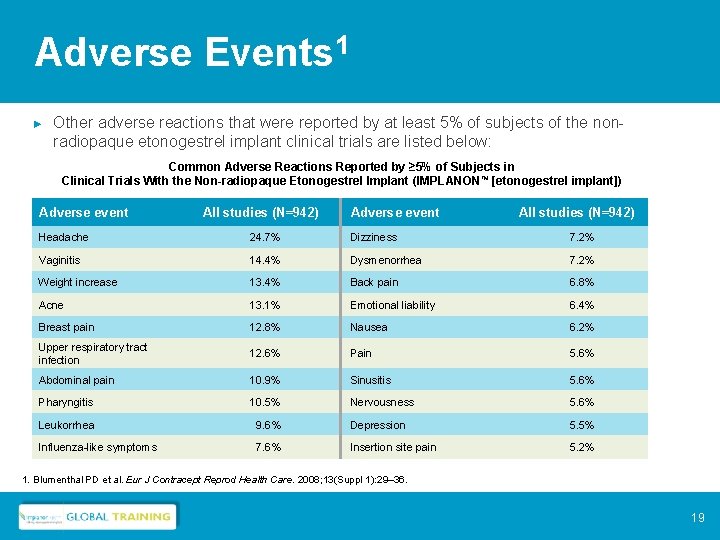
Adverse Events 1 ► Other adverse reactions that were reported by at least 5% of subjects of the nonradiopaque etonogestrel implant clinical trials are listed below: Common Adverse Reactions Reported by ≥ 5% of Subjects in Clinical Trials With the Non-radiopaque Etonogestrel Implant (IMPLANON™ [etonogestrel implant]) Adverse event All studies (N=942) Headache 24. 7% Dizziness 7. 2% Vaginitis 14. 4% Dysmenorrhea 7. 2% Weight increase 13. 4% Back pain 6. 8% Acne 13. 1% Emotional liability 6. 4% Breast pain 12. 8% Nausea 6. 2% Upper respiratory tract infection 12. 6% Pain 5. 6% Abdominal pain 10. 9% Sinusitis 5. 6% Pharyngitis 10. 5% Nervousness 5. 6% Leukorrhea 9. 6% Depression 5. 5% Influenza-like symptoms 7. 6% Insertion site pain 5. 2% 1. Blumenthal PD et al. Eur J Contracept Reprod Health Care. 2008; 13(Suppl 1): 29– 36. 19
Complications of Insertion and Removal ► ► ► Insertion or removal of the implant may cause some bruising, slight local irritation, pain or itching Fibrosis at the implant site may occur, a scar may be formed or an abscess may develop Paresthesia or paresthesia-like events may occur There have been reports of migration of the implant within the arm from the insertion site, which may be related to a deep insertion or external forces (eg, manipulation of the implant or contact sports) There also have been rare postmarketing reports of implants located within the vessels of the arm and the pulmonary artery, which may be related to deep insertions or intravascular insertion 20
Complications of Insertion and Removal (continued) ► ► In cases where the implant has migrated within the arm from the insertion site, localization of the implant may be more difficult and removal may require a minor surgical procedure with a larger incision or a surgical procedure in an operating room In cases where the implant has migrated to the pulmonary artery endovascular or surgical procedures may be needed for removal If at any time the implant cannot be palpated, it should be localized and removal is recommended as soon as medically appropriate If the implant is not removed, contraception and the risk of progestagen -related undesirable effects may continue beyond the time desired by the woman 21
Use While Breastfeeding ► Small amounts of etonogestrel are excreted in breast milk (~ 0. 2% of estimated absolute maternal daily dose) ► Comparative study: Cu-IUD (n=33) vs IMPLANON™ (etonogestrel implant) (n=38), infants followed up to 36 months: – No effect on milk quality (protein, lactose or fat concentration) or quantity was detected – No difference for infant growth and development between IMPLANON and a IUD ► Refer for further information about breastfeeding to the approved product information IUD = intrauterine device. 22
Contraindications ► Known or suspected pregnancy ► Active venous thromboembolic disorder ► Known or suspected sex steroid sensitive malignancies ► Presence or history of liver tumors (benign or malignant) ► Presence or history of severe hepatic disease as long as liver function values have not returned to normal Undiagnosed vaginal bleeding Hypersensitivity to the active substance or to any of the excipients of IMPLANON NXT™ (etonogestrel implant) ► ► 23
Exposure to IMPLANON NXT™ (etonogestrel implant) During Pregnancy ► If pregnancy occurs during use of IMPLANON NXT, the implant should be removed ► Postmarketing surveillance since worldwide launch of IMPLANON™ (etonogestrel implant) (1998) does not indicate adverse effects on fetus Extensive epidemiological studies have revealed neither an increased risk of birth defects in children born to women who used oral contraceptives (OCs) prior to pregnancy, nor of a teratogenic effect when OCs were inadvertently used during pregnancy. Although this probably applies to all OCs, it is not clear whether this is also the case for IMPLANON NXT. ► ► 24
Special Warnings and Precautions for Use ► Risk for breast cancer ► Liver function disturbances ► Arterial and venous thromboembolic events ► Hypertension ► Insulin resistance and glucose tolerance ► Hyperlipidemia ► Chloasma 25
Special Warnings and Precautions for Use (continued) ► Body weight ► Implant migration ► In situ broken or bent implant ► Follicular development ► Ectopic pregnancy ► Conditions related to sex steroid use 26
Interactions ► Interactions can occur with medicinal or herbal products that induce microsomal enzymes, specifically cytochrome P 450 enzymes, which can result in increased clearance of sex hormones, and may decrease the effectiveness of IMPLANON NXT™ (etonogestrel implant) – eg, phenytoin, phenobarbital, primidone, bosentan, carbamazepine, rifampicin – HIV-medication (eg, ritonavir, nelfinavir, nevirapine, efavirenz) – Possibly also oxcarbazepine, topiramate, felbamate, griseofulvin and the herbal remedy St. John’s wort ► Many combinations of HIV protease inhibitors (eg, nelfinavir) and nonnucleoside reverse transcriptase inhibitors (eg, nevirapine), and/or combinations with HCV medicinal products (eg, boceprevir, telaprevir), can increase or decrease plasma concentrations of progestins, including etonogestrel. The net effect of these changes may be clinically relevant in some cases HCV = hepatitis C virus; HIV = human immunodeficiency virus. 27
Interactions (continued) ► ► ► Women on treatment with any of the mentioned drugs should use a non-hormonal contraceptive method in addition to IMPLANON NXT™ (etonogestrel implant) With microsomal enzyme-inducing drugs, the non-hormonal contraceptive method should be used during the time of concomitant drug administration and for 28 days after their discontinuation In women on long-term treatment with hepatic enzyme-inducing drugs, it is recommended to remove the implant and to prescribe a nonhormonal method 28
Interactions (continued) ► ► Women receiving any of the mentioned hepatic enzyme-inducing drugs or herbal products should be advised that the efficacy of IMPLANON NXT™ (etonogestrel implant) may be reduced If it is decided to continue using IMPLANON NXT, women should be advised to also use a non-hormonal contraceptive method during the time of concomitant drug administration and for 28 days after discontinuation 29

GLOBALTRAINING Counseling 30
Counseling Points ► Discuss benefits, risks, and possible side effects: – Highly effective – No method of contraception is 100% effective – Return to normal menstrual cycle – If inserted correctly, can be removed any time – Should not be used for longer than 3 years and will need to be removed at the end of that time period – Contraindications – Side effects, emphasizing the alteration of the bleeding pattern – No protection against STI or HIV = human immunodeficiency virus; STI = sexually transmitted infection. 31
Counseling Points (continued) ► Alterations in bleeding pattern and dysmenorrhea 1: – During the use of IMPLANON NXT™ (etonogestrel implant), women are likely to have changes in their menstrual bleeding pattern – About 20% of women had amenorrhea – About 20% of women experienced frequent and/or prolonged bleeding – Dysmenorrhea tended to improve 1. Mansour D et al. Eur J Contracept Reprod Health Care. 2008; 13(suppl 1): 13– 28. 32
Counseling Points (continued) ► Tell women that in clinical trials, bleeding changes were the most common reason for stopping treatment with IMPLANON NXT™ (etonogestrel implant) (11%) ► Explain insertion and removal procedures: – The implant should be palpable – Difficult removal and scars/complications may occur ► Provide sufficient time for woman to review, consider, and ask questions 33

GLOBALTRAINING Applicator Insertion, Localization, Removal, and Reinsertion 34
Before Insertion of IMPLANON NXT™ (etonogestrel implant) ► The health care provider should confirm the following: – The woman’s medical history has been obtained, and a physical examination has been performed – The woman is not pregnant and has no other contraindication to IMPLANON NXT – The woman understands the benefits and risks of IMPLANON NXT – The woman has received a copy of the Product Information included in the packaging – The woman has reviewed and completed a consent form to be maintained with her chart – The woman does not have allergies to the antiseptic or anesthetic to be used during insertion 35
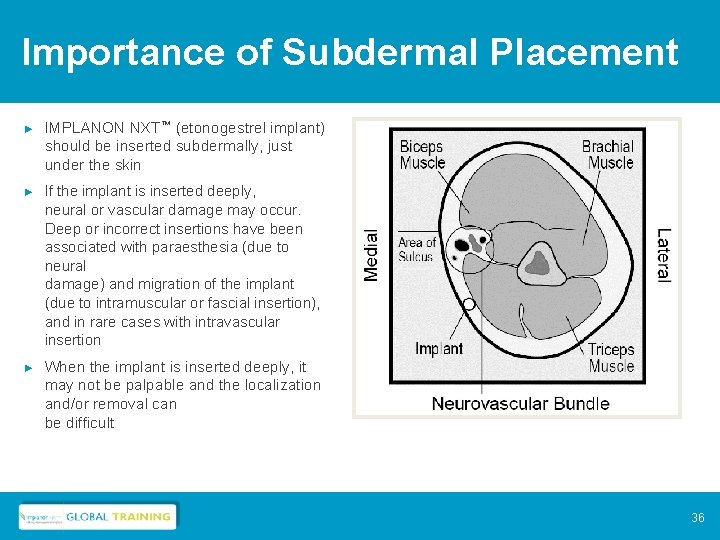
Importance of Subdermal Placement ► IMPLANON NXT™ (etonogestrel implant) should be inserted subdermally, just under the skin ► If the implant is inserted deeply, neural or vascular damage may occur. Deep or incorrect insertions have been associated with paraesthesia (due to neural damage) and migration of the implant (due to intramuscular or fascial insertion), and in rare cases with intravascular insertion ► When the implant is inserted deeply, it may not be palpable and the localization and/or removal can be difficult 36
Preparation for Insertion ► ► Insertion of IMPLANON NXT™ (etonogestrel implant) should be performed under aseptic conditions and only by a qualified health care provider who is familiar with the procedure. Insertion of the implant should only be performed with the preloaded applicator You can best see movement of the needle and that it is inserted just under the skin, if you are seated and are looking at the applicator from the side and NOT from above. In this position, you can clearly see the insertion site and the movement of the needle just under the skin 37
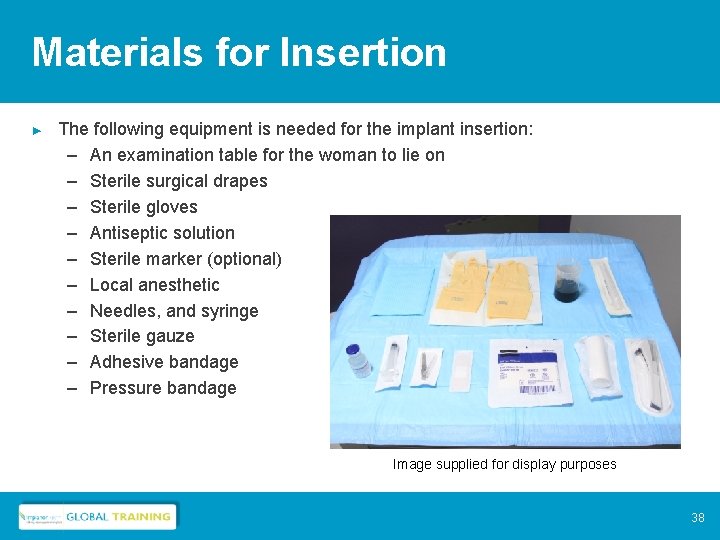
Materials for Insertion ► The following equipment is needed for the implant insertion: – An examination table for the woman to lie on – Sterile surgical drapes – Sterile gloves – Antiseptic solution – Sterile marker (optional) – Local anesthetic – Needles, and syringe – Sterile gauze – Adhesive bandage – Pressure bandage Image supplied for display purposes 38
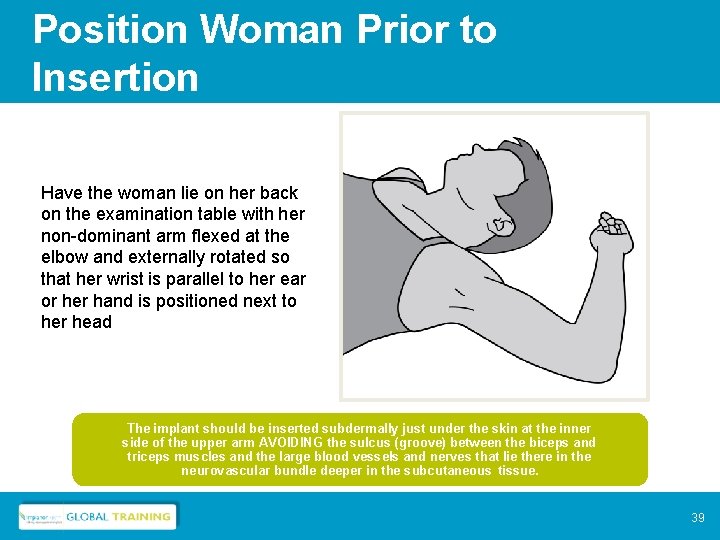
Position Woman Prior to Insertion Have the woman lie on her back on the examination table with her non-dominant arm flexed at the elbow and externally rotated so that her wrist is parallel to her ear or her hand is positioned next to her head The implant should be inserted subdermally just under the skin at the inner side of the upper arm AVOIDING the sulcus (groove) between the biceps and triceps muscles and the large blood vessels and nerves that lie there in the neurovascular bundle deeper in the subcutaneous tissue. 39
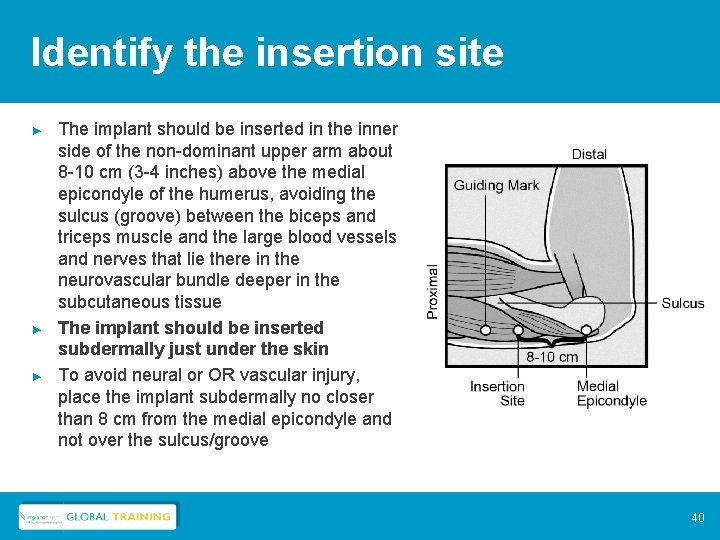
Identify the insertion site ► ► ► The implant should be inserted in the inner side of the non-dominant upper arm about 8 -10 cm (3 -4 inches) above the medial epicondyle of the humerus, avoiding the sulcus (groove) between the biceps and triceps muscle and the large blood vessels and nerves that lie there in the neurovascular bundle deeper in the subcutaneous tissue The implant should be inserted subdermally just under the skin To avoid neural or OR vascular injury, place the implant subdermally no closer than 8 cm from the medial epicondyle and not over the sulcus/groove 40
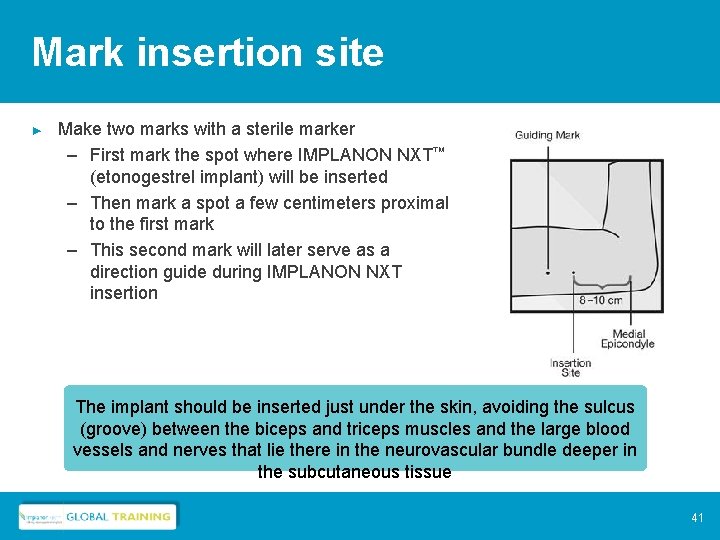
Mark insertion site ► Make two marks with a sterile marker – First mark the spot where IMPLANON NXT™ (etonogestrel implant) will be inserted – Then mark a spot a few centimeters proximal to the first mark – This second mark will later serve as a direction guide during IMPLANON NXT insertion The implant should be inserted just under the skin, avoiding the sulcus (groove) between the biceps and triceps muscles and the large blood vessels and nerves that lie there in the neurovascular bundle deeper in the subcutaneous tissue 41
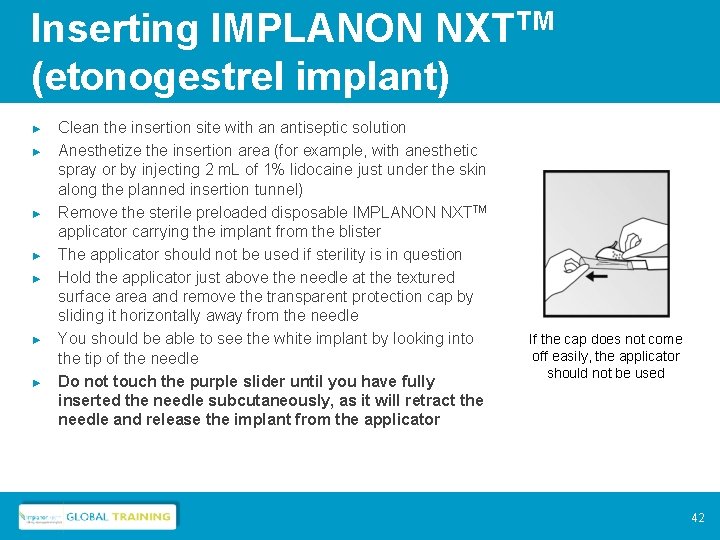
Inserting IMPLANON NXTTM (etonogestrel implant) ► ► ► ► Clean the insertion site with an antiseptic solution Anesthetize the insertion area (for example, with anesthetic spray or by injecting 2 m. L of 1% lidocaine just under the skin along the planned insertion tunnel) Remove the sterile preloaded disposable IMPLANON NXTTM applicator carrying the implant from the blister The applicator should not be used if sterility is in question Hold the applicator just above the needle at the textured surface area and remove the transparent protection cap by sliding it horizontally away from the needle You should be able to see the white implant by looking into the tip of the needle Do not touch the purple slider until you have fully inserted the needle subcutaneously, as it will retract the needle and release the implant from the applicator If the cap does not come off easily, the applicator should not be used 42
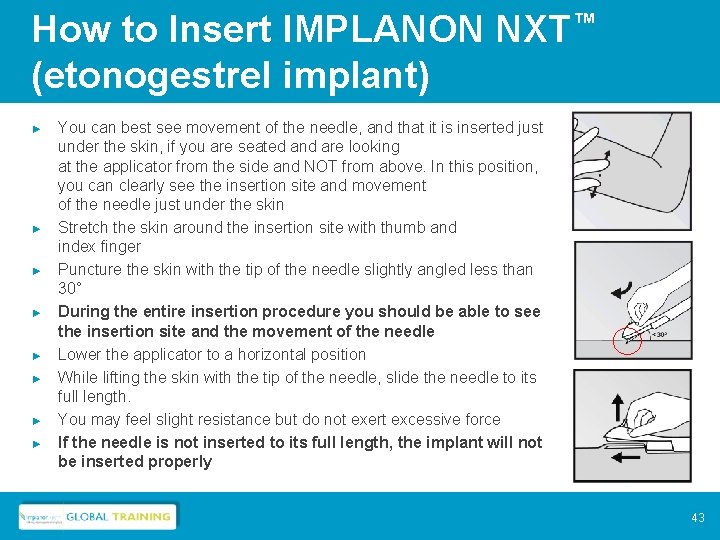
How to Insert IMPLANON NXT™ (etonogestrel implant) ► ► ► ► You can best see movement of the needle, and that it is inserted just under the skin, if you are seated and are looking at the applicator from the side and NOT from above. In this position, you can clearly see the insertion site and movement of the needle just under the skin Stretch the skin around the insertion site with thumb and index finger Puncture the skin with the tip of the needle slightly angled less than 30° During the entire insertion procedure you should be able to see the insertion site and the movement of the needle Lower the applicator to a horizontal position While lifting the skin with the tip of the needle, slide the needle to its full length. You may feel slight resistance but do not exert excessive force If the needle is not inserted to its full length, the implant will not be inserted properly 43
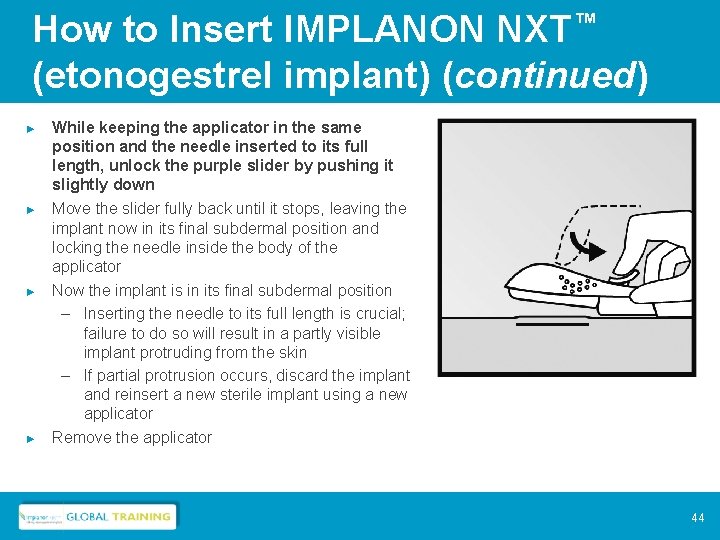
How to Insert IMPLANON NXT™ (etonogestrel implant) (continued) ► While keeping the applicator in the same position and the needle inserted to its full length, unlock the purple slider by pushing it slightly down ► Move the slider fully back until it stops, leaving the implant now in its final subdermal position and locking the needle inside the body of the applicator ► Now the implant is in its final subdermal position – Inserting the needle to its full length is crucial; failure to do so will result in a partly visible implant protruding from the skin – If partial protrusion occurs, discard the implant and reinsert a new sterile implant using a new applicator ► Remove the applicator 44
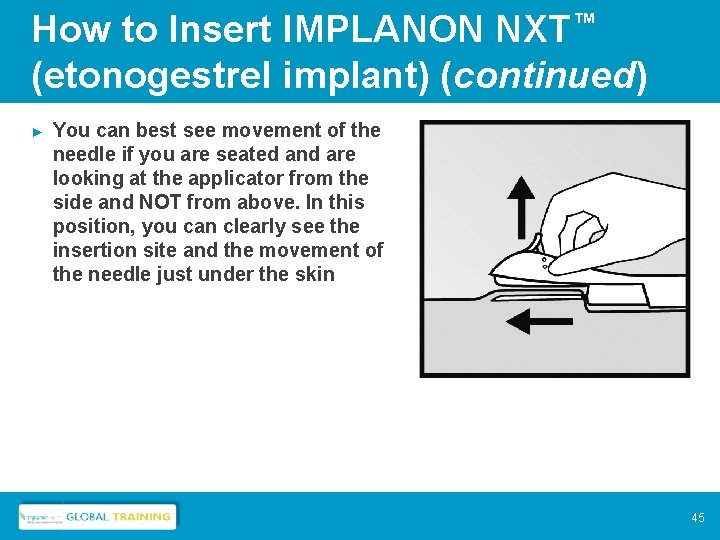
How to Insert IMPLANON NXT™ (etonogestrel implant) (continued) ► You can best see movement of the needle if you are seated and are looking at the applicator from the side and NOT from above. In this position, you can clearly see the insertion site and the movement of the needle just under the skin 45
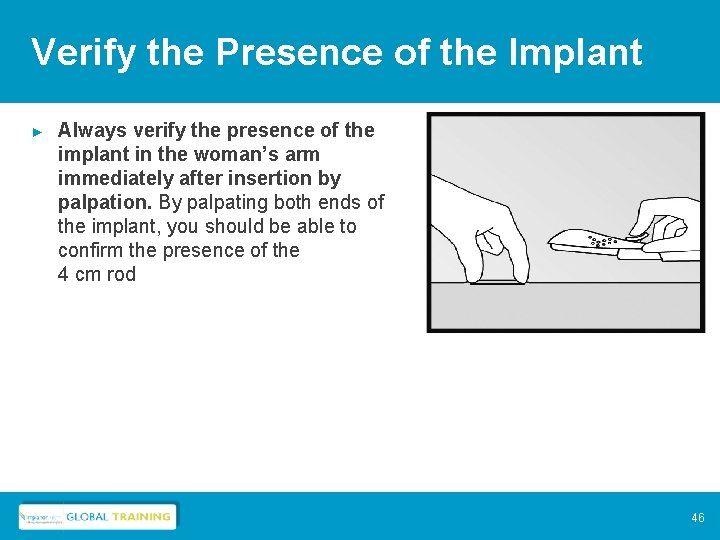
Verify the Presence of the Implant ► Always verify the presence of the implant in the woman’s arm immediately after insertion by palpation. By palpating both ends of the implant, you should be able to confirm the presence of the 4 cm rod 46
Post-insertion Steps ► Apply a small adhesive bandage over the insertion site ► Request that the woman palpate the implant ► Apply a sterile gauze with a pressure bandage to minimize bruising. The woman may remove the pressure bandage after 24 hours and the small bandage after 3 to 5 days ► Complete the User Card and give it to the woman to keep and complete the adhesive labels and affix to the woman’s medical record ► The applicator is for single use only and must be disposed of by the inserting physician in accordance with local regulations for biohazardous waste 47
If You Cannot Feel the Implant or Doubt Its Presence ► ► ► If you cannot palpate the implant or are in doubt of its presence, the implant may not have been inserted or it may have been inserted deeply Check the applicator. The needle should be fully retracted and only the purple tip of the obturator should be visible Use other methods to confirm the presence of the implant. Given the radiopaque nature of the implant, suitable methods for localization are two-dimensional X-ray and X-ray computerized tomography (CT scan). Ultrasound scanning (USS) with a high-frequency linear array transducer (10 MHz or greater) or magnetic resonance imaging (MRI) may be used. Prior to the application of X-ray, CT, USS or MRI for the localization of the implant, it is recommended to consult the local supplier of IMPLANON NXT™ (etonogestrel implant) for instructions 48
If You Cannot Feel the Implant or Doubt Its Presence (continued) ► In case these imaging methods fail, it is advised to verify the presence of the implant in the arm by measuring the etonogestrel level in a blood sample of the subject. In this case the local supplier will provide the appropriate procedure ► Until you have verified the presence of the implant, a nonhormonal contraceptive method must be used ► Once the non-palpable implant has been located, removal is recommended as soon as medically appropriate 49

Insertion Video 50

GLOBALTRAINING Questions 51

GLOBALTRAINING Localization 52
Localization ► ► ► Localization is an essential component of the removal process Always localize: – Immediately after insertion – Immediately prior to removal Localization begins with palpation Confirm presence of implant in the arm with imaging techniques (ultrasound, X-ray) as soon as possible The woman must use a backup method of contraception until the presence of IMPLANON NXT™ (etonogestrel implant) has been confirmed Once the non-palpable implant has been located, removal is recommended as soon as medically appropriate 53
Localization Before Removal ► Exploratory surgery without knowledge of the exact location of the implant is strongly discouraged ► Removal of deeply inserted implants should be conducted with caution in order to prevent damage to deeper neural or vascular structures in the arm and should be performed by health care providers familiar with the anatomy of the arm ► There have been occasional reports of migration of the implant; usually this involves minor movement relative to the original position ► An implant that has been deeply inserted or has migrated may not be palpable and therefore imaging procedures may be required for localization ► Removal may require a larger incision and more time MRI = magnetic resonance imaging; USS = ultrasound scanning. 54
Localization Before Removal (continued) ► If the implant cannot be found in the arm after comprehensive localization attempts, consider applying imaging techniques to the chest as rare events of migration to the pulmonary vasculature have been reported ► If the implant is located in the chest, endovascular or surgical procedures may be needed for removal; health care providers (HCPs) familiar with the anatomy of the chest should be consulted ► If at any time these imaging methods fail to locate the implant, etonogestrel blood level determination can be used for verification of the presence of the implant. Please contact your local supplier for further guidance ► If the implant migrates within the arm, removal may require a minor surgical procedure with a larger incision or a surgical procedure in an operating room ► Removal of deeply inserted implants should be conducted with caution in order to prevent damage to deeper neural or vascular structures in the arm and should be performed by HCPs familiar with the anatomy of the arm 55
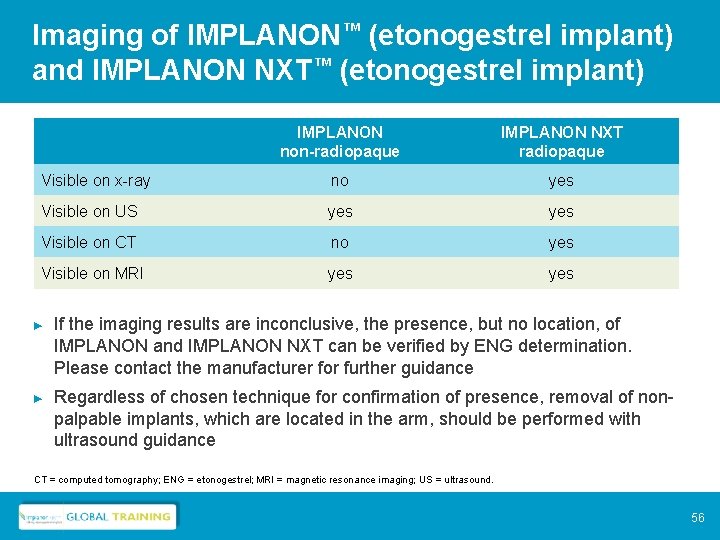
Imaging of IMPLANON™ (etonogestrel implant) and IMPLANON NXT™ (etonogestrel implant) IMPLANON non-radiopaque IMPLANON NXT radiopaque Visible on x-ray no yes Visible on US yes Visible on CT no yes Visible on MRI yes ► If the imaging results are inconclusive, the presence, but no location, of IMPLANON and IMPLANON NXT can be verified by ENG determination. Please contact the manufacturer for further guidance ► Regardless of chosen technique for confirmation of presence, removal of nonpalpable implants, which are located in the arm, should be performed with ultrasound guidance CT = computed tomography; ENG = etonogestrel; MRI = magnetic resonance imaging; US = ultrasound. 56
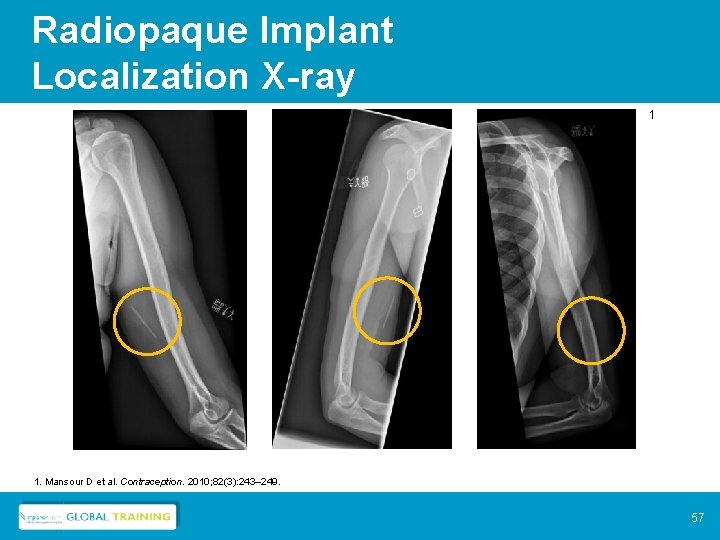
Radiopaque Implant Localization X-ray 1 1. Mansour D et al. Contraception. 2010; 82(3): 243– 249. 57
Ultrasound Localization 1, 2 ► ► Ultrasound – Should be performed by a health care provider who is familiar with implant localization procedures and with US equipment: • With a linear array transducer • With a frequency of 10 MHz or greater – Set US focus superficial (increases visibility of shadow) and switch off image enhancing software – With correct technique and transducer: implants can be located – Ideally perform removal shortly after/during localization to increase accuracy of removal Ultrasound characteristics – Sharp acoustic shadow below the implant in the transverse position – Implant is a small echogenic spot (2 mm) when viewed in transverse position US = ultrasound. 1. Shulman LP et al. Contraception. 2006; 73(4): 325– 330. 2. Walling M. J Fam Plann Reprod Health Care. 2005; 31(4): 320– 321. 58
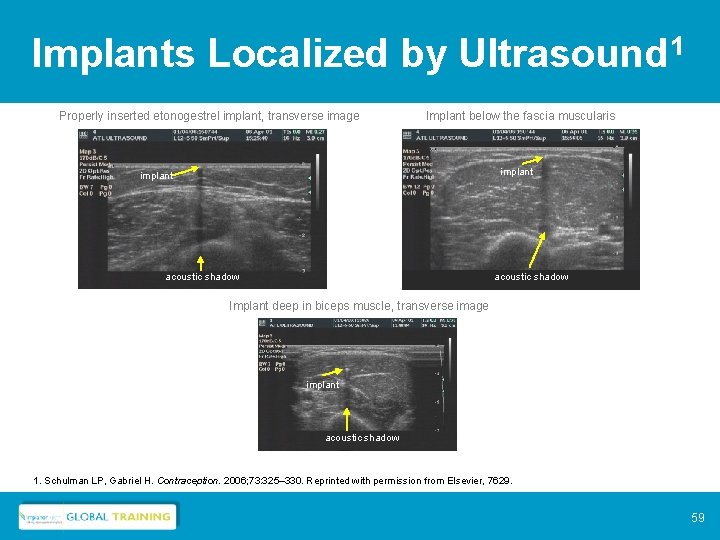
Implants Localized by Ultrasound 1 Properly inserted etonogestrel implant, transverse image Implant below the fascia muscularis implant acoustic shadow Implant deep in biceps muscle, transverse image implant acoustic shadow 1. Schulman LP, Gabriel H. Contraception. 2006; 73: 325– 330. Reprinted with permission from Elsevier, 7629. 59
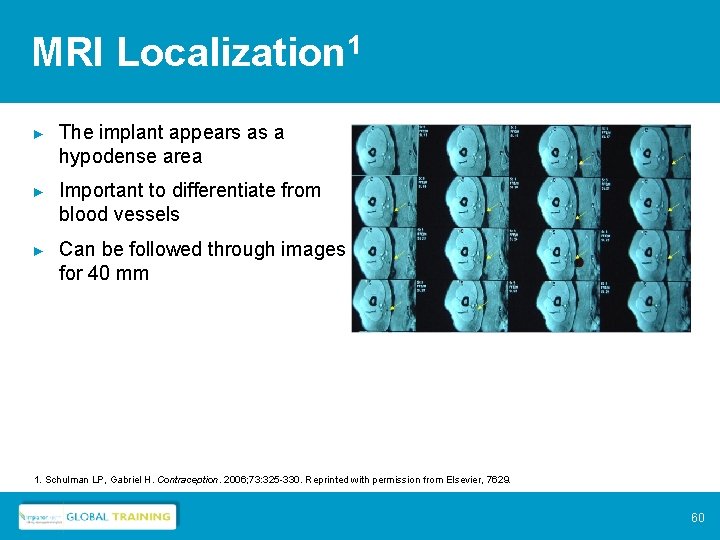
MRI Localization 1 ► The implant appears as a hypodense area ► Important to differentiate from blood vessels ► Can be followed through images for 40 mm 1. Schulman LP, Gabriel H. Contraception. 2006; 73: 325 -330. Reprinted with permission from Elsevier, 7629. 60
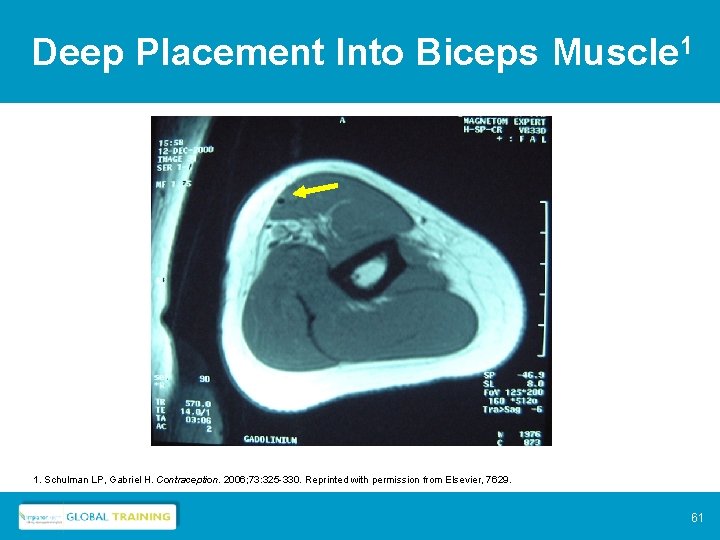
Deep Placement Into Biceps Muscle 1 1. Schulman LP, Gabriel H. Contraception. 2006; 73: 325 -330. Reprinted with permission from Elsevier, 7629. 61
ENG Assay 1 ► Serum etonogestrel levels – Can only indicate presence, but never to confirm location – Obtain when unable to localize by palpation and imaging techniques – The woman should not be using other contraceptive hormones to avoid cross reactivity – Assay can only be performed by approved laboratories – Contact manufacturer for assistance in submitting the sample ENG = etonogestrel. 1. Schulman LP, Gabriel H. Contraception. 2006; 73: 325 -330. Reprinted with permission from Elsevier, 7629. 62

GLOBALTRAINING Questions 63

GLOBALTRAINING Removal and Reinsertion 64
Removal ► Indications for removal: – Woman’s request – Medical indication – At the end of the 3 years of use ► Removal of the implant should only be performed under aseptic conditions by a health care provider who is familiar with the removal technique. ► Prior to removal, carefully read the full instructions for removal in the regulatory approved Product Information ► After the removal of the implant, immediate insertion of another implant will result in continued contraceptive protection. If the woman does not wish to continue using IMPLANON NXT™ (etonogestrel implant), but wants to continue preventing pregnancy, another contraceptive method should be recommended. 65
Removal (continued) ► Counsel women about removal ► Determine whether the woman has IMPLANON™ (etonogestrel implant) or IMPLANON NXT™ (etonogestrel implant) ► Exploratory surgery without knowledge of the exact location of the implant is strongly discouraged ► Removal of deeply inserted implants should be conducted with caution in order to prevent damage to deeper neural or vascular structures in the arm and should be performed by health care providers familiar with the anatomy of the arm ► If the implant cannot be removed, please contact your local supplier for further guidance 66
Removal (continued) ► Possible situations complicating localization and/or removal: – Formation of fibrosis – Deep insertion – Implant not palpable – Broken or damaged implant – Implant not present – Migration ► Only start removal procedure if location of implant is unambiguously confirmed ► In case of broken or damaged implant, remove all pieces and contact manufacturer ► Consider referral to experienced colleague in case of difficult removal 67
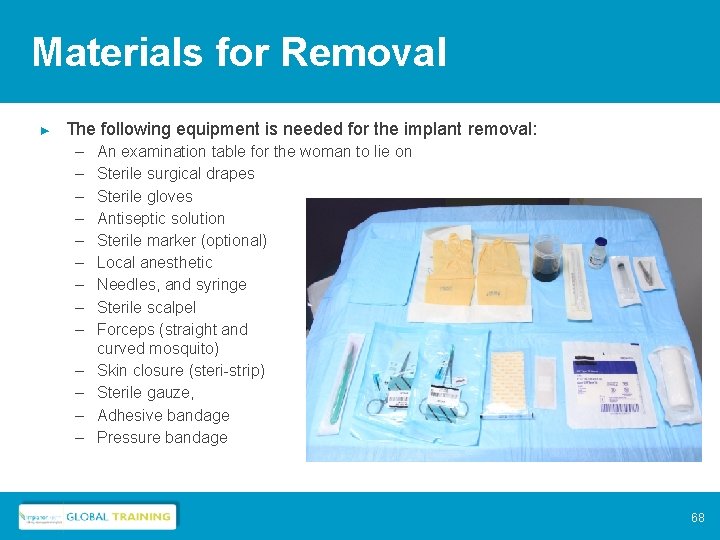
Materials for Removal ► The following equipment is needed for the implant removal: – – – – An examination table for the woman to lie on Sterile surgical drapes Sterile gloves Antiseptic solution Sterile marker (optional) Local anesthetic Needles, and syringe Sterile scalpel Forceps (straight and curved mosquito) Skin closure (steri-strip) Sterile gauze, Adhesive bandage Pressure bandage 68
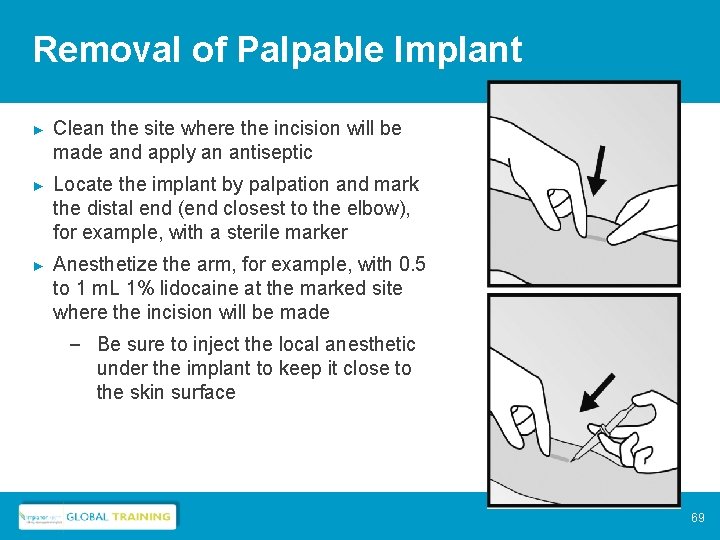
Removal of Palpable Implant ► Clean the site where the incision will be made and apply an antiseptic ► Locate the implant by palpation and mark the distal end (end closest to the elbow), for example, with a sterile marker ► Anesthetize the arm, for example, with 0. 5 to 1 m. L 1% lidocaine at the marked site where the incision will be made – Be sure to inject the local anesthetic under the implant to keep it close to the skin surface 69
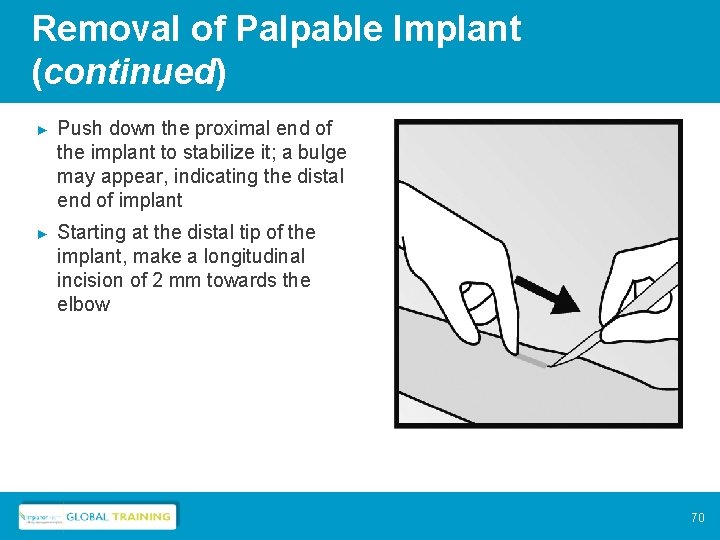
Removal of Palpable Implant (continued) ► Push down the proximal end of the implant to stabilize it; a bulge may appear, indicating the distal end of implant ► Starting at the distal tip of the implant, make a longitudinal incision of 2 mm towards the elbow 70
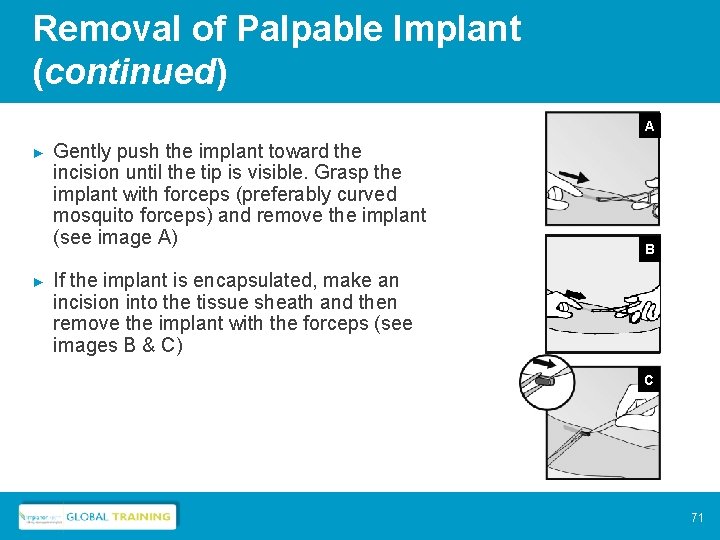
Removal of Palpable Implant (continued) A ► ► Gently push the implant toward the incision until the tip is visible. Grasp the implant with forceps (preferably curved mosquito forceps) and remove the implant (see image A) B If the implant is encapsulated, make an incision into the tissue sheath and then remove the implant with the forceps (see images B & C) C 71
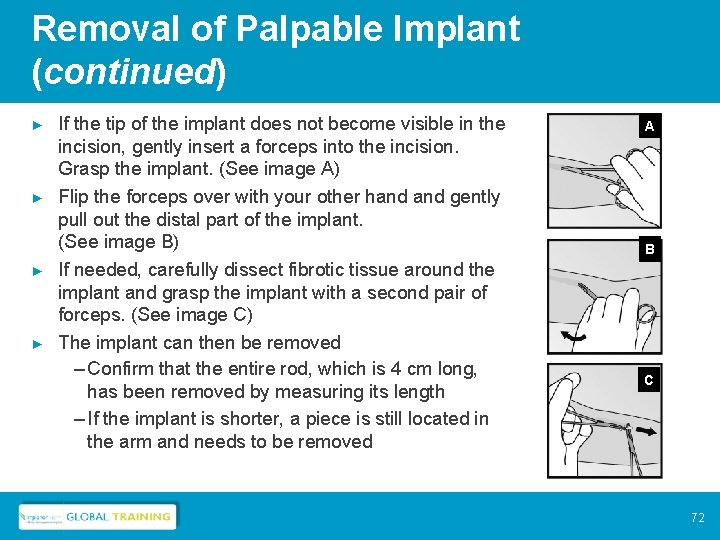
Removal of Palpable Implant (continued) ► ► If the tip of the implant does not become visible in the incision, gently insert a forceps into the incision. Grasp the implant. (See image A) Flip the forceps over with your other hand gently pull out the distal part of the implant. (See image B) If needed, carefully dissect fibrotic tissue around the implant and grasp the implant with a second pair of forceps. (See image C) The implant can then be removed – Confirm that the entire rod, which is 4 cm long, has been removed by measuring its length – If the implant is shorter, a piece is still located in the arm and needs to be removed A B C 72

Removal Video 73
Post-removal Steps ► After removing the implant, close the incision with a steri-strip and apply an adhesive bandage ► Apply sterile gauze with a pressure bandage to minimize bruising. The woman may remove the pressure bandage after 24 hours and the small bandage after 3 to 5 days ► If the woman does not wish to become pregnant, a method of contraception should be started immediately ► If the woman would like to continue using IMPLANON NXT™ (etonogestrel implant), a new implant may be inserted immediately after the old implant is removed using the same incision ► The implant must be disposed of by the removing health care professional in accordance with local legislation for biohazardous waste 74
Removal of Non-palpable Implant ► ► An implant that has been deeply inserted or has migrated may not be palpable and therefore imaging procedures may be required for localization Once the implant has been localized in the arm, the implant should be removed according to the instructions for removal of a palpable implant and the use of ultrasound guidance during the removal should be considered If the implant migrates within the arm, removal may require a minor surgical procedure with a larger incision or a surgical procedure in an operating room Removal of deeply inserted implants should be conducted with caution in order to prevent damage to deeper neural or vascular structures in the arm and should be performed by health care providers familiar with the anatomy of the arm 75
Removal of Non-palpable Implant (continued) ► If the implant cannot be found in the arm after comprehensive localization attempts, consider applying imaging techniques to the chest as rare cases of migration to the pulmonary vasculature have been reported ► If the implant is located in the chest, endovascular or surgical procedures may be needed for removal; health care providers familiar with the anatomy of the chest should be consulted ► If at any time these imaging methods fail to locate the implant, etonogestrel blood level determination can be used for verification of the presence of the implant. Please contact your local supplier for further guidance 76

GLOBALTRAINING Questions 77

GLOBALTRAINING Reinsertion 78
How to Replace IMPLANON NXT™ (etonogestrel implant) ► ► ► Replacement of IMPLANON NXT should be performed under aseptic conditions, and strictly in accordance with the instructions as provided in the regulatory approved Product Information and by a health care provider authorized to perform the removal procedure Immediate replacement can be done after removal of the previous implant as described in “How to remove IMPLANON™ (etonogestrel implant) in the regulatory approved Prescribing Information” The procedure to replace IMPLANON NXT is similar to the insertion procedure “How to insert IMPLANON NXT” The new implant may be inserted in the same arm, and through the same incision from which the previous implant was removed If implant is replaced immediately, no backup method of contraception is necessary 79
How to Replace IMPLANON NXT™ (etonogestrel implant) (continued) ► ► ► If the same incision is being used, the instructions below must also be taken into account The small incision made during the removal procedure can be used as the entrance for the needle of the new applicator Anesthetize the insertion site along the “insertion canal” with 2 m. L lidocaine (1%) applied just under the skin commencing at the removal incision along the “insertion canal” Inserting the needle to its full length is crucial; failure to do so will result in a partly visible implant in the removal incision in the skin If partial protrusion of the implant occurs, discard the implant and reinsert a new sterile implant using a new applicator 80
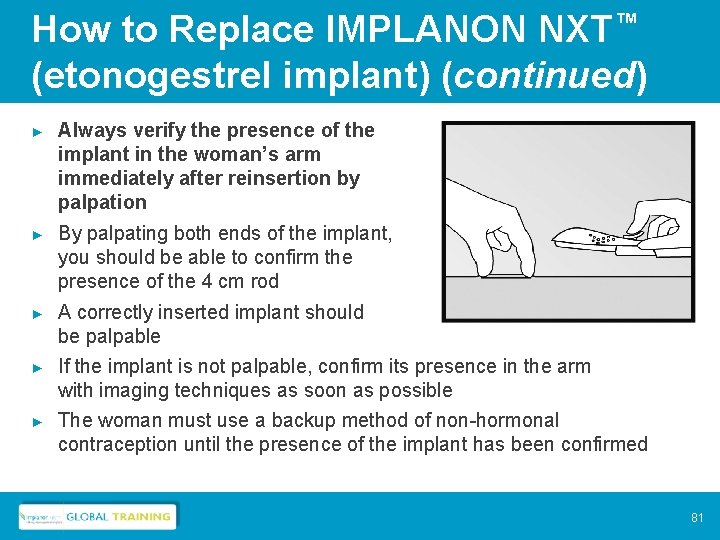
How to Replace IMPLANON NXT™ (etonogestrel implant) (continued) ► Always verify the presence of the implant in the woman’s arm immediately after reinsertion by palpation ► By palpating both ends of the implant, you should be able to confirm the presence of the 4 cm rod ► A correctly inserted implant should be palpable If the implant is not palpable, confirm its presence in the arm with imaging techniques as soon as possible The woman must use a backup method of non-hormonal contraception until the presence of the implant has been confirmed ► ► 81
How to Replace IMPLANON NXT™ (etonogestrel implant) (continued) ► After replacing the implant, close the incision with a steri-strip and apply an adhesive bandage ► Apply sterile gauze with a pressure bandage to minimize bruising. The woman may remove the pressure bandage after 24 hours and the small bandage after 3 to 5 days ► Complete the User Card and give it to the woman to keep. Also, complete the adhesive labels and affix it to the woman's medical record ► The used implant and the applicator must be disposed of by the removing health care professional in accordance with local legislation 82
Summary ► ► ► ► Should be removed after 3 years Subdermal, long-acting hormonal contraceptive Radiopaque More than 99% effective in the population of users Does not require daily, weekly, or monthly administration Rapid return of normal menstrual cycle after removal The most common side effect associated with discontinuation is irregular bleeding Counseling of women is very important 83

GLOBALTRAINING Questions 84

GLOBALTRAINING Thank You Copyright © 2017 Merck Sharp & Dohme B. V. , a subsidiary of Merck & Co. , Inc. , Kenilworth, NJ, USA. All rights reserved. WOMN-1134826 -0019 01/17 85
- Slides: 85