
Globalization of water Derk Kuiper Executive Director Water
Globalization of water Derk Kuiper Executive Director Water Footprint Network www. waterfootprint. org
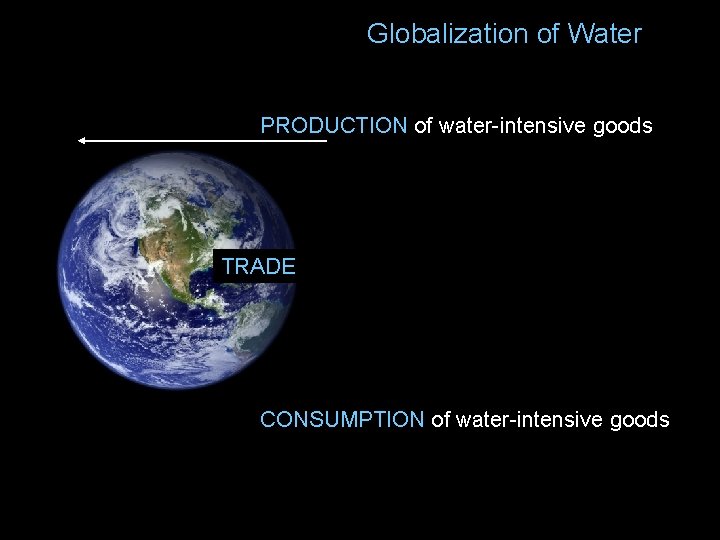
Globalization of Water PRODUCTION of water-intensive goods TRADE CONSUMPTION of water-intensive goods
Globalization of Water Consumers indirectly contribute to water depletion and pollution elsewhere, without covering the cost. Water-abundant regions have other opportunities than water-scarce regions. Several nations become increasingly dependent on external water resources. Water is a geopolitical resource. There is a growing need to harmonize national water and trade policies.
Overview Presentation 1. Virtual water and water footprint 2. From concept to practice 3. What is next?
1 Virtual water and water footprint
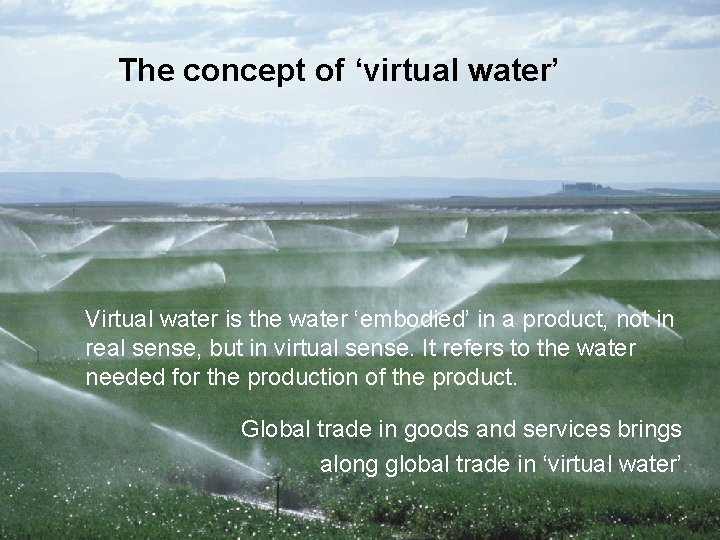
The concept of ‘virtual water’ Virtual water is the water ‘embodied’ in a product, not in real sense, but in virtual sense. It refers to the water needed for the production of the product. Global trade in goods and services brings along global trade in ‘virtual water’
► The Water Footprint of a product is the same as its ‘virtual water content’, but includes a temporal and spatial dimension: when and where was the water used.
► The Water Footprint of a product is the volume of fresh water used to produce the product, summed over the various steps of the production chain.
► The Water Footprint consists of three components: BLUE wf + GREEN wf + GREY wf
► Assessing the Water Footprint of a product requires analysis of the full production chain.
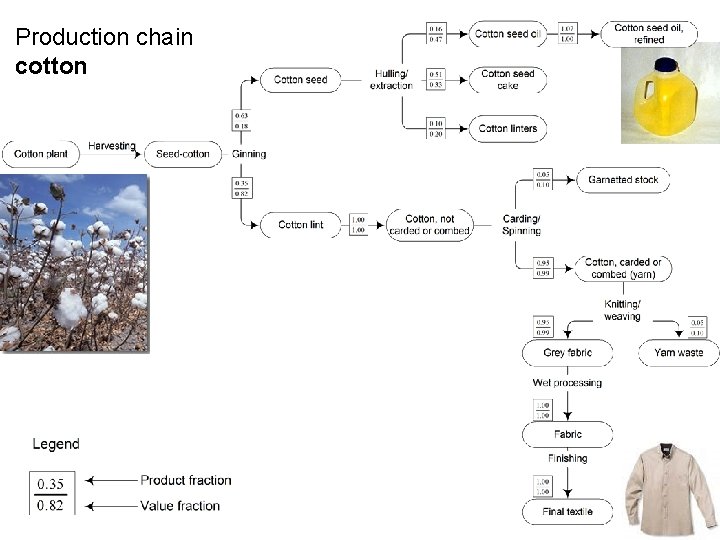
Production chain cotton
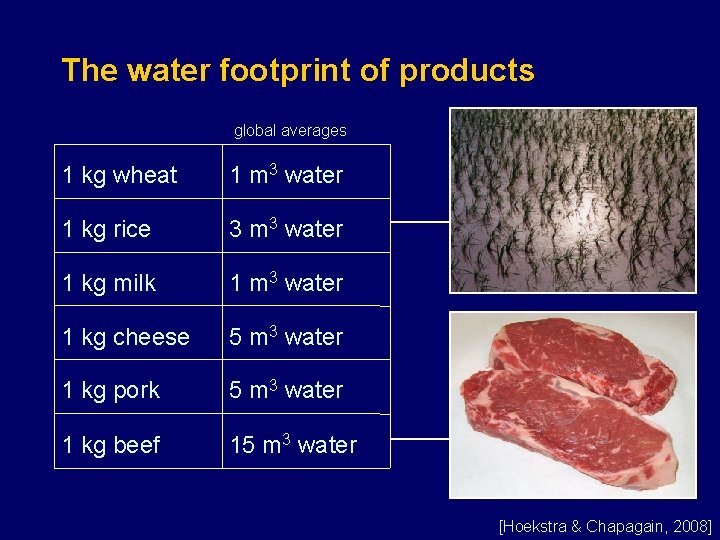
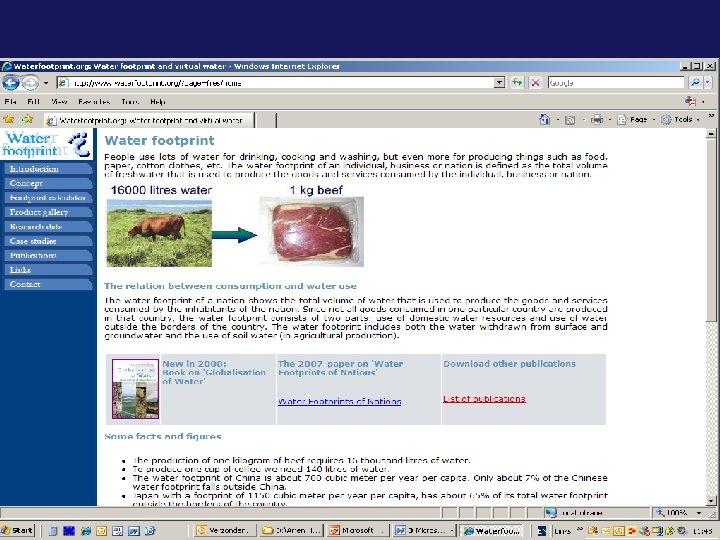
The water footprint of products global averages 1 kg wheat 1 m 3 water 1 kg rice 3 m 3 water 1 kg milk 1 m 3 water 1 kg cheese 5 m 3 water 1 kg pork 5 m 3 water 1 kg beef 15 m 3 water [Hoekstra & Chapagain, 2008]
► The Water Footprint is spatially explicit. Example for cotton.
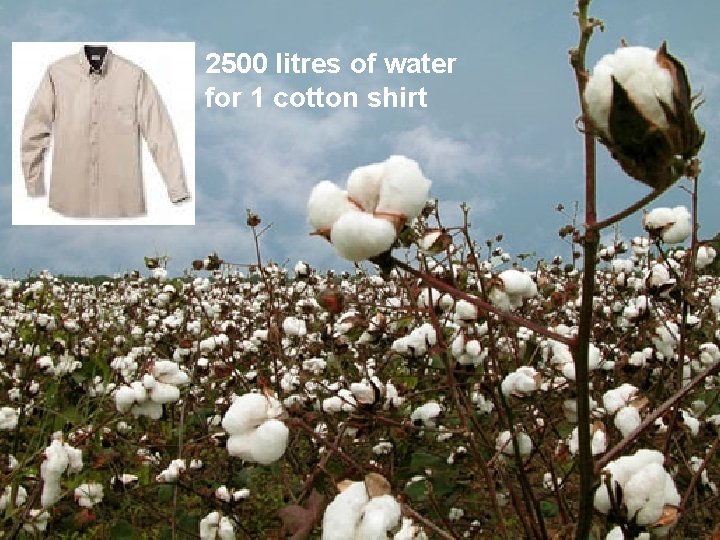
2500 litres of water for 1 cotton shirt
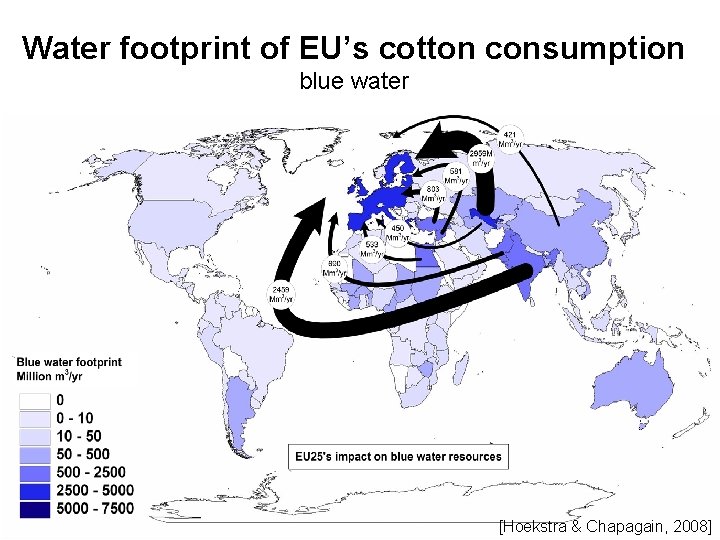
Water footprint of EU’s cotton consumption blue water [Hoekstra & Chapagain, 2008]
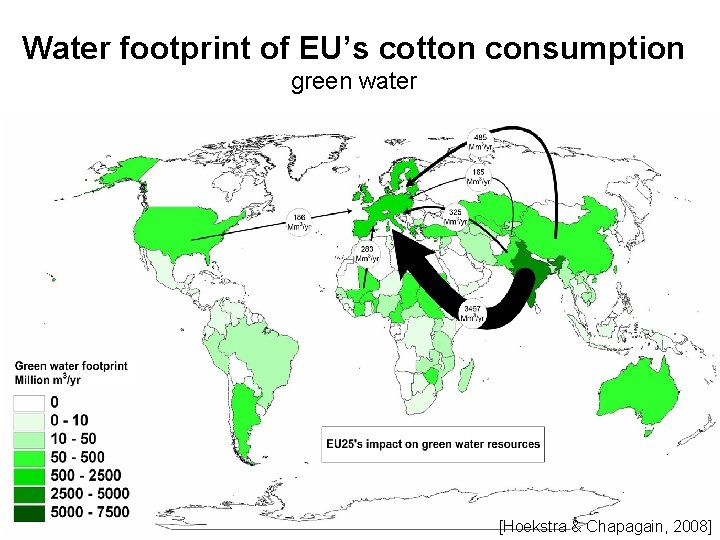
Water footprint of EU’s cotton consumption green water [Hoekstra & Chapagain, 2008]
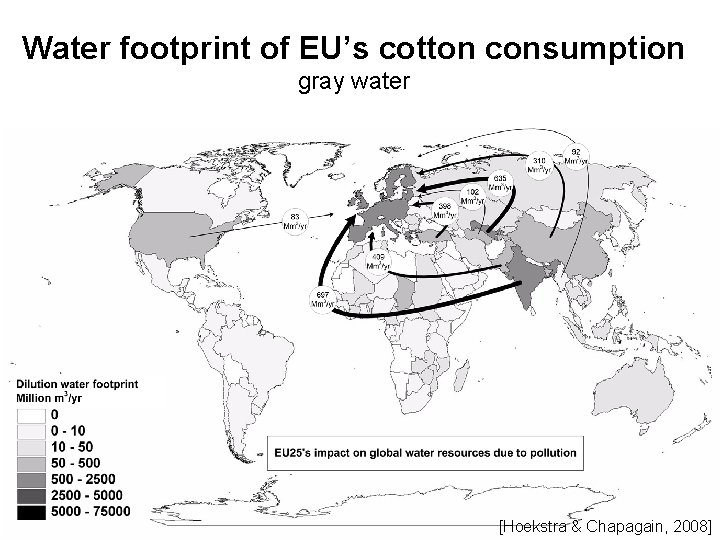
Water footprint of EU’s cotton consumption gray water [Hoekstra & Chapagain, 2008]
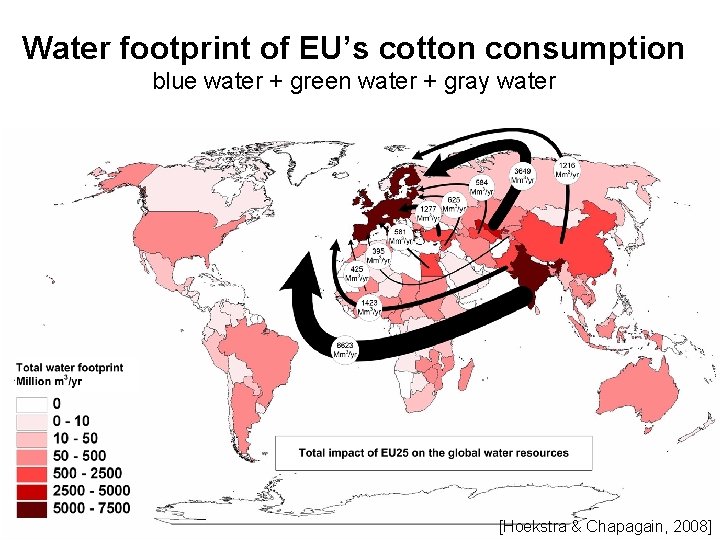
Water footprint of EU’s cotton consumption blue water + green water + gray water [Hoekstra & Chapagain, 2008]
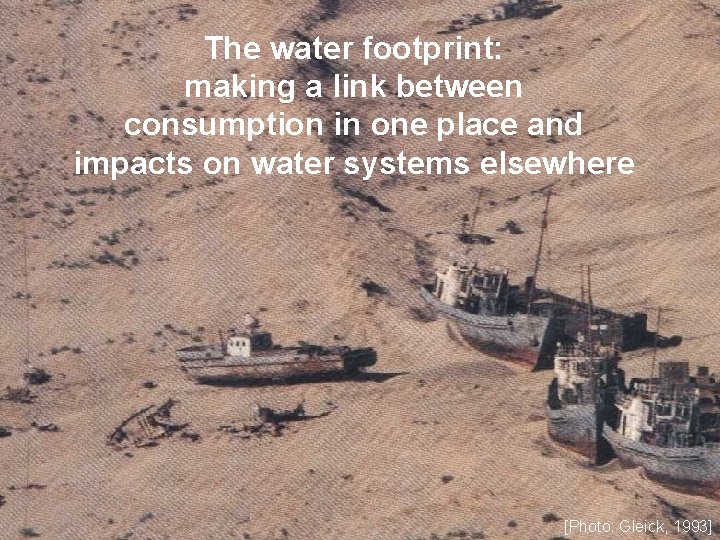
The water footprint: making a link between consumption in one place and impacts on water systems elsewhere [Photo: Gleick, 1993]
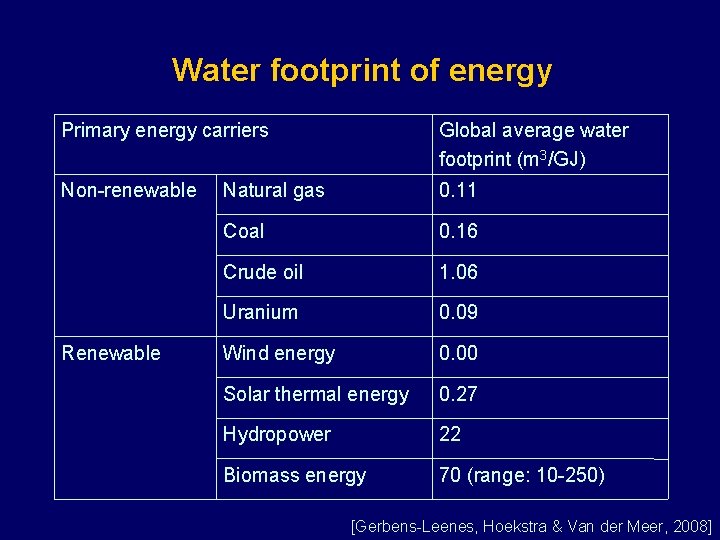
Water footprint of energy Primary energy carriers Global average water footprint (m 3/GJ) Non-renewable Natural gas 0. 11 Coal 0. 16 Crude oil 1. 06 Uranium 0. 09 Wind energy 0. 00 Solar thermal energy 0. 27 Hydropower 22 Biomass energy 70 (range: 10 -250) Renewable [Gerbens-Leenes, Hoekstra & Van der Meer, 2008]
► The Water Footprint of a nation is the total amount of water that is used to produce the goods and services consumed by the inhabitants of the nation.
► Consumption is partly related to domestic resource use, and partly to resource use outside the country borders Internal & External Water Footprint.
► National Water Footprint = national water use + virtual water import – virtual water export
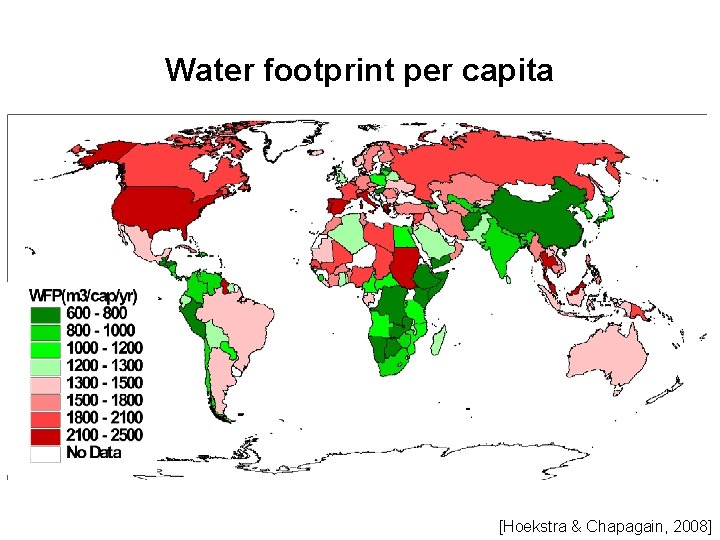
Water footprint per capita [Hoekstra & Chapagain, 2008]
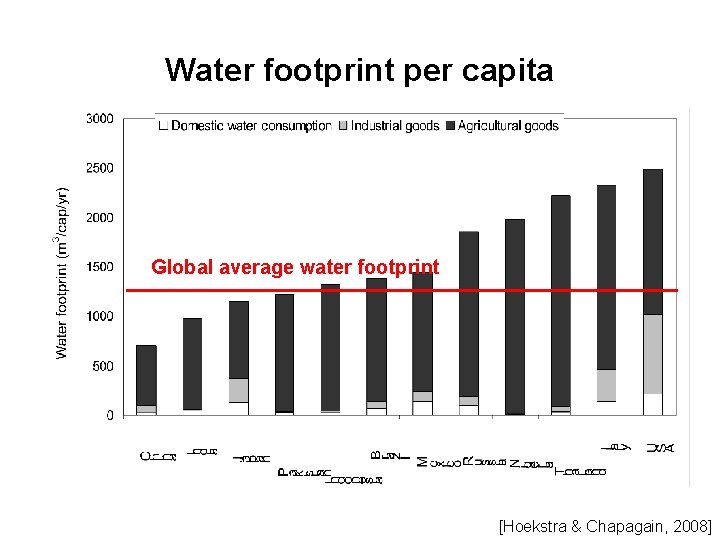
Water footprint per capita Global average water footprint [Hoekstra & Chapagain, 2008]
below a threshold of 1500 m 3/cap/yr, the demand for cereal import increases exponentially with decreasing water resources [Yang et al. , 2003]
► Country Case Studies China, Netherlands
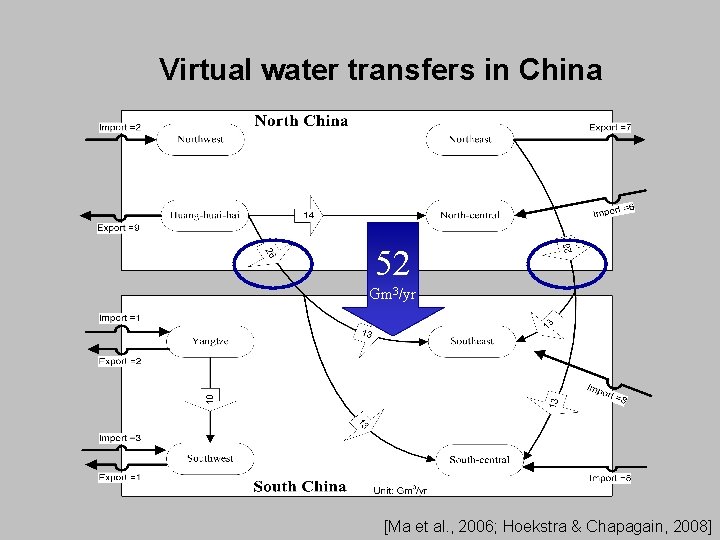
Virtual water transfers in China 52 Gm 3/yr [Ma et al. , 2006; Hoekstra & Chapagain, 2008]
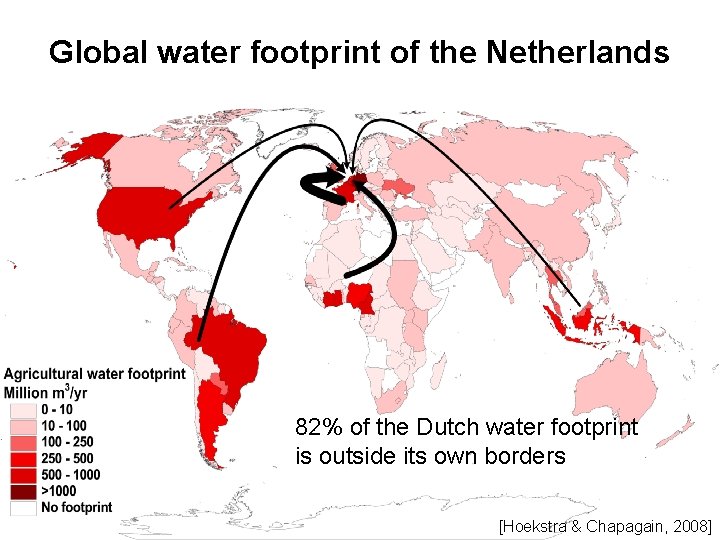
Global water footprint of the Netherlands 82% of the Dutch water footprint is outside its own borders [Hoekstra & Chapagain, 2008]
Environmental Water Scarcity Index [Smakhtin, Revenga & Doll, 2004]
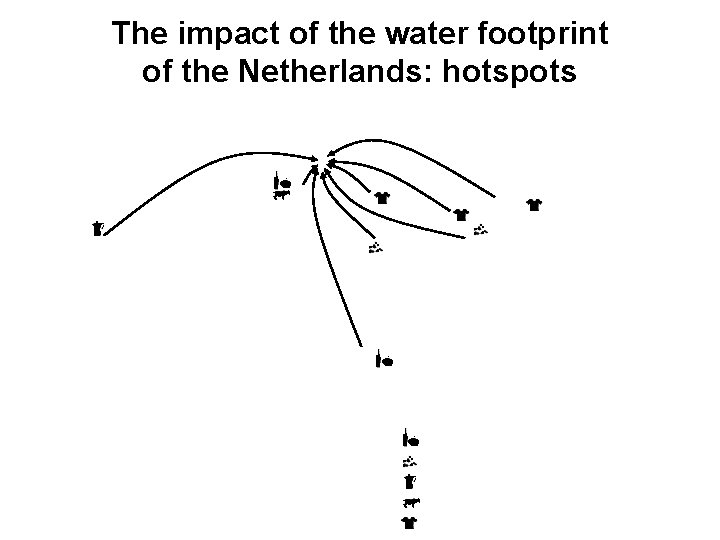
The impact of the water footprint of the Netherlands: hotspots
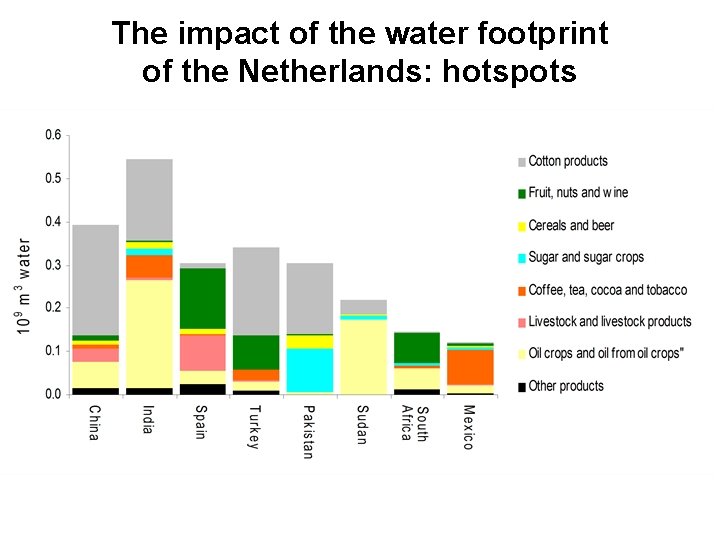
The impact of the water footprint of the Netherlands: hotspots
► The Water Footprint of a business is the total volume of freshwater that is used directly and indirectly to run and support a business.
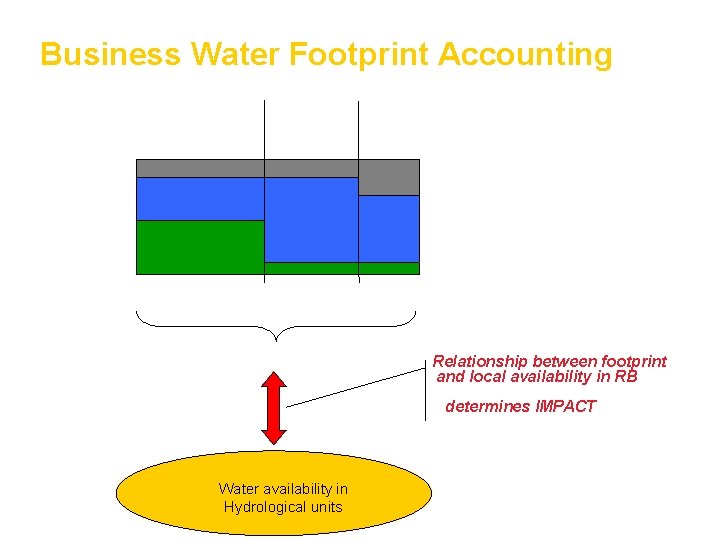
Business Water Footprint Accounting Supply chain Operational End use grey blue green Business Water Footprint Relationship between footprint and local availability in RB determines IMPACT Water availability in Hydrological units
3 What is next?
Next. . . Engage stakeholders to apply WF accounting, impacts assessment and impact mitigation Establish Standardised methodology for WF accounting, impact assessment and responses Building strong partnerships between the Water Footprint Network, academia, business, government, NGO and water umbrella bodies Further the research agenda on WF accounting impacts and global to local (policy) responses like offsetting, public policy, water footprint offsetting, water credit markets etc
Partner with us. . . www. waterfootprint. org More pilots on WF accounting, impacts and impact mitigation Standardised methodology for WF accounting, impact assessment and responses Stimulating partnerships between Water Footprint Network and others like CEO Water mandate, ISO others [Hoekstra, 2008]
- Slides: 37