
Globalization and injuries in the context of the
Globalization and injuries in the context of the Americas Dr. Mirta Roses Periago Director, Pan American Health Organization (PAHO) 9 th World Conference on Injury Prevention and Security Promotion 15 TO 18 MARCH, MERIDA, MEXICO
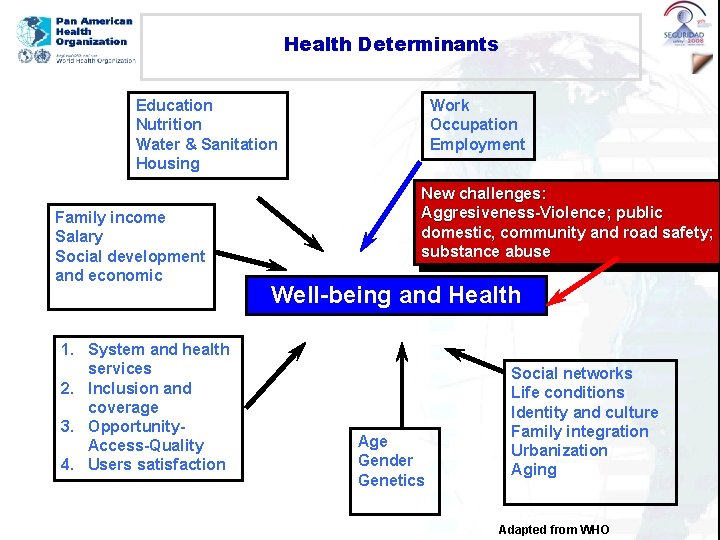
Health Determinants Education Nutrition Water & Sanitation Housing Family income Salary Social development and economic 1. System and health services 2. Inclusion and coverage 3. Opportunity. Access-Quality 4. Users satisfaction Work Occupation Employment New challenges: Aggresiveness-Violence; public domestic, community and road safety; substance abuse Well-being and Health Age Gender Genetics Social networks Life conditions Identity and culture Family integration Urbanization Aging Adapted from WHO
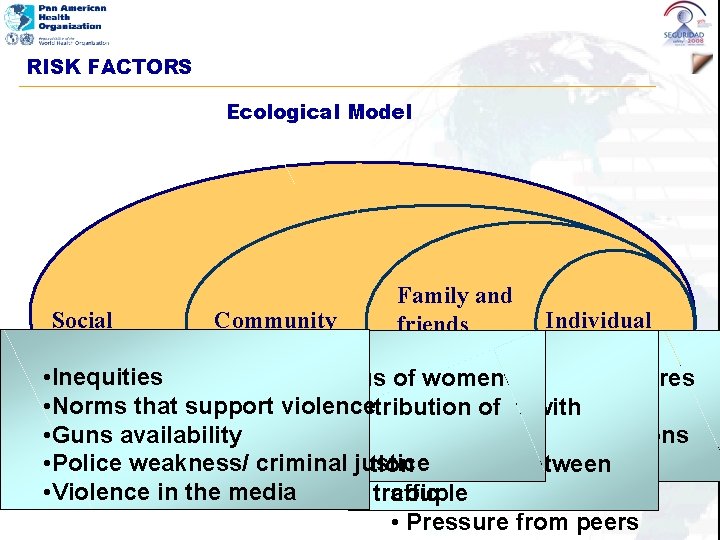
RISK FACTORS Ecological Model Family and Social Community Individual friends relationship • Inequities • Social status • of. Conflictive women • Demographic features • Norms that support violence • Unequal distribution relationship • Psychological of with and • Guns availability wealth parents personality alterations • Police weakness/ criminal justice • Social isolation • Conflicts • Abusebetween history • Violence in the • media Illegal drug traffic couple • Pressure from peers
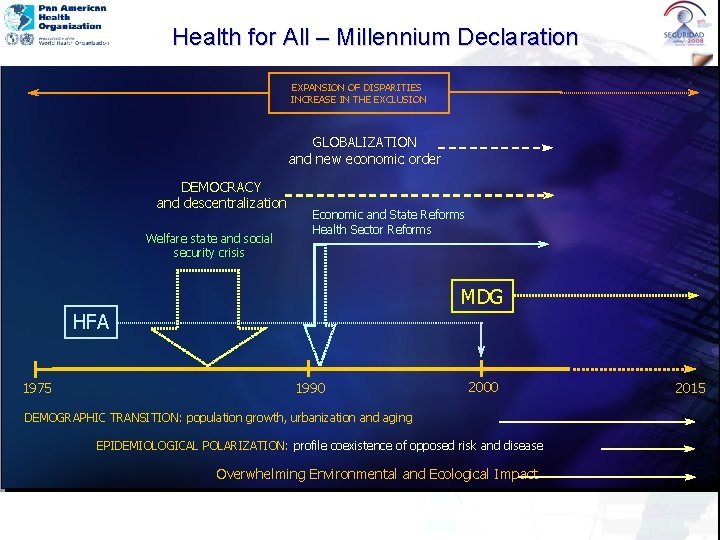
Health for All – Millennium Declaration EXPANSION OF DISPARITIES INCREASE IN THE EXCLUSION GLOBALIZATION and new economic order DEMOCRACY and descentralization Welfare state and social security crisis Economic and State Reforms Health Sector Reforms MDG HFA 1975 1990 2000 DEMOGRAPHIC TRANSITION: population growth, urbanization and aging EPIDEMIOLOGICAL POLARIZATION: profile coexistence of opposed risk and disease Overwhelming Environmental and Ecological Impact 2015
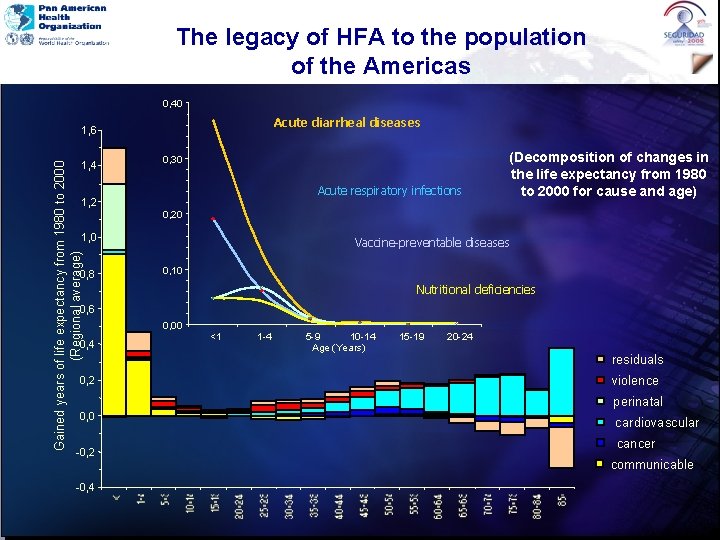
The legacy of HFA to the population of the Americas 0, 40 Acute diarrheal diseases 1, 6 Gained years of life expectancy from 1980 to 2000 (Regional average) 1, 4 0, 30 Acute respiratory infections 1, 2 0, 20 1, 0 0, 8 (Decomposition of changes in the life expectancy from 1980 to 2000 for cause and age) Vaccine-preventable diseases 0, 10 Nutritional deficiencies 0, 6 0, 4 0, 2 0, 0 -0, 2 -0, 4 0, 00 <1 1 -4 5 -9 10 -14 Age (Years) 15 -19 20 -24 residuals violence perinatal cardiovascular cancer communicable
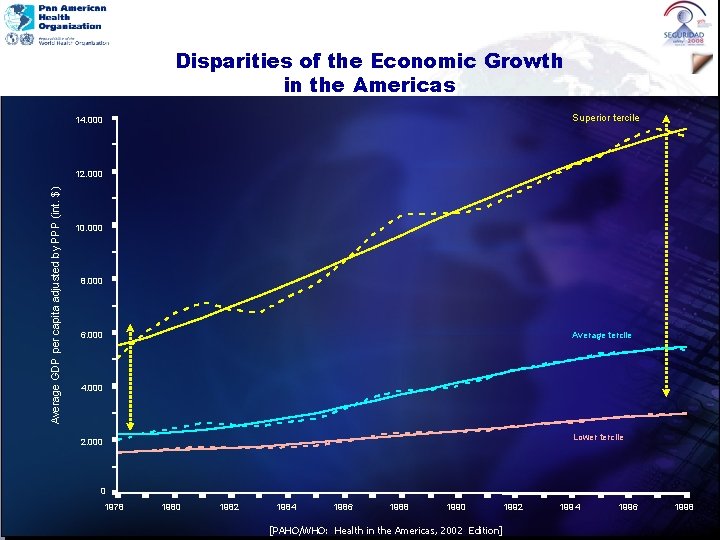
Disparities of the Economic Growth in the Americas Superior tercile 14. 000 Average GDP per capita adjusted by PPP (int. $) 12. 000 10. 000 8. 000 6. 000 Average tercile 4. 000 Lower tercile 2. 000 0 1978 1980 1982 1984 1986 1988 1990 1992 [PAHO/WHO: Health in the Americas, 2002 Edition] 1994 1996 1998
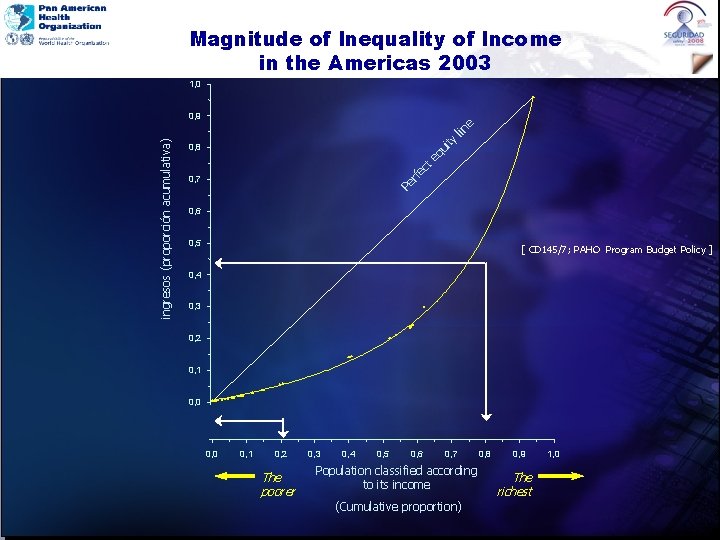
Magnitude of Inequality of Income in the Americas 2003 1, 0 ity rfe ct eq u 0, 8 0, 7 Pe ingresos (proporción acumulativa) lin e 0, 9 0, 6 0, 5 [ CD 145/7; PAHO Program Budget Policy ] 0, 4 0, 3 0, 2 0, 1 0, 0 0, 1 0, 2 The poorer 0, 3 0, 4 0, 5 0, 6 0, 7 Population classified according to its income (Cumulative proportion) 0, 8 0, 9 The richest 1, 0
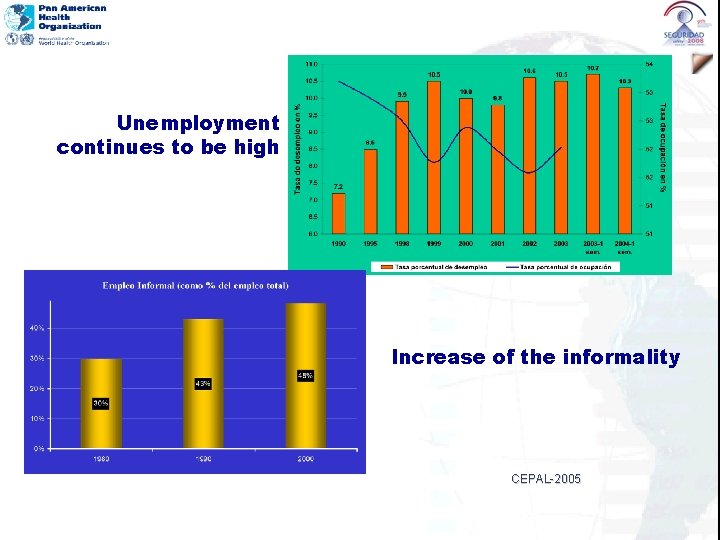
Unemployment continues to be high Increase of the informality CEPAL-2005
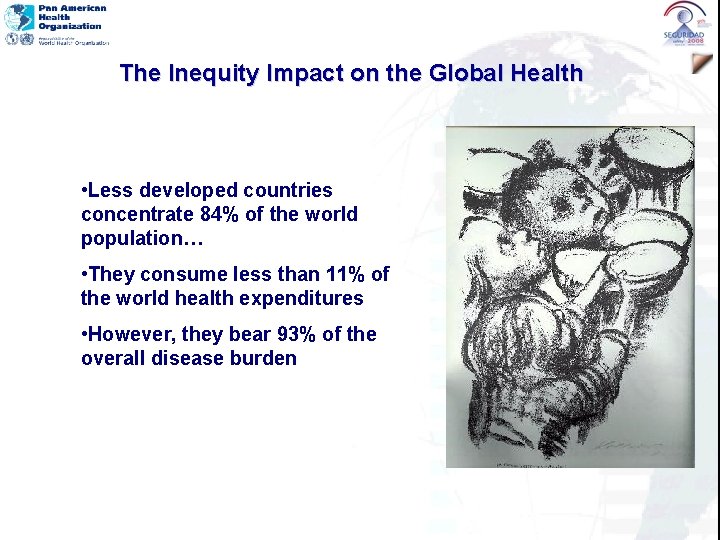
The Inequity Impact on the Global Health • Less developed countries concentrate 84% of the world population… • They consume less than 11% of the world health expenditures • However, they bear 93% of the overall disease burden
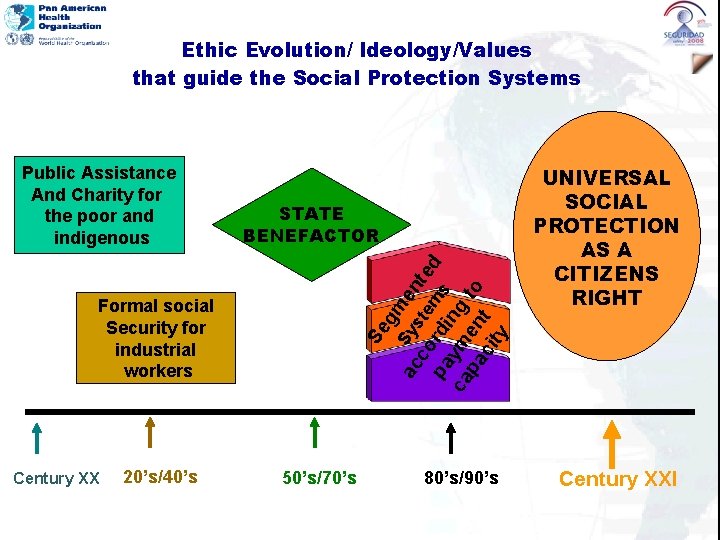
Ethic Evolution/ Ideology/Values that guide the Social Protection Systems STATE BENEFACTOR Century XX 20’s/40’s Se gm Formal social Security for industrial workers ac Sys en co te te pa rdi ms d ca ym ng pa en to ci t ty Public Assistance And Charity for the poor and indigenous 50’s/70’s 80’s/90’s UNIVERSAL SOCIAL PROTECTION AS A CITIZENS RIGHT Century XXI
Incidence of Diseases AVISAs per 100 inhabitants Group I (communicable) Group II (non communicable) Group III (accidents, violence) OMS-2005
Expected effect in crime rate according to changes in macroeconomic indicators Source: Fajnzylber P, Lederman D, Loaiza N, BM, 2001
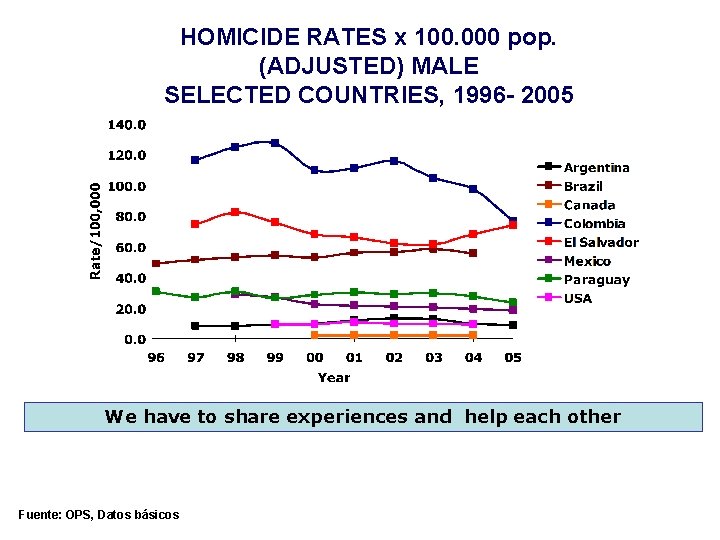
HOMICIDE RATES x 100. 000 pop. (ADJUSTED) MALE SELECTED COUNTRIES, 1996 - 2005 We have to share experiences and help each other Fuente: OPS, Datos básicos
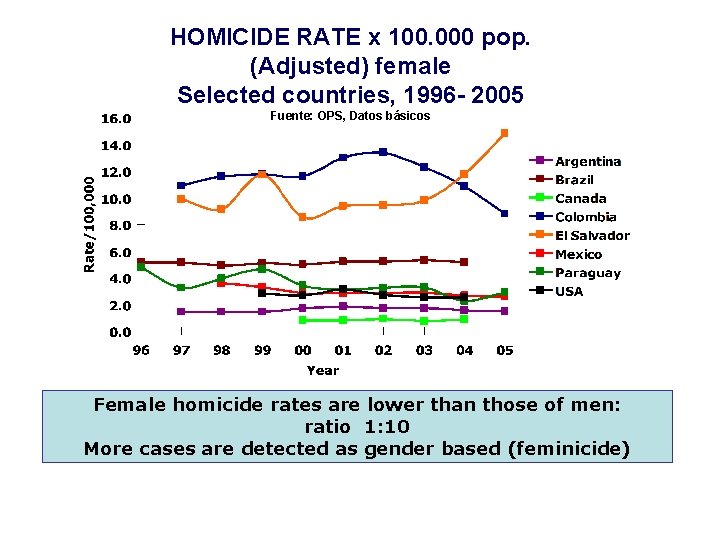
HOMICIDE RATE x 100. 000 pop. (Adjusted) female Selected countries, 1996 - 2005 Fuente: OPS, Datos básicos Female homicide rates are lower than those of men: ratio 1: 10 More cases are detected as gender based (feminicide)
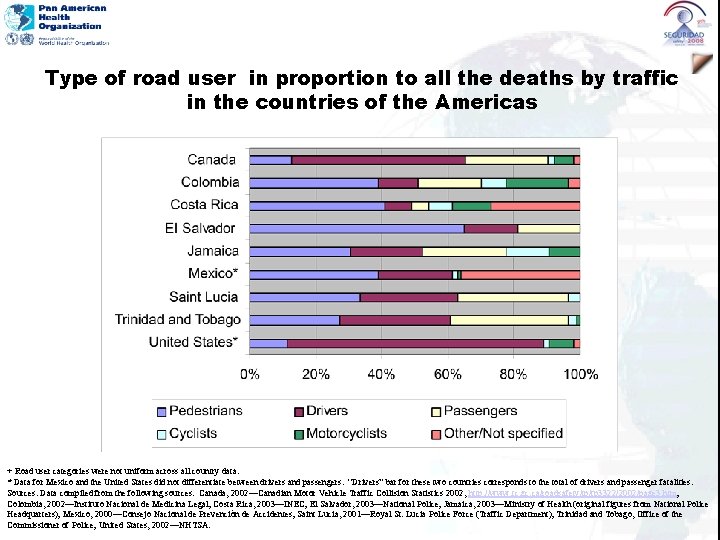
Type of road user in proportion to all the deaths by traffic in the countries of the Americas + Road user categories were not uniform across all country data. * Data for Mexico and the United States did not differentiate between drivers and passengers. “Drivers” bar for these two countries corresponds to the total of drivers and passenger fatalities. Sources: Data compiled from the following sources. Canada, 2002—Canadian Motor Vehicle Traffic Collision Statistics 2002, http: //www. tc. gc. ca/roadsafety/tp/tp 3322/2002/page 3. htm; Colombia, 2002—Instituto Nacional de Medicina Legal; Costa Rica, 2003—INEC; El Salvador, 2003—National Police; Jamaica, 2003—Ministry of Health (original figures from National Police Headquarters); Mexico, 2000—Consejo Nacional de Prevención de Accidentes; Saint Lucia, 2001—Royal St. Lucia Police Force (Traffic Department); Trinidad and Tobago, Office of the Commissioner of Police; United States, 2002—NHTSA.
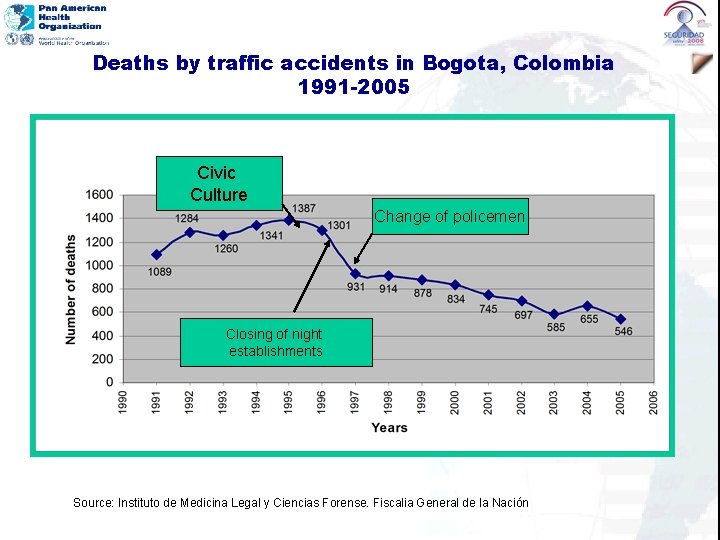
Deaths by traffic accidents in Bogota, Colombia 1991 -2005 Civic Culture Change of policemen Closing of night establishments Source: Instituto de Medicina Legal y Ciencias Forense. Fiscalia General de la Nación
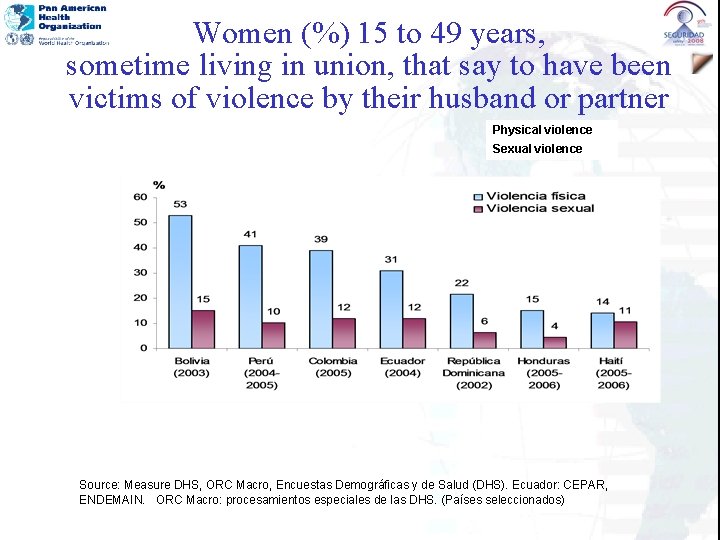
Women (%) 15 to 49 years, sometime living in union, that say to have been victims of violence by their husband or partner Physical violence Sexual violence Source: Measure DHS, ORC Macro, Encuestas Demográficas y de Salud (DHS). Ecuador: CEPAR, ENDEMAIN. ORC Macro: procesamientos especiales de las DHS. (Países seleccionados)
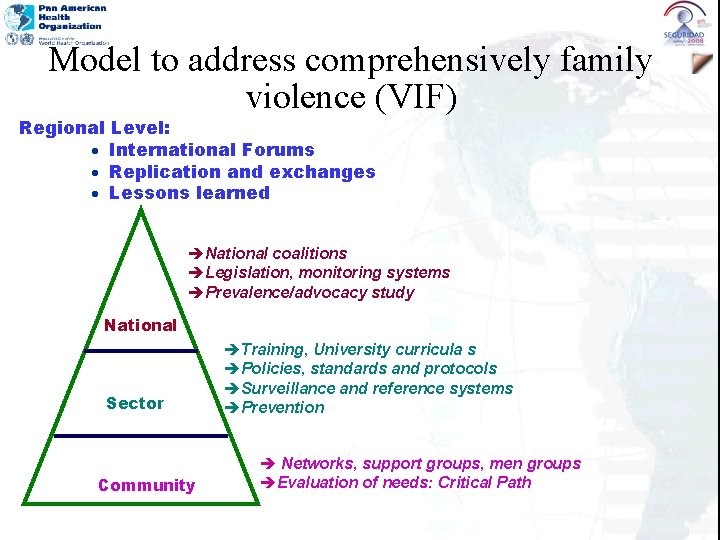
Model to address comprehensively family violence (VIF) Regional Level: · International Forums · Replication and exchanges · Lessons learned èNational coalitions èLegislation, monitoring systems èPrevalence/advocacy study National Sector Community èTraining, University curricula s èPolicies, standards and protocols èSurveillance and reference systems èPrevention è Networks, support groups, men groups èEvaluation of needs: Critical Path
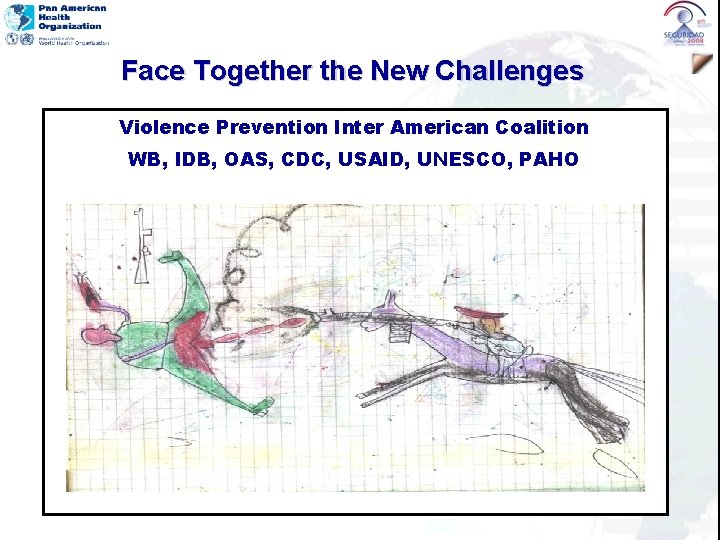
Face Together the New Challenges Violence Prevention Inter American Coalition WB, IDB, OAS, CDC, USAID, UNESCO, PAHO
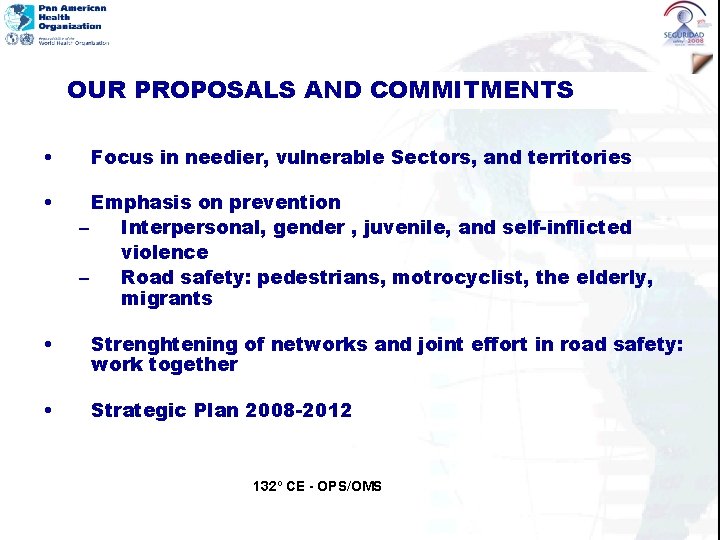
OUR PROPOSALS AND COMMITMENTS • Focus in needier, vulnerable Sectors, and territories • Emphasis on prevention – Interpersonal, gender , juvenile, and self-inflicted violence – Road safety: pedestrians, motrocyclist, the elderly, migrants • Strenghtening of networks and joint effort in road safety: work together • Strategic Plan 2008 -2012 132º CE - OPS/OMS
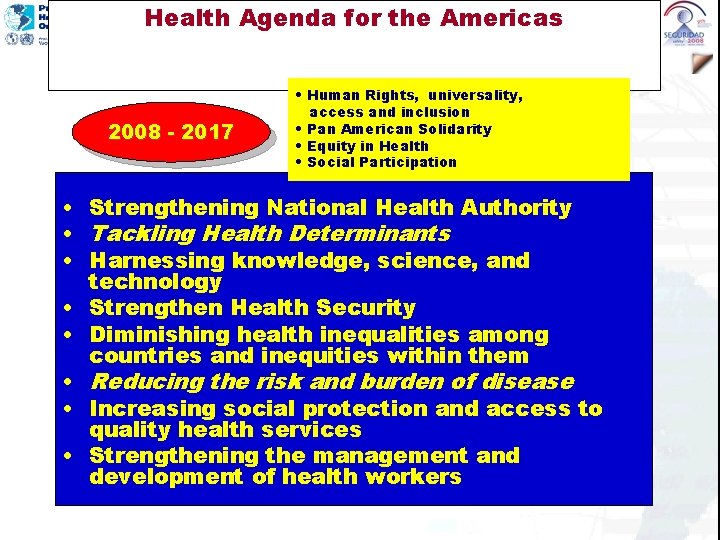
Health Agenda for the Americas 2008 - 2017 • Human Rights, universality, access and inclusion • Pan American Solidarity • Equity in Health • Social Participation • Strengthening National Health Authority • Tackling Health Determinants • Harnessing knowledge, science, and technology • Strengthen Health Security • Diminishing health inequalities among countries and inequities within them • Reducing the risk and burden of disease • Increasing social protection and access to quality health services • Strengthening the management and development of health workers
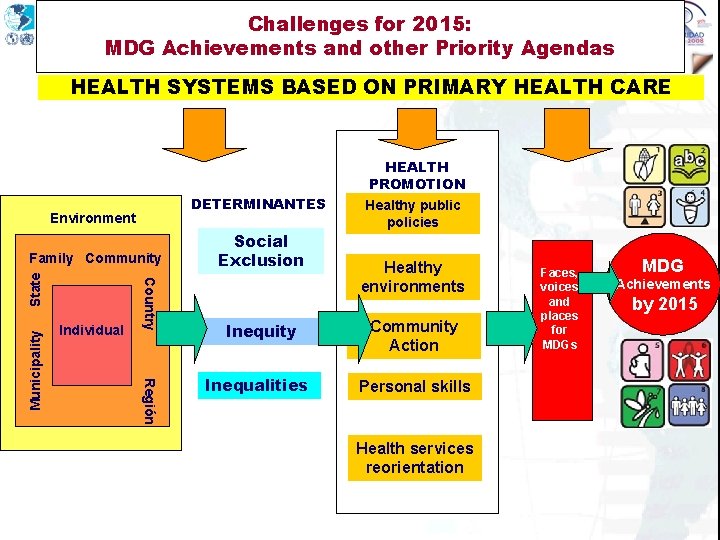
Challenges for 2015: MDG Achievements and other Priority Agendas HEALTH SYSTEMS BASED ON PRIMARY HEALTH CARE HEALTH PROMOTION DETERMINANTES Environment Región Municipality Individual Country State Family Community Social Exclusion Healthy public policies Healthy environments Inequity Community Action Inequalities Personal skills Health services reorientation Faces, voices and places for MDGs MDG Achievements by 2015
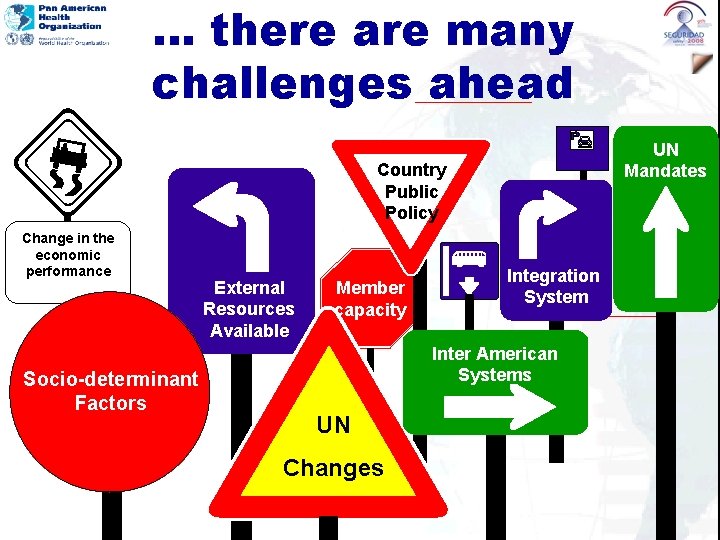
… there are many challenges ahead UN Mandates Country Public Policy Change in the economic performance Socio-determinant Factors External Resources Available Member capacity Integration System Inter American Systems UN Changes
- Slides: 23