
Globalism Chapters 20 2 20 4 The International

Globalism Chapters 20. 2 & 20. 4
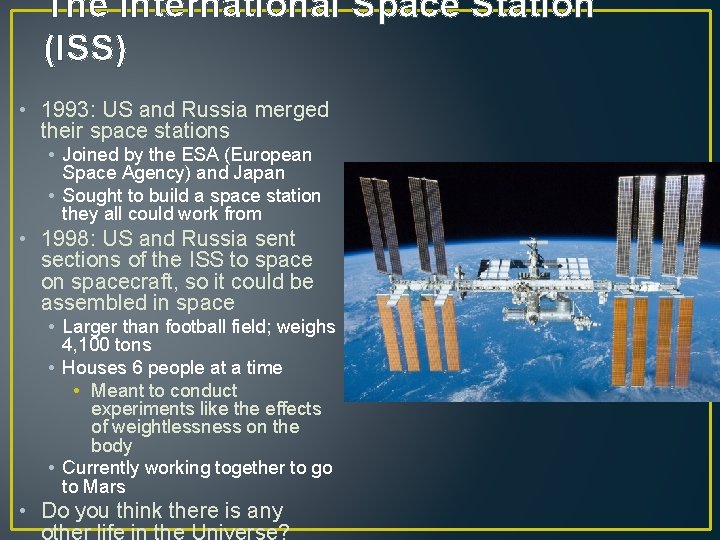
The International Space Station (ISS) • 1993: US and Russia merged their space stations • Joined by the ESA (European Space Agency) and Japan • Sought to build a space station they all could work from • 1998: US and Russia sent sections of the ISS to space on spacecraft, so it could be assembled in space • Larger than football field; weighs 4, 100 tons • Houses 6 people at a time • Meant to conduct experiments like the effects of weightlessness on the body • Currently working together to go to Mars • Do you think there is any other life in the Universe?
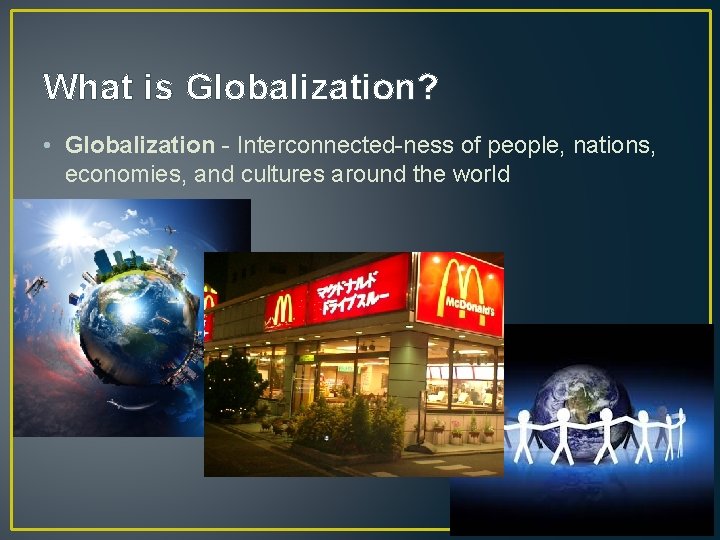
What is Globalization? • Globalization - Interconnected-ness of people, nations, economies, and cultures around the world
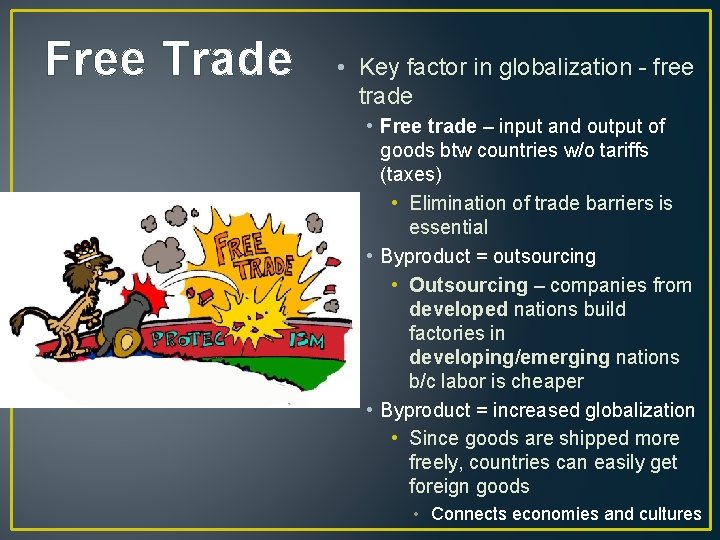
Free Trade • Key factor in globalization - free trade • Free trade – input and output of goods btw countries w/o tariffs (taxes) • Elimination of trade barriers is essential • Byproduct = outsourcing • Outsourcing – companies from developed nations build factories in developing/emerging nations b/c labor is cheaper • Byproduct = increased globalization • Since goods are shipped more freely, countries can easily get foreign goods • Connects economies and cultures
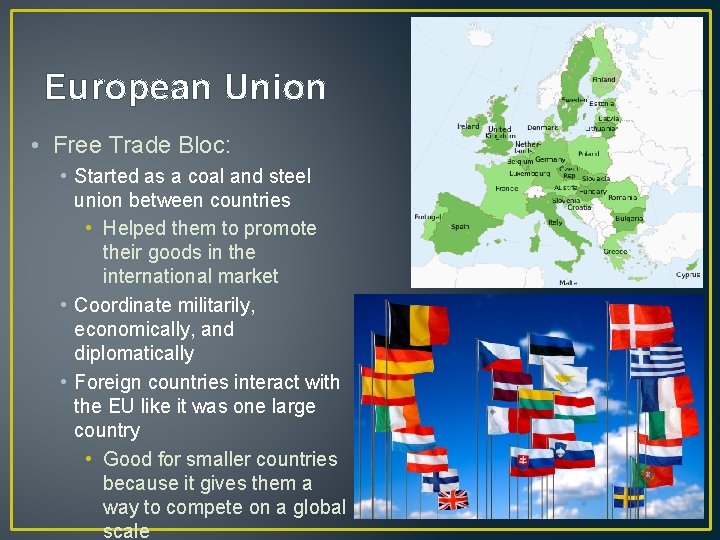
European Union • Free Trade Bloc: • Started as a coal and steel union between countries • Helped them to promote their goods in the international market • Coordinate militarily, economically, and diplomatically • Foreign countries interact with the EU like it was one large country • Good for smaller countries because it gives them a way to compete on a global scale
Multinational Corporation • Multinational Corporation – company that operates in several different countries • Manufacturing plants, stores, and offices across the world • BP, Shell, Toyota, Mc. Donalds • Can you think of any others?
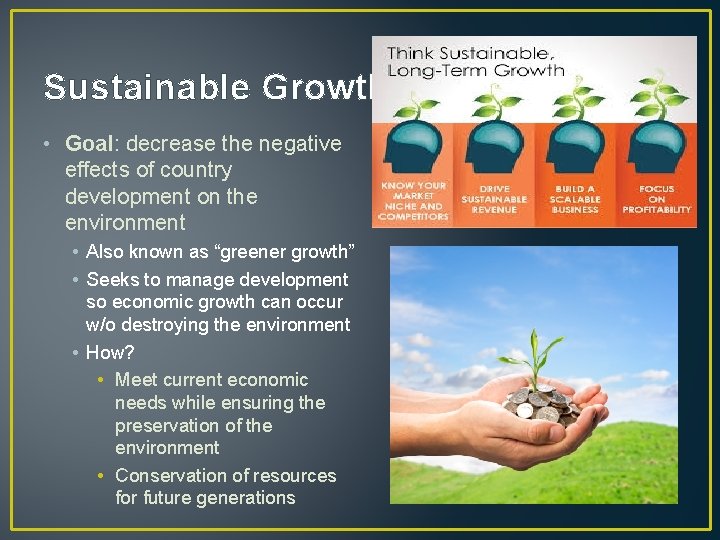
Sustainable Growth • Goal: decrease the negative effects of country development on the environment • Also known as “greener growth” • Seeks to manage development so economic growth can occur w/o destroying the environment • How? • Meet current economic needs while ensuring the preservation of the environment • Conservation of resources for future generations

Popular Culture • Popular Culture – cultural elements that reflect a group’s common background and changing interests • Involves music, sports, technology, foods, clothing fashion, hobbies, activities • How would you describe popular culture today? • Think of 10 different examples
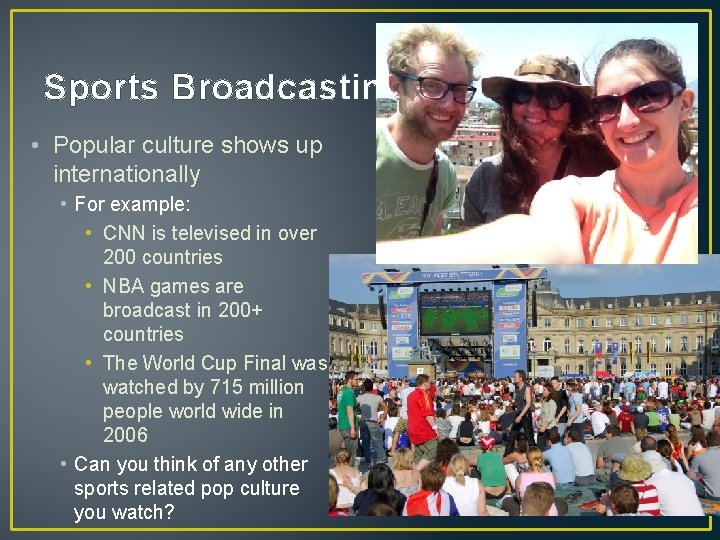
Sports Broadcasting • Popular culture shows up internationally • For example: • CNN is televised in over 200 countries • NBA games are broadcast in 200+ countries • The World Cup Final was watched by 715 million people world wide in 2006 • Can you think of any other sports related pop culture you watch?
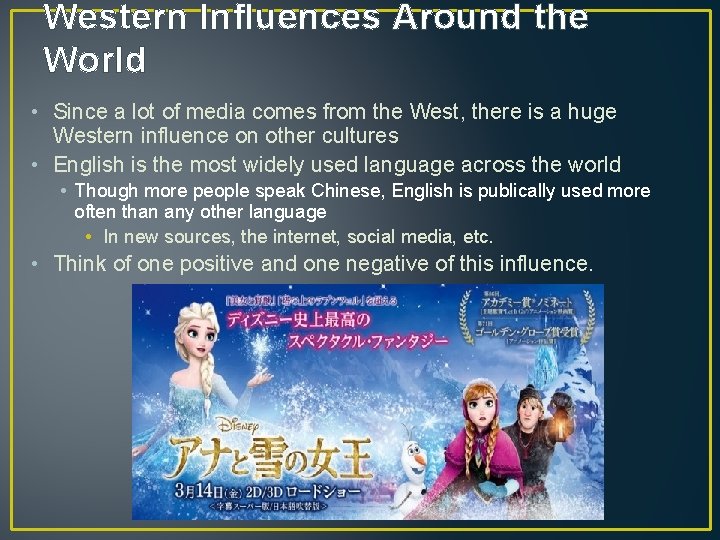
Western Influences Around the World • Since a lot of media comes from the West, there is a huge Western influence on other cultures • English is the most widely used language across the world • Though more people speak Chinese, English is publically used more often than any other language • In new sources, the internet, social media, etc. • Think of one positive and one negative of this influence.
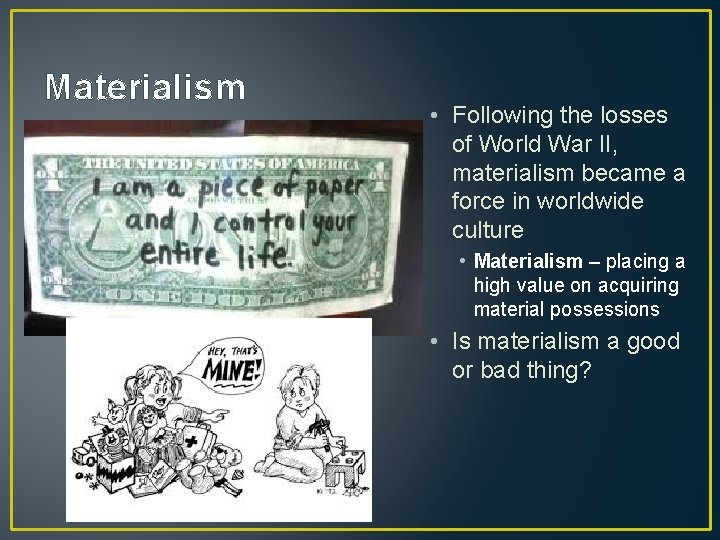
Materialism • Following the losses of World War II, materialism became a force in worldwide culture • Materialism – placing a high value on acquiring material possessions • Is materialism a good or bad thing?
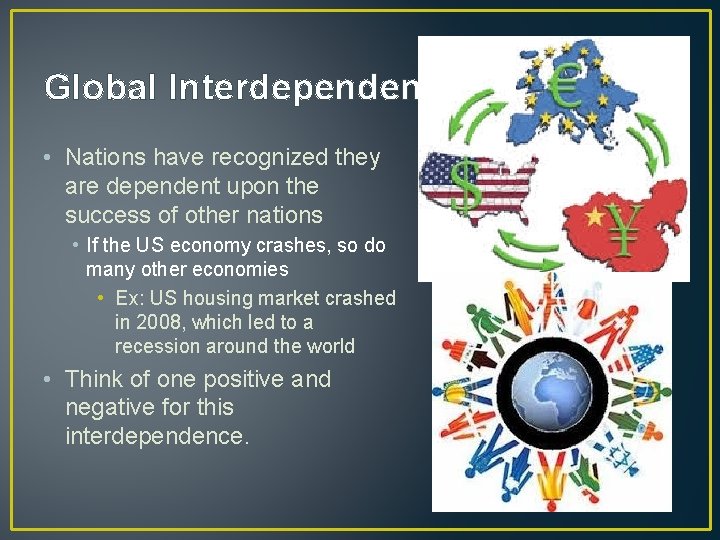
Global Interdependence • Nations have recognized they are dependent upon the success of other nations • If the US economy crashes, so do many other economies • Ex: US housing market crashed in 2008, which led to a recession around the world • Think of one positive and negative for this interdependence.
- Slides: 12