
Globalisation A 2 Economics Aims and Objectives Aim

Globalisation A 2 Economics
Aims and Objectives Aim: • Understand globalisation Objectives: • Define globalisation • Explain the role of MNCs • Analyse the effects of globalisation on firms and LDCs

Globalisation • Trend towards worldwide markets in products, capital, labour and unrestricted trade barriers. • Fewer tariffs (taxes on products imported/exported) • Fewer quotas (limits on number of exports/imports)
Aspects of Globalisation Growth of International Trade • World imports and exports have increased annually by 10% between 2000 and 2006 (WTO) Growth of MNCs • Large firms moving into global markets and the developed world to benefit from economic growth. Mc. Donald’s / Ford/ Coca Cola
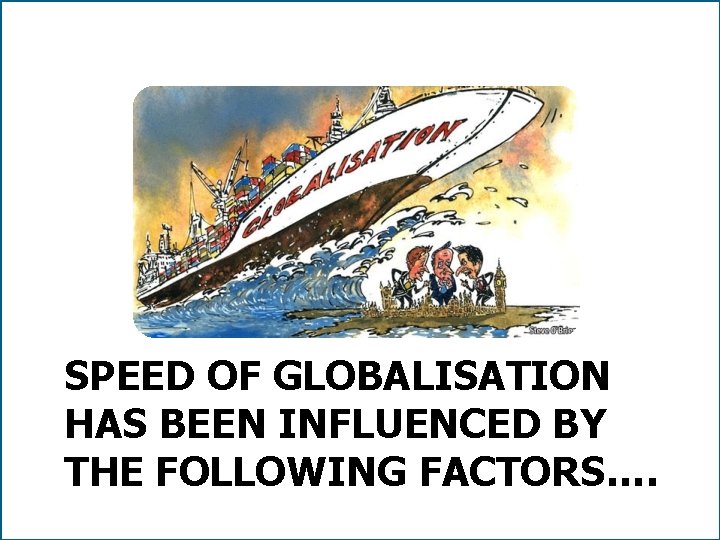
SPEED OF GLOBALISATION HAS BEEN INFLUENCED BY THE FOLLOWING FACTORS….

Technological Change • Growth of the internet and communications allows global trade Transportation Improvements • Containerisation has allowed firms to reduce costs and transport goods more easily and efficiently Growth in Eastern Europe • Former USSR states attract MNCs who wish to benefit from cheap Fof. P Liberated Trade • Trade in various industries and countries has been liberated by WTO

GLOBALISATION HAS INCREASED COMPETITION IN ALL MARKETS AND LED TO THE FOLLOWING OUTCOMES…
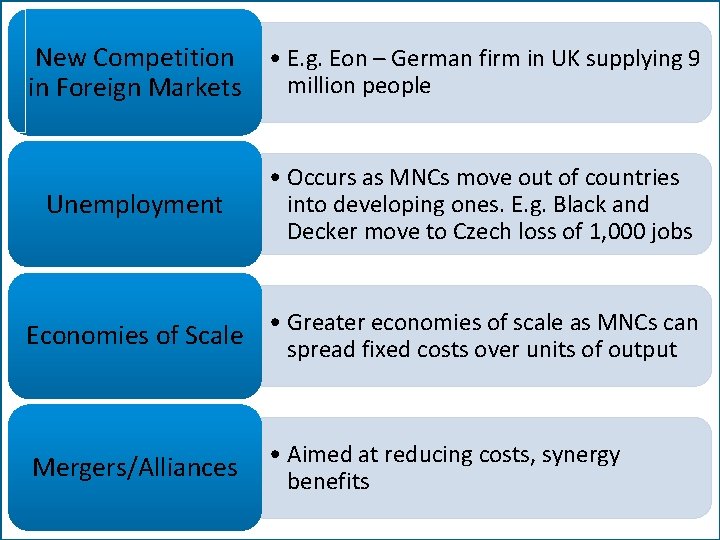
New Competition • E. g. Eon – German firm in UK supplying 9 million people in Foreign Markets Unemployment • Occurs as MNCs move out of countries into developing ones. E. g. Black and Decker move to Czech loss of 1, 000 jobs • Greater economies of scale as MNCs can Economies of Scale spread fixed costs over units of output Mergers/Alliances • Aimed at reducing costs, synergy benefits

Effects of Globalisation on Developing Countries • MNCs play a vital role in developing countries • There are benefits to the firm and country, however some MNCs are having a negative impact on LDCs. • Feedback
- Slides: 9