
Global Winds Global circulation depends on differential heating
Global Winds
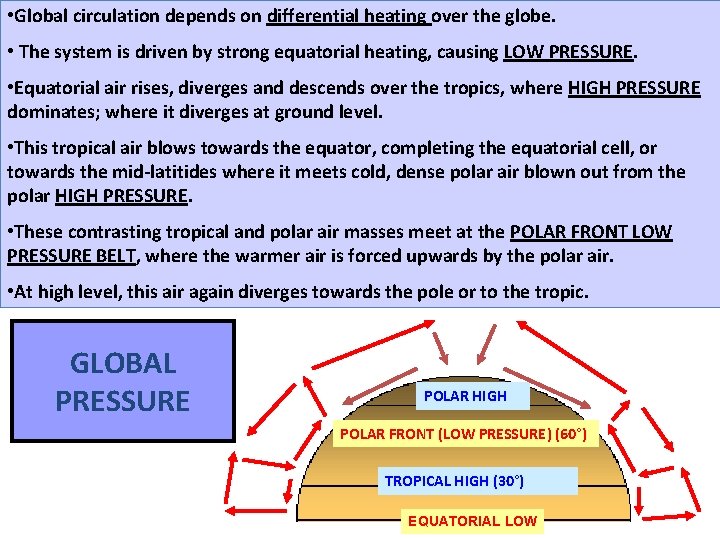
• Global circulation depends on differential heating over the globe. • The system is driven by strong equatorial heating, causing LOW PRESSURE. • Equatorial air rises, diverges and descends over the tropics, where HIGH PRESSURE dominates; where it diverges at ground level. • This tropical air blows towards the equator, completing the equatorial cell, or towards the mid-latitides where it meets cold, dense polar air blown out from the polar HIGH PRESSURE. • These contrasting tropical and polar air masses meet at the POLAR FRONT LOW PRESSURE BELT, where the warmer air is forced upwards by the polar air. • At high level, this air again diverges towards the pole or to the tropic. GLOBAL PRESSURE POLAR HIGH POLAR FRONT (LOW PRESSURE) (60°) TROPICAL HIGH (30°) EQUATORIAL LOW
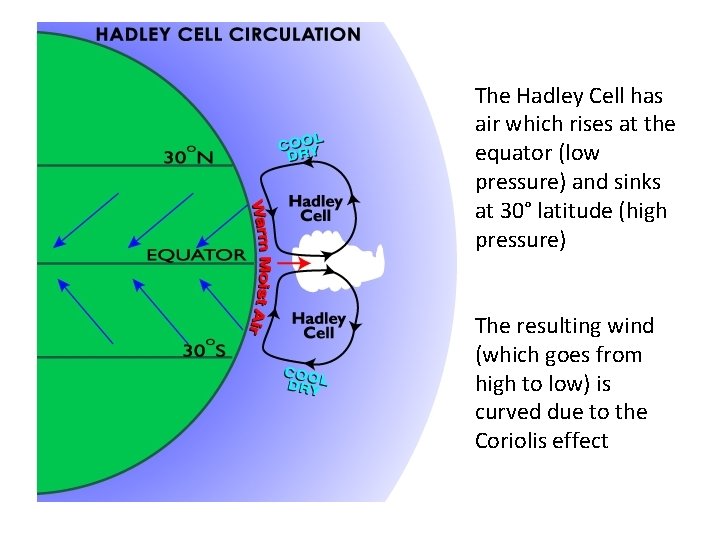
The Hadley Cell has air which rises at the equator (low pressure) and sinks at 30° latitude (high pressure) The resulting wind (which goes from high to low) is curved due to the Coriolis effect
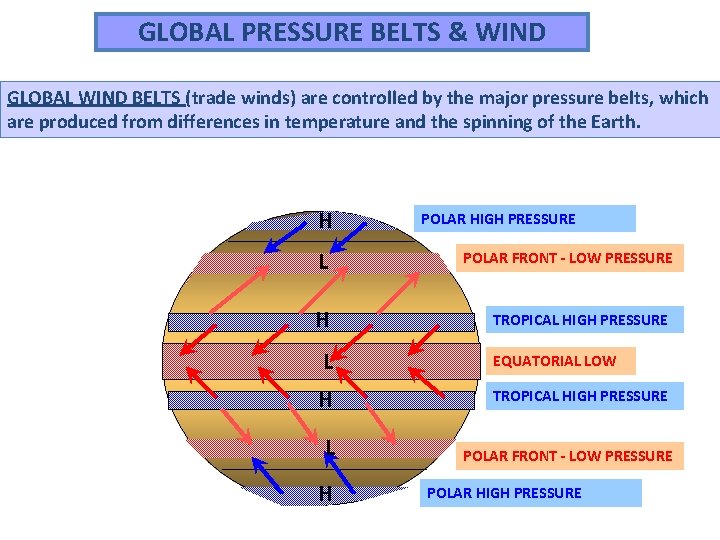
GLOBAL PRESSURE BELTS & WIND GLOBAL WIND BELTS (trade winds) are controlled by the major pressure belts, which are produced from differences in temperature and the spinning of the Earth. H POLAR HIGH PRESSURE L POLAR FRONT - LOW PRESSURE H TROPICAL HIGH PRESSURE L EQUATORIAL LOW H TROPICAL HIGH PRESSURE L POLAR FRONT - LOW PRESSURE H POLAR HIGH PRESSURE
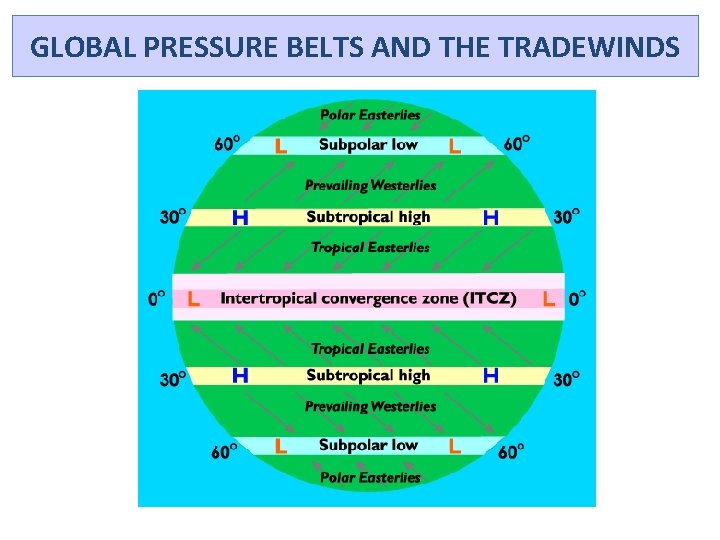
GLOBAL PRESSURE BELTS AND THE TRADEWINDS
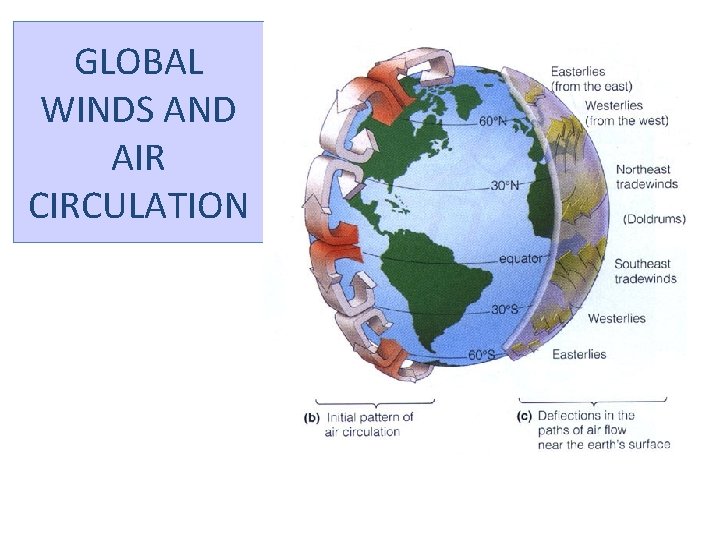
GLOBAL WINDS AND AIR CIRCULATION
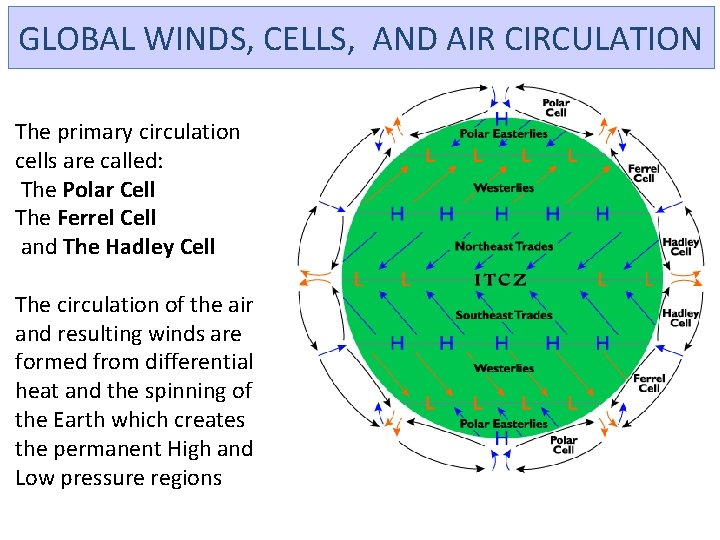
GLOBAL WINDS, CELLS, AND AIR CIRCULATION The primary circulation cells are called: The Polar Cell The Ferrel Cell and The Hadley Cell The circulation of the air and resulting winds are formed from differential heat and the spinning of the Earth which creates the permanent High and Low pressure regions
- Slides: 7