
Global Water Scientific Method Northdene Preparatory School We
Global Water Scientific Method Northdene Preparatory School
• We chose not to use grey water, because we can’t control what kind of cleaning products people use. • We might receive grey water that has something toxic in it. • Instead, we did our experiment on the most waterwise farming method to use to grow vegetables.
Report Title – Waterwise Gardening Introduction Problem you want to solve or question you want to answer? What are the best farming methods to grow Swiss Chard in a waterwise way? Aim of research To establish what a gardener can do to effectively grow vegetables in drought conditions.
Background research Summarise what you have learned about the topic. Mulch and compost seem to be things that are used the most.
Variables Independent variables - Variables that stand alone and are not affected by other variables eg: Time in weeks Dependant variables – Something that depends on other factors eg: Height of plants
MONITORING SHEET � Direction of plot - North facing � Sun – Midday sun. � Watering regime Once a day � Soil type – Poor soil. Dry and sandy. Nothing has grown there for years.
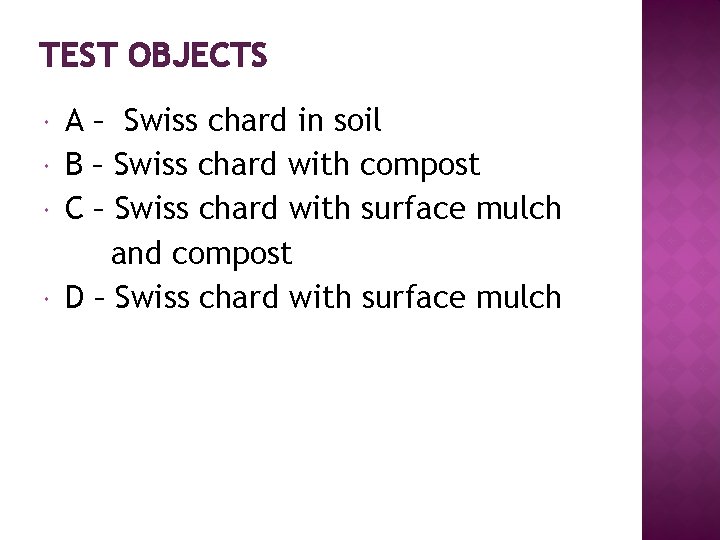
TEST OBJECTS A – Swiss chard in soil B – Swiss chard with compost C – Swiss chard with surface mulch and compost D – Swiss chard with surface mulch

Hypothesis – what do you think the answer will be? The one with compost and mulch will do the best.
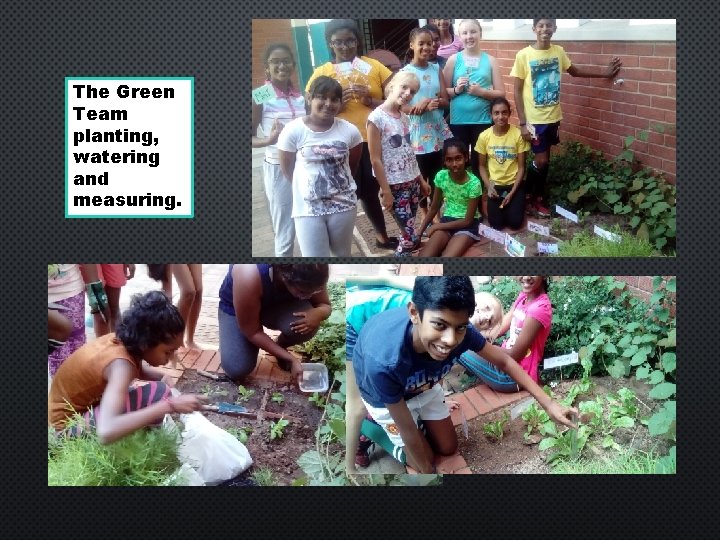
The Green Team planting, watering and measuring.
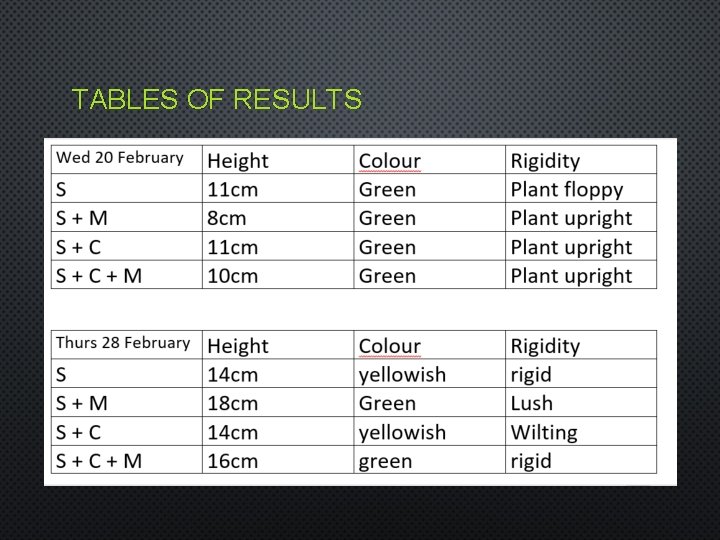
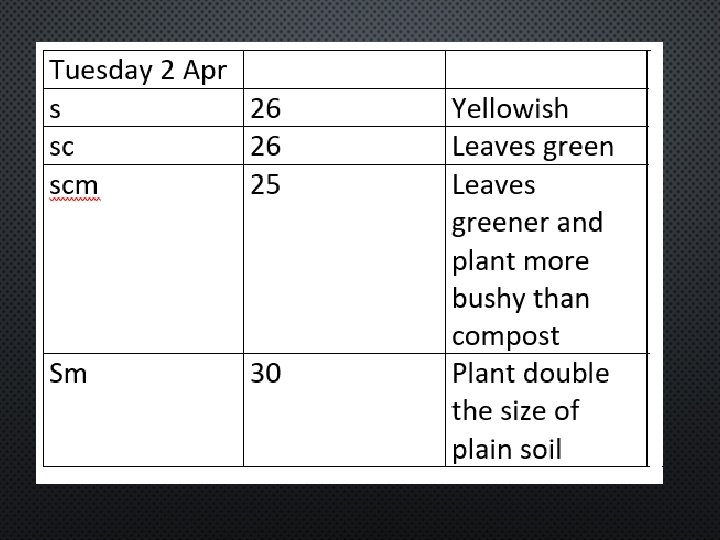
TABLES OF RESULTS
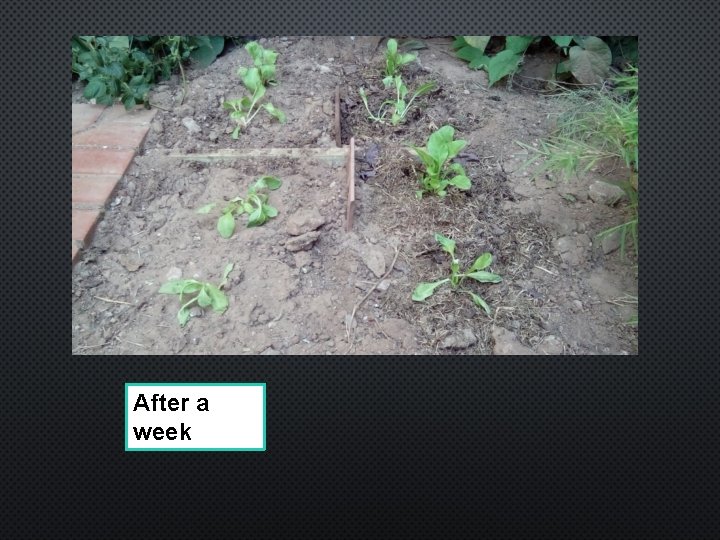
After a week
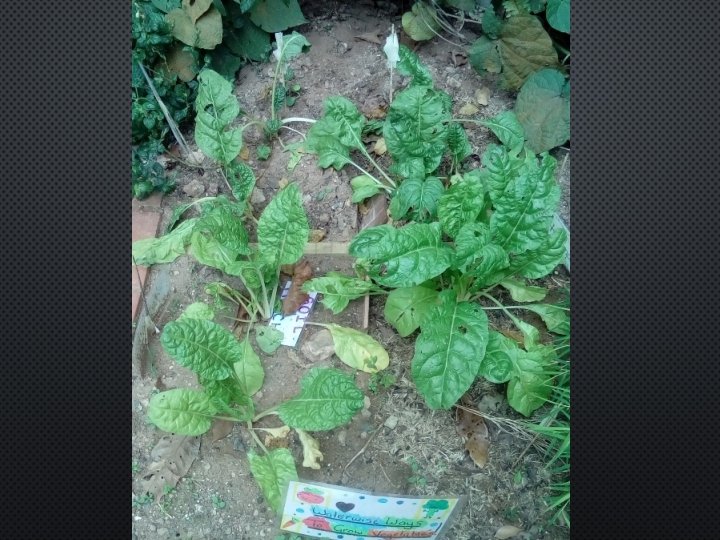
Our Green Team planted the Swiss Chard and we set up a watering timetable, to water the plants every day at a similar time, except of course on weekends. After a few weeks, it seemed like someone was watering the plants at other times, and a notice was put up asking people to refrain from watering the plants. We are not sure how this may have affected the results. Possibly, the plants that were looking the most stressed were the ones which had been watered, but it was difficult to tell.
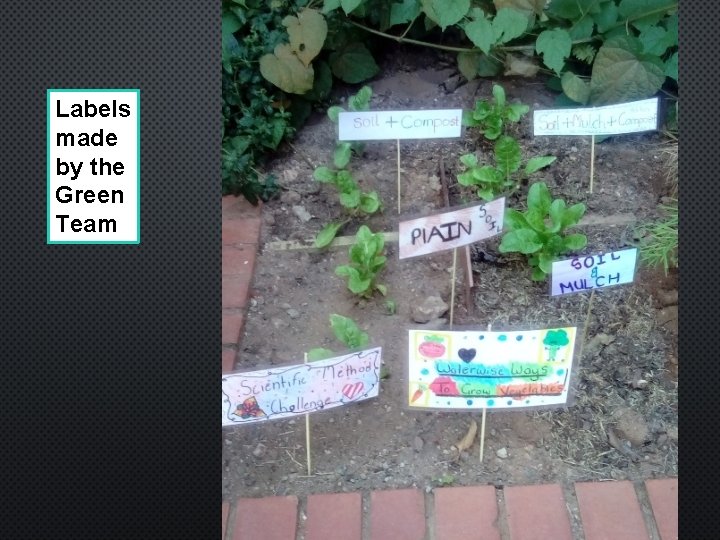
Labels made by the Green Team
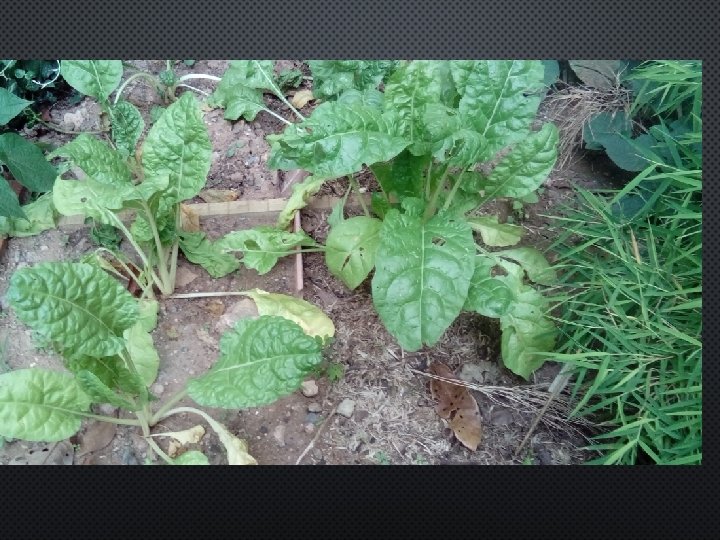
• The plants grew steadily, but we unfortunately lost one of the mulch only plants to a strange disease that turned the plant translucent. A similar disease was noted on ornamental plants about 25 m away.
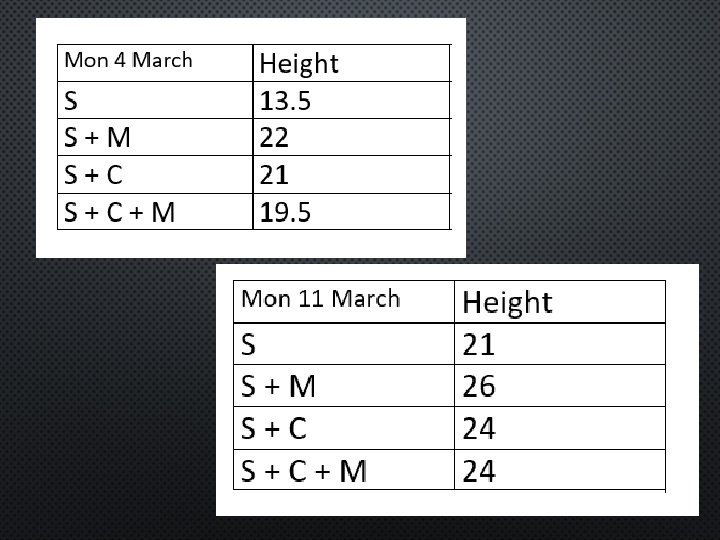
Height of the plants was measured once a week. The plants were left over the two week holidays to see how they fared. There was some rain during the time in the area.
Line Graph • Height of plants • Length of time
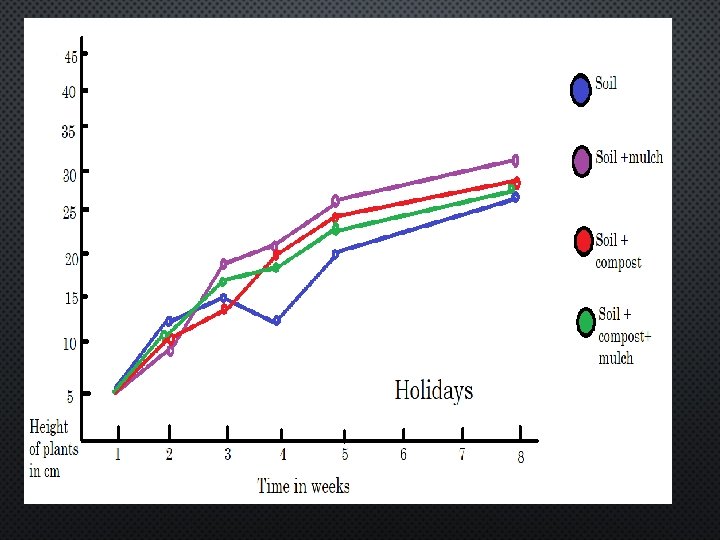
Discuss results The mulch-only plants seem to have done very much better than the other three scenarios.
At the end of the experiment, the plants were measured. Photographic and graph evidence was shown to the main Water Explorer team, and a conclusion was reached that the plants with mulch only did exponentially better than the other three scenarios. A reason for this might be the “no dig” garden method.
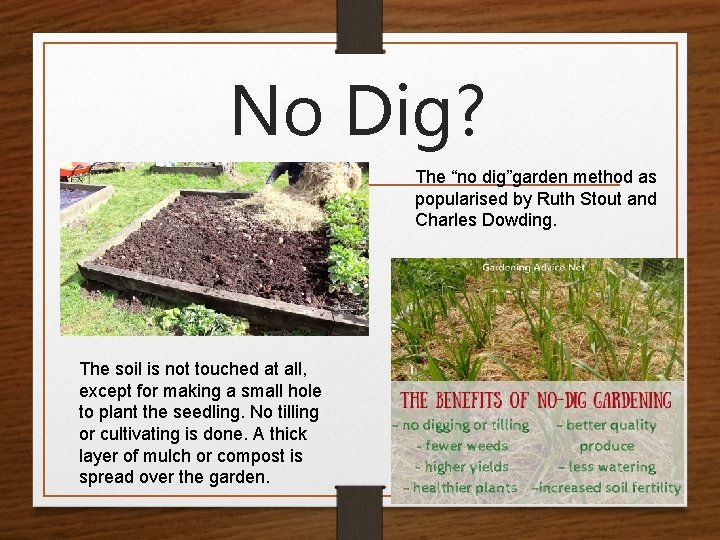
No Dig? The “no dig”garden method as popularised by Ruth Stout and Charles Dowding. The soil is not touched at all, except for making a small hole to plant the seedling. No tilling or cultivating is done. A thick layer of mulch or compost is spread over the garden.
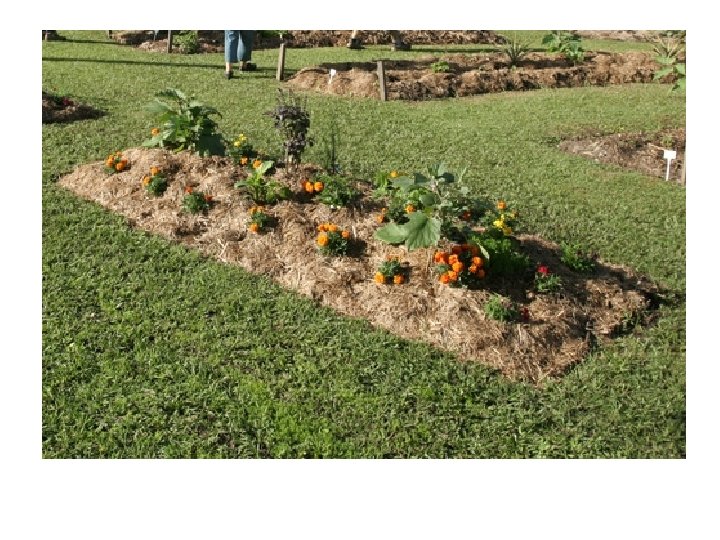
• This is said to increase soil fertility because soil structure is not damaged. This leads to healthier plants, higher yield and less water usage. • We would like to do more experiments to see if this conclusion is valid, and also to eliminate the possibility of some plants being watered more than others by the mysterious waterer!
Conclusion It would seem that the most effective way to grow vegetables during a drought is by adding a thick layer of mulch on the top of the soil.
Bibliography • https: //www. all 4 women. co. za/643532/foodhome/garden/tips-for-a-water-wise-vegetableand-herb-garden • http: //wearewhiteriver. com/water-wisevegetable-gardens/ • https: //blog. gardeners. com/2015/04/water-wise -vegetable-gardening/
- Slides: 29