
Global Water Resources and Use ANNA SINIARD AND
Global Water Resources and Use ANNA SINIARD AND EDUARDO JULIAN
Water: Hydrological Cycle Describes the continuous movement of water on, above and below the surface of the Earth. Begins with evaporation of water from the surface of the ocean. Water vapor condenses to form clouds Returns to the surface as precipitation (rain, snow, hail, fog, and sleet). Becomes groundwater (infiltration) or evaporates Transpiration or runoff into oceans, lakes, rivers, etc.
Water: Saltwater v. Freshwater Saltwater Freshwater Contains sodium chloride (3. 5%) Marine estuaries, coastal wetlands, coral reefs, mangrove forests, and open oceans Water with few dissolved salts (less than 1%) Relatively pure 3% of total water on Earth Glaciers, ice caps, and aquifers Lakes, rivers and streams 97% of total water on Earth
Water: Distribution of Water on Earth 97% is saltwater 3% is freshwater 69% in glaciers 30% underground Less than 1% in rivers, lakes and swamps. 0. 5% available for human use
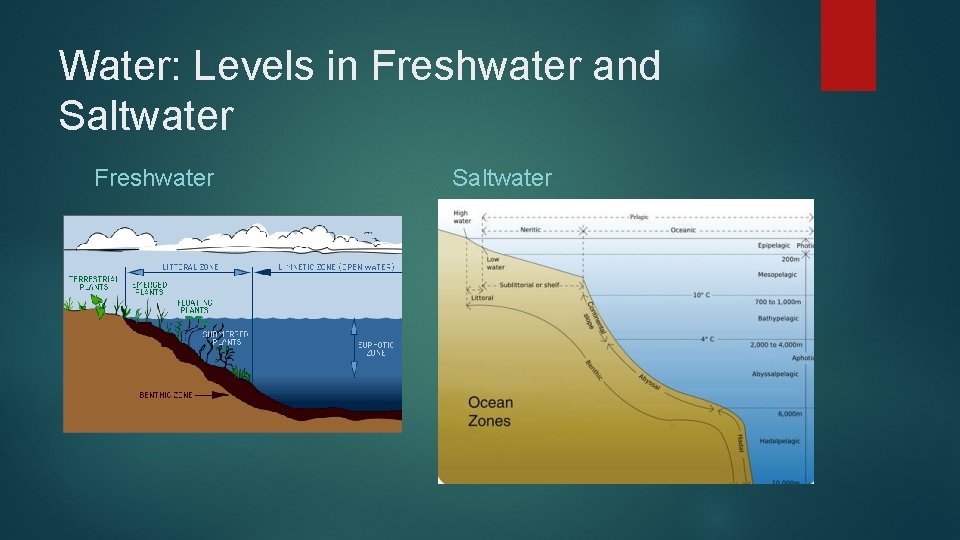
Water: Levels in Freshwater and Saltwater Freshwater Saltwater
Water: Saltwater Intrusion The movement of saline water into freshwater aquifers Leads to contamination of drinking water sources Since groundwater and seawater are connected, it naturally occurs to some degree in coastal aquifers Leads to the removal of millions of gallons of fresh groundwater from aquifers everyday Aquifers being contaminated with saltwater
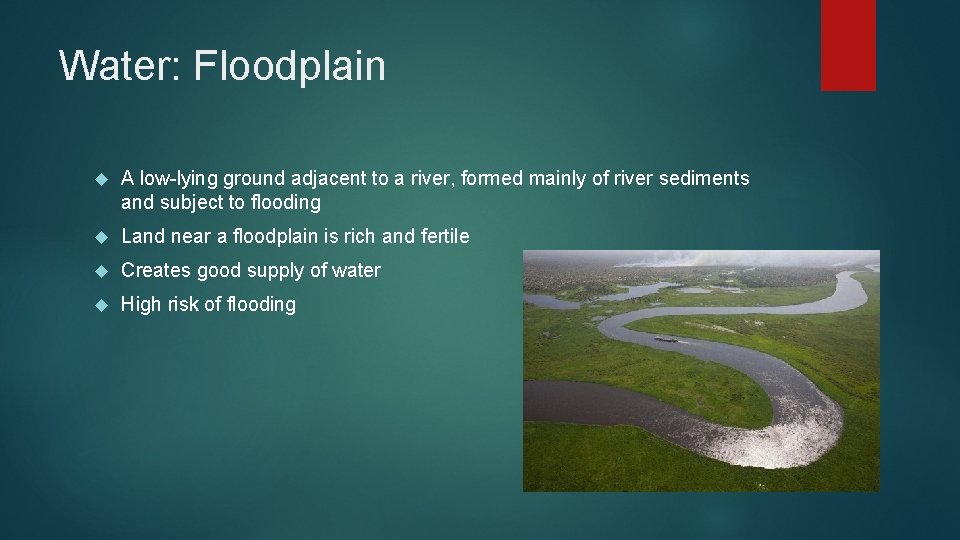
Water: Floodplain A low-lying ground adjacent to a river, formed mainly of river sediments and subject to flooding Land near a floodplain is rich and fertile Creates good supply of water High risk of flooding
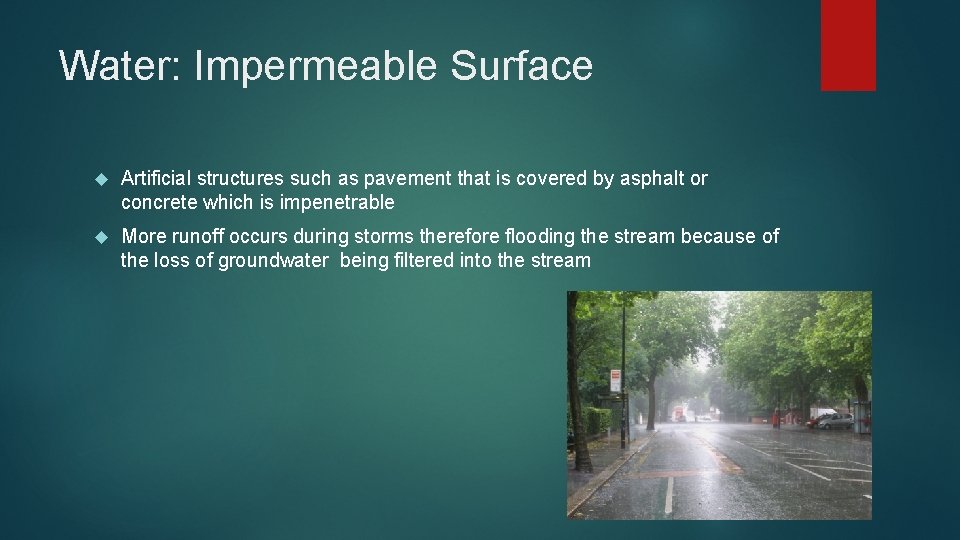
Water: Impermeable Surface Artificial structures such as pavement that is covered by asphalt or concrete which is impenetrable More runoff occurs during storms therefore flooding the stream because of the loss of groundwater being filtered into the stream
Water: Water Footprint The amount of freshwater utilized in the production or supply of the goods and services used by a particular person or group
Water: Ogallala Aquifer Crisis The Ogallala aquifer underlies approximately 225, 000 square miles in the Great Plains region The withdrawal of this groundwater has now greatly surpassed the aquifer's rate of natural recharge. Drought in this region caused the use of the aquifer groundwater for agriculture This caused the aquifer to deplete and threatened vital U. S. farmland It will be completely depleted by 2045 It will take 6000 years to refill naturally
Water: Groundwater Overdrafts Occurs when groundwater use exceeds the amount of recharge into an aquifer, which leads to a decline in groundwater level Effects include: Reduced water supply due to aquifer depletion or groundwater contamination Increased groundwater pumping costs The costs of well replacement or deepening
Water Use: Agricultural Use 70% of freshwater goes into irrigation About 3600 km 3 of freshwater are withdrawn for human use Of these, roughly half is really consumed as a result of evaporation, incorporation into crops and transpiration from crops For vegetative growth and development, plants require water in adequate quantity and at the right time
Water Use: Agricultural Use Surface Irrigation- group of application techniques where water is applied and distributed over the soil surface by gravity Localized Irrigation- apply water directly where the plant is growing thus minimizing water loss through evaporation from the soil Drip Irrigation- allows water to drip slowly to the roots of many different plants, either onto the soil surface or directly onto the root zone, through a network of valves, pipes, tubing, and emitters Sprinkler Irrigation- water is distributed through a system of pipes by pumping. It is then sprayed into the air through sprinklers so that it breaks up into small water drops which fall to the ground
Water Use: Agricultural Use Three most efficient irrigation techniques: Drip irrigation is easy to use once installed, gets water directly to the roots, and causes no erosion or waste of water Sprinkler irrigation is moderately easy to use, most effective for turf areas, and can cover large areas Hand watering is the simplest and most common irrigation system and can easily avoid overwatering
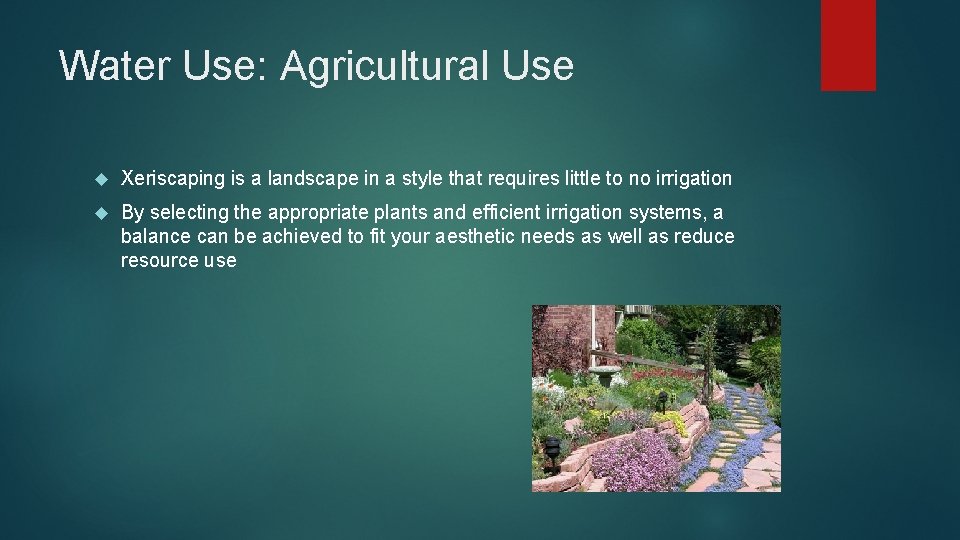
Water Use: Agricultural Use Xeriscaping is a landscape in a style that requires little to no irrigation By selecting the appropriate plants and efficient irrigation systems, a balance can be achieved to fit your aesthetic needs as well as reduce resource use
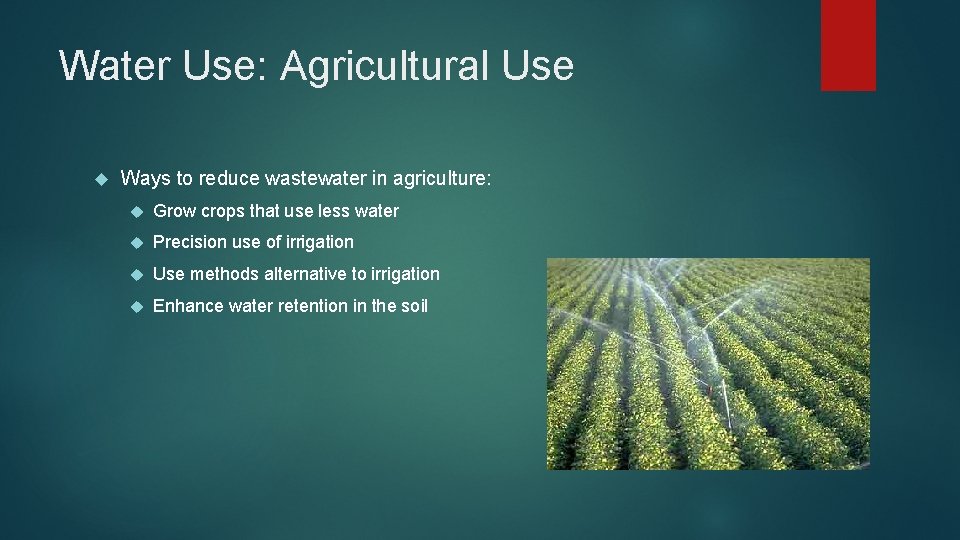
Water Use: Agricultural Use Ways to reduce wastewater in agriculture: Grow crops that use less water Precision use of irrigation Use methods alternative to irrigation Enhance water retention in the soil
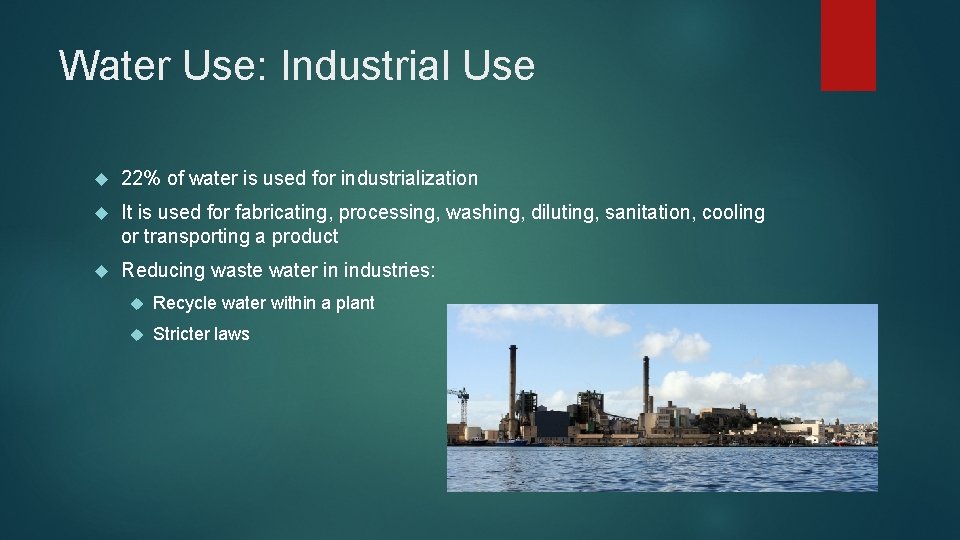
Water Use: Industrial Use 22% of water is used for industrialization It is used for fabricating, processing, washing, diluting, sanitation, cooling or transporting a product Reducing waste water in industries: Recycle water within a plant Stricter laws
Water Use: Domestic Use 8% used worldwide and in low income countries 11% in high income countries Used for drinking, preparing food, bathing, washing clothes & dishes, brushing your teeth Gray water- the relatively clean waste water from baths, sinks, washing machines, and other kitchen appliances Domestic water reduction: Use gray water to flush toilets, wash cars or water the grass
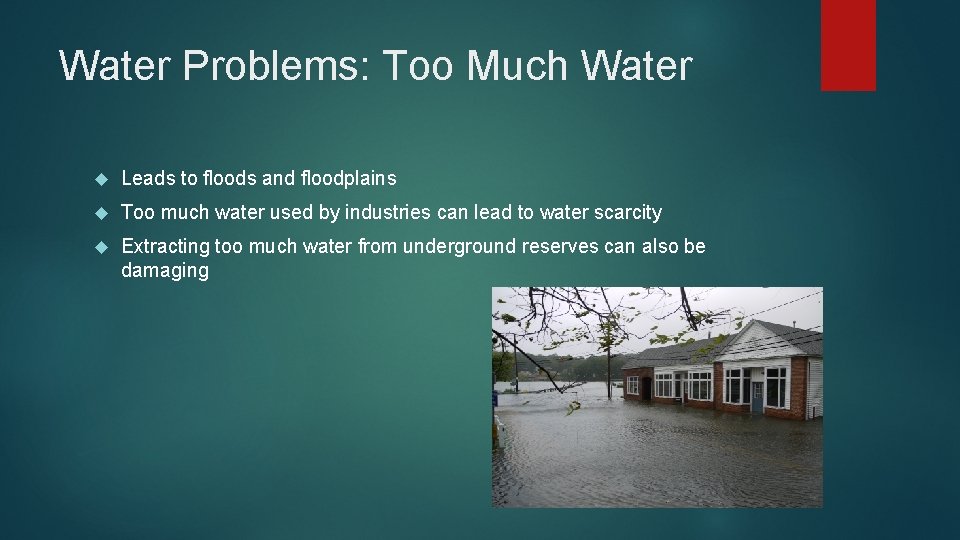
Water Problems: Too Much Water Leads to floods and floodplains Too much water used by industries can lead to water scarcity Extracting too much water from underground reserves can also be damaging
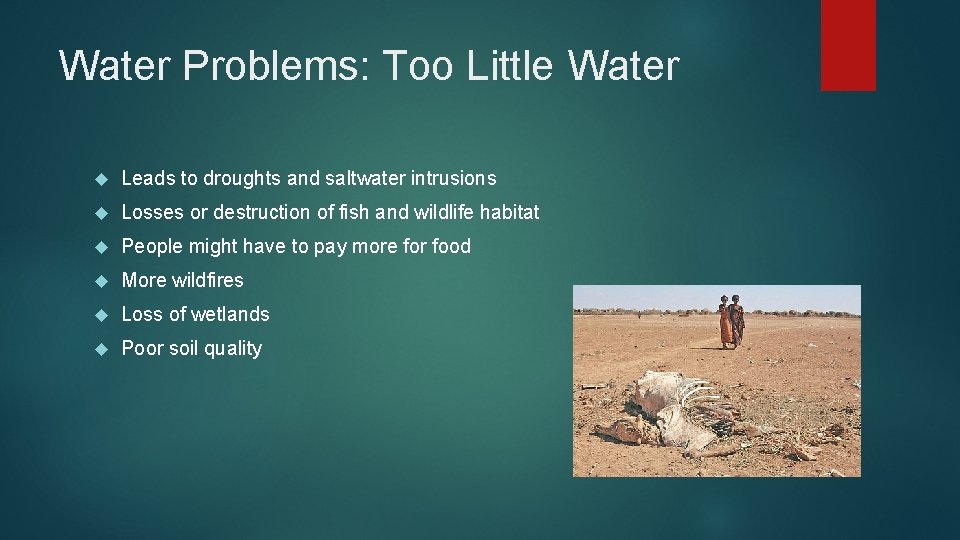
Water Problems: Too Little Water Leads to droughts and saltwater intrusions Losses or destruction of fish and wildlife habitat People might have to pay more for food More wildfires Loss of wetlands Poor soil quality
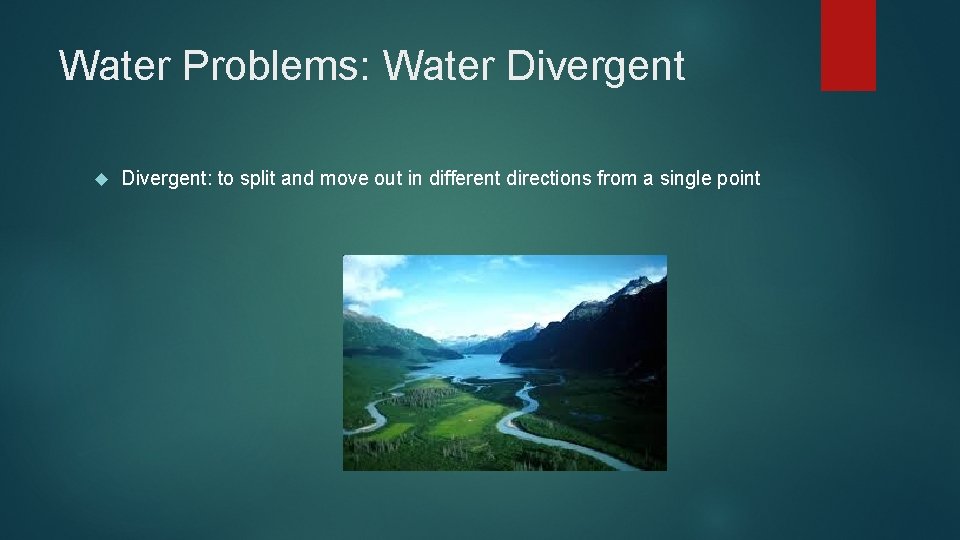
Water Problems: Water Divergent: to split and move out in different directions from a single point
Water Problems: Mono Lake In 1941, the Los Angeles Department of Water and Power began diverting Mono Lake's tributary streams 350 miles south to meet the growing water demands of Los Angeles. Deprived of its freshwater sources, the volume of Mono Lake halved, while its salinity doubled. Unable to adapt to these changing conditions within such a short period of time, the ecosystem began to collapse.
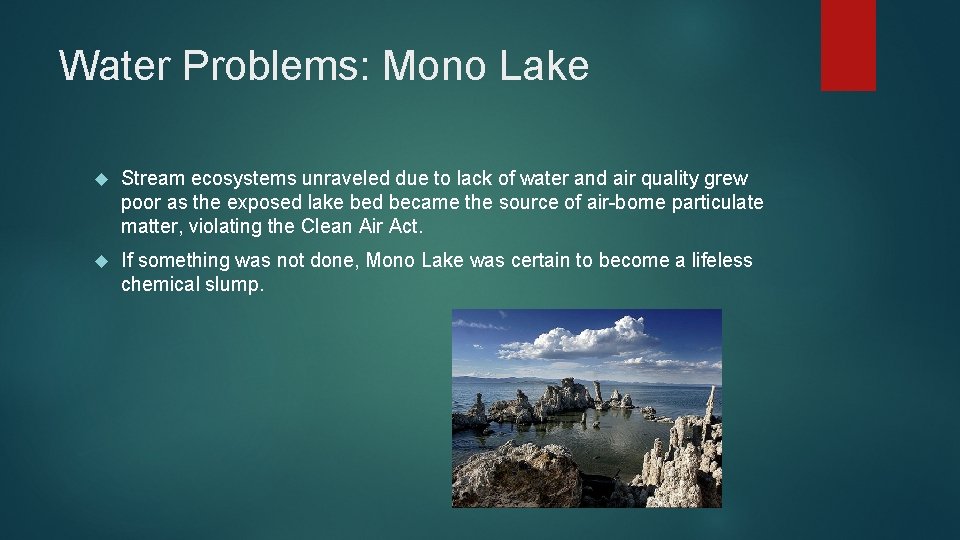
Water Problems: Mono Lake Stream ecosystems unraveled due to lack of water and air quality grew poor as the exposed lake bed became the source of air-borne particulate matter, violating the Clean Air Act. If something was not done, Mono Lake was certain to become a lifeless chemical slump.
Water Problems: Colorado River Basin The Colorado River is primarily a snowmelt-driven hydrologic system. Roughly 90 percent of the river’s flow is derived from snowmelt from precipitation in three upper basin states, Colorado, Utah, and Wyoming. However, most of the demand use of the flows are in the lower basin states, Arizona, California, and Nevada. For the first time, aggregate water demand has exceeded available water supplies in some years. Changes in winter precipitation and temperature patterns in the upper Colorado River basin are of great concern in terms of long-term water availability.
Water Problems: Colorado River Basin Today, the Colorado River basin continues to be home to the fastest growing states in the nation adding to the strains on limited water supplies. Measures to extend and conserve water supplies, such as conservation programs, changes in landscaping practices and related technologies, aquifer storage, and desalination, have improved water use efficiencies, and agriculture-urban water transfers have increased water supplies available to urban areas.
Water Problems: Delaware Most homes in Delaware have hard water, whether it is supplied by a private well or a municipality. Though chlorine in Delaware is vital for stopping the spread of disease, its benefits come at a price. Conservation pricing is based on the idea that customer water use decreases as the price paid for water increases, which is the typical pricequantity relationship for almost any good or service.
Global Water Problems: Climate Change Less rain can mean less water for some places, while too much rain cause terrible flooding. More hot days can dry up crops and make people and animals sick. It will greatly reduce mountain snowpack. Getting rain instead of snow will also change the variation in water availability at different times of year, and dams set up to capture snowmelt may no longer be optimally placed to capture rainfall. As global temperatures rise, climate scientists generally expect more rain to fall, but less often. Longer dry spells could impact the food supply in a number of areas.
Global Water Problems: Freshwater Global water sources vary widely; some areas, such as sub-Saharan Africa, regularly suffer from water scarcity. More than 1 billion people lack access to potable water and 2. 6 billion do not have access to adequate sanitation. Population and development pressures are creating competing demands for water for basic human needs, agriculture and power (water is used not only in hydroelectric plants and steam turbines, but also to cool fossil fuel and nuclear power plants).
Global Water Problems: Freshwater For inland areas, one obvious but often controversial idea is to divert water from rivers with heavy flow to areas that are water-deprived. Advances are being made developing materials that can trap viruses and bacteria, and de-activate them using catalysts triggered by light. It's a good idea too to re-use water whenever possible. Captured water from industry or municipal waste can be lightly treated and re-used on the spot for irrigation or industry, saving the energy needed to fully clean or repump water around. And agricultural systems can be designed so that crops need less water and are more tolerant to drought. There is some tension, however, on whether to move forward with genetically modified crops for this purpose
Global Water Problems: Population Growth The exact number of people living on Earth in the coming decades is uncertain, but we do know that the population will continue growing, and this will impact water availability. Investing in efforts that slow the rates of population growth through increasing access to voluntary family planning services can help ensure that ample water is available for global food production, ecosystem health, and political and social stability. Growth in populations means mounting demand competition for water for domestic, industrial, and municipal uses. Water is also needed for agriculture and industrial use, and for the evacuation of waste materials.
Global Water Problems: Population Growth The most water scarce or stressed areas are typically those with few water resources, high population densities, and high population growth rates. Population growth limits the amount of water available person, drives people into marginal regions—which are already water stressed—and also into cities. Projections show that by 2035, 3. 6 billion people will be living in areas with water stress or scarcity, as population growth causes more countries and regions to become water scarce.
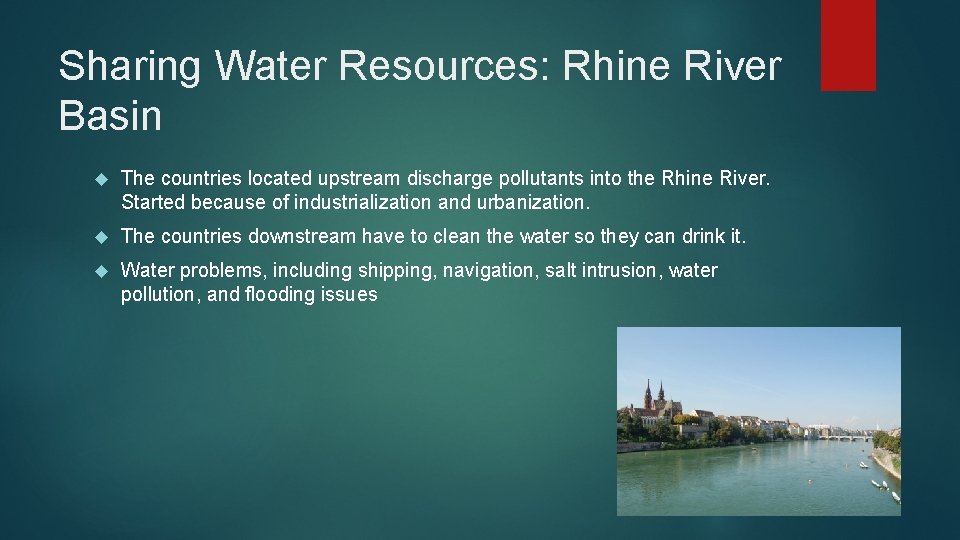
Sharing Water Resources: Rhine River Basin The countries located upstream discharge pollutants into the Rhine River. Started because of industrialization and urbanization. The countries downstream have to clean the water so they can drink it. Water problems, including shipping, navigation, salt intrusion, water pollution, and flooding issues
Sharing Water Resources: Aral Sea This sea contained too much salt due to water diversion for irrigation. Deliberately deprived the Aral Sea of its two main sources of water income, which almost immediately led to less water arriving to the sea. Not only was all this water being diverted into canals at the expense of the Aral Sea supply, but the majority of it was being soaked up by the desert and blatantly wasted. Level of salinity rose from approximately 10 g/l to often more than 100 g/l in the remaining Southern Aral, causing some or all fishes that either survived or had been reintroduced in the 1990 s to die.
Sharing Water Resources: Tri-State Water Wars Fighting over future allocations of water in the Alabama-Coosa-Tallapoosa River and the Apalachicola-Chattahoochee-Flint Basin which both cross all three states borders. Georgia Wants more water to continue growing economically. Wants enough water for heavy agricultural use in South Georgia. Alabama Wants more water for power generation, municipal supply and fisheries. Wants more water for future uses. Florida Wants enough freshwater to sustain its Shellfish industry Due to low river flows and saltwater intrusion no one will eat the shellfish.
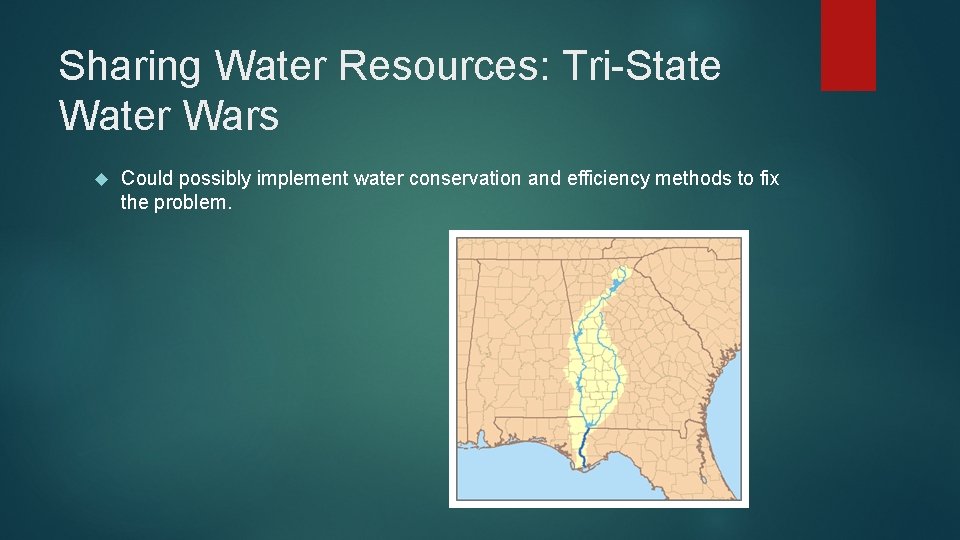
Sharing Water Resources: Tri-State Water Wars Could possibly implement water conservation and efficiency methods to fix the problem.
Potentially Volatile International Water Situations: Israel and Jordan Water politics in the Jordan River basin are the political issues of water within the Jordan River drainage basin, including competing claims and water usage, and issues of riparian rights of surface water along transnational rivers, as well as the availability and usage of ground water. Water resources are scarce which has caused issues of both supply and usage. The basin and its water are central issues of both the Arab-Israeli Conflict and the Israeli-Palestinian conflict.
Potentially Volatile International Water Situations: Israel and Jordan The riparian rights to the Jordan River are shared by 4 different countries: Lebanon, Syria, Jordan, Israel as well as the Palestinian territories; although Israel as the occupying authority has refused to give up any of the water resources to the Palestinian National Authority. The three tributaries of the upper Jordan have a low salinity of about 20 ppm. The salinity of water in Lake Tiberius ranges from 240 ppm in the upper end of the lake (marginal for irrigation water), to 350 ppm (too high for sensitive citrus fruits) where it discharges back into the Jordan River.
Potentially Volatile International Water Situations: Israel and Jordan As a resource for freshwater the Jordan River drainage system is vital for most of the population of Palestine, Israel and Jordan, and to a lesser extent in Lebanon and Syria who are able to utilize water from other national sources. Twenty per cent of the region’s population lack access to adequate potable water and 35% of the population lack appropriate sanitation. The Palestinian National Authority wished to expand develop the agricultural sector in the West Bank to decrease their dependency on the Israeli labor market, while Israel has prevented an increase in the irrigation of the West bank. Jordan also wishes to expand its agricultural sector so as to be able to achieve food security.
Water Management/Conservation: Iowa Flood Also called the Great Flood of 1993 The flood was among the most costly and devastating to ever occur in the United States, with $15 billion in damages. Well above average rainfall and below average temperatures beginning in the summer of 1992 resulted in above-normal soil moisture and reservoir levels in the Missouri and Upper Mississippi River basins. This weather pattern persisted throughout the following autumn. During the winter of 1992– 93, the region experienced heavy snowfall. These conditions were followed by persistent spring weather patterns that produced storms over the same locations. Soils across much of the affected area were saturated with additional rainfall running off into streams and rivers, instead of soaking into the ground.
Water Management/Conservation: Iowa Flood Storms, persistent and repetitive in nature during the late spring and summer, bombarded the Upper Midwest with voluminous rainfall. Portions of east-central Iowa received as much as 48 inches (120 cm) of rain between April 1 and August 31, 1993, and many areas across the centralnorthern plains had precipitation 400– 750% above normal. Illinois, Iowa, Kansas, Minnesota, Missouri, Nebraska, North Dakota, South Dakota, and Wisconsin were all affected.
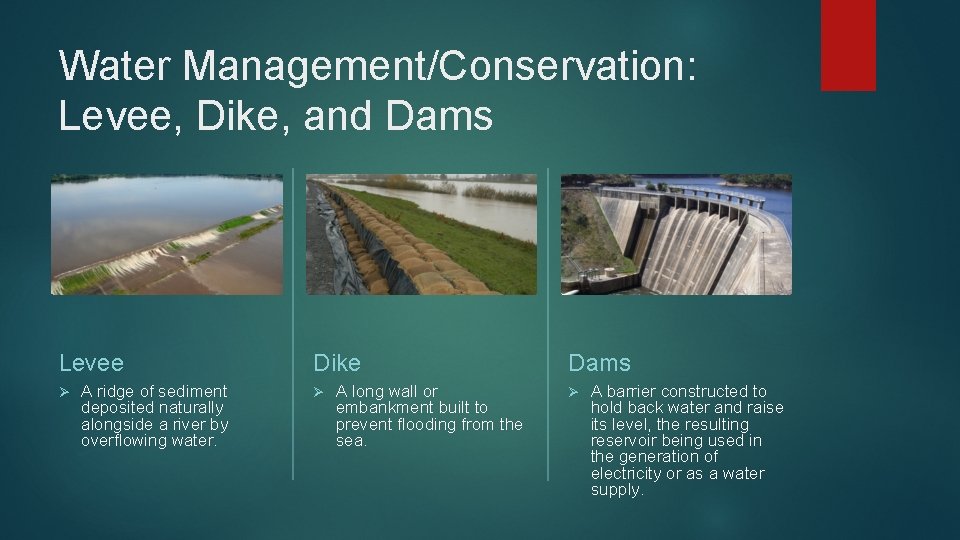
Water Management/Conservation: Levee, Dike, and Dams Levee Ø A ridge of sediment deposited naturally alongside a river by overflowing water. Dike Ø A long wall or embankment built to prevent flooding from the sea. Dams Ø A barrier constructed to hold back water and raise its level, the resulting reservoir being used in the generation of electricity or as a water supply.
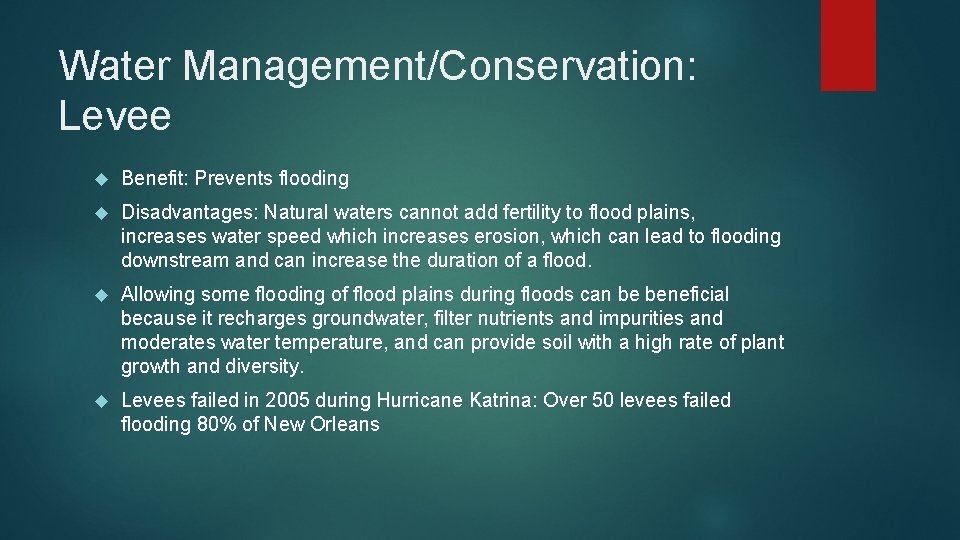
Water Management/Conservation: Levee Benefit: Prevents flooding Disadvantages: Natural waters cannot add fertility to flood plains, increases water speed which increases erosion, which can lead to flooding downstream and can increase the duration of a flood. Allowing some flooding of flood plains during floods can be beneficial because it recharges groundwater, filter nutrients and impurities and moderates water temperature, and can provide soil with a high rate of plant growth and diversity. Levees failed in 2005 during Hurricane Katrina: Over 50 levees failed flooding 80% of New Orleans
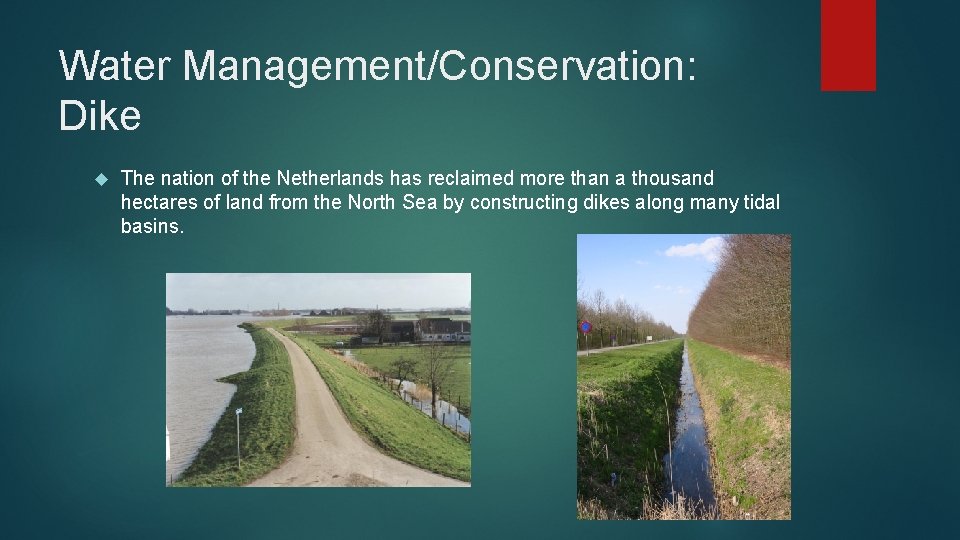
Water Management/Conservation: Dike The nation of the Netherlands has reclaimed more than a thousand hectares of land from the North Sea by constructing dikes along many tidal basins.
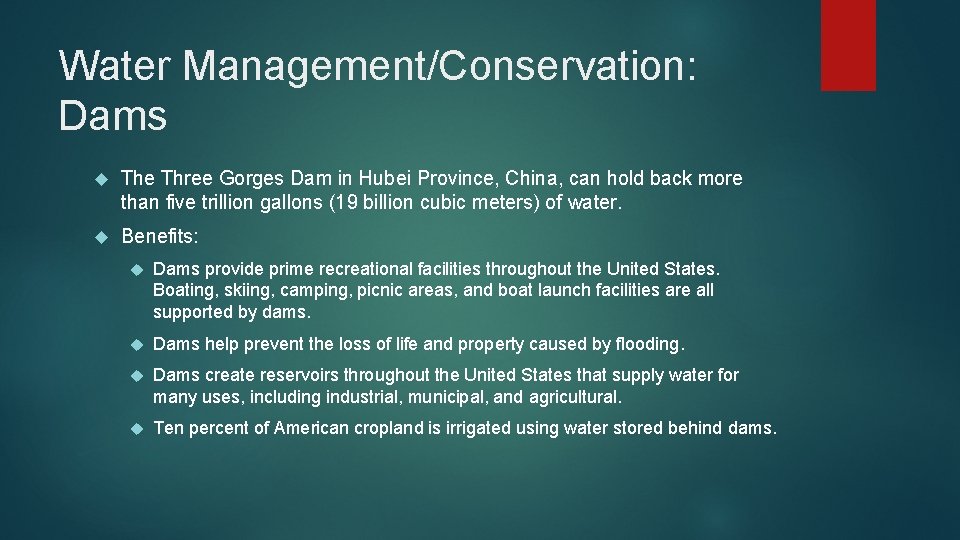
Water Management/Conservation: Dams The Three Gorges Dam in Hubei Province, China, can hold back more than five trillion gallons (19 billion cubic meters) of water. Benefits: Dams provide prime recreational facilities throughout the United States. Boating, skiing, camping, picnic areas, and boat launch facilities are all supported by dams. Dams help prevent the loss of life and property caused by flooding. Dams create reservoirs throughout the United States that supply water for many uses, including industrial, municipal, and agricultural. Ten percent of American cropland is irrigated using water stored behind dams.
Water Management/Conservation: Dams Disadvantages: Blocks fish migrations, which in some cases and with some species completely separate spawning habitats from rearing habitats. Traps sediments, which are critical for maintaining physical processes and habitats downstream of the dam. Changes in temperature, chemical composition, dissolved oxygen levels and the physical properties of a reservoir are often not suitable to the aquatic plants and animals that evolved with a given river system.
Water Management/Conservation: Dams block passage of salmon and steelhead between spawning and rearing habitat and the Pacific Ocean. Reservoirs also slow the flow of water and, through insolation, can cause its temperature to rise to levels that are lethal to salmon and steelhead. Dams also changed the food web in rivers by impounding reservoirs, as well as by altering the ecology downriver of dams through, for example, changes in sediment transport. Releasing all the sediment buildup behind the dam can cause the river ecosystem to fluctuate and possibly die off. Reduces the supply of water to help keep downstream ecosystems healthy.
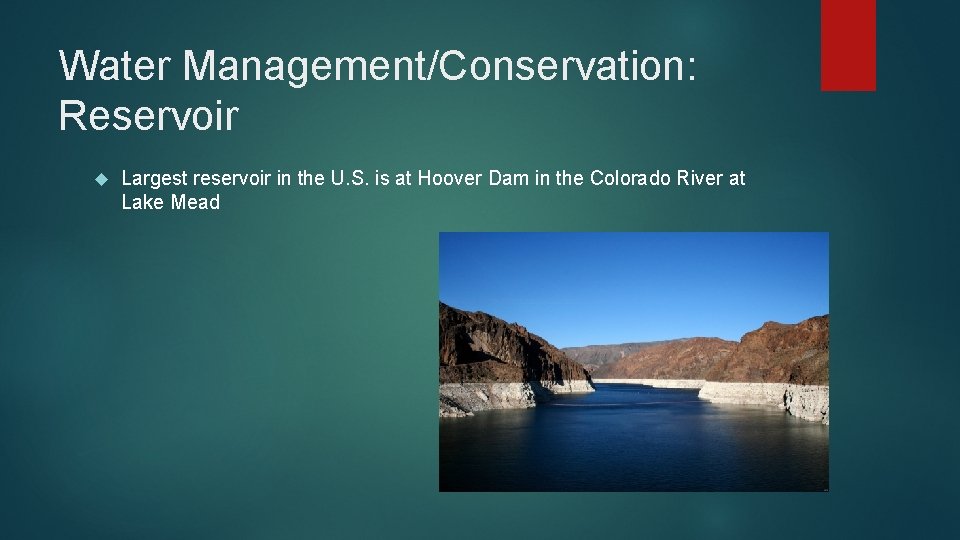
Water Management/Conservation: Reservoir Largest reservoir in the U. S. is at Hoover Dam in the Colorado River at Lake Mead
Water Management/Conservation: Desalination is the process of removing salts from seawater. Reverse Osmosis Desalination- using osmosis to remove salt and other impurities. Transfers water through a series of semi-permeable membranes. Thermal Desalination- uses heat to evaporate and condense water to purify it. It is needed to create drinking water in places where it is scarce.
Water Management/Conservation: Desalination Advantages: Provides drinking water Quality and Habitat Protection Disadvantages: The desalination process uses or produces chemicals such as chlorine, carbon dioxide, hydrochloric acid anti-scalants which in high amounts can be harmful.
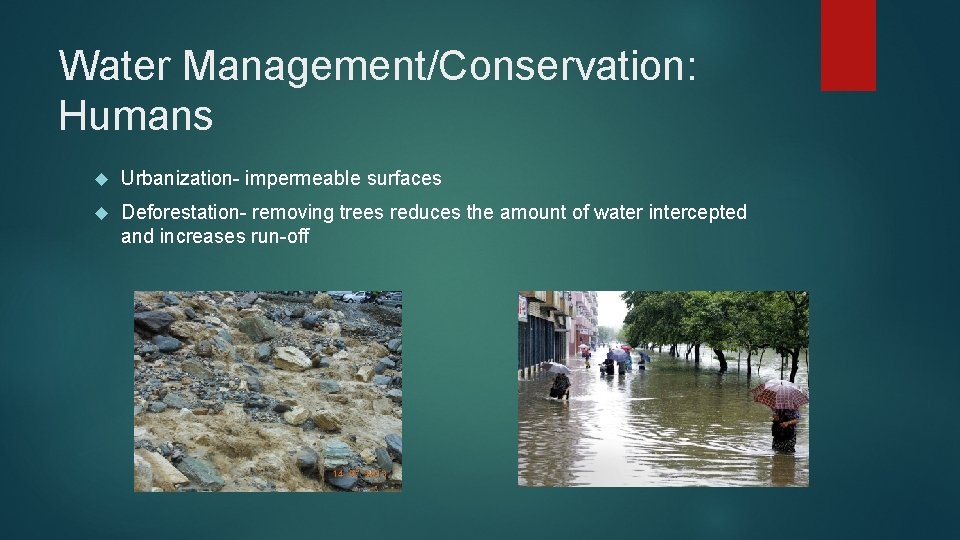
Water Management/Conservation: Humans Urbanization- impermeable surfaces Deforestation- removing trees reduces the amount of water intercepted and increases run-off
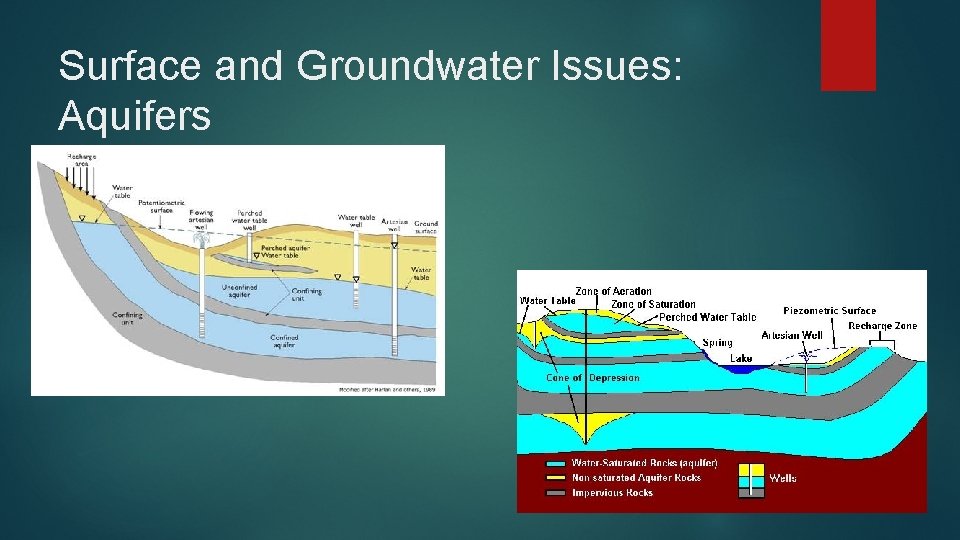
Surface and Groundwater Issues: Aquifers
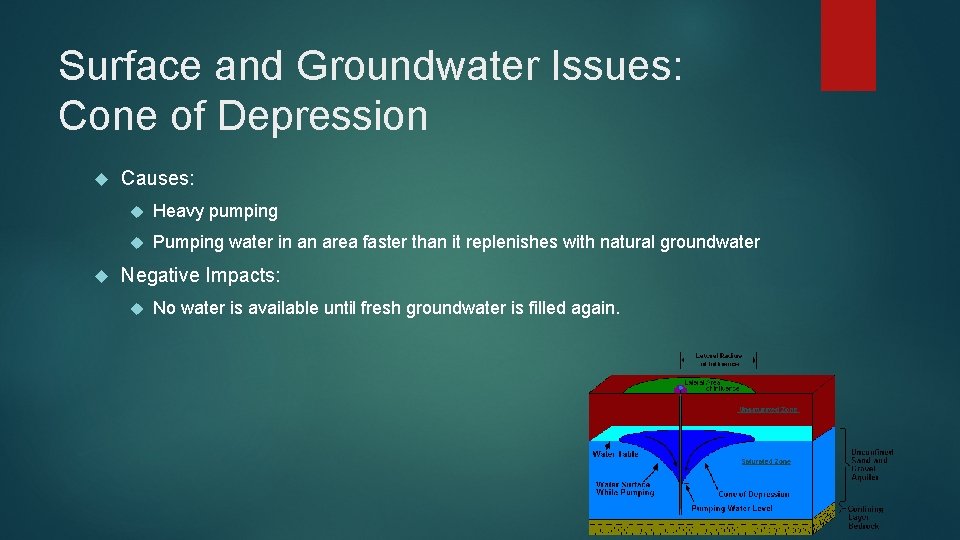
Surface and Groundwater Issues: Cone of Depression Causes: Heavy pumping Pumping water in an area faster than it replenishes with natural groundwater Negative Impacts: No water is available until fresh groundwater is filled again.
Water Diversion: California Aqueducts The aqueduct begins at the San Joaquin-Sacramento River Delta at the Banks Pumping Plant, which pumps from the Clifton Court Forebay. Water is pumped by the Banks Pumping Plant to the Bethany Reservoir. The Delta is not only a 700, 000 -acre place where people live and work, but some of the most important plumbing in the world. The current level of agricultural production in the southern San Joaquin Valley could not be sustained, and many cities, including the three largest on the West Coast —Los Angeles, San Diego, and San Jose—would have to come up with radical new water-supply solutions. It stretches 701. 5 mi (1, 129. 0 km): From Clifton Court Forebay, Contra Costa County to Castaic Lake, Los Angeles County
Water Diversion: California Aqueducts Too much is being asked of the Delta. The levees that define the region's water channels are aging, and geologists and climate scientists worry that earthquakes or rising sea levels could rupture them. The Delta ecosystem is collapsing. Native fish species are on the brink of extinction in part because of this massive water-transfer apparatus. The unnatural flows disrupt their natural habitat, and when they reach the pumps—which they often do, despite the state's efforts—they die.
- Slides: 54