
Global Warming Hurts Humans Warm temps and disease
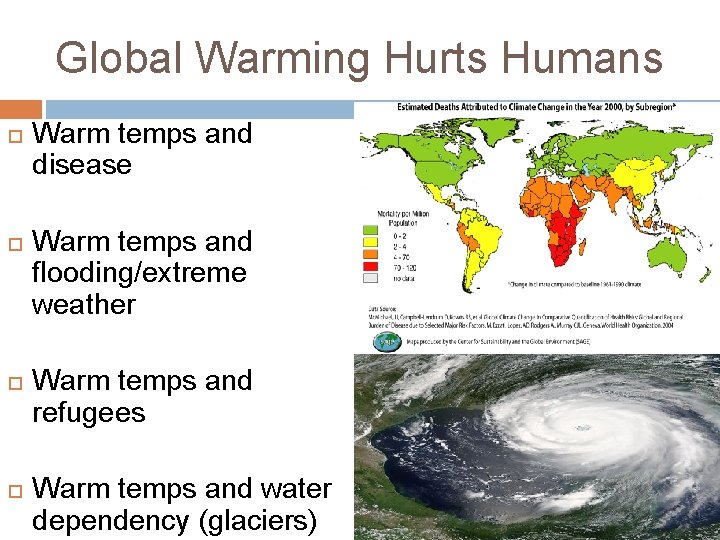
Global Warming Hurts Humans Warm temps and disease Warm temps and flooding/extreme weather Warm temps and refugees Warm temps and water dependency (glaciers)
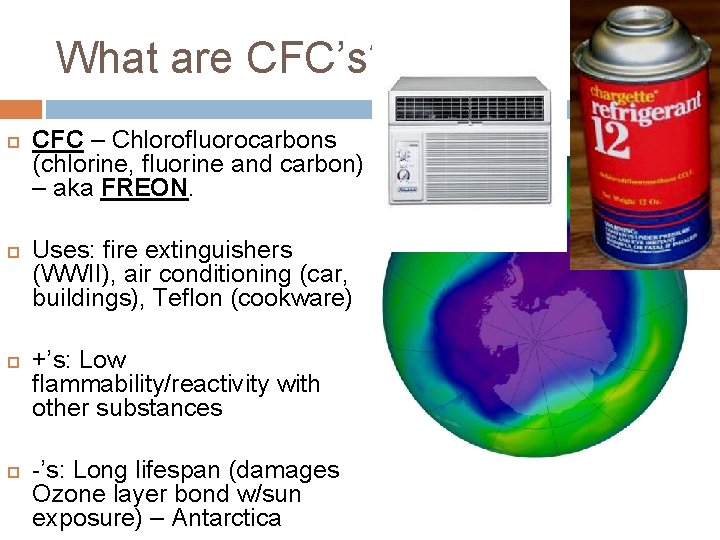
What are CFC’s? CFC – Chlorofluorocarbons (chlorine, fluorine and carbon) – aka FREON. Uses: fire extinguishers (WWII), air conditioning (car, buildings), Teflon (cookware) +’s: Low flammability/reactivity with other substances -’s: Long lifespan (damages Ozone layer bond w/sun exposure) – Antarctica
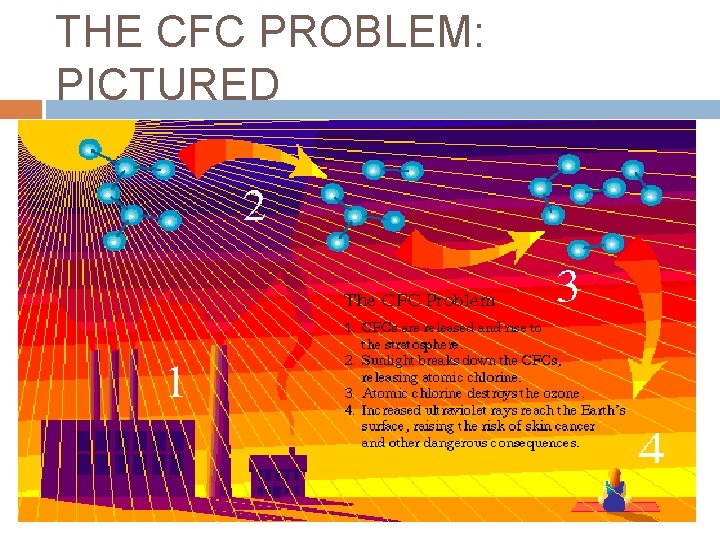
THE CFC PROBLEM: PICTURED
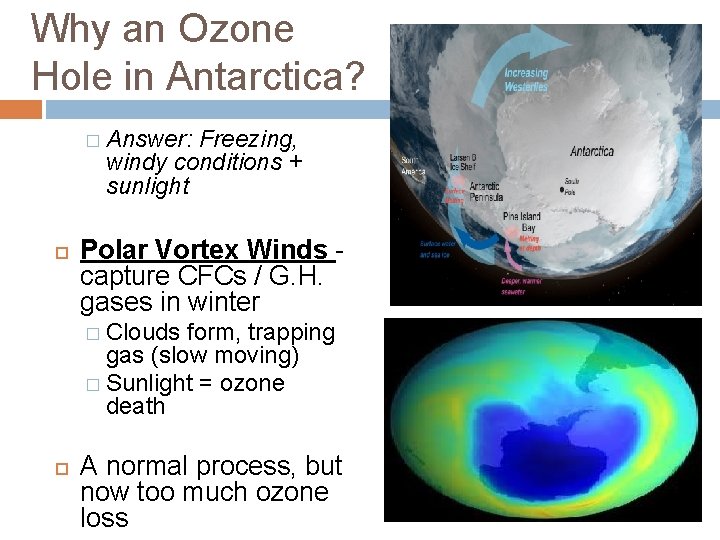
Why an Ozone Hole in Antarctica? � Answer: Freezing, windy conditions + sunlight Polar Vortex Winds capture CFCs / G. H. gases in winter � Clouds form, trapping gas (slow moving) � Sunlight = ozone death A normal process, but now too much ozone loss
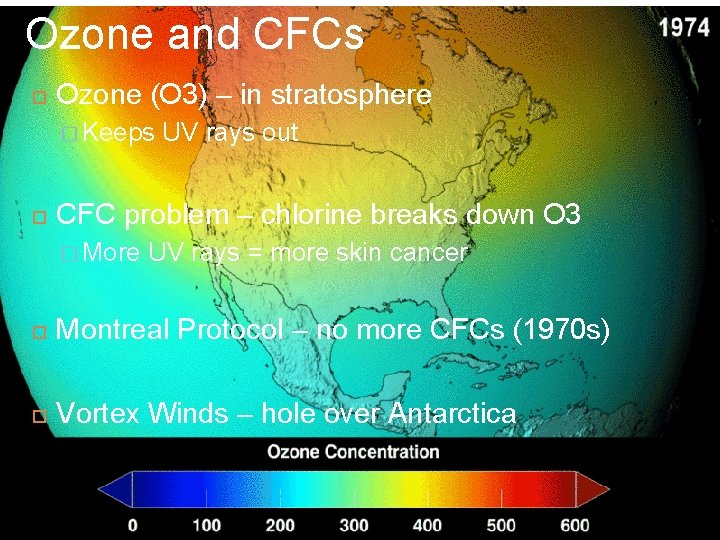
Ozone and CFCs Ozone (O 3) – in stratosphere � Keeps UV rays out CFC problem – chlorine breaks down O 3 � More UV rays = more skin cancer Montreal Protocol – no more CFCs (1970 s) Vortex Winds – hole over Antarctica
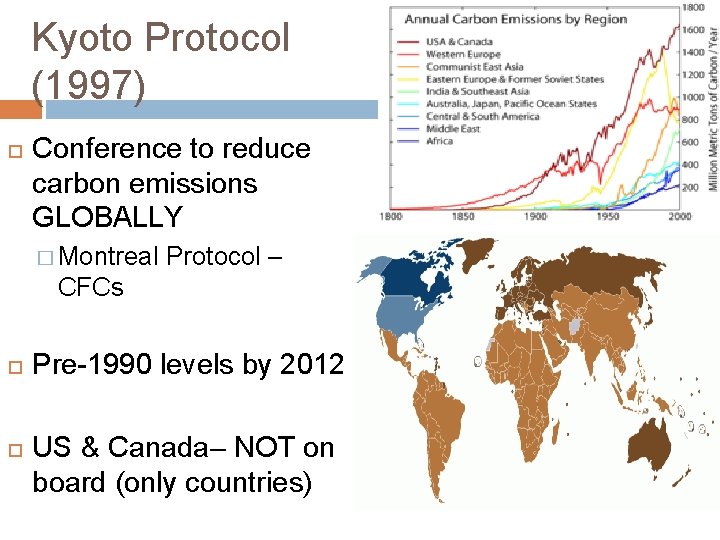
Kyoto Protocol (1997) Conference to reduce carbon emissions GLOBALLY � Montreal Protocol – CFCs Pre-1990 levels by 2012 US & Canada– NOT on board (only countries)
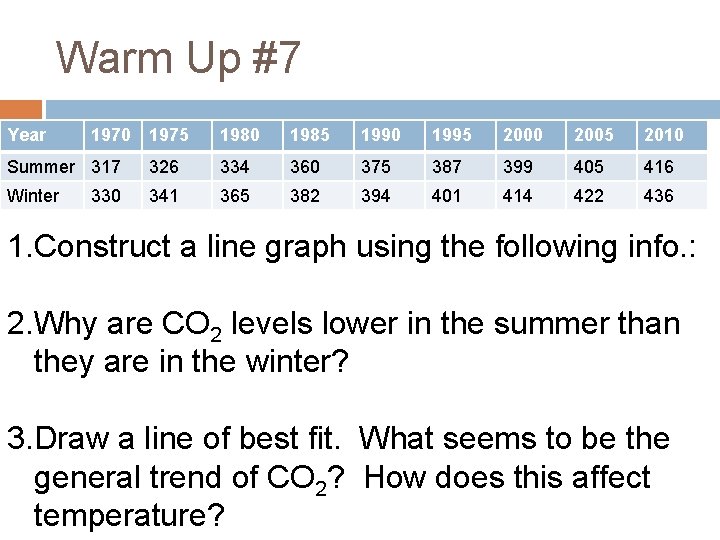
Warm Up #7 Year 1970 1975 1980 1985 1990 1995 2000 2005 2010 Summer 317 326 334 360 375 387 399 405 416 Winter 341 365 382 394 401 414 422 436 330 1. Construct a line graph using the following info. : 2. Why are CO 2 levels lower in the summer than they are in the winter? 3. Draw a line of best fit. What seems to be the general trend of CO 2? How does this affect temperature?
ECOLOGICAL FOOTPRINT How Many Earths Does Your Lifestyle Need?
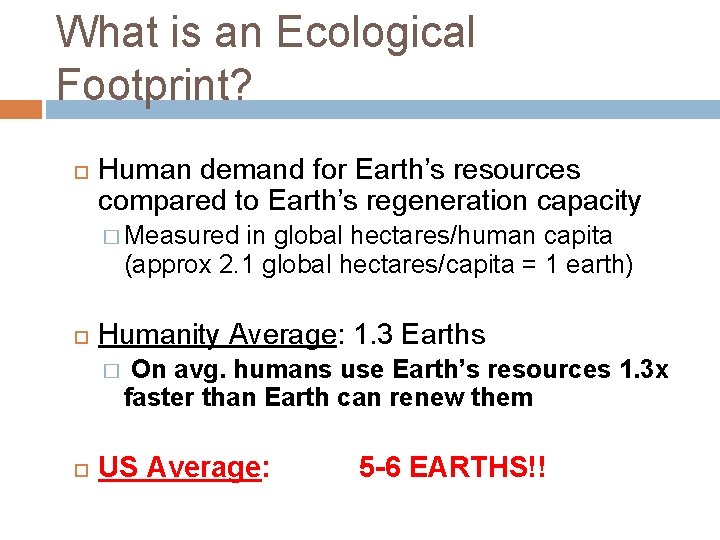
What is an Ecological Footprint? Human demand for Earth’s resources compared to Earth’s regeneration capacity � Measured in global hectares/human capita (approx 2. 1 global hectares/capita = 1 earth) Humanity Average: 1. 3 Earths � On avg. humans use Earth’s resources 1. 3 x faster than Earth can renew them US Average: 5 -6 EARTHS!!
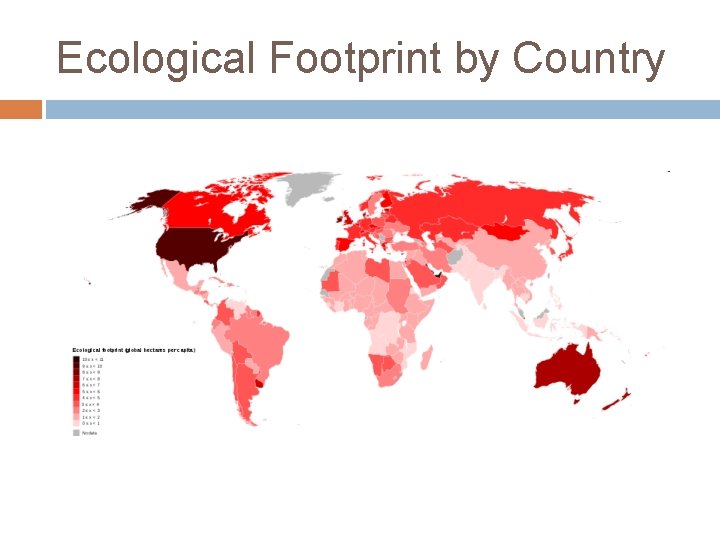
Ecological Footprint by Country
Places like United States (500 million people) = HUGE ecological footprint BUT India and China (1 billion people each) = SMALL ecological footprint Why is there such a big difference? ?
Take Out a Sheet of Paper… Places like United States (500 million people) = HUGE ecological footprint BUT India and China (1 billion people each) = SMALL ecological footprint Why is there such a big difference? ?
My. Footprint. org www. myfootprint. org “Green” non-profit non-governmental organization (NGO) Quiz designed to measure individual ecological footprint based on where you live and the lifestyle you lead � How often you use water, drive, use electricity, etc.
What Can We Do to Reduce Ours? In your tables, come up with strategies to reduce your own ecological footprints. � What methods of transportation? How often? � Recycle habits? � Spending habits? � Water use habits? � Use of power - gas, electricity, light sources?
GLOBAL WARMING REVIEW SLIDES
Global Warming and Gases Greenhouse Effect – too thick (troposphere) � Too much heat trapped CO 2 (fires, exhaling, fossil fuels) , CH 4 (landfills) , N 20 (cars), CFCs (aerosol, A/Cs) Carbon Cycle (oceans, plants/animals, volcanoes, dead matter)
Global Warming and Ice Albedo Effect – ice reflects sunlight � Positive Feedback Loop Sea Ice vs. Land Ice � Greenland (land) = 20 ft. increase in sea level Glaciers melting (water supply) Permafrost – frozen soil layer � Release methane, damage houses, access to oil
Global Warming and Life (Death) Extreme Weather (hurricanes, tornadoes) Disease (mosquitos) Extinctions (generalist species) Refugees (sea level rising) Thermohaline Circulation (ocean conveyor belt) � Warm, shallow, less salty water � Cold, deep, salty water
Measurements and Solutions? CO 2 levels � High in winter, low in summer…but rising on avg. Ice Core Samples � Some warming and cooling periods Kyoto Protocol (1997) – reduce G. H. gas emissions � US not involved (economic reasons)
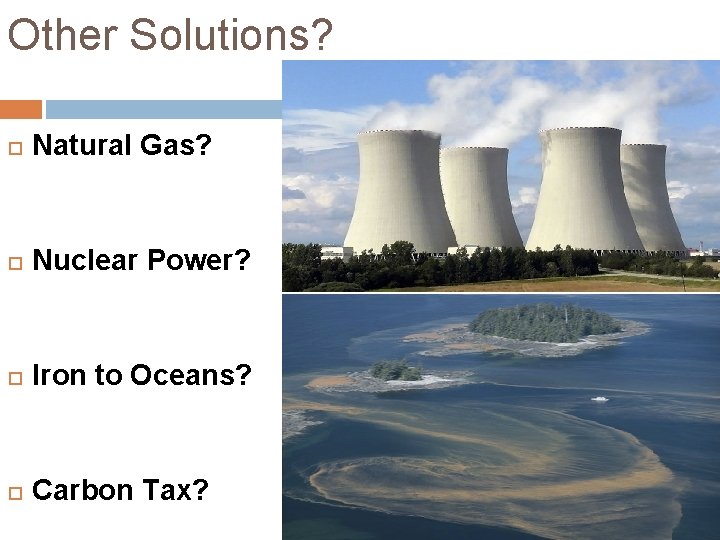
Other Solutions? Natural Gas? Nuclear Power? Iron to Oceans? Carbon Tax?
- Slides: 20