
Global Trade Analysis Project Scenario for Free Trade
Global Trade Analysis Project Scenario for Free Trade in APEC -From the viewpoint of Japan & NAFTA- Theo Jonker & Minoru Ono Aug. 1, 1998
Global Trade Analysis Project Goal in APEC • In 1994, APEC members agreed Free Trade by 2010 for industrialized countries by 2020 for developing countries

Global Trade Analysis Project Problem • In Chapter 9 of GTAP BOOK……. . Free Trade in all sectors • But……… Tough trade negotiation in food sector Easier in manufacturing sector
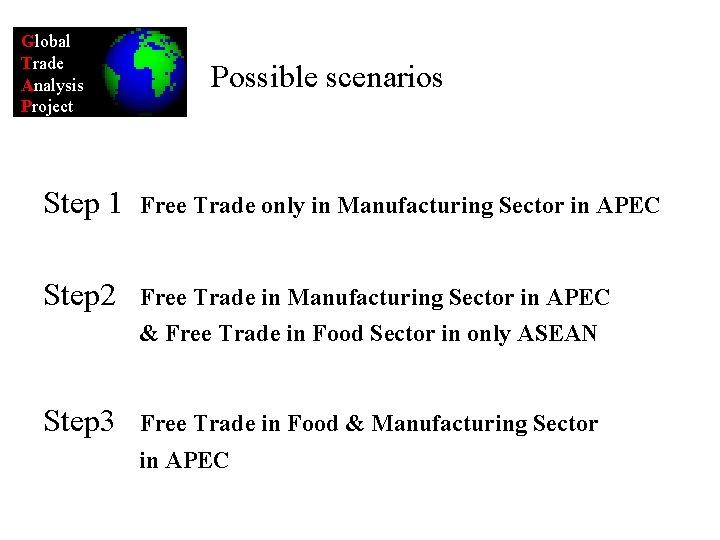
Global Trade Analysis Project Possible scenarios Step 1 Free Trade only in Manufacturing Sector in APEC Step 2 Free Trade in Manufacturing Sector in APEC & Free Trade in Food Sector in only ASEAN Step 3 Free Trade in Food & Manufacturing Sector in APEC
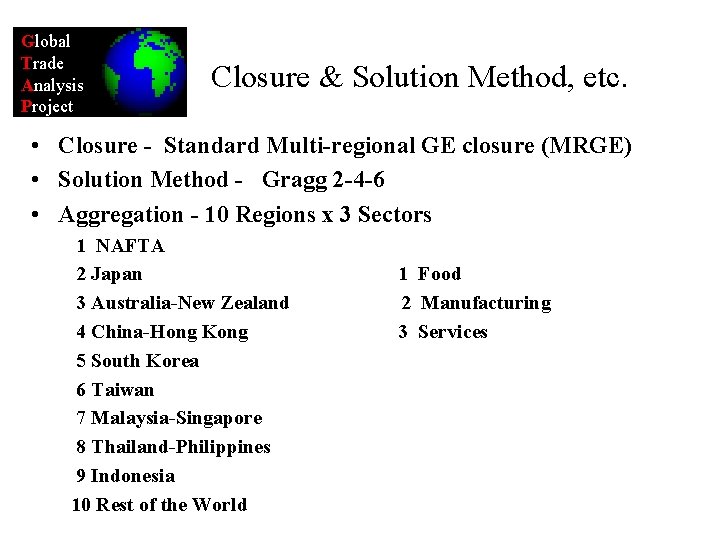
Global Trade Analysis Project Closure & Solution Method, etc. • Closure - Standard Multi-regional GE closure (MRGE) • Solution Method - Gragg 2 -4 -6 • Aggregation - 10 Regions x 3 Sectors 1 NAFTA 2 Japan 3 Australia-New Zealand 4 China-Hong Kong 5 South Korea 6 Taiwan 7 Malaysia-Singapore 8 Thailand-Philippines 9 Indonesia 10 Rest of the World 1 Food 2 Manufacturing 3 Services
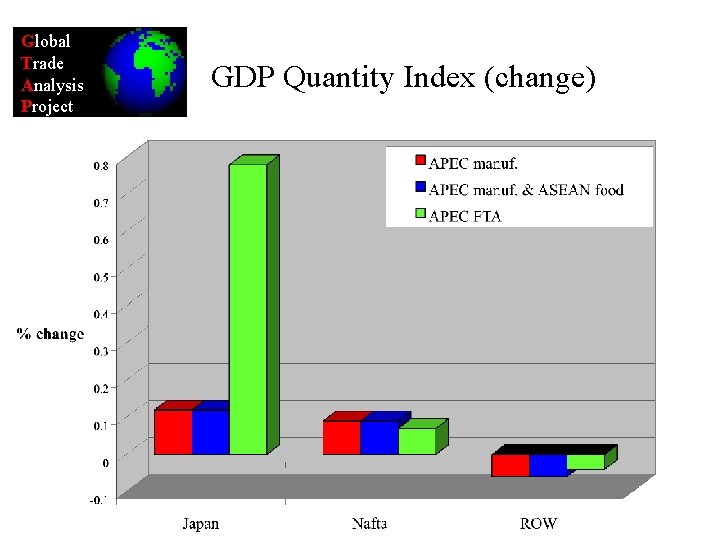
Global Trade Analysis Project GDP Quantity Index (change)
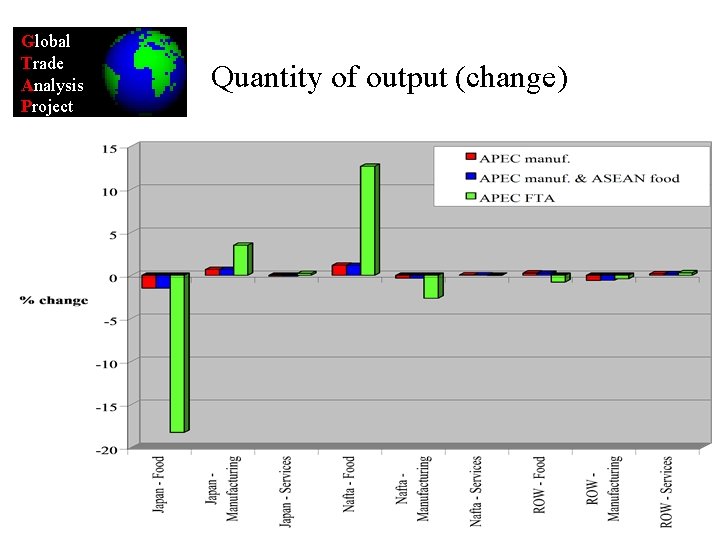
Global Trade Analysis Project Quantity of output (change)
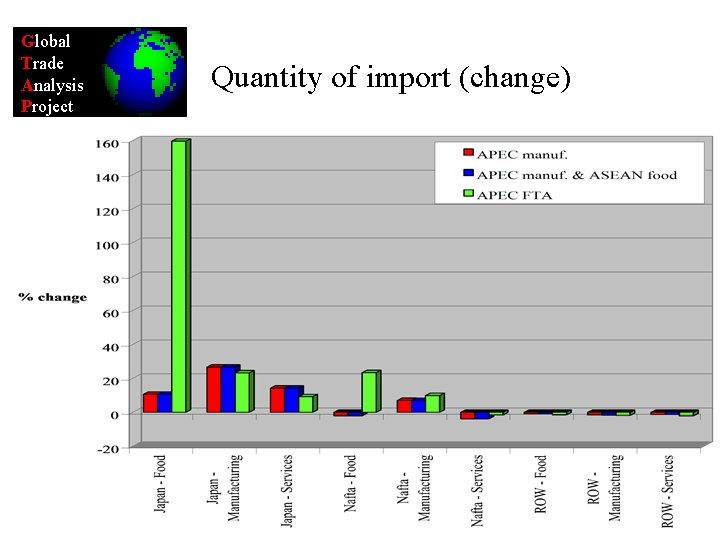
Global Trade Analysis Project Quantity of import (change)
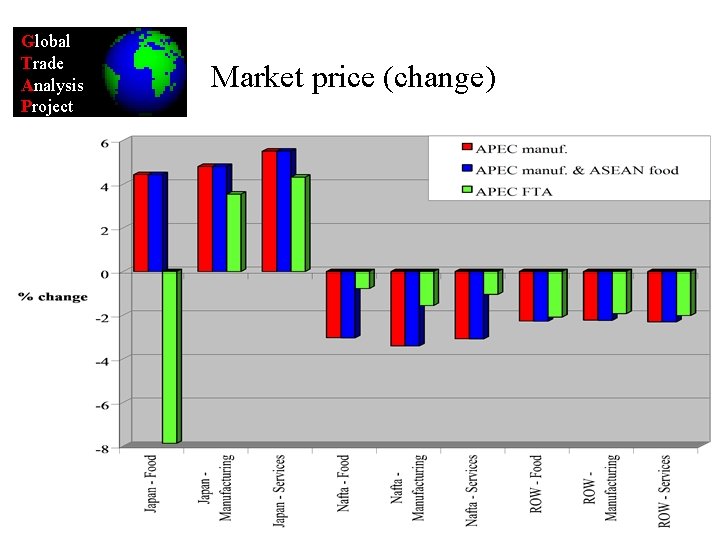
Global Trade Analysis Project Market price (change)
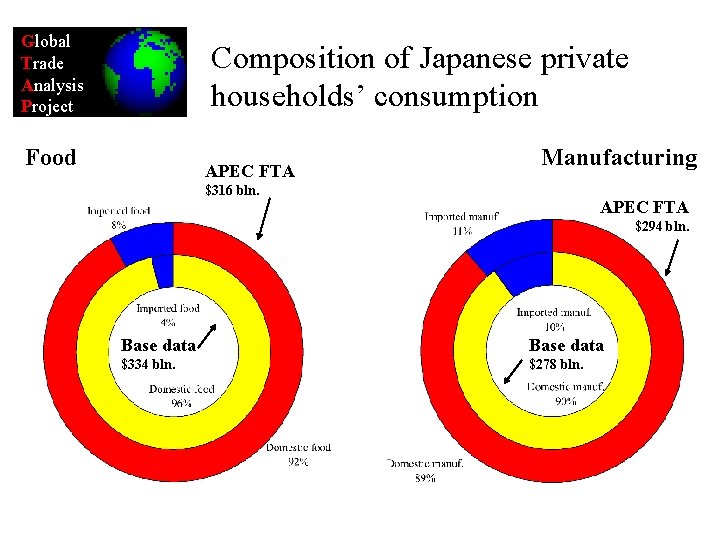
Global Trade Analysis Project Composition of Japanese private households’ consumption Food APEC FTA Manufacturing $316 bln. APEC FTA $294 bln. Base data $334 bln. $278 bln.
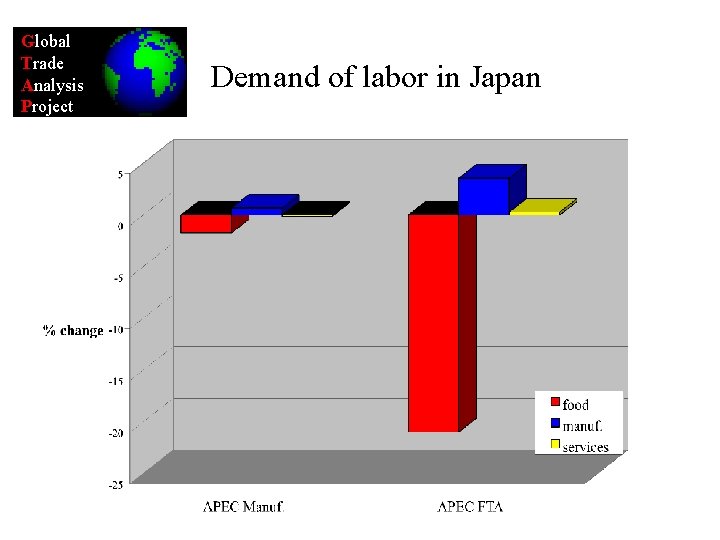
Global Trade Analysis Project Demand of labor in Japan
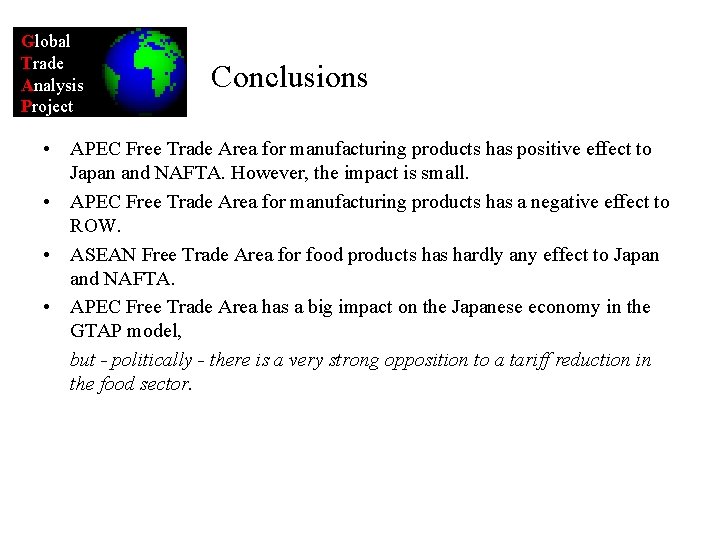
Global Trade Analysis Project Conclusions • APEC Free Trade Area for manufacturing products has positive effect to Japan and NAFTA. However, the impact is small. • APEC Free Trade Area for manufacturing products has a negative effect to ROW. • ASEAN Free Trade Area for food products hardly any effect to Japan and NAFTA. • APEC Free Trade Area has a big impact on the Japanese economy in the GTAP model, but - politically - there is a very strong opposition to a tariff reduction in the food sector.
Global Trade Analysis Project GTAP Short Course 1998 Free Trade in the Pacific Rim Chapter 9 Extensions
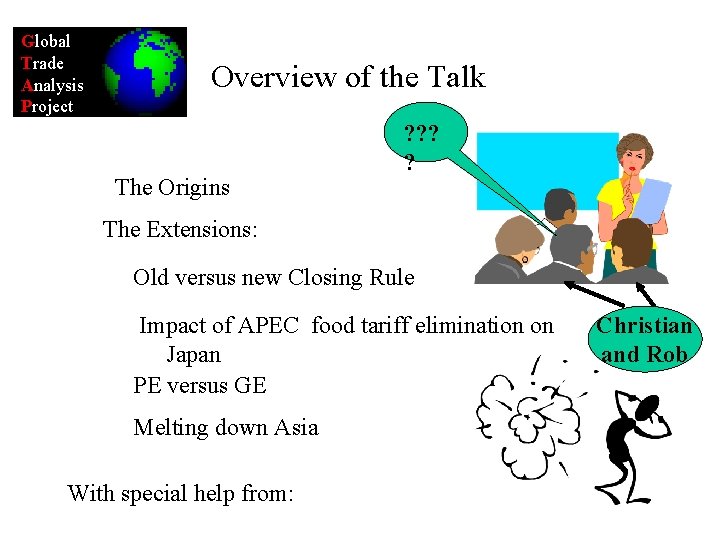
Global Trade Analysis Project Overview of the Talk The Origins ? ? The Extensions: Old versus new Closing Rule Impact of APEC food tariff elimination on Japan PE versus GE Melting down Asia With special help from: Christian and Rob
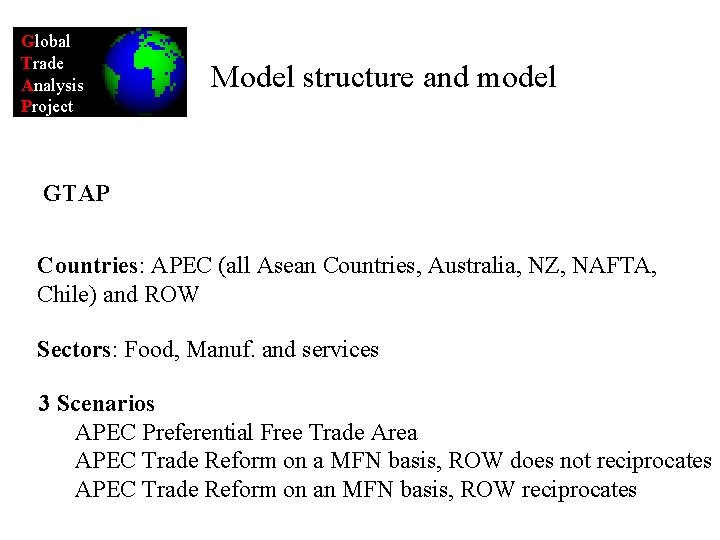
Global Trade Analysis Project Model structure and model Oooppss!!! GTAP GAMS/MPSGE Countries: APEC (all Asean Countries, Australia, NZ, NAFTA, Chile) and ROW Sectors: Food, Manuf. and services 3 Scenarios APEC Preferential Free Trade Area APEC Trade Reform on a MFN basis, ROW does not reciprocates APEC Trade Reform on an MFN basis, ROW reciprocates
Global Trade Analysis Project Results • Overall welfare effects as expected: MFN-Re>MFN>PR • Liwayway and Michael, “Playing Games with GTAP”, paper to published at the coming conference in Denmark (please do not quote) • No incentive for ROW to reciprocate: MFN better • MFN: but NAM and ANZ are the big loosers • PR will be the solution • Once again Nam is a big looser • No Trade Reform!
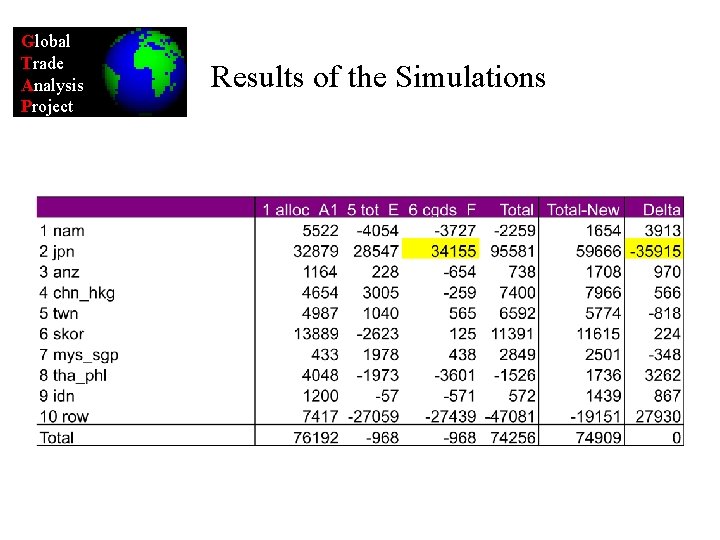
Global Trade Analysis Project Results of the Simulations
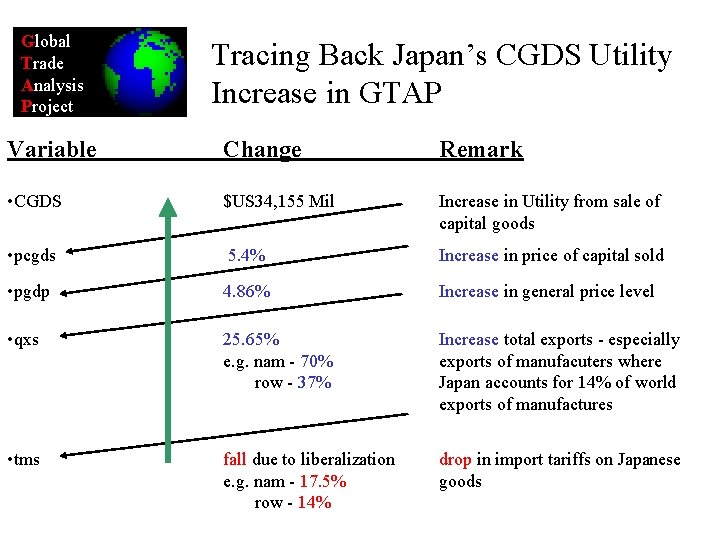
Global Trade Analysis Project Tracing Back Japan’s CGDS Utility Increase in GTAP Variable Change Remark • CGDS $US 34, 155 Mil Increase in Utility from sale of capital goods • pcgds 5. 4% Increase in price of capital sold • pgdp 4. 86% Increase in general price level • qxs 25. 65% e. g. nam - 70% row - 37% Increase total exports - especially exports of manufacuters where Japan accounts for 14% of world exports of manufactures • tms fall due to liberalization e. g. nam - 17. 5% row - 14% drop in import tariffs on Japanese goods
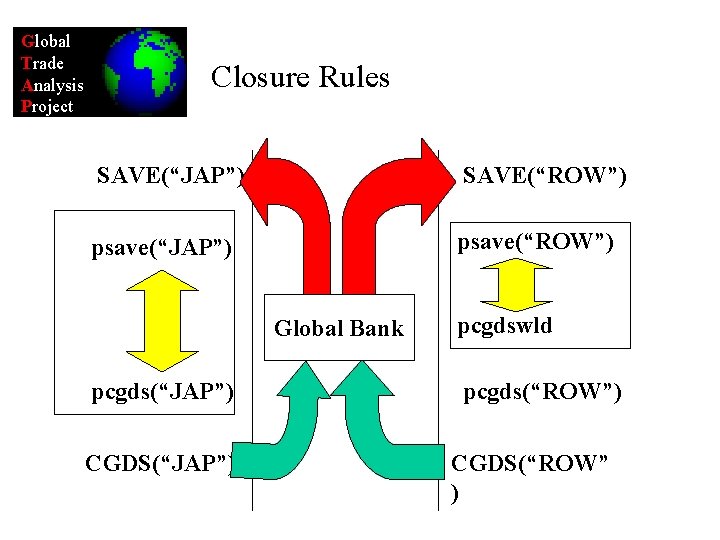
Global Trade Analysis Project Closure Rules SAVE(“JAP”) SAVE(“ROW”) psave(“JAP”) psave(“ROW”) Global Bank pcgds(“JAP”) CGDS(“JAP”) pcgdswld pcgds(“ROW”) CGDS(“ROW” )
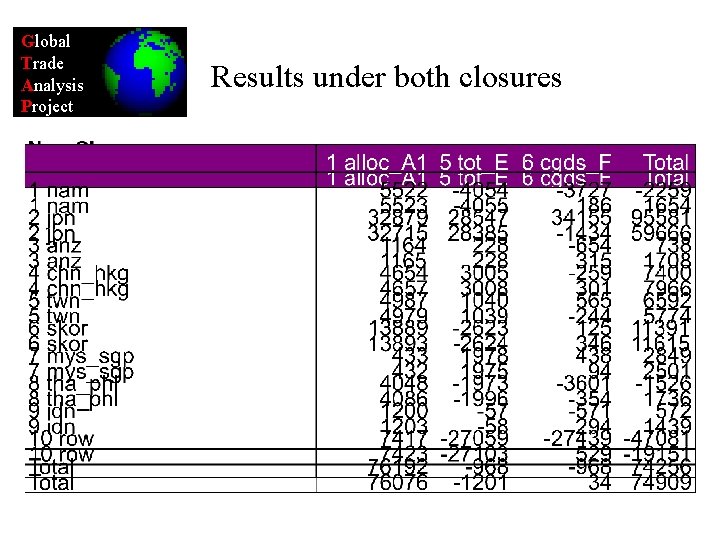
Global Trade Analysis Project Results under both closures
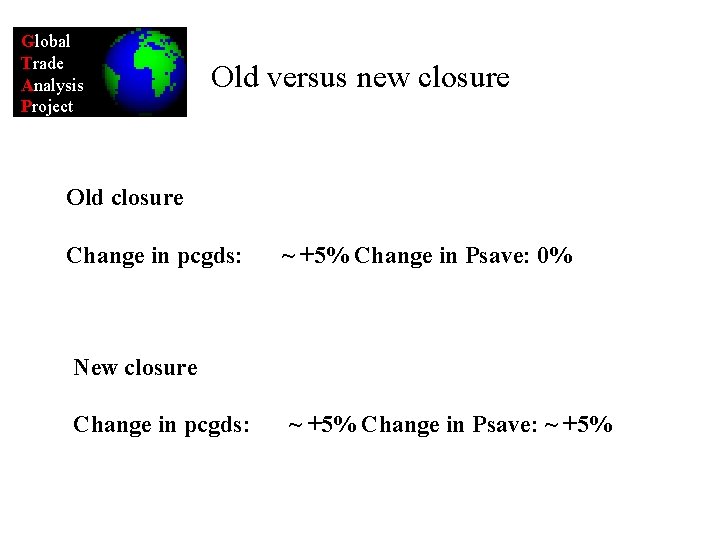
Global Trade Analysis Project Old versus new closure Old closure Change in pcgds: ~ +5% Change in Psave: 0% New closure Change in pcgds: ~ +5% Change in Psave: ~ +5%
Global Trade Analysis Project Impact of Asian Financial Crisis Sumio Ishikawa and Jianbang Gan
Global Trade Analysis Project MOTIVATION • To estimate the potential impact of increased risks in the Asian financial market; and • To analyze the role of the regional free trade agreement in the economic recovery in Asia.
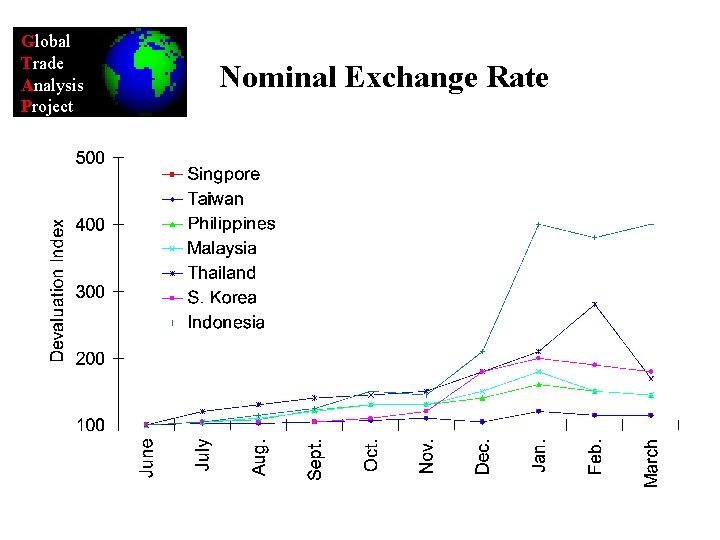
Global Trade Analysis Project Nominal Exchange Rate
Global Trade Analysis Project METHODOLOGY Modeling country risk and capital flows in GTAP (Gerard Malcolm, 1998): RORE(r)/RSK(r) = RORG rore(r) = rorg + risk(r) rore(r) = rorg + cgdslack(r), when RORDELTA = 1
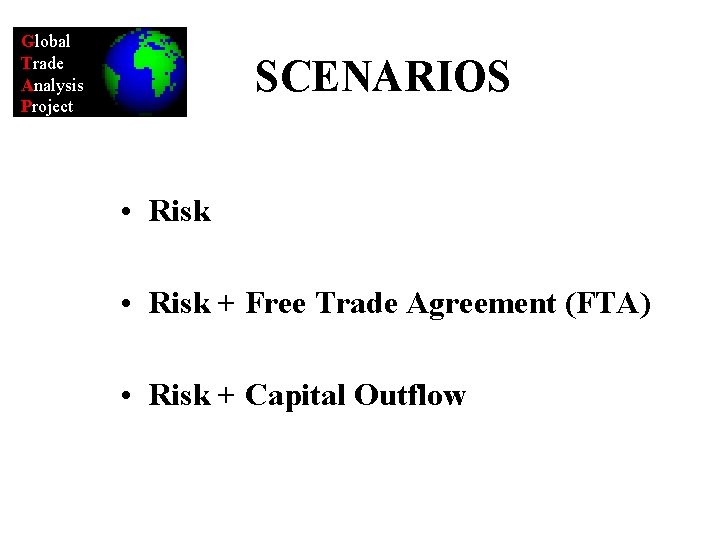
Global Trade Analysis Project SCENARIOS • Risk + Free Trade Agreement (FTA) • Risk + Capital Outflow
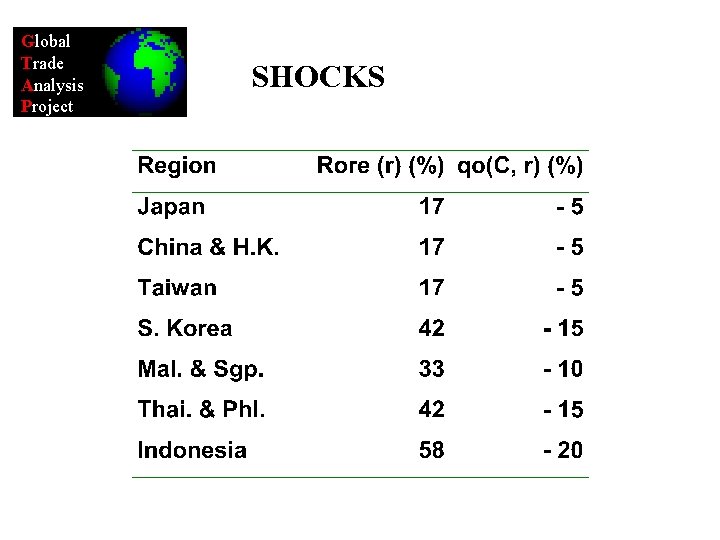
Global Trade Analysis Project SHOCKS
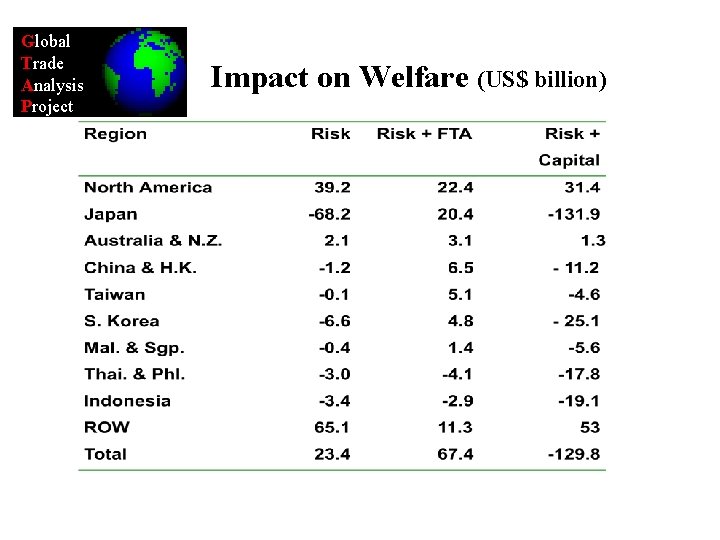
Global Trade Analysis Project Impact on Welfare (US$ billion)
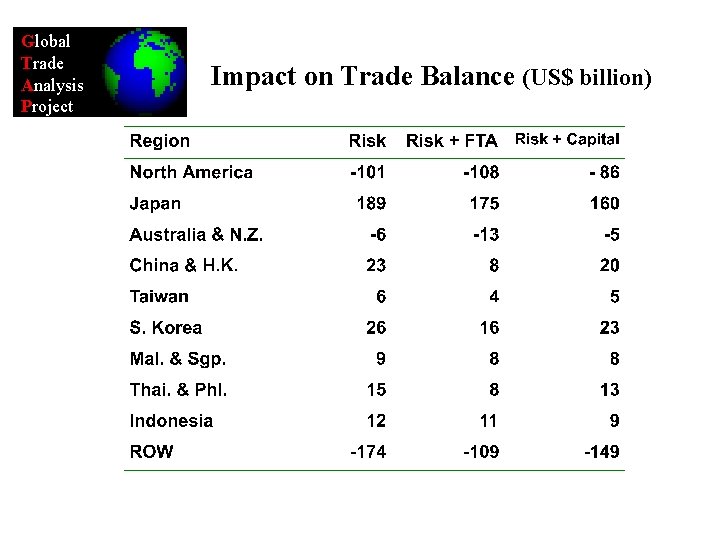
Global Trade Analysis Project Impact on Trade Balance (US$ billion)
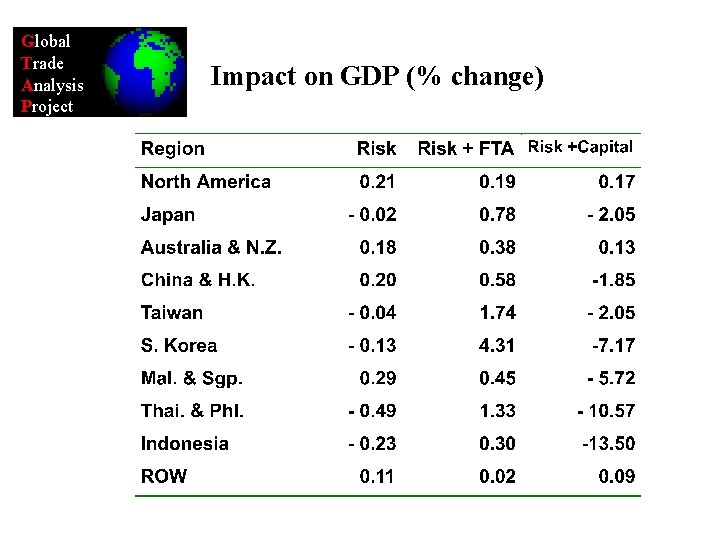
Global Trade Analysis Project Impact on GDP (% change)
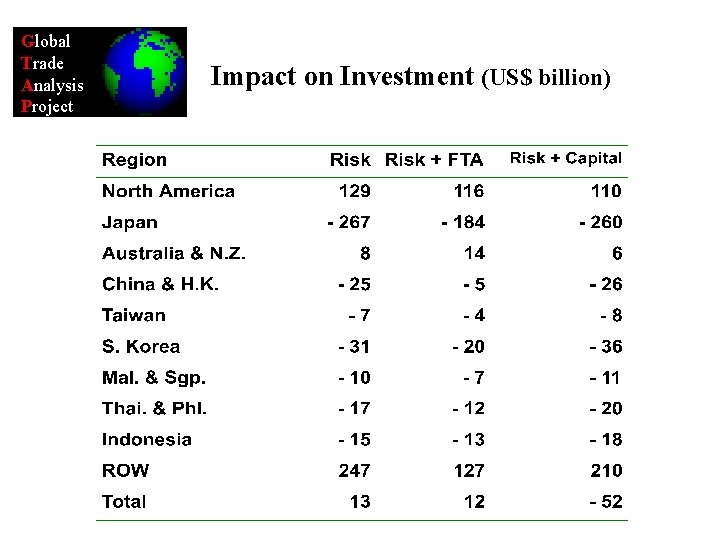
Global Trade Analysis Project Impact on Investment (US$ billion)
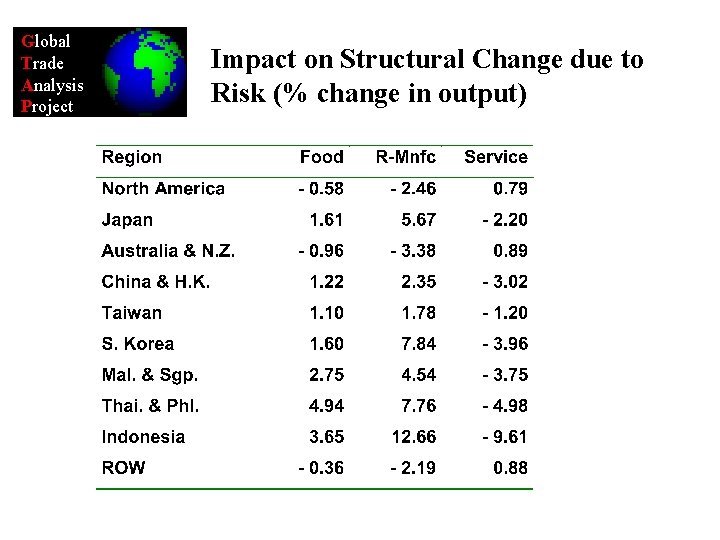
Global Trade Analysis Project Impact on Structural Change due to Risk (% change in output)
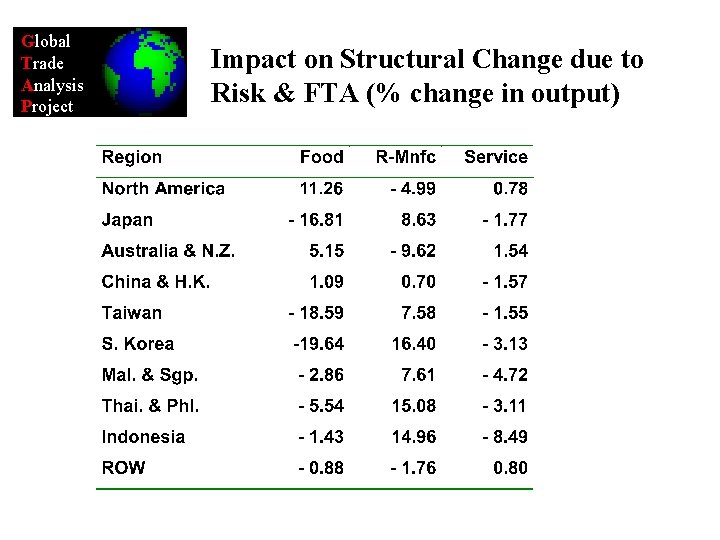
Global Trade Analysis Project Impact on Structural Change due to Risk & FTA (% change in output)
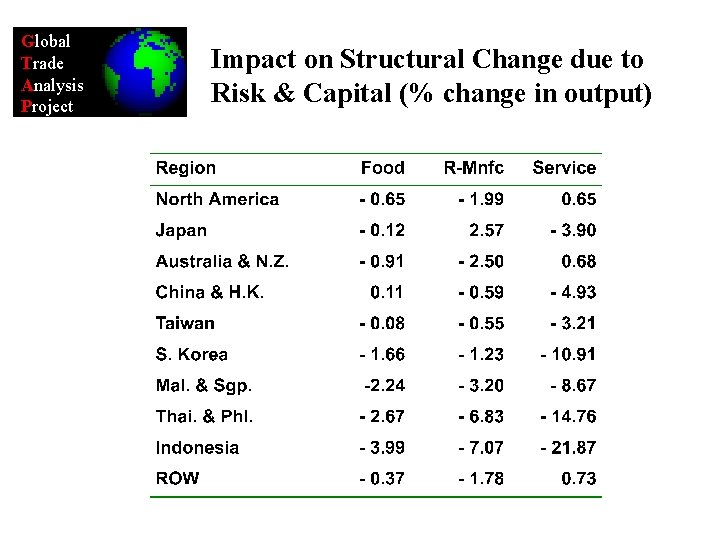
Global Trade Analysis Project Impact on Structural Change due to Risk & Capital (% change in output)
Global Trade Analysis Project CONCLUSIONS • Asian financial crisis has global impacts. • Regional trade liberalization will help economic recovery in Asia. • Additional capital outflows will intensify the impact of financial market risks.
- Slides: 35