
Global Registry of Acute Coronary Events Assessing Todays
Global Registry of Acute Coronary Events Assessing Today’s Practice Patterns to Enhance Tomorrow’s Care Supported by an unrestricted educational grant from sanofi-aventis to the Center for Outcomes Research University of Massachusetts Medical School
What is GRACE? Global Registry of Acute Coronary Events w Largest multinational registry covering the full spectrum of ACS w Generalizable patient inclusion criteria w In-hospital and 6 -month follow-up w Representative of the catchment population: (clusters of hospitals) w Full spectrum of hospitals and facilities w Training, audit and quality control
International Scientific Advisory Committee International Advisory Committee ‘Americas’ clusters Chair: JM Gore ‘European’ clusters Chair: KAA Fox 8 advisors 40 subsite cardiologists

Scientific Advisory Committee Co-Chairs Keith AA Fox, UK Joel M Gore, USA Publications Co-Chairs Kim A Eagle, USA Ph Gabriel Steg, France Study Co-ordination Fred Anderson, University of Massachusetts Argentina Enrique Gurfinkel Australia/New Zealand David Brieger Austria Georg Gaul Belgium Frans J Van de Werf Brazil Álvaro Avezum Canada Shaun Goodman Germany Dietrich C Gulba Italy Giancarlo Agnelli France Gilles Montalescot Ph Gabriel Steg Poland Andrzej Budaj Spain José López-Sendón United Kingdom Keith AA Fox Marcus Flather United States Frederick A Anderson Kim A Eagle Robert J Goldberg Joel M Gore Christopher B Granger Brian M Kennelly
Objectives of GRACE w Identify opportunities to improve the quality of care for patients with ACS w Describe diagnostic & treatment strategies, & hospital & post-discharge outcomes w Develop hypotheses for future clinical research w Disseminate findings to a wider audience
Core GRACE Study Design w ~100 hospitals in 14 countries – Europe, North & South America, Australia, New Zealand w Population-based clusters with community hospitals and referral centres w First 10 -20 consecutive cases per centre/month: qualifying symptoms PLUS evidence of CAD w Random audit of all centres: 3 year cycle
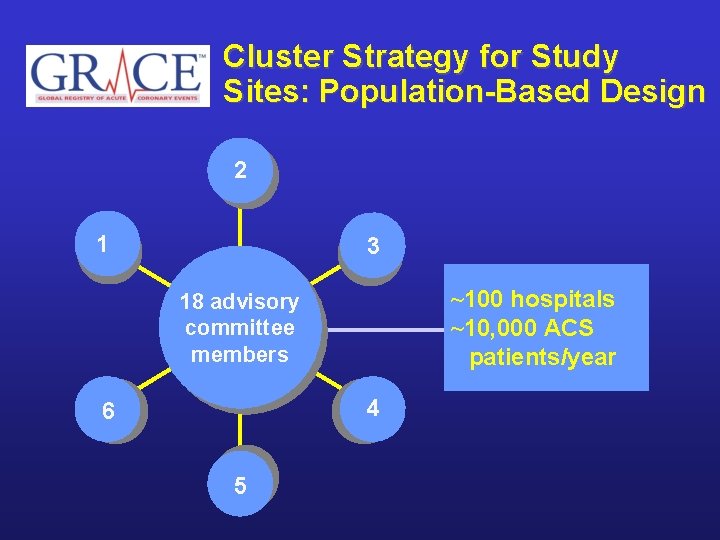
Cluster Strategy for Study Sites: Population-Based Design 2 1 3 ~100 hospitals ~10, 000 ACS patients/year 18 advisory committee members 4 6 5
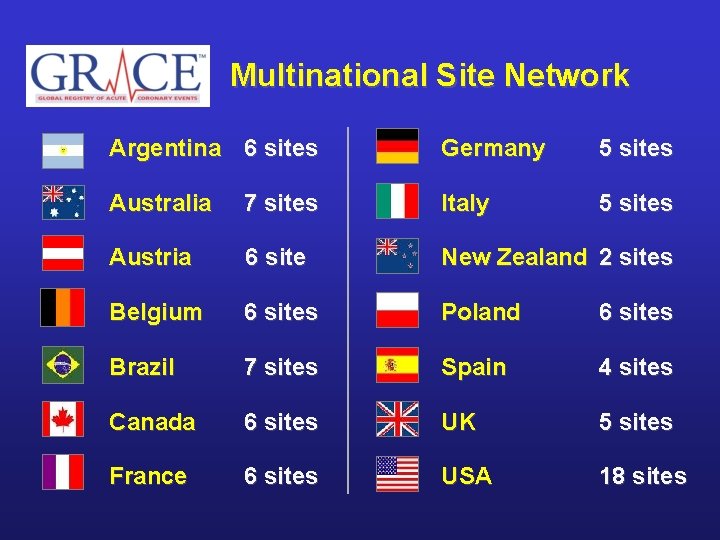
Multinational Site Network Argentina 6 sites Germany 5 sites Australia 7 sites Italy 5 sites Austria 6 site New Zealand 2 sites Belgium 6 sites Poland 6 sites Brazil 7 sites Spain 4 sites Canada 6 sites UK 5 sites France 6 sites USA 18 sites
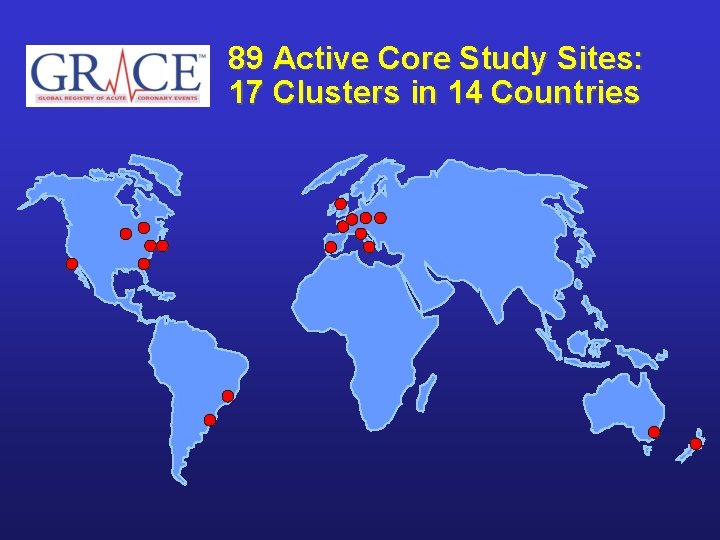
89 Active Core Study Sites: 17 Clusters in 14 Countries
Status of 17 Core Clusters w 70, 359 cases enrolled w 85% six-month follow-up Q 4 -2007

The “Big Picture” Core GRACE & GRACE 2 GRACE Core Substudy 1 Substudy 3 Substudy 2 GRACE Core 70, 359 patients 89 hospitals 14 countries GRACE 2 31, 982 patients 158 hospitals 23 countries

247 Core GRACE & GRACE 2 Study Sites in 30 Countries* *30 countries = 16 GRACE 2 + 7 core GRACE + 7 both
Status: December 31, 2007 89 Core & 158 Expanded Sites w 30 countries w 247 hospitals w 102, 341 cases Q 4 -2007

Internet Website www. outcomes. org/grace
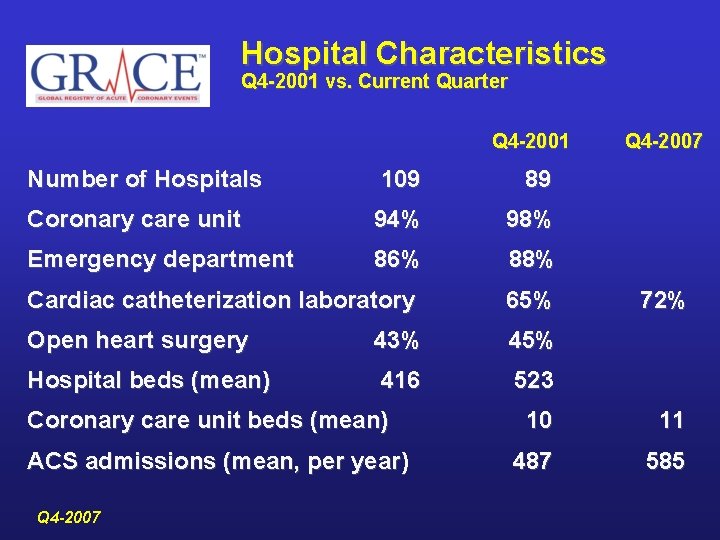
Hospital Characteristics Q 4 -2001 vs. Current Quarter Q 4 -2001 Number of Hospitals 109 89 Coronary care unit 94% 98% Emergency department 86% 88% Cardiac catheterization laboratory 65% Open heart surgery 43% 45% Hospital beds (mean) 416 523 Coronary care unit beds (mean) ACS admissions (mean, per year) Q 4 -2007 72% 10 11 487 585
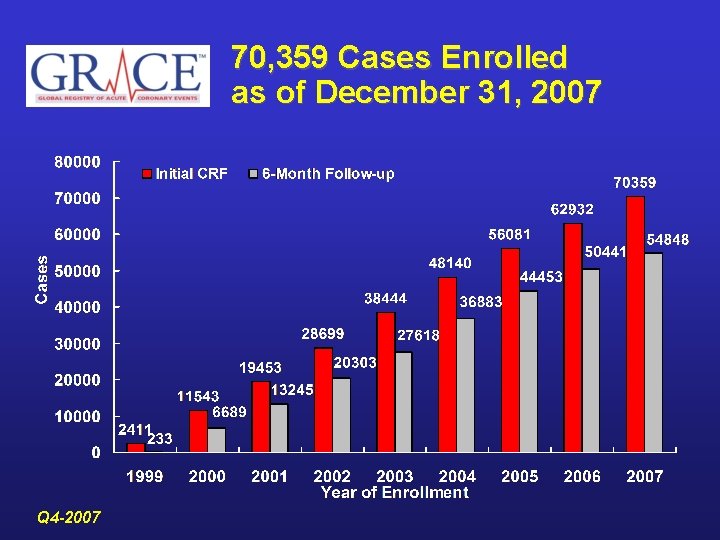
70, 359 Cases Enrolled as of December 31, 2007 Q 4 -2007
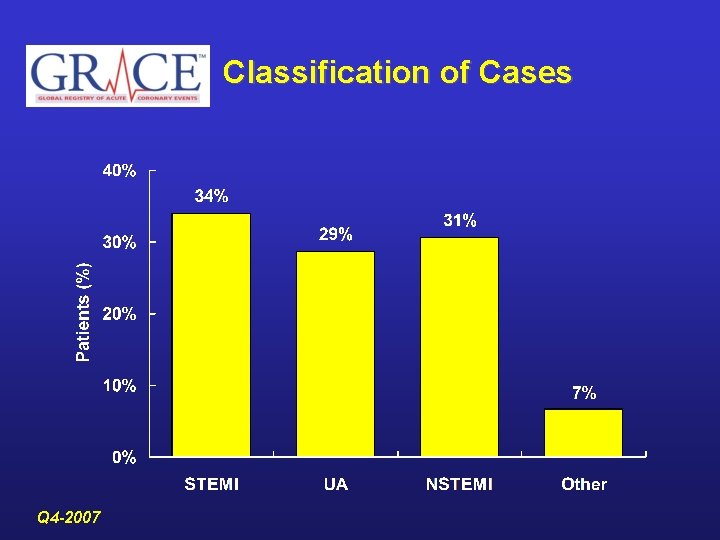
Classification of Cases Q 4 -2007
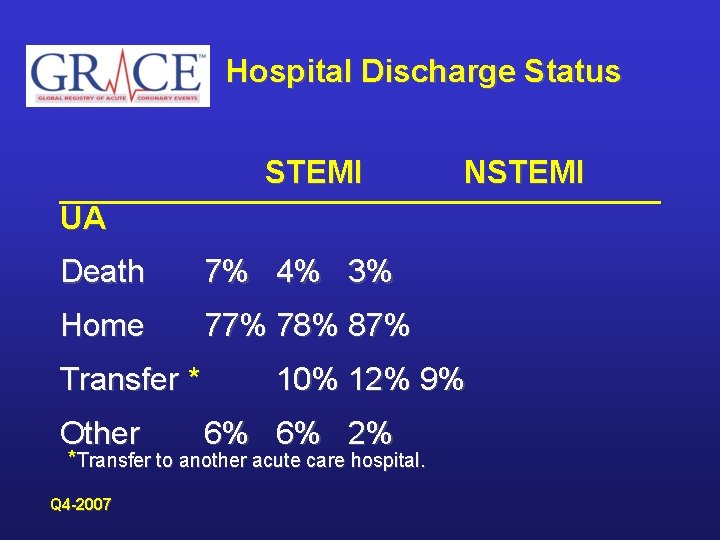
Hospital Discharge Status STEMI NSTEMI UA Death 7% 4% 3% Home 77% 78% 87% Transfer * Other 10% 12% 9% 6% 6% 2% *Transfer to another acute care hospital. Q 4 -2007
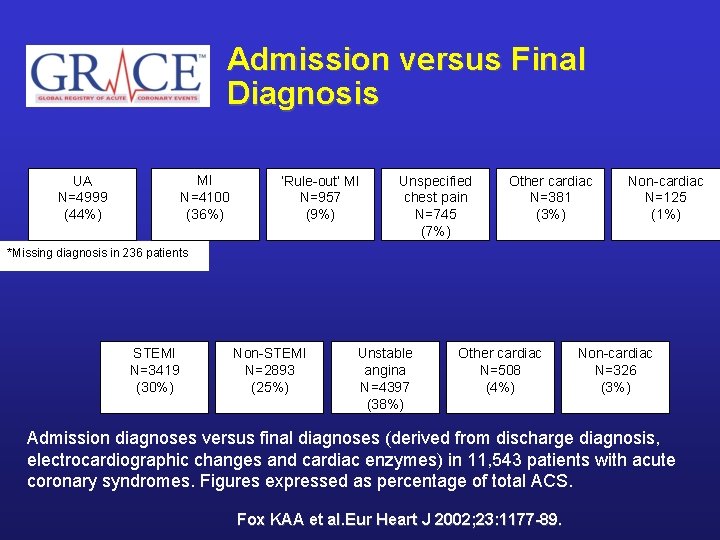
Admission versus Final Diagnosis MI N=4100 (36%) UA N=4999 (44%) ‘Rule-out’ MI N=957 (9%) Unspecified chest pain N=745 (7%) Other cardiac N=381 (3%) Non-cardiac N=125 (1%) *Missing diagnosis in 236 patients STEMI N=3419 (30%) Non-STEMI N=2893 (25%) Unstable angina N=4397 (38%) Other cardiac N=508 (4%) Non-cardiac N=326 (3%) Admission diagnoses versus final diagnoses (derived from discharge diagnosis, electrocardiographic changes and cardiac enzymes) in 11, 543 patients with acute coronary syndromes. Figures expressed as percentage of total ACS. Fox KAA et al. Eur Heart J 2002; 23: 1177 -89.
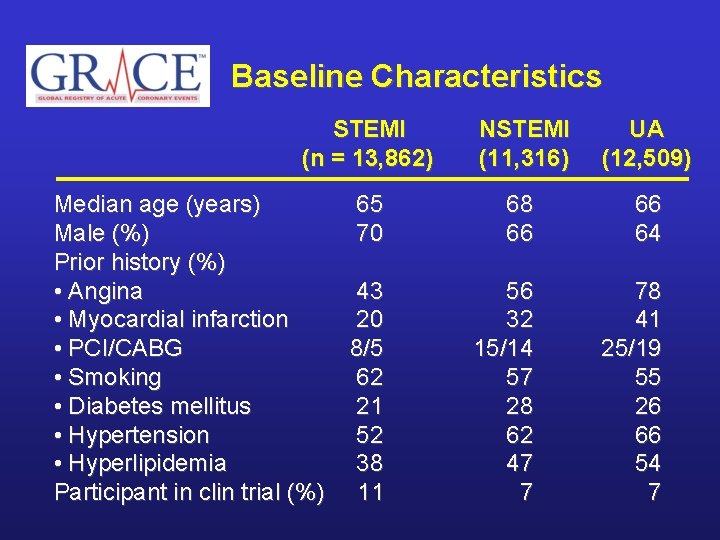
Baseline Characteristics STEMI (n = 13, 862) Median age (years) Male (%) Prior history (%) • Angina • Myocardial infarction • PCI/CABG • Smoking • Diabetes mellitus • Hypertension • Hyperlipidemia Participant in clin trial (%) NSTEMI (11, 316) UA (12, 509) 65 70 68 66 66 64 43 20 8/5 62 21 52 38 11 56 32 15/14 57 28 62 47 7 78 41 25/19 55 26 66 54 7
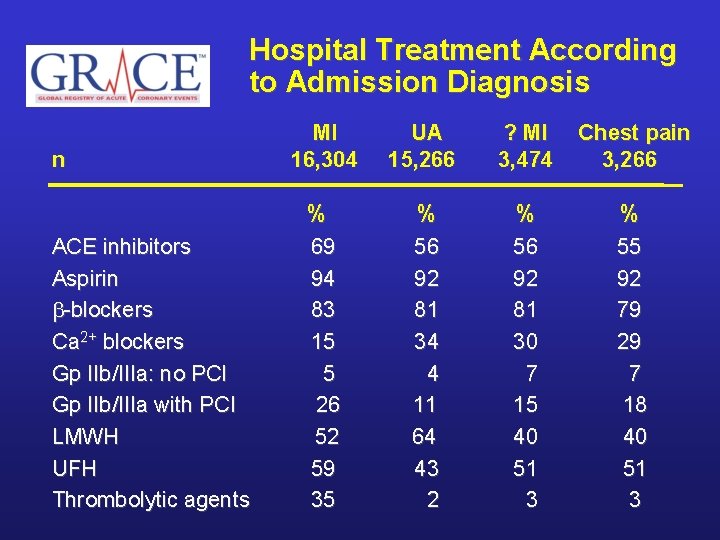
Hospital Treatment According to Admission Diagnosis n ACE inhibitors Aspirin -blockers Ca 2+ blockers Gp IIb/IIIa: no PCI Gp IIb/IIIa with PCI LMWH UFH Thrombolytic agents MI 16, 304 UA 15, 266 ? MI 3, 474 Chest pain 3, 266 % % 69 94 83 15 5 26 52 59 35 56 92 81 34 4 11 64 43 2 56 92 81 30 7 15 40 51 3 55 92 79 29 7 18 40 51 3
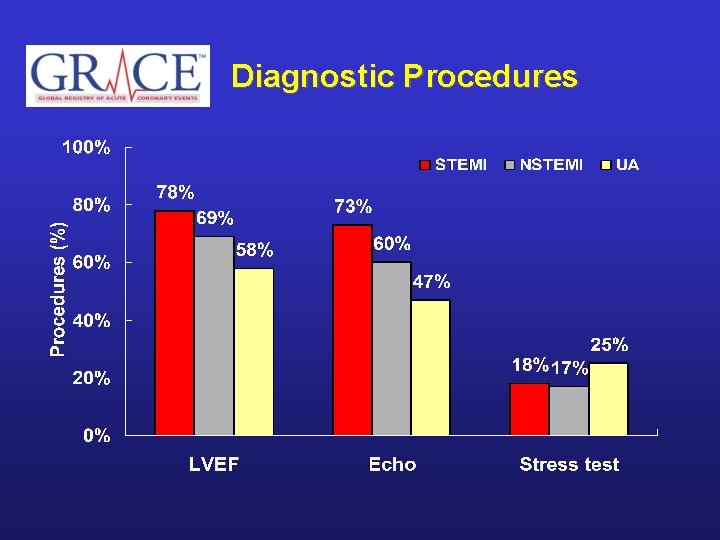
Diagnostic Procedures
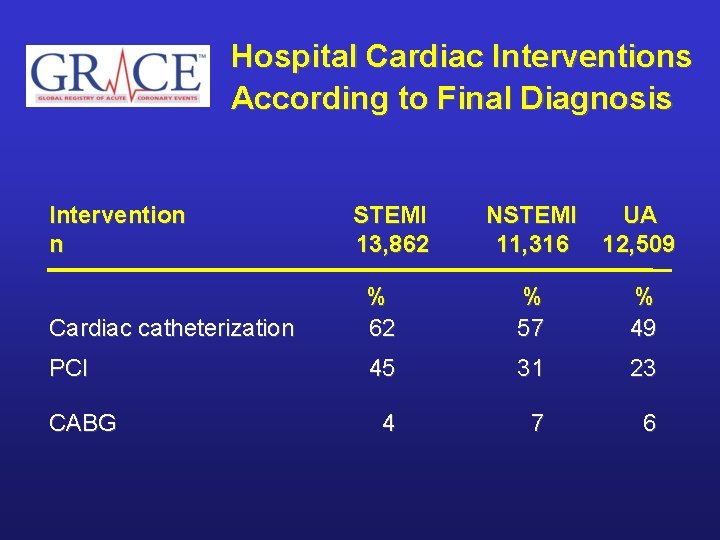
Hospital Cardiac Interventions According to Final Diagnosis Intervention n NSTEMI 11, 316 UA 12, 509 Cardiac catheterization % 62 % 57 % 49 PCI 45 31 23 4 7 6 CABG STEMI 13, 862
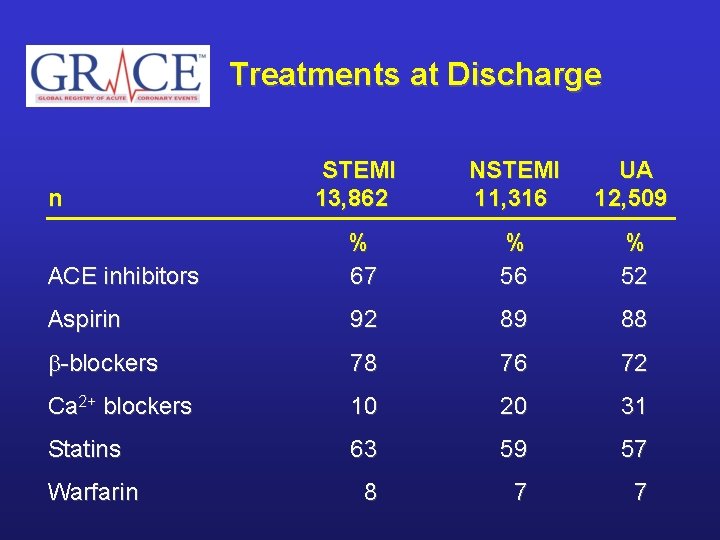
Treatments at Discharge NSTEMI 11, 316 UA 12, 509 ACE inhibitors % 67 % 56 % 52 Aspirin 92 89 88 -blockers 78 76 72 Ca 2+ blockers 10 20 31 Statins 63 59 57 8 7 7 n Warfarin STEMI 13, 862
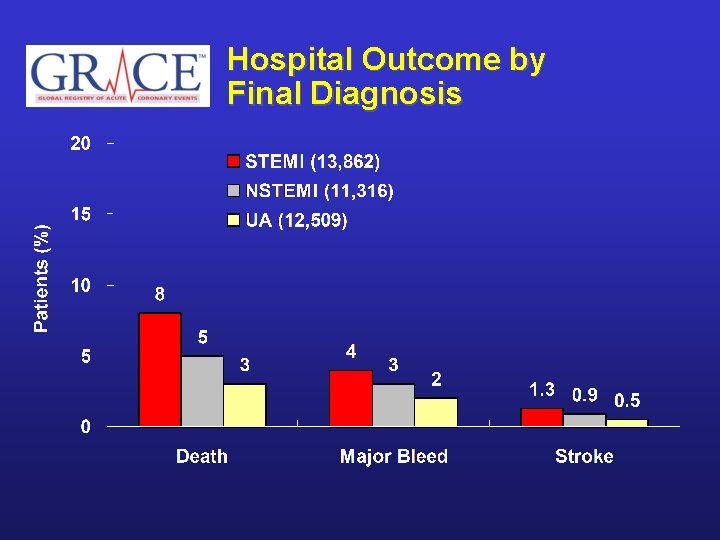
Hospital Outcome by Final Diagnosis
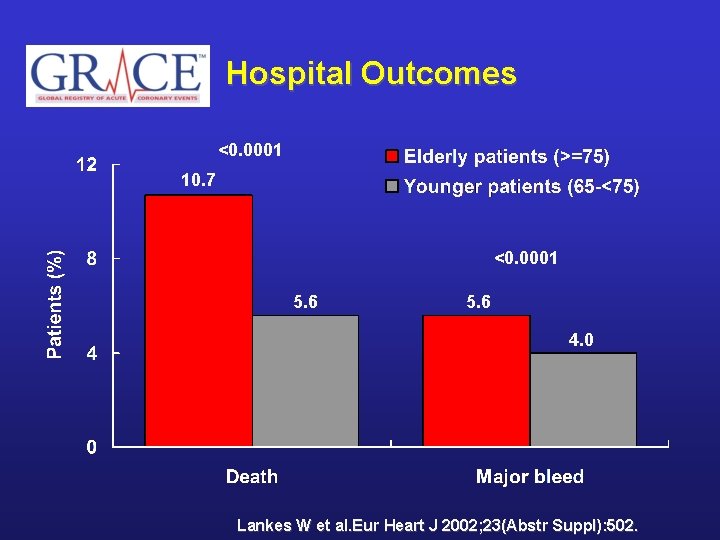
Hospital Outcomes <0. 0001 10. 7 <0. 0001 5. 6 4. 0 Lankes W et al. Eur Heart J 2002; 23(Abstr Suppl): 502.

What proportion of eligible patients receive reperfusion therapy?
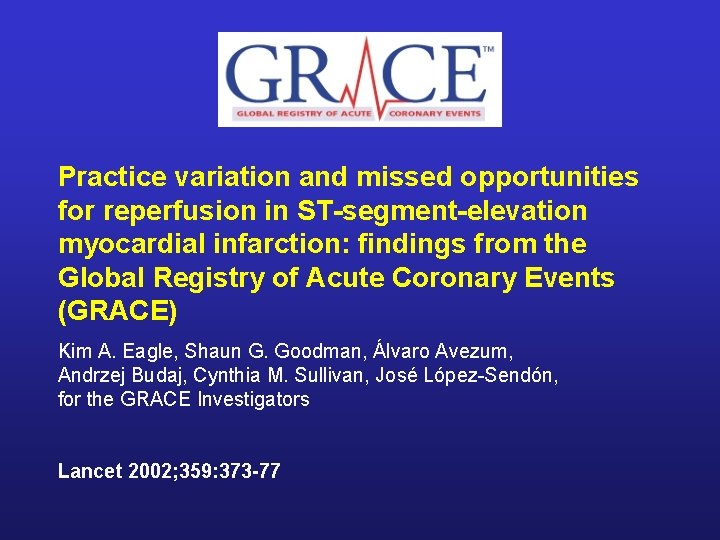
Practice variation and missed opportunities for reperfusion in ST-segment-elevation myocardial infarction: findings from the Global Registry of Acute Coronary Events (GRACE) Kim A. Eagle, Shaun G. Goodman, Álvaro Avezum, Andrzej Budaj, Cynthia M. Sullivan, José López-Sendón, for the GRACE Investigators Lancet 2002; 359: 373 -77
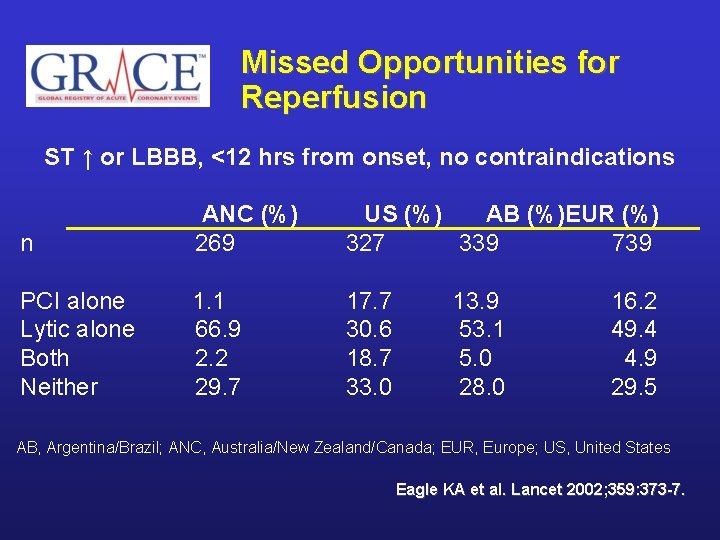
Missed Opportunities for Reperfusion ST ↑ or LBBB, <12 hrs from onset, no contraindications n ANC (%) 269 US (%) AB (%)EUR (%) 327 339 739 PCI alone Lytic alone Both Neither 1. 1 66. 9 2. 2 29. 7 17. 7 30. 6 18. 7 33. 0 13. 9 53. 1 5. 0 28. 0 16. 2 49. 4 4. 9 29. 5 AB, Argentina/Brazil; ANC, Australia/New Zealand/Canada; EUR, Europe; US, United States Eagle KA et al. Lancet 2002; 359: 373 -7.
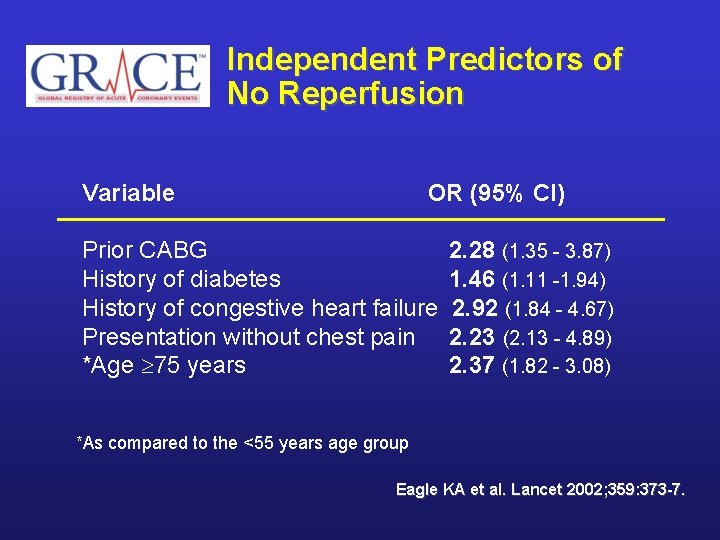
Independent Predictors of No Reperfusion Variable OR (95% CI) Prior CABG History of diabetes History of congestive heart failure Presentation without chest pain *Age 75 years 2. 28 (1. 35 - 3. 87) 1. 46 (1. 11 -1. 94) 2. 92 (1. 84 - 4. 67) 2. 23 (2. 13 - 4. 89) 2. 37 (1. 82 - 3. 08) *As compared to the <55 years age group Eagle KA et al. Lancet 2002; 359: 373 -7.
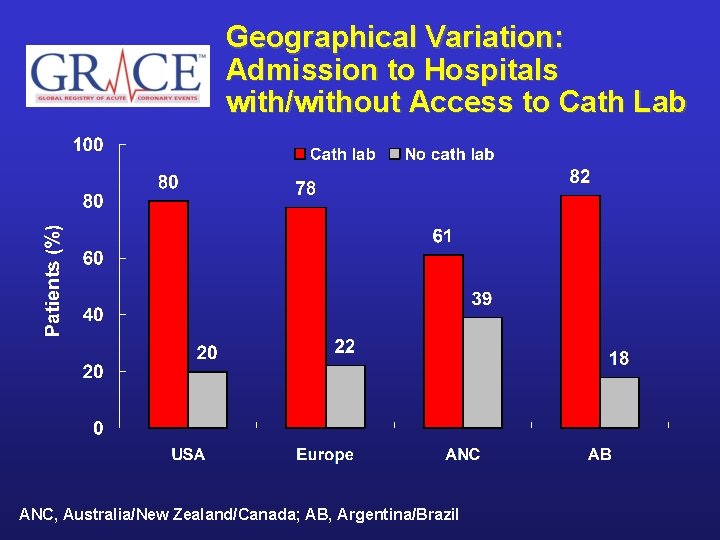
Geographical Variation: Admission to Hospitals with/without Access to Cath Lab ANC, Australia/New Zealand/Canada; AB, Argentina/Brazil
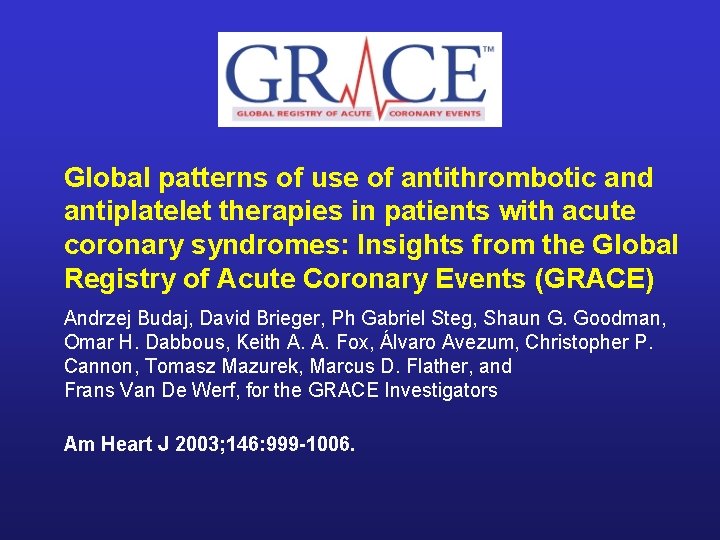
Global patterns of use of antithrombotic and antiplatelet therapies in patients with acute coronary syndromes: Insights from the Global Registry of Acute Coronary Events (GRACE) Andrzej Budaj, David Brieger, Ph Gabriel Steg, Shaun G. Goodman, Omar H. Dabbous, Keith A. A. Fox, Álvaro Avezum, Christopher P. Cannon, Tomasz Mazurek, Marcus D. Flather, and Frans Van De Werf, for the GRACE Investigators Am Heart J 2003; 146: 999 -1006.
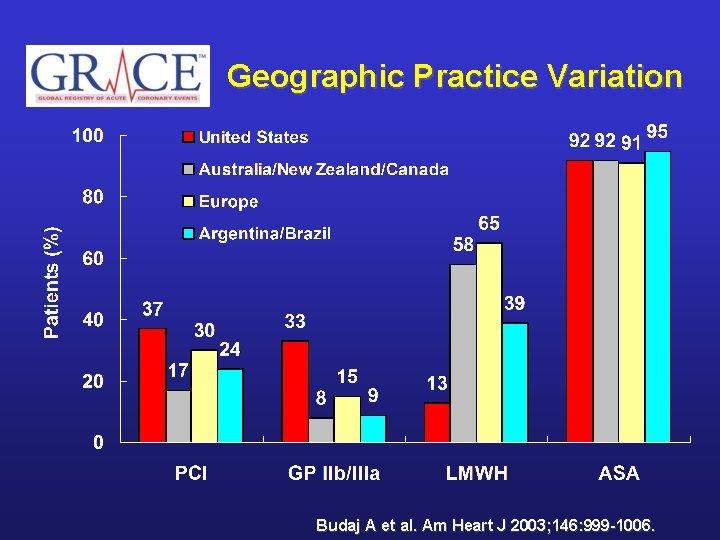
Geographic Practice Variation Budaj A et al. Am Heart J 2003; 146: 999 -1006.
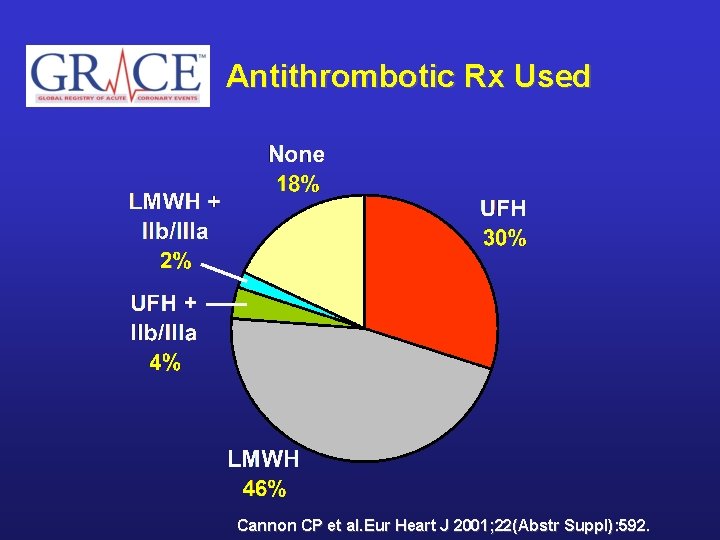
Antithrombotic Rx Used Cannon CP et al. Eur Heart J 2001; 22(Abstr Suppl): 592.
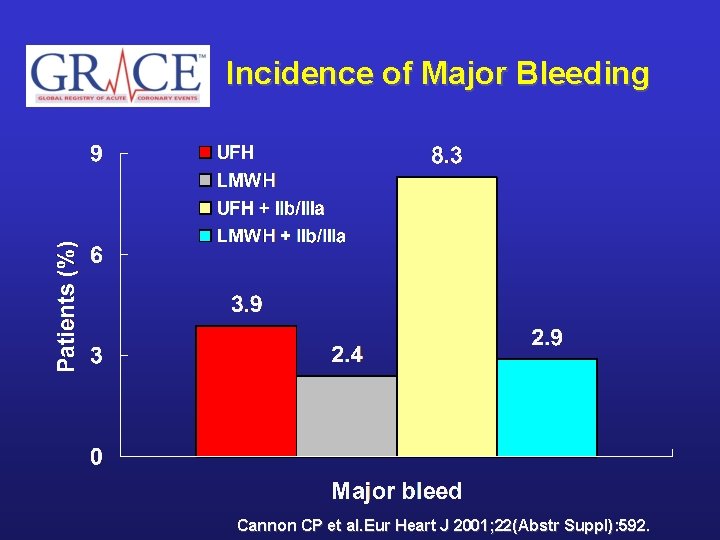
Incidence of Major Bleeding Cannon CP et al. Eur Heart J 2001; 22(Abstr Suppl): 592.
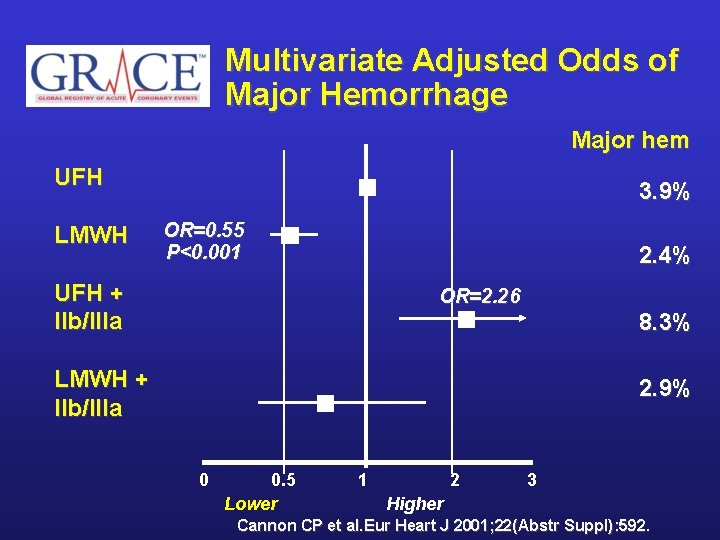
Multivariate Adjusted Odds of Major Hemorrhage Major hem UFH LMWH 3. 9% OR=0. 55 P<0. 001 2. 4% UFH + IIb/IIIa OR=2. 26 8. 3% LMWH + IIb/IIIa 2. 9% 0 0. 5 Lower 1 2 3 Higher Cannon CP et al. Eur Heart J 2001; 22(Abstr Suppl): 592.
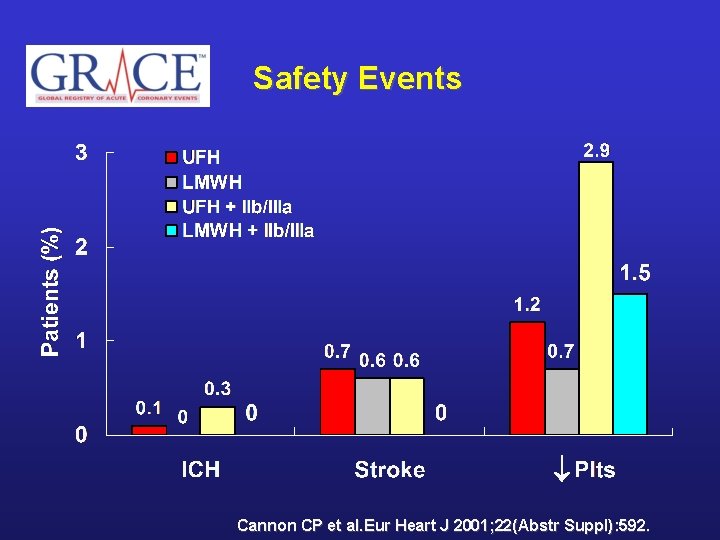
Safety Events Cannon CP et al. Eur Heart J 2001; 22(Abstr Suppl): 592.
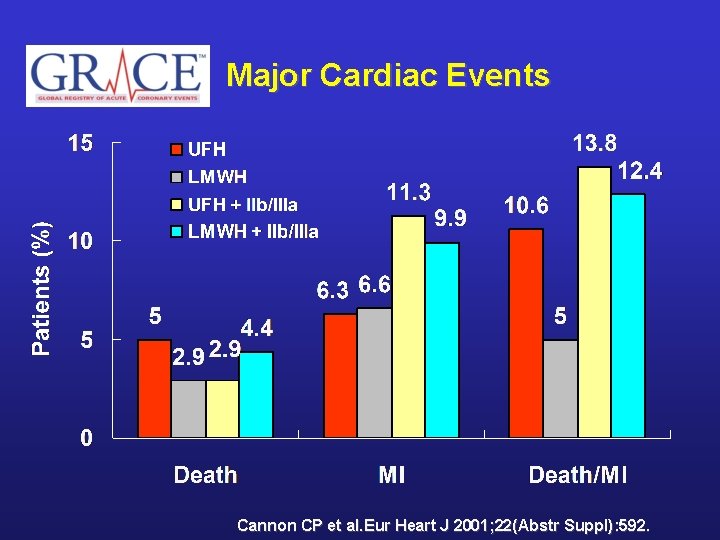
Major Cardiac Events Cannon CP et al. Eur Heart J 2001; 22(Abstr Suppl): 592.
Predictors of major bleeding in acute coronary syndromes: the Global Registry of Acute Coronary Events (GRACE) M. Moscucci, K. A. A. Fox, Christopher P. Cannon, W. Klein, José López-Sendón, G. Montalescot, K. White, R. J. Goldberg, for the GRACE Investigators European Heart Journal 2003; 24: 1815 -1823
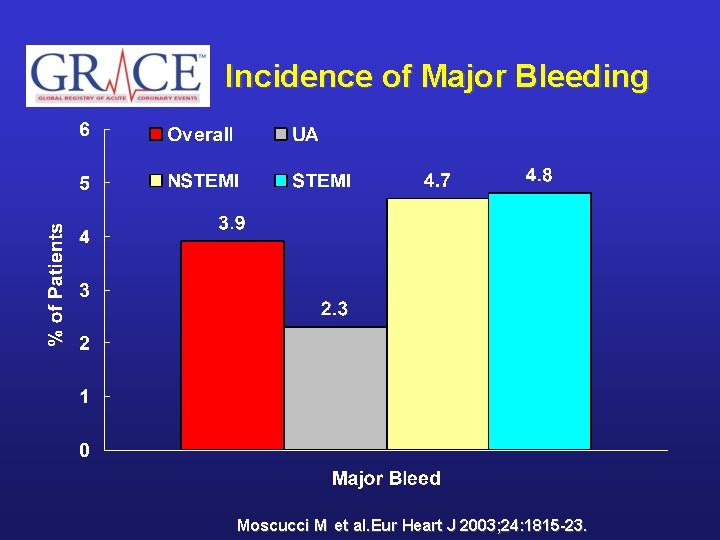
Incidence of Major Bleeding Moscucci M et al. Eur Heart J 2003; 24: 1815 -23.
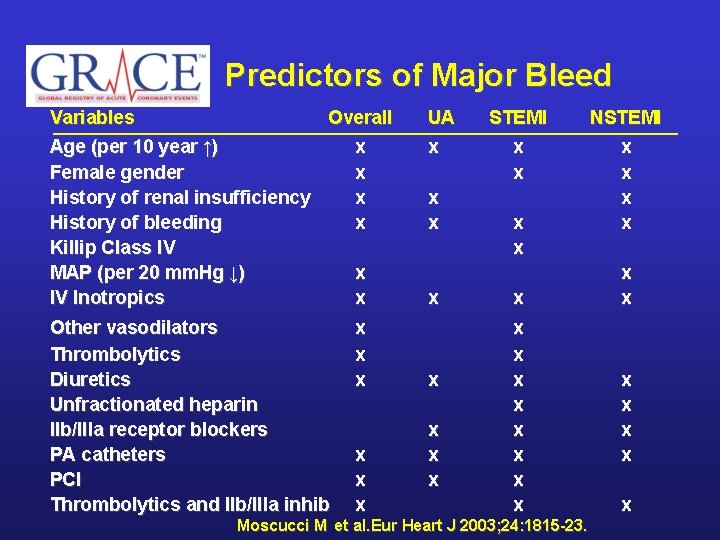
Predictors of Major Bleed Variables Overall Age (per 10 year ↑) Female gender History of renal insufficiency History of bleeding Killip Class IV MAP (per 20 mm. Hg ↓) IV Inotropics x x Other vasodilators Thrombolytics Diuretics Unfractionated heparin IIb/IIIa receptor blockers PA catheters PCI Thrombolytics and IIb/IIIa inhib x x x x UA x x x x STEMI NSTEMI x x x x x Moscucci M et al. Eur Heart J 2003; 24: 1815 -23. x x x x
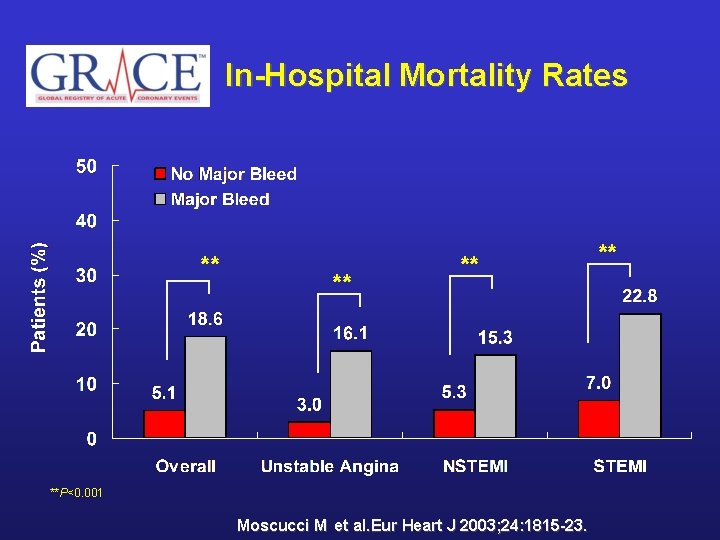
In-Hospital Mortality Rates ** **P<0. 001 Moscucci M et al. Eur Heart J 2003; 24: 1815 -23. **
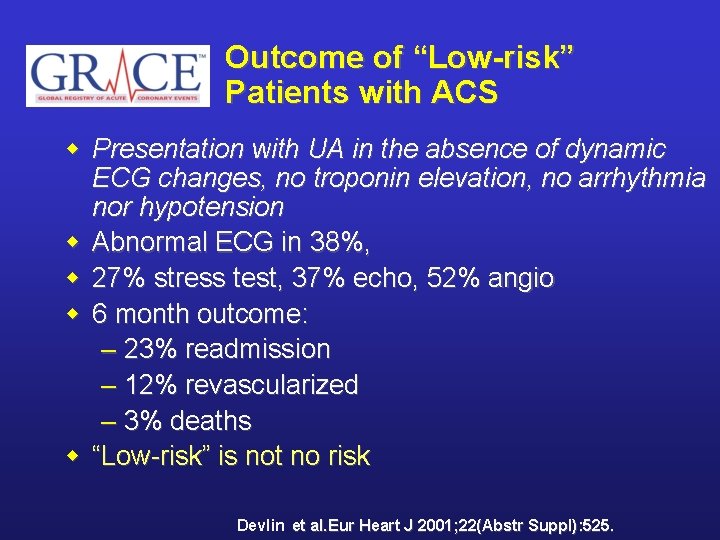
Outcome of “Low-risk” Patients with ACS w Presentation with UA in the absence of dynamic ECG changes, no troponin elevation, no arrhythmia nor hypotension w Abnormal ECG in 38%, w 27% stress test, 37% echo, 52% angio w 6 month outcome: – 23% readmission – 12% revascularized – 3% deaths w “Low-risk” is not no risk Devlin et al. Eur Heart J 2001; 22(Abstr Suppl): 525.
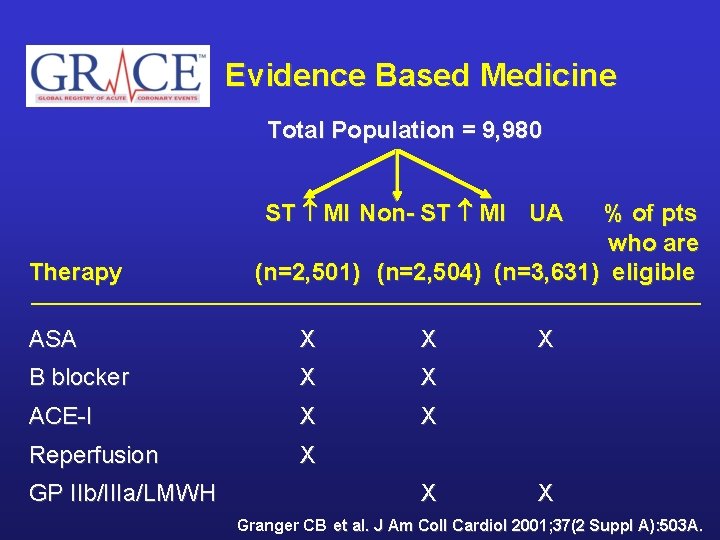
Evidence Based Medicine Total Population = 9, 980 ST MI Non- ST MI UA Therapy % of pts who are (n=2, 501) (n=2, 504) (n=3, 631) eligible ASA X X B blocker X X ACE-I X X Reperfusion X GP IIb/IIIa/LMWH X X X Granger CB et al. J Am Coll Cardiol 2001; 37(2 Suppl A): 503 A.
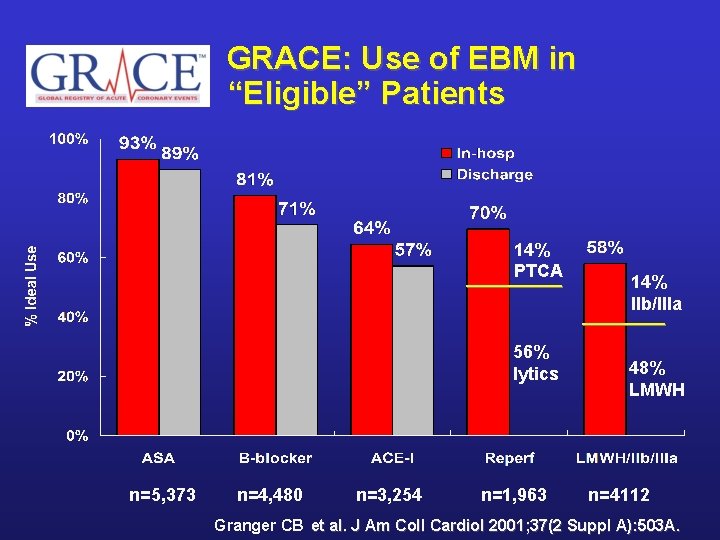
GRACE: Use of EBM in “Eligible” Patients 14% PTCA 56% lytics n=5, 373 n=4, 480 n=3, 254 n=1, 963 14% IIb/IIIa 48% LMWH n=4112 Granger CB et al. J Am Coll Cardiol 2001; 37(2 Suppl A): 503 A.
Management of acute coronary syndromes. variations in practice and outcome: Findings from the Global Registry of Acute Coronary Events (GRACE) K. A. A. Fox, S. G. Goodman, W. Klein, D. Brieger, P. G. Steg, O. Dabbous and Á. Avezum for the GRACE Investigators Eur Heart J 2002; 23: 1177 -1189
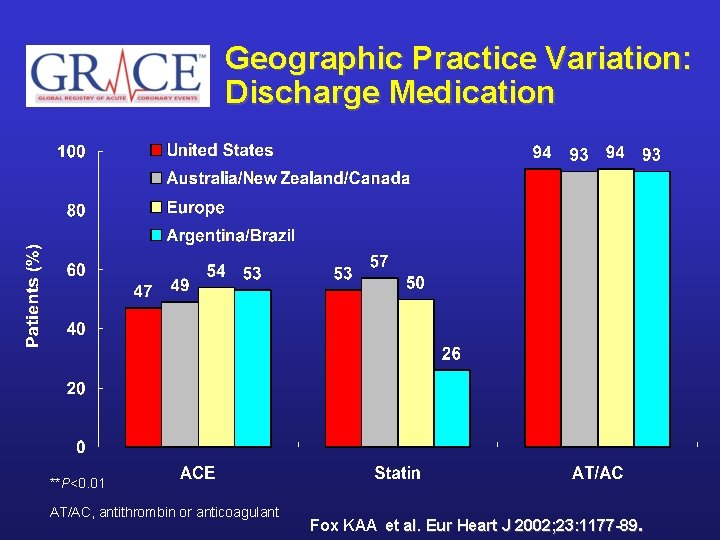
Geographic Practice Variation: Discharge Medication **P<0. 01 AT/AC, antithrombin or anticoagulant Fox KAA et al. Eur Heart J 2002; 23: 1177 -89.
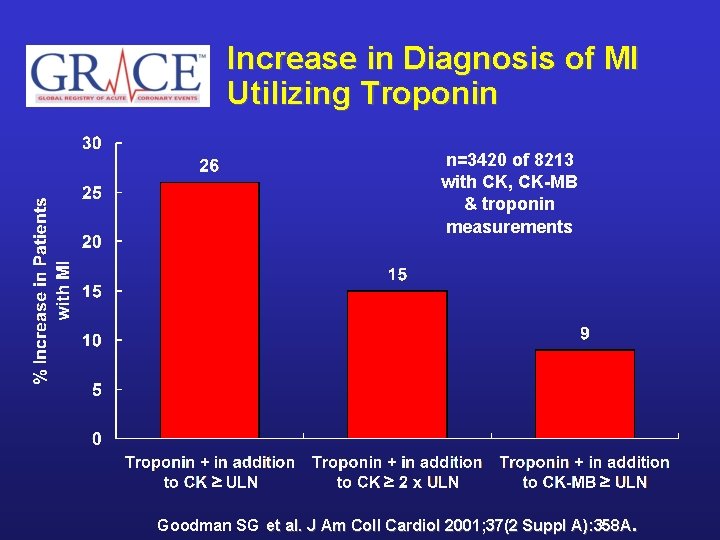
Increase in Diagnosis of MI Utilizing Troponin n=3420 of 8213 with CK, CK-MB & troponin measurements ³ ³ ³ Goodman SG et al. J Am Coll Cardiol 2001; 37(2 Suppl A): 358 A.
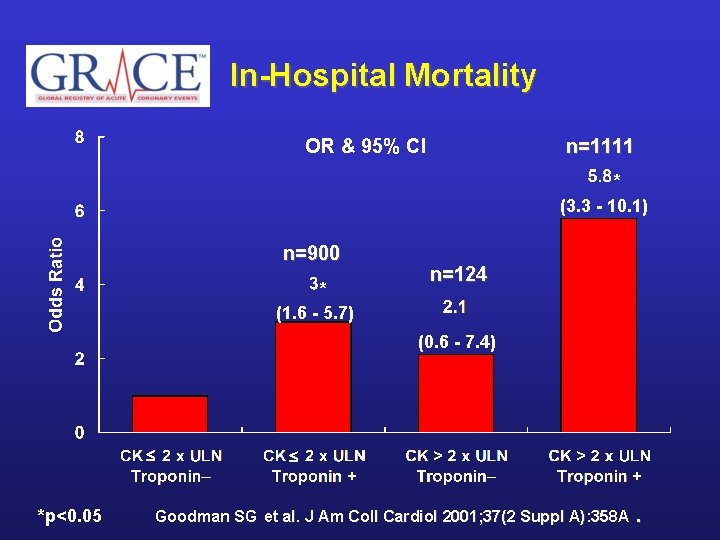
In-Hospital Mortality OR & 95% CI n=1111 * (3. 3 - 10. 1) n=900 * (1. 6 - 5. 7) n=124 (0. 6 - 7. 4) £ *p<0. 05 £ Goodman SG et al. J Am Coll Cardiol 2001; 37(2 Suppl A): 358 A .
Impact of Aspirin on Presentation and Hospital Outcomes in Patients with Acute Coronary Syndromes (The Global Registry of Acute Coronary Events [GRACE]) Frederick A. Spencer, Jose J. Santopinto, Joel M. Gore, Robert J. Goldberg, Keith A. A. Fox, Mauro Moscucci, Kami White, and Enrique P. Gurfinkel Am J Cardiol 2002; 90: 1056 -1061
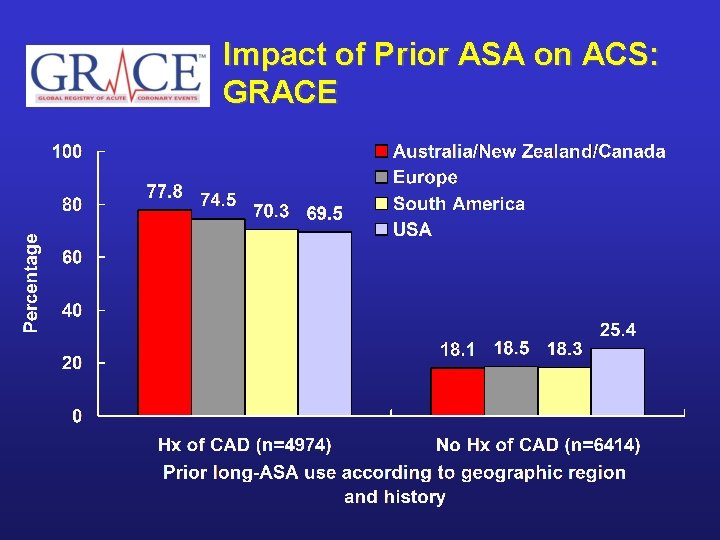
Impact of Prior ASA on ACS: GRACE
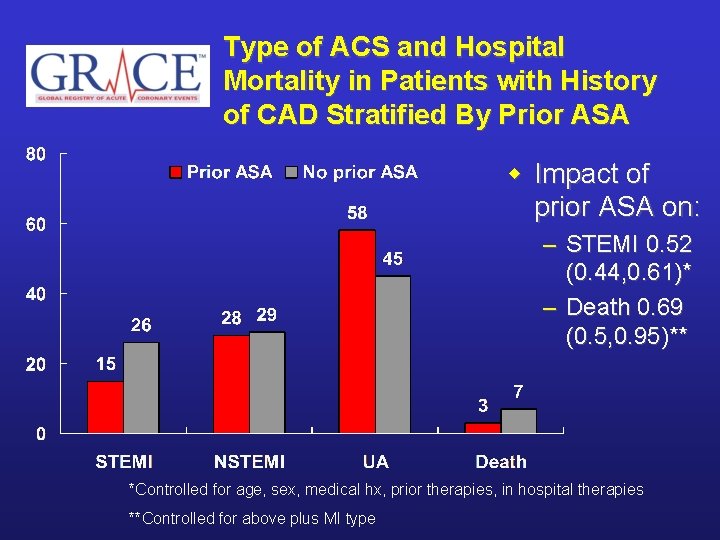
Type of ACS and Hospital Mortality in Patients with History of CAD Stratified By Prior ASA w Impact of prior ASA on: – STEMI 0. 52 (0. 44, 0. 61)* – Death 0. 69 (0. 5, 0. 95)** *Controlled for age, sex, medical hx, prior therapies, in hospital therapies **Controlled for above plus MI type
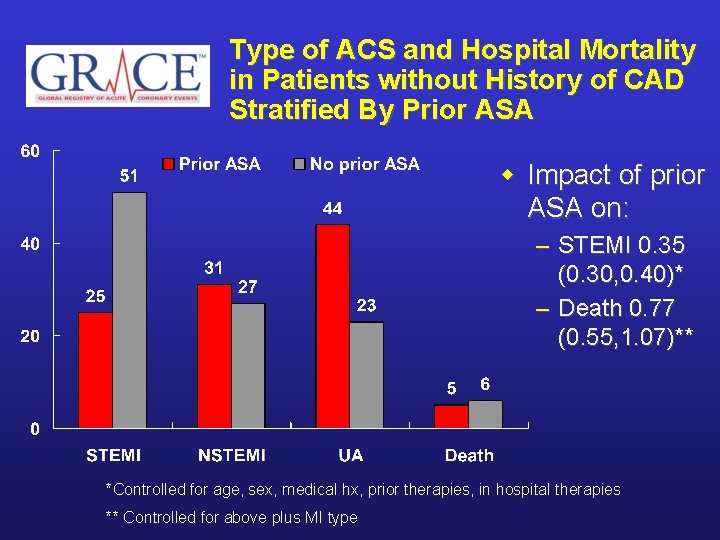
Type of ACS and Hospital Mortality in Patients without History of CAD Stratified By Prior ASA w Impact of prior ASA on: – STEMI 0. 35 (0. 30, 0. 40)* – Death 0. 77 (0. 55, 1. 07)** *Controlled for age, sex, medical hx, prior therapies, in hospital therapies ** Controlled for above plus MI type
Association of Statin Therapy with Outcomes of Acute Coronary Syndromes: The GRACE Study Frederick A. Spencer, Jeanna Allegrone, Robert J. Goldberg, Joel M. Gore, Keith A. A. Fox, Christopher B. Granger, Rajendra H. Mehta and David Brieger for the GRACE Investigators* Ann Intern Med 2004; 140: 857 -866
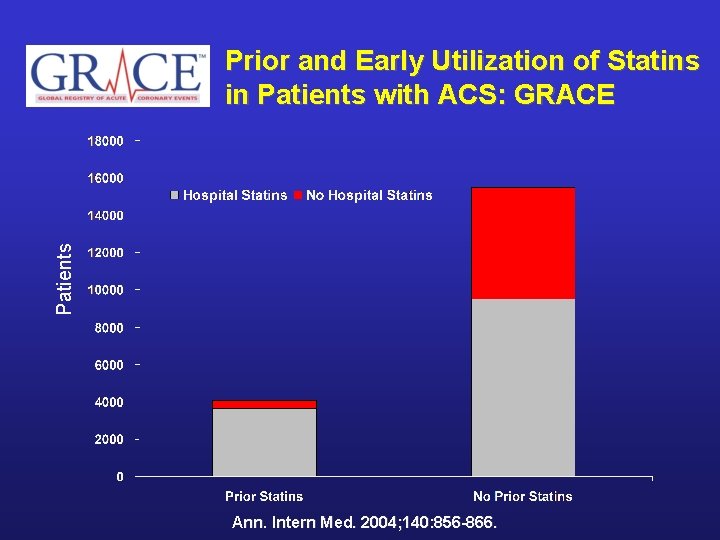
Patients Prior and Early Utilization of Statins in Patients with ACS: GRACE Ann. Intern Med. 2004; 140: 856 -866.
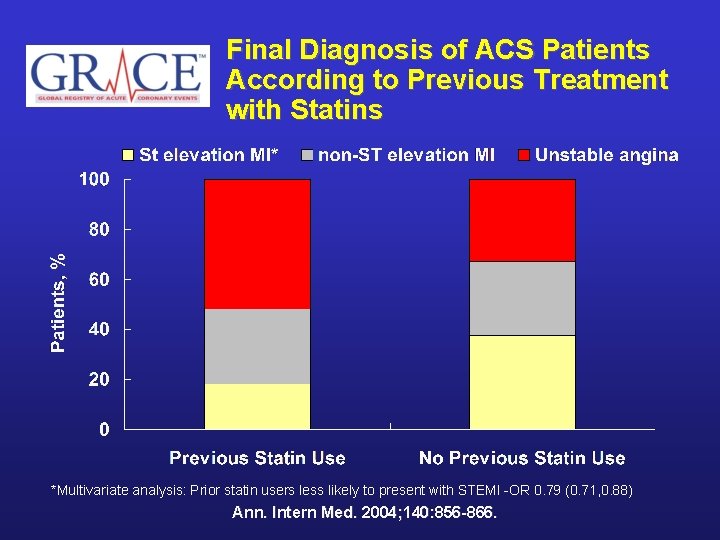
Final Diagnosis of ACS Patients According to Previous Treatment with Statins *Multivariate analysis: Prior statin users less likely to present with STEMI -OR 0. 79 (0. 71, 0. 88) Ann. Intern Med. 2004; 140: 856 -866.
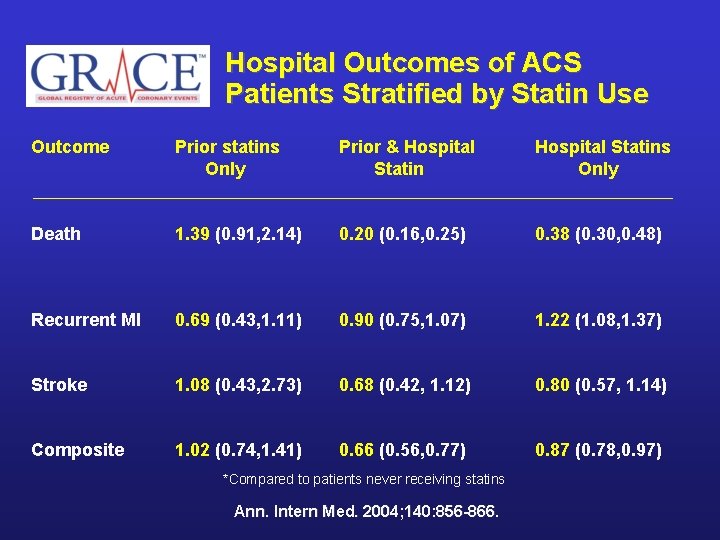
Hospital Outcomes of ACS Patients Stratified by Statin Use Outcome Prior statins Only Prior & Hospital Statins Only Death 1. 39 (0. 91, 2. 14) 0. 20 (0. 16, 0. 25) 0. 38 (0. 30, 0. 48) Recurrent MI 0. 69 (0. 43, 1. 11) 0. 90 (0. 75, 1. 07) 1. 22 (1. 08, 1. 37) Stroke 1. 08 (0. 43, 2. 73) 0. 68 (0. 42, 1. 12) 0. 80 (0. 57, 1. 14) Composite 1. 02 (0. 74, 1. 41) 0. 66 (0. 56, 0. 77) 0. 87 (0. 78, 0. 97) *Compared to patients never receiving statins Ann. Intern Med. 2004; 140: 856 -866.
Comparison of Outcomes of Patients With Acute Coronary Syndromes With and Without Atrial Fibrillation Rajendra H. Mehta, Omar H. Dabbous, Christopher B. Granger, Polina Kuznetsova, Eva M. Kline-Rogers, Frederick A. Anderson, Jr. , Keith A. A. Fox, Joel M. Gore, Robert J. Goldberg and Kim A. Eagle for the GRACE Investigators Ann J Cardiol 2003; 92: 1031 -1036
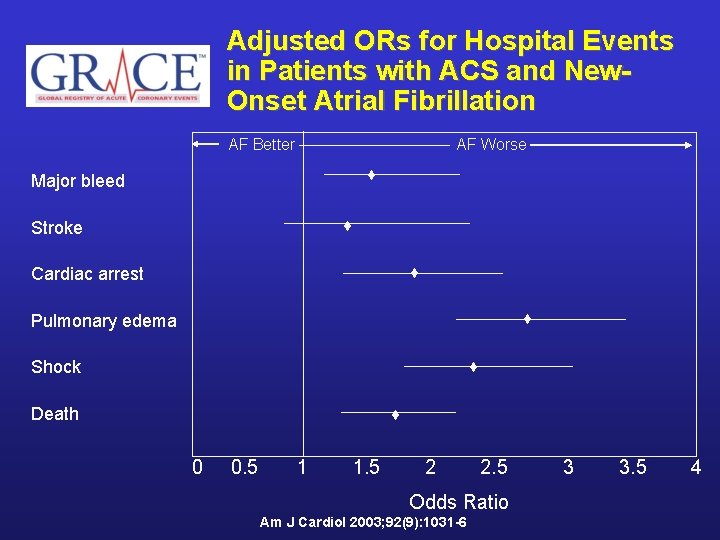
Adjusted ORs for Hospital Events in Patients with ACS and New. Onset Atrial Fibrillation AF Better AF Worse Major bleed Stroke Cardiac arrest Pulmonary edema Shock Death 0 0. 5 1 1. 5 2 2. 5 Odds Ratio Am J Cardiol 2003; 92(9): 1031 -6 3 3. 5 4
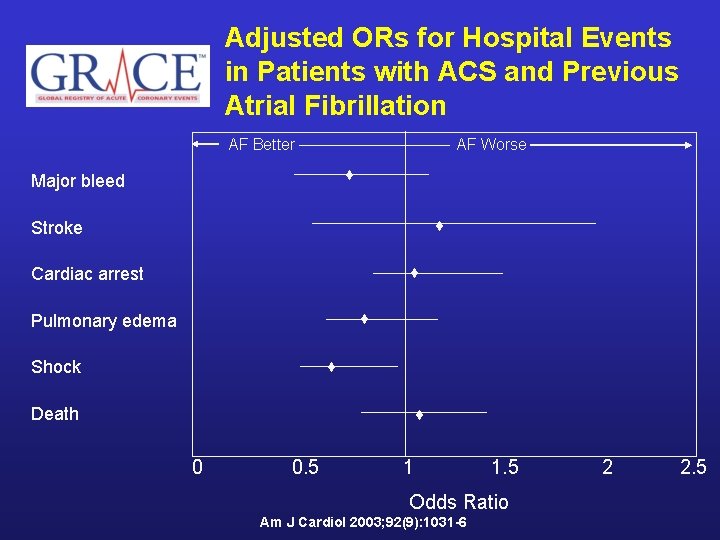
Adjusted ORs for Hospital Events in Patients with ACS and Previous Atrial Fibrillation AF Better AF Worse Major bleed Stroke Cardiac arrest Pulmonary edema Shock Death 0 0. 5 1 1. 5 Odds Ratio Am J Cardiol 2003; 92(9): 1031 -6 2 2. 5
Determinants and Prognostic Impact of Heart Failure Complicating Acute Coronary Syndromes: Observations From the Global Registry of Acute Coronary Events (GRACE) Philippe Gabriel Steg, Omar H. Dabbous, Laurent J. Feldman, Alain Cohen-Solal, Marie-Claude Aumont, José López-Sendón, Andrzej Budaj, Robert J. Goldberg, Werner Klein, Frederick A. Anderson, Jr, for the Global Registry of Acute Coronary Events (GRACE) Investigators Circulation. 2004; 109: 494 -499
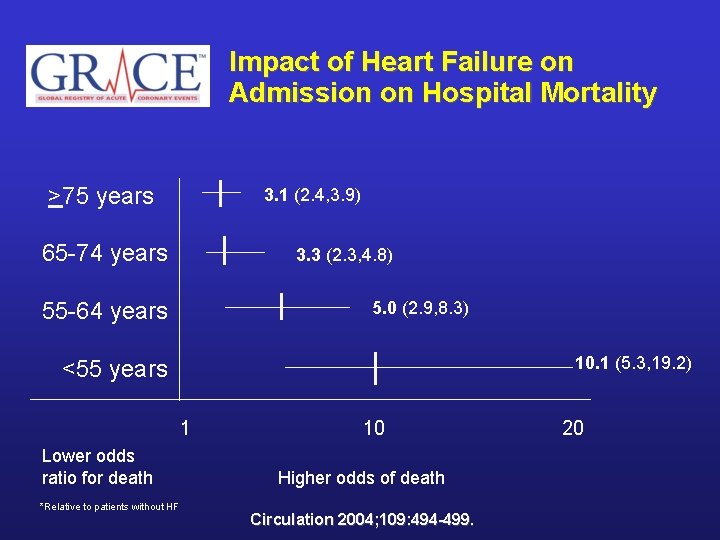
Impact of Heart Failure on Admission on Hospital Mortality >75 years 3. 1 (2. 4, 3. 9) 65 -74 years 3. 3 (2. 3, 4. 8) 55 -64 years 5. 0 (2. 9, 8. 3) 10. 1 (5. 3, 19. 2) <55 years 1 Lower odds ratio for death *Relative to patients without HF 10 Higher odds of death Circulation 2004; 109: 494 -499. 20
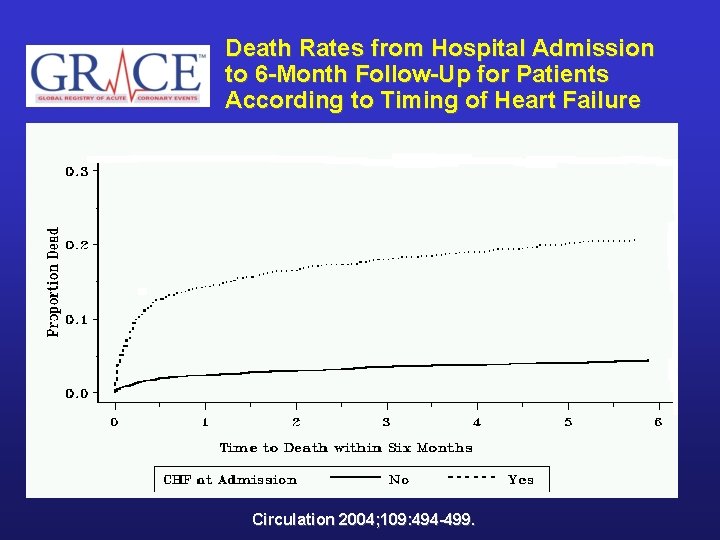
Death Rates from Hospital Admission to 6 -Month Follow-Up for Patients According to Timing of Heart Failure Circulation 2004; 109: 494 -499.
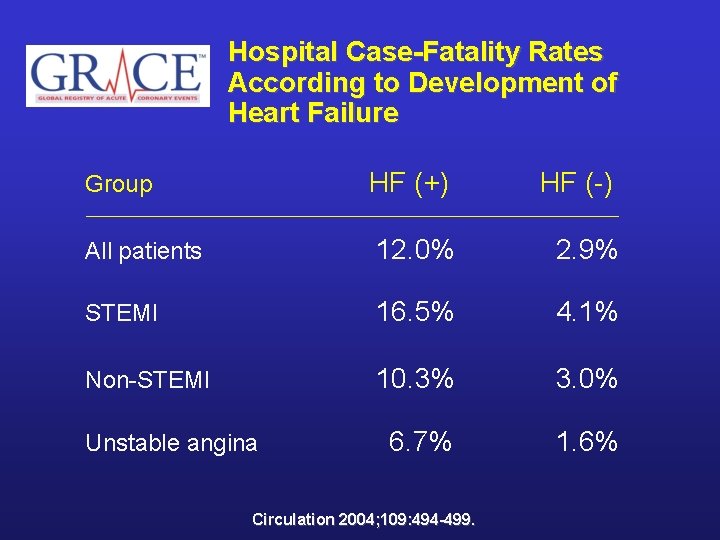
Hospital Case-Fatality Rates According to Development of Heart Failure Group HF (+) HF (-) All patients 12. 0% 2. 9% STEMI 16. 5% 4. 1% Non-STEMI 10. 3% 3. 0% 6. 7% 1. 6% Unstable angina Circulation 2004; 109: 494 -499.
Stenting and Glycoprotein IIb/IIIa Inhibition in Patients With Acute Myocardial Infarction Undergoing Percutaneous Coronary Intervention: Findings From the Global Registry of Acute Coronary Events (GRACE) Gilles Montalescot, Frans Van de Werf, Dietrich C. Gulba, Àlvaro Avezum, David Brieger, Brian M. Kennelly, Tomasz Mazurek, Frederick Spencer, Kami White, and Joel M. Gore for the GRACE Investigators Catheterization & Cardiovascular Interventions. 60: 360 -367 (2003)
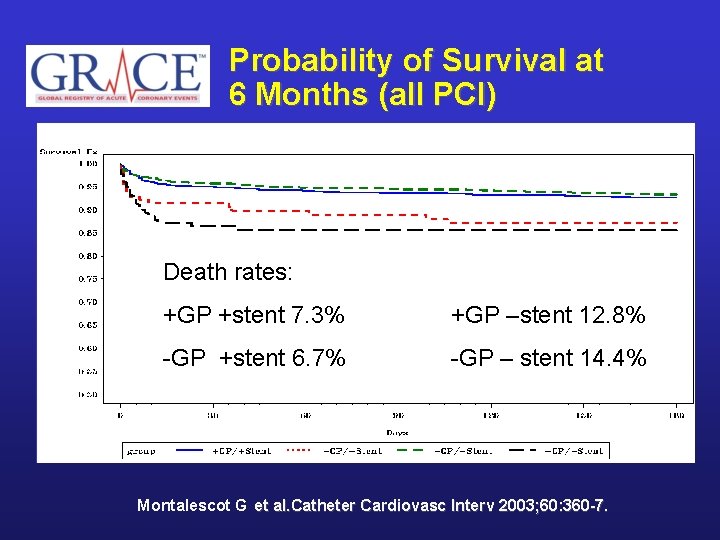
Probability of Survival at 6 Months (all PCI) Death rates: +GP +stent 7. 3% +GP –stent 12. 8% -GP +stent 6. 7% -GP – stent 14. 4% Montalescot G et al. Catheter Cardiovasc Interv 2003; 60: 360 -7.
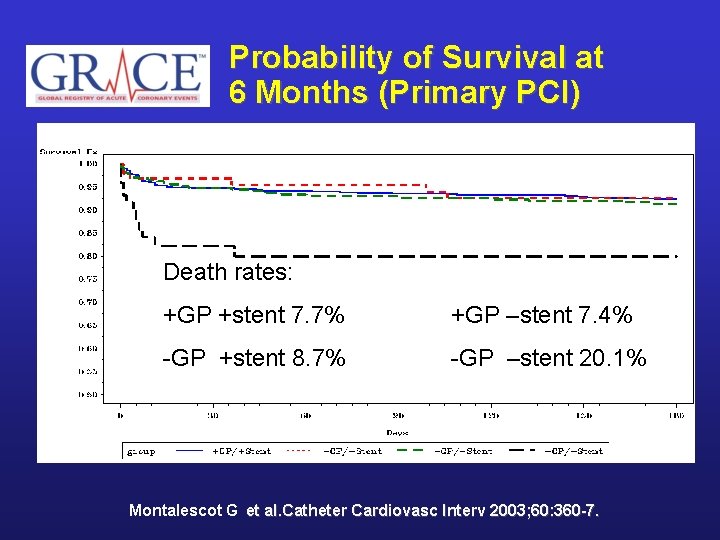
Probability of Survival at 6 Months (Primary PCI) Death rates: +GP +stent 7. 7% +GP –stent 7. 4% -GP +stent 8. 7% -GP –stent 20. 1% Montalescot G et al. Catheter Cardiovasc Interv 2003; 60: 360 -7.
Six-Month Outcomes in a Multinational Registry of Patients Hospitalized With an Acute Coronary Syndrome (The Global Registry of Acute Coronary Events [GRACE]) Robert J. Goldberg, Kristen Currie, Kami White, David Brieger, Phillippe Gabriel Steg, Shaun G. Goodman, Omar Dabbous, Keith A. A. Fox and Joel M. Gore for the GRACE Investigators Am J Cardiol 2004; 93: 288 -293
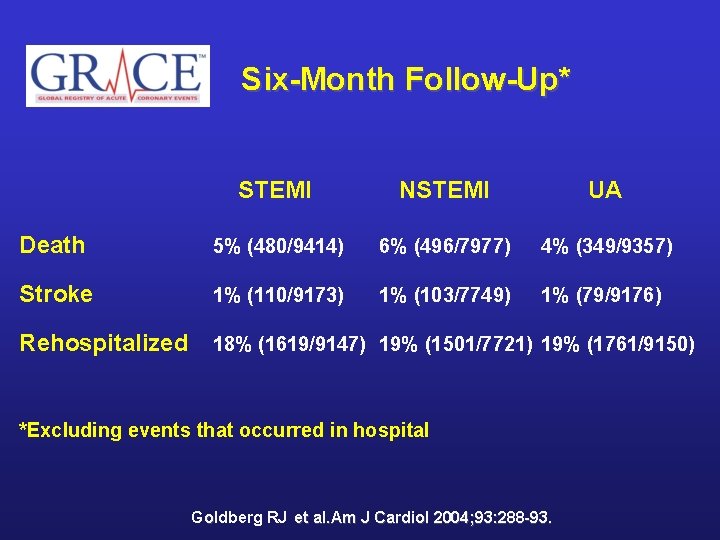
Six-Month Follow-Up* STEMI NSTEMI UA Death 5% (480/9414) 6% (496/7977) 4% (349/9357) Stroke 1% (110/9173) 1% (103/7749) 1% (79/9176) Rehospitalized 18% (1619/9147) 19% (1501/7721) 19% (1761/9150) *Excluding events that occurred in hospital Goldberg RJ et al. Am J Cardiol 2004; 93: 288 -93.
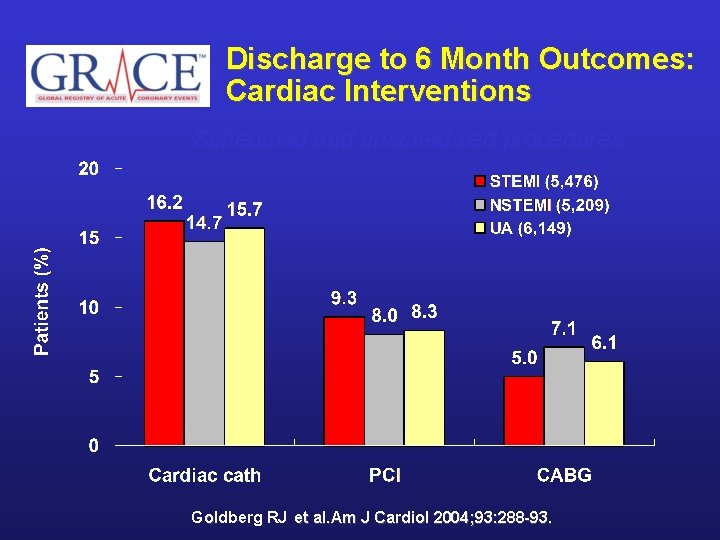
Discharge to 6 Month Outcomes: Cardiac Interventions Scheduled and unscheduled procedures Goldberg RJ et al. Am J Cardiol 2004; 93: 288 -93.
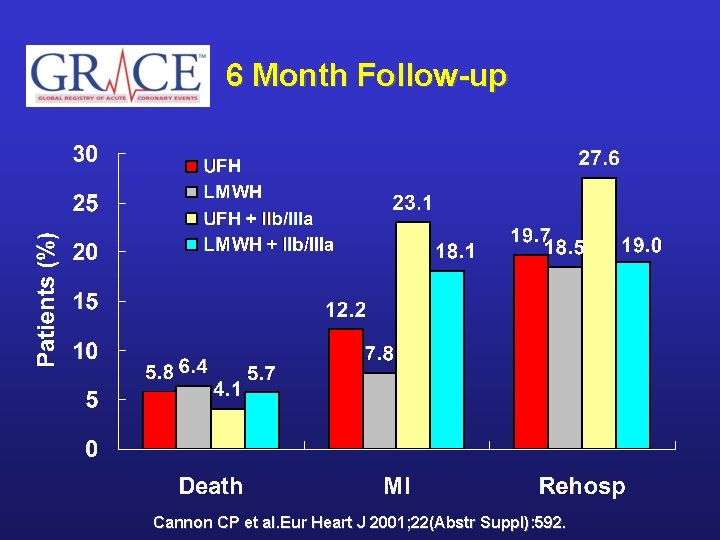
6 Month Follow-up Cannon CP et al. Eur Heart J 2001; 22(Abstr Suppl): 592.
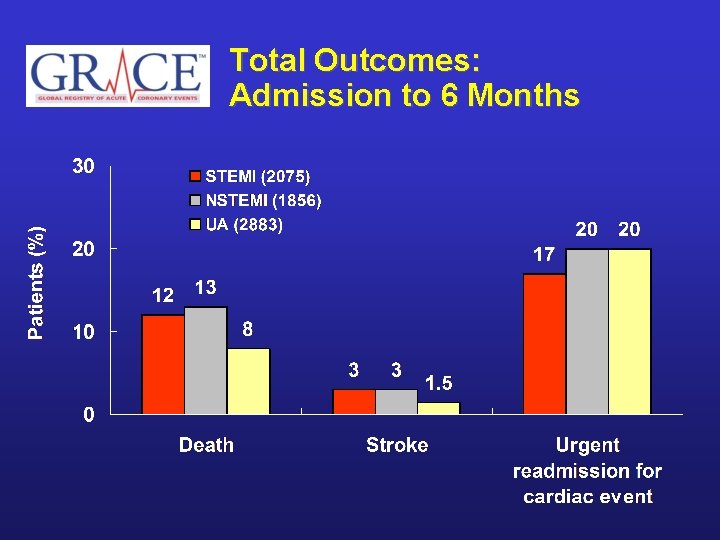
Total Outcomes: Admission to 6 Months
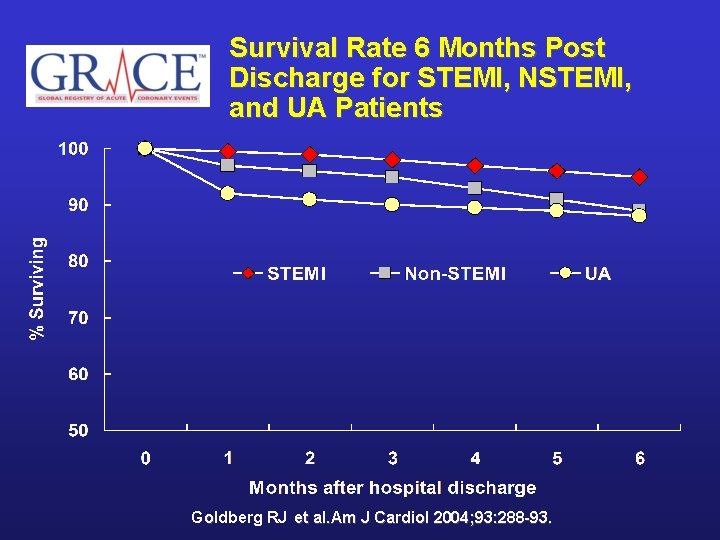
Survival Rate 6 Months Post Discharge for STEMI, NSTEMI, and UA Patients Goldberg RJ et al. Am J Cardiol 2004; 93: 288 -93.
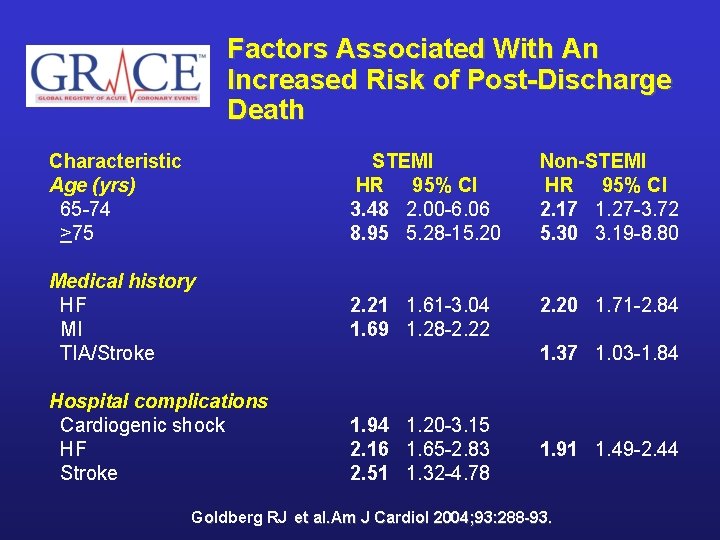
Factors Associated With An Increased Risk of Post-Discharge Death Characteristic Age (yrs) 65 -74 >75 STEMI HR 95% CI 3. 48 2. 00 -6. 06 8. 95 5. 28 -15. 20 Non-STEMI HR 95% CI 2. 17 1. 27 -3. 72 5. 30 3. 19 -8. 80 Medical history HF MI TIA/Stroke 2. 21 1. 61 -3. 04 1. 69 1. 28 -2. 22 2. 20 1. 71 -2. 84 Hospital complications Cardiogenic shock HF Stroke 1. 37 1. 03 -1. 84 1. 94 1. 20 -3. 15 2. 16 1. 65 -2. 83 2. 51 1. 32 -4. 78 1. 91 1. 49 -2. 44 Goldberg RJ et al. Am J Cardiol 2004; 93: 288 -93.
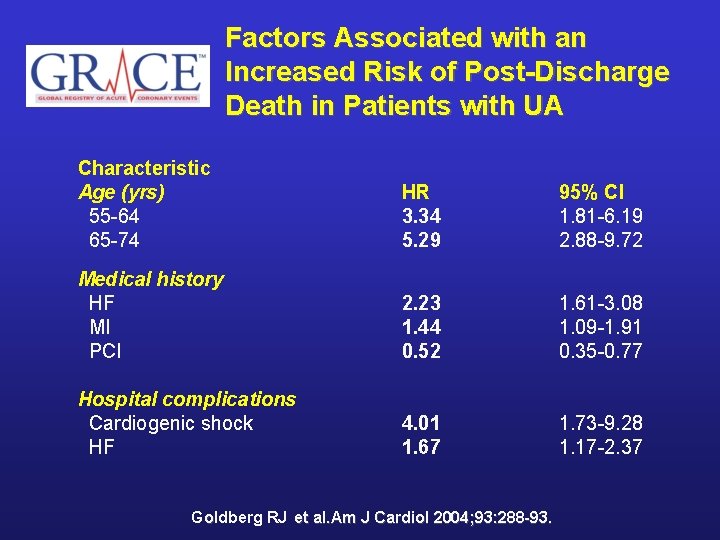
Factors Associated with an Increased Risk of Post-Discharge Death in Patients with UA Characteristic Age (yrs) 55 -64 65 -74 HR 3. 34 5. 29 95% CI 1. 81 -6. 19 2. 88 -9. 72 Medical history HF MI PCI 2. 23 1. 44 0. 52 1. 61 -3. 08 1. 09 -1. 91 0. 35 -0. 77 Hospital complications Cardiogenic shock HF 4. 01 1. 67 1. 73 -9. 28 1. 17 -2. 37 Goldberg RJ et al. Am J Cardiol 2004; 93: 288 -93.
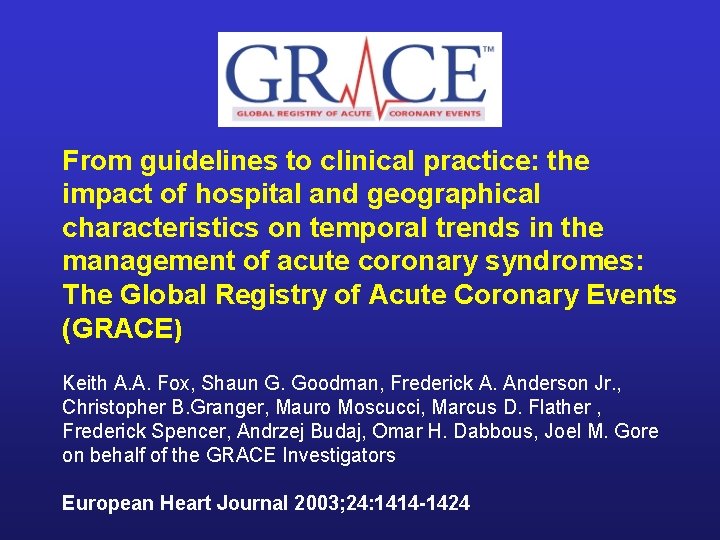
From guidelines to clinical practice: the impact of hospital and geographical characteristics on temporal trends in the management of acute coronary syndromes: The Global Registry of Acute Coronary Events (GRACE) Keith A. A. Fox, Shaun G. Goodman, Frederick A. Anderson Jr. , Christopher B. Granger, Mauro Moscucci, Marcus D. Flather , Frederick Spencer, Andrzej Budaj, Omar H. Dabbous, Joel M. Gore on behalf of the GRACE Investigators European Heart Journal 2003; 24: 1414 -1424
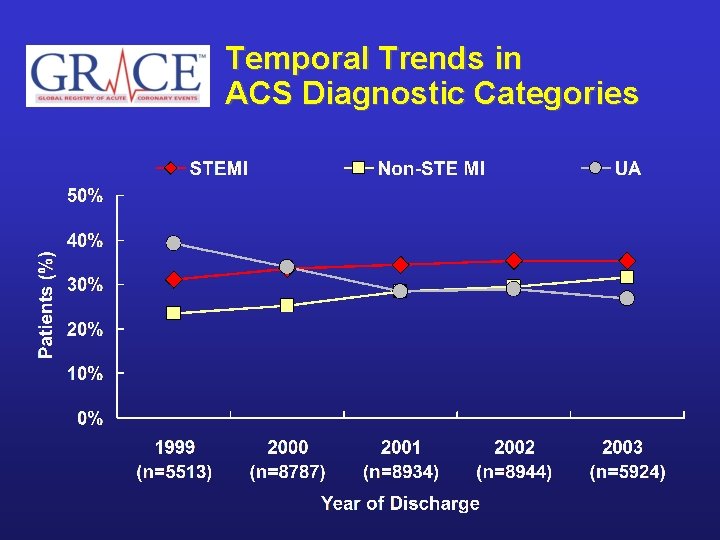
Temporal Trends in ACS Diagnostic Categories
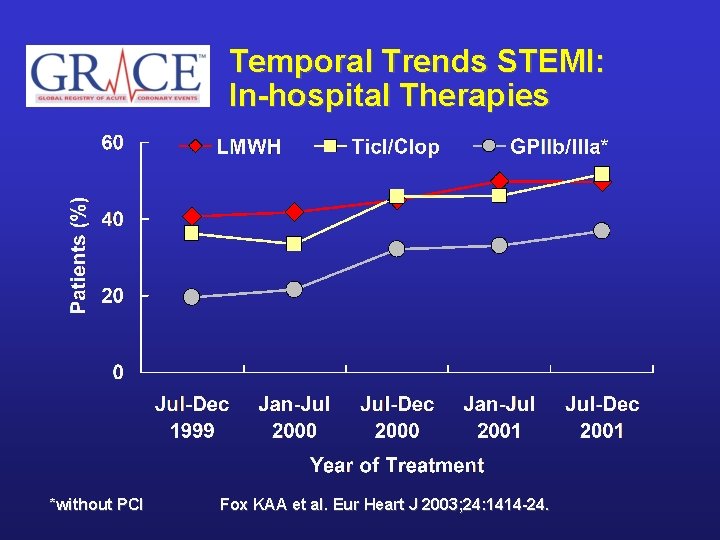
Temporal Trends STEMI: In-hospital Therapies *without PCI Fox KAA et al. Eur Heart J 2003; 24: 1414 -24.
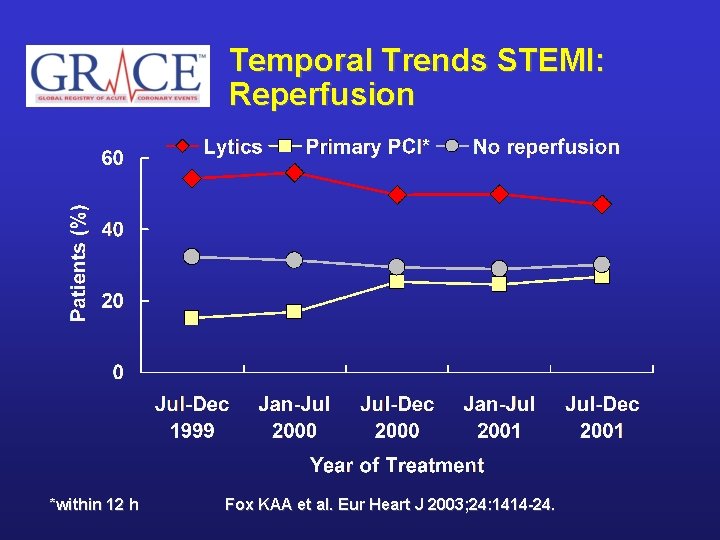
Temporal Trends STEMI: Reperfusion *within 12 h Fox KAA et al. Eur Heart J 2003; 24: 1414 -24.
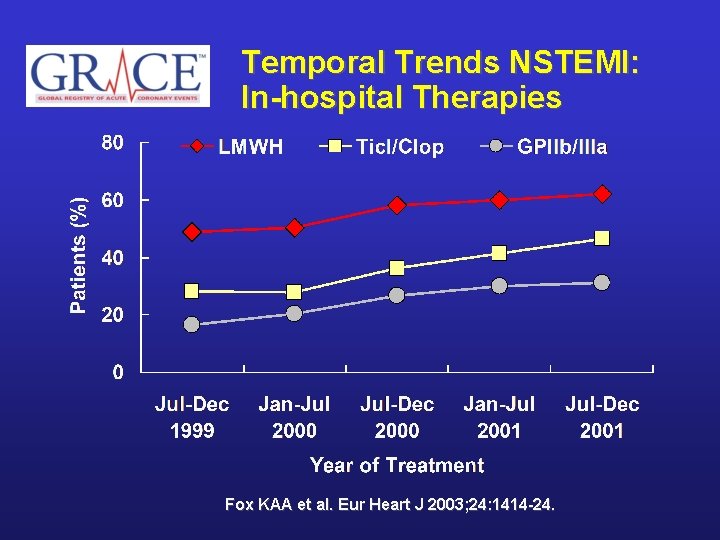
Temporal Trends NSTEMI: In-hospital Therapies Fox KAA et al. Eur Heart J 2003; 24: 1414 -24.

GRACE Palm Pilot Software In-hospital, 6 -months Death, Death/MI Prediction Model
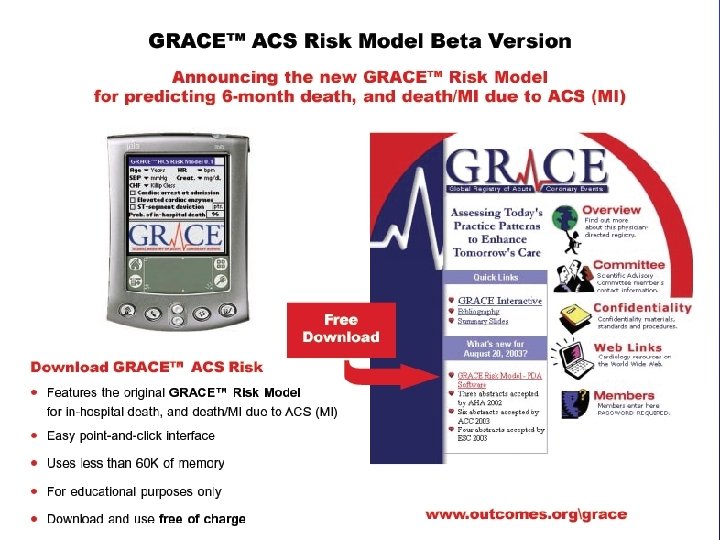
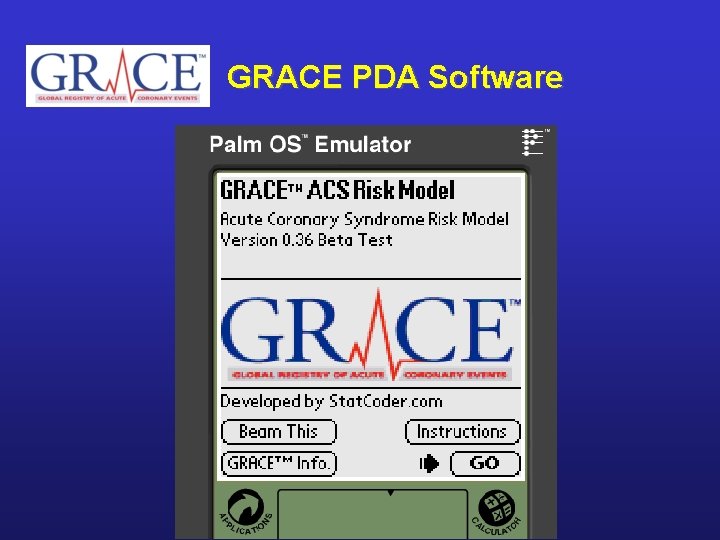
GRACE PDA Software
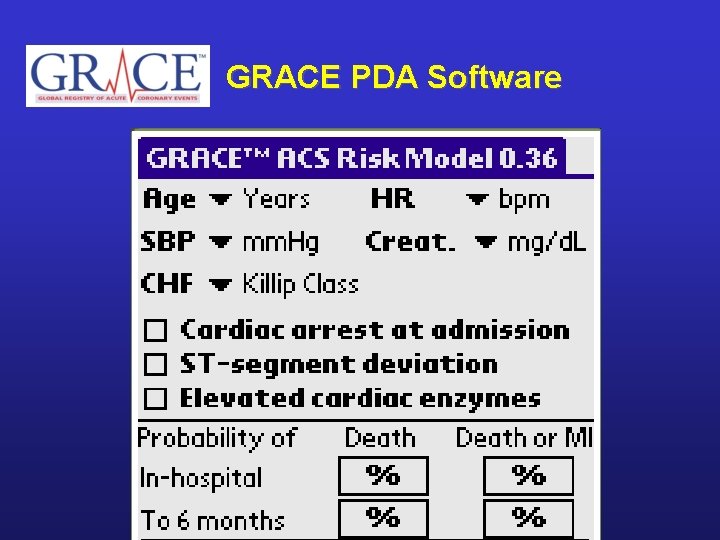
GRACE PDA Software
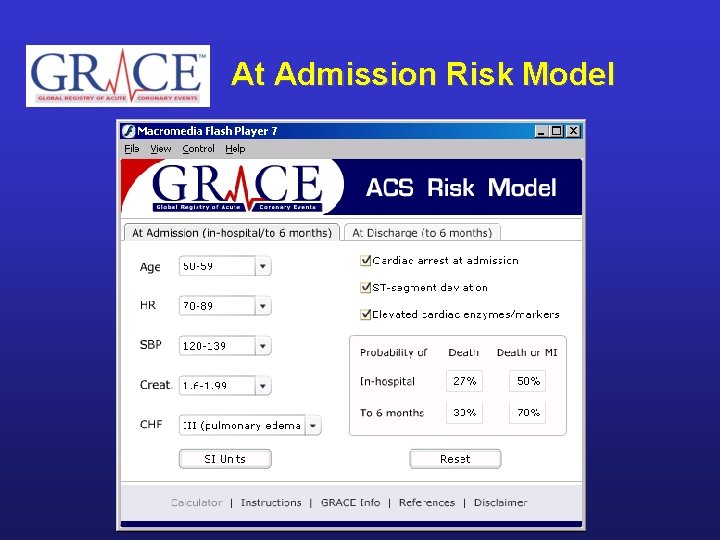
At Admission Risk Model
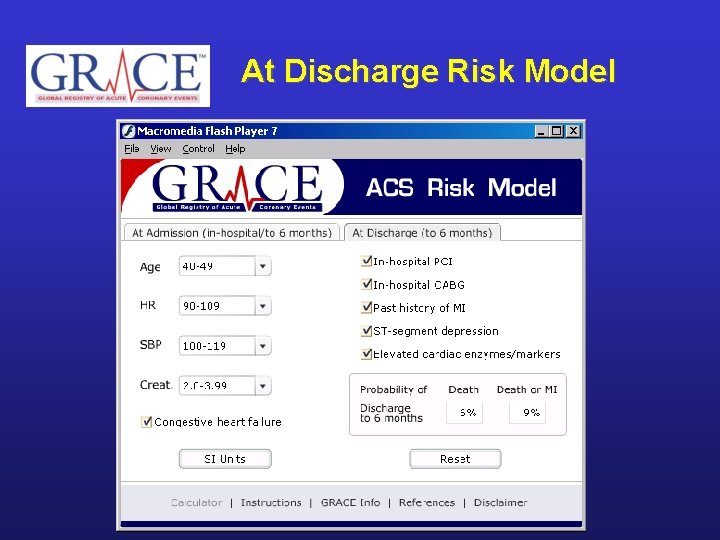
At Discharge Risk Model

GRACE Publications
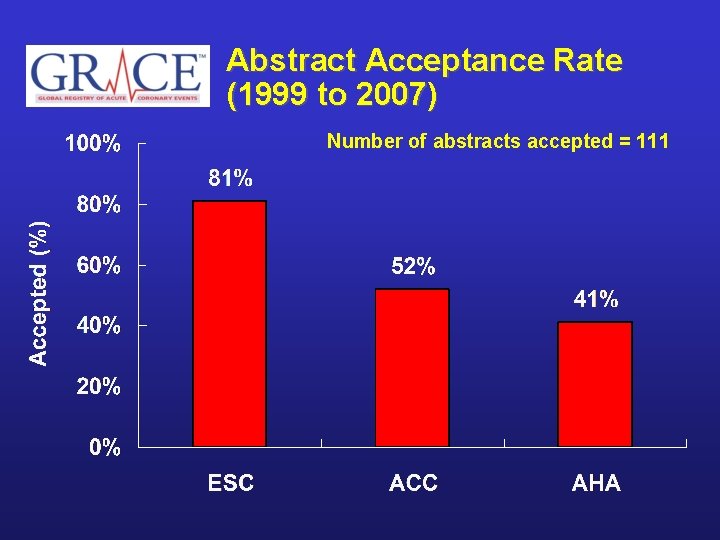
Abstract Acceptance Rate (1999 to 2007) Number of abstracts accepted = 111
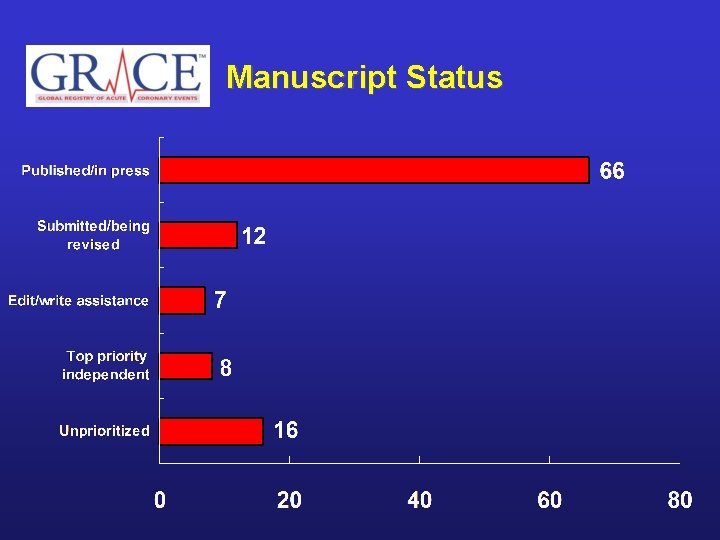
Manuscript Status

GRACE Quarterly Reports to Investigators
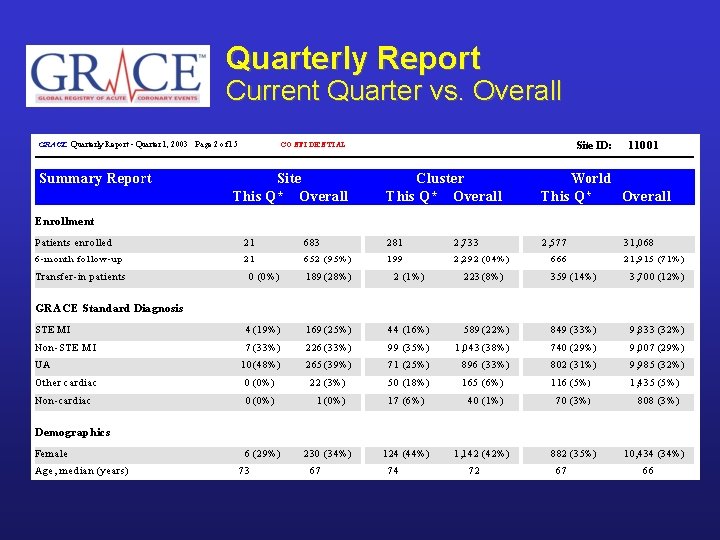
Quarterly Report Current Quarter vs. Overall
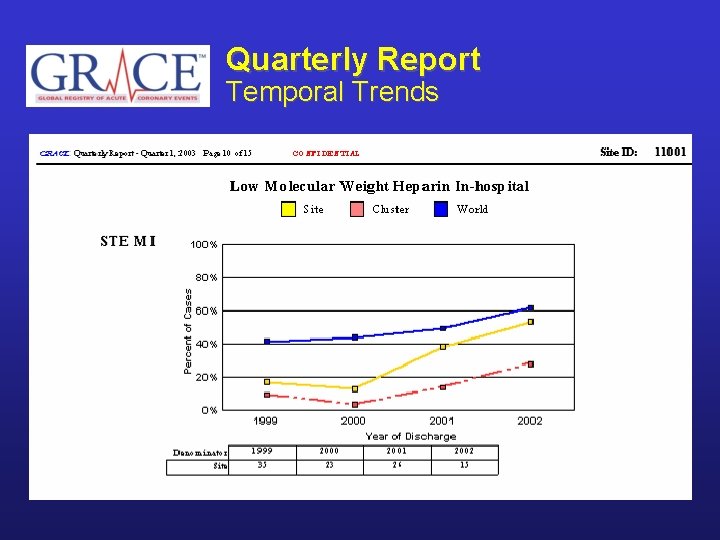
Quarterly Report Temporal Trends
Unique Features of GRACE w Multi-national perspective w Full spectrum of coronary syndromes w Increased data on demographics, presentation, management and outcome w Regular audits of data quality w Feedback to participating sites w 6 -month follow-up
- Slides: 93