
Global Programme to Eliminate Lymphatic Filariasis Global commitment
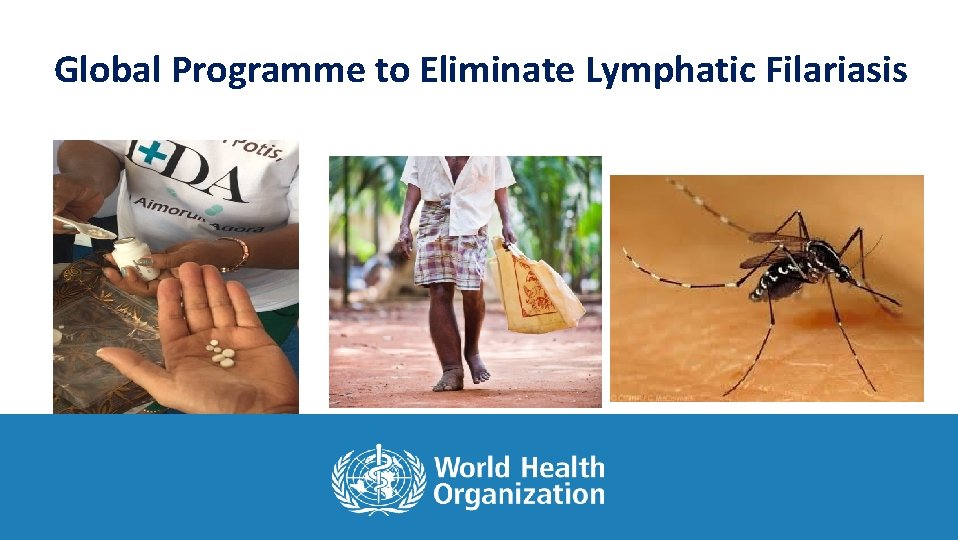
Global Programme to Eliminate Lymphatic Filariasis
Global commitment – WHA 50. 29 Elimination of LF as a public health problem Global Programme to Eliminate Lymphatic Filariasis (GPELF) was launched in 2000 1. Interrupt transmission • Mass drug administration (MDA ) 2. Reduce suffering and improve quality of life • Slide 2 Morbidity management and disability prevention (MMDP)
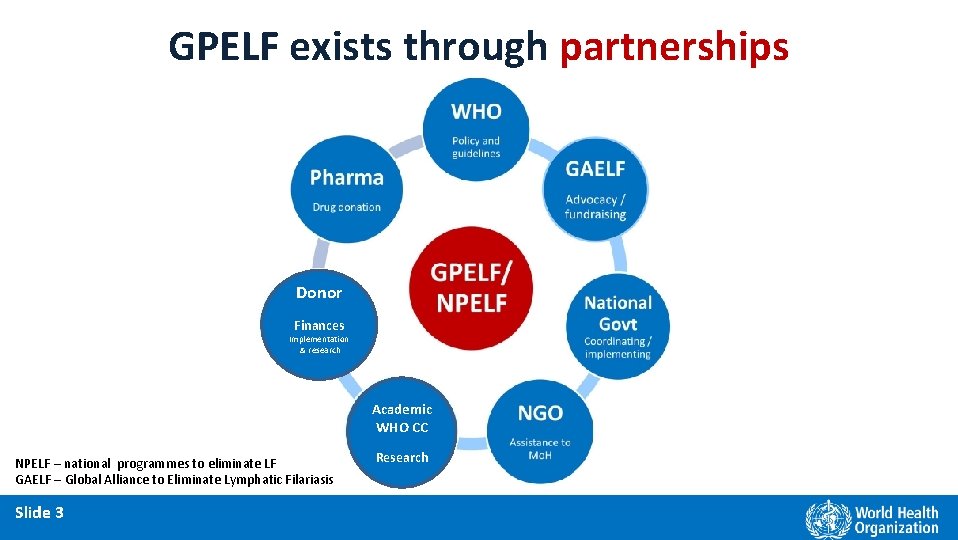
GPELF exists through partnerships Donor Finances Implementation & research Academic WHO CC NPELF – national programmes to eliminate LF GAELF – Global Alliance to Eliminate Lymphatic Filariasis Slide 3 Research
The GPELF strategy has led to substantial achievements: – 69 countries implementing MDA, delivering a cumulative total of 7. 1 billion treatments reaching more than 890 million people – 52 countries reducing infection below target thresholds and no longer requiring MDA in at least 1 district – 22 countries no longer requiring MDA nationally – 15 countries having achieved the validation criteria for elimination of LF as a public health problem Slide 4
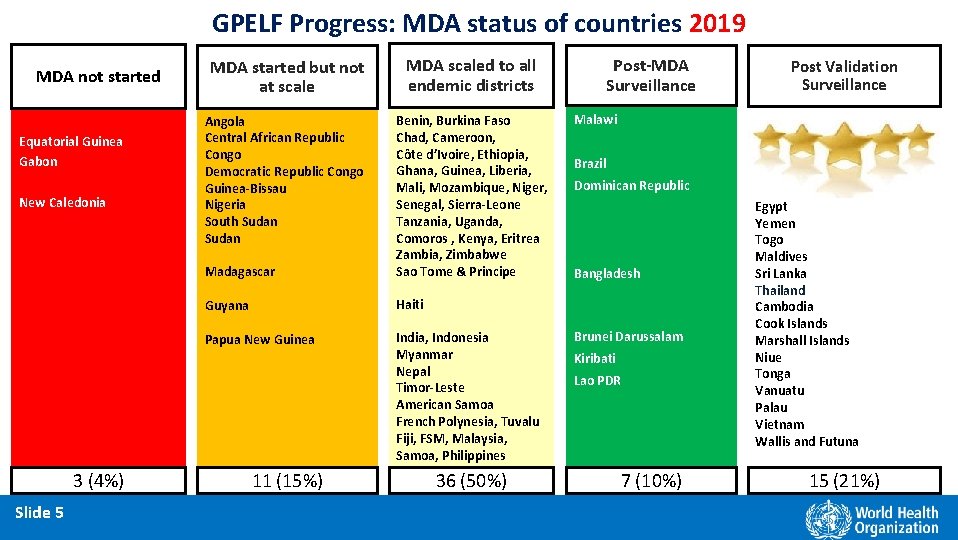
GPELF Progress: MDA status of countries 2019 MDA not started Equatorial Guinea Gabon New Caledonia 3 (4%) Slide 5 MDA started but not at scale MDA scaled to all endemic districts Angola Central African Republic Congo Democratic Republic Congo Guinea-Bissau Nigeria South Sudan Madagascar Benin, Burkina Faso Chad, Cameroon, Côte d’Ivoire, Ethiopia, Ghana, Guinea, Liberia, Mali, Mozambique, Niger, Senegal, Sierra-Leone Tanzania, Uganda, Comoros , Kenya, Eritrea Zambia, Zimbabwe Sao Tome & Principe Guyana Haiti Papua New Guinea India, Indonesia Myanmar Nepal Timor-Leste American Samoa French Polynesia, Tuvalu Fiji, FSM, Malaysia, Samoa, Philippines 11 (15%) 36 (50%) Post-MDA Surveillance Post Validation Surveillance Malawi Brazil Dominican Republic Bangladesh Brunei Darussalam Kiribati Lao PDR 7 (10%) Egypt Yemen Togo Maldives Sri Lanka Thailand Cambodia Cook Islands Marshall Islands Niue Tonga Vanuatu Palau Vietnam Wallis and Futuna 15 (21%)
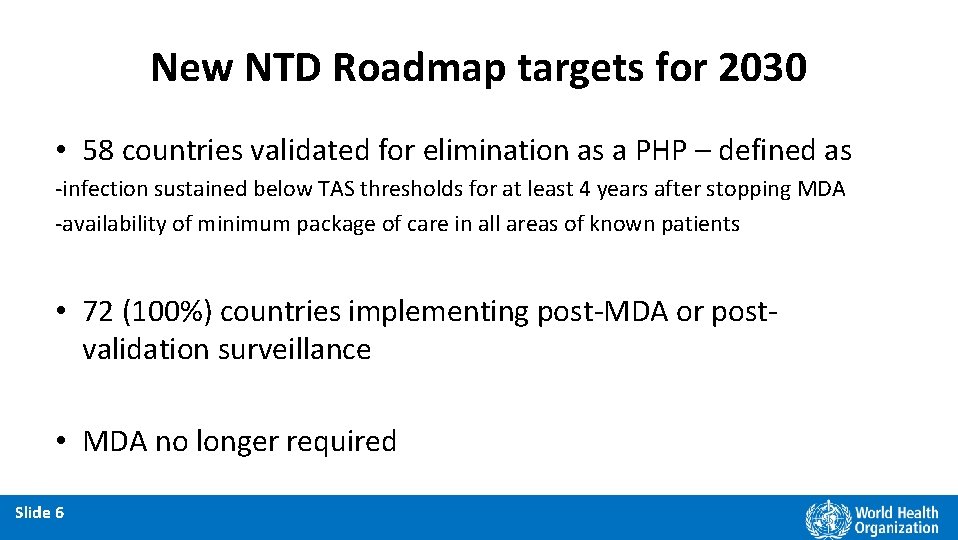
New NTD Roadmap targets for 2030 • 58 countries validated for elimination as a PHP – defined as -infection sustained below TAS thresholds for at least 4 years after stopping MDA -availability of minimum package of care in all areas of known patients • 72 (100%) countries implementing post-MDA or postvalidation surveillance • MDA no longer required Slide 6
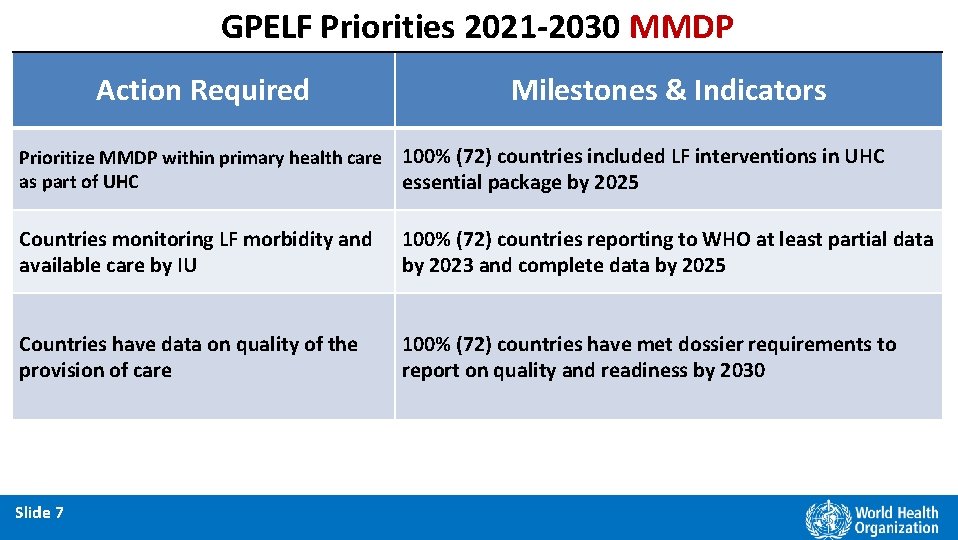
GPELF Priorities 2021 -2030 MMDP Action Required Milestones & Indicators Prioritize MMDP within primary health care 100% (72) countries included LF interventions in UHC as part of UHC essential package by 2025 Countries monitoring LF morbidity and available care by IU 100% (72) countries reporting to WHO at least partial data by 2023 and complete data by 2025 Countries have data on quality of the provision of care 100% (72) countries have met dossier requirements to report on quality and readiness by 2030 Slide 7
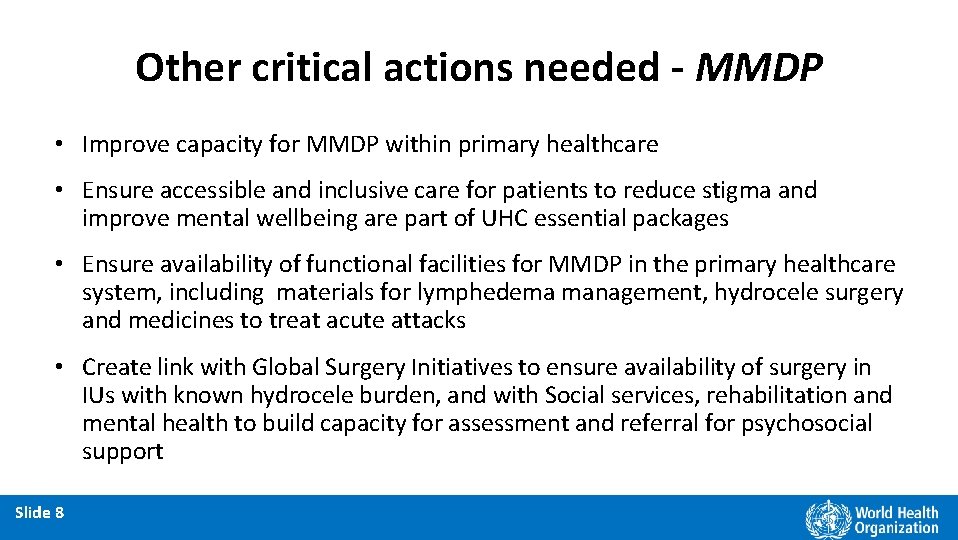
Other critical actions needed - MMDP • Improve capacity for MMDP within primary healthcare • Ensure accessible and inclusive care for patients to reduce stigma and improve mental wellbeing are part of UHC essential packages • Ensure availability of functional facilities for MMDP in the primary healthcare system, including materials for lymphedema management, hydrocele surgery and medicines to treat acute attacks • Create link with Global Surgery Initiatives to ensure availability of surgery in IUs with known hydrocele burden, and with Social services, rehabilitation and mental health to build capacity for assessment and referral for psychosocial support Slide 8
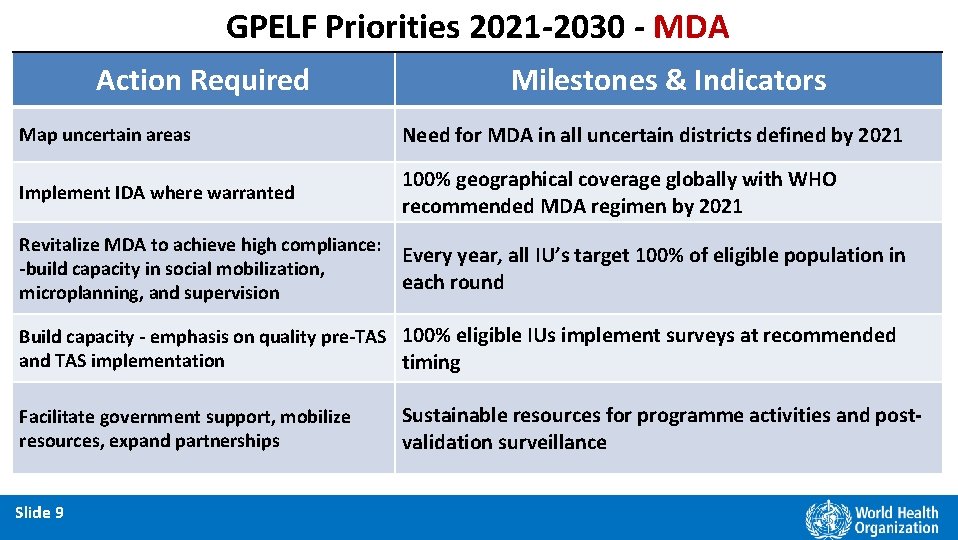
GPELF Priorities 2021 -2030 - MDA Action Required Milestones & Indicators Map uncertain areas Need for MDA in all uncertain districts defined by 2021 Implement IDA where warranted 100% geographical coverage globally with WHO recommended MDA regimen by 2021 Revitalize MDA to achieve high compliance: -build capacity in social mobilization, microplanning, and supervision Every year, all IU’s target 100% of eligible population in each round Build capacity - emphasis on quality pre-TAS 100% eligible IUs implement surveys at recommended and TAS implementation timing Facilitate government support, mobilize resources, expand partnerships Slide 9 Sustainable resources for programme activities and postvalidation surveillance
Other critical actions needed - MDA – Develop strategies to mitigate ‘hot-spots’ of persistent infection and reach missed populations – Develop new approaches for urban MDA – Develop diagnostic test which is not cross-reactive with L. loa – Improve reliability of current diagnostic tests; – Ensure reporting of issues with diagnostic tests for quality monitoring Slide 10
Critical actions needed - surveillance • Improved diagnostics for post-MDA surveillance • Encourage sustained commitment post-validation to avoid recrudescence • Specify the minimum standards for post-validation surveillance (PVS) and how to set up and maintain activities • Integrate vector management and surveillance (where feasible) through the Global Vector Control Response to supplement MDA • Define criteria to achieve verification of interruption of LF transmission Slide 11
Thank you Please send questions to: kingj@who. int courtesy of Zanzibar & GSK
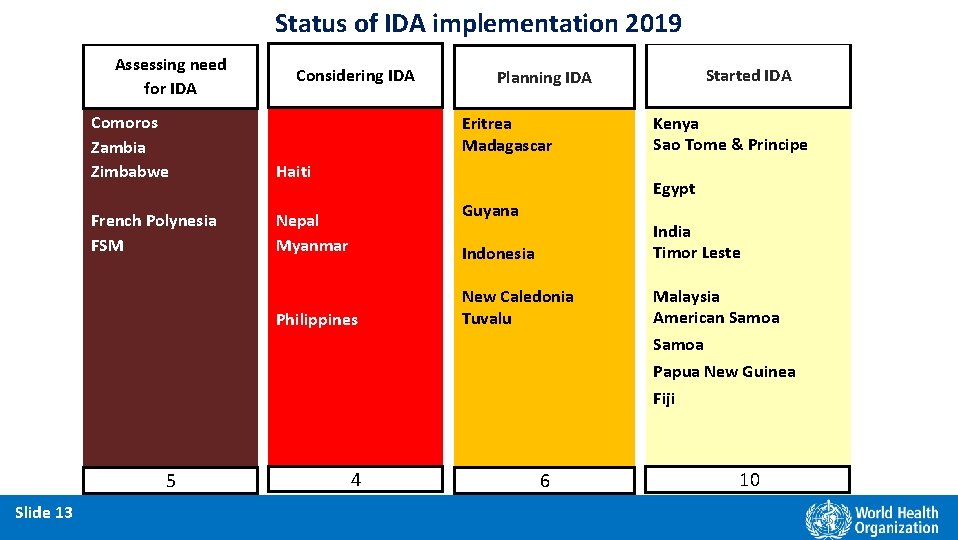
Status of IDA implementation 2019 Assessing need for IDA Considering IDA Comoros Zambia Zimbabwe Haiti French Polynesia FSM Nepal Myanmar Eritrea Madagascar Slide 13 Kenya Sao Tome & Principe Egypt Guyana India Timor Leste Indonesia Philippines 5 Started IDA Planning IDA 4 New Caledonia Tuvalu 6 Malaysia American Samoa Papua New Guinea Fiji 10
- Slides: 13