
Global Marketing Strategies Chapter 12 Global Marketing Strategies
Global Marketing Strategies Chapter 12 Global Marketing Strategies Copyright 2006 Prentice Hall Publishing Company 1
Why “Go Global? ” n n n n Offset sales declines in the domestic market Increase sales and profits Extend products’ life cycles Lower manufacturing costs Improve competitive position Raise quality levels Become more customer-oriented Chapter 12 Global Marketing Strategies Copyright 2006 Prentice Hall Publishing Company 2
Questions to Consider Before Going Global 1. 2. 3. Is there a profitable market in which our company has the potential to be successful over the long run? (see Table 12. 1) Do we have and are we willing to commit adequate resources of time, people, and capital to a global campaign? Are domestic pressures forcing our company to consider global opportunities? Chapter 12 Global Marketing Strategies Copyright 2006 Prentice Hall Publishing Company 3
Questions to Consider Before Going Global 4. 5. 6. Do we understand the cultural differences, history, economics, values, opportunities, and risks of conducting business in the country we are considering? Is there a viable exit strategy for our company if conditions change or the new venture does not succeed? Can we afford not to go global? Chapter 12 Global Marketing Strategies Copyright 2006 Prentice Hall Publishing Company 4
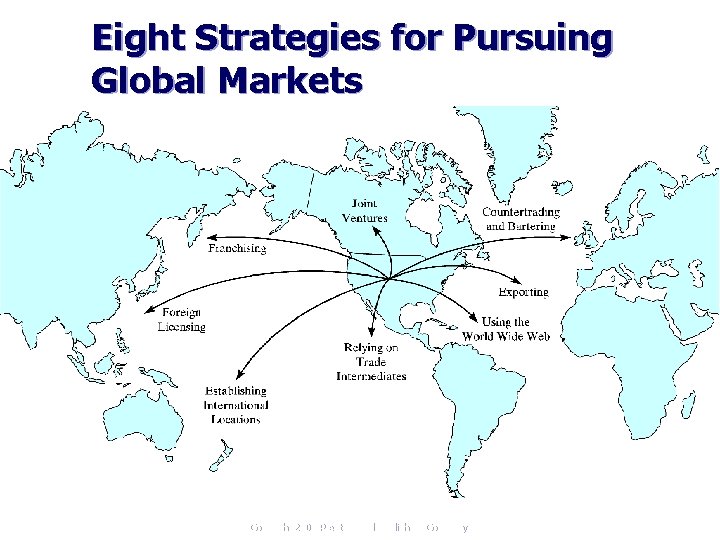
Eight Strategies for Pursuing Global Markets Copyright 2006 Prentice Hall Publishing Company 5
Strategies For "Going Global" n Launching a World Wide Web site Chapter 12 Global Marketing Strategies Copyright 2006 Prentice Hall Publishing Company 6
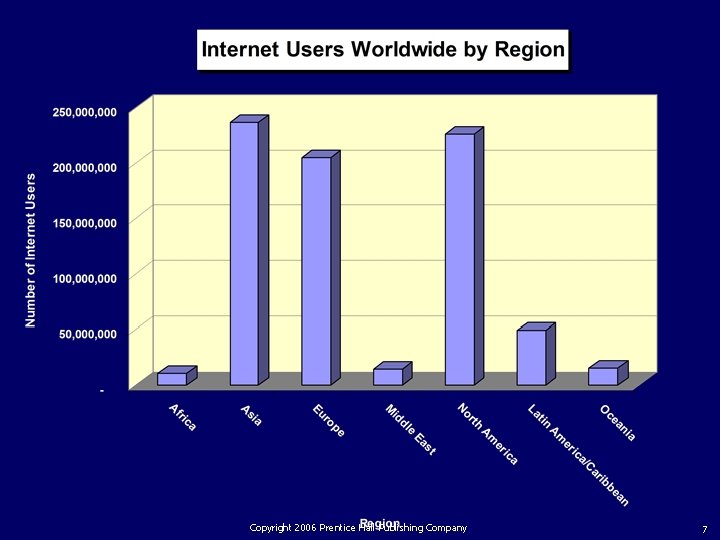
Copyright 2006 Prentice Hall Publishing Company 7
Strategies For "Going Global" n Launching a World Wide Web site n Relying on trade intermediaries Chapter 12 Global Marketing Strategies Copyright 2006 Prentice Hall Publishing Company 8
Trade Intermediaries n n n Export Management Companies (EMCs) Export Trading Companies (ETCs) Manufacturer’s Export Agents (MEAs) Export merchants Resident buying offices Foreign distributors Chapter 12 Global Marketing Strategies Copyright 2006 Prentice Hall Publishing Company 9
Strategies For "Going Global" n n n Launching a World Wide Web site Relying on trade intermediaries Joint ventures Chapter 12 Global Marketing Strategies Copyright 2006 Prentice Hall Publishing Company 10
Joint Ventures n n Domestic joint venture – two or more U. S. companies form an alliance for the purpose of exporting their goods and services abroad. Foreign joint venture – a domestic firm forms an alliance with a company in the target nation. Most important ingredient: Choosing the right partner. Ø Another key to success: Establishing common objectives. Ø Chapter 12 Global Marketing Strategies Copyright 2006 Prentice Hall Publishing Company 11
Strategies For "Going Global" n n n n Launching a World Wide Web site Relying on trade intermediaries Joint ventures Foreign licensing International franchising Countertrading and bartering Exporting Chapter 12 Global Marketing Strategies Copyright 2006 Prentice Hall Publishing Company 12
Exporting Small companies account for 97% of all companies involved in exporting, but… n They generate just one-third of the U. S. export sales. n Only 1% of all small and medium-sized businesses export; twice as many are capable of exporting but are not doing so. n Chapter 12 Global Marketing Strategies Copyright 2006 Prentice Hall Publishing Company 13
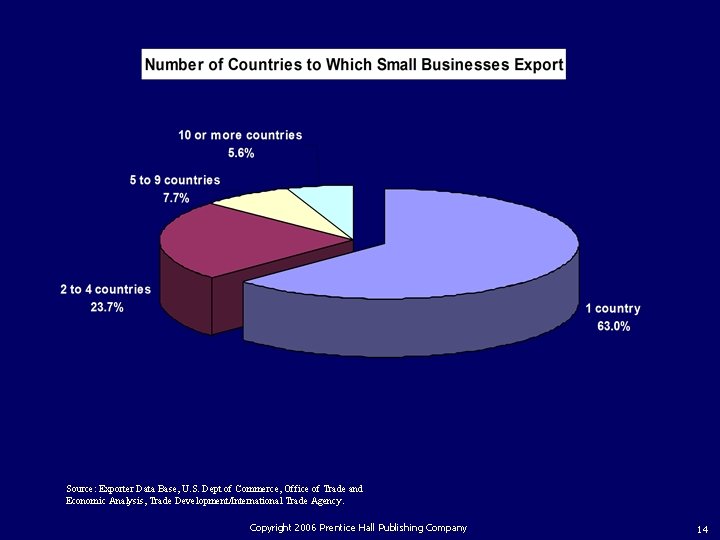
Source: Exporter Data Base, U. S. Dept of Commerce, Office of Trade and Economic Analysis, Trade Development/International Trade Agency. Copyright 2006 Prentice Hall Publishing Company 14
Steps to Successful Exporting 1. Recognize that even the tiniest companies and least experienced entrepreneurs have the potential to export. 2. Analyze your product or service. 3. Analyze your commitment to developing export markets. 4. Research potential markets and pick your target. Chapter 12 Global Marketing Strategies Copyright 2006 Prentice Hall Publishing Company 15
Steps to Successful Exporting (Continued) 5. Develop a distribution strategy. 6. Find your customer. Ø Ø 7. U. S. Department of Commerce International Trade Administration Find financing for export sales. Ø SBA, EX-IM Bank, OPIC, and others 8. Ship your goods. 9. Collect your money. Chapter 12 Global Marketing Strategies Copyright 2006 Prentice Hall Publishing Company 16
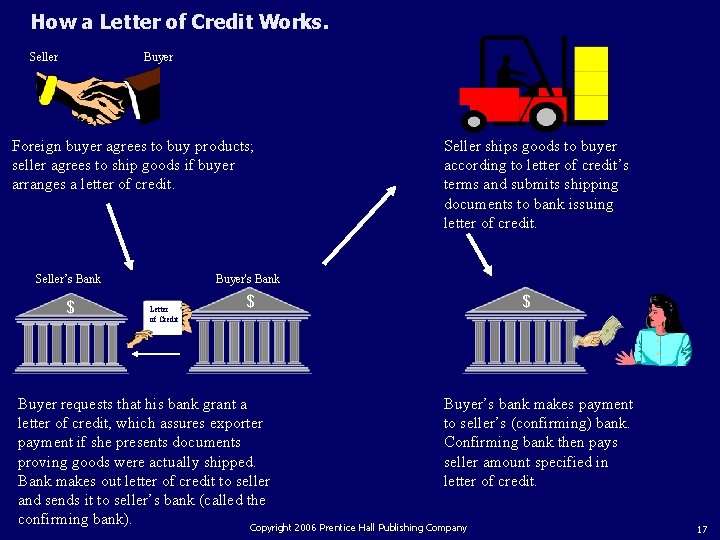
How a Letter of Credit Works. Seller Buyer Foreign buyer agrees to buy products; seller agrees to ship goods if buyer arranges a letter of credit. Seller’s Bank $ Seller ships goods to buyer according to letter of credit’s terms and submits shipping documents to bank issuing letter of credit. Buyer's Bank Letter of Credit $ $ Buyer requests that his bank grant a Buyer’s bank makes payment letter of credit, which assures exporter to seller’s (confirming) bank. payment if she presents documents Confirming bank then pays proving goods were actually shipped. seller amount specified in Bank makes out letter of credit to seller letter of credit. and sends it to seller’s bank (called the confirming bank). Copyright 2006 Prentice Hall Publishing Company 17
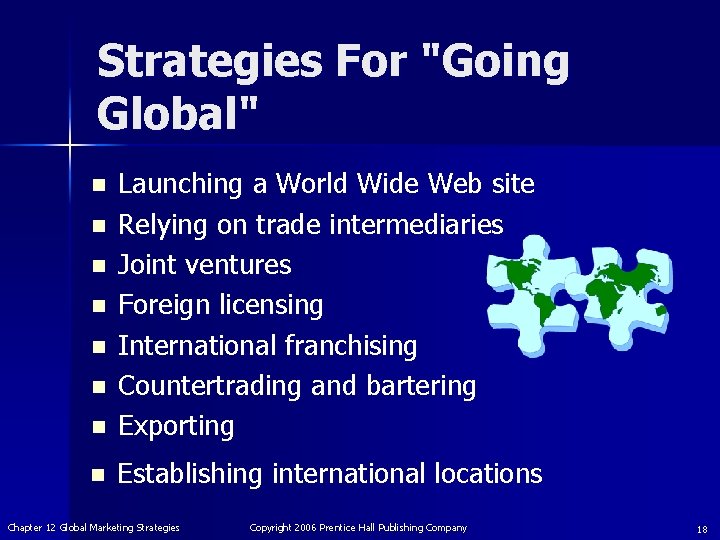
Strategies For "Going Global" n Launching a World Wide Web site Relying on trade intermediaries Joint ventures Foreign licensing International franchising Countertrading and bartering Exporting n Establishing international locations n n n Chapter 12 Global Marketing Strategies Copyright 2006 Prentice Hall Publishing Company 18
Barriers To International Trade Domestic Barriers: Attitude - "My company is too small to export. " n Lack of information about how to get started. n Lack of export financing. n Chapter 12 Global Marketing Strategies Copyright 2006 Prentice Hall Publishing Company 19
Barriers To International Trade International Barriers: n n n Tariffs - Taxes a government imposes on goods and services imported into that country. Quotas - Limits on the amount of a product imported into a country. Embargoes - Total bans on imports of certain products. Chapter 12 Global Marketing Strategies Copyright 2006 Prentice Hall Publishing Company 20
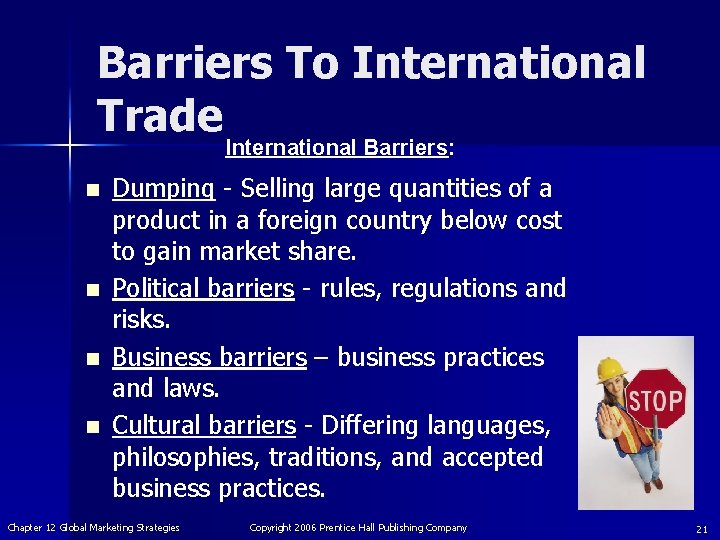
Barriers To International Trade International Barriers: n n Dumping - Selling large quantities of a product in a foreign country below cost to gain market share. Political barriers - rules, regulations and risks. Business barriers – business practices and laws. Cultural barriers - Differing languages, philosophies, traditions, and accepted business practices. Chapter 12 Global Marketing Strategies Copyright 2006 Prentice Hall Publishing Company 21
International Trade Agreements General Agreement on Tariffs and Trade (GATT) and the World Trade Organization (WTO) n North American Free Trade Agreement (NAFTA) n Chapter 12 Global Marketing Strategies Copyright 2006 Prentice Hall Publishing Company 22
Guidelines For Success In International Markets n n Make yourself at home in all three of the world's key markets - North America, Europe, and Asia. Appeal to the similarities within the various regions in which you operate but recognize the differences in their particular cultures. Be willing to commit the necessary resources to make your global efforts successful. Develop new products for the world market. Chapter 12 Global Marketing Strategies Copyright 2006 Prentice Hall Publishing Company 23
Guidelines For Success In International Markets n n n Use the many resources available to research potential markets and to determine the ideal target for your products. Familiarize yourself with foreign customs and languages. Learn to understand your customers from the perspective of their culture, not your own. Chapter 12 Global Marketing Strategies Copyright 2006 Prentice Hall Publishing Company 24
Guidelines For Success In International Markets "Glocalize" - Make global decisions about products, markets, and management, but allow local employees to make tactical decisions about packaging, advertising, and service. n Make positive and preferably visible contributions to the local community. n Chapter 12 Global Marketing Strategies Copyright 2006 Prentice Hall Publishing Company 25
Guidelines For Success In International Markets Train employees to think globally, send them on international trips, and equip them with state-of-the-art communication technology. n Hire local managers to staff foreign offices and branches. n Chapter 12 Global Marketing Strategies Copyright 2006 Prentice Hall Publishing Company 26
Guidelines For Success In International Markets Do whatever seems best wherever it seems best, even if people at home lose jobs or responsibilities. n Consider using partners and joint ventures to break into foreign markets you cannot penetrate on your own. n Chapter 12 Global Marketing Strategies Copyright 2006 Prentice Hall Publishing Company 27
- Slides: 27