
GLOBAL IMPLEMENTATION CONFERENCE DUBLIN 27 TH 28 TH
GLOBAL IMPLEMENTATION CONFERENCE, DUBLIN 27 TH & 28 TH MAY 2015 Prevention and Early Intervention Programme (PEIP) – An Irish experience of Scaling and Capacity Development in Communities experiencing Social and Economic Deprivation Presentation By Gráinne Smith, CDI Tallaght & Noel Kelly, PFL Northside Partnership
PREVENTION AND EARLY INTERVENTION PROGRAMME (PEIP)
DEVELOPING THE PREVENTION AND EARLY INTERVENTION PROGRAMME (PEIP) The journey commenced in Ireland in 2004 when Atlantic Philanthropies (AP) announced their Children and Youth Programme in Ireland; Three initial test sites were identified: Ballymun (youngballymun), Darndale (Preparing for Life) and Tallaght West (Childhood Development Initiative CDI)*; AP provided planning grants and technical assistance to the 3 sites; Plans for the 3 areas were developed using an agreed approach:
OBJECTIVE OF PEIP The PEIP were set up with the objective of ‘testing innovative ways of delivering services and early interventions for children and young people, including the wider family and community settings’ (DCYA, 2011).
DEVELOPING THE PREVENTION AND EARLY INTERVENTION PROGRAMME (PEIP) Emphasis on Prevention & Early Intervention; Focus on Outcomes; Using a Logic Model; Delivering Tailored Activities/Services; Use of Evidence of what works; Facilitating the integration of services; Rigorous Evaluation to measure progress.
DEVELOPING THE PREVENTION AND EARLY INTERVENTION PROGRAMME (PEIP) 2006: AP approved plans and committed 50% of the funding required to implement the 5 year area plans; 2007: Government committed 50% match funding for the period (2007 -2012); Getting a 5 -Year budget commitment from Govt. was significant and AP’s investment made this possible; The Irish Economy was booming up to 2007 and our expectation were high, but!

THE IRISH STORY

IRISH ECONOMY – 2006/2007
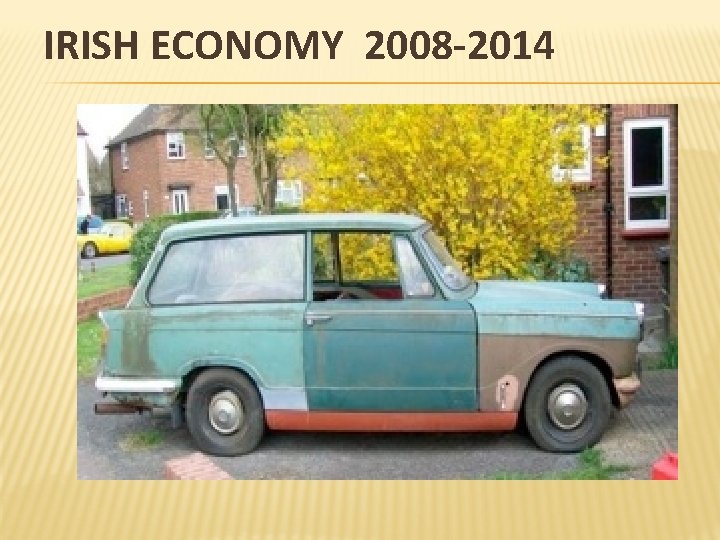
IRISH ECONOMY 2008 -2014

IRISH ECONOMY 2015
HOW CDI AND PFL AREAS COMPARE TO REST OF IRELAND
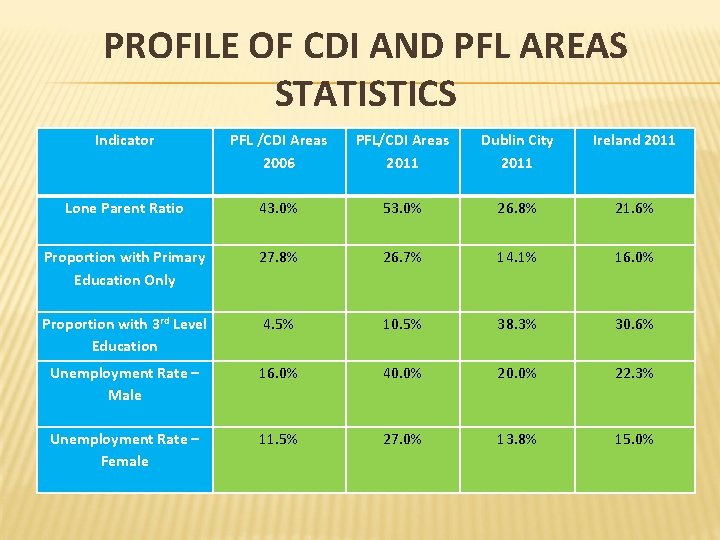
PROFILE OF CDI AND PFL AREAS STATISTICS Indicator PFL /CDI Areas 2006 PFL/CDI Areas 2011 Dublin City 2011 Ireland 2011 Lone Parent Ratio 43. 0% 53. 0% 26. 8% 21. 6% Proportion with Primary Education Only Proportion with 3 rd Level Education 27. 8% 26. 7% 14. 1% 16. 0% 4. 5% 10. 5% 38. 3% 30. 6% Unemployment Rate – Male Unemployment Rate – Female 16. 0% 40. 0% 22. 3% 11. 5% 27. 0% 13. 8% 15. 0%
PREPARING FOR LIFE - CONTEXT Poor outcomes for children with high levels of early school leaving; High rates of anti-social behaviour, youth suicide, crime and substance use often easily traced back to children making a poor start in school; Research in 2004 indicated that 51% of children not ready for school when they started; Difficulties identified in the areas of language, cognitive development, communications and general knowledge; Evidence pointed to the need to intervene early before children start school – hence the concept of Preparing For Life.
WHAT IS PREPARING FOR LIFE? Community led Home Visiting Programme focused on Child Development and Parenting being researched using a Random Control Trial over. Intervention type: 5 -year programme focused on: Cognitive development Physical health and motor skills Social, emotional & behavioural development Approaches to learning Language development and literacy Aim: Help parents to help their children in order to improve child outcomes, leave a legacy in the community and generate high quality outcome data.
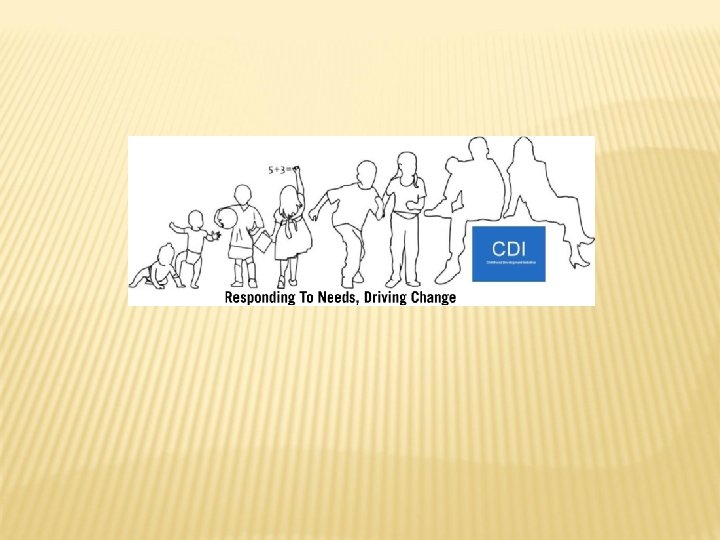
CDI - CONTEXT Strategy developed and implemented: informed by and in consultation with those living and working in Tallaght West; To improve outcomes for children and families, and; To test and create evidence to inform policy and practice through; Commissioning local service providers; Designing and delivering seven manualised programmes; Eight rigorous independent evaluations (ten+ now published).
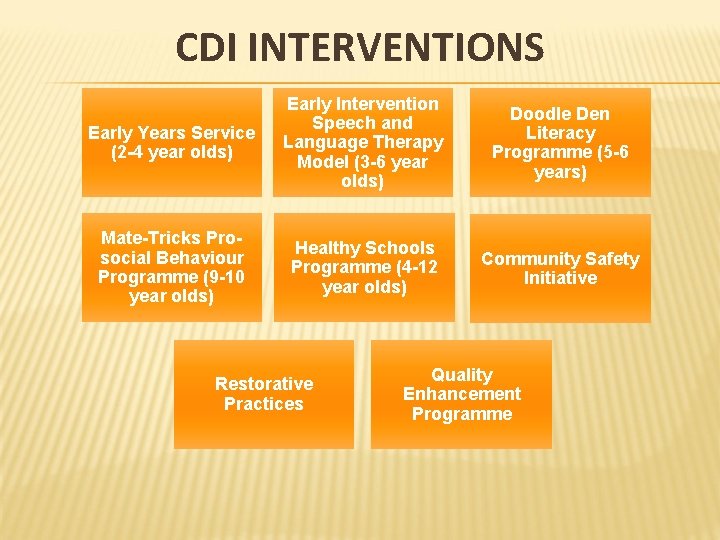
CDI INTERVENTIONS Early Years Service (2 -4 year olds) Early Intervention Speech and Language Therapy Model (3 -6 year olds) Doodle Den Literacy Programme (5 -6 years) Mate-Tricks Prosocial Behaviour Programme (9 -10 year olds) Healthy Schools Programme (4 -12 year olds) Community Safety Initiative Restorative Practices Quality Enhancement Programme
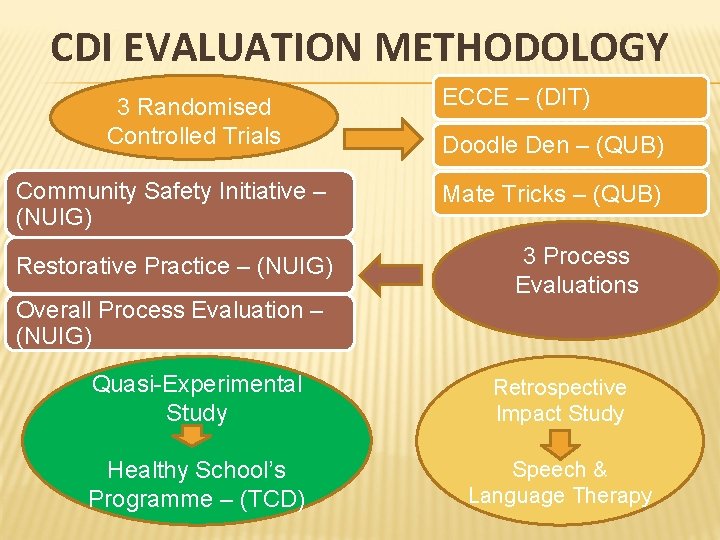
CDI EVALUATION METHODOLOGY 3 Randomised Controlled Trials Community Safety Initiative – (NUIG) Restorative Practice – (NUIG) Overall Process Evaluation – (NUIG) ECCE – (DIT) Doodle Den – (QUB) Mate Tricks – (QUB) 3 Process Evaluations Quasi-Experimental Study Retrospective Impact Study Healthy School’s Programme – (TCD) Speech & Language Therapy
From PEIP to ABC!
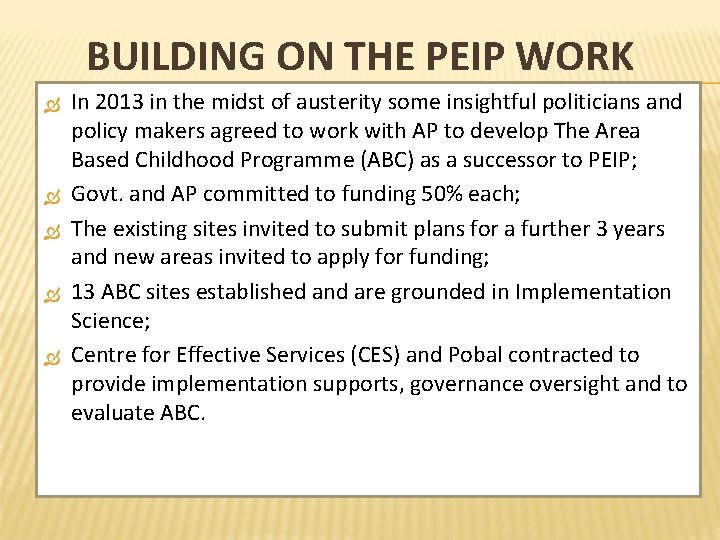
BUILDING ON THE PEIP WORK In 2013 in the midst of austerity some insightful politicians and policy makers agreed to work with AP to develop The Area Based Childhood Programme (ABC) as a successor to PEIP; Govt. and AP committed to funding 50% each; The existing sites invited to submit plans for a further 3 years and new areas invited to apply for funding; 13 ABC sites established and are grounded in Implementation Science; Centre for Effective Services (CES) and Pobal contracted to provide implementation supports, governance oversight and to evaluate ABC.
CURRENT SITUATION- CDI Parent support in early years; Early intervention speech and language service; Doodle Den; Doodle Families; Restorative Practice Strategic Development; Antenatal to Three Initiative (ATTI); Families in Prison Programme (FIPP); Sharing the learning.
SCALING UP - PFL Based on positive findings from the PFL-RCT we have scaled up our actions under the ABC programme; Engaging all key partners in a community wide approach: Parents & Families, Health Staff including Maternity Hospitals, Public Health Nursing and Speech and Language Therapy, Early Years Settings and Schools; Aligned to national policies in areas of health and wellbeing, early years and education; We offer support to other ABC sites.
PFL – ABC INTERVENTIONS Completion of Random Control Trial (RCT) Delivering Ante-Natal Care and Education in the Community Home Visiting Programme to support Child Development and Parenting Early Years Practice Programme – Quality, Speech and Language and Transitions Schools Programme Literacy, Play and Self. Regulation Triple-P Parenting Programme
PREPARING FOR LIFE - RESEARCH PFL is committed to gathering evidence to inform and support our work especially in the areas of implementation and outcome measurement. Random Control Trial – final results available in May 2016; Evaluating outcomes for the second wave of families receiving the home visiting programme; Conducting focused evaluations on a number of the programme we are implementing – PAX Good Behaviour Game, Early Years Practice Programme, Write to Read Literacy Programme and Play to Learn Programme.
OUR LEARNING
4 AREAS OF LEARNING CHALLENGES OF RESEARCH & PRACTICE IMPLEMENTATION CHALLENGES SUSTAINABILITY & SCALING UP COMMUNITY RESPONSE TO CHILD POVERTY
CHALLENGES OF RESEARCH AND PRACTICE Targeted versus Universal; Community led versus manualised; Having a common understanding of research methodologies and language; Research informing practice or practice informing research? Timeframe for commencing research; Making assumptions and managing expectations; RCTs - Agencies acting as gatekeepers for participants; Getting buy-in – reluctant participants; Communication – balancing involvement, ‘contamination’ and ‘obstruction’; Pace of change; Negative findings?
WHAT HELPED? Being a purveyor… Being clear on the vision for your programme; Meetings and more meetings…shared understanding of research and all that goes with it!! Being clear about programme direction and outcomes! Having a lead in time is crucial; De-mystifying research and listening to participants view points; Quick wins – open dialogue; Sharing what doesn’t work; Feedback loops.
IMPLEMENTATION CHALLENGES Time lags and collective amnesia; Getting buy-in to a ‘scientific approach’; Fear of being de-professionalised in the context of manualised programmes; Introducing new approaches seen as a criticism of existing practice; Staff selection – getting the right people; Using and creating evidence (outcome data unavailable throughout service delivery); Creating and supporting change in terms of ways of working, nature of relationships, etc. ; Managing research and practice side by side.
WHAT HELPED? Honesty; Transparency and communication; Admitting that we are not the experts – but having access to them, e. g. EAC; Good coffee; Well run meetings; Humour; Informal follow-up and connections; Quick wins; Documenting everything; Relationships!!
SUSTAINABILITY & SCALING UP Having the evidence to support case for scale up; Defining key messages and recommendations; Development of policy papers; PR! Others seeing the need and benefits of new models; Peer champions, e. g. teachers, principals; Tapping into local politicians to keep them in the loop; Development of Implementation Guides; Maintaining relationships with statutory agencies – can also act as champions.
THE ESSENCE OF A COMMUNITY RESPONSE TO SOCIAL AND ECONOMIC DEPRIVATION Consultation, collaboration: having a named person responsible for bringing people together; Identifying need (within existing resources); Utilising evidence to maximise positive outcomes; Work with existing services to develop capacity; Resource change management processes, upskilling, getting buy-in, developing leadership.
THANK YOU FOR LISTENING FOR FURTHER INFORMATION ON CDI AND PFL PLEASE VISIT OUR WEBSITES AT: www. twcdi. ie www. preparingforlife. ie
- Slides: 37