
Global History Geography Word Association Flashcards 3 Protestant
Global History & Geography Word Association Flashcards 3
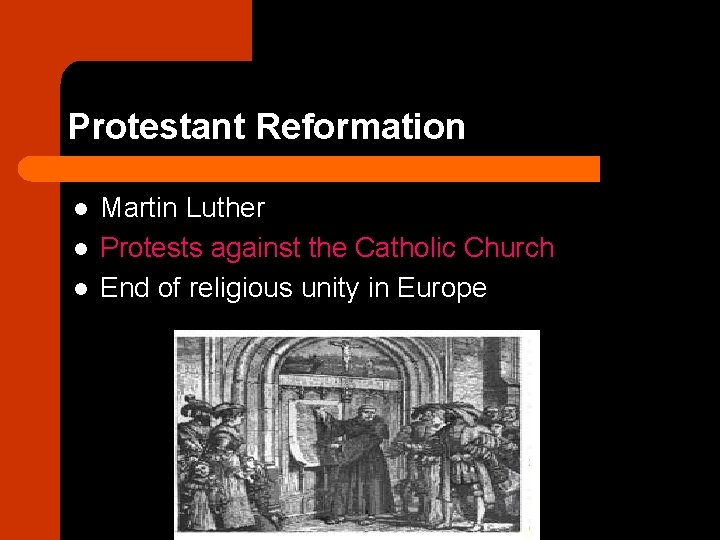
Protestant Reformation l l l Martin Luther Protests against the Catholic Church End of religious unity in Europe
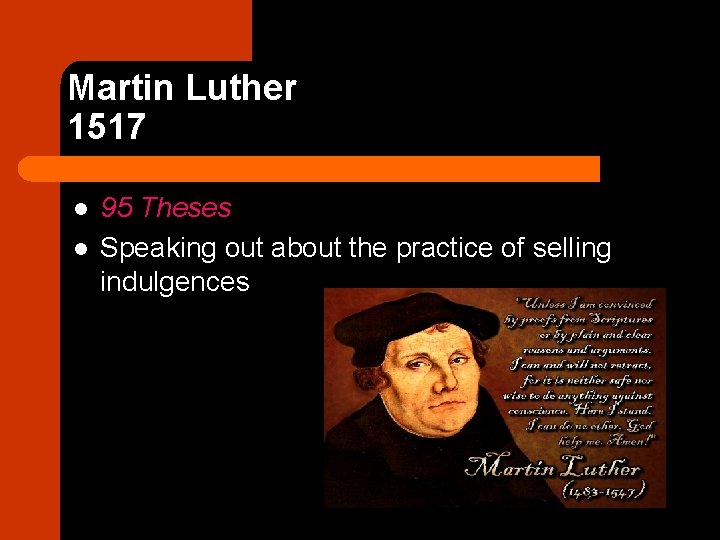
Martin Luther 1517 l l 95 Theses Speaking out about the practice of selling indulgences
Counter Reformation / Catholic Reformation l l l Council of Trent Ignatius of Loyola & the Jesuits Reaffirm Catholic Doctrine but reform a little
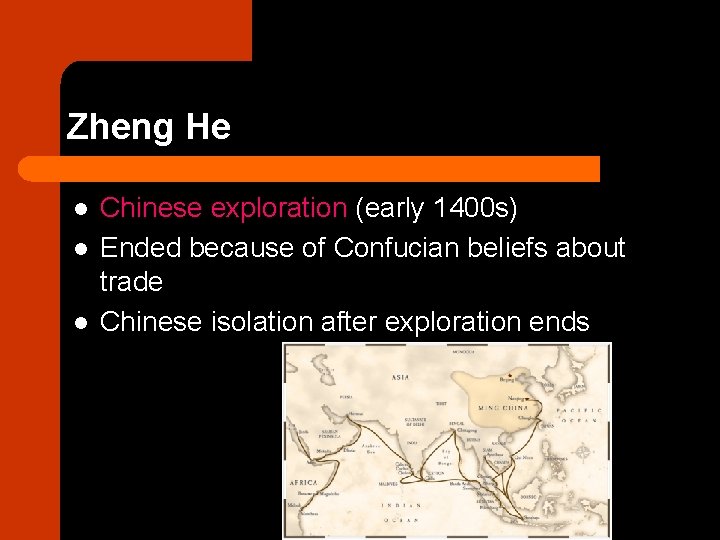
Zheng He l l l Chinese exploration (early 1400 s) Ended because of Confucian beliefs about trade Chinese isolation after exploration ends
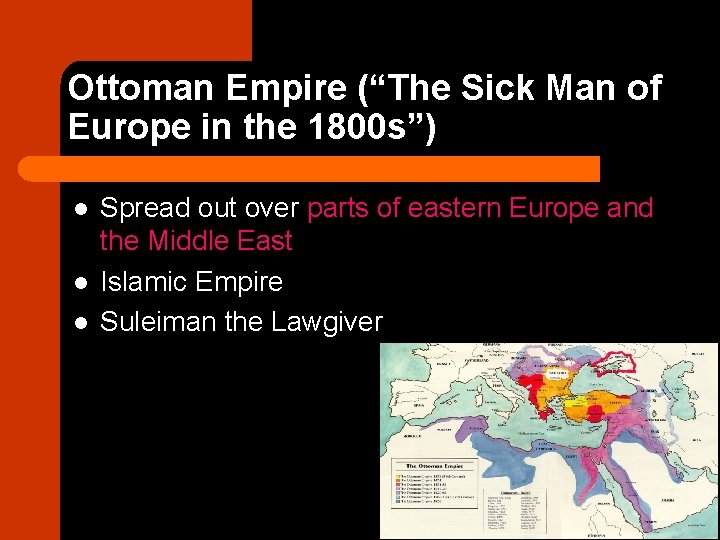
Ottoman Empire (“The Sick Man of Europe in the 1800 s”) l l l Spread out over parts of eastern Europe and the Middle East Islamic Empire Suleiman the Lawgiver
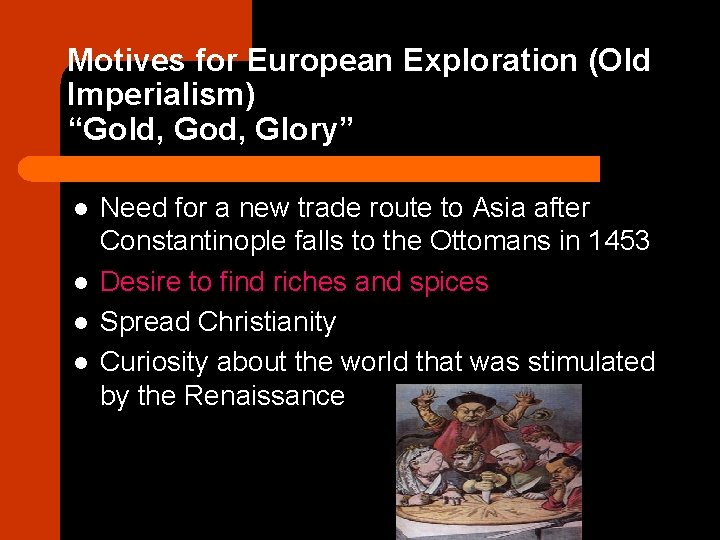
Motives for European Exploration (Old Imperialism) “Gold, God, Glory” l l Need for a new trade route to Asia after Constantinople falls to the Ottomans in 1453 Desire to find riches and spices Spread Christianity Curiosity about the world that was stimulated by the Renaissance
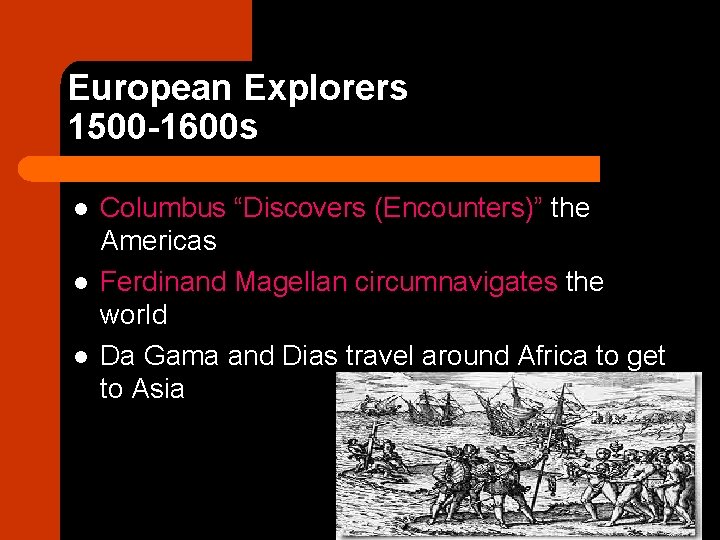
European Explorers 1500 -1600 s l l l Columbus “Discovers (Encounters)” the Americas Ferdinand Magellan circumnavigates the world Da Gama and Dias travel around Africa to get to Asia
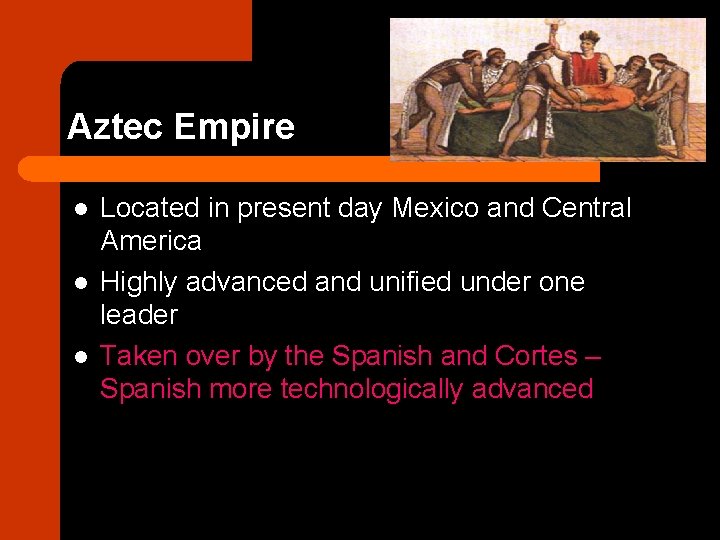
Aztec Empire l l l Located in present day Mexico and Central America Highly advanced and unified under one leader Taken over by the Spanish and Cortes – Spanish more technologically advanced
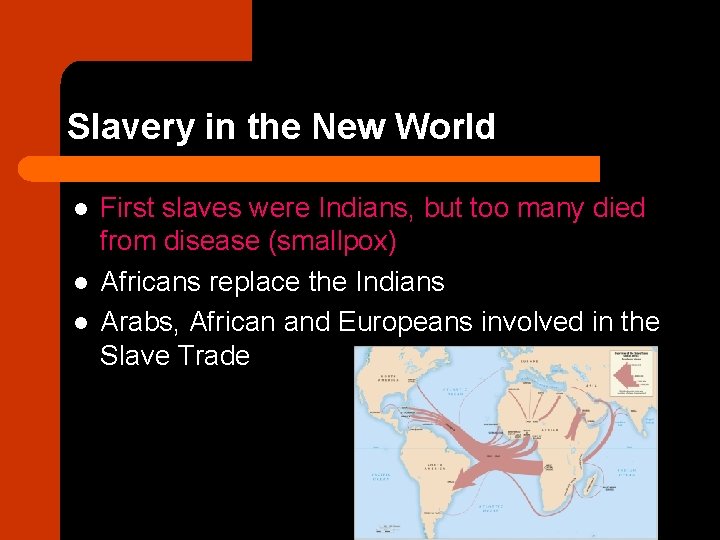
Slavery in the New World l l l First slaves were Indians, but too many died from disease (smallpox) Africans replace the Indians Arabs, African and Europeans involved in the Slave Trade
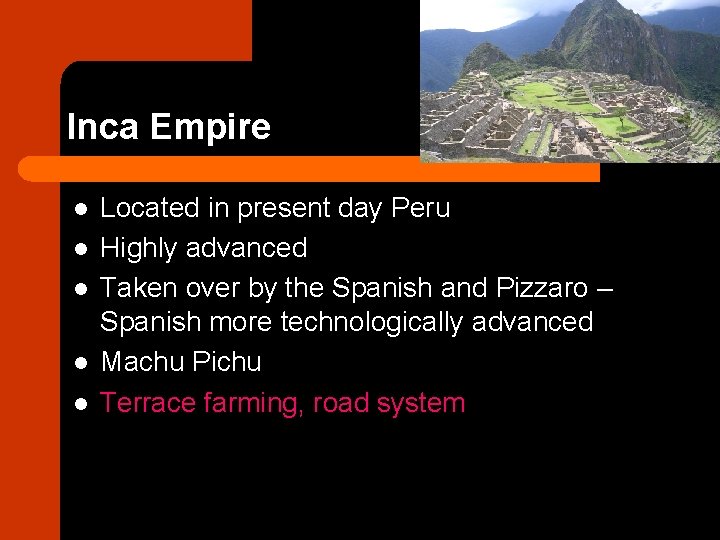
Inca Empire l l l Located in present day Peru Highly advanced Taken over by the Spanish and Pizzaro – Spanish more technologically advanced Machu Pichu Terrace farming, road system
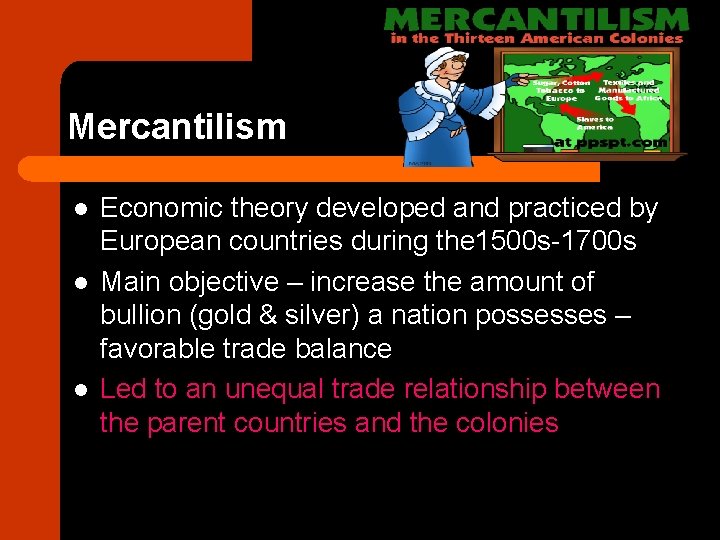
Mercantilism l l l Economic theory developed and practiced by European countries during the 1500 s-1700 s Main objective – increase the amount of bullion (gold & silver) a nation possesses – favorable trade balance Led to an unequal trade relationship between the parent countries and the colonies
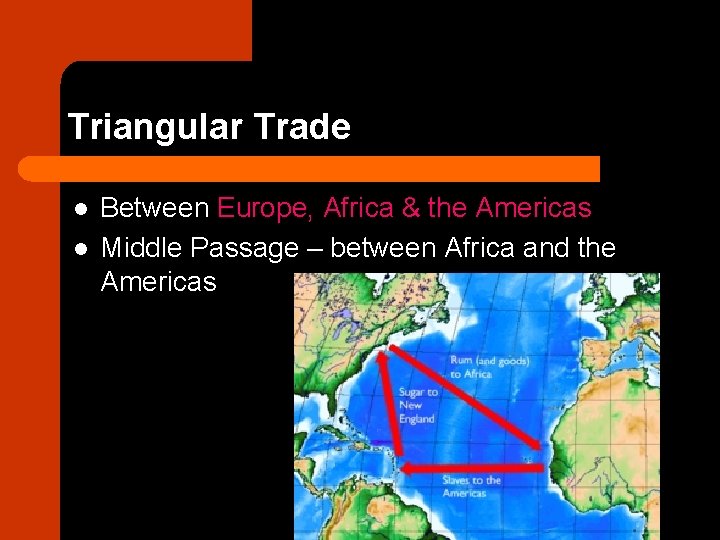
Triangular Trade l l Between Europe, Africa & the Americas Middle Passage – between Africa and the Americas
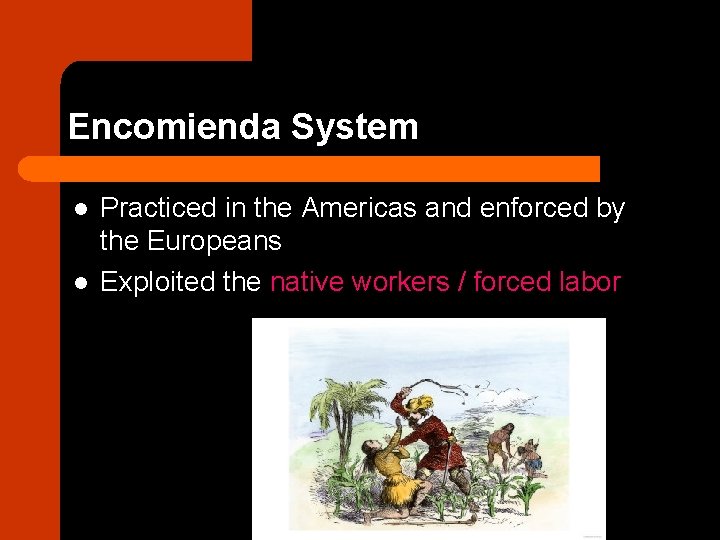
Encomienda System l l Practiced in the Americas and enforced by the Europeans Exploited the native workers / forced labor
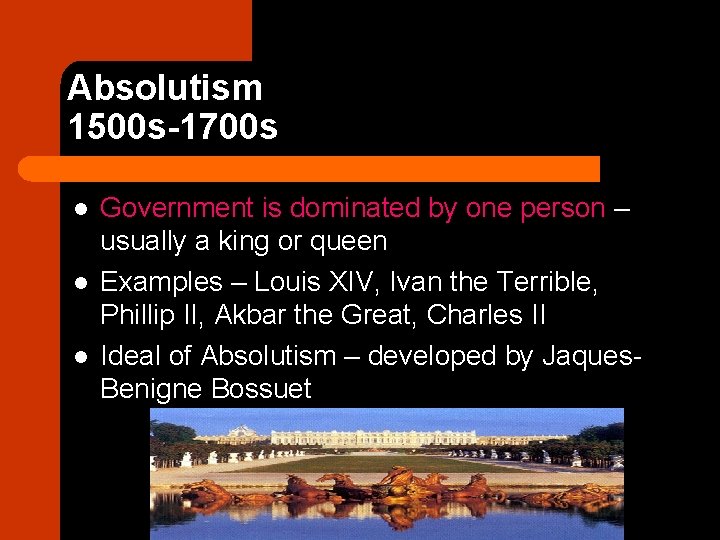
Absolutism 1500 s-1700 s l l l Government is dominated by one person – usually a king or queen Examples – Louis XIV, Ivan the Terrible, Phillip II, Akbar the Great, Charles II Ideal of Absolutism – developed by Jaques. Benigne Bossuet
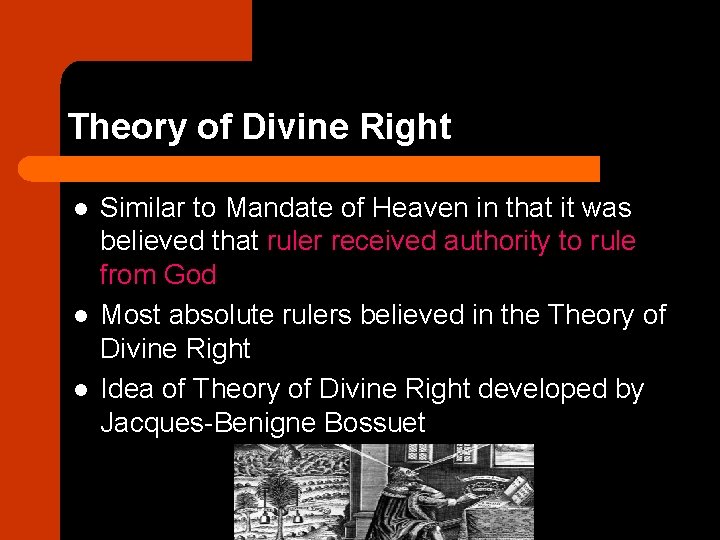
Theory of Divine Right l l l Similar to Mandate of Heaven in that it was believed that ruler received authority to rule from God Most absolute rulers believed in the Theory of Divine Right Idea of Theory of Divine Right developed by Jacques-Benigne Bossuet
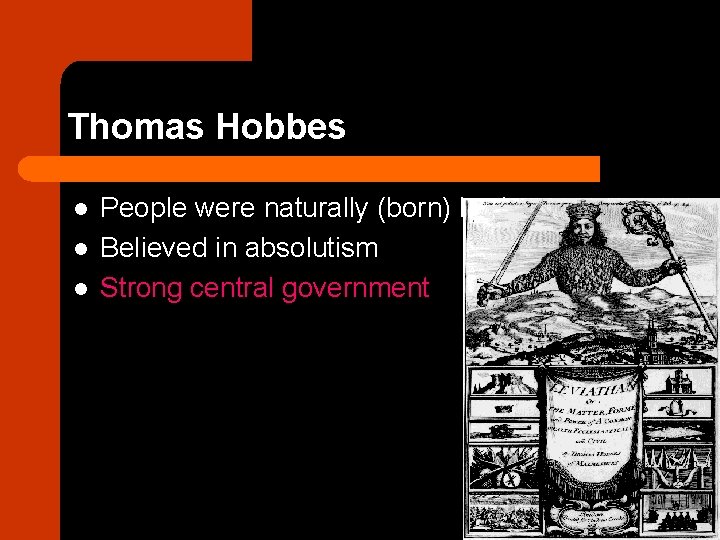
Thomas Hobbes l l l People were naturally (born) bad Believed in absolutism Strong central government
John Locke l l l Believed in Natural Rights – life, liberty and property and protection of them (social contract) People were naturally (born) good People have the right to overthrow a government if it doesn’t protect their natural rights
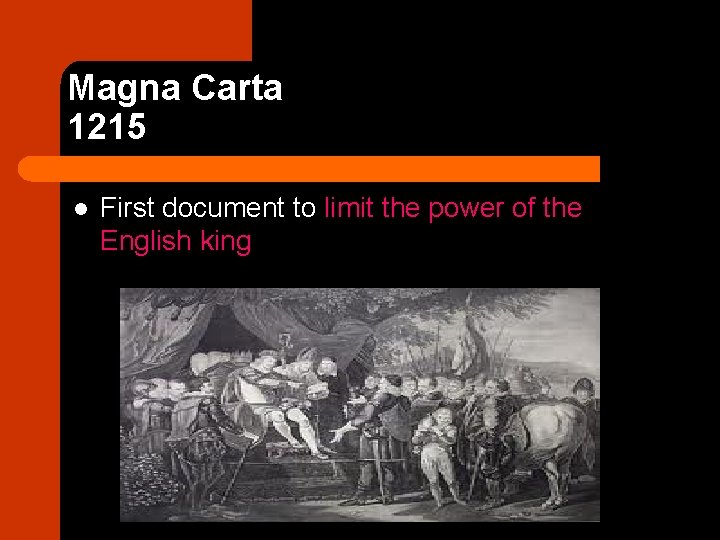
Magna Carta 1215 l First document to limit the power of the English king
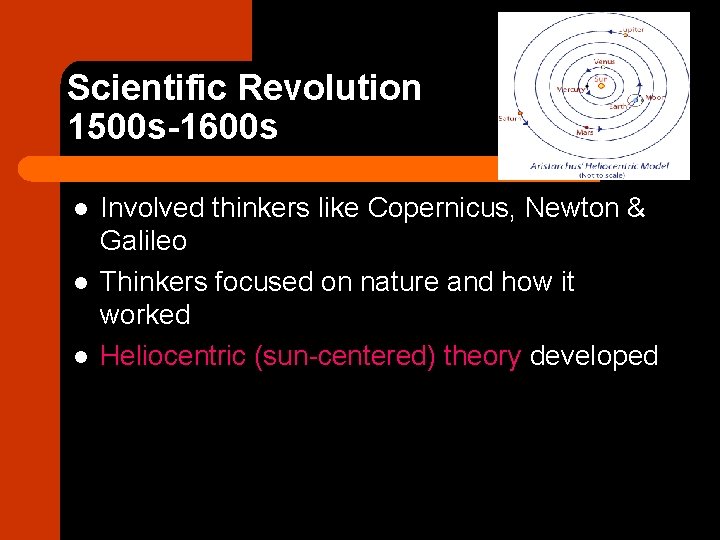
Scientific Revolution 1500 s-1600 s l l l Involved thinkers like Copernicus, Newton & Galileo Thinkers focused on nature and how it worked Heliocentric (sun-centered) theory developed
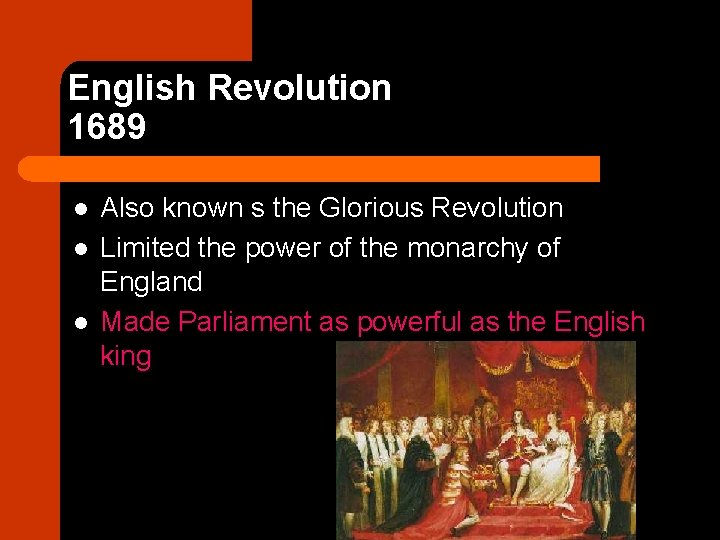
English Revolution 1689 l l l Also known s the Glorious Revolution Limited the power of the monarchy of England Made Parliament as powerful as the English king
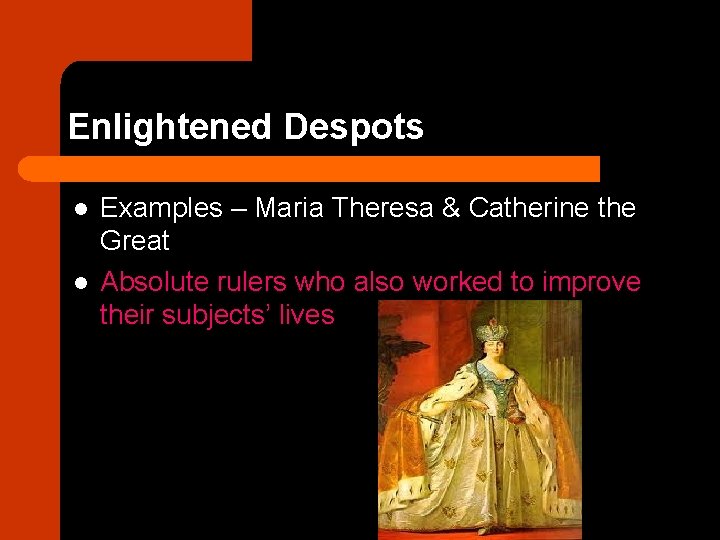
Enlightened Despots l l Examples – Maria Theresa & Catherine the Great Absolute rulers who also worked to improve their subjects’ lives
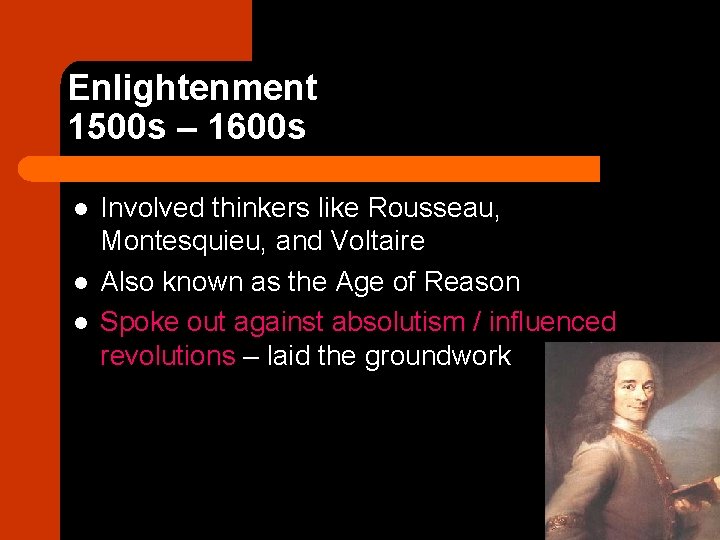
Enlightenment 1500 s – 1600 s l l l Involved thinkers like Rousseau, Montesquieu, and Voltaire Also known as the Age of Reason Spoke out against absolutism / influenced revolutions – laid the groundwork
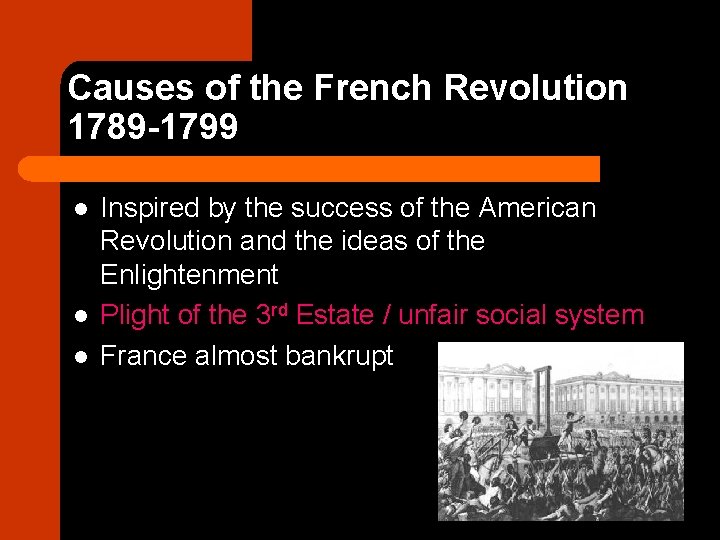
Causes of the French Revolution 1789 -1799 l l l Inspired by the success of the American Revolution and the ideas of the Enlightenment Plight of the 3 rd Estate / unfair social system France almost bankrupt
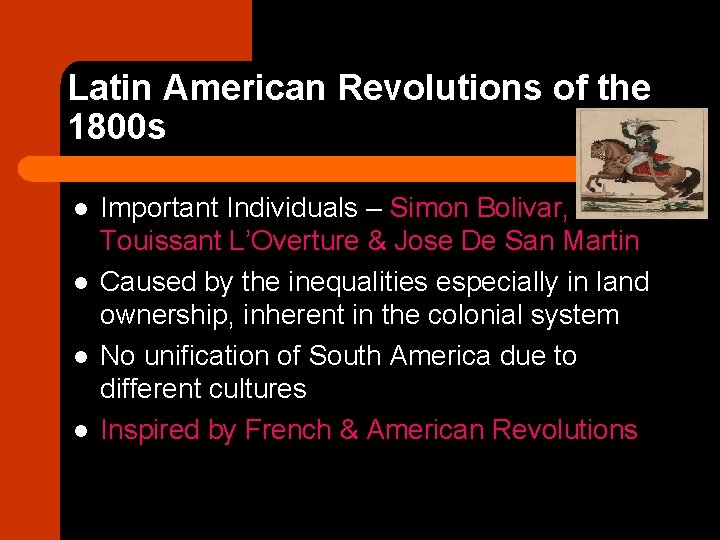
Latin American Revolutions of the 1800 s l l Important Individuals – Simon Bolivar, Touissant L’Overture & Jose De San Martin Caused by the inequalities especially in land ownership, inherent in the colonial system No unification of South America due to different cultures Inspired by French & American Revolutions
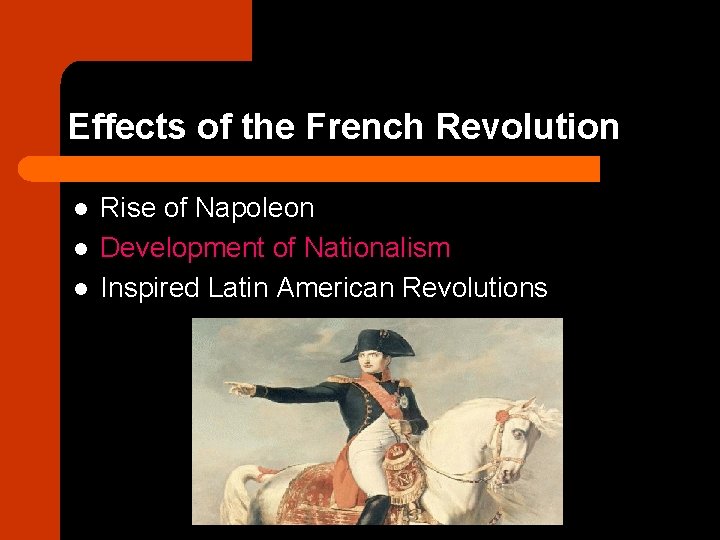
Effects of the French Revolution l l l Rise of Napoleon Development of Nationalism Inspired Latin American Revolutions
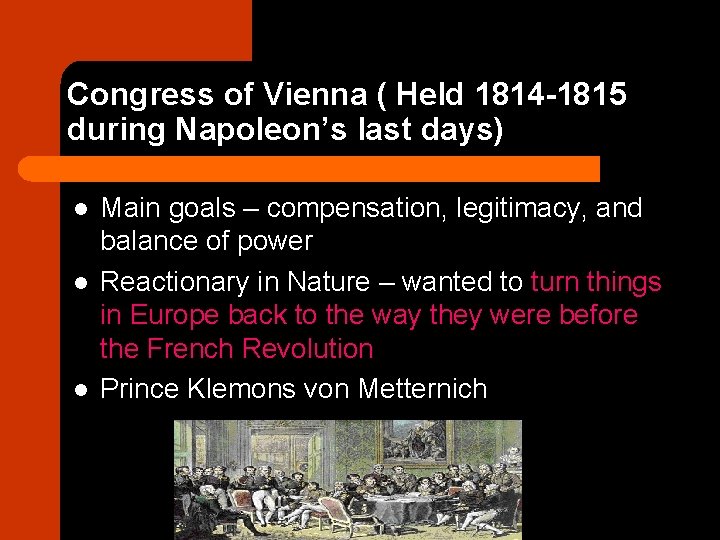
Congress of Vienna ( Held 1814 -1815 during Napoleon’s last days) l l l Main goals – compensation, legitimacy, and balance of power Reactionary in Nature – wanted to turn things in Europe back to the way they were before the French Revolution Prince Klemons von Metternich
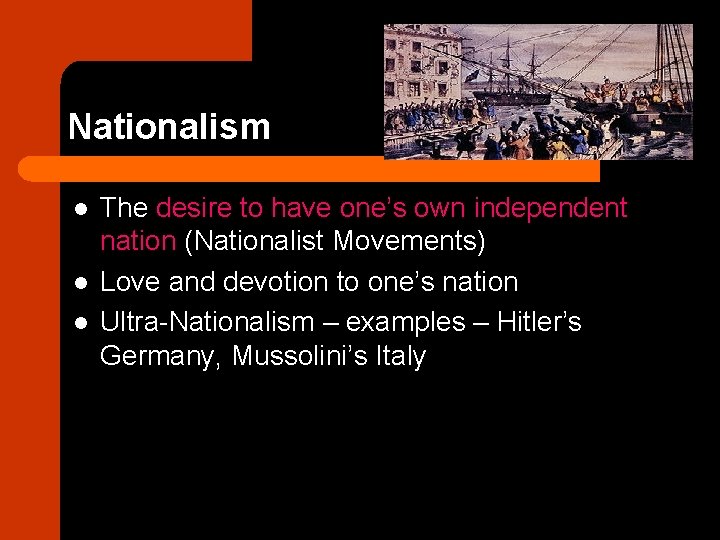
Nationalism l l l The desire to have one’s own independent nation (Nationalist Movements) Love and devotion to one’s nation Ultra-Nationalism – examples – Hitler’s Germany, Mussolini’s Italy
- Slides: 28