
Global epidemiology of drug use indicators and challenges
Global epidemiology of drug use: indicators and challenges Chloé Carpentier Drug Research Section, Chief UNODC Virtual Conference on Drug Demand Reduction in Africa, Plenary 4: Epidemiology and its Role in Drug Demand Reduction, 20 October 2020
Why drug use epidemiology? to support evidence-based responses to drug use Develop policies and programmes (interventions) Evaluate the outcome and impact of policies and programmes Allocate resources to priority areas Contribute to international monitoring and policy debate
Why drug use epidemiology? to generate reliable information for policies & programmes Identify existing drug use patterns Type of drugs, by whom, what ways Monitor changing trends in patterns Over time, geographic area and population groups Detecting new drugs, methods of use Determine health and social consequences of drug use
Monitoring the SDGs – Goal 3 – Ensure healthy lives and promote well being for all at all ages Target 3. 5 – strengthening the prevention and treatment of substance abuse including narcotic drug abuse Indicator – number of people provided drug treatment services / estimates of people with drug use disorder (= in need of treatment)
THE CONCEPTUAL FRAMEWORK
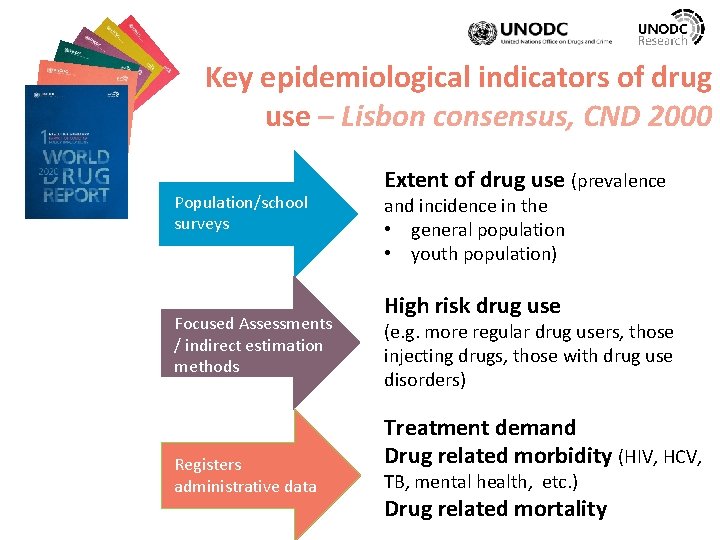
Key epidemiological indicators of drug use – Lisbon consensus, CND 2000 Population/school surveys Focused Assessments / indirect estimation methods Registers administrative Registers data administrative data Extent of drug use (prevalence and incidence in the • general population • youth population) High risk drug use (e. g. more regular drug users, those injecting drugs, those with drug use disorders) Treatment demand Drug related morbidity (HIV, HCV, TB, mental health, etc. ) Drug related mortality
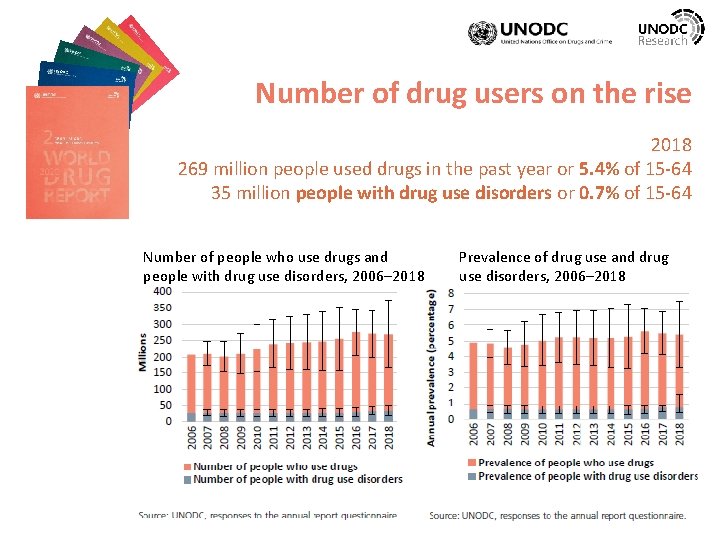
Number of drug users on the rise 2018 269 million people used drugs in the past year or 5. 4% of 15 -64 35 million people with drug use disorders or 0. 7% of 15 -64 Number of people who use drugs and people with drug use disorders, 2006– 2018 Prevalence of drug use and drug use disorders, 2006– 2018

Estimates of global numbers of people using drugs 2018
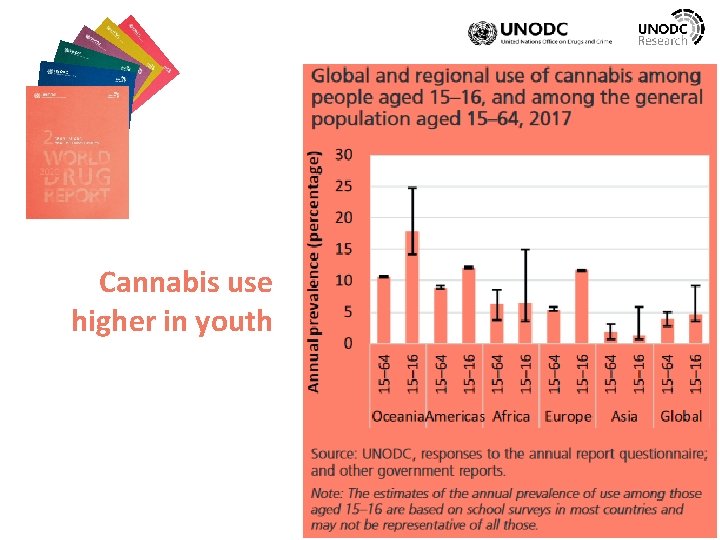
Cannabis use higher in youth
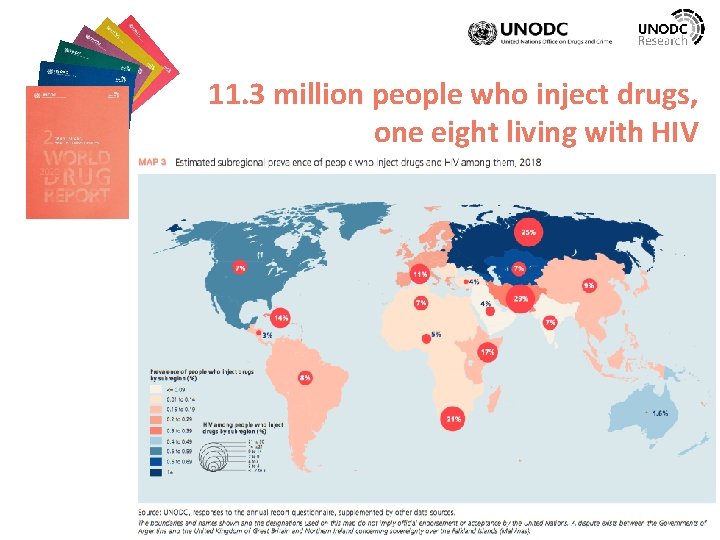
11. 3 million people who inject drugs, one eight living with HIV

Half people who inject drugs are living with hepatitis C And
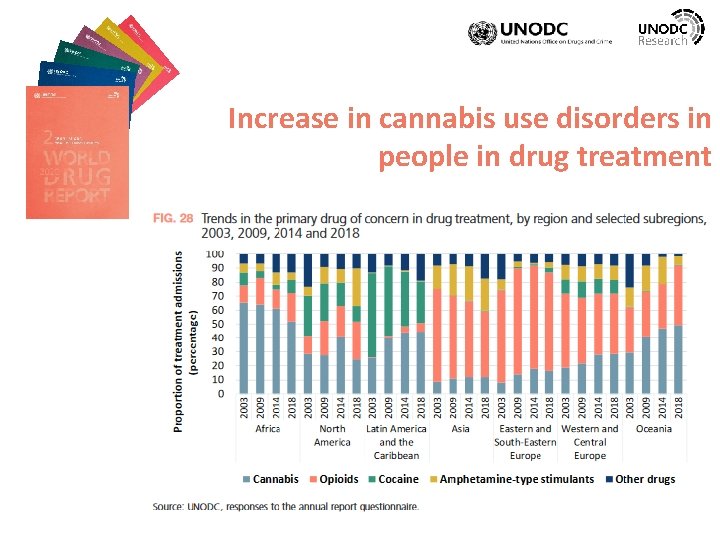
Increase in cannabis use disorders in people in drug treatment
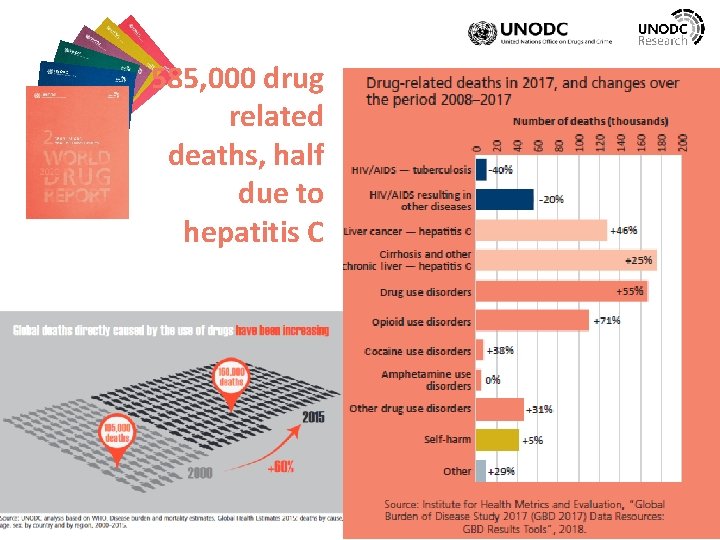
585, 000 drug related deaths, half due to hepatitis C
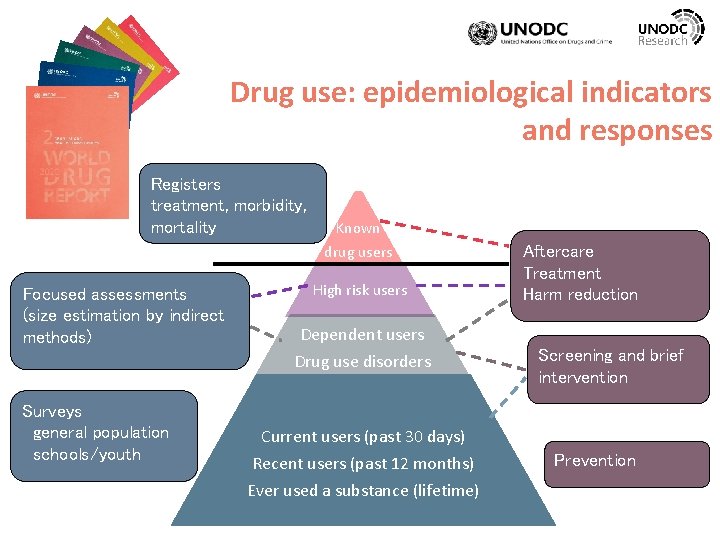
Drug use: epidemiological indicators and responses Registers treatment, morbidity, mortality Known drug users Focused assessments (size estimation by indirect methods) High risk users Dependent users Drug use disorders Surveys general population schools/youth Aftercare Treatment Harm reduction Current users (past 30 days) Recent users (past 12 months) Ever used a substance (lifetime) Screening and brief intervention Prevention
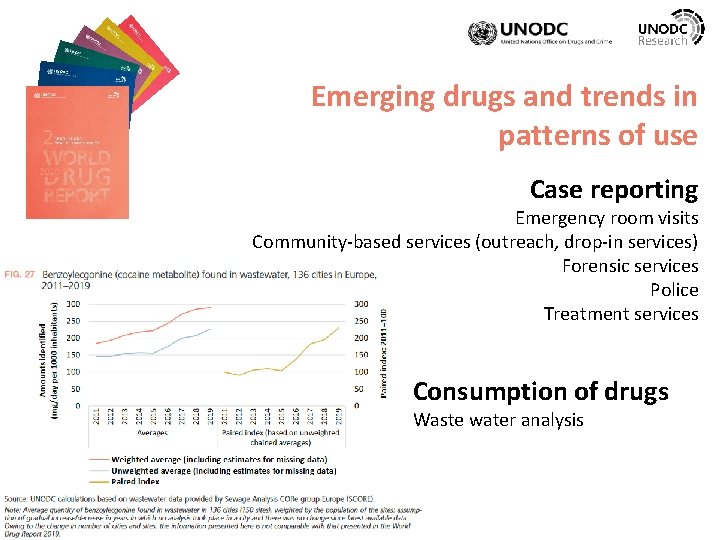
Emerging drugs and trends in patterns of use Case reporting Emergency room visits Community-based services (outreach, drop-in services) Forensic services Police Treatment services Consumption of drugs Waste water analysis

Drug use among vulnerable populations Population groups that are especially impacted by socioeconomic inequalities resulting from drug use disorders § § § Indigenous populations Immigrants Displaced populations Women Children § § Sexual minorities Sex workers People in prison Homeless people No international consensus on vulnerable populations neither on how to monitor drug use among these groups

Drug use in prison Any drug 31% at least once 19 % past month
Inter Agency Technical Working Group on Drug Epidemiology – IATWG-DE UNODC-WHO led + African Union, EMCDDA, OAS/CICAD For strategic partnerships and better coordination and harmonization of efforts in drug epidemiology, 2016 § Identify major gaps and challenges for producing the global & regional/subregional estimates on drug use and its health and social consequences § Discuss current approaches, major data gaps and challenges for reporting on SDG target 3. 5 § Identify key priorities for collaboration § Discuss and identify roles and responsibilities of the organizations to address key priorities for international collaboration
Thank you for your listening!
- Slides: 19