
GLOBAL EDUCATION MONITORING REPORT 2020 Inclusion and education
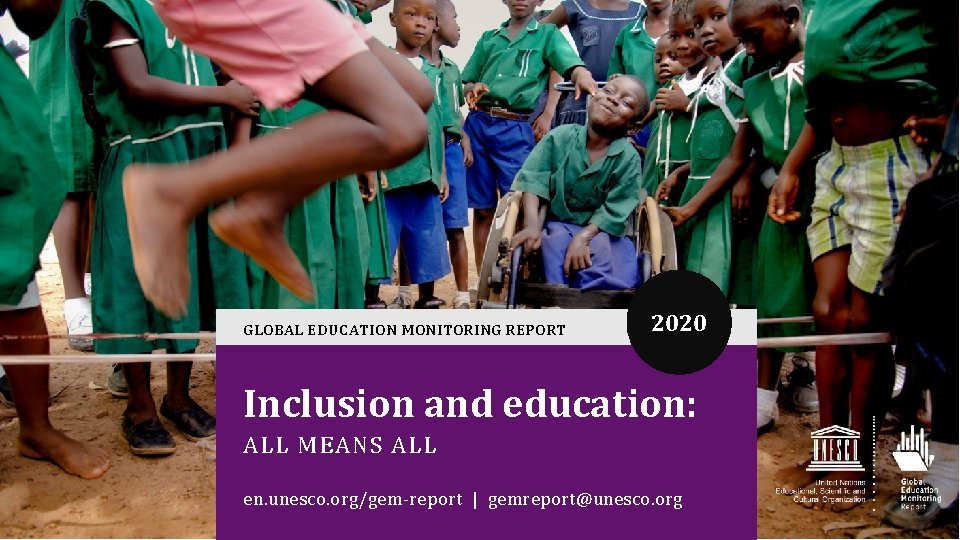
GLOBAL EDUCATION MONITORING REPORT 2020 Inclusion and education: ALL MEANS ALL en. unesco. org/gem-report | gemreport@unesco. org
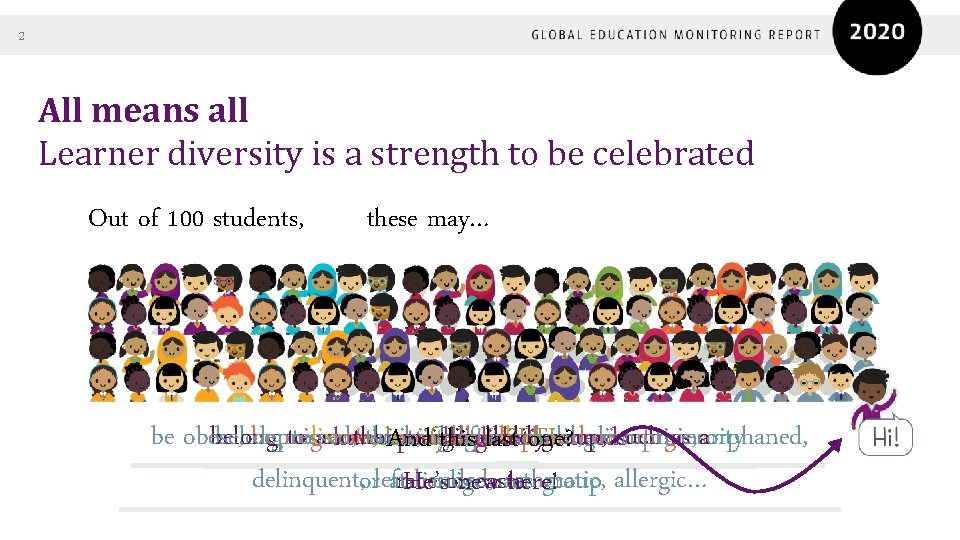
2 All means all Learner diversity is a strength to be celebrated Out of 100 students, these may… be obese, depressed, after school, disruptive, have areligious inworking remote rural areas be poor belong totolive another anhave ethnic, marginalized or group, linguistic minority as aorphaned, be migrants, internally displaced orsuch refugees bedisability girls identify as LGBTI special education needs And this last one? delinquent, orleft-handed, asthmatic, anrace indigenous ornew caste He’s here!group allergic…
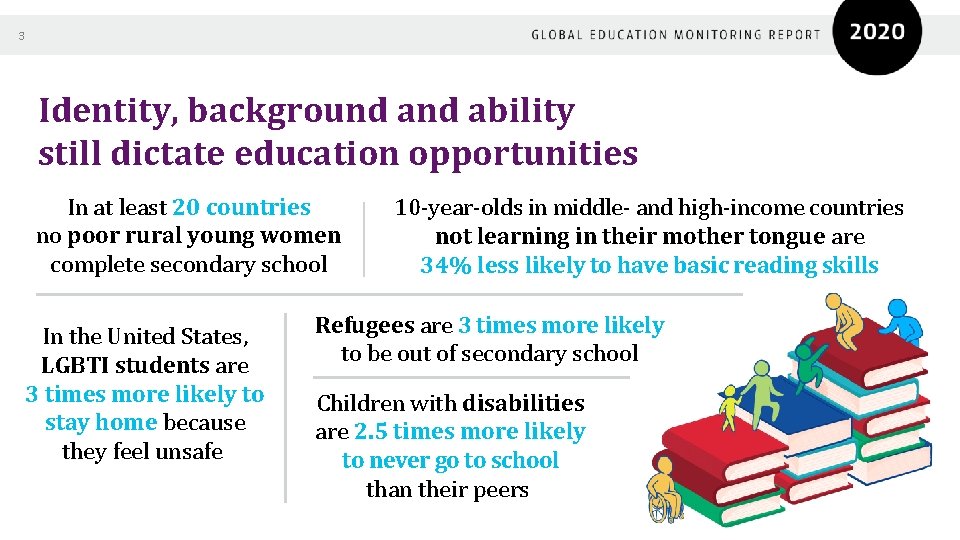
3 Identity, background ability still dictate education opportunities In at least 20 countries no poor rural young women complete secondary school In the United States, LGBTI students are 3 times more likely to stay home because they feel unsafe 10 -year-olds in middle- and high-income countries not learning in their mother tongue are 34% less likely to have basic reading skills Refugees are 3 times more likely to be out of secondary school Children with disabilities are 2. 5 times more likely to never go to school than their peers
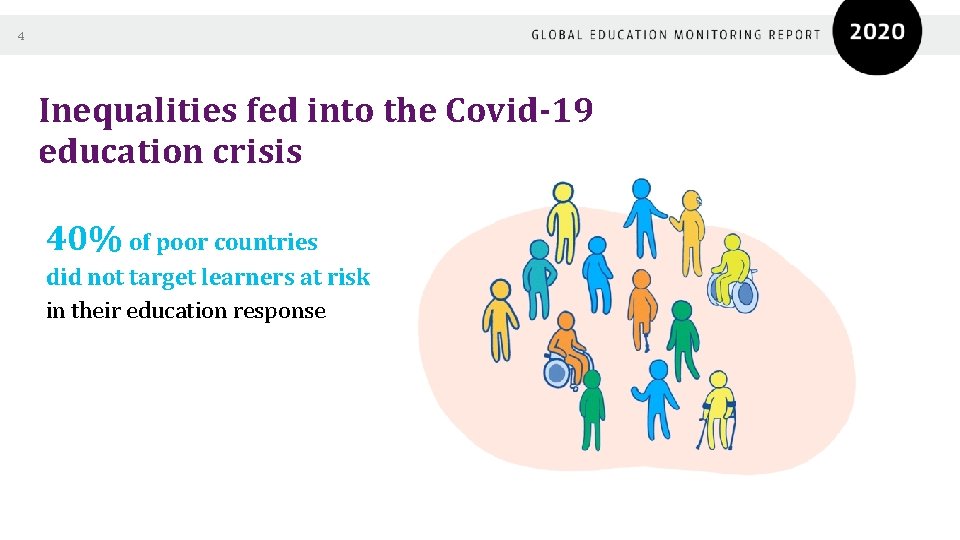
4 Inequalities fed into the Covid-19 education crisis 40% of poor countries did not target learners at risk in their education response
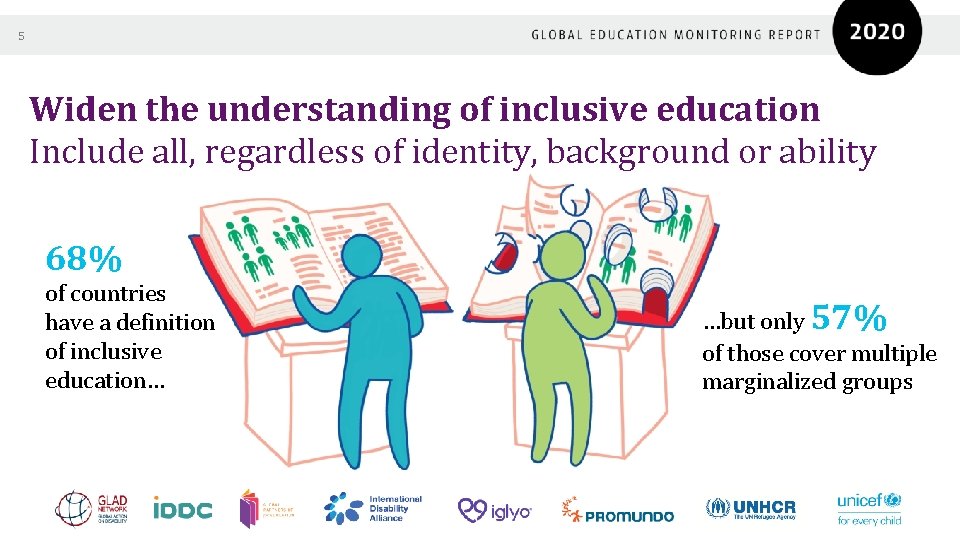
5 Widen the understanding of inclusive education Include all, regardless of identity, background or ability 68% of countries have a definition of inclusive education… …but only 57% of those cover multiple marginalized groups
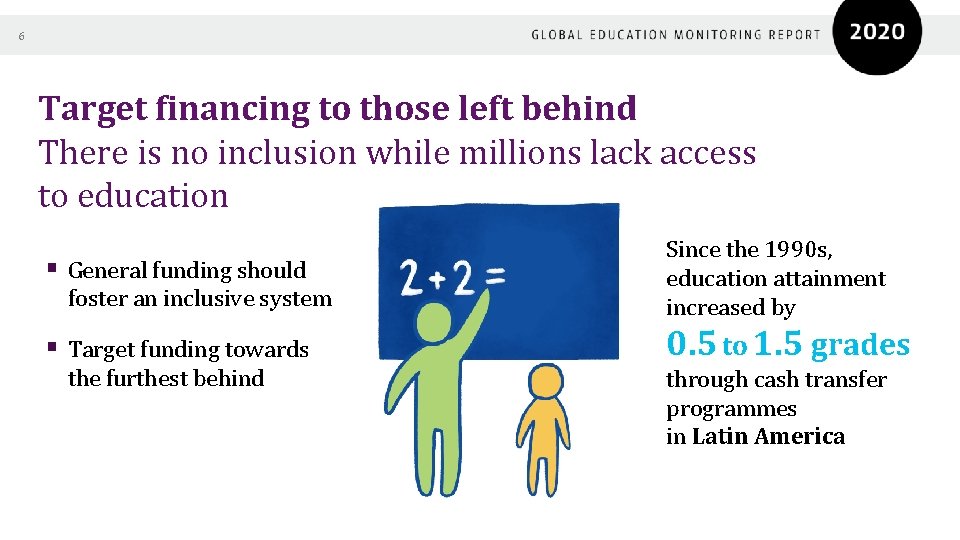
6 Target financing to those left behind There is no inclusion while millions lack access to education § General funding should Since the 1990 s, education attainment increased by § Target funding towards 0. 5 to 1. 5 grades foster an inclusive system the furthest behind through cash transfer programmes in Latin America
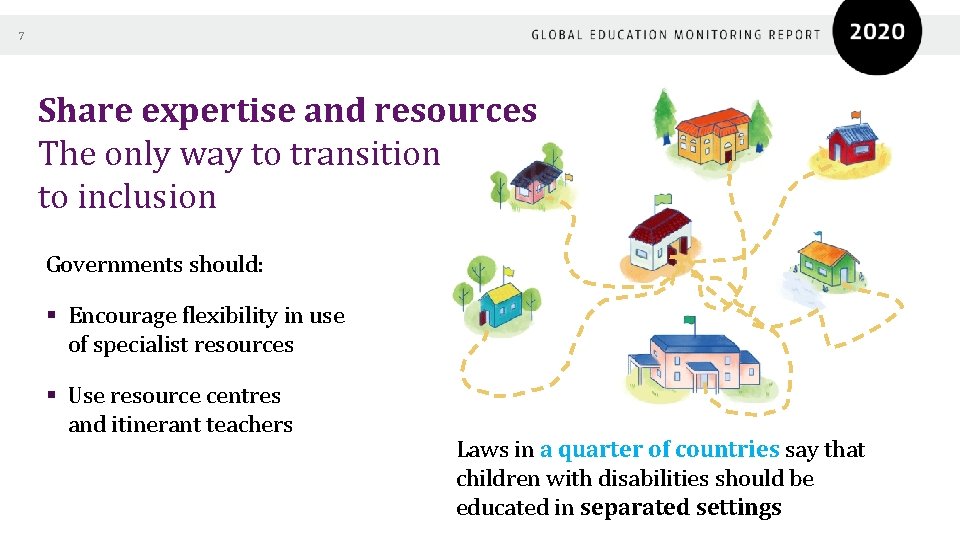
7 Share expertise and resources The only way to transition to inclusion Governments should: § Encourage flexibility in use of specialist resources § Use resource centres and itinerant teachers Laws in a quarter of countries say that children with disabilities should be educated in separated settings
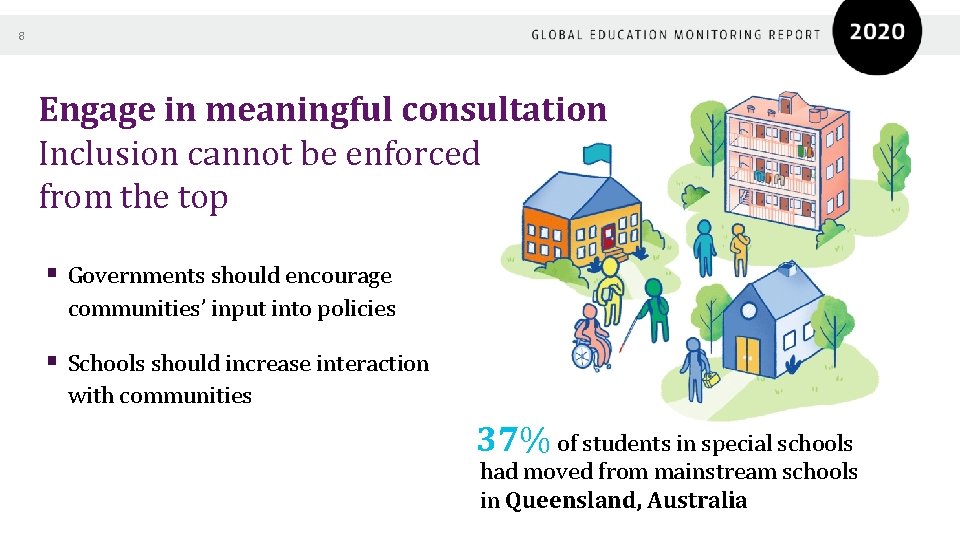
8 Engage in meaningful consultation Inclusion cannot be enforced from the top § Governments should encourage communities’ input into policies § Schools should increase interaction with communities 37% of students in special schools had moved from mainstream schools in Queensland, Australia
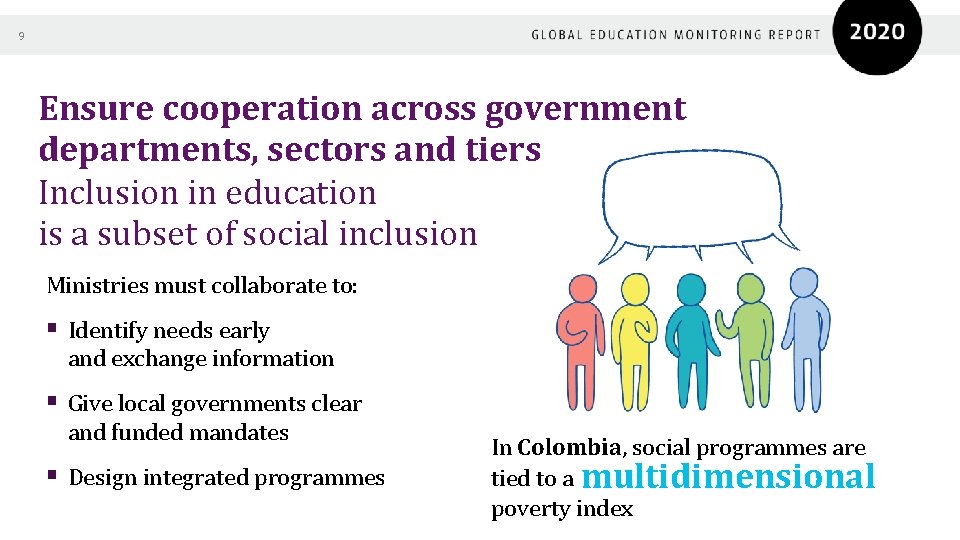
9 Ensure cooperation across government departments, sectors and tiers Inclusion in education is a subset of social inclusion Ministries must collaborate to: § Identify needs early and exchange information § Give local governments clear and funded mandates § Design integrated programmes In Colombia, social programmes are tied to a multidimensional poverty index
10 Make space for non-government actors to challenge and fill gaps Make sure they work towards the same inclusion goal Governments should: § Maintain dialogue with NGOs § Make sure NGOs align with policy § Create conditions enabling NGOs to hold governments to account In Armenia, an NGO campaign resulted in the country rolling out inclusive education by 2025
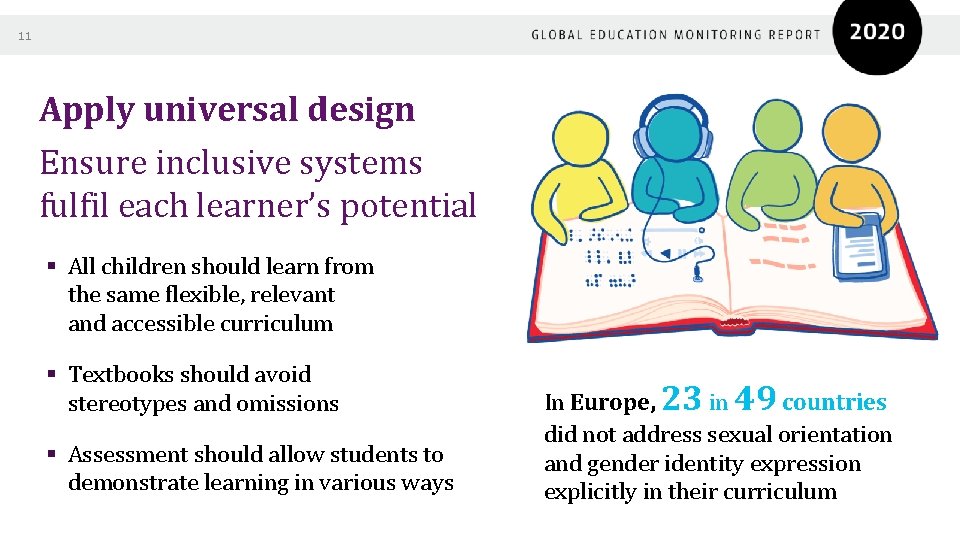
11 Apply universal design Ensure inclusive systems fulfil each learner’s potential § All children should learn from the same flexible, relevant and accessible curriculum § Textbooks should avoid stereotypes and omissions § Assessment should allow students to demonstrate learning in various ways In Europe, 23 in 49 countries did not address sexual orientation and gender identity expression explicitly in their curriculum
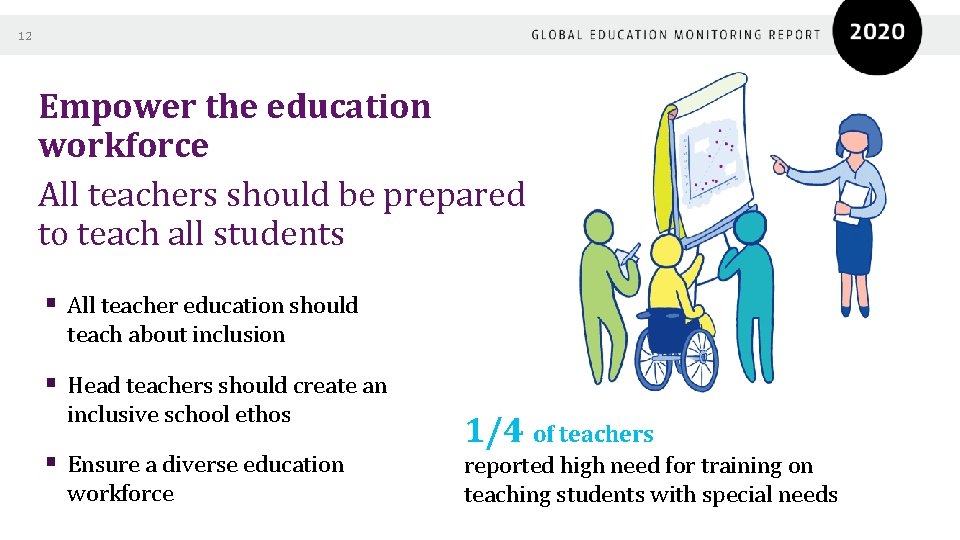
12 Empower the education workforce All teachers should be prepared to teach all students § All teacher education should teach about inclusion § Head teachers should create an inclusive school ethos § Ensure a diverse education workforce 1/4 of teachers reported high need for training on teaching students with special needs
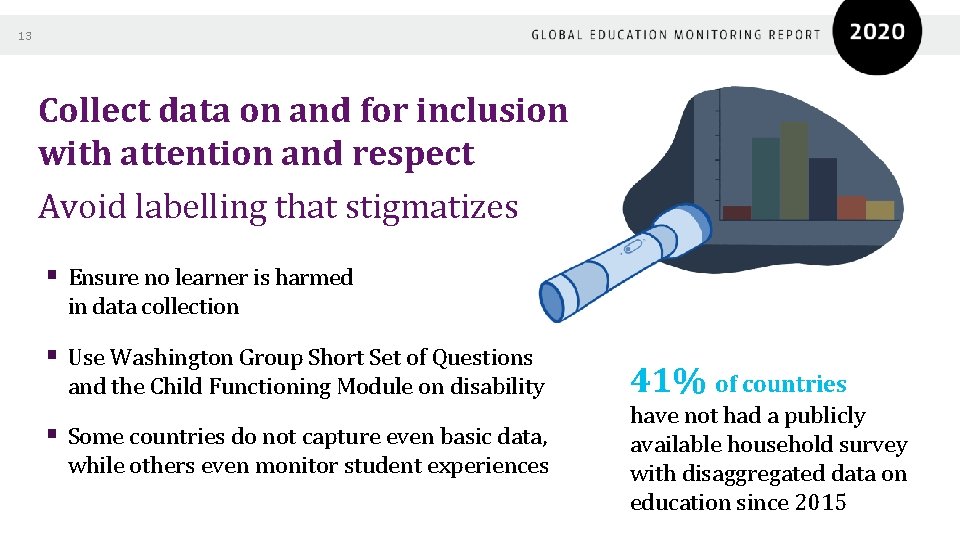
13 Collect data on and for inclusion with attention and respect Avoid labelling that stigmatizes § Ensure no learner is harmed in data collection § Use Washington Group Short Set of Questions and the Child Functioning Module on disability § Some countries do not capture even basic data, while others even monitor student experiences 41% of countries have not had a publicly available household survey with disaggregated data on education since 2015
14 Learn from peers A shift to inclusion is not easy PEER education-profiles. org Description of laws and policies on inclusion in education WIDE educationinequalities. org Education inequalities within/between countries SCOPE education-progress. org Interactive visualizations of SDG 4 data
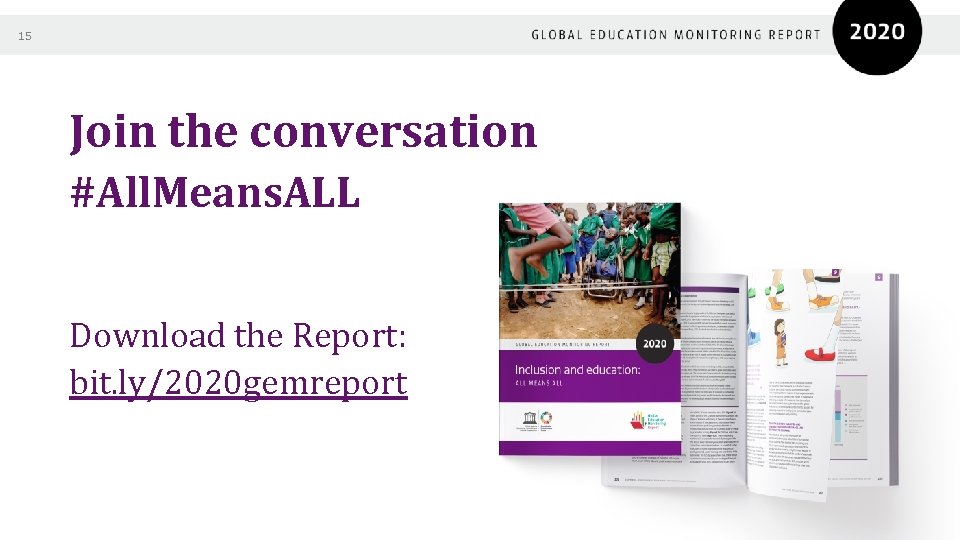
15 Join the conversation #All. Means. ALL Download the Report: bit. ly/2020 gemreport
- Slides: 15