
Global Ecological Problems Prevention and Solution Teachers Vision
Global Ecological Problems Prevention and Solution. Teachers' Vision in Practice and Theory INTERNATIONAL TEACHERS ASSOCIATION CONFERENCE AMERICAN UNIVERSITY IN BULGARIA , BLAGOEVGRAD, 03. 07. 2019
Informal education and knowledge of global problems Characteristics of informal education • an innovation designed to solve some of the most pressing problems in a society , oriented towards a specific purpose • flexible, centered in the learner • more practical than theoretical • more economical, as it can use all existing conditions and environments • represents a continuous process of lifelong learning.
Active partnership participation of the teacher / facilitator / and the pupils / participants / ØParticipants are: v active vsolve problems, work with their hands vthink creatively Ø Learning is: v practical, vflexible vbased on the real needs of the participants vbased on mutual trust and respect vencouraging questioning and reflection ØThe purpose is rather to support the life of the individual or community rather than to provide the transfer of individual skills or knowledge; .
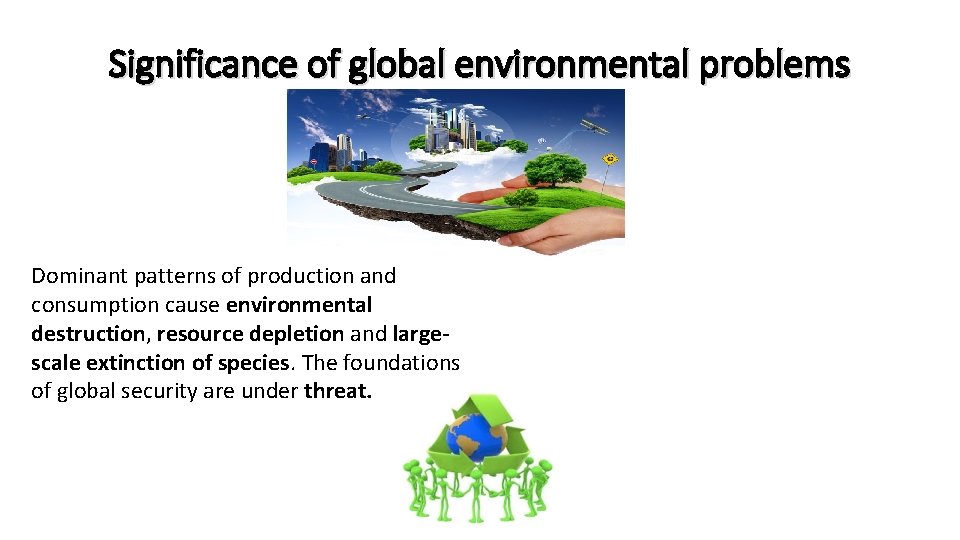
Significance of global environmental problems Dominant patterns of production and consumption cause environmental destruction, resource depletion and largescale extinction of species. The foundations of global security are under threat.
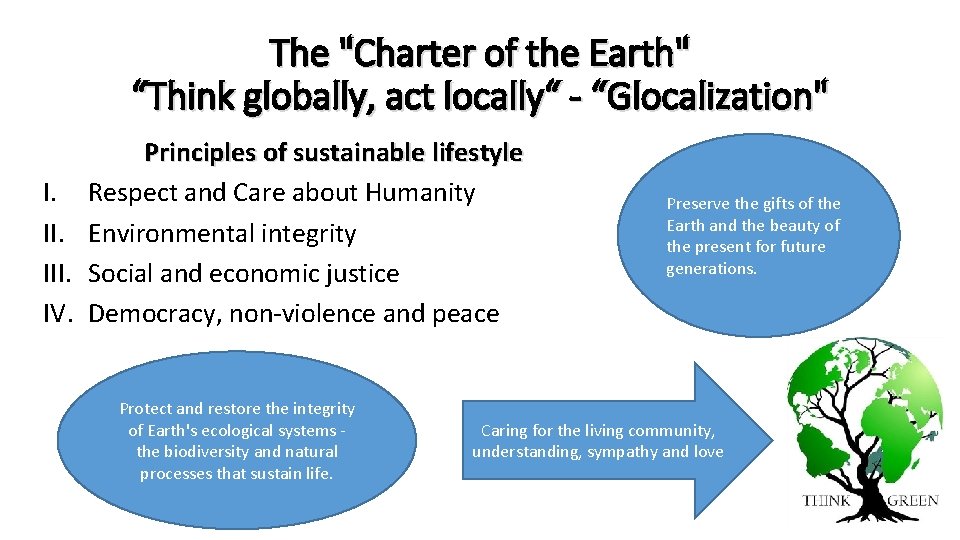
The "Charter of the Earth" “Think globally, act locally“ - “Glocalization" Principles of sustainable lifestyle I. Respect and Care about Humanity II. Environmental integrity III. Social and economic justice IV. Democracy, non-violence and peace Protect and restore the integrity of Earth's ecological systems - the biodiversity and natural processes that sustain life. Preserve the gifts of the Earth and the beauty of the present for future generations. Caring for the living community, understanding, sympathy and love
Teacher practice : International Partnerships – a Bridge to Build a Global Sustainable Community • Working in The UNESCO Associated Schools Network (ASPnet) is a priority in education üASEF Classroom Netork (ASEF Class. Net) https: //www. asef. org/ “TEENS ACTIONS FOR CHANGE“ https: //www. youtube. com/watch? v=lf. Zp. Un 0 Pu. RU Students aged 12 -18 and teachers from European and Asian schools joined their efforts to support global sustainable development goals
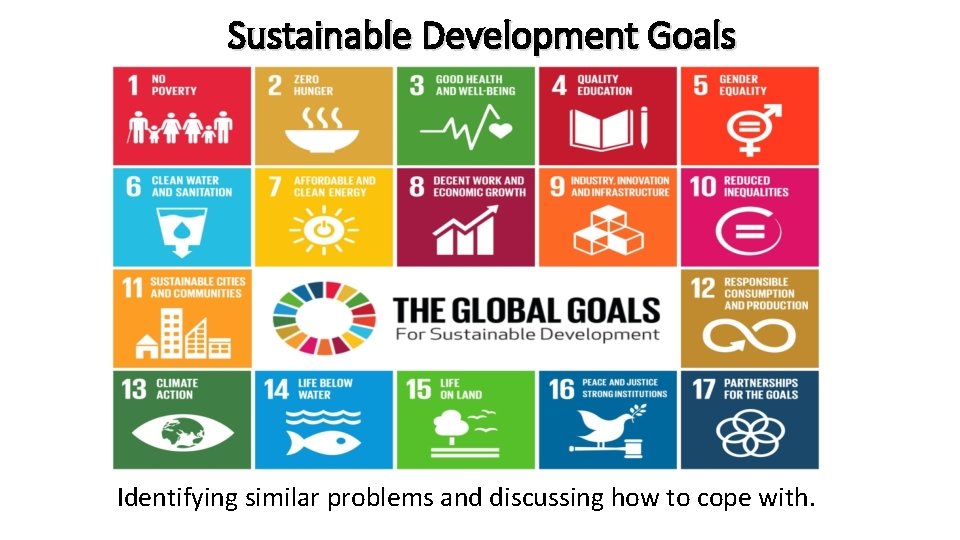
Sustainable Development Goals Identifying similar problems and discussing how to cope with.
Problem analyzing and solving related to “Good health and well-being” in Slatina Municipality Sofia, Bulgaria Similar problems: • The risk of what’s called “injury death”, which includes traffic accidents and crime and it is 20 percent higher than in the countryside. • A lot of more air pollution, that causes a lot of lung diseases. • Airborne particles and pollutants (including nitrogen dioxide and sulfur dioxide) have been linked to an increased risk of lung cancer, type 2 diabetes, asthma, premature death, etc. Tackle the problems: • A lot of parks have been found and “built”. • Trees have been planted. • Cars are necessarily with catalytic converters for harmful gases. • More people every day start doing exercises and going to the gym. instead of a car
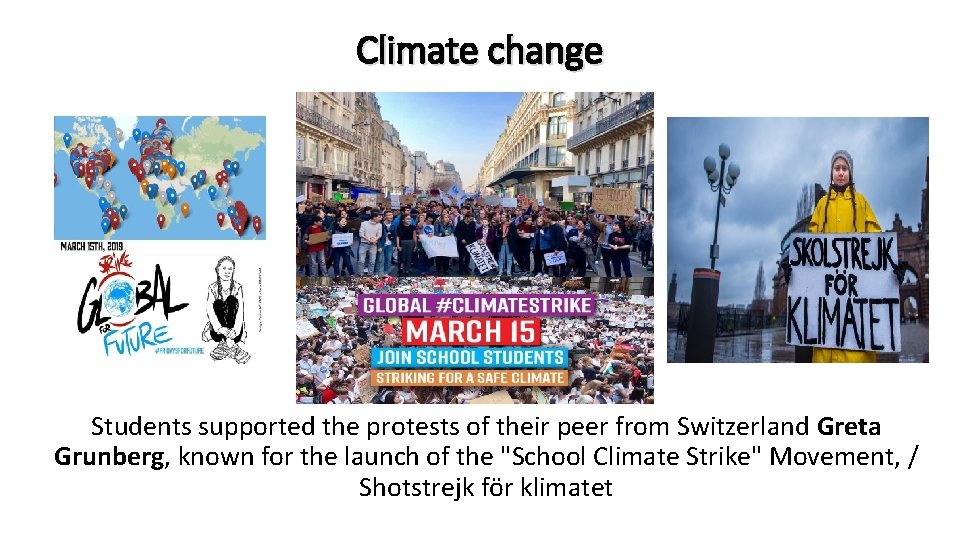
Climate change Students supported the protests of their peer from Switzerland Greta Grunberg, known for the launch of the "School Climate Strike" Movement, / Shotstrejk för klimatet
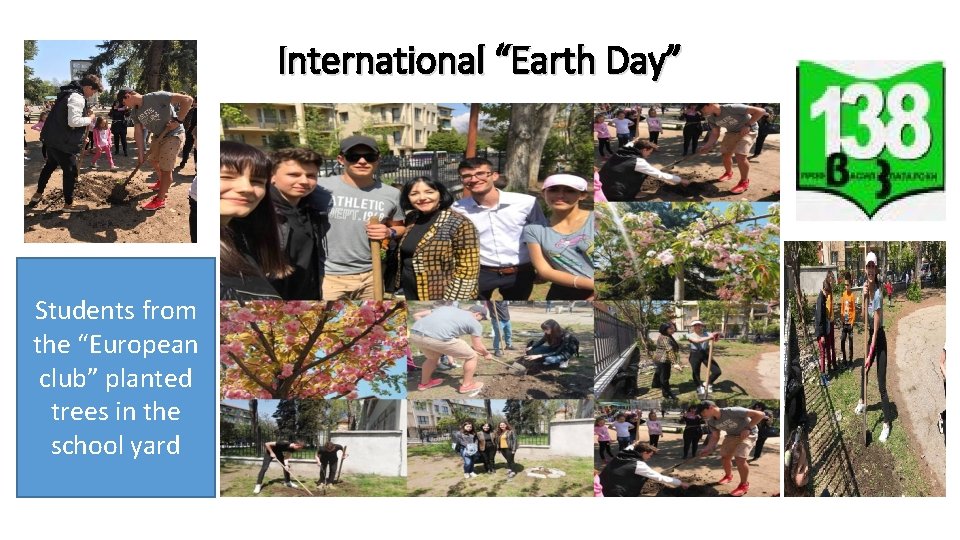
International “Earth Day” Students from the “European club” planted trees in the school yard
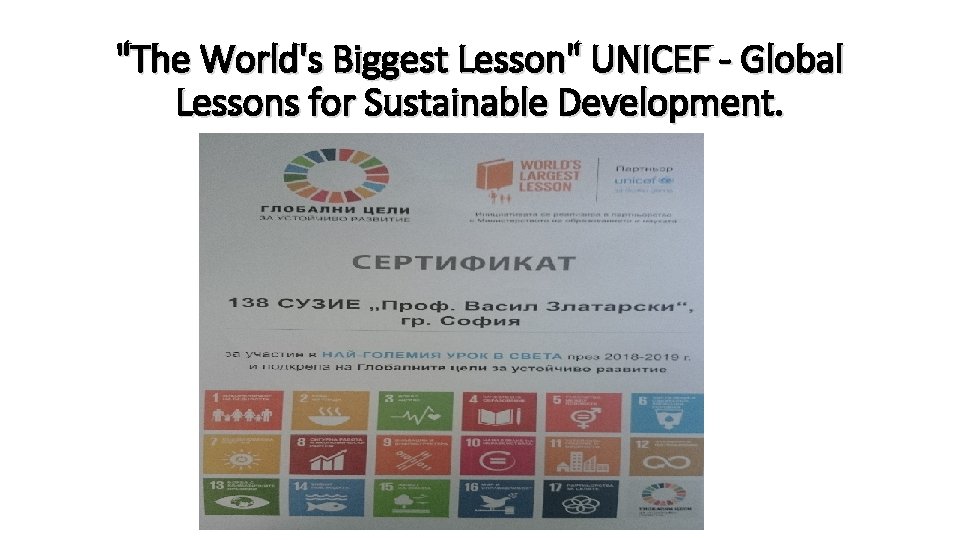
"The World's Biggest Lesson" UNICEF - Global Lessons for Sustainable Development.
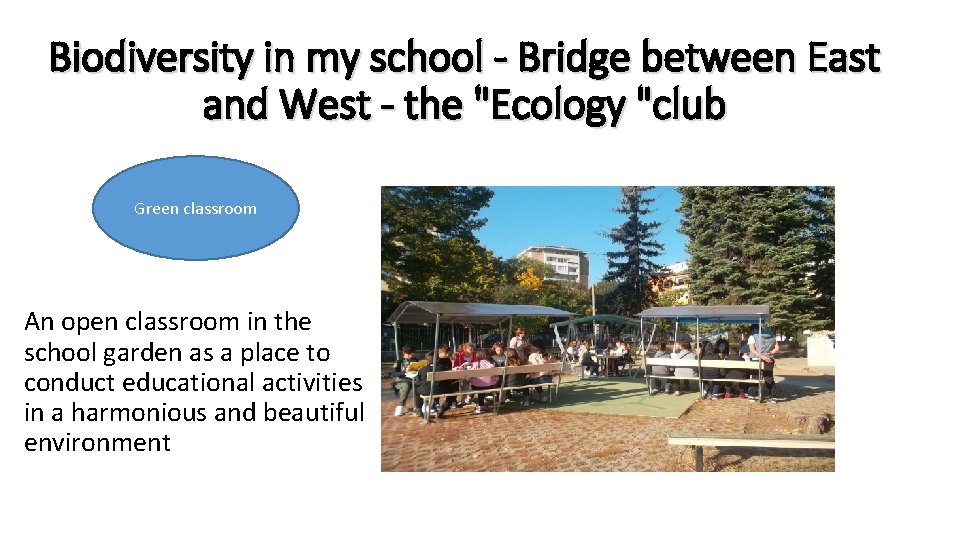
Biodiversity in my school - Bridge between East and West - the "Ecology "club Green classroom An open classroom in the school garden as a place to conduct educational activities in a harmonious and beautiful environment
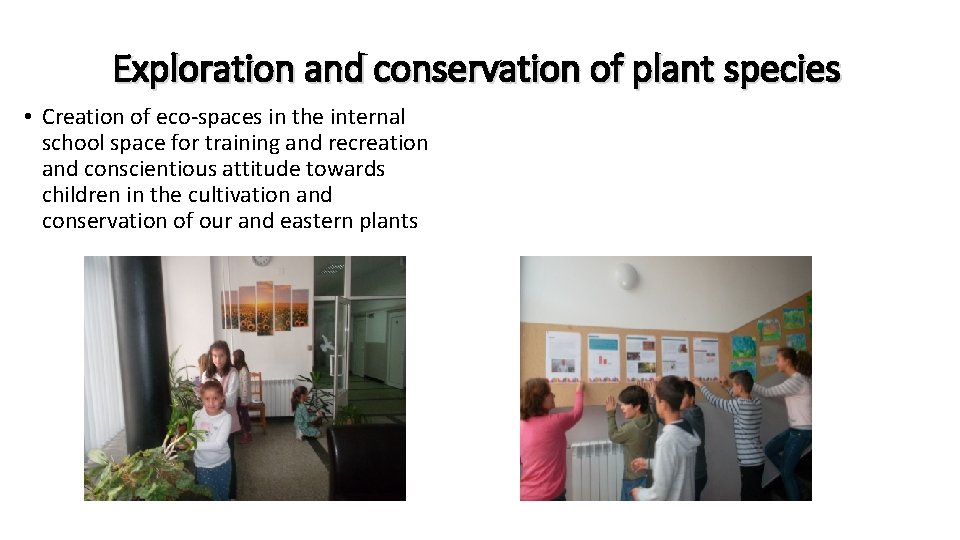
Exploration and conservation of plant species • Creation of eco-spaces in the internal school space for training and recreation and conscientious attitude towards children in the cultivation and conservation of our and eastern plants
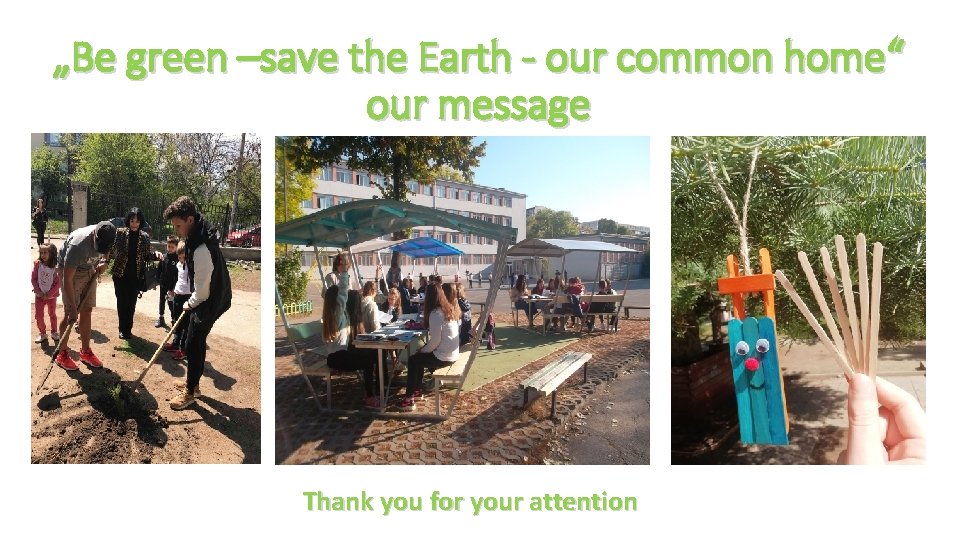
„Be green –save the Earth - our common home“ our message Thank you for your attention
- Slides: 14