
Global Demographics Lesson 1 World Population Trends Lesson
Global Demographics Lesson 1: World Population Trends
Lesson Content Distribution of World Population Trends over Time Trends across regions and countries Population Geography (location of the world’s people)
Distribution of World Population Two thirds of the world’s inhabitants are clustered in � East Asia � South East Asia � Western Europe. When Eastern North America is included, these four population concentrations account for ¾ of the world population.
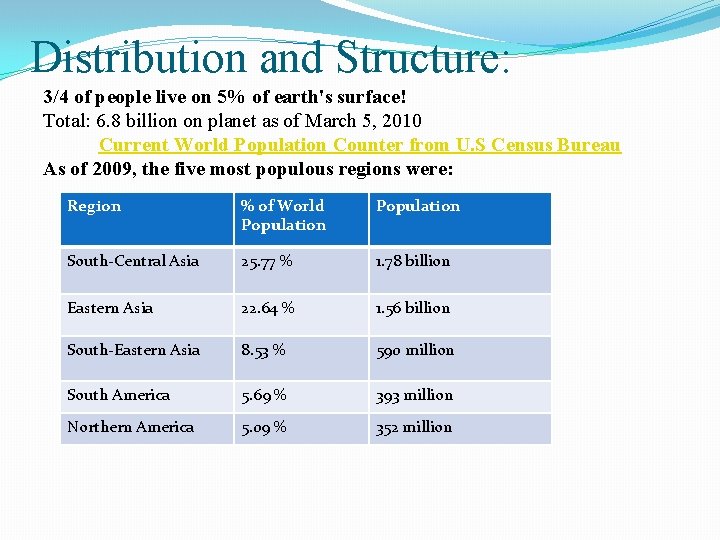
Distribution and Structure: 3/4 of people live on 5% of earth's surface! Total: 6. 8 billion on planet as of March 5, 2010 Current World Population Counter from U. S Census Bureau As of 2009, the five most populous regions were: Region % of World Population South-Central Asia 25. 77 % 1. 78 billion Eastern Asia 22. 64 % 1. 56 billion South-Eastern Asia 8. 53 % 590 million South America 5. 69 % 393 million Northern America 5. 09 % 352 million
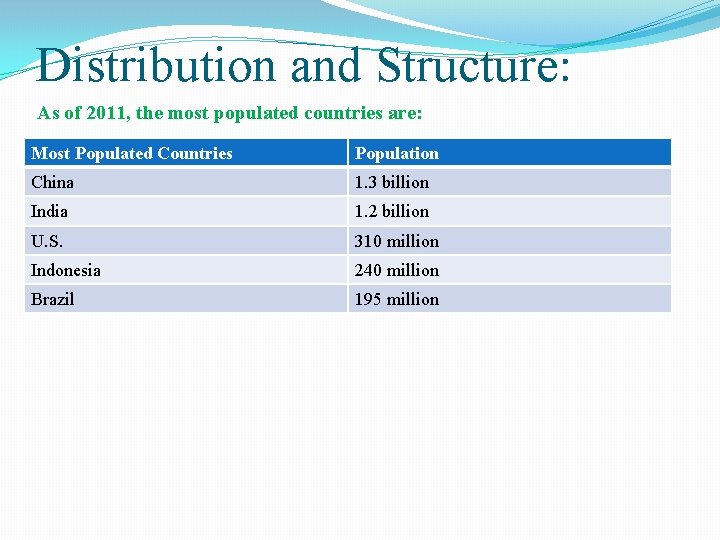
Distribution and Structure: As of 2011, the most populated countries are: Most Populated Countries Population China 1. 3 billion India 1. 2 billion U. S. 310 million Indonesia 240 million Brazil 195 million
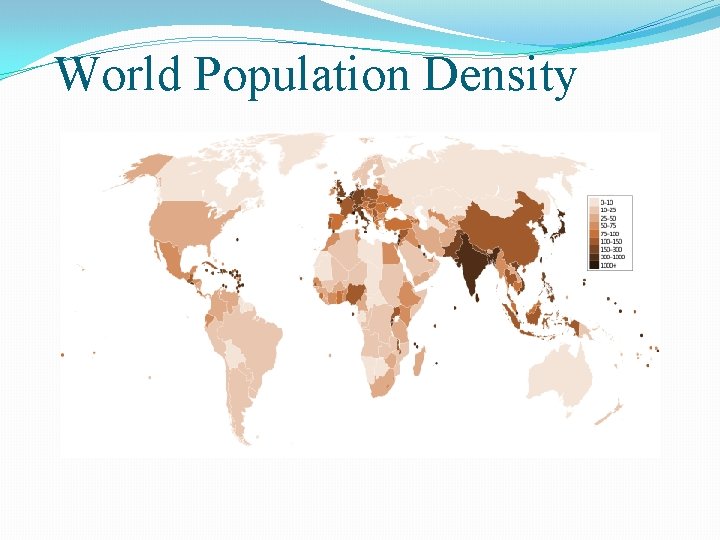
World Population Density
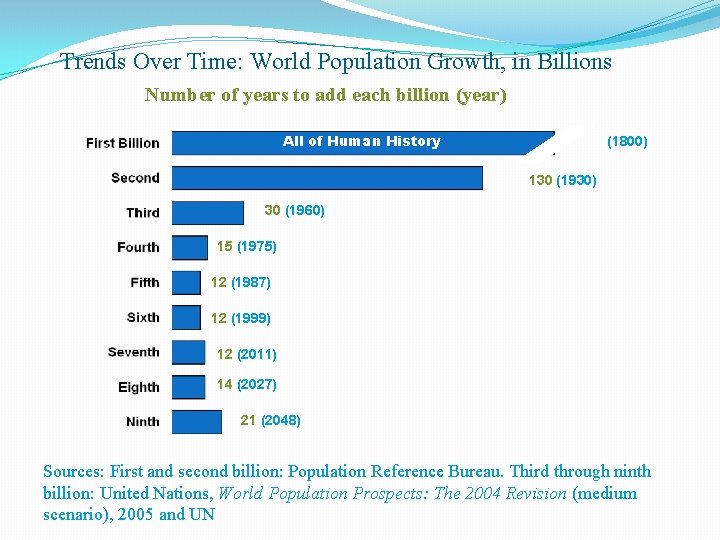
Trends Over Time: World Population Growth, in Billions Number of years to add each billion (year) All of Human History (1800) 130 (1930) 30 (1960) 15 (1975) 12 (1987) 12 (1999) 12 (2011) 14 (2027) 21 (2048) Sources: First and second billion: Population Reference Bureau. Third through ninth billion: United Nations, World Population Prospects: The 2004 Revision (medium scenario), 2005 and UN
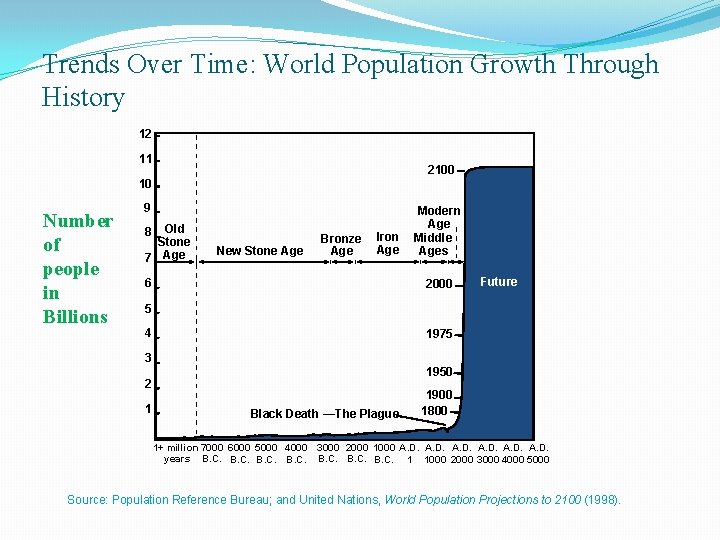
Trends Over Time: World Population Growth Through History 12 11 2100 10 Number of people in Billions 9 Old Stone 7 Age 8 New Stone Age Bronze Age Iron Age 6 Modern Age Middle Ages 2000 Future 5 4 1975 3 1950 2 1 Black Death —The Plague 1900 1800 1+ million 7000 6000 5000 4000 3000 2000 1000 A. D. years B. C. 1 1000 2000 3000 4000 5000 Source: Population Reference Bureau; and United Nations, World Population Projections to 2100 (1998).
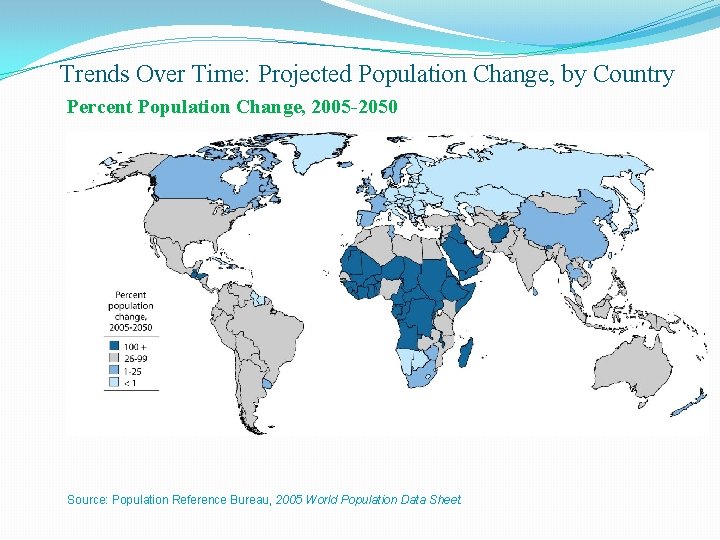
Trends Over Time: Projected Population Change, by Country Percent Population Change, 2005 -2050 Source: Population Reference Bureau, 2005 World Population Data Sheet.
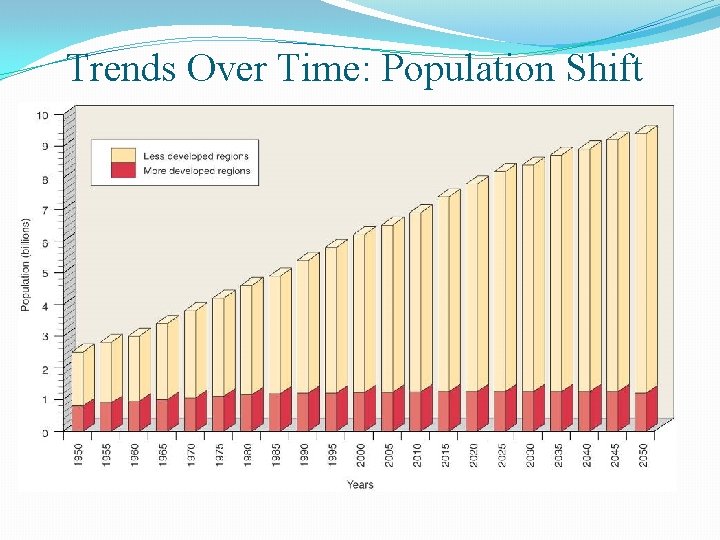
Trends Over Time: Population Shift
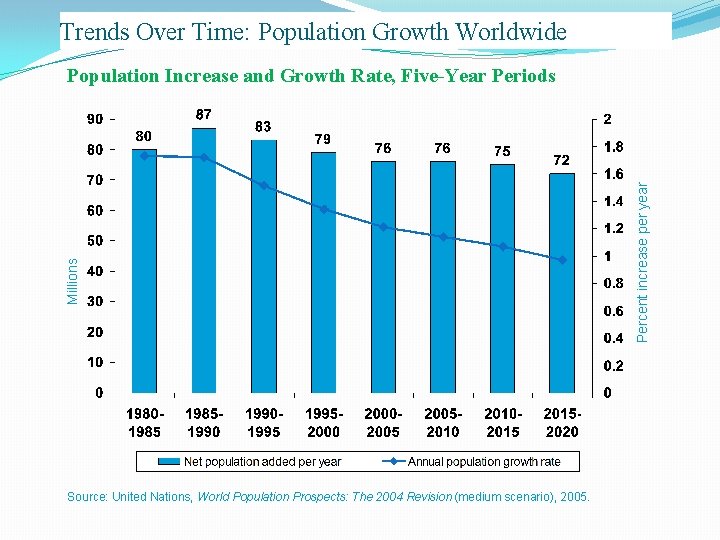
Trends Over Time: Population Growth Worldwide Source: United Nations, World Population Prospects: The 2004 Revision (medium scenario), 2005. Percent increase per year Millions Population Increase and Growth Rate, Five-Year Periods
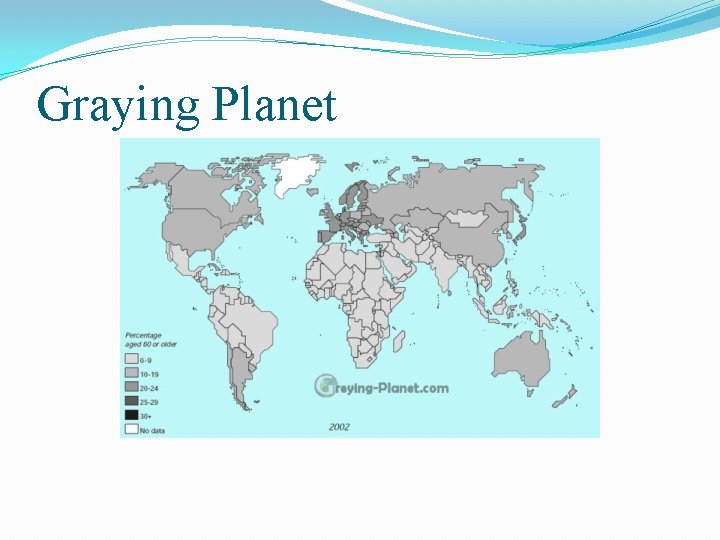
Graying Planet
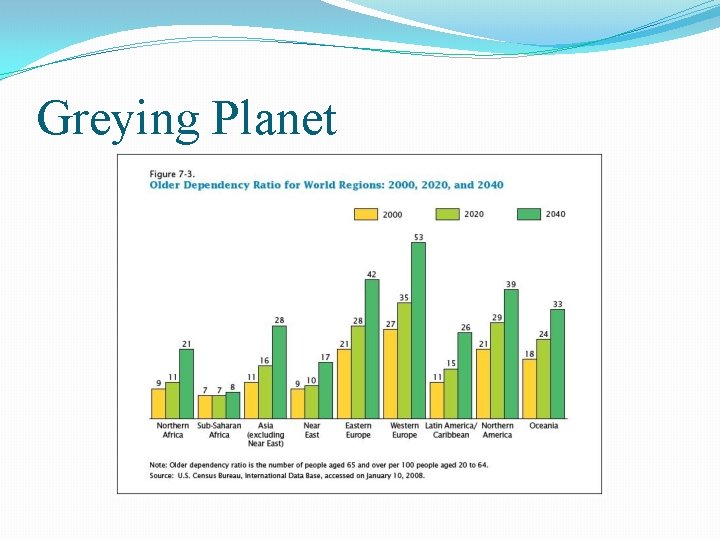
Greying Planet
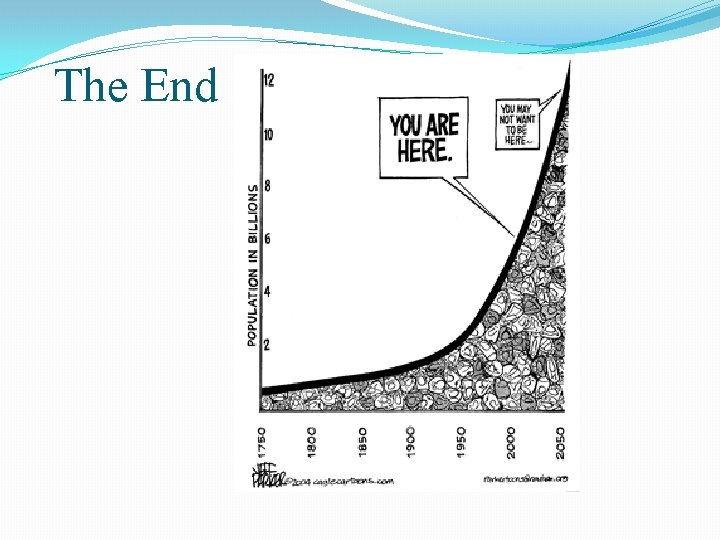
The End
An Aging World: The United States � Class Discussion: Why Does this Matter to ME? � What are the implications of an aging population for: 1. The U. S. housing market? 2. Social security and pension funds? 3. Public financing of colleges and universities? 4. Global migration flows?
- Slides: 15