
Global Cultures Chapter 4 Section 2 Stereotypes With
Global Cultures Chapter 4 Section 2

Stereotypes With your partner (person at your table) list the classic high school stereotypes Are they real? Do you fit in any of them? List other classic stereotypes (dumb blonde, loud Italians, ect) Are these believable? Why/how are they created?
Elements of Culture – way of life of a group of people who share similar beliefs and customs Language, religion, daily life, history, art, government, economy
Language Key to a culture’s development Communication, information, values Local dialects – colloquial terms Language families – similar roots
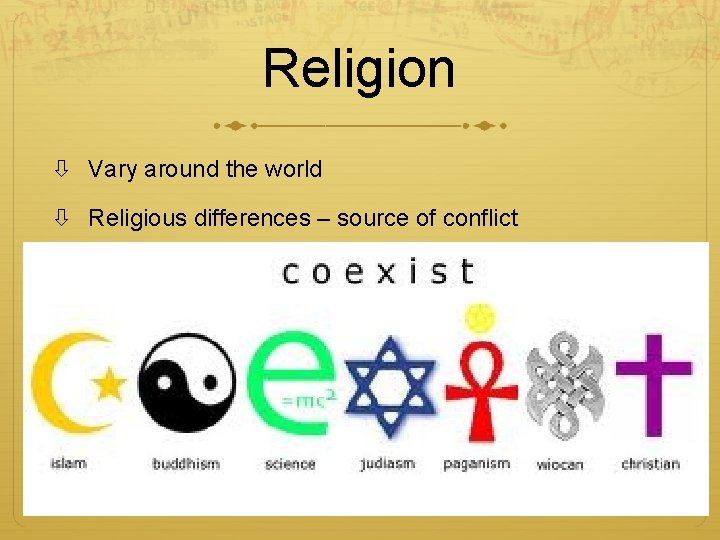
Religion Vary around the world Religious differences – source of conflict Influences aspects of daily life Religious stories and symbols shape history, paintings, architecture and music
Social Groups Social classes Ranked based on wealth, ancestry, education Ethnic group – people who share a common language, history, place of origin, or combination
Government and Economy Levels of power: national, regional and local How a culture utilizes natural resources to meet human needs Produce, obtain, use and sell goods and services
Types of Government Spades: Capitalism Clubs: Socialism Diamonds: Communism Hearts: Monarchy You must have one of each in every group. Within your group decide which form of government is the most effective and why. Use your phones ONLY if you need to look up one of the forms of government.
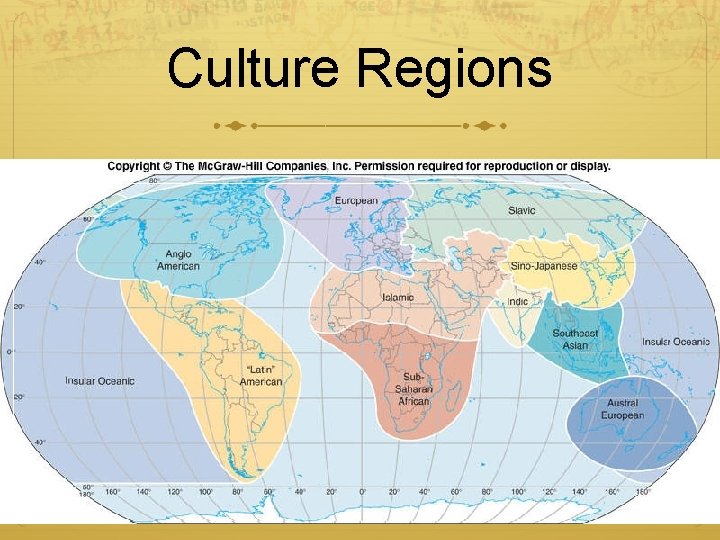
Culture Regions Countries that share similar economic systems, forms of government and social groups Histories, art and social groups share similar influences
Cultural Change New ideas, lifestyles, and inventions Change within cultures Cultural diffusion – process of spreading new knowledge from one culture to another
The Agricultural Revolution Earliest humans were nomads Finding fertile plains led to farming Shift from hunting to farming – agricultural revolution Civilizations – highly organized, city-based societies
Culture Hearths Culture hearths – early centers of civilization whose ideas and practices spread to surrounding areas Egypt, Iraq, Pakistan, China and Mexico Farming settlements with fertile land, near major river
Culture Contacts Ideas and practices spread through travel Forced mass migrations – slave trade
Industrial and Information Revolutions New production methods = change in economy Change in economy – social changes End of 1900 s – Information revolution Computers – storing and sending mass amounts of information
- Slides: 14