
Global Coral Reef Alliance A nonprofit corporation dedicated
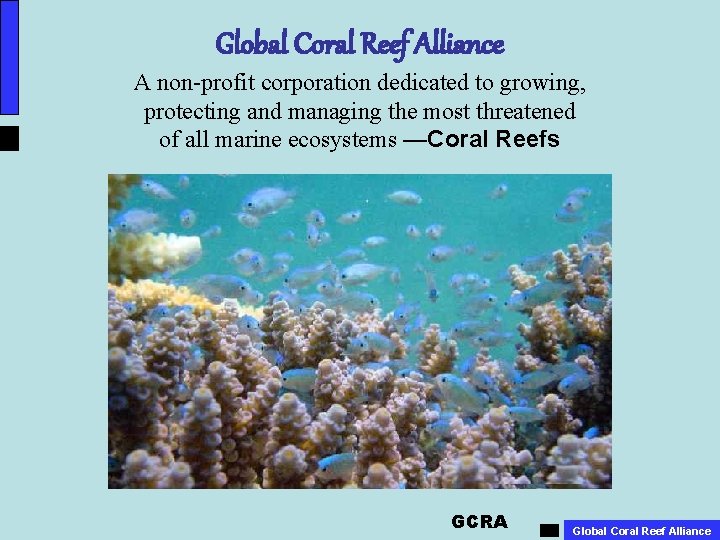
Global Coral Reef Alliance A non-profit corporation dedicated to growing, protecting and managing the most threatened of all marine ecosystems —Coral Reefs GCRA Global Coral Reef Alliance
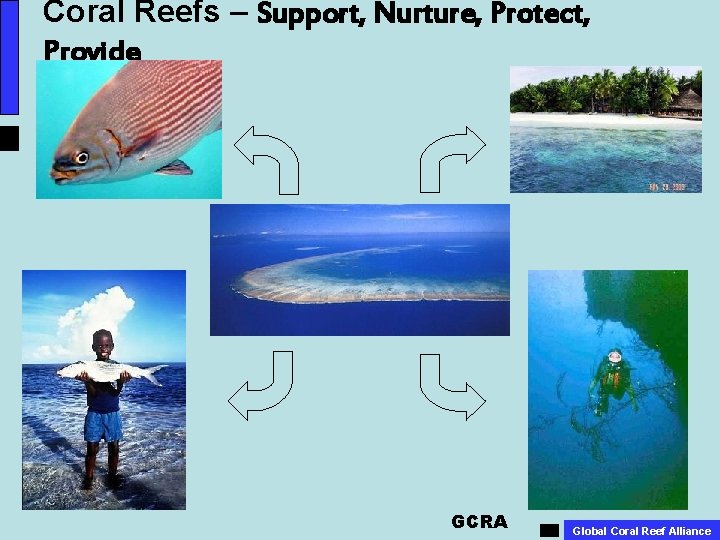
Coral Reefs – Support, Nurture, Protect, Provide GCRA Global Coral Reef Alliance
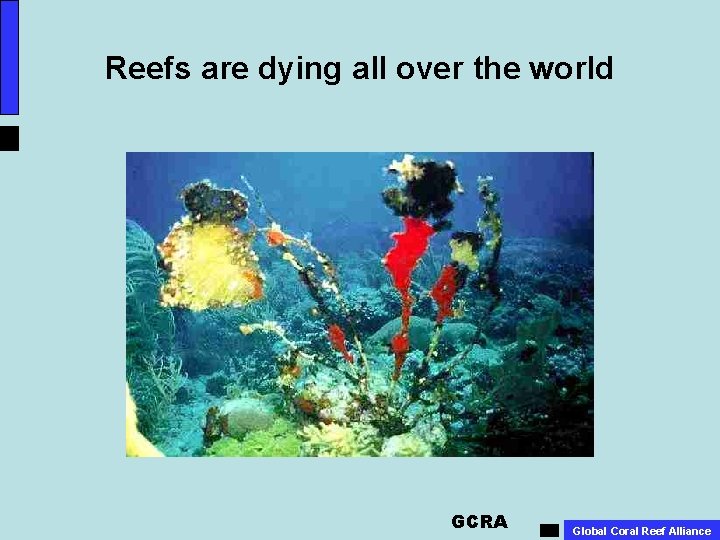
Reefs are dying all over the world GCRA Global Coral Reef Alliance
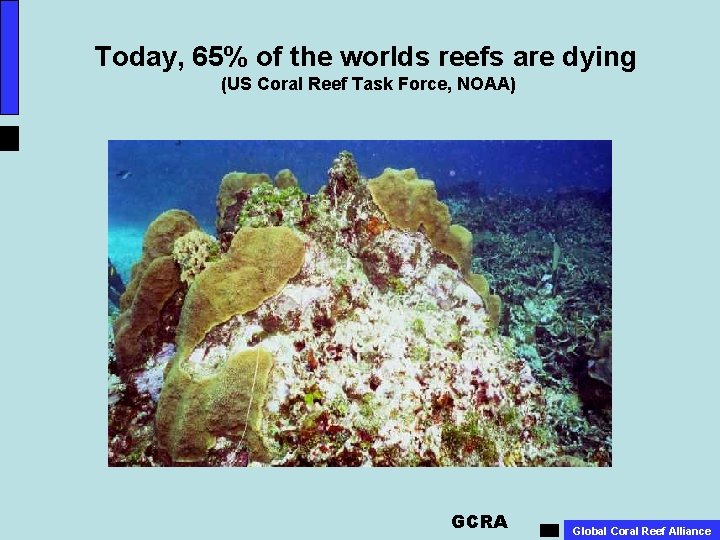
Today, 65% of the worlds reefs are dying (US Coral Reef Task Force, NOAA) GCRA Global Coral Reef Alliance
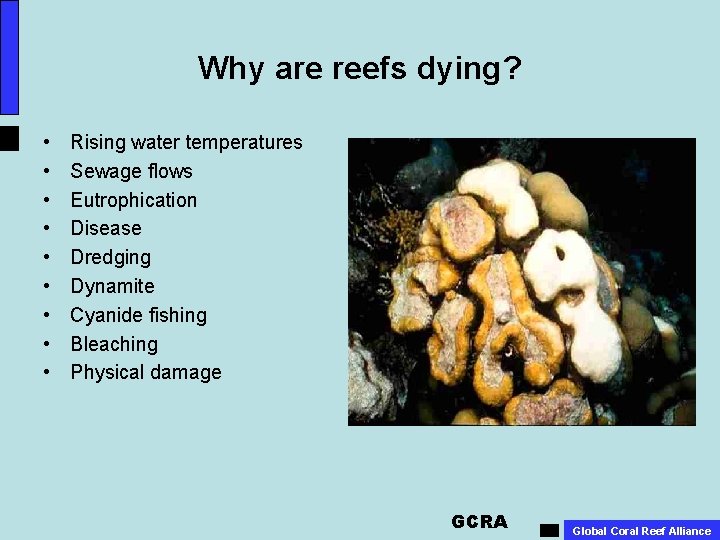
Why are reefs dying? • • • Rising water temperatures Sewage flows Eutrophication Disease Dredging Dynamite Cyanide fishing Bleaching Physical damage GCRA Global Coral Reef Alliance
Consider Cancun • Only 12 families lived on this forested island until the 1970 s • Then the tourist industry arrived • Today, 2. 6 million people visit Cancun each year • The island is bare, its forests long gone • Sewage facilities process only one-quarter of the daily flow • The rest goes straight into the sea GCRA Global Coral Reef Alliance
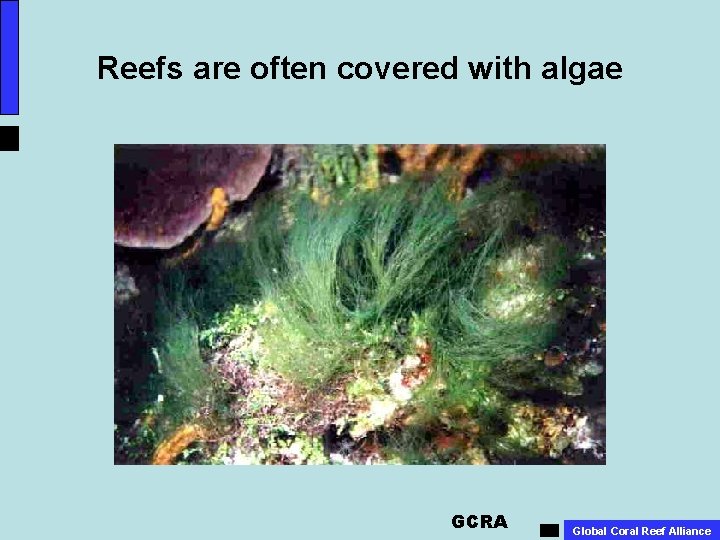
Reefs are often covered with algae GCRA Global Coral Reef Alliance
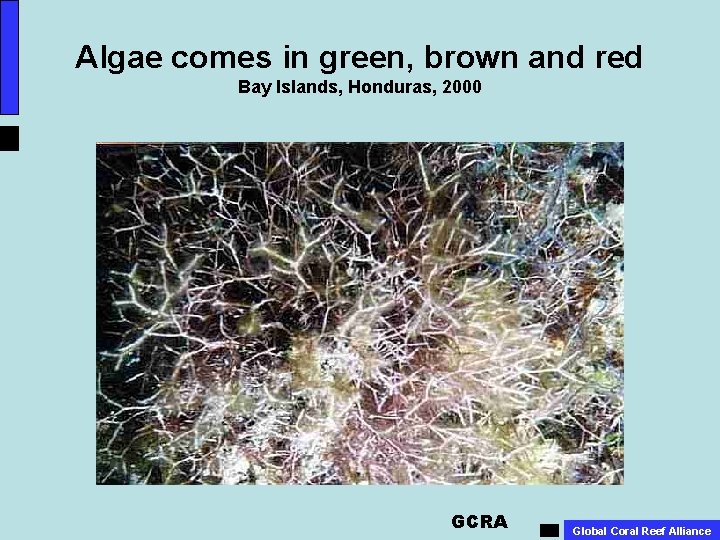
Algae comes in green, brown and red Bay Islands, Honduras, 2000 GCRA Global Coral Reef Alliance
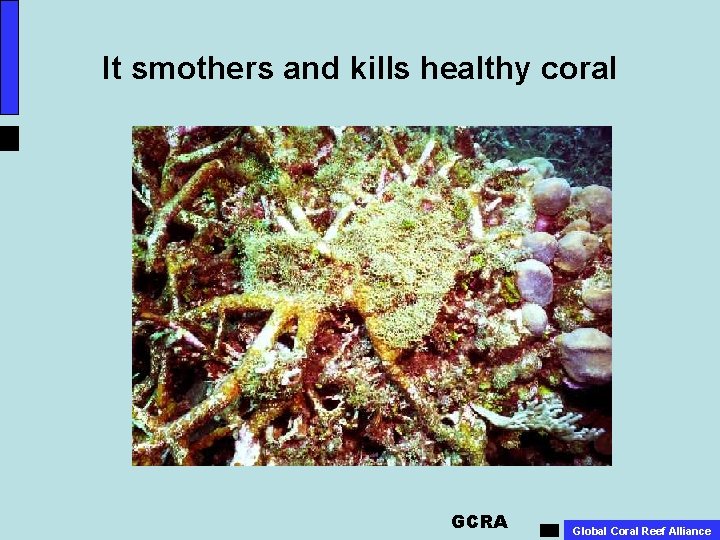
It smothers and kills healthy coral GCRA Global Coral Reef Alliance
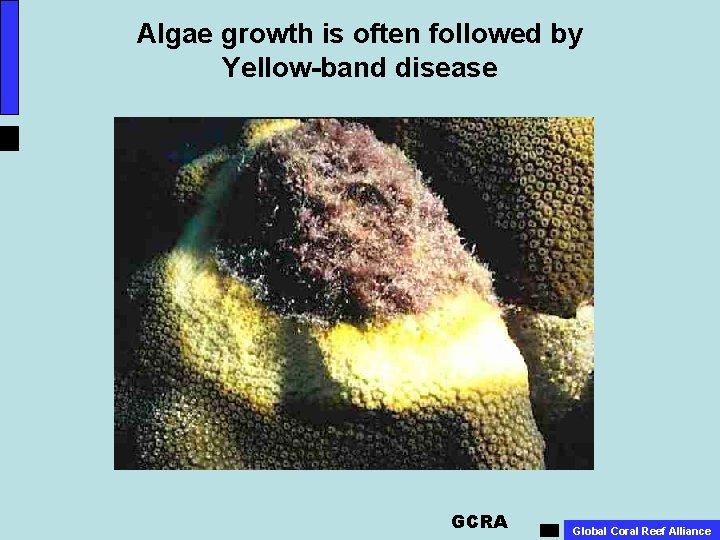
Algae growth is often followed by Yellow-band disease GCRA Global Coral Reef Alliance
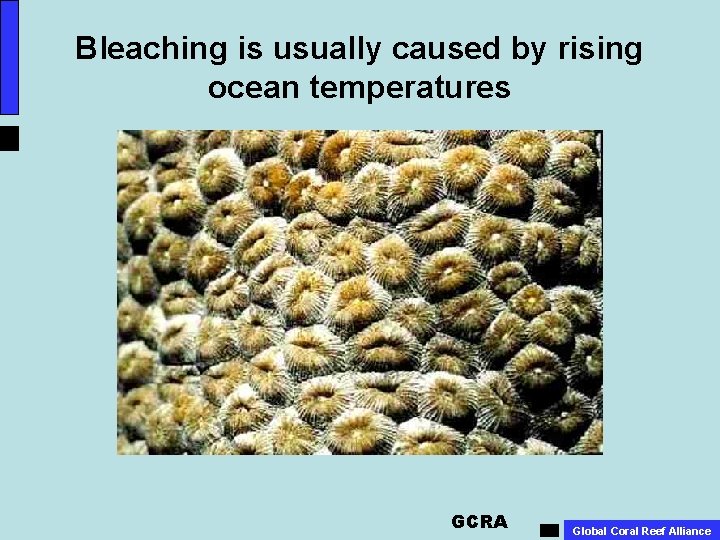
Bleaching is usually caused by rising ocean temperatures GCRA Global Coral Reef Alliance
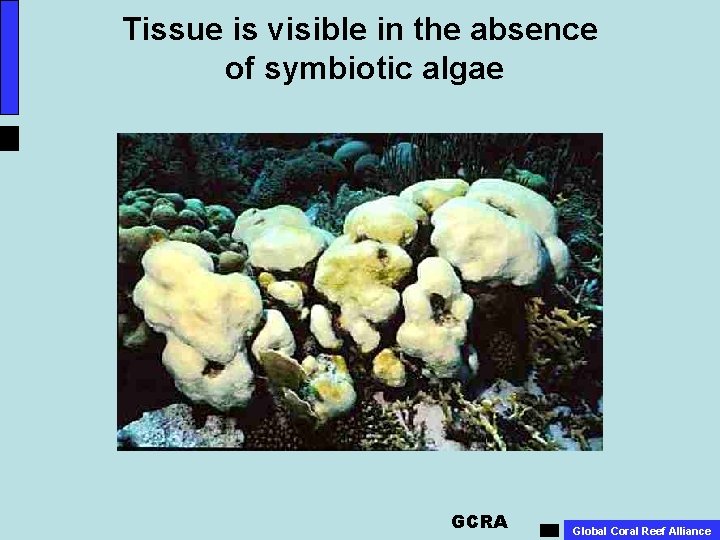
Tissue is visible in the absence of symbiotic algae GCRA Global Coral Reef Alliance
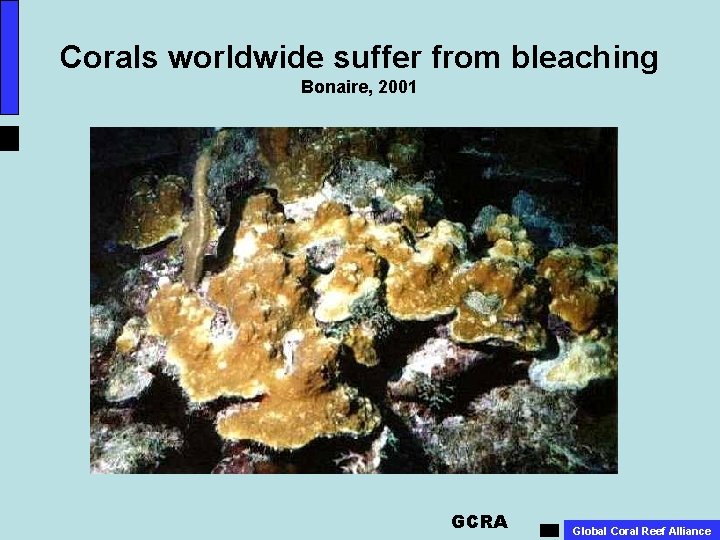
Corals worldwide suffer from bleaching Bonaire, 2001 GCRA Global Coral Reef Alliance
BLEACHED CORAL NEW GUINEA GCRA Global Coral Reef Alliance
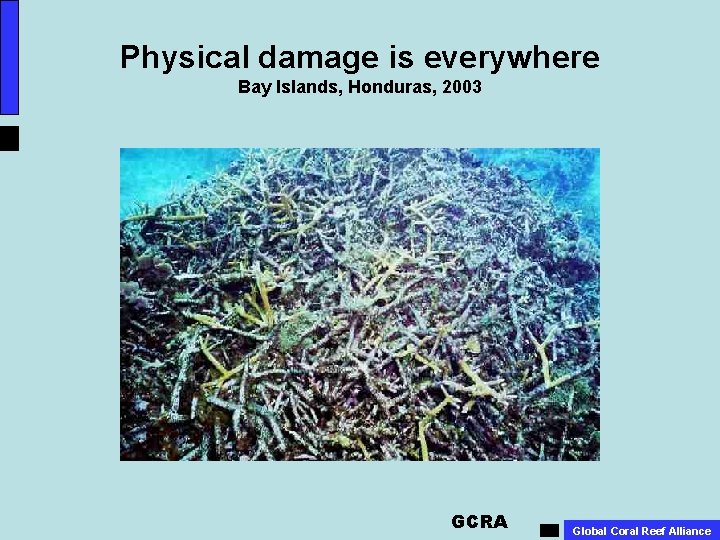
Physical damage is everywhere Bay Islands, Honduras, 2003 GCRA Global Coral Reef Alliance
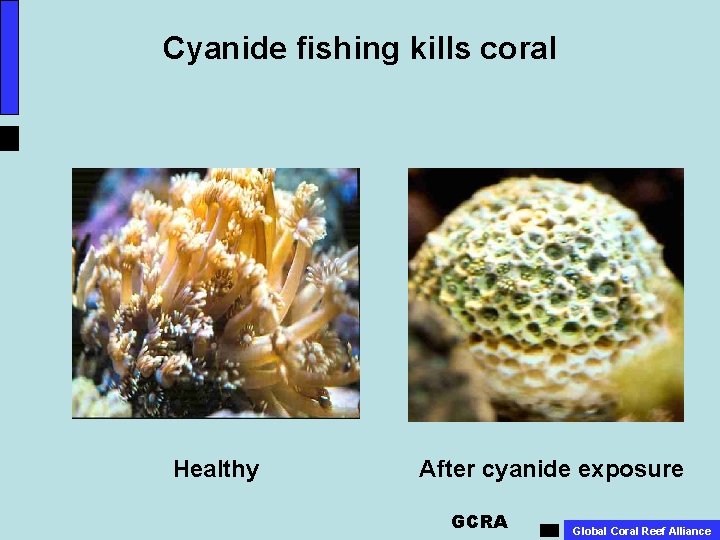
Cyanide fishing kills coral Healthy After cyanide exposure GCRA Global Coral Reef Alliance
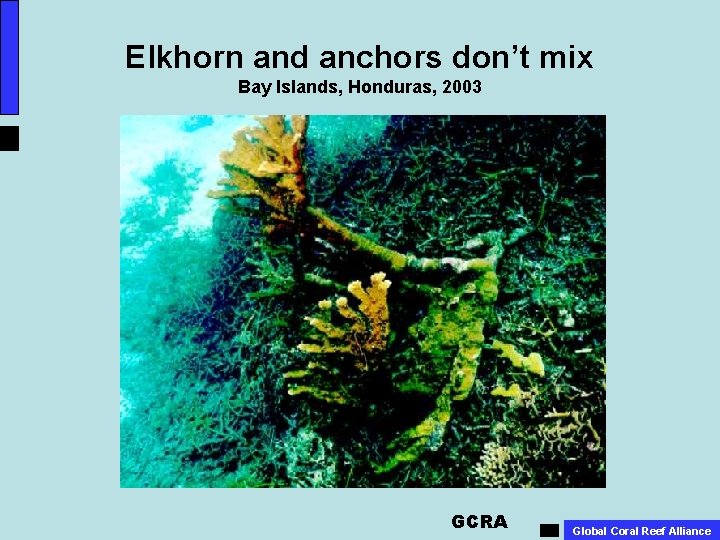
Elkhorn and anchors don’t mix Bay Islands, Honduras, 2003 GCRA Global Coral Reef Alliance
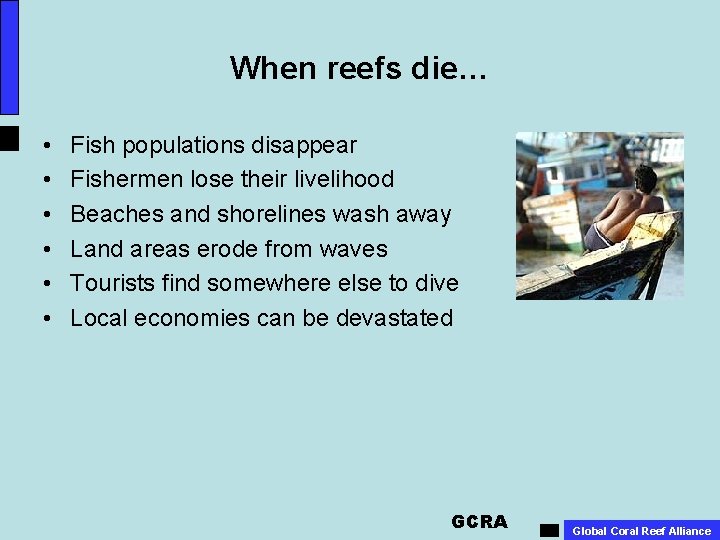
When reefs die… • • • Fish populations disappear Fishermen lose their livelihood Beaches and shorelines wash away Land areas erode from waves Tourists find somewhere else to dive Local economies can be devastated GCRA Global Coral Reef Alliance
A solution for corals in peril Biorock™ Process GCRA Global Coral Reef Alliance
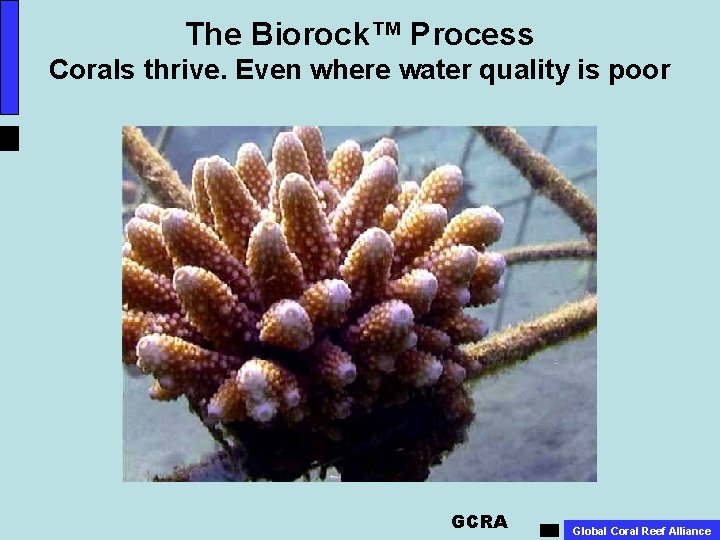
The Biorock™ Process Corals thrive. Even where water quality is poor GCRA Global Coral Reef Alliance
Biorock™/ Mineral Accretion • On underwater, conductive structures we assemble a positively charged anode and a negatively charged cathode (structure) • Apply a low voltage electric current between them – Safe for swimmers • Which causes minerals to crystallize from seawater onto structures • Calcium carbonate, white limestone (Ca. CO 3) is formed – Similar to natural coral reefs and tropical white sand • Corals adhere to limestone and grow quickly GCRA Global Coral Reef Alliance
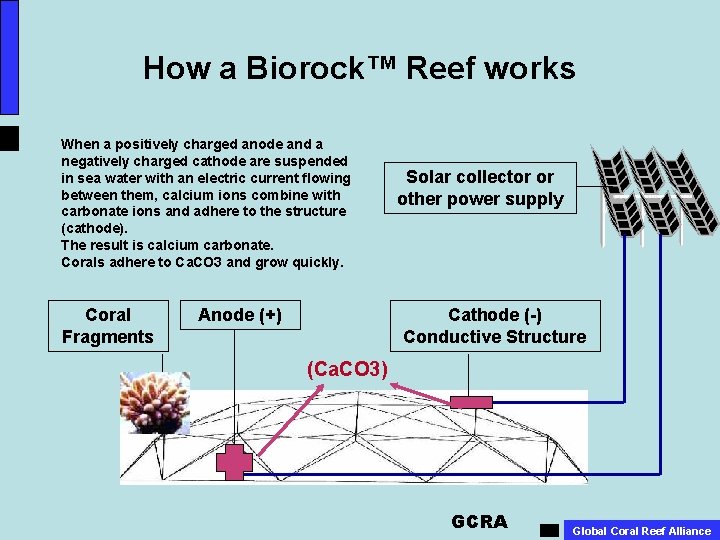
How a Biorock™ Reef works When a positively charged anode and a negatively charged cathode are suspended in sea water with an electric current flowing between them, calcium ions combine with carbonate ions and adhere to the structure (cathode). The result is calcium carbonate. Corals adhere to Ca. CO 3 and grow quickly. Coral Fragments Anode (+) Solar collector or other power supply Cathode (-) Conductive Structure (Ca. CO 3) GCRA Global Coral Reef Alliance
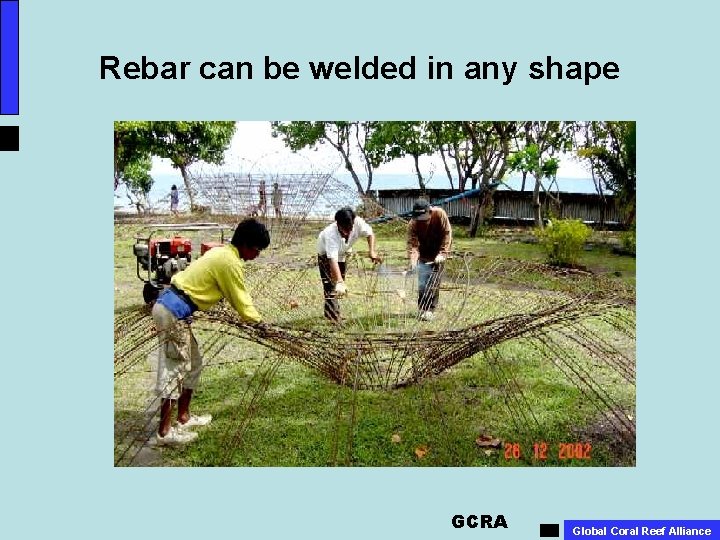
Rebar can be welded in any shape GCRA Global Coral Reef Alliance
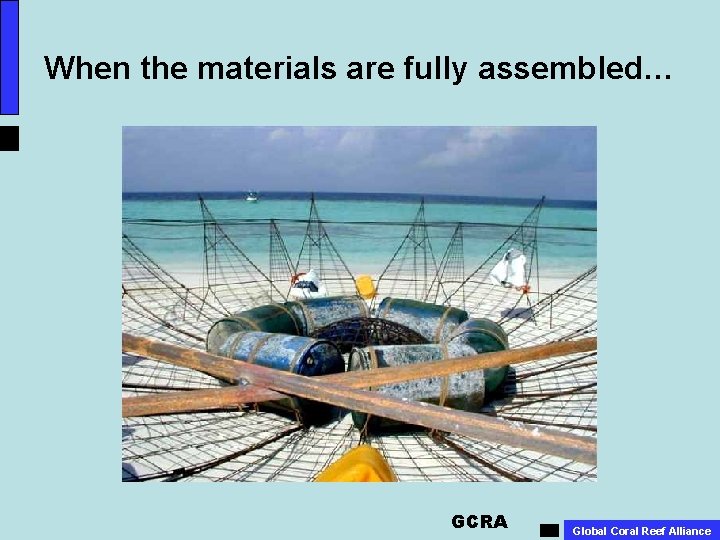
When the materials are fully assembled… GCRA Global Coral Reef Alliance
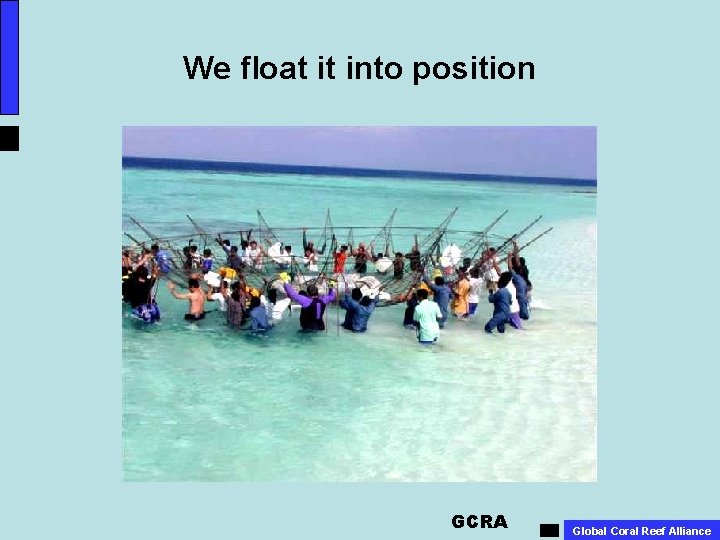
We float it into position GCRA Global Coral Reef Alliance
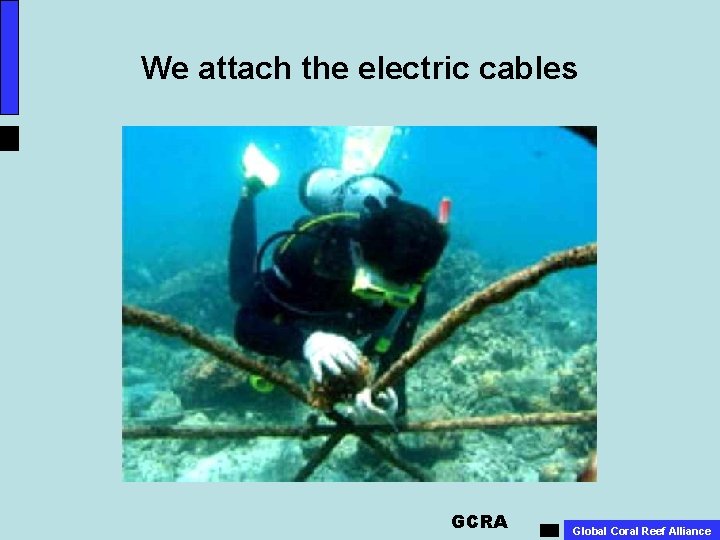
We attach the electric cables GCRA Global Coral Reef Alliance
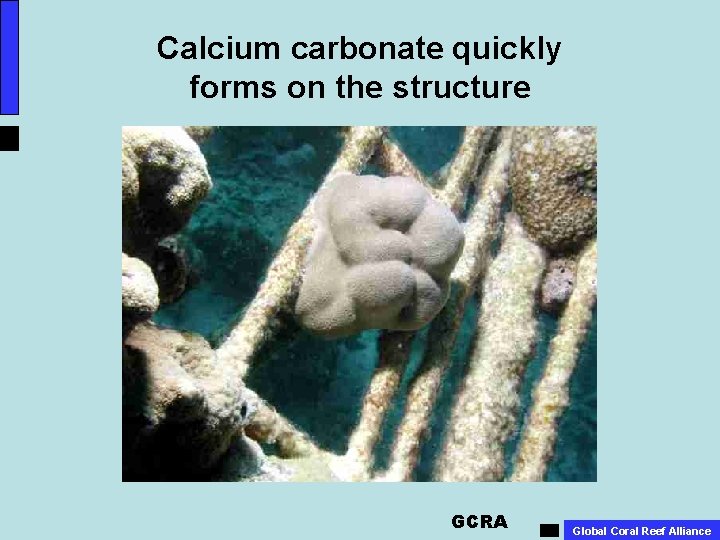
Calcium carbonate quickly forms on the structure GCRA Global Coral Reef Alliance
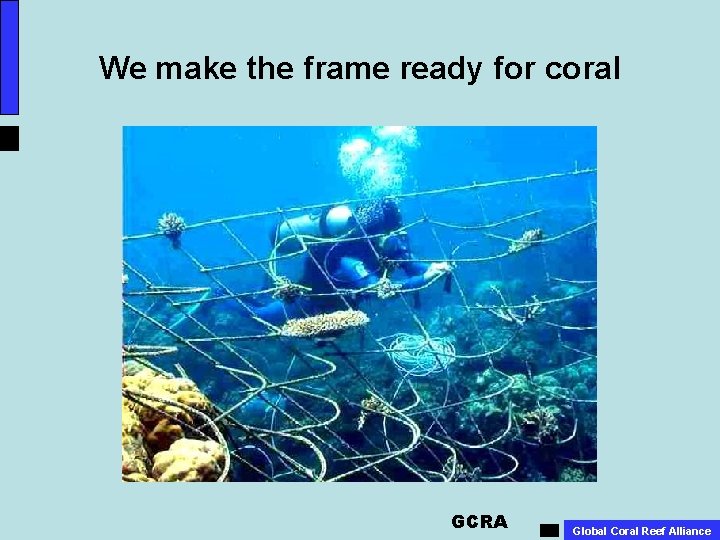
We make the frame ready for coral GCRA Global Coral Reef Alliance
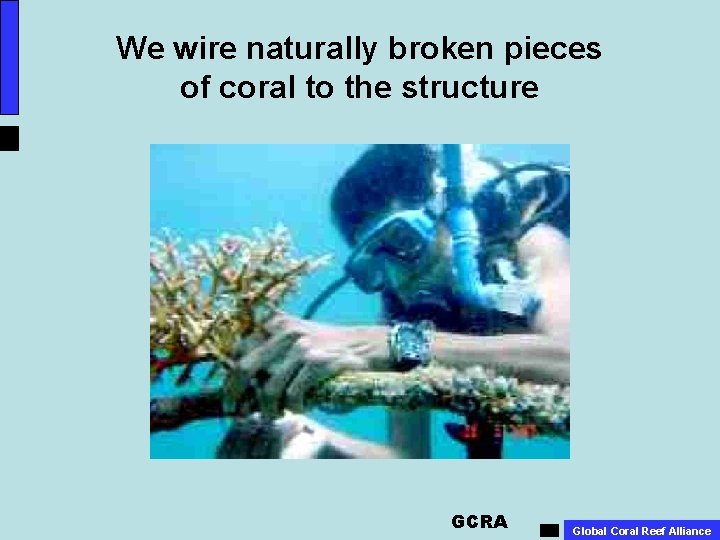
We wire naturally broken pieces of coral to the structure GCRA Global Coral Reef Alliance
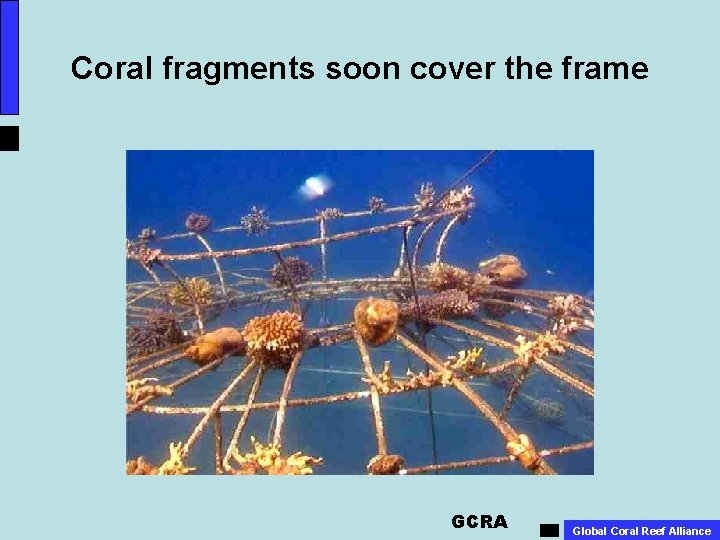
Coral fragments soon cover the frame GCRA Global Coral Reef Alliance
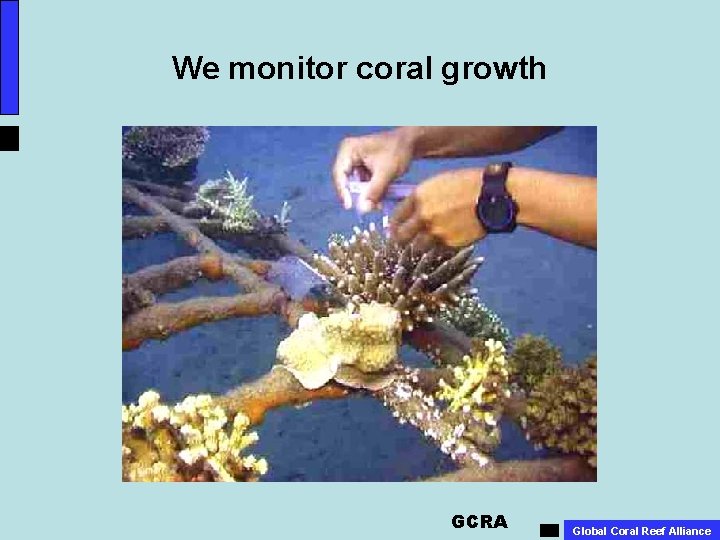
We monitor coral growth GCRA Global Coral Reef Alliance
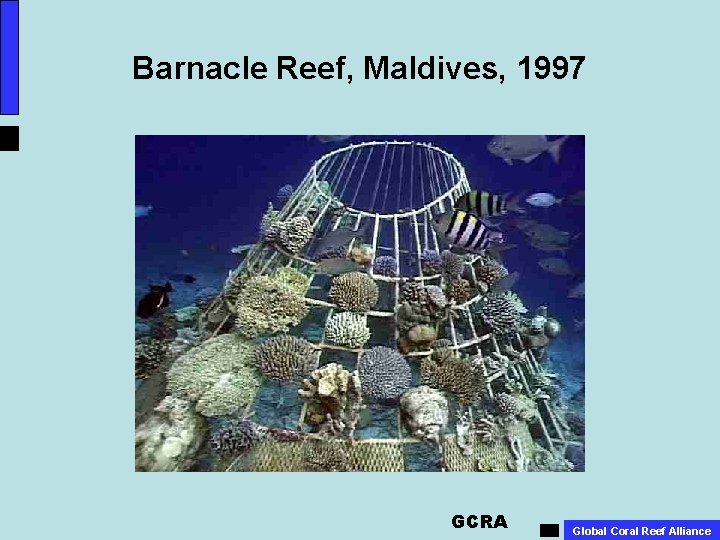
Barnacle Reef, Maldives, 1997 GCRA Global Coral Reef Alliance
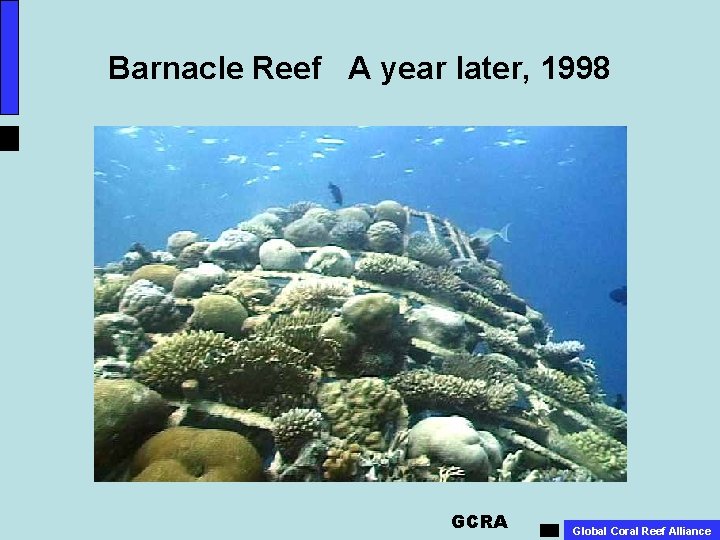
Barnacle Reef A year later, 1998 GCRA Global Coral Reef Alliance
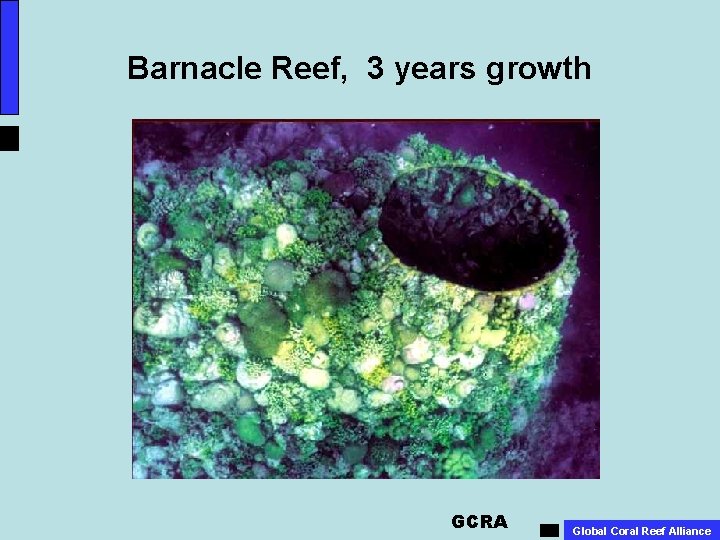
Barnacle Reef, 3 years growth GCRA Global Coral Reef Alliance
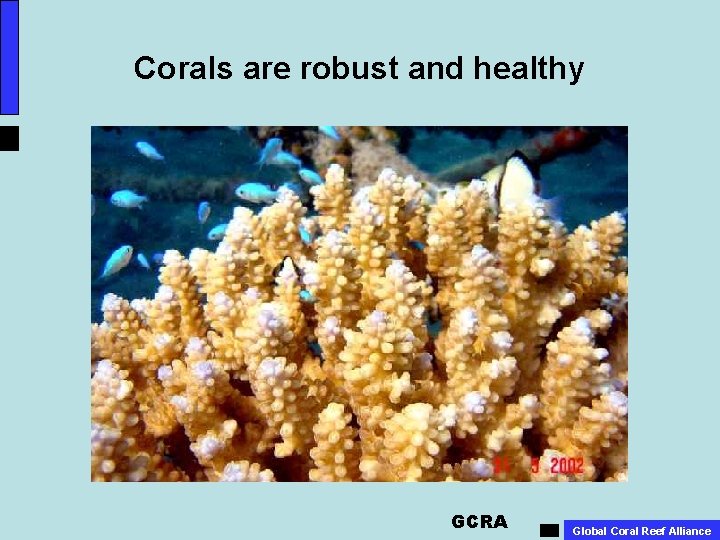
Corals are robust and healthy GCRA Global Coral Reef Alliance
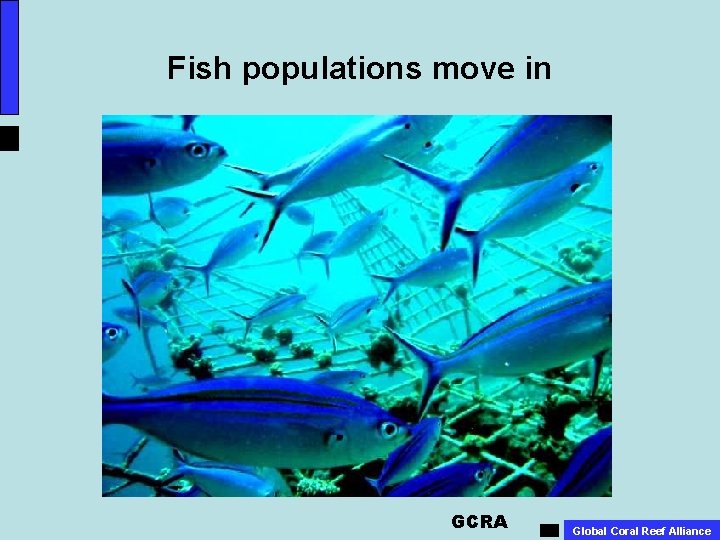
Fish populations move in GCRA Global Coral Reef Alliance
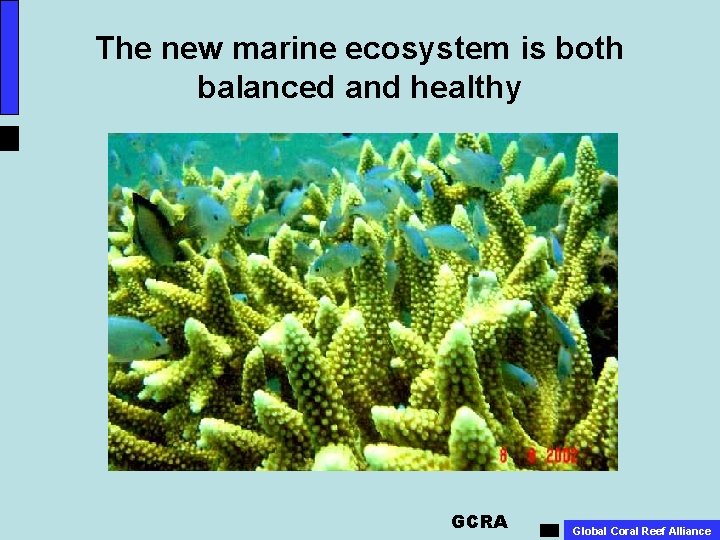
The new marine ecosystem is both balanced and healthy GCRA Global Coral Reef Alliance
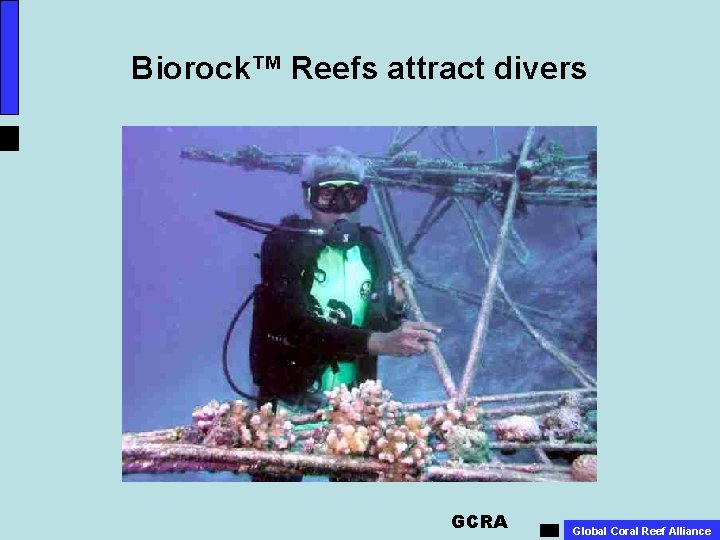
Biorock™ Reefs attract divers GCRA Global Coral Reef Alliance
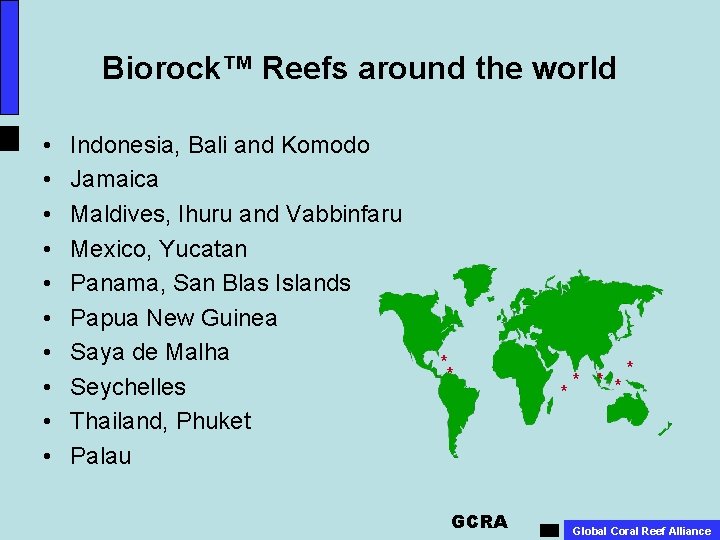
Biorock™ Reefs around the world • • • Indonesia, Bali and Komodo Jamaica Maldives, Ihuru and Vabbinfaru Mexico, Yucatan Panama, San Blas Islands Papua New Guinea Saya de Malha Seychelles Thailand, Phuket Palau * * GCRA * * * Global Coral Reef Alliance
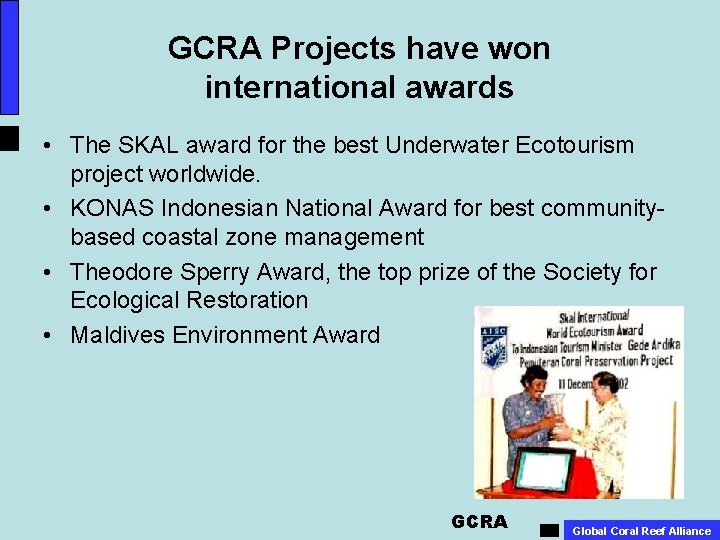
GCRA Projects have won international awards • The SKAL award for the best Underwater Ecotourism project worldwide. • KONAS Indonesian National Award for best communitybased coastal zone management • Theodore Sperry Award, the top prize of the Society for Ecological Restoration • Maldives Environment Award GCRA Global Coral Reef Alliance
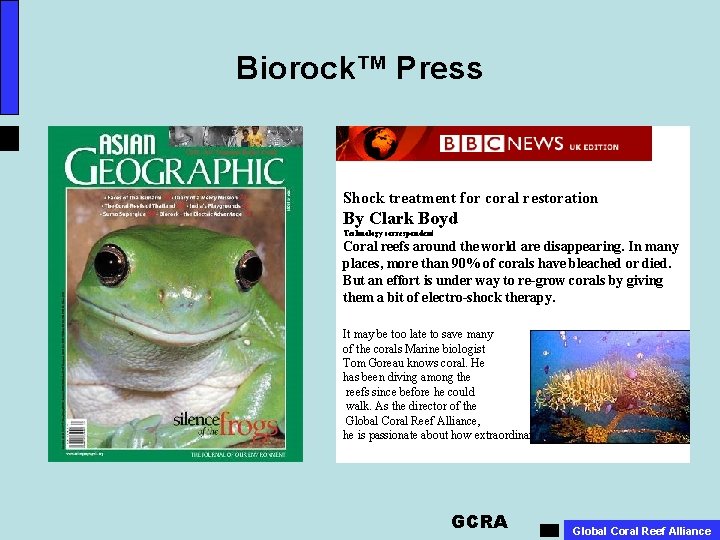
Biorock™ Press Shock treatment for coral restoration By Clark Boyd Technology correspondent Coral reefs around the world are disappearing. In many places, more than 90% of corals have bleached or died. But an effort is under way to re-grow corals by giving them a bit of electro-shock therapy. It may be too late to save many of the corals Marine biologist Tom Goreau knows coral. He has been diving among the reefs since before he could walk. As the director of the Global Coral Reef Alliance, he is passionate about how extraordinary corals are GCRA Global Coral Reef Alliance
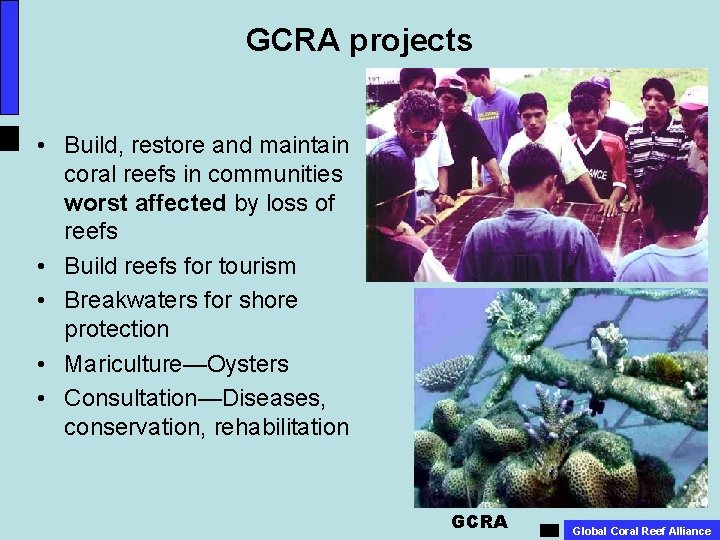
GCRA projects • Build, restore and maintain coral reefs in communities worst affected by loss of reefs • Build reefs for tourism • Breakwaters for shore protection • Mariculture—Oysters • Consultation—Diseases, conservation, rehabilitation GCRA Global Coral Reef Alliance
Funding To date……. Small cash donations from private individuals and businesses Valuable in-kind donations from the communities with which the GCRA has worked. No Salaries are drawn from GCRA funding GCRA Global Coral Reef Alliance
Global Coral Reef Alliance Associates • • • • • • Jon Allen, GCRA Board of Directors, research engineer and instrumentation designer Yos Amerta, Bali programs Max Benjamin, Papua New Guinea programs Jude Bijoux, Seychelles programs James Cervino, Coral physiologist, field and laboratory analysis Dan & Stefanie Clark, Florida programs Gabriel Despaigne, Panama programs Gerardo Garcia, Mexico programs Marina Goreau, Children's program Tom Goreau, GCRA President Azeez. A. Hakeem, Maldives programs Ray Hayes, GCRA Board of Advisors, coral health Wolf Hilbertz, Reef Restoration Jeff Houdret, GCRA Board of Advisors, marketing advisor, web issues Narayana, Bali programs Dr. Steven Orzack, GCRA Board of Directors, Director of the Fresh Pond Research Institute Niphon Phongsuwan, Thailand programs Cody Shwaiko, Komodo programs Roque Solis, Panama programs Dr. Robert K. Trench. Retired professor of biology at University of California at Santa Barbara Ernest Williams, GCRA Board of Directors, Coral diseases GCRA Global Coral Reef Alliance
- Slides: 44