
Global Communism 1914 Present USSR Flag Communism Communism
Global Communism 1914 -Present
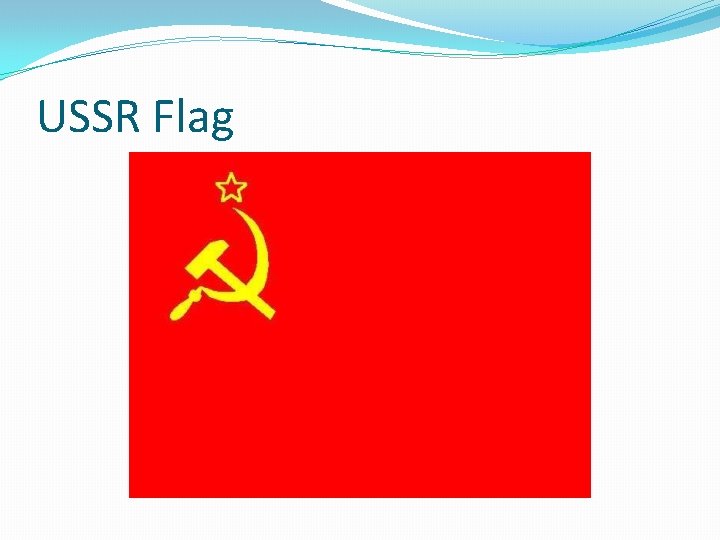
USSR Flag
Communism �Communism inspired by Karl Marx - most European socialists came to believe that they could achieve their goals through the democratic process - “communists” in the twentieth century advocated revolution - “communism” - full development of social equality and collective living
Communism �At communism’s height in the 1970 s, almost one-third of the world’s population was governed by communist regimes - most important communist societies - USSR and China - communism also came to Eastern Europe, North Korea, Vietnam, Laos, Cambodia, Cuba, Afghanistan
Communism Spreads past USSR �The various expressions of communism shared common ground - a common ideology, based on Marxism - an international revolutionary movement was more important than national loyalties - USSR provided aid and advice to aspiring revolutionaries elsewhere �Warsaw Pact- military alliance of Eastern European states and the USSR - Council on Mutual Economic Assistance tied Eastern European economies to the USSR’s
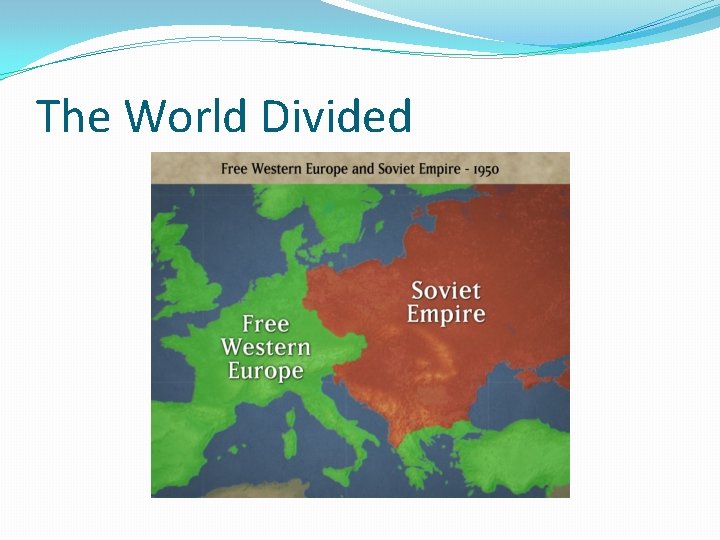
The World Divided
Communist Revolutions �Got rid of landed aristocracies and the old ruling classes �Involved peasant upheavals in the countryside; educated leadership in the cities �French, Russian, and Chinese revolutions all looked to a modernizing future - but there were important differences - highly organized parties guided by a Marxist ideology - the middle classes were among the victims of communist upheavals, whereas middle classes were chief beneficiaries of French Revolution
Russia: Revolution in a Single Year �Russia’s revolution (1917) was sudden, explosive - Tsar Nicholas II was forced to abdicate throne - massive social upheaval �People disliked the Provisional Government - it would not/could not meet the demands of the revolutionary masses - refused to withdraw from WWI - most effective opposition group was the Bolsheviks, led by Vladimir Ulyanov (Lenin)
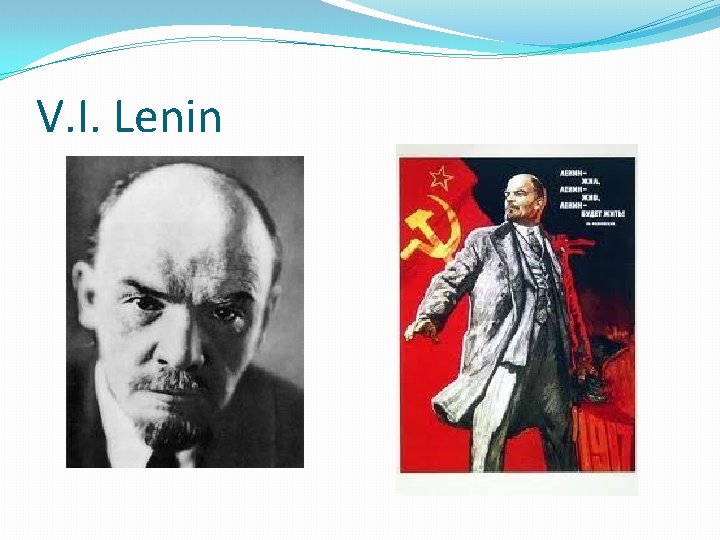
V. I. Lenin
The Bolsheviks �Bolsheviks seized power in a coup (October 1917) - claimed to act on behalf of the “soviets” - three-year civil war followed: Bolsheviks vs. a variety of enemies - by 1921, Bolsheviks (now calling their party “communist”) had won
The Bolsheviks �The Bolsheviks: - regimented the economy - suppressed nationalist rebellions - committed atrocities (as did their enemies) - claimed to defend Russia from imperialists as well as from internal exploiters - strengthened their tendency toward authoritarianism �For 25 years, the new USSR was the only communist country - expansion into Eastern Europe thanks to Soviet occupation at the end of WWII
China: A Prolonged Revolutionary Struggle �Communism won in China in 1949, after a long struggle - the Chinese imperial system had collapsed in 1911 - the Chinese Communist Party (CCP) was not founded until 1921
The CCP �Over the next 28 years, the CCP grew immensely and transformed its strategy under Mao Zedong - had a formidable enemy in the Guomindang (Nationalist Party), which ruled China after 1928 - Chiang Kai-shek led the Guomindang - the Guomindang promoted modern development, at least in cities - the countryside remained impoverished
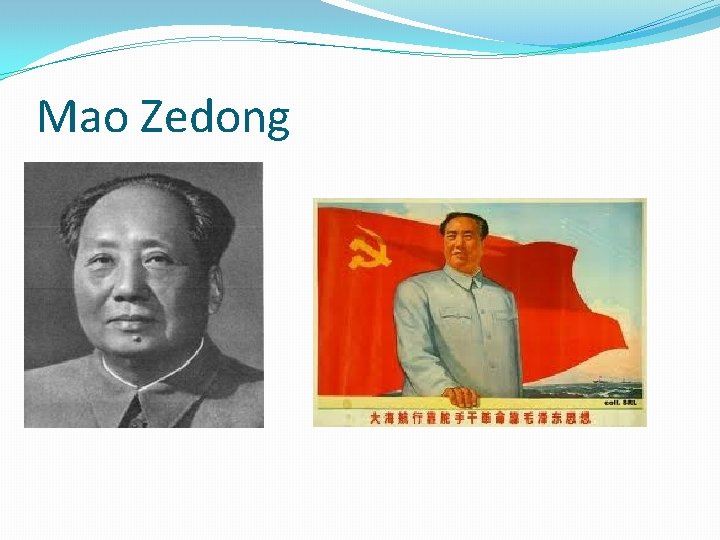
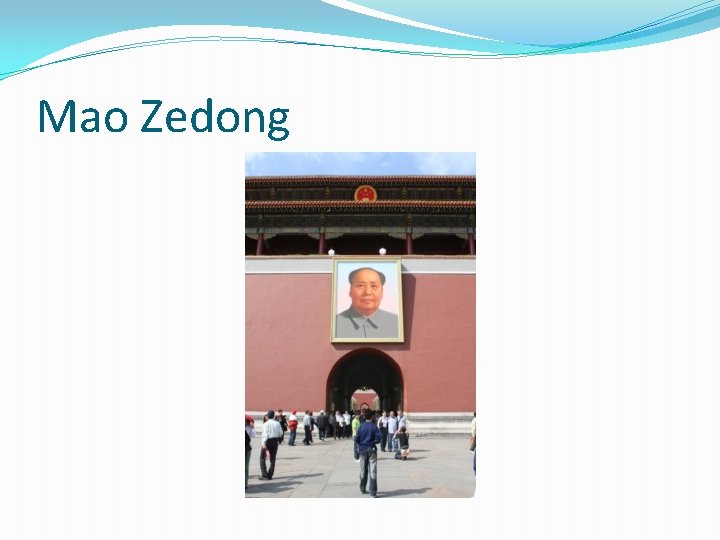
Mao Zedong
China: A Prolonged Revolutionary Struggle �The CCP was driven from the cities, developed a new strategy - looked to the peasants for support, not city workers - only gradually won respect and support of peasants - given a boost by Japan’s invasion of China - CCP’s People’s Liberation Army waged vigorous war against Japanese invaders using guerrilla warfare tactics
CCP Gets Support �The CCP addressed both foreign imperialism and peasant exploitation - expressed Chinese nationalism and demand for social change - gained a reputation for honesty, unlike the Guomindang
Building a Socialist Society �Joseph Stalin built a socialist society in the USSR in the 1920 s and 1930 s, Mao Zedong did the same in China in the 1950 s and 1960 s. - first step: modernization and industrialization - serious attack on class and gender inequalities - political systems dominated by the Communist Party �China’s conversion to communism was a much easier process than that experienced by the USSR - the USSR had already paved the way - Chinese communists - support of the rural masses
Communist Feminism �Communist countries pioneered “women’s liberation” - largely directed by the state - USSR almost immediately declared full legal and political equality for women - divorce, abortion, pregnancy leave, women’s work were all enabled or encouraged
The Zhenotdel � 1919: USSR’s Communist Party set up Zhenotdel(Women’s Department) - pushed a feminist agenda - male communist officials and ordinary people often opposed it - Stalin abolished it in 1930 - Stalin declared the women’s question “solved” in 1930
Feminism in China �China also worked for women’s equality - Marriage Law of 1950 ordered free choice in marriage, easier divorce, the end of concubinage and child marriage, and equal property rights for women - CCP tried to implement pro-female changes against strong opposition - women became much more active in the workforce
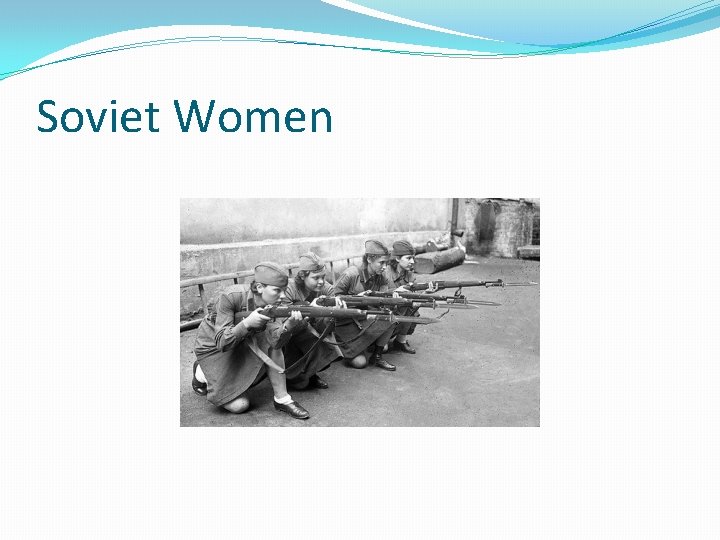
Soviet Women
Socialism in the Countryside �The communists took estates and redistributed the land to peasants - Russia: peasants took and redistributed the land themselves - China: land reform teams mobilized poor peasants to confront landlords and wealthier peasants - 1 million– 2 million landlords were killed in the process
Socialism in the Countryside �Second stage: effort to end private property in land by collectivizing agriculture - in China, collectivization was largely peaceful (1950 s) - in the USSR, collectivization was imposed by violence (1928– 1933) - kulaks (rich peasants) were killed or deported - the result was a massive famine (around 5 million died) �China’s collectivization went further than the USSR’s - creation of huge “people’s communes” during the Great Leap Forward (late 1950 s) - the result: massive famine (1959– 1962) - 20 million dead
Communism and Industrial Development �Both states regarded industrialization as fundamental - need to end humiliating backwardness and poverty - desire to create military strength �China largely followed the model established by the USSR - state ownership of property - centralized planning (five-year plans) - priority given to heavy industry - massive mobilization of resources - intrusive party control of the whole process
Effects of Industrialization �Both USSR and China experienced major economic growth - vast improvement in literacy and education - great increase in social mobility - rapid urbanization
Mao Zedong �China under Mao Zedong tried to combat the social effects of industrialization - hoped to bring full communism to the “people’s communes” without waiting for industrial development - result: massive disruptions, accompanied by natural disasters, caused a massive famine �The Great Cultural Revolution (mid-1960 s) - intended to combat capitalist tendencies - effort to bring health care and education to the countryside
Mao Zedong
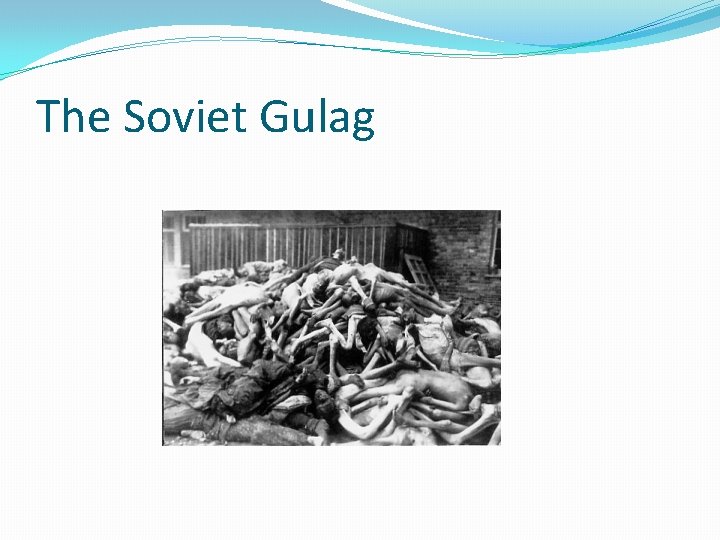
The Search for Enemies �USSR and China under Stalin and Mao were paranoid - fear that important communists were corrupted by bourgeois ideas; became class enemies - fear of a vast conspiracy by class enemies and foreign imperialists to restore capitalism �USSR: the Terror (Great Purges) of the late 1930 s - enveloped millions of Russians, including tens of thousands of prominent communists - many were sentenced to harsh labor camps (the gulag) - nearly a million people were executed between 1936 and 1941
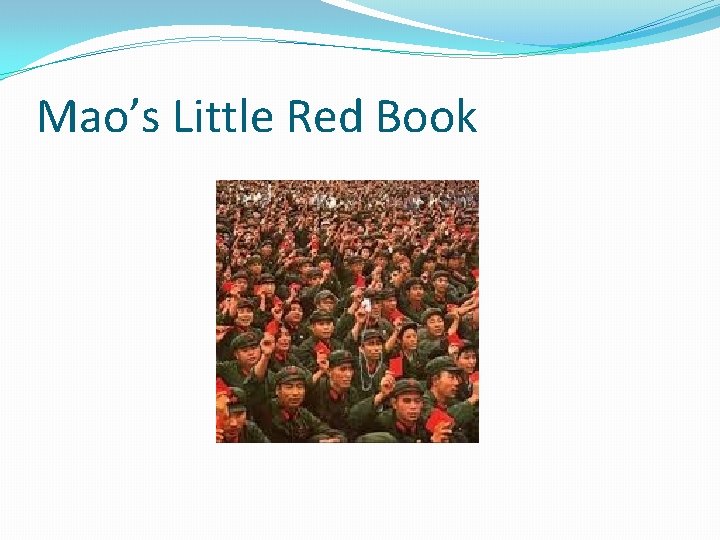
Internal Enemies �China: the search for enemies was a more public process - Cultural Revolution (1966– 1969) escaped control of communist leadership - Mao had called for rebellion against the Communist Party itself - purge of millions of supposed capitalist sympathizers - Mao had to call in the army to avert civil war �Both the Terror and the Cultural Revolution discredited socialism and contributed to eventual collapse of communist experiment
The Soviet Gulag
Mao’s Little Red Book
East vs. West �Europe was the cold war’s first arena - Soviet concern for security and control in Eastern Europe - American and British desire for open societies linked to the capitalist world economy �Creation of rival military alliances (NATO and the Warsaw Pact) - American sphere of influence (Western Europe) was largely voluntary - Soviet sphere (Eastern Europe) was imposed - the “Iron Curtain” divided the two spheres
US Policy Truman Doctrine “the policy of the United States to support free people who are resisting attempted subjugation by armed minorities or by outside pressures” Containment Policy policy using numerous strategies to prevent the spread of communism abroad
Communism Spreads �Communism spread into Asia (China, Korea, Vietnam), caused conflict - North Korea invaded South Korea in 1950 - bitter war (1950– 1953), with Chinese and American involvement - ended in a standoff and a divided Korea �Vietnam: massive U. S. intervention in the 1960 s - Vietnamese communists successfully united the country by 1975
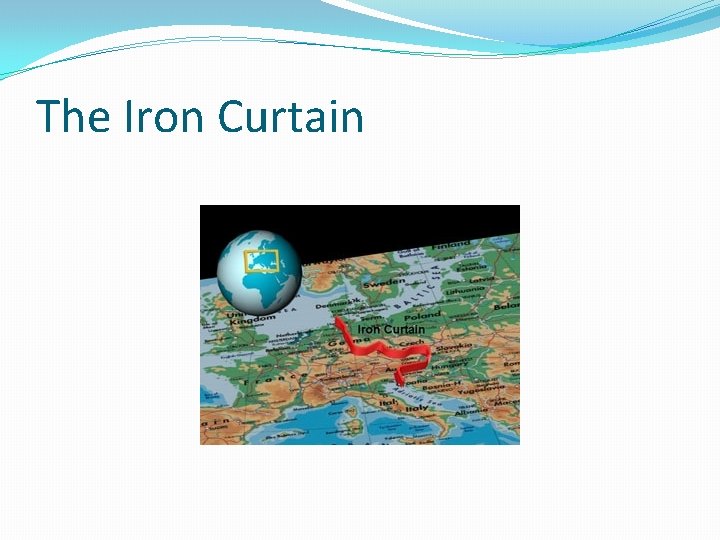
The Iron Curtain
Soviets in Afghanistan �Major cold war–era conflict in Afghanistan - a Marxist party took power in 1978 but soon alienated much of the population - Soviet military intervention (1979– 1989) met with little success - USSR withdrew in 1989 under international pressure
Bay of Pigs �April 1961 – CIA trained Cuban exiles to invade Southern Cuba �Goal – to overthrow Fiedel Castro and the Cuban Government �Outcome - Complete failure, heightened tension
Cuba �The battle that never happened: Cuba - Fidel Castro came to power in 1959 - nationalization of U. S. assets provoked U. S. hostility - Castro gradually aligned himself with the USSR �Cuban missile crisis (October 1962) - Khrushchev deployed nuclear missiles in Cuba - U. S. government detected the missiles - United States nearly invaded Cuba - Khrushchev and Kennedy reached a compromise
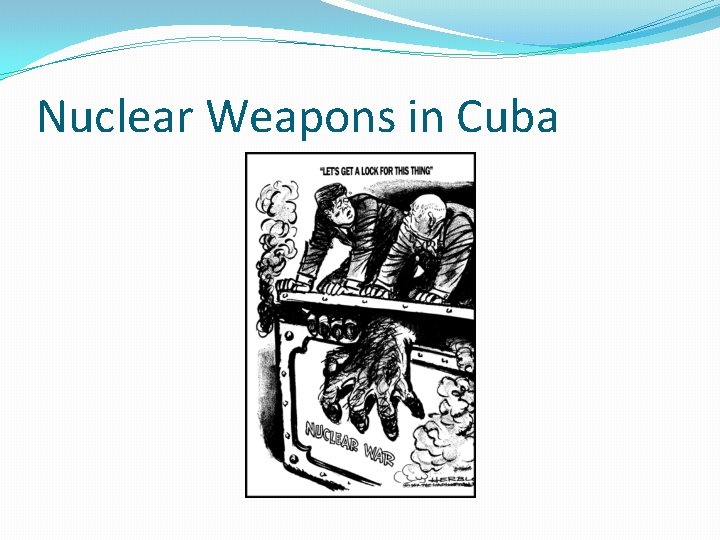
Nuclear Weapons in Cuba
Nuclear Standoff �USSR succeeded in creating a nuclear weapon in 1949 - massive arms race: by 1989, the world had nearly 60, 000 nuclear warheads � 1949– 1989: fear of massive nuclear destruction and extinction of humankind �Both sides knew how serious their destructive power was - careful avoidance of nuclear provocation, especially after 1962 - avoidance of any direct military confrontation, since it might turn into a nuclear war
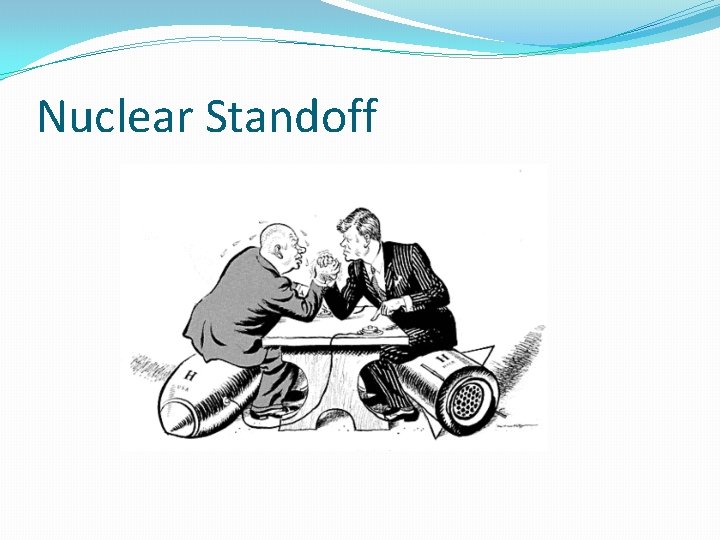
Nuclear Standoff
Third World Rivalry �United States and the USSR courted third world countries - United States intervened in Iran, the Philippines, Guatemala, El Salvador, Chile, the Congo, and elsewhere because of fear of communist penetration - the United States often supported corrupt, authoritarian regimes - many third world countries resisted being used as pawns - some countries (e. g. , India) claimed “nonalignment” status in the cold war - some tried to play off the superpowers against each other for $$$
The United States: Superpower of the West, 1945– 1975 �United States became leader of the West against communism - power was given to defense and intelligence agencies - fear that democracy was being undermined - anticommunist witch-hunts (1950 s) – Mc. Carthyism - strengthened the influence of the “militaryindustrial complex” - JFK- Space Race, Reagan and “Star Wars”
USA – Post WWII �U. S. military effort was sustained due to booming economy - industry not harmed by WWII, unlike every other major industrial society - growing pace of U. S. investment abroad �American popular culture also spread around the world - jazz, rock-and-roll, and rap found foreign audiences - by the 1990 s, American movies took about 70 percent of the European market - around 20, 000 Mc. Donald’s restaurants in 100 countries
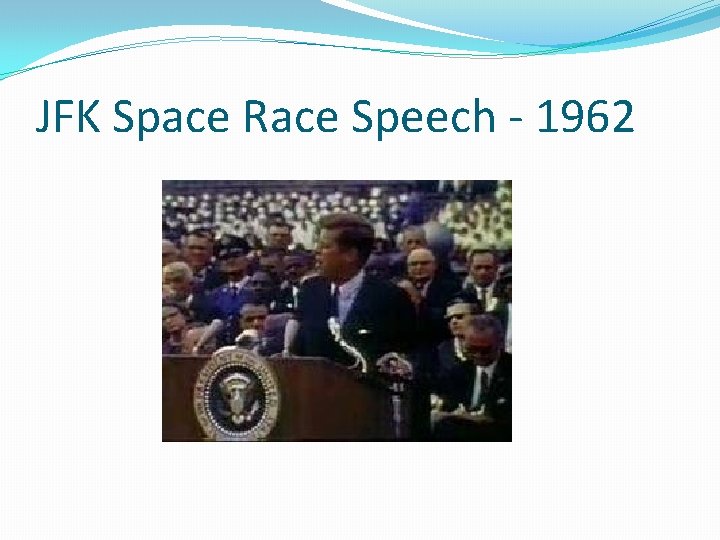
JFK Space Race Speech - 1962
The Communist World, 1950 s– 1970 s �Nikita Khrushchev took power in the USSR in 1953; in 1956, he denounced Stalin as a criminal - continuous government propaganda glorified the Soviet system and vilified America �Growing conflict among the communist countries - Yugoslavia rejected Soviet domination - Tito
Communist World �Soviet invasions of Hungary (1956– 1957) and Czechoslovakia (1968) to crush reform movements - early 1980 s: Poland was also threatened with invasion - brutal suppression of reform tarnished the image of Soviet communism
An Unhappy Marriage �Sharp opposition between the USSR and China - territorial disputes - ideological differences - rivalry for communist leadership - 1960: the USSR withdrew Soviet advisers and technicians from China - China developed its own nuclear weapons - USSR and China were close to war by the late 1960 s �World communism reached its greatest extent in the 1970 s
An End to Communism (1970 -1991) �China: Mao Zedong died in 1976 - the CCP gradually abandoned Maoist socialism �Europe: popular movements overthrew communist governments in 1989 - USSR suffered political disintegration on Christmas Day, 1991
The Failure of Communism �Both cases show the economic failure of communism - communist states couldn’t catch up economically - the Soviet economy was stagnant - failures were known around the world - economic failure limited military capacity �Both cases show the moral failure of communism - Stalin’s Terror and the gulag - Mao’s Cultural Revolution - genocide in Cambodia – Pol Pot - all happened in a global climate that embraced democracy and human rights
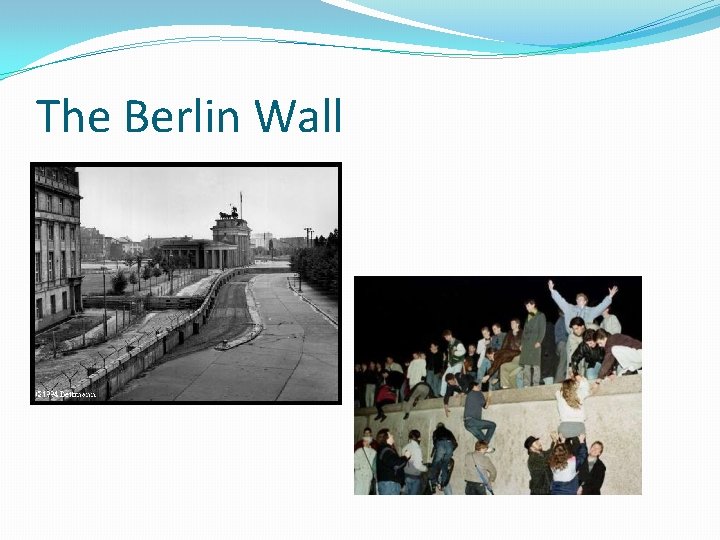
The Berlin Wall
China: Abandoning Communism and Maintaining the Party �Deng Xiaoping came to power in 1976 - relaxed censorship - released some 100, 000 political prisoners - dismantled collectivized farming system �China opened itself to the world economy - result: stunning economic growth and new prosperity - also generated massive corruption among officials, urban inequality, pollution, and inequality between coast and interior
Social Controls Persist �The Chinese Communist Party has kept its political monopoly - brutal crushing of democracy movement in late 1980 s - Tiananmen Square massacre �China is now a “strange and troubled hybrid” that combines nationalism, consumerism, and new respect for ancient traditions
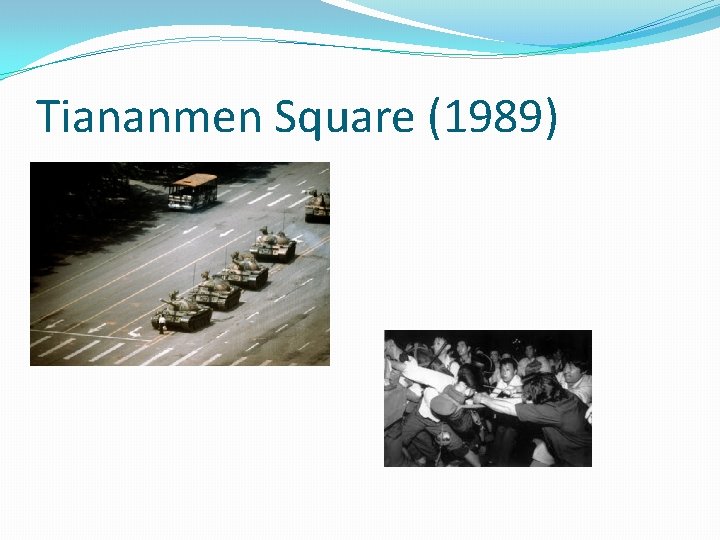
Tiananmen Square (1989)
The Soviet Union: The Collapse of Communism and Country �Mikhail Gorbachev became general secretary in mid-1980 s - perestroika - economic reform program in 1987 - was met with heavy resistance - glasnost (“openness”) cultural and intellectual freedoms - effort to end the deep distrust between society and state �Glasnost revealed what a mess the USSR was (crime, prostitution, suicide, corruption, etc. ) - the extent of Stalin’s atrocities was uncovered - new openness to religious expression - ending of government censorship of culture �Democratization—free elections in 1989
Famous Ronald Reagan Speech �http: //www. youtube. com/watch? v=Wj. WDr. TXMg. F 8
The Soviet Union: The Collapse of Communism and Country �Gorbachev’s reforms led to collapse of the USSR - the planned economy was dismantled before a market-based system could develop - states demand independence(velvet revolution 1991) �Gorbachev refused to use force to crush the protesters �Eastern European states broke free from USSRsponsored communism �Fifteen new and independent states emerged from the breakup of the USSR
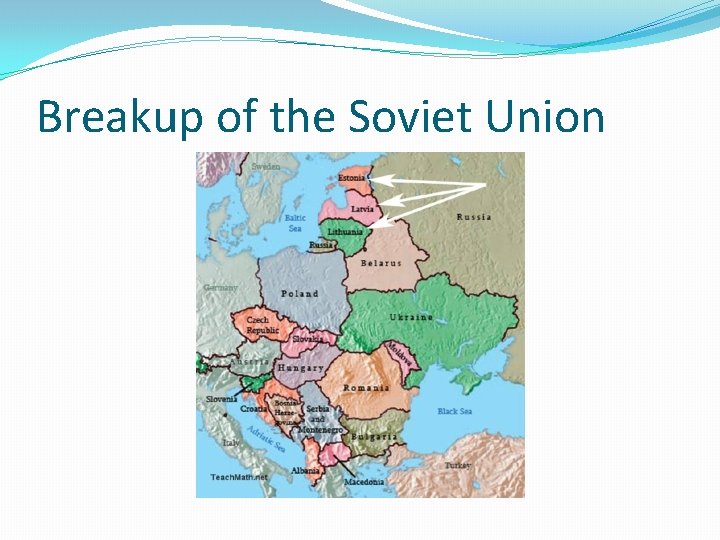
Breakup of the Soviet Union
Communism in 2000 CE �Communism lost its dominance completely in the USSR and Eastern Europe �China abandoned communist economic policies �Vietnam and Laos remained officially communist but pursued Chinese-style reforms �Cuba: economic crisis in the 1990 s, began to allow small businesses and private food markets �North Korea is the most unreformed and Stalinist communist state left
- Slides: 59