
Global Climates What is a Climate Temperature Regimes
Global Climates • • • What is a Climate? Temperature Regimes Precipitation Regimes Climate Classification Different Climates: – Low Latitude Climates – Midlatitude Climates – High Latitude Climates – Highland Climates
What is Climate? v Climate is the average weather of a region over an extended period of time. v Average weather is based on measurements of temperature and precipitation. v. Measurements are concerned with both average annual values and annual variation
Why do we care about climate classification? v Weather v Type of agriculture v Our mood v Types of vegetation v Types of animals v Type of people/culture v Type of economy v Types of activities v. Types of soil v Type of clothes we wear v. Climate Change!
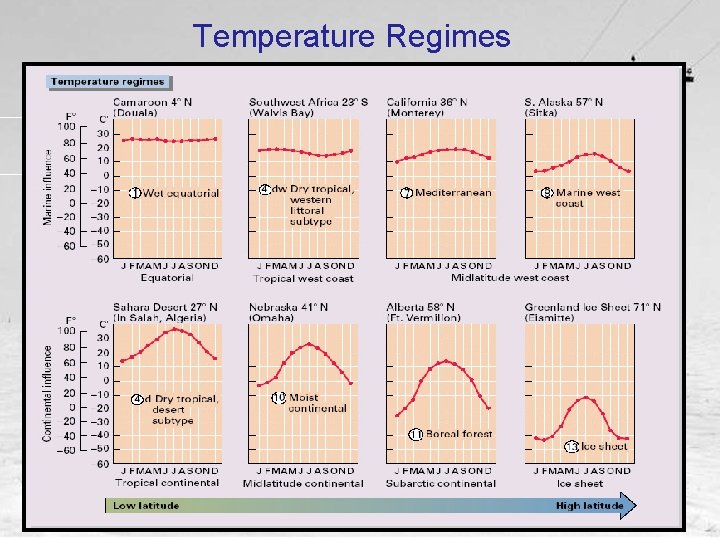
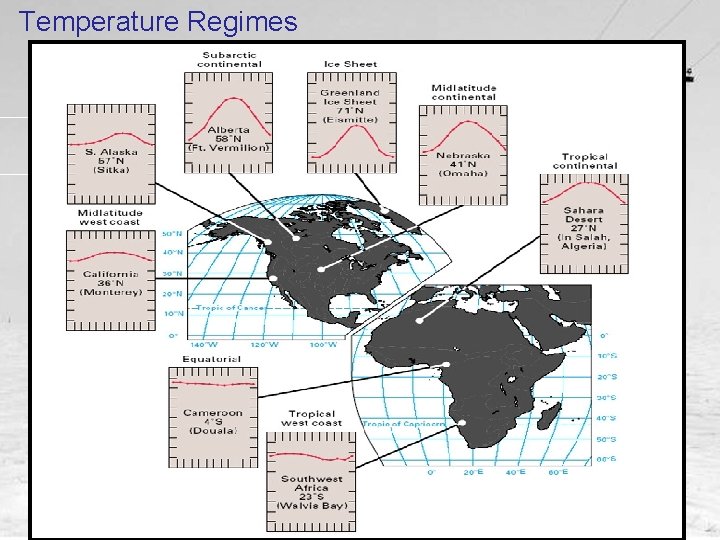
Keys to Climate v Temperature Regime – annual temperature cycle. Based on latitude, location, elevation. There are seven distinct types: (Subarctic continental, Ice sheet, midlatitude continental, tropical continental, midlatitude west coast, equatorial, tropical west coast) v Precipitation – seasonality patterns controlled by air masses and their movements (influenced by atmospheric circulation patterns) There are seven precipitation regions: (Wet equatorial, Trade-wind coasts, tropical deserts, midlatitude deserts and steppes, midlatitude west coasts, arctic and polar deserts)
Dry Vs Moist Climate • Dry: Outputs > Inputs • Wet: Inputs > Outputs • Inputs = precipitation • Outputs = evaporation, transpiration
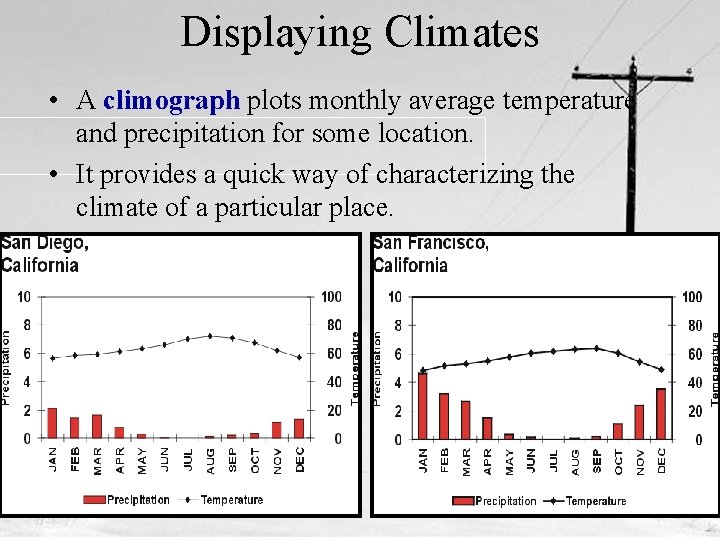
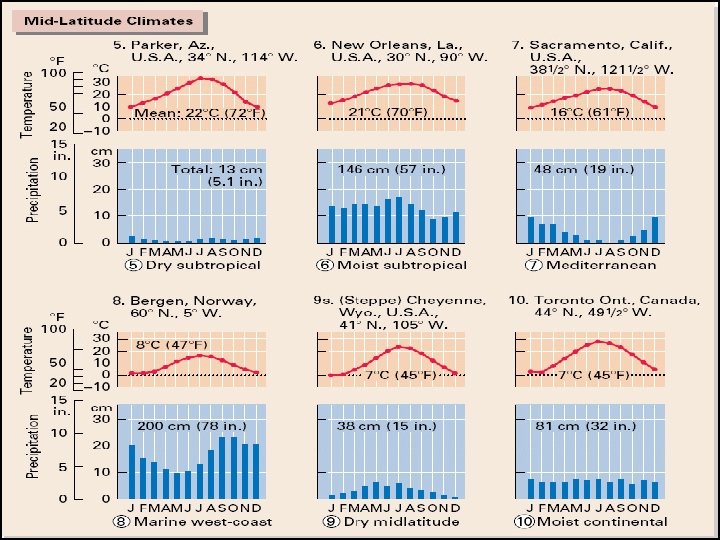
Displaying Climates • A climograph plots monthly average temperature and precipitation for some location. • It provides a quick way of characterizing the climate of a particular place.
Temperature Regimes
A B
So… What Determines a Climate? 1. Latitude 2. Coastal-Continental location 3. Elevation 4. Source of incoming air mass.
Global Climates • • • What is a Climate? Temperature Regimes Precipitation Regimes Climate Classification Different Climates: – Low Latitude Climates – Midlatitude Climates – High Latitude Climates – Highland Climates
Temperature Regimes 1. 2. 3. 4. 5. 6. 7. Subarctic continental Ice sheet Midlatitude continental Tropical continental Midlatitude west coast Equatorial Tropical west coast
Temperature Regimes
Major Principles of Temperature Regimes: v Low latitude locations have warmer temperatures and smaller annual temperature ranges than high latitude locations… why? v Continental Locations have larger annual temperature ranges than coastal locations (of the same latitude)… why? v Colder locations tend to have less precipitation than warm locations …why?
Global Climates • • • What is a Climate? Temperature Regimes Precipitation Regimes Climate Classification Different Climates: – Low Latitude Climates – Midlatitude Climates – High Latitude Climates – Highland Climates
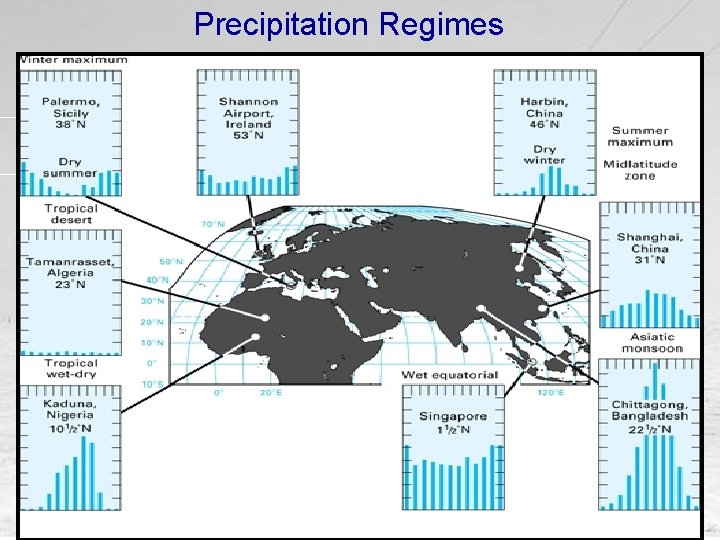
Precipitation Regimes 1. 2. 3. 4. 5. 6. 7. Wet equatorial Trade-wind coasts Tropical deserts Midlatitude deserts and steppes Midlatitude west coasts Arctic and polar deserts
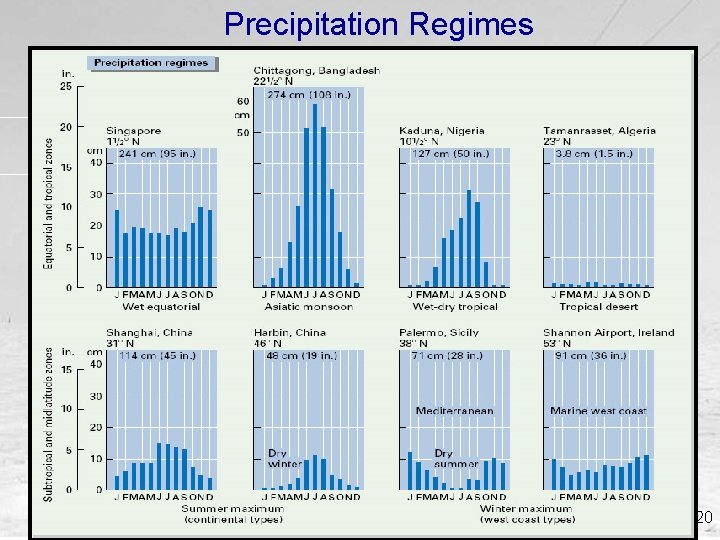
Precipitation Regimes Figure 7. 3, p. 220
Precipitation patterns: 1. Uniformly distributed precipitation seasonally 2. Precipitation maximum during the warmest period of the year (high sun season) 3. Precipitation maximum during the coolest period of the year (low sun season)
Precipitation Regimes
Major Principles of Precipitation Regimes… v Atmospheric Circulation has a strong influence on precipitation pattern… why? v High convectional precipitation at equatorial regions… why? v Mountain ranges produce wet areas… why?
Major Principles of Precipitation Regimes v Coastal mountains can act as barriers to produce rain shadows. v Continental interiors tend to be dry because they are far from source areas of moist air masses
Global Climates • • • What is a Climate? Temperature Regimes Precipitation Regimes Climate Classification Different Climates: – Low Latitude Climates – Midlatitude Climates – High Latitude Climates – Highland Climates
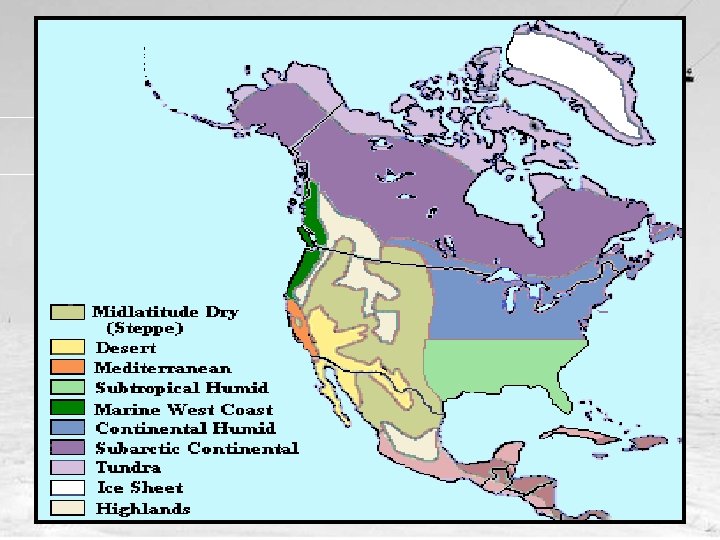
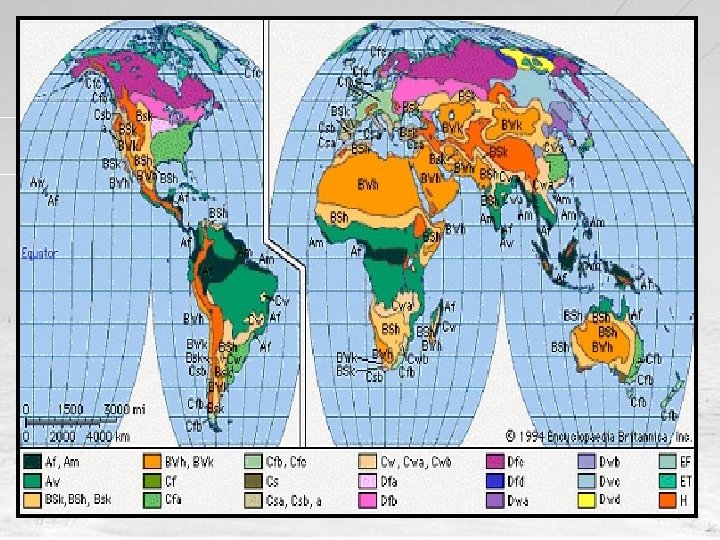
Climate Classification How are climates classified ? v. Based on monthly values of air temp and precipitation v Understood and explained by air mass movements and frontal zones v Moisture based on incoming Vs Outgoing
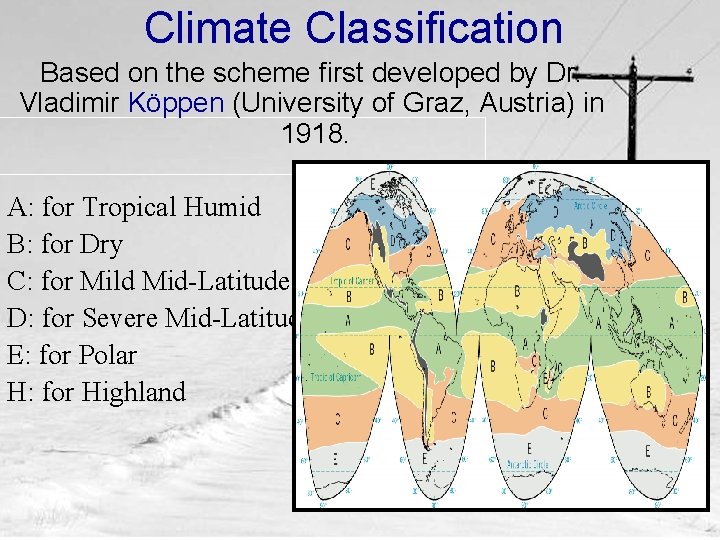
Climate Classification Based on the scheme first developed by Dr. Vladimir Köppen (University of Graz, Austria) in 1918. A: for Tropical Humid B: for Dry C: for Mild Mid-Latitude D: for Severe Mid-Latitude E: for Polar H: for Highland
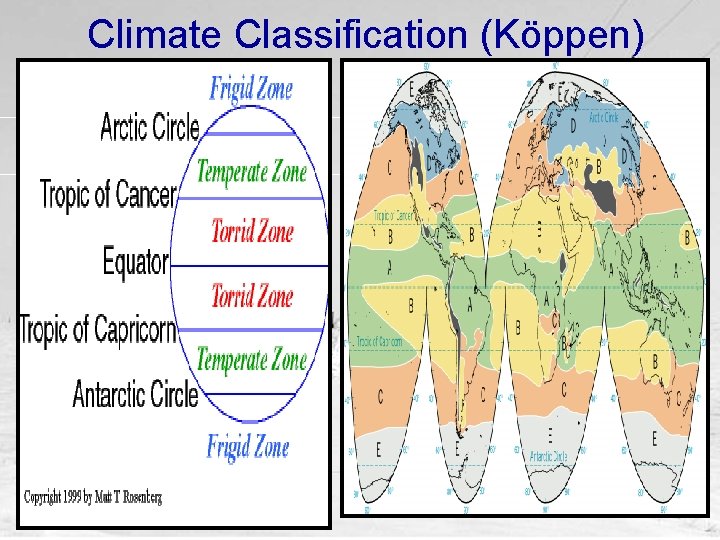
Climate Classification (Köppen)
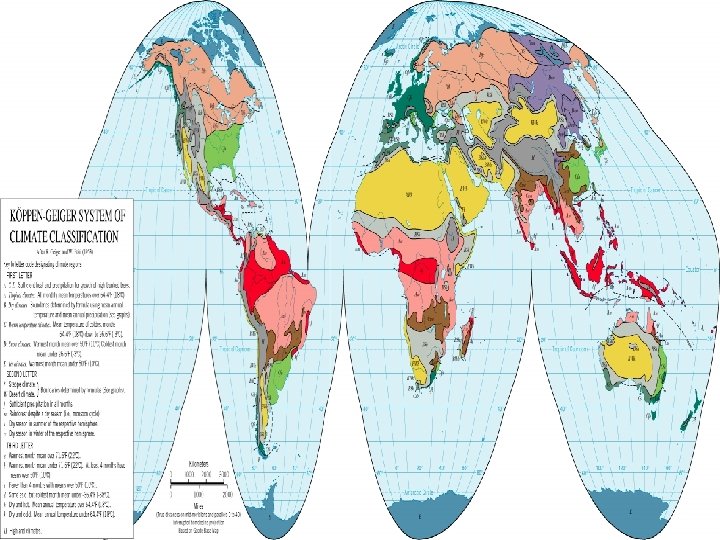
Köppen Global Climates Classification
Global Climates • • • What is a Climate? Temperature Regimes Precipitation Regimes Climate Classification Different Climates: – Low Latitude Climates – Midlatitude Climates – High Latitude Climates – Highland Climates
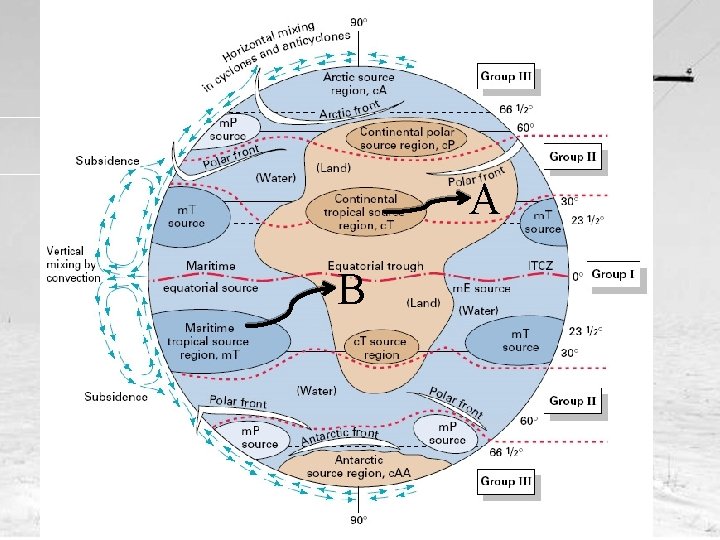
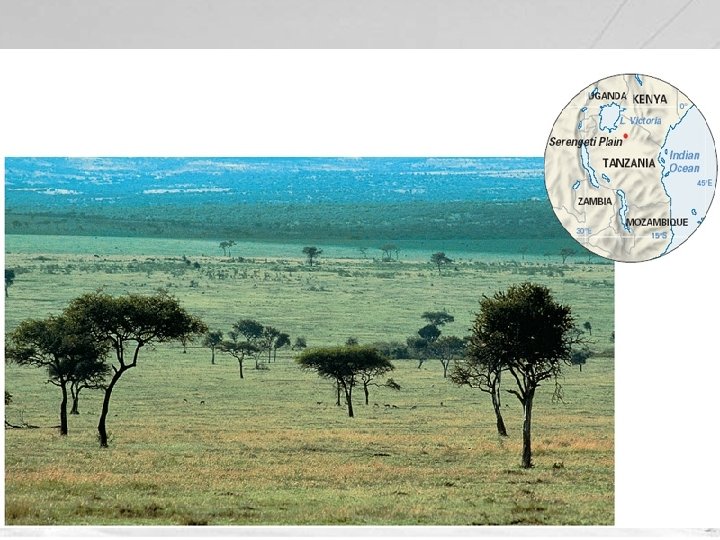
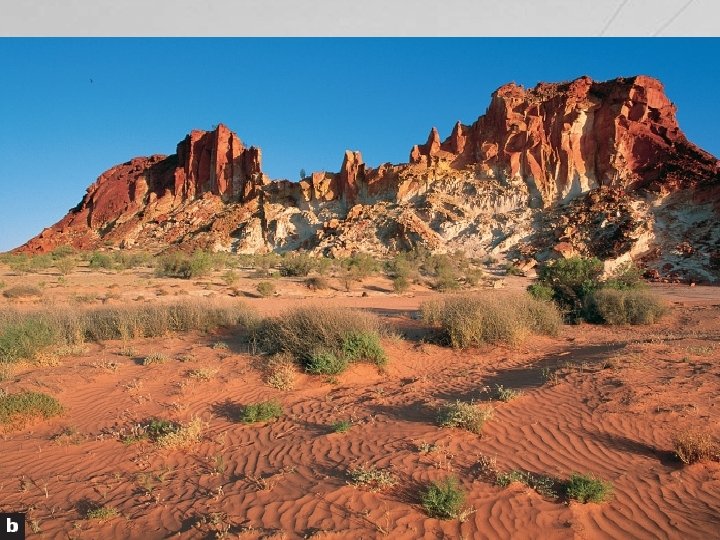
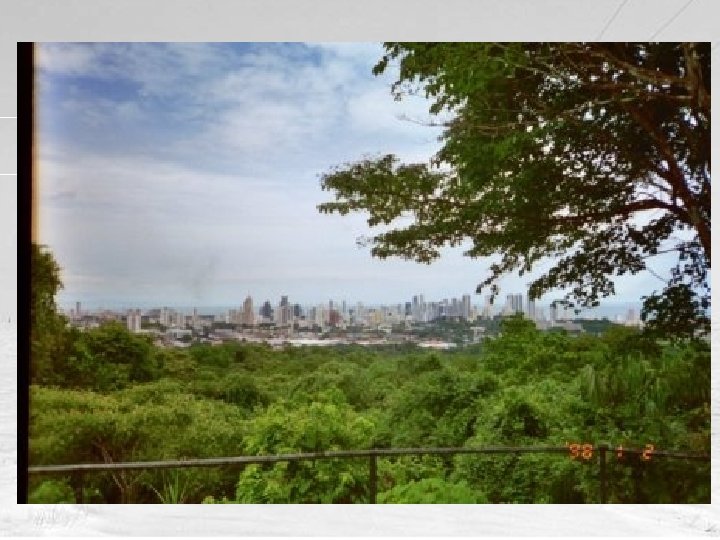
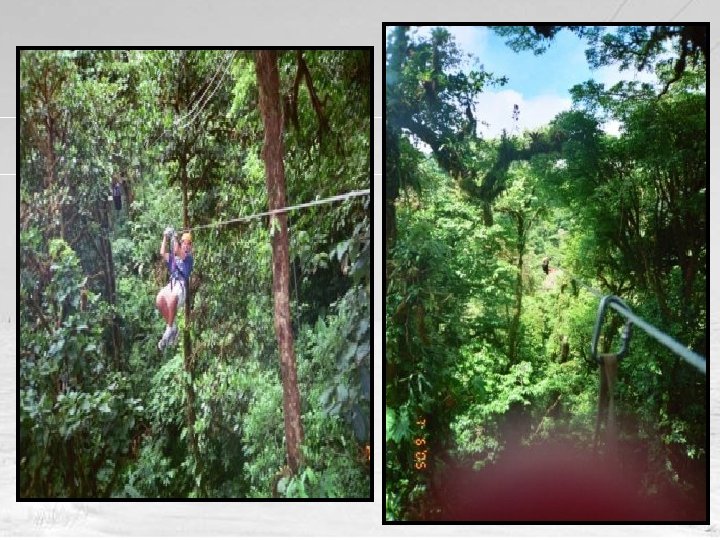
Low Latitude Climate Properties v Located near the equator, between the Tropic of Cancer and Tropic of Capricorn. v Range from very wet to very dry v Smaller seasonal temperature range v Dominated by c. T, m. T, and m. E air masses
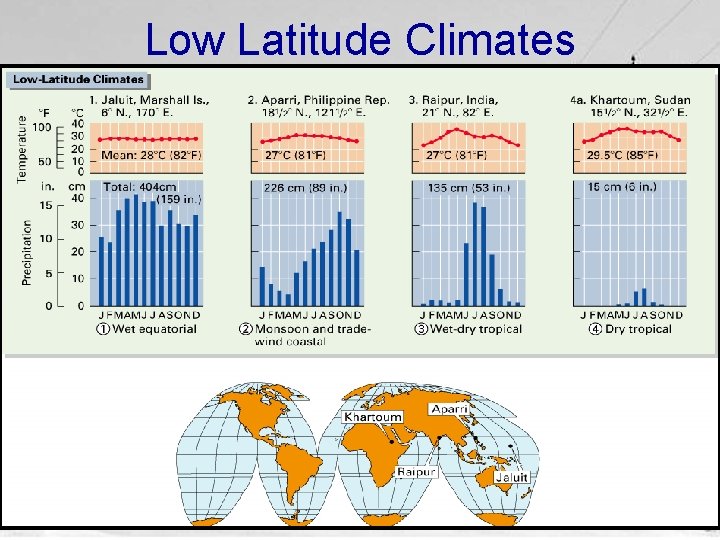
Low Latitude Climates
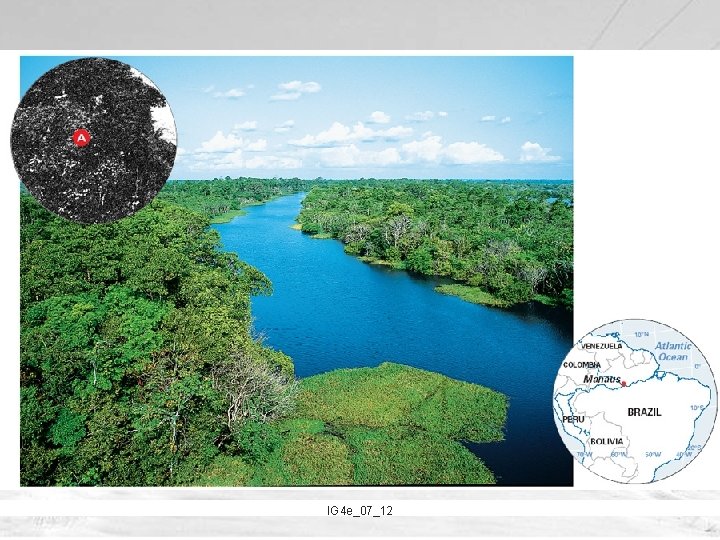
IG 4 e_07_12

Global Climates • • • What is a Climate? Temperature Regimes Precipitation Regimes Climate Classification Different Climates: – Low Latitude Climates – Midlatitude Climates – High Latitude Climates – Highland Climates
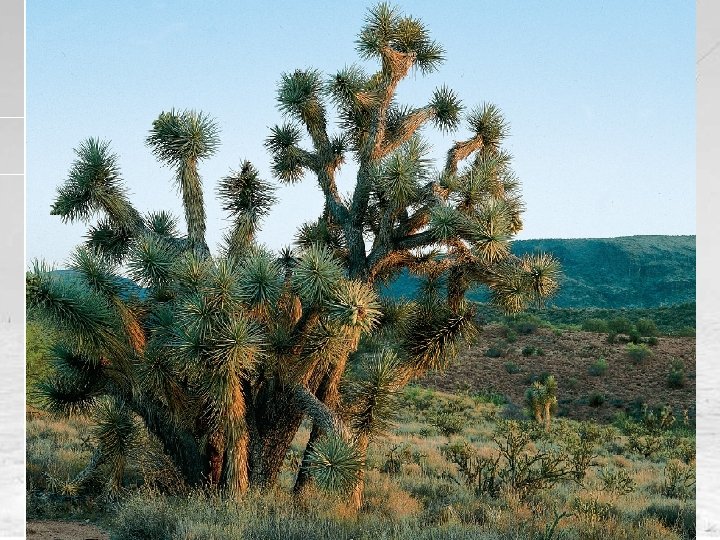
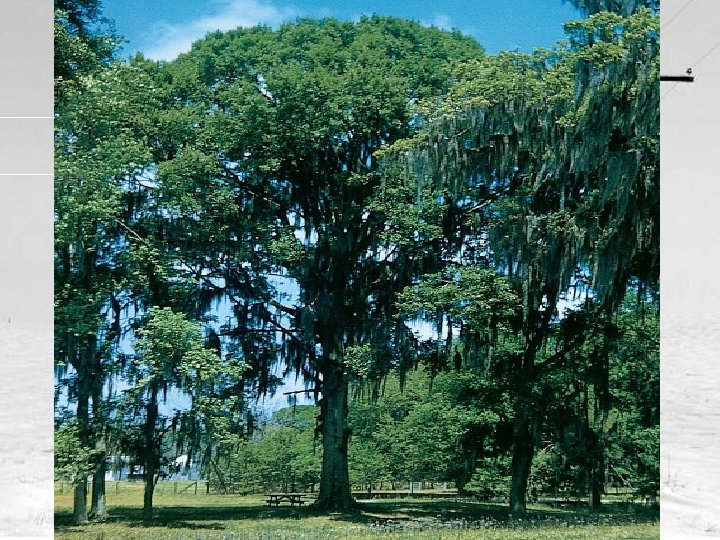
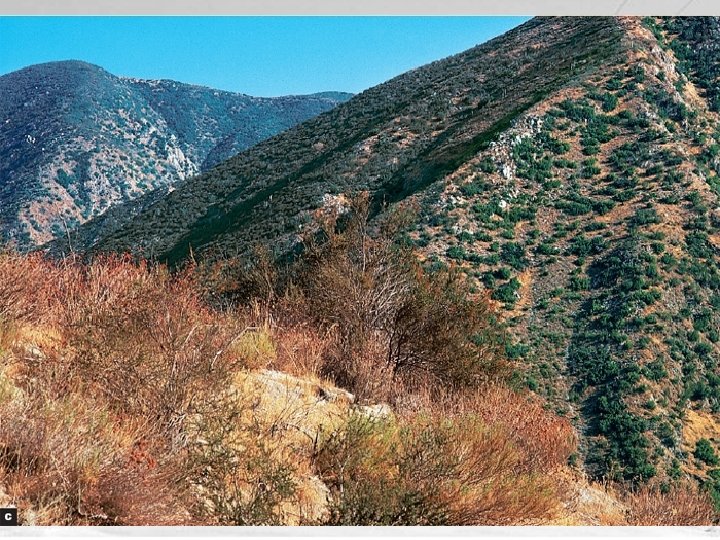
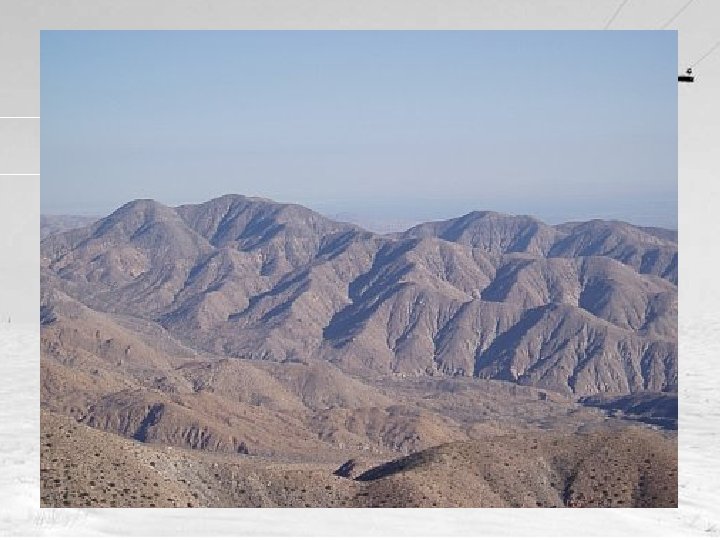
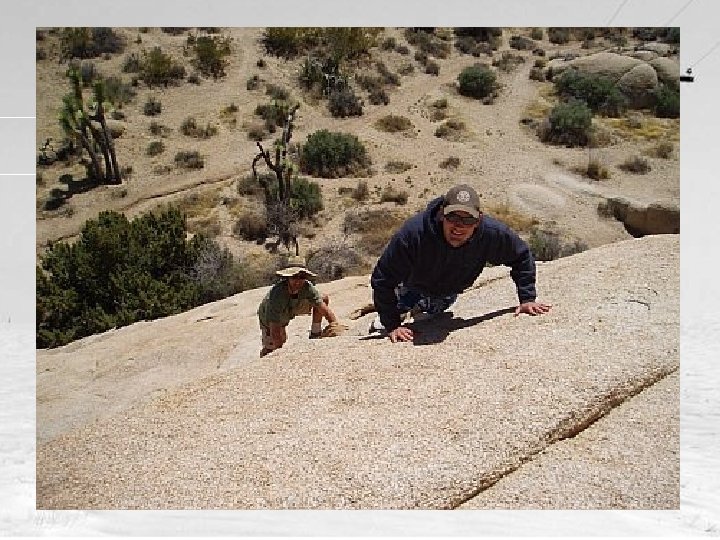
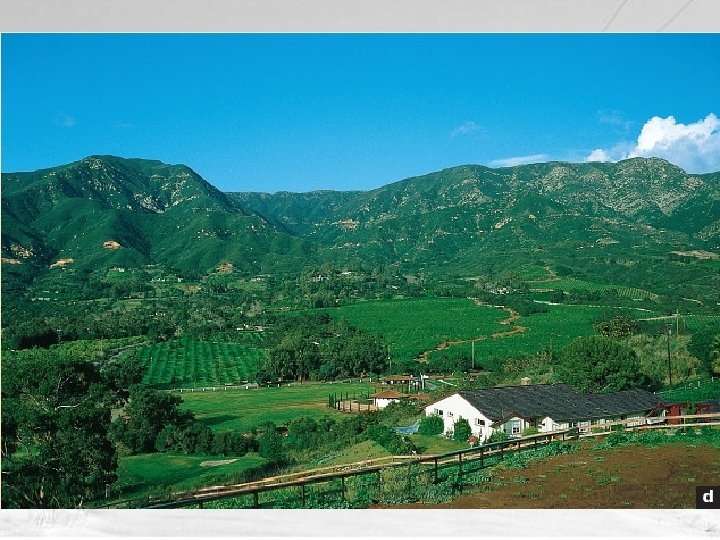
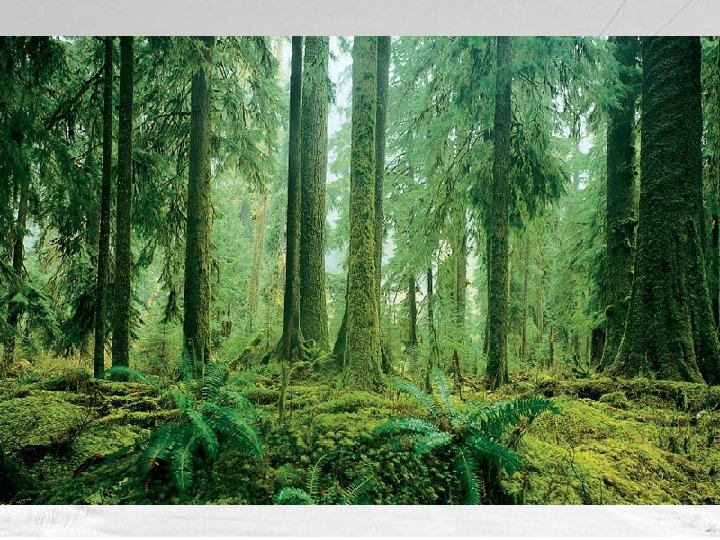
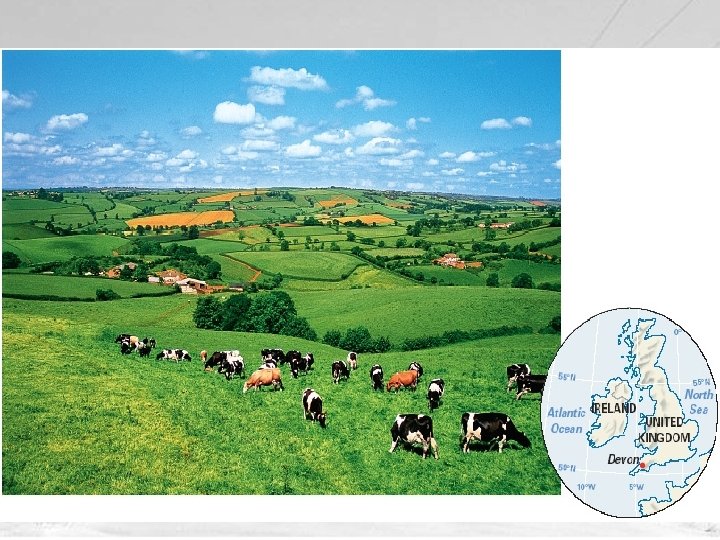
Midlatitude Climate Properties v Located at the polar front zone where warm air masses and cold air masses interact v These climates occupy the land areas of the midlatitude zones (mainly in the Northern Hemisphere) v Strong annual variations in temperature and precipitation v m. T, c. T. m. P, c. A air masses

Global Climates • • • What is a Climate? Temperature Regimes Precipitation Regimes Climate Classification Different Climates: – Low Latitude Climates – Midlatitude Climates – High Latitude Climates – Highland Climates
High Latitude Climates v Exist almost entirely in the Northern Hemisphere (from the arctic/sub-arctic zone to the 47 th parallel) v Influenced by m. P air masses conflicting with dominant c. P and c. A air masses v Experience greater summer precipitation brought in by m. T air masses v. Huge temperature ranges
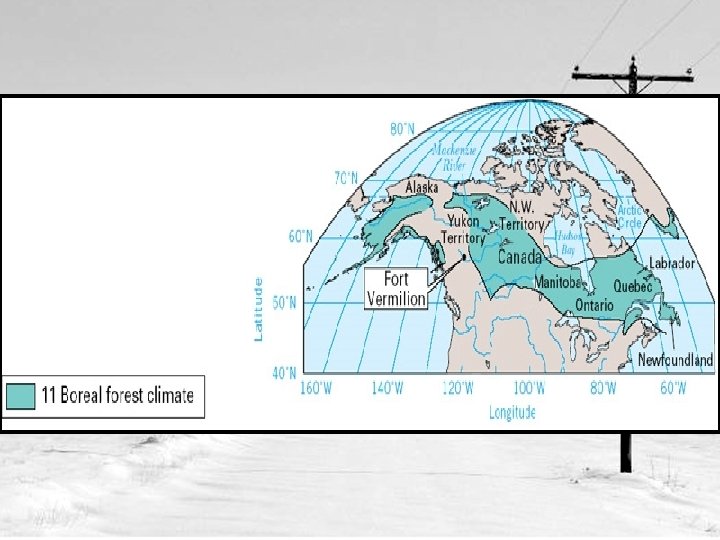
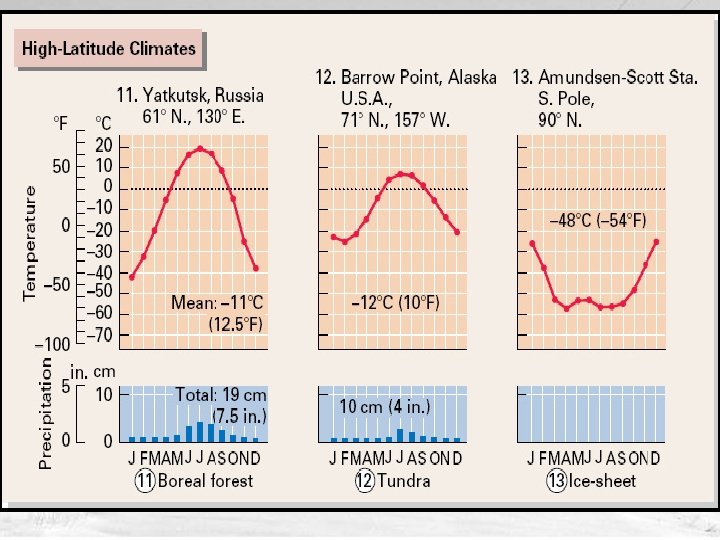
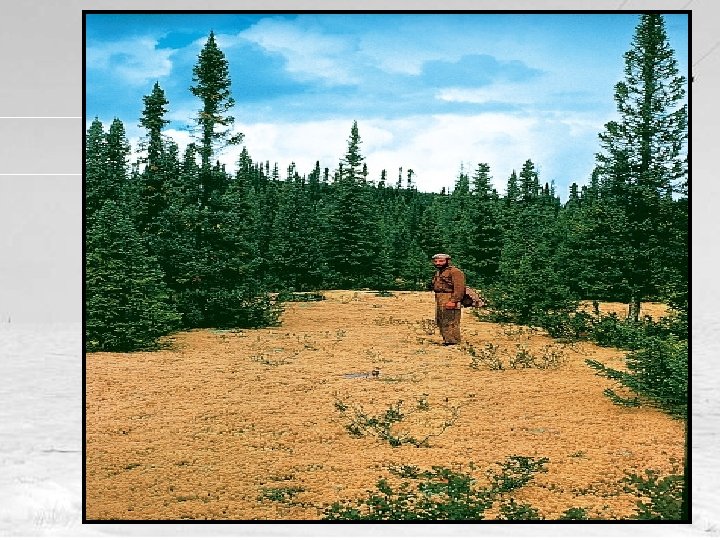
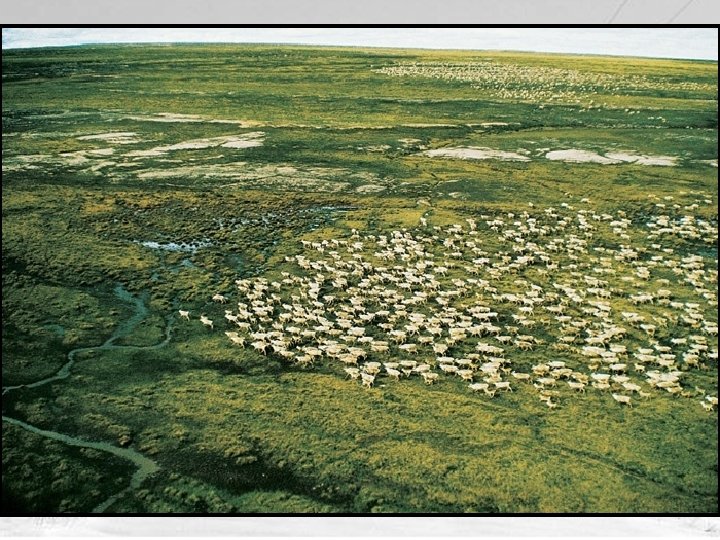
High Latitude Climates: boreal forest climate long, bitterly cold low sun seasons and short cool high sun seasons very large annual temperature range (continental location) source region for c. P air masses and invasions of c. A air masses are common low total annual precipitation with a high sun season precipitation maximum
Global Climates • • • What is a Climate? Temperature Regimes Precipitation Regimes Climate Classification Different Climates: – Low Latitude Climates – Midlatitude Climates – High Latitude Climates – Highland Climates
Highland Climates v Closely related to the climate in the surrounding lowlands v Cool to cold, usually moist climates that occupy mountains and high plateaus v Generally, higher locations experience colder and wetter climates
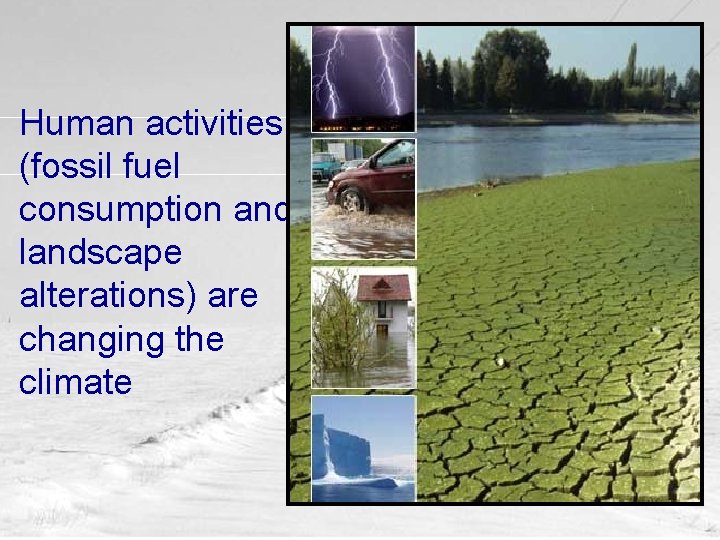
Human activities (fossil fuel consumption and landscape alterations) are changing the climate
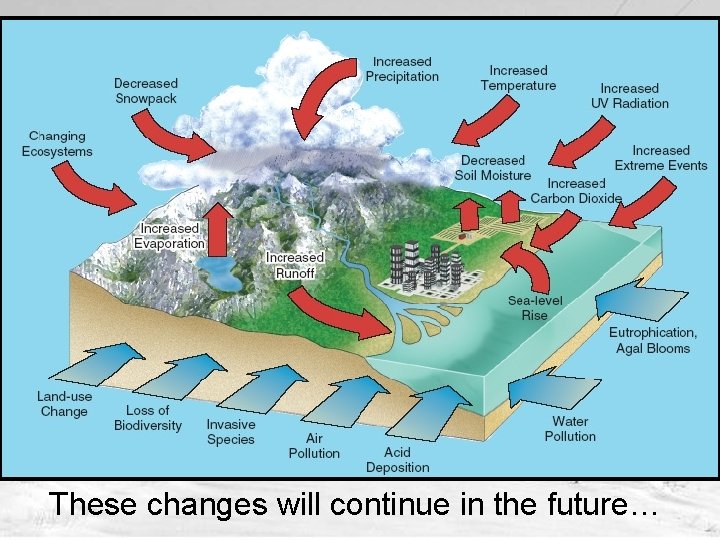
These changes will continue in the future…
- Slides: 61