
Global Circulation and Winds Stewart Cap 4 Outline
Global Circulation and Winds (Stewart Cap. 4)
Outline 1. 2. 3. 4. Atmospheric pressure Winds Global circulation patterns Ocean circulation patterns
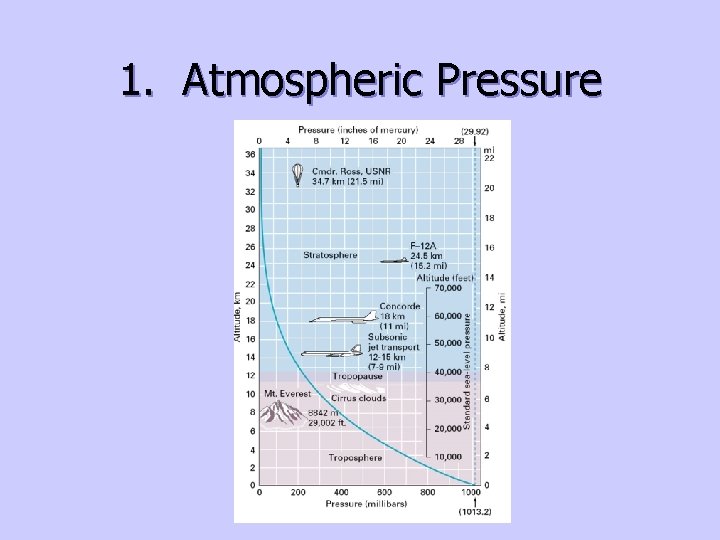
1. Atmospheric Pressure
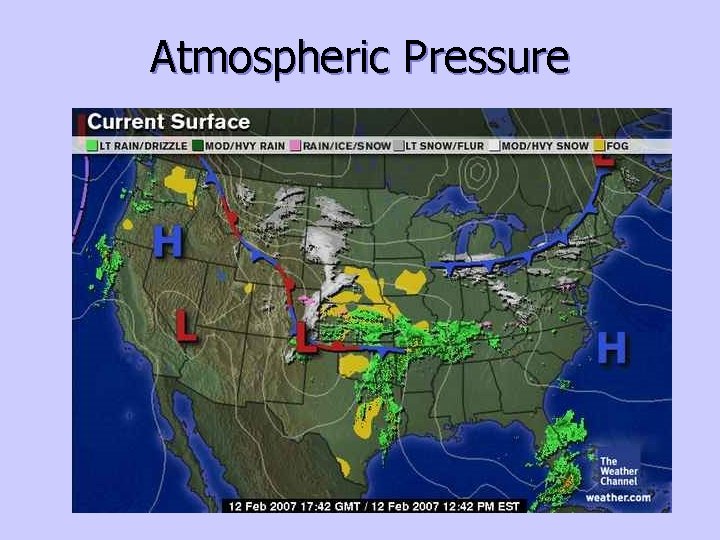
Atmospheric Pressure
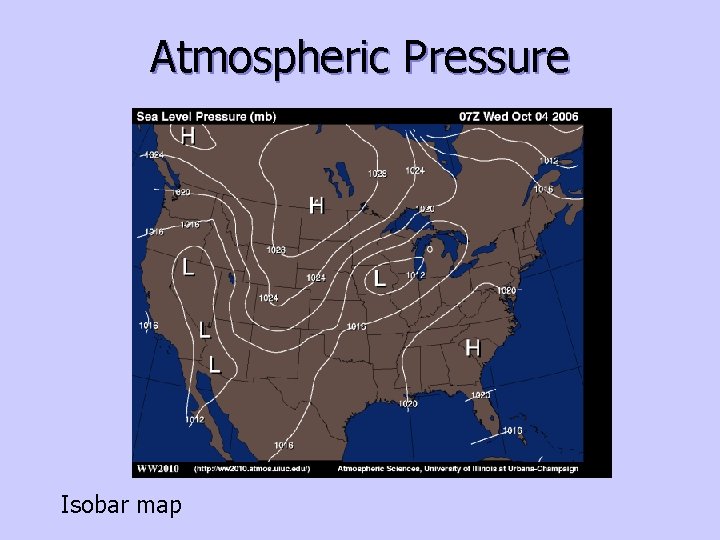
Atmospheric Pressure Isobar map
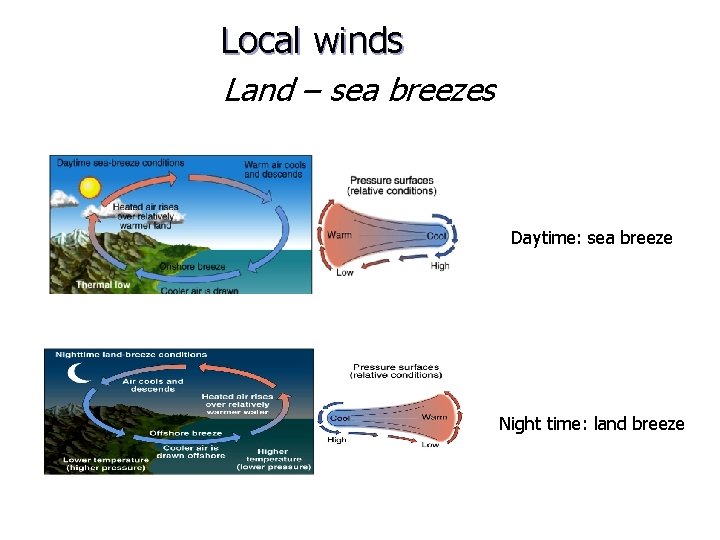
Local winds Land – sea breezes Daytime: sea breeze Night time: land breeze
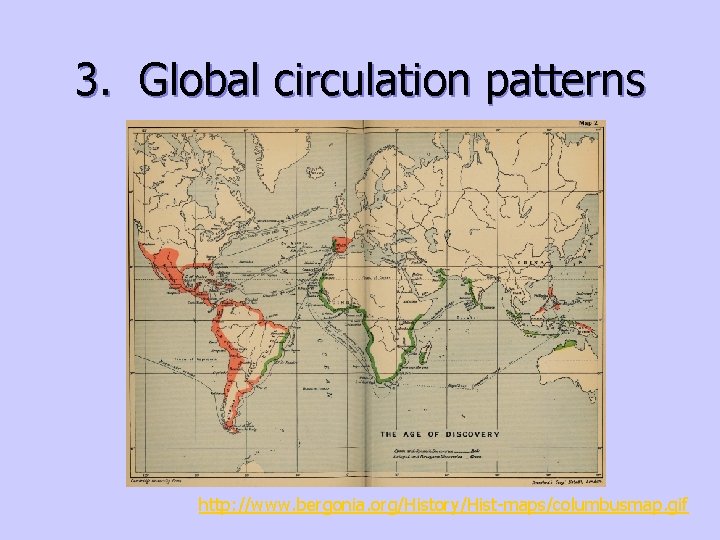
3. Global circulation patterns http: //www. bergonia. org/History/Hist-maps/columbusmap. gif
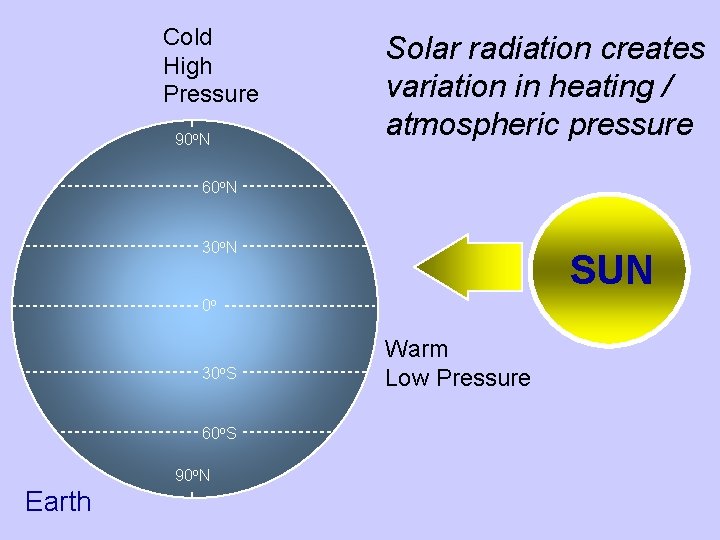
Cold High Pressure 90 o. N Solar radiation creates variation in heating / atmospheric pressure 60 o. N 30 o. N SUN 0 o 30 o. S 60 o. S 90 o. N Earth Warm Low Pressure
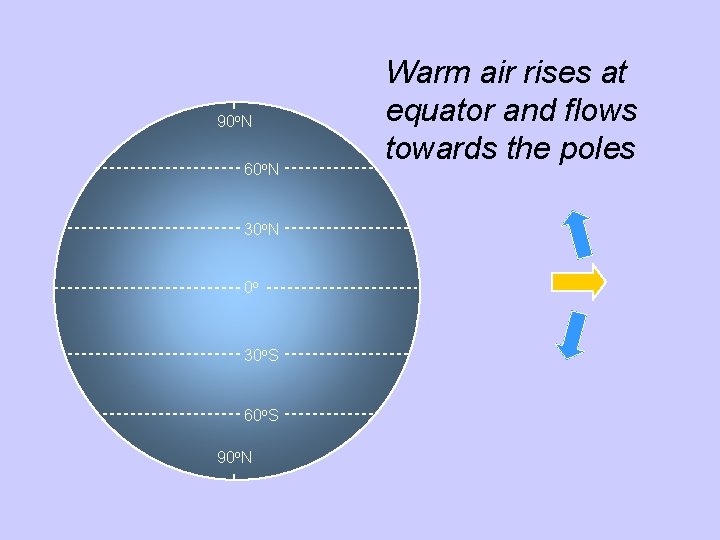
90 o. N 60 o. N 30 o. N L 0 o 30 o. S 60 o. S 90 o. N Warm air rises at equator and flows towards the poles
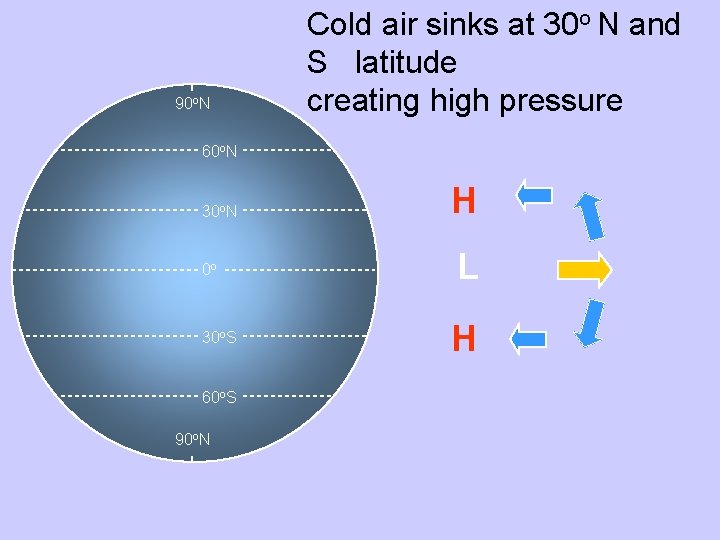
90 o. N Cold air sinks at 30 o N and S latitude creating high pressure 60 o. N 30 o. N 0 o 30 o. S 60 o. S 90 o. N H L H
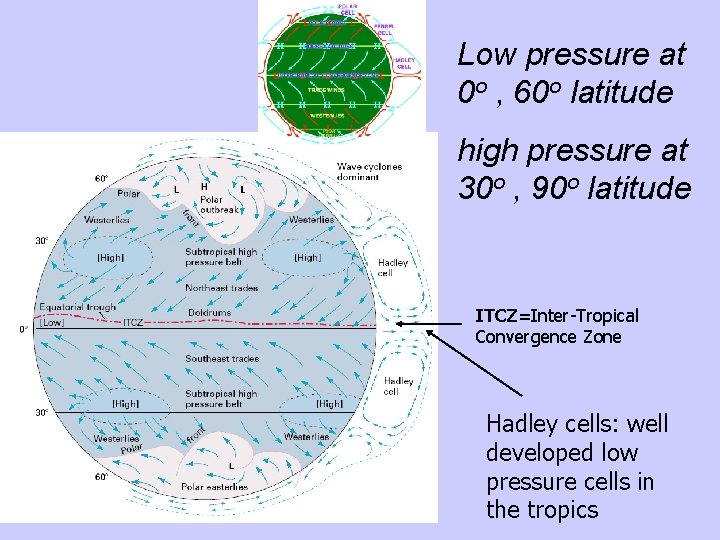
Low pressure at 0 o , 60 o latitude high pressure at 30 o , 90 o latitude ITCZ=Inter-Tropical Convergence Zone Hadley cells: well developed low pressure cells in the tropics
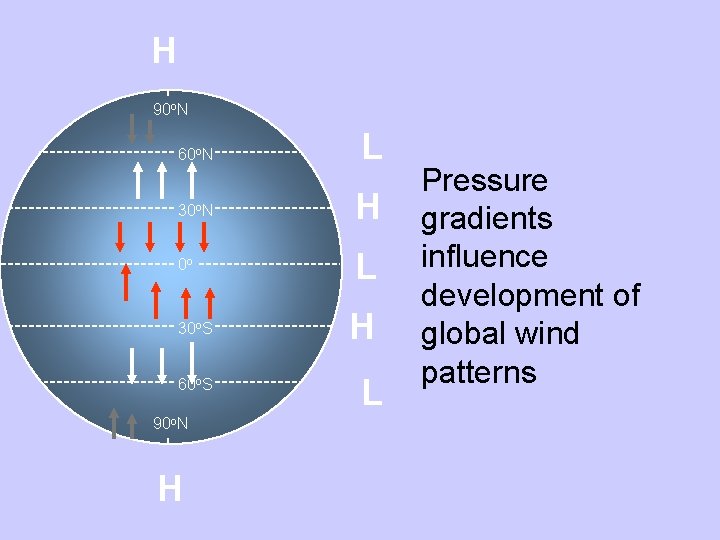
H 90 o. N 60 o. N L 30 o. N H 0 o L 30 o. S 60 o. S 90 o. N H H L Pressure gradients influence development of global wind patterns
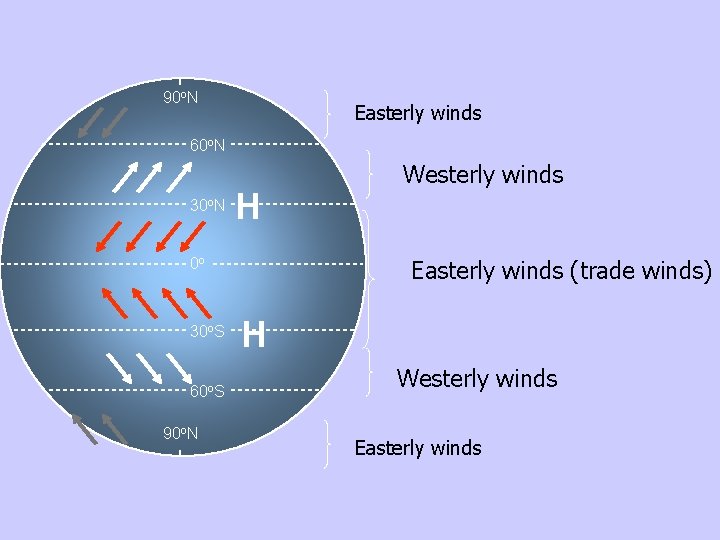
90 o. N Easterly winds 60 o. N 30 o. N 0 o 30 o. S 60 o. S 90 o. N H L Westerly winds Easterly winds (trade winds) H Westerly winds Easterly winds
4. Ocean circulation patterns
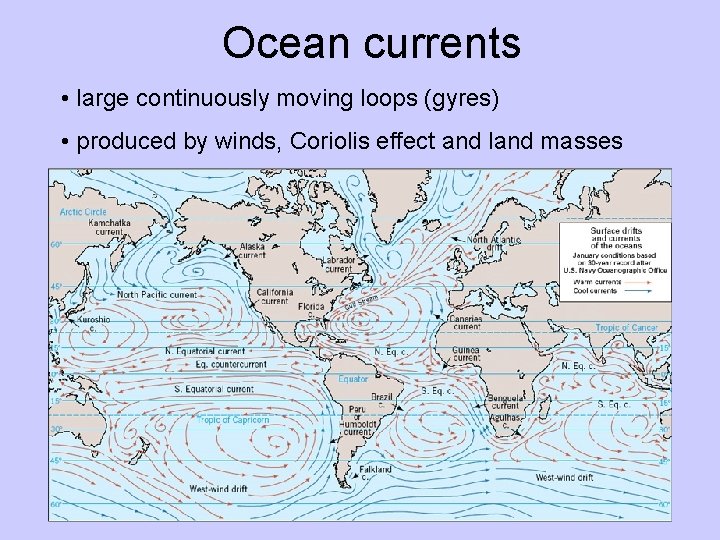
Ocean currents • large continuously moving loops (gyres) • produced by winds, Coriolis effect and land masses
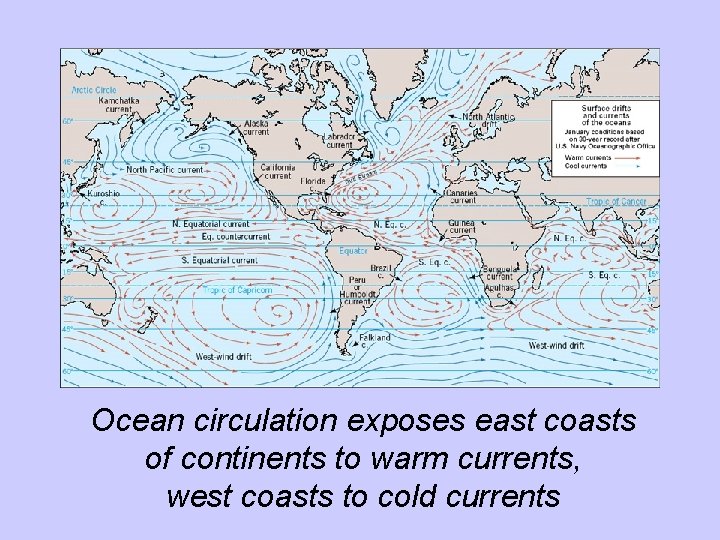
Ocean circulation exposes east coasts of continents to warm currents, west coasts to cold currents
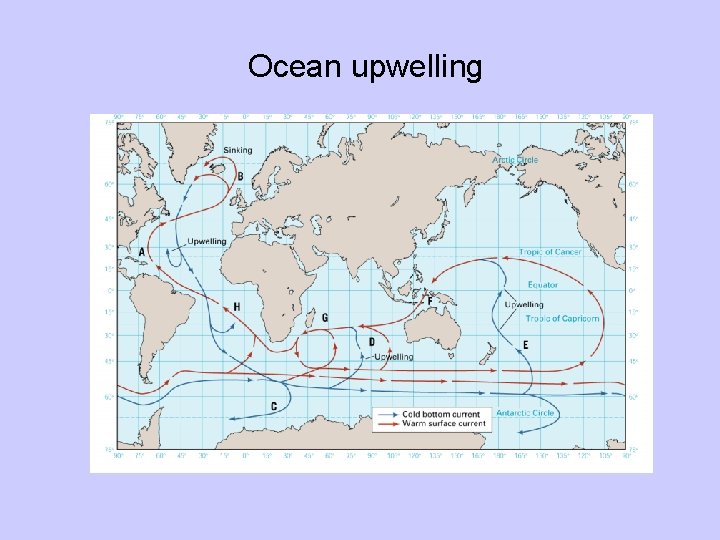
Ocean upwelling
Summary • Variation in heating causes variation in atmospheric pressure conditions • Variation in atmospheric pressure causes air to move (H L) • Local-scale wind patterns occur with variation in heating, pressure
Summary (continued) • Direction of air movement affected by pressure gradient, Coriolis effect, and friction • In No. Hemisphere L pressure systems (cyclones) circulate counterclockwise in, H pressures systems (anticyclones) circulate clockwise out
Summary (continued) • Global variation in heating produces L pressure at 0 o and 60 o, H pressure at 30 o and 90 o • H and L pressure systems drive global wind patterns (easterlies between 30 o N and 30 o S; westerlies between 30 -60 o N and S)
Summary (continued) • Ocean currents influenced by winds, Coriolis effect and land masses • Ocean circulation exposes east coasts of continents to warm currents, west coasts to cold currents
- Slides: 23