
Global and Local Arrays Topics covered Types of
Global and Local Arrays
Topics covered: § Types of seismic arrays § How arrays are used § Example global networks
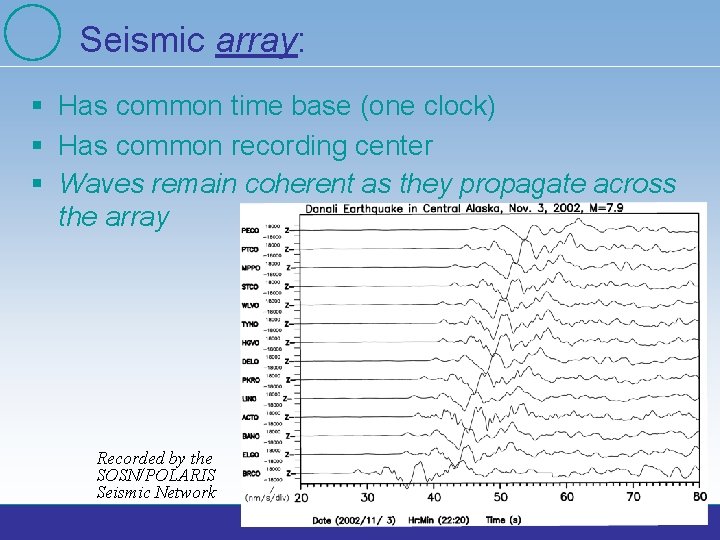
Seismic array: § Has common time base (one clock) § Has common recording center § Waves remain coherent as they propagate across the array Recorded by the SOSN/POLARIS Seismic Network
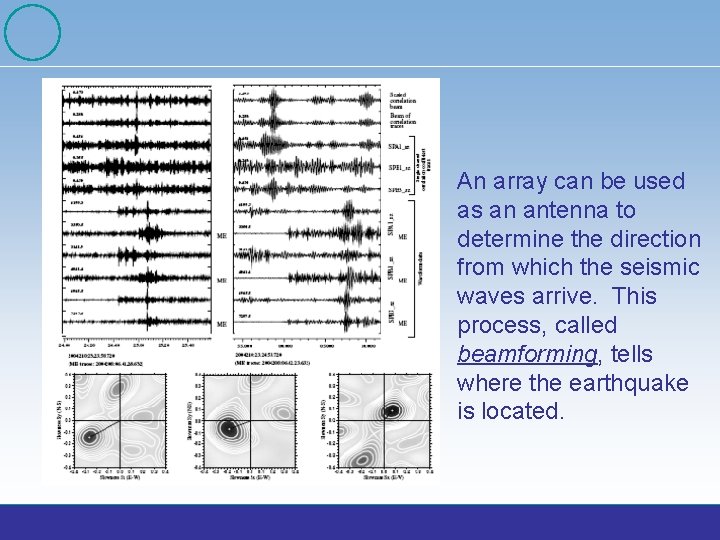
An array can be used as an antenna to determine the direction from which the seismic waves arrive. This process, called beamforming, tells where the earthquake is located.

The NORSAR Array
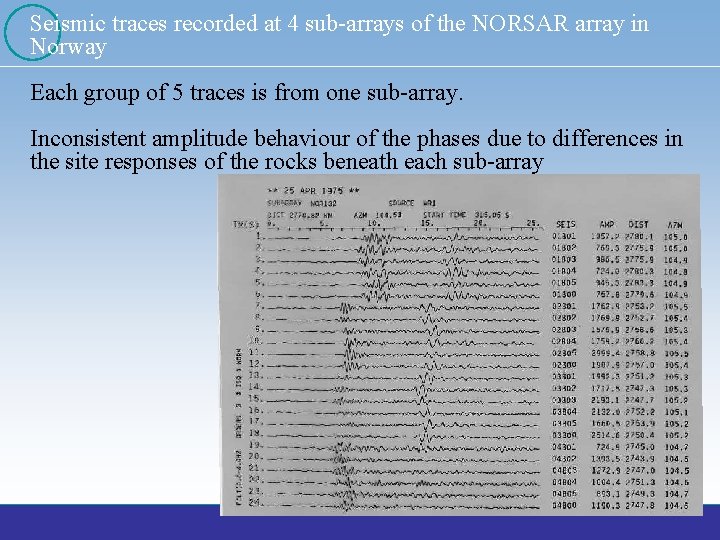
Seismic traces recorded at 4 sub-arrays of the NORSAR array in Norway Each group of 5 traces is from one sub-array. Inconsistent amplitude behaviour of the phases due to differences in the site responses of the rocks beneath each sub-array
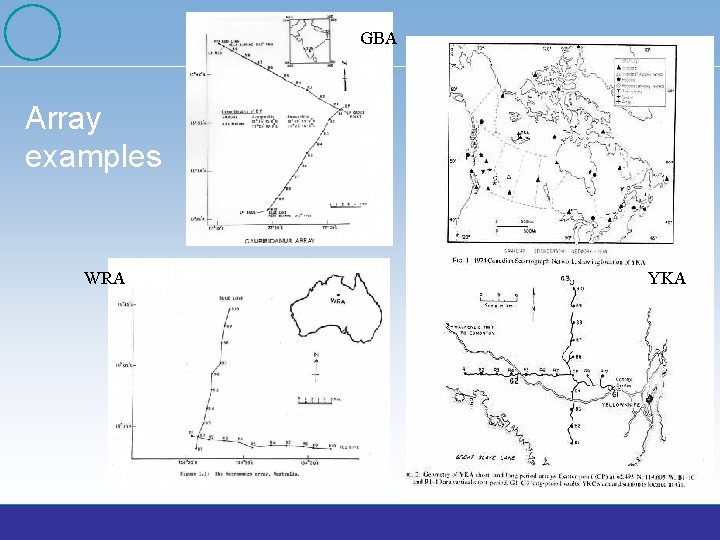
GBA Array examples WRA YKA
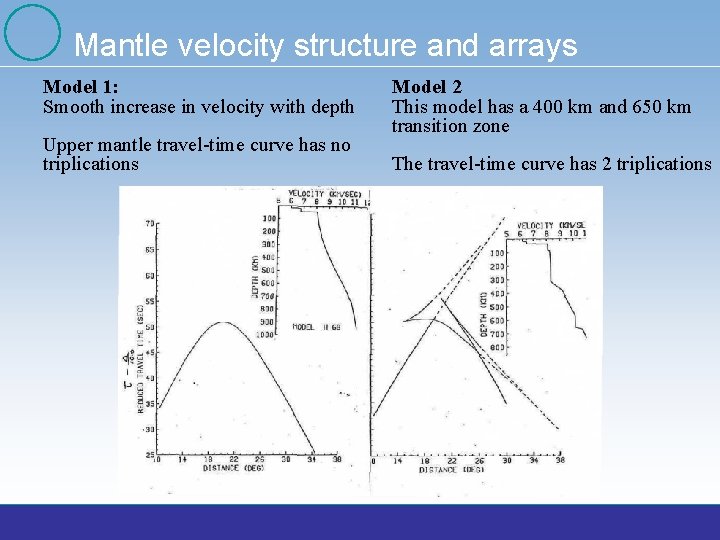
Mantle velocity structure and arrays Model 1: Smooth increase in velocity with depth Upper mantle travel-time curve has no triplications Model 2 This model has a 400 km and 650 km transition zone The travel-time curve has 2 triplications
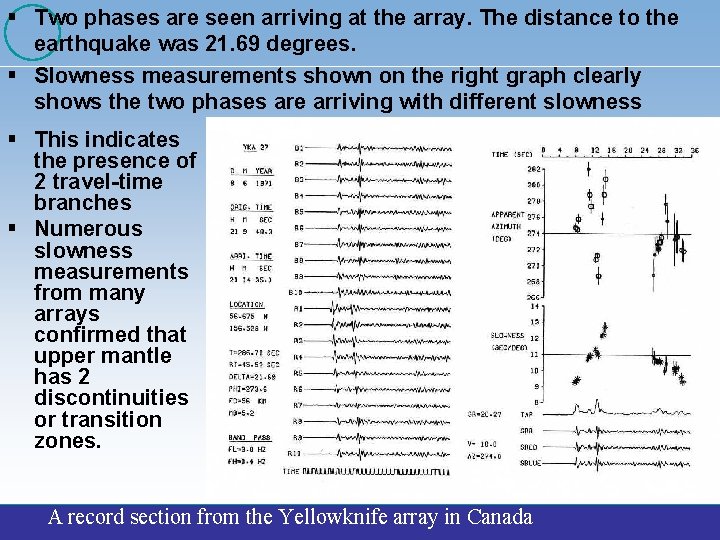
§ Two phases are seen arriving at the array. The distance to the earthquake was 21. 69 degrees. § Slowness measurements shown on the right graph clearly shows the two phases are arriving with different slowness § This indicates the presence of 2 travel-time branches § Numerous slowness measurements from many arrays confirmed that upper mantle has 2 discontinuities or transition zones. A record section from the Yellowknife array in Canada
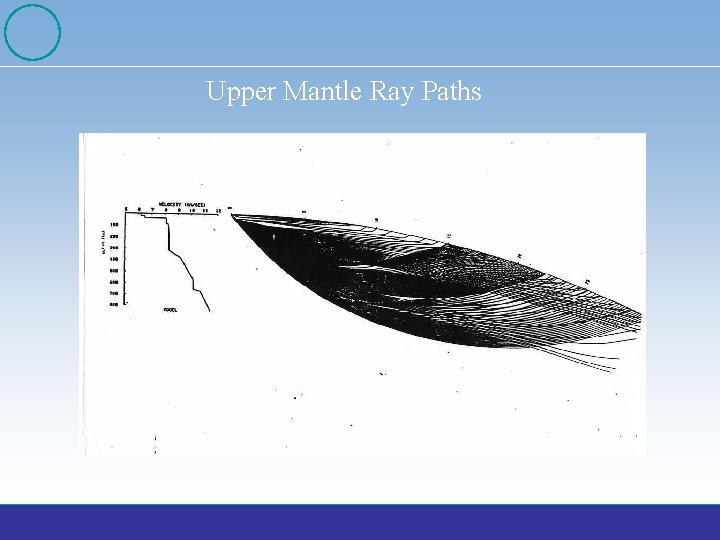
Upper Mantle Ray Paths
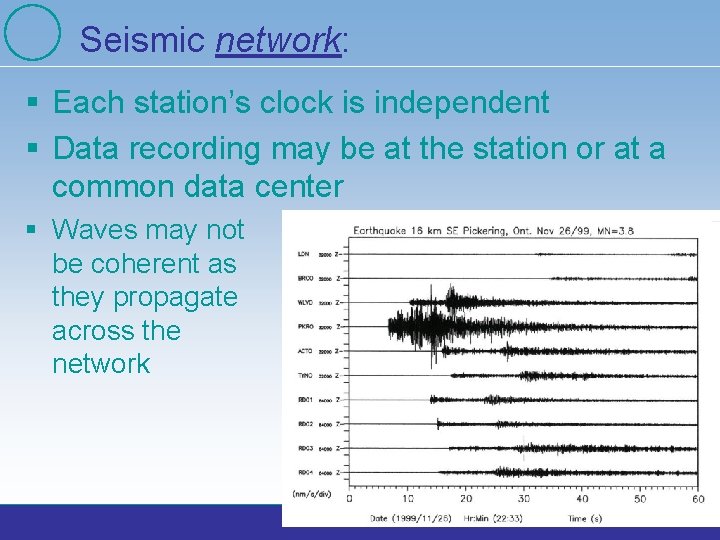
Seismic network: § Each station’s clock is independent § Data recording may be at the station or at a common data center § Waves may not be coherent as they propagate across the network
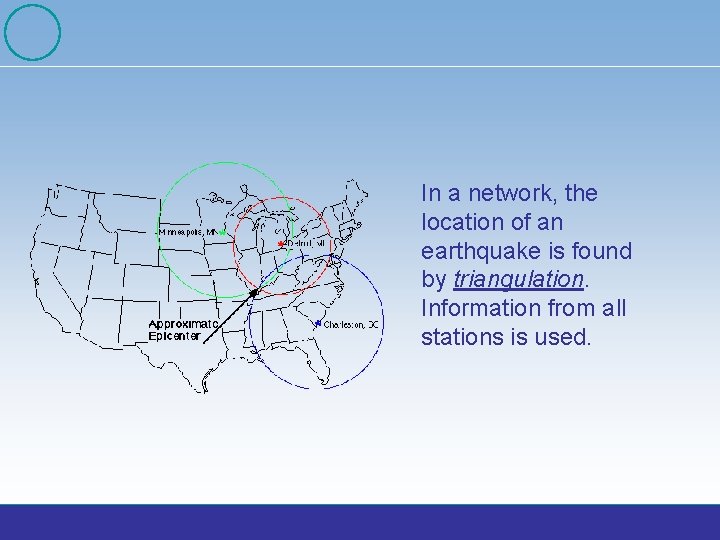
In a network, the location of an earthquake is found by triangulation. Information from all stations is used.
The Earth acts like a filter! High frequency waves attenuate (damp out) rapidly with distance. Low frequency waves diminish in amplitude more slowly with distance traveled.
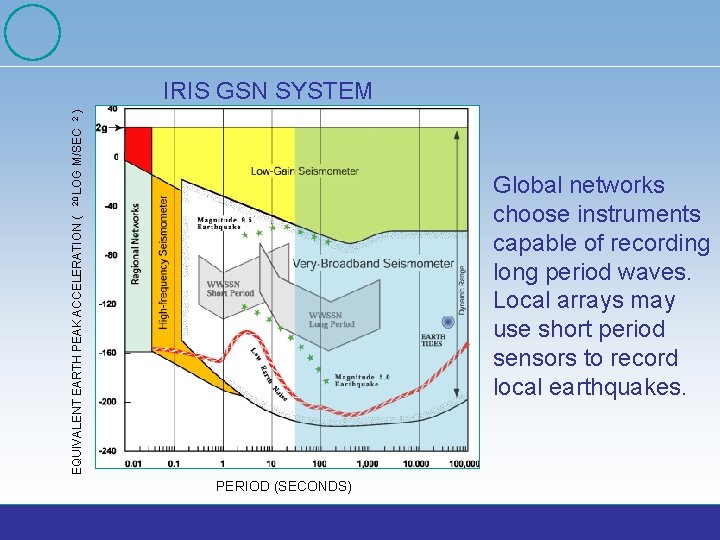
20 LOG M/SEC 2 ) IRIS GSN SYSTEM EQUIVALENT EARTH PEAK ACCELERATION ( Global networks choose instruments capable of recording long period waves. Local arrays may use short period sensors to record local earthquakes. PERIOD (SECONDS)
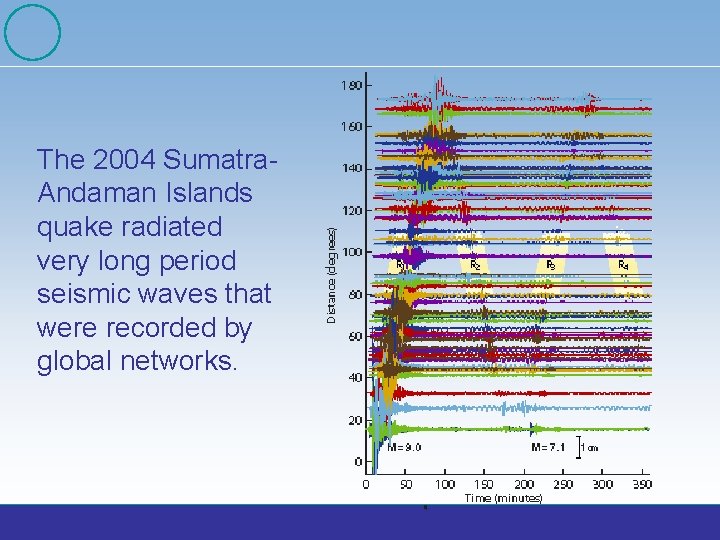
The 2004 Sumatra. Andaman Islands quake radiated very long period seismic waves that were recorded by global networks.
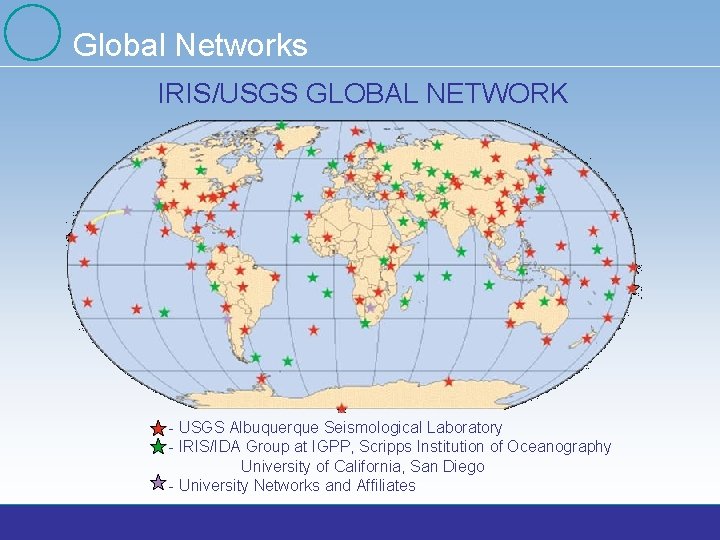
Global Networks IRIS/USGS GLOBAL NETWORK - USGS Albuquerque Seismological Laboratory - IRIS/IDA Group at IGPP, Scripps Institution of Oceanography University of California, San Diego - University Networks and Affiliates
GSN Goals: § develop high quality seismic data acquisition equipment § deploy systems globally at 2000 km spacing § make data openly available to all who request a copy
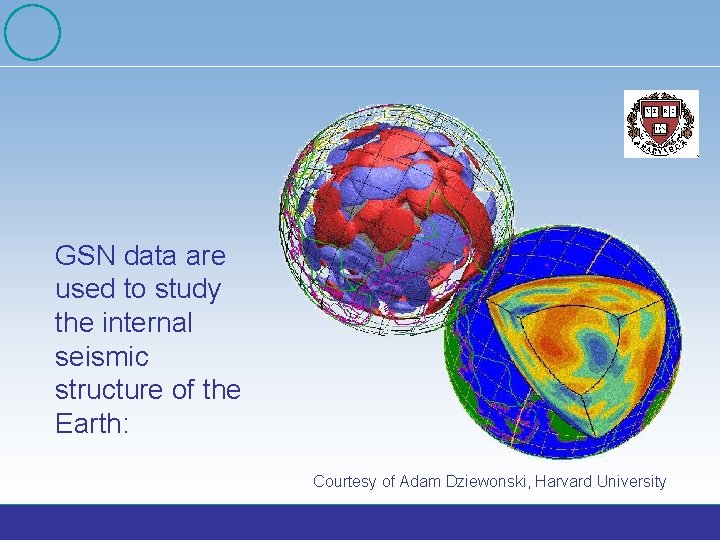
GSN data are used to study the internal seismic structure of the Earth: Courtesy of Adam Dziewonski, Harvard University
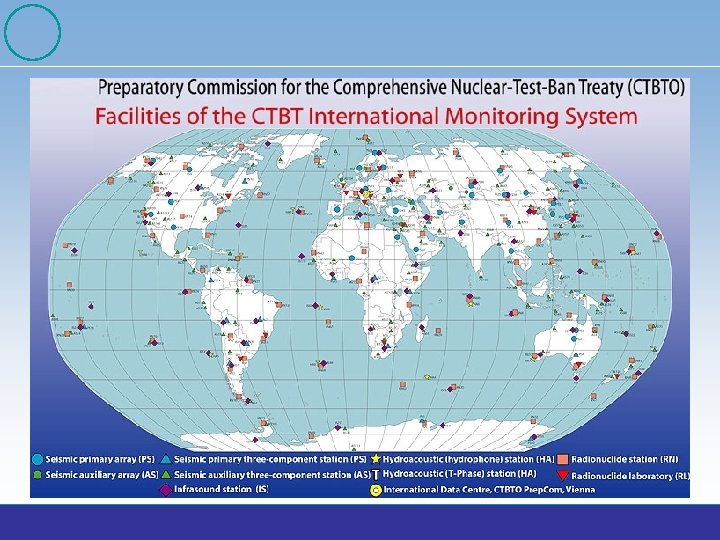
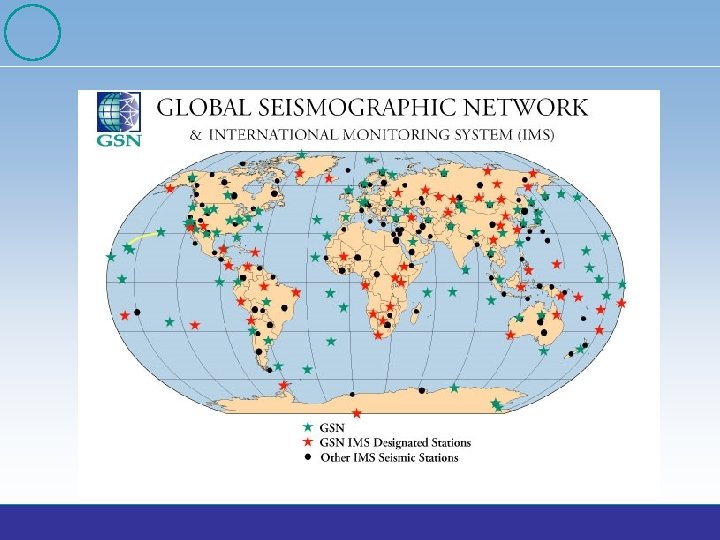
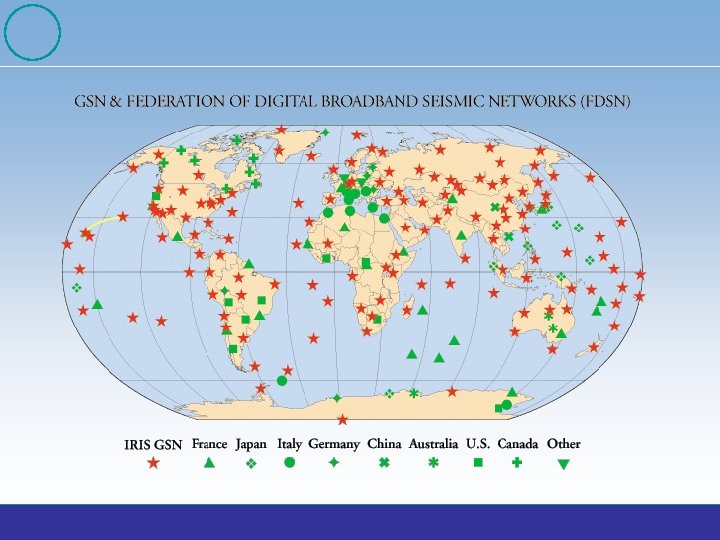
Regional networks The future Earth coverage will depend increasingly on regional and national networks. These are supported for surveillance and alert, § often have more stable budget and recognition § are less interested in technical developments § require real-time data availability and processing § are less strict about VBB standards § participate less in FDSN activities § rarely have science under their mandate Extreme challenge to organize an efficient data exchange National priorities and requirements, restrictions to data access
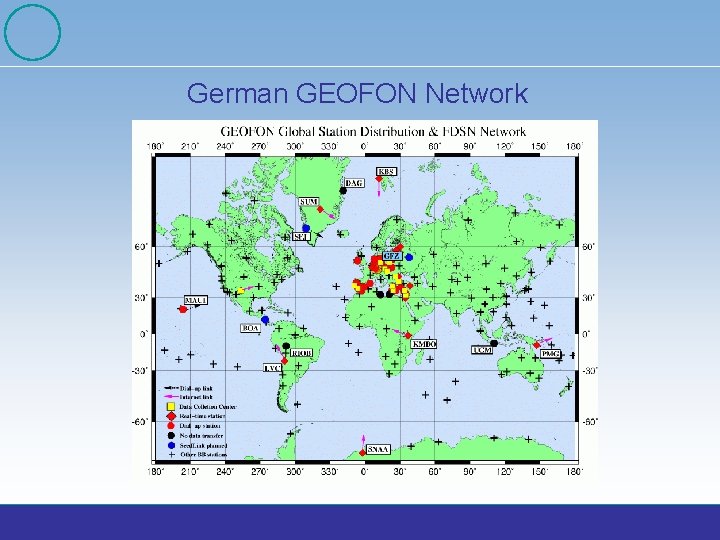
German GEOFON Network
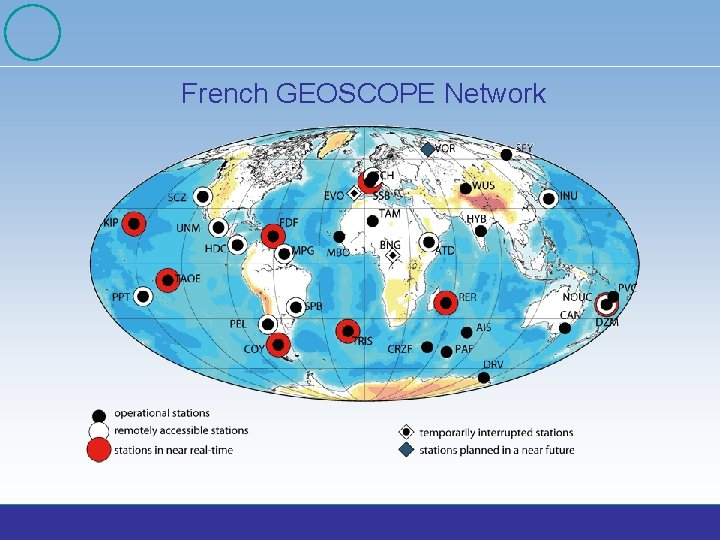
French GEOSCOPE Network
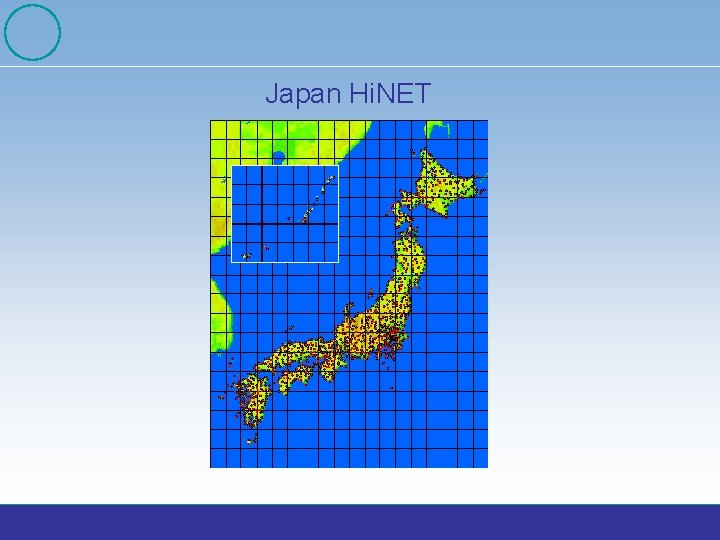
Japan Hi. NET
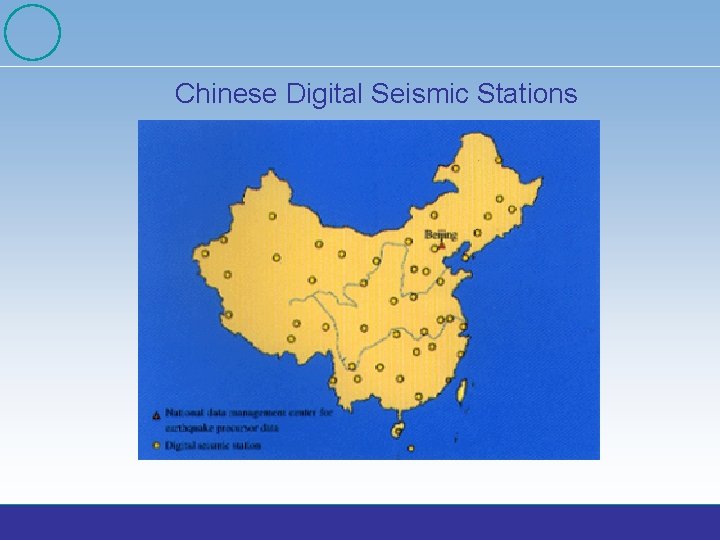
Chinese Digital Seismic Stations
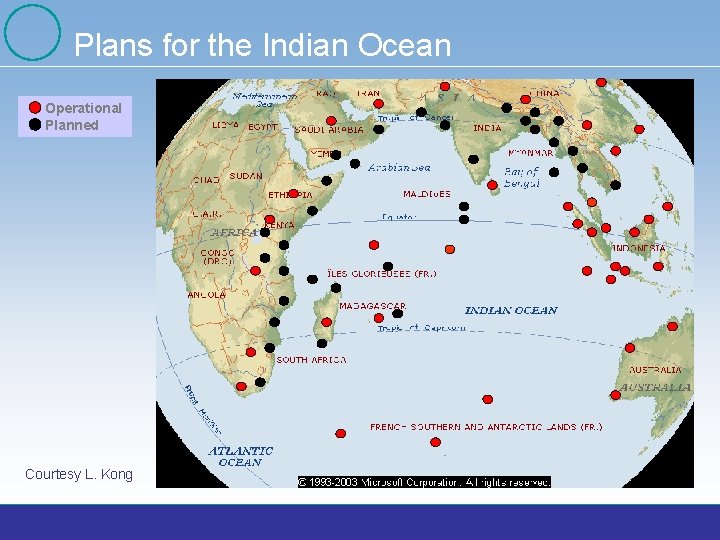
Plans for the Indian Ocean Operational Planned Courtesy L. Kong
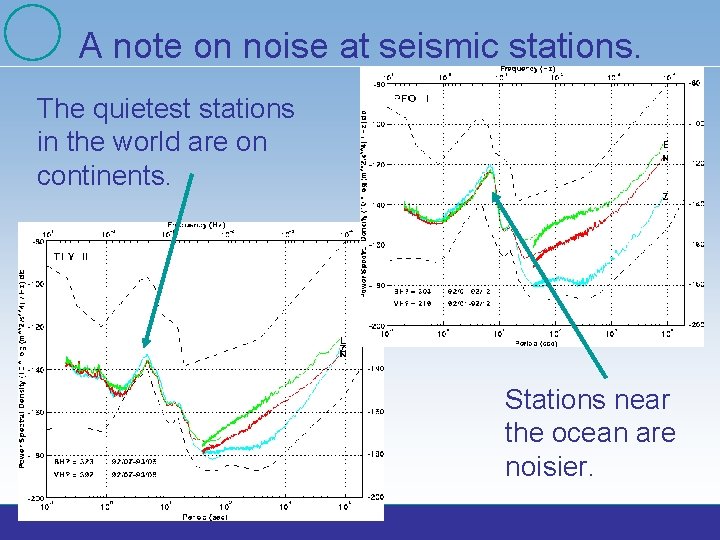
A note on noise at seismic stations. The quietest stations in the world are on continents. Stations near the ocean are noisier.
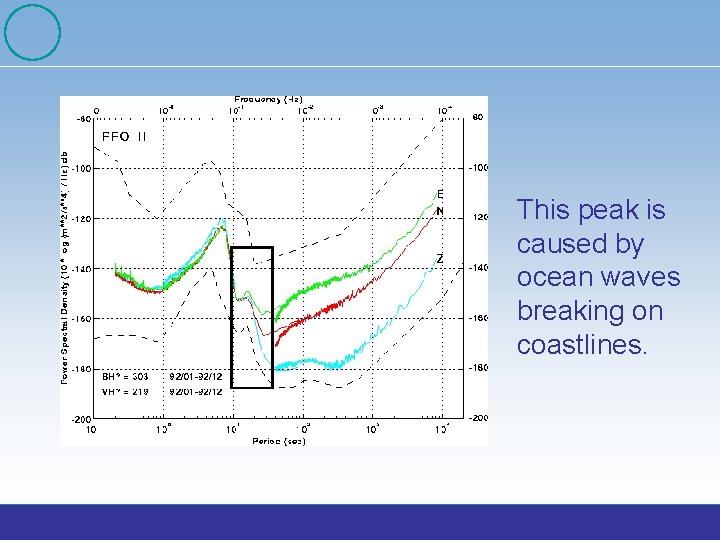
This peak is caused by ocean waves breaking on coastlines.
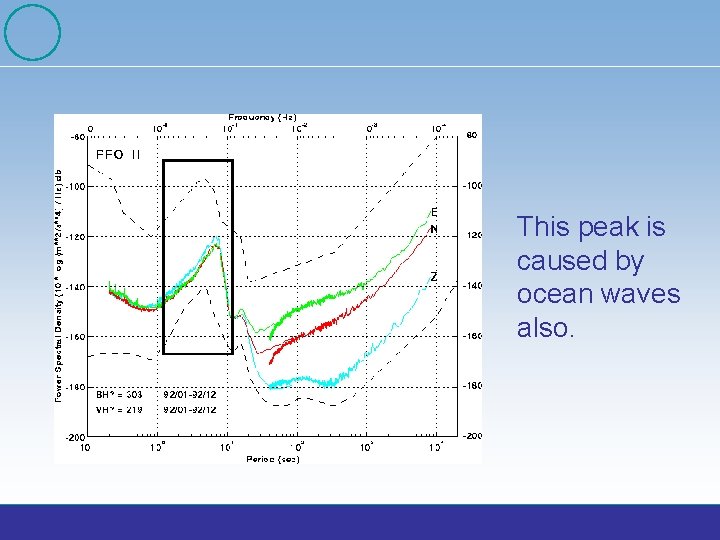
This peak is caused by ocean waves also.
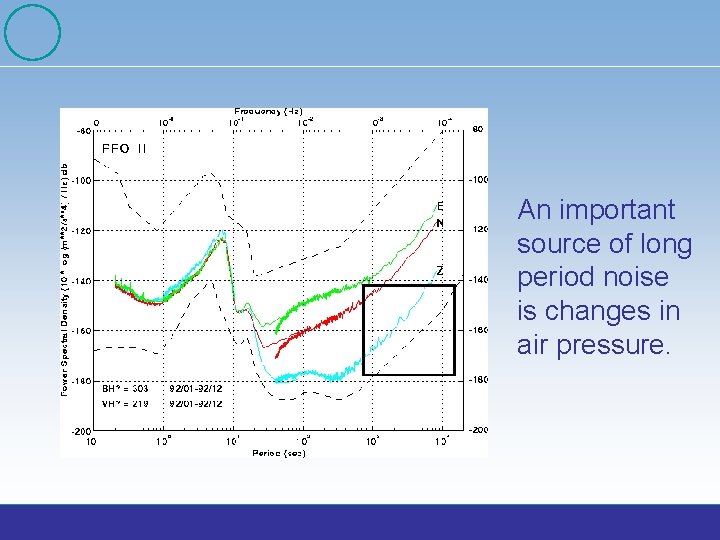
An important source of long period noise is changes in air pressure.
If possible, locate seismic stations away from the coast where noise conditions are better (noise is lower).
- Slides: 32