
Glitchology Lila Warszawski Andrew Melatos Penn State June

- Slides: 34
Glitchology Lila Warszawski & Andrew Melatos Penn. State, June 2009.
The agenda • Neutron star basics • Pulsar glitches, glitch statistics • Superfluids and vortices • Glitch models • Gravitational waves from glitches
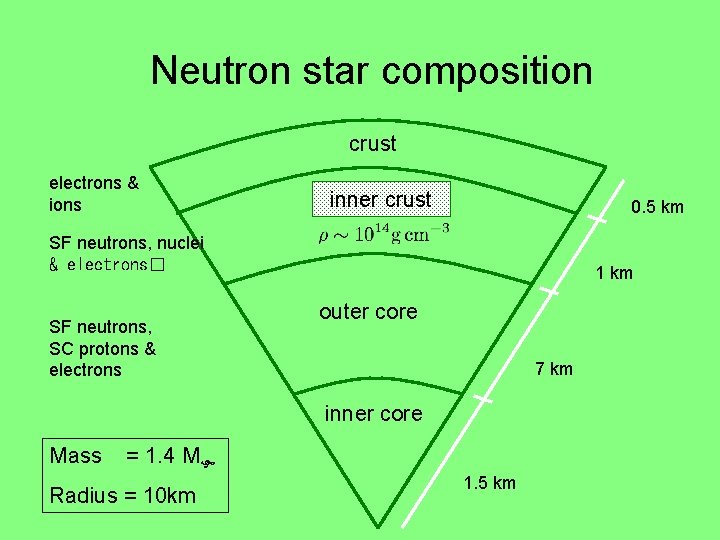
Neutron star composition crust electrons & ions inner crust 0. 5 km SF neutrons, nuclei & electrons� SF neutrons, SC protons & electrons 1 km outer core 7 km inner core Mass = 1. 4 M Radius = 10 km 1. 5 km
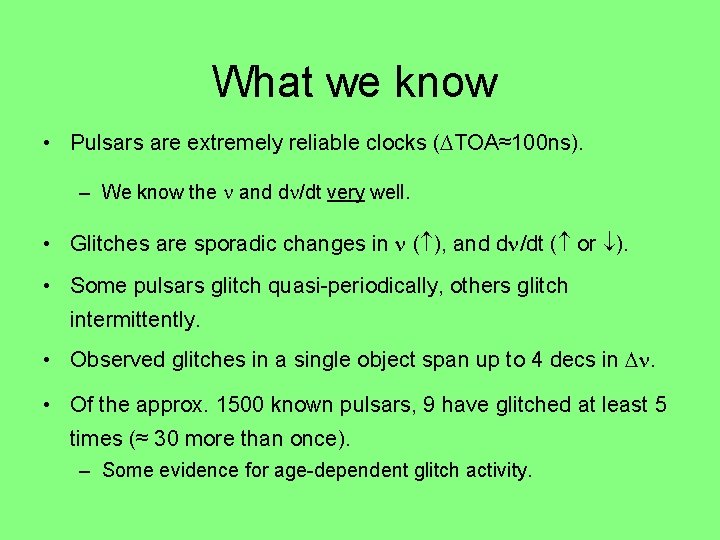
What we know • Pulsars are extremely reliable clocks (∆TOA≈100 ns). – We know the and d /dt very well. • Glitches are sporadic changes in ( ), and d /dt ( or ). • Some pulsars glitch quasi-periodically, others glitch intermittently. • Observed glitches in a single object span up to 4 decs in . • Of the approx. 1500 known pulsars, 9 have glitched at least 5 times (≈ 30 more than once). – Some evidence for age-dependent glitch activity.
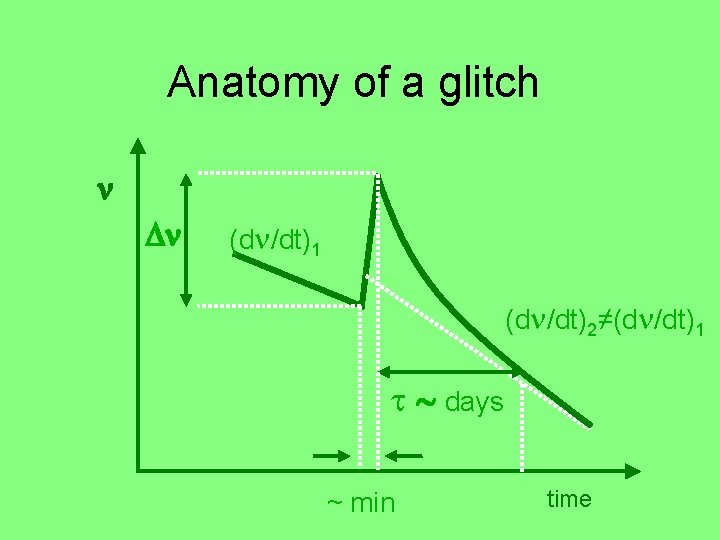
Anatomy of a glitch n Dn (d /dt)1 (d /dt)2≠(d /dt)1 t ~ days ~ min time
Timing residual How do we see a glitch? Arrival time (days) Janssen & Stappers, 2006, A&A, 457, 611
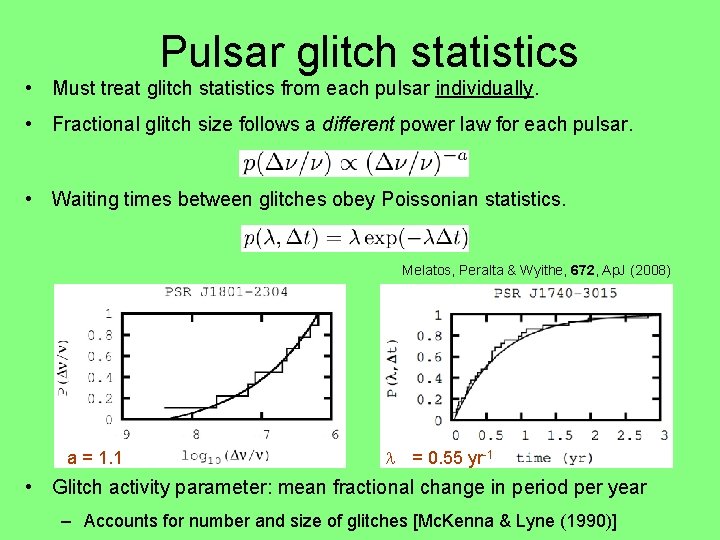
Pulsar glitch statistics • Must treat glitch statistics from each pulsar individually. • Fractional glitch size follows a different power law for each pulsar. • Waiting times between glitches obey Poissonian statistics. Melatos, Peralta & Wyithe, 672, Ap. J (2008) a = 1. 1 l = 0. 55 yr-1 • Glitch activity parameter: mean fractional change in period per year – Accounts for number and size of glitches [Mc. Kenna & Lyne (1990)]
A superfluid interior? • Post-glitch relaxation slower than for normal fluid: – Coupling between interior and crust is weak. • Nuclear density, temperature below Fermi temperature. • Spin-up during glitch is very fast (<100 s). – NOT electomagnetic torque Interior fluid is an inviscid (frictionless) superfluid.
What can we learn? Nuclear physics laboratory not possible on Earth • QCD equation of state (mass vs radius) • • Compressibility: soft or hard? State of superfluidity Viscosity: quantum lower bound? Lattice structure: – Type, depth & concentration of defects Of interest to many diverse scientific communities!
Glitch mechanisms • Starquakes • Catastrophic vortex unpinning • Fluid instabilities
Starquakes • Deposit large amount of energy into NS crust – Changed SF/crust coupling sudden vortex unpinning Link & Epstein (1996) • Equilibrium shape of star departs from sphericity until crust cracks – Cannot explain all glitches – Works well for 23 glitches in PSR J 0537 -6910 predict glitches within few days Middleditch et al. (2006)
Vortex unpinning • Spindown Magnus force on pinned vortices – Stress released in bursts as vortices unpin Anderson & Itoh (1975) • Post-glitch relaxation due to vortex creep Alpar, Anderson, Pines, Shaham (1984 -) • Vortex avalanches – Analogous to superconducting flux vortices Warszawski & Melatos (2008) • Vortex motion in the presence of pinning Link (2009)
Fluid instability • Two-stream intsability analagous to Kelvin-Helmholtz – Activated when relative flow reaches critical value Andersson, Comer & Prix (2001) • R-mode instability as trigger for vortex unpinning – Sets in when rotational lag reaches critical levels Glampedakis & Andersson (2009)
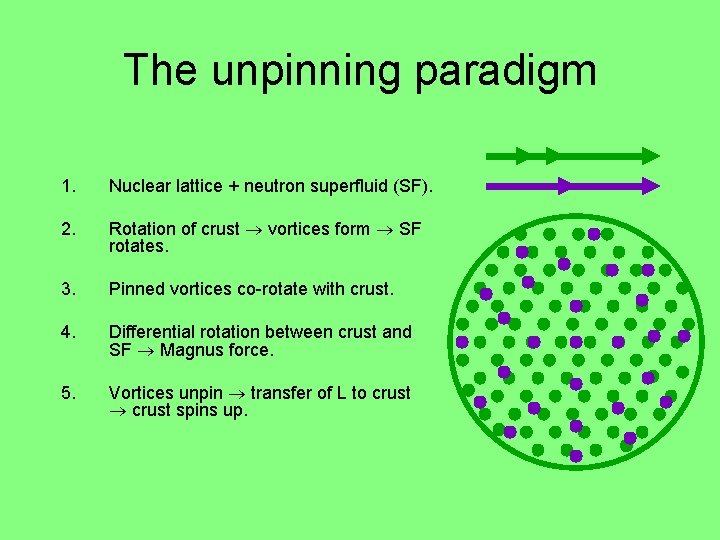
The unpinning paradigm 1. Nuclear lattice + neutron superfluid (SF). 2. Rotation of crust vortices form SF rotates. 3. Pinned vortices co-rotate with crust. 4. Differential rotation between crust and SF Magnus force. 5. Vortices unpin transfer of L to crust spins up.
Avalanche model Aim: Using simple ideas about vortex interactions and Self-organized criticality, reproduce the observed statistics of pulsar glitches.
The rules of the avalanche game
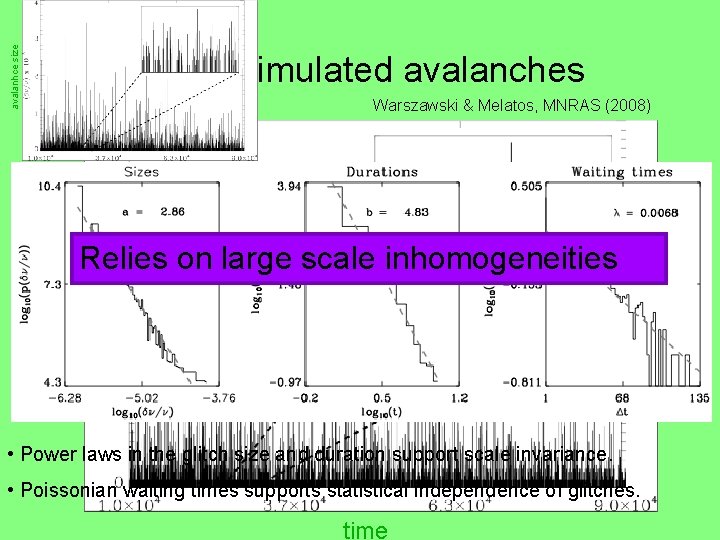
avalanhce size Some simulated avalanches avalanhce size Warszawski & Melatos, MNRAS (2008) Relies on large scale inhomogeneities • Power laws in the glitch size and duration support scale invariance. • Poissonian waiting times supports statistical independence of glitches. time
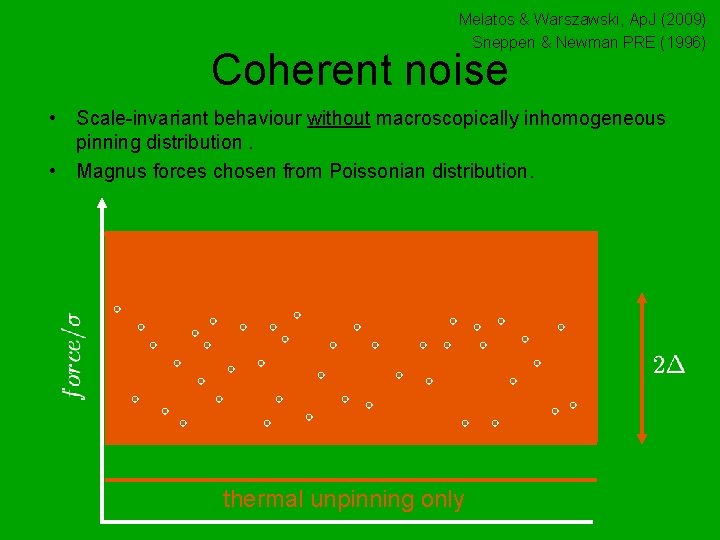
Melatos & Warszawski, Ap. J (2009) Sneppen & Newman PRE (1996) Coherent noise • Scale-invariant behaviour without macroscopically inhomogeneous pinning distribution. • Magnus forces chosen from Poissonian distribution. thermal unpinning only
Computational output thermal unpinning only 2 power law F 0 all unpin
Model fits - Poissonian • F 0 gives best fit in most cases. • Broad pinning distribution agrees with theory: 2 Me. V 1 Me. V • GW detection will make more precise
Gravitational waves from pulsar glitches
Recent work • Undamped quasiradial fluctuations – Glitch transfers energy to crust radiated as GWs. – Depends on glitch size AND change in – Crab pulsar h 10 -26 Sedrakian et al. (2003) • Glitches excite pulsation modes in multi-component core fluid – Acoustic, gravity and Rosby waves Rezania & Jahan-Miri (2000), Andersson & Comer (2001)
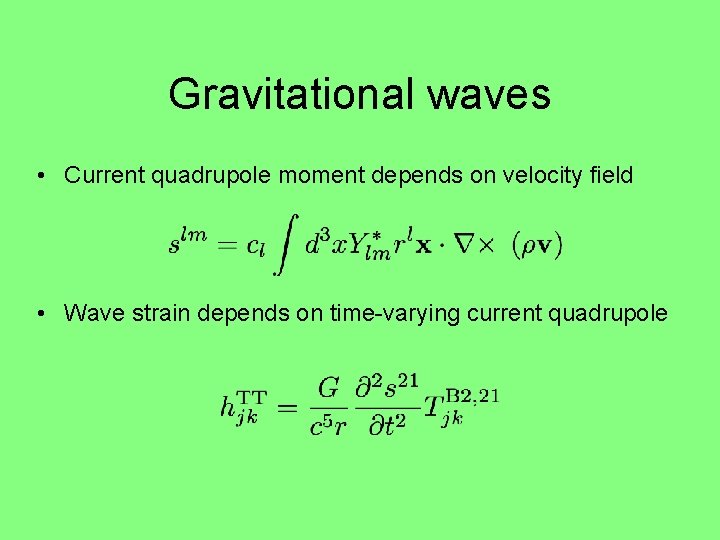
GWs three ways @ • Strongest signal from time-varying current quadrupole moment (s) • Burst signal: – Vortex rearrangement changing velocity field • Post-glitch ringing (relaxation): – Viscous component of interior fluid adjusts to spin-up • Stochastic signal: – Turbulence (eddies) [Melatos & Peralta (2009)]
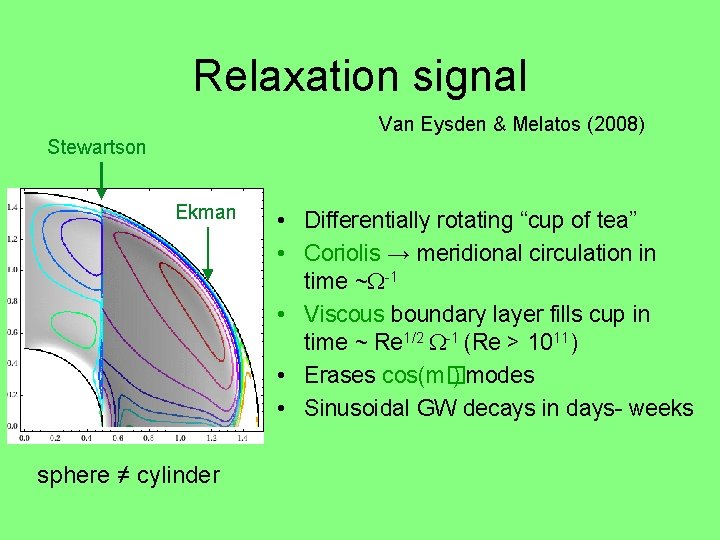
Relaxation signal Van Eysden & Melatos (2008) Stewartson Ekman sphere ≠ cylinder • Differentially rotating “cup of tea” • Coriolis → meridional circulation in time ~ -1 • Viscous boundary layer fills cup in time ~ Re 1/2 -1 (Re > 1011) • Erases cos(m� ) modes • Sinusoidal GW decays in days- weeks
DECAY TIME RATIO AND 2 INTERSECT van Eysden & Melatos (2008) • Compressibility K, viscosity N set Ekman layer thickness → wave strain and decay time • Nuclear equation of state! • Polarization mixture → source inclination • Wave strain ~10 -25: at edge of Advanced LIGO AMPLITUDE RATIO AND 2
Turbulent signal Re = 3 x 10² Re = 3 x 10⁴ HVBK two-fluid • Re ~1010 → Kolmogorov turbulence • • T 0 i k-5/3, i. e. KE in large eddies GW ≈ non-axisymmetric modes • • BUT, GW ≈ “noise” • • Strain set by large eddies, decoherence Time set by large and small eddies • Too weak for Advanced LIGO (h < 10 -31) … … but GW spin down exceeds radio pulsar observations unless shear / < 0. 01 small eddies faster Peralta et al. (2005), (2006)
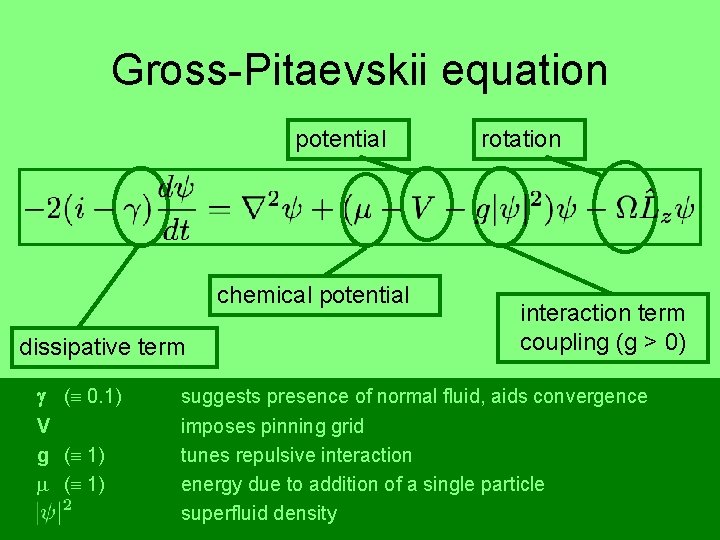
Gross-Pitaevskii equation potential chemical potential dissipative term rotation interaction term coupling (g > 0) ( 0. 1) suggests presence of normal fluid, aids convergence V g ( 1) m ( 1) imposes pinning grid tunes repulsive interaction energy due to addition of a single particle superfluid density
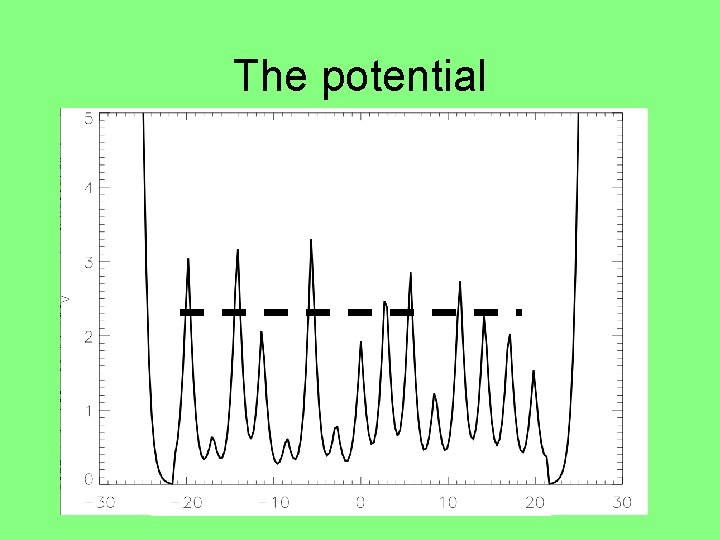
The potential
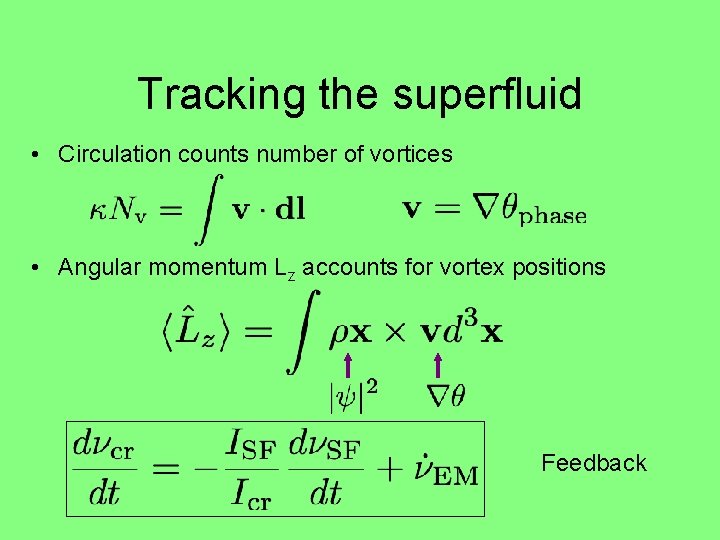
Tracking the superfluid • Circulation counts number of vortices • Angular momentum Lz accounts for vortex positions Feedback
Gravitational waves • Current quadrupole moment depends on velocity field • Wave strain depends on time-varying current quadrupole
Simulations with GWs
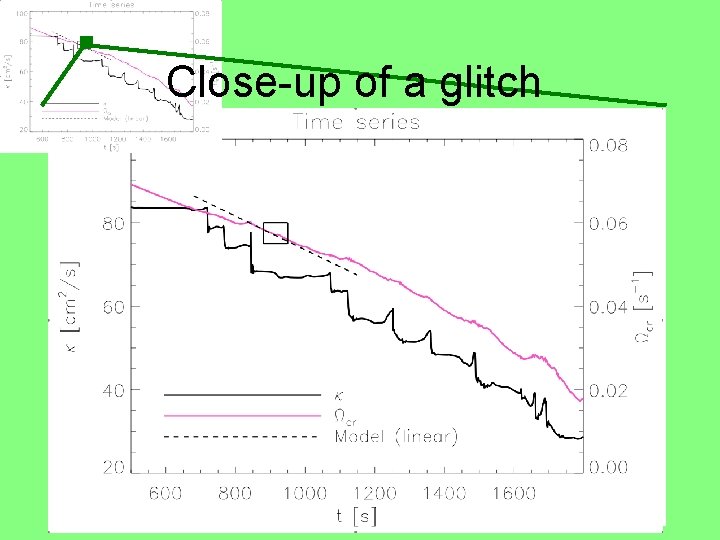
Close-up of a glitch
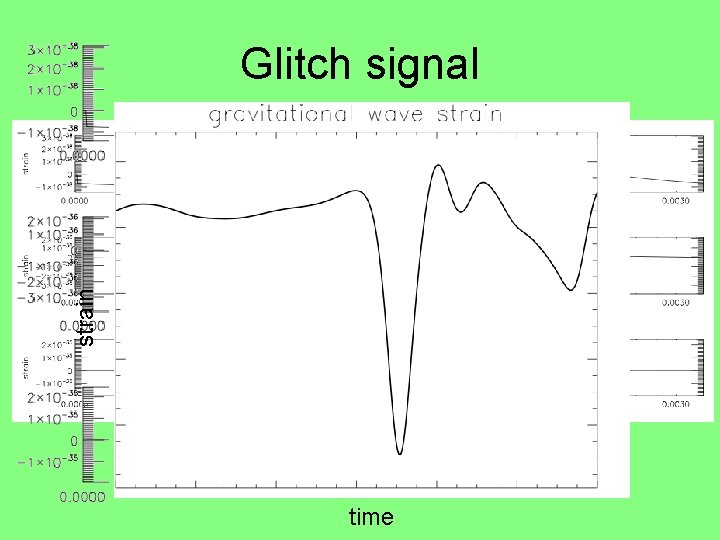
strain Glitch signal time
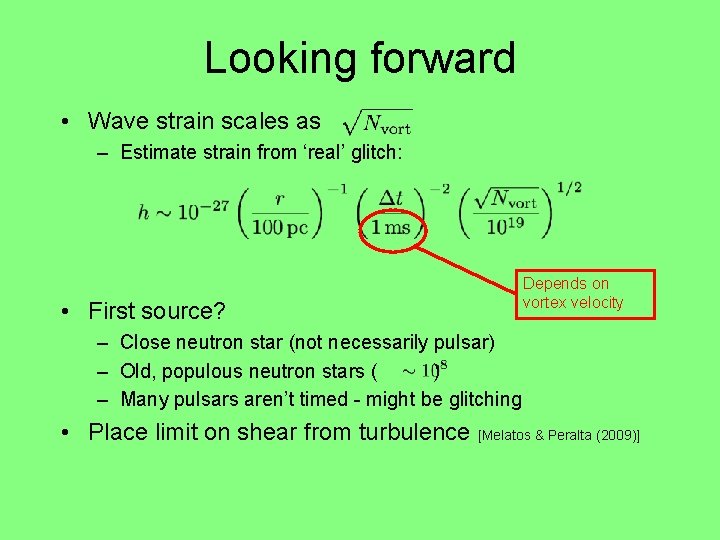
Looking forward • Wave strain scales as – Estimate strain from ‘real’ glitch: • First source? Depends on vortex velocity – Close neutron star (not necessarily pulsar) – Old, populous neutron stars ( ) – Many pulsars aren’t timed - might be glitching • Place limit on shear from turbulence [Melatos & Peralta (2009)]