
GLIDER DESIGN PROJECT The Task To design build
GLIDER DESIGN PROJECT
The Task • To design, build and test a scale-model glider • Designs will be judged on four criteria: – Distance travelled, D – Time of flight, T – The product D×T – The quantity D×T÷M where M is the glider mass
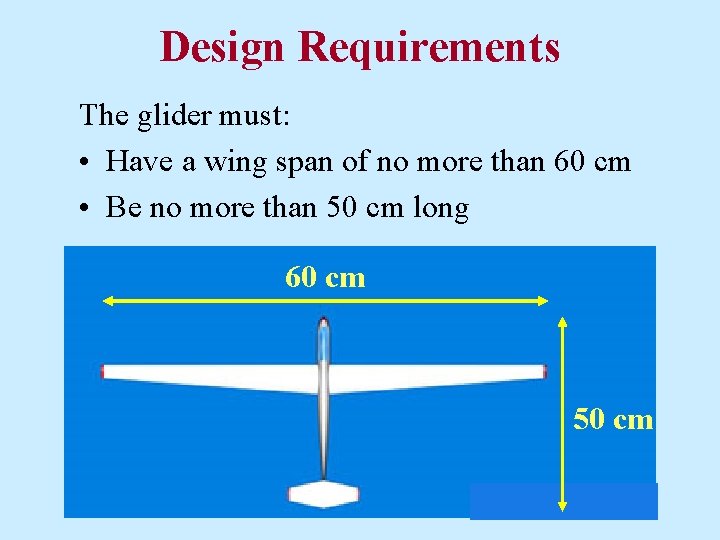
Design Requirements The glider must: • Have a wing span of no more than 60 cm • Be no more than 50 cm long 60 cm 50 cm
Materials • • Thick foam board – 2 sheets ~33× 8 cm Thin foam board – 2 sheets ~31× 19. 5 cm A 4 paper – 4 sheets Drinking straws – 8 Tissue paper – 1 sheet Masking tape Adhesive
Equipment • • • Scissors Stanley knife Steel ruler Sand paper Radius aids Bluetack (for centre of gravity adjustment)
Objectives To give a taste of what Engineering is all about: • Problem solving • Being creative – an Engineer is by definition an ingenious person • Team work • Rewarding • Fun
Project Timetable Introduction to Design Task 10 minutes Introduction to Glider Design 20 minutes Design Session 15 minutes Construction/Test Session 60 minutes Final Test Session 15 minutes
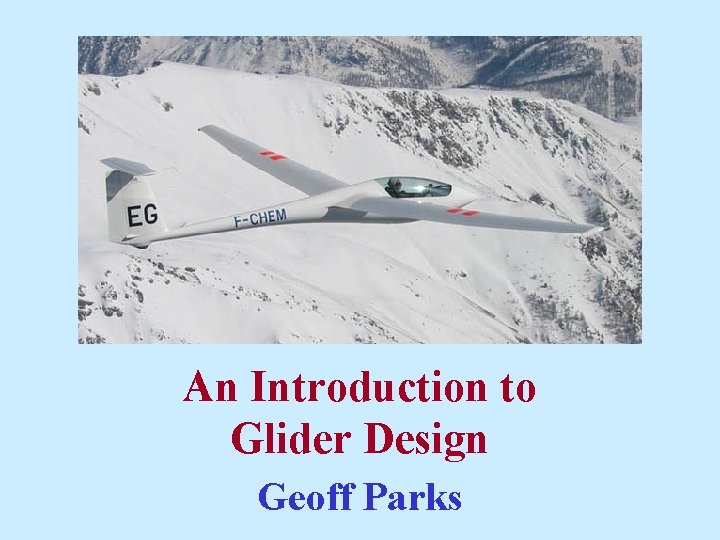
An Introduction to Glider Design Geoff Parks
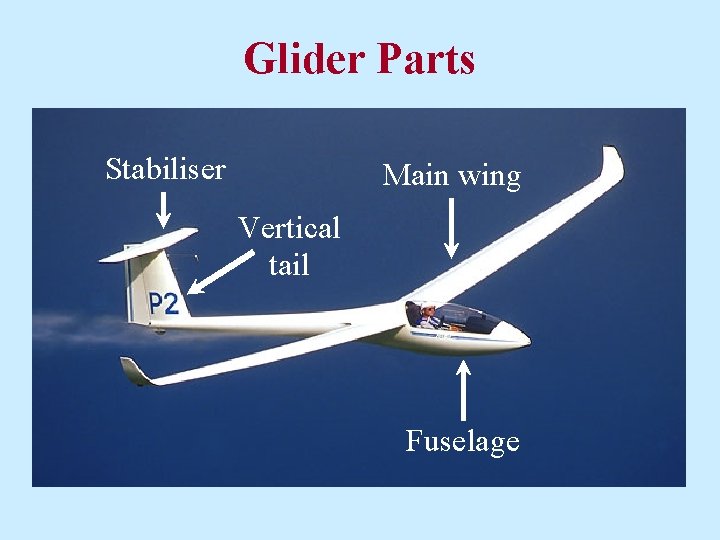
Glider Parts Stabiliser Main wing Vertical tail Fuselage
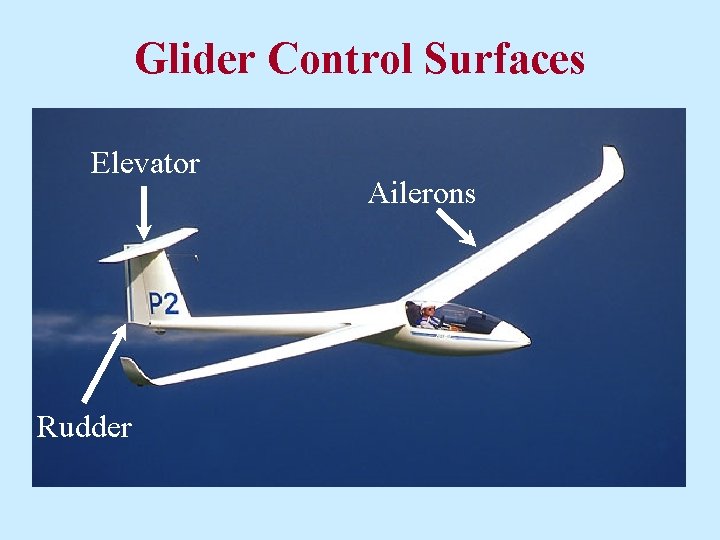
Glider Control Surfaces Elevator Rudder Ailerons

Forces on a Glider Lift Drag Weight
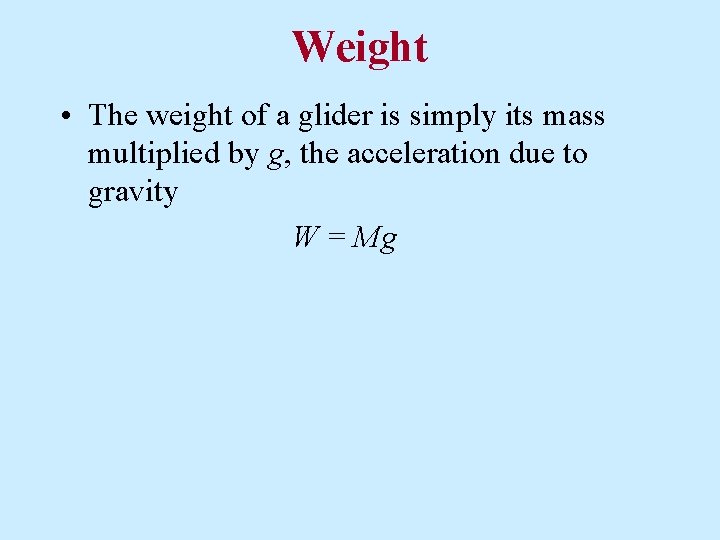
Weight • The weight of a glider is simply its mass multiplied by g, the acceleration due to gravity W = Mg
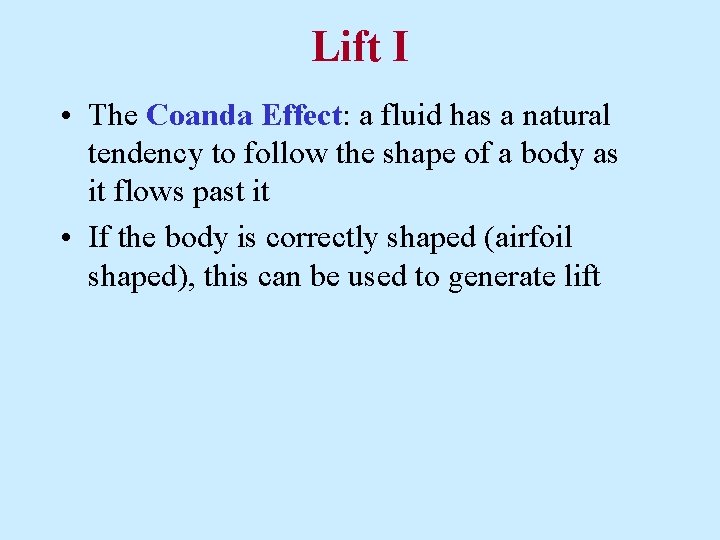
Lift I • The Coanda Effect: a fluid has a natural tendency to follow the shape of a body as it flows past it • If the body is correctly shaped (airfoil shaped), this can be used to generate lift
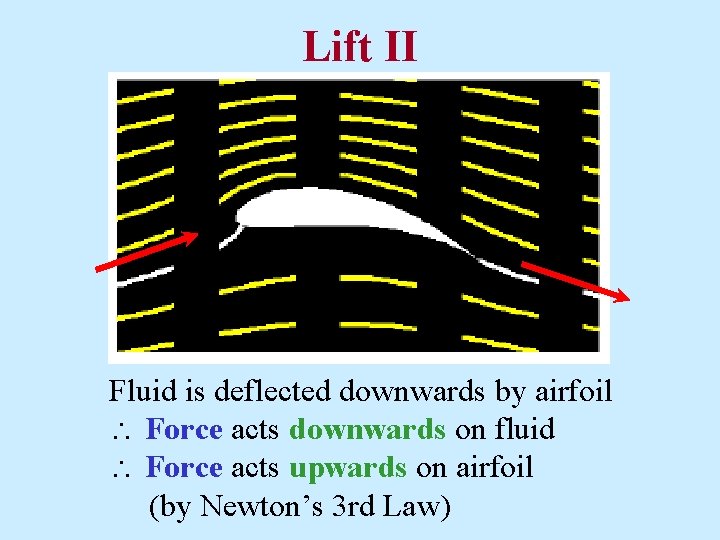
Lift II Fluid is deflected downwards by airfoil Force acts downwards on fluid Force acts upwards on airfoil (by Newton’s 3 rd Law)
Lift III The amount of lift depends on: • Wing size – larger area more lift • Speed – higher speed more lift • Airfoil shape – more flow turning more lift • Airfoil angle of attack – larger angle of attack more lift
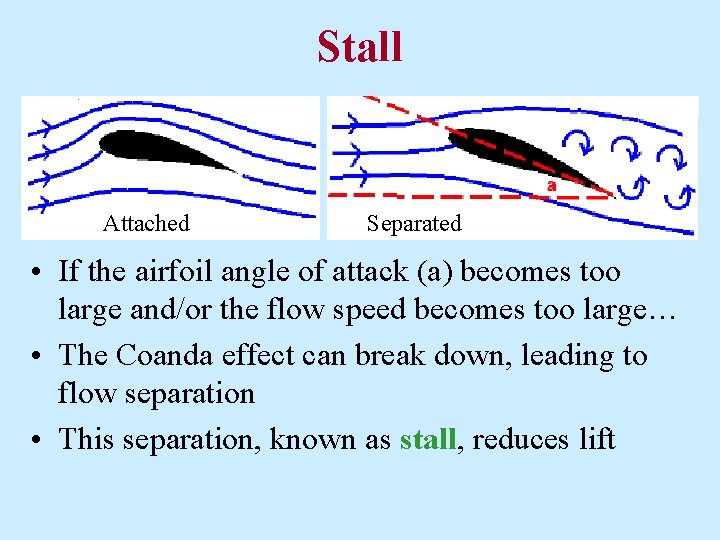
Stall Attached Separated • If the airfoil angle of attack (a) becomes too large and/or the flow speed becomes too large… • The Coanda effect can break down, leading to flow separation • This separation, known as stall, reduces lift
Drag I There are two forms of drag: • Form Drag • Induced Drag Form Drag depends on: • The size of the object – larger projected area more drag • Speed – higher speed more drag
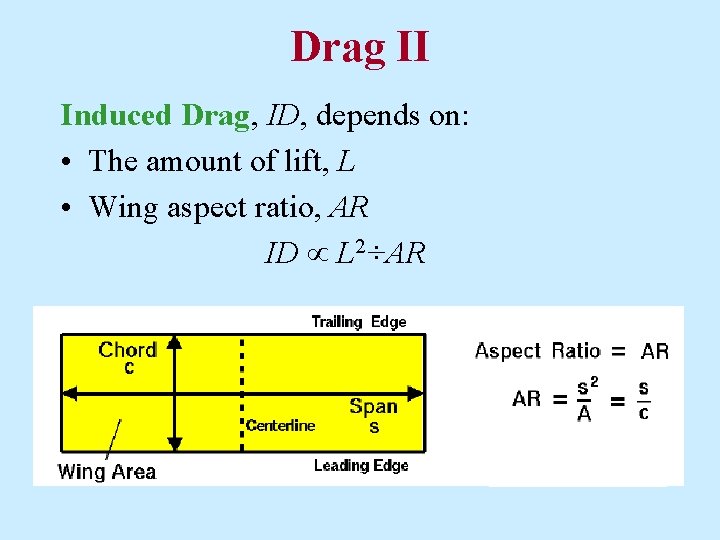
Drag II Induced Drag, ID, depends on: • The amount of lift, L • Wing aspect ratio, AR ID L 2 ÷AR
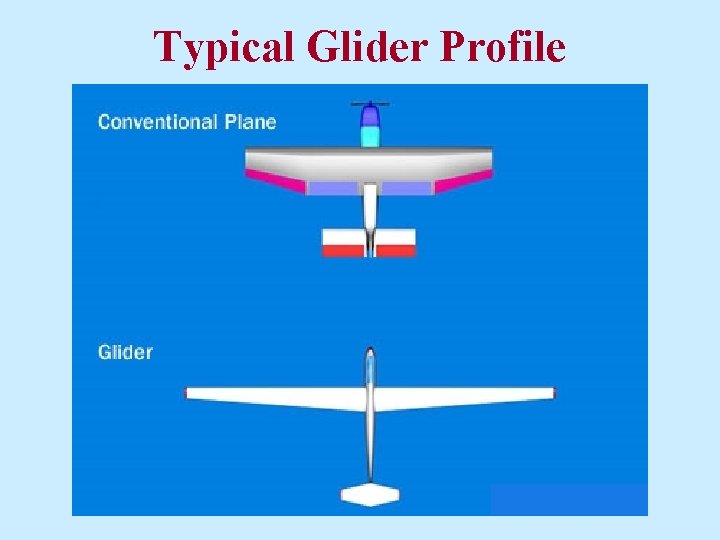
Typical Glider Profile
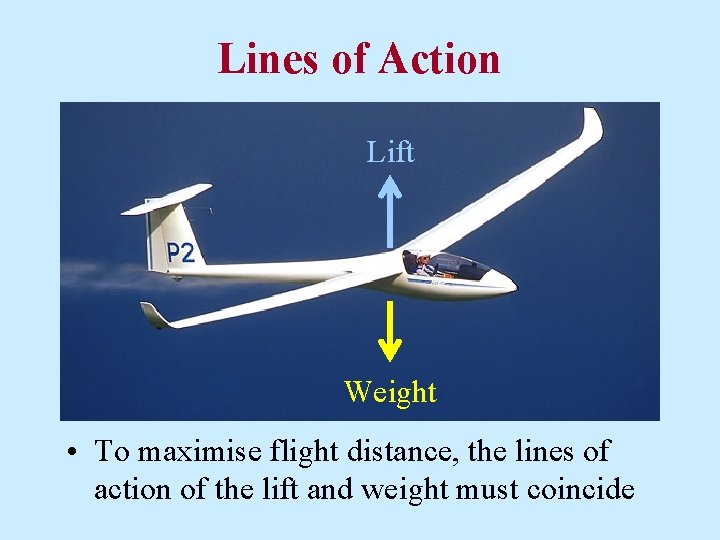
Lines of Action Lift Weight • To maximise flight distance, the lines of action of the lift and weight must coincide
Design Tips I • Tape pieces of thin board onto the glider to act as ailerons, elevator and rudder; you can then slightly bend these to help trim your glider and direct it in flight. • Add dihedral to the wing tips by making the outer portions of the wing angle upwards.
Design Tips II • Make the wings moveable – so you can slide them fore and aft along the fuselage to find their optimal position. • Round the leading edges of all surfaces and “point” the trailing edges.
- Slides: 22