
Glass sustainability and competitiveness Forming process stability AFGM
Glass: sustainability and competitiveness Forming process stability AFGM, Yogyakarta, September 2018
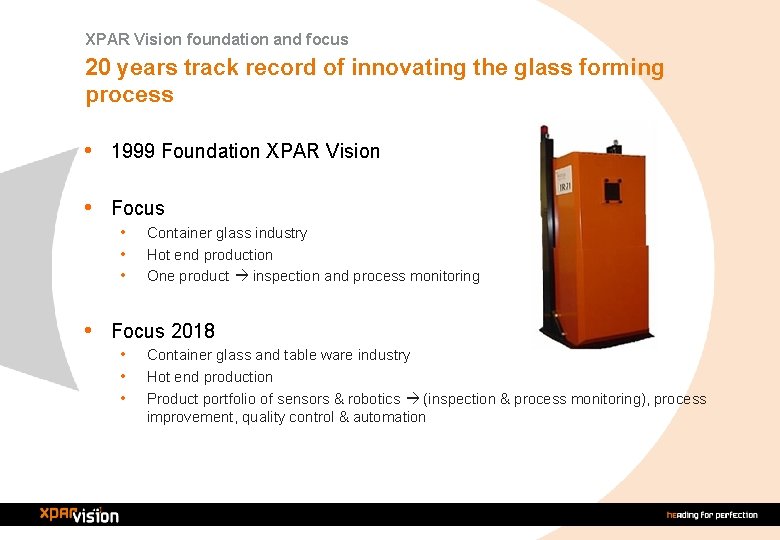
XPAR Vision foundation and focus 20 years track record of innovating the glass forming process • 1999 Foundation XPAR Vision • Focus • • • Container glass industry Hot end production One product inspection and process monitoring • Focus 2018 • • • Container glass and table ware industry Hot end production Product portfolio of sensors & robotics (inspection & process monitoring), process improvement, quality control & automation
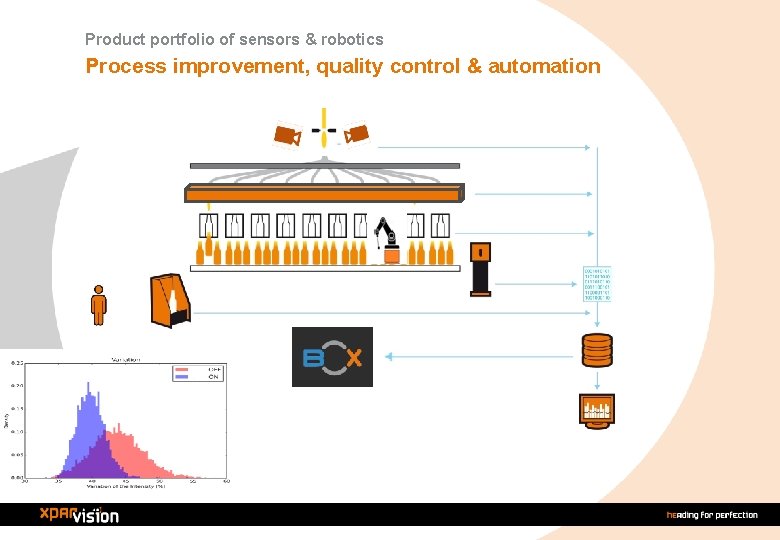
Product portfolio of sensors & robotics Process improvement, quality control & automation

Glass forming today Hot end pack most important • Sustainability Environmental (waste/energy/carbon) • Social (labour conditions) Cost Energy • • • Material Labour Alternatives Characteristics • • • Efficiency low: 85 -90% Quality to customer < 100% Many unknown variables No/slow (quality) feedback loop Forming highly human dependent Labour is aging, experience disappears Health/safety is a concern Flexibility is low Containers are too heavy (40%) Speed of production too low • Plastic, Aluminium, PET • Cheap, flexible, light Huge potential for efficiency/quality & weight/speed
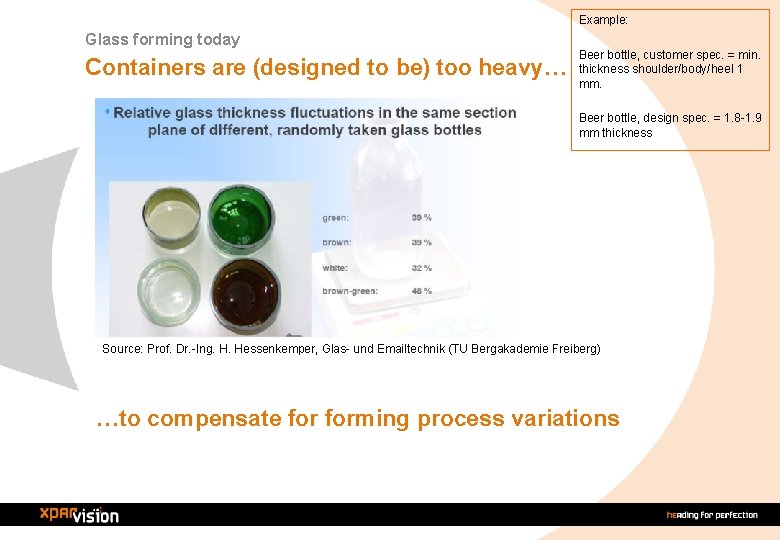
Example: Glass forming today Containers are (designed to be) too heavy… Beer bottle, customer spec. = min. thickness shoulder/body/heel 1 mm. Beer bottle, design spec. = 1. 8 -1. 9 mm thickness Source: Prof. Dr. -Ing. H. Hessenkemper, Glas- und Emailtechnik (TU Bergakademie Freiberg) …to compensate forming process variations

Glass industry: level of forming process control is very low Many process disturbances causing process variations… • • • Cullet Batch/homogenity Viscosity/temperature/homogenity Feeder pull Ambient temperature Deterioration/wear Material change Operator change Stop/start Swabbing …and… • • Gob condition (weight/shape/temperature) variation Loading variation Temperature variation Bottle variation/defects
Glass industry: level of forming process control is very low …and… • …forming machines are getting bigger • …factual information in real time of gob condition, loading • • variation, temperature variation and bottle variation is hardly available …customers continuously ask for better quality and lower carbon footprint …workforce is aging, knowledge and experience are disappearing with every retiring employee …it is time to change! change …automation is required… • Reduce disturbances • Deal with disturbances: (re) actions manually, by automation or by robotics
Process stability is the key towards optimization, automation is required Huge savings potential! Lighter and stronger containers. . . produced with (almost) zero defects…. . at higher speed…. with minimal human dependency.
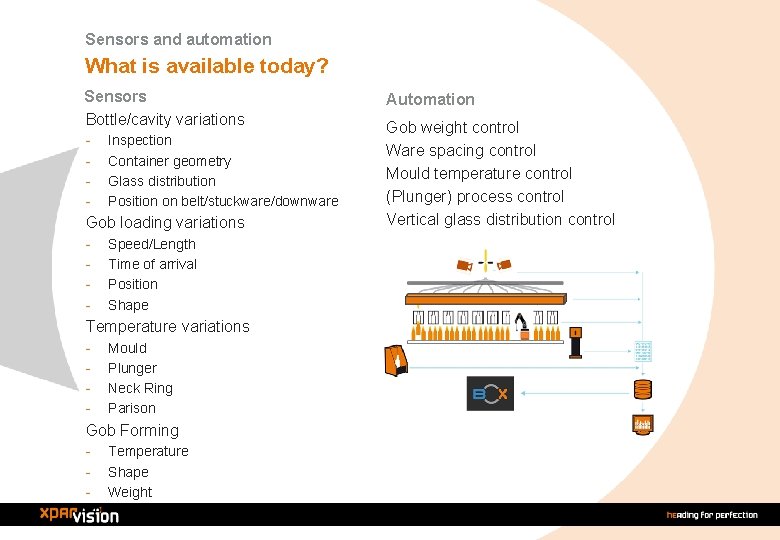
Sensors and automation What is available today? Sensors Bottle/cavity variations - Inspection Container geometry Glass distribution Position on belt/stuckware/downware Gob loading variations - Speed/Length Time of arrival Position Shape Temperature variations - Mould Plunger Neck Ring Parison Gob Forming - Temperature Shape Weight Automation Gob weight control Ware spacing control Mould temperature control (Plunger) process control Vertical glass distribution control
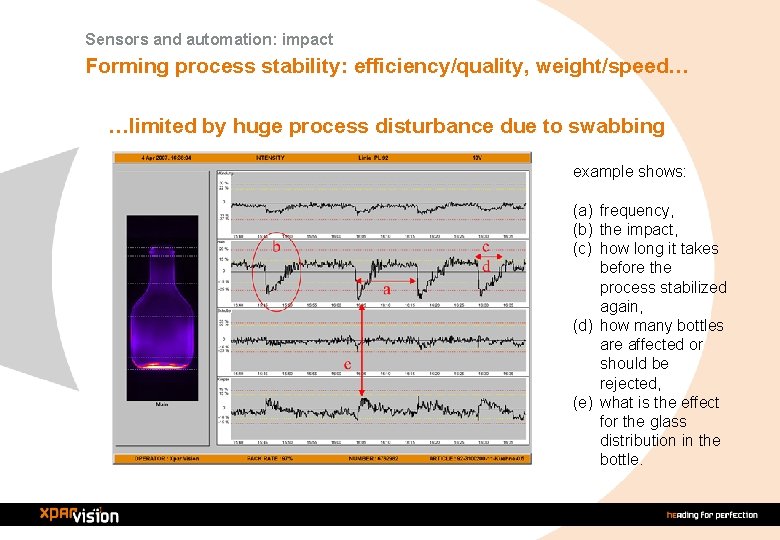
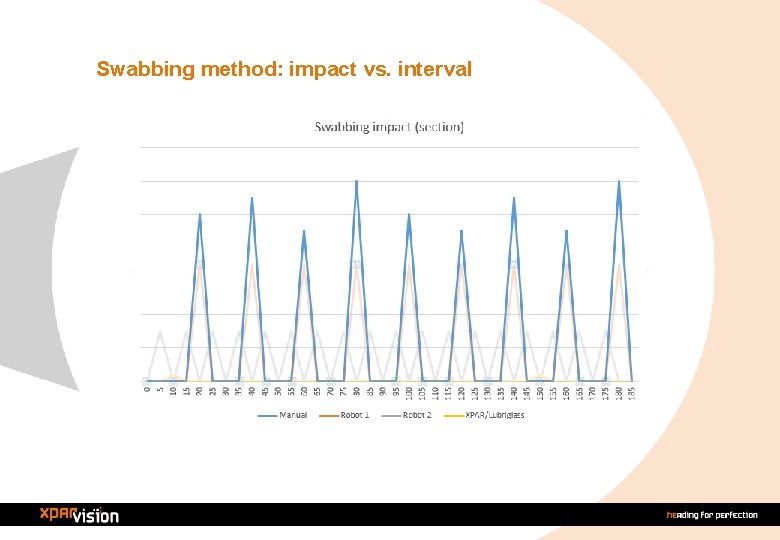
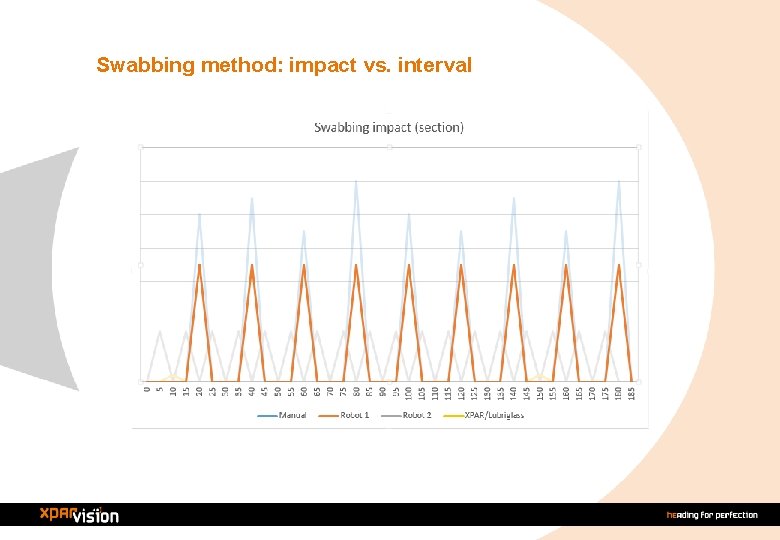
Sensors and automation: impact Forming process stability: efficiency/quality, weight/speed… …limited by huge process disturbance due to swabbing example shows: (a) frequency, (b) the impact, (c) how long it takes before the process stabilized again, (d) how many bottles are affected or should be rejected, (e) what is the effect for the glass distribution in the bottle.
Minimize swabbing disturbance Blank side swabbing today • Huge process disturbance due to manual swabbing limits the effect of sensors and automation • Current automatic robot swabbing is simply converting manual into automatic • Current automatic robot swabbing (once per 5 – 20 minutes) limits machine accessability
Swabbing method: impact vs. interval
Swabbing method: impact vs. interval
Swabbing method: impact vs. interval

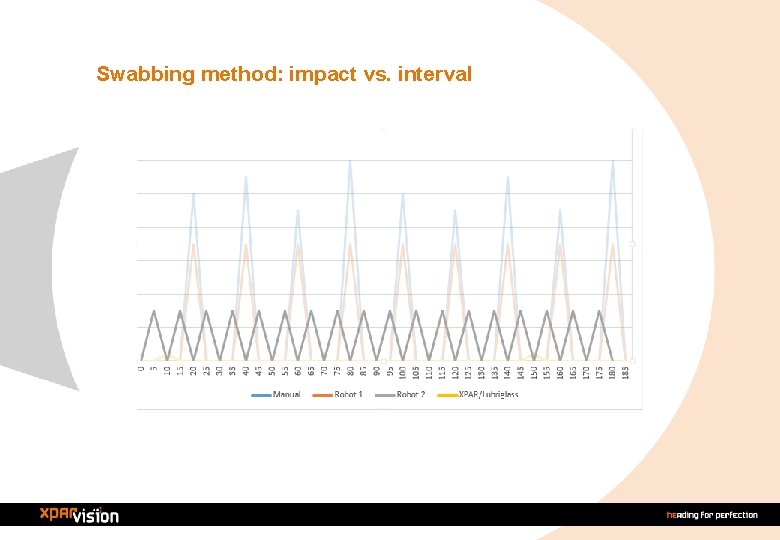
Swabbing method: impact vs. interval …ultra low frequency & impact blank side swabbing
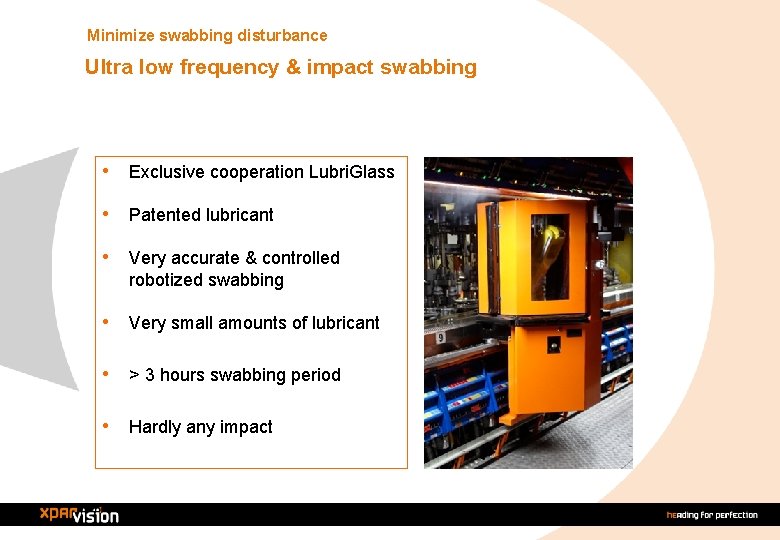
Minimize swabbing disturbance Ultra low frequency & impact swabbing • Exclusive cooperation Lubri. Glass • Patented lubricant • Very accurate & controlled robotized swabbing • Very small amounts of lubricant • > 3 hours swabbing period • Hardly any impact
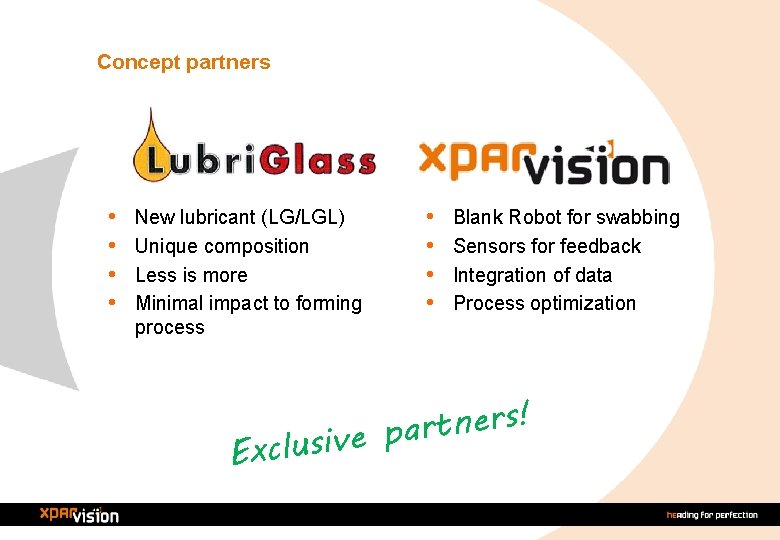
Concept partners • • New lubricant (LG/LGL) Unique composition Less is more Minimal impact to forming process • • Blank Robot for swabbing Sensors for feedback Integration of data Process optimization ! s r e n t r a p e v i s Exclu

Ultra low frequency & impact swabbing ü Limited lubricant consumption ü No pollution safety & health ü No disturbance glass forming process ü Reduced badly affected bottles due to swabbing ü Increased lifetime of (mould) material ü More time for operator ü Robot has time to do more. . !!
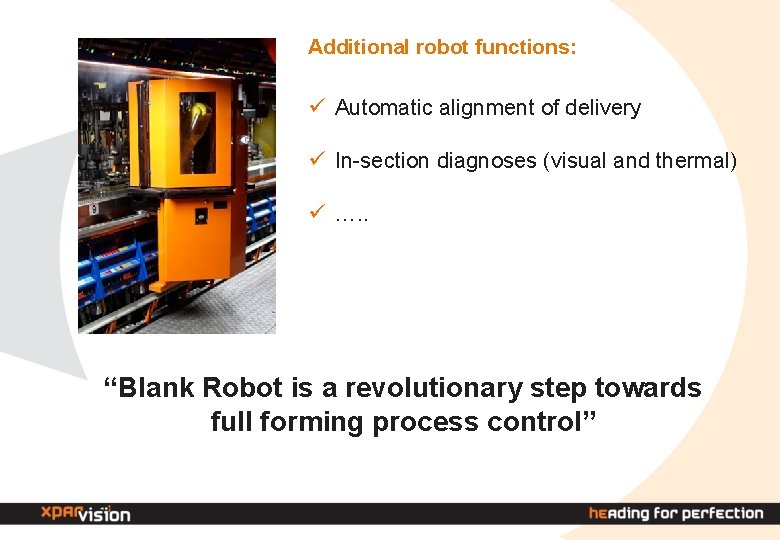
Additional robot functions: ü Automatic alignment of delivery ü In-section diagnoses (visual and thermal) ü …. . “Blank Robot is a revolutionary step towards full forming process control”
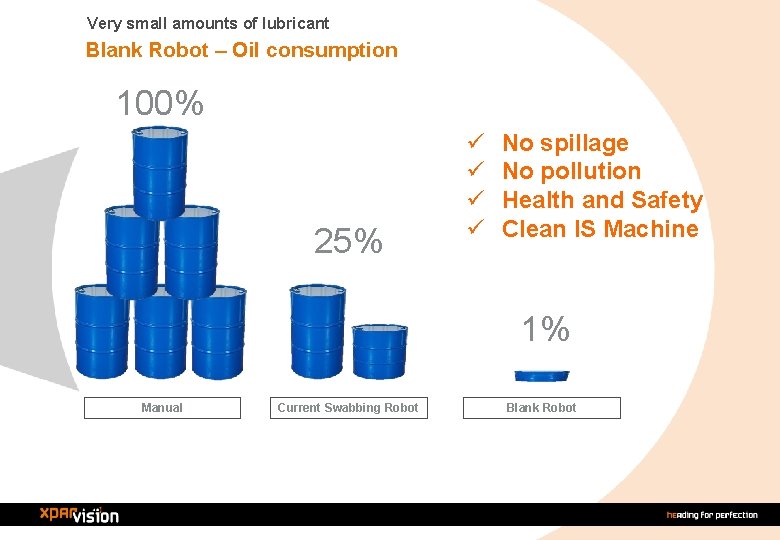
Very small amounts of lubricant Blank Robot – Oil consumption 100% 25% ü ü No spillage No pollution Health and Safety Clean IS Machine 1% Manual Current Swabbing Robot Blank Robot
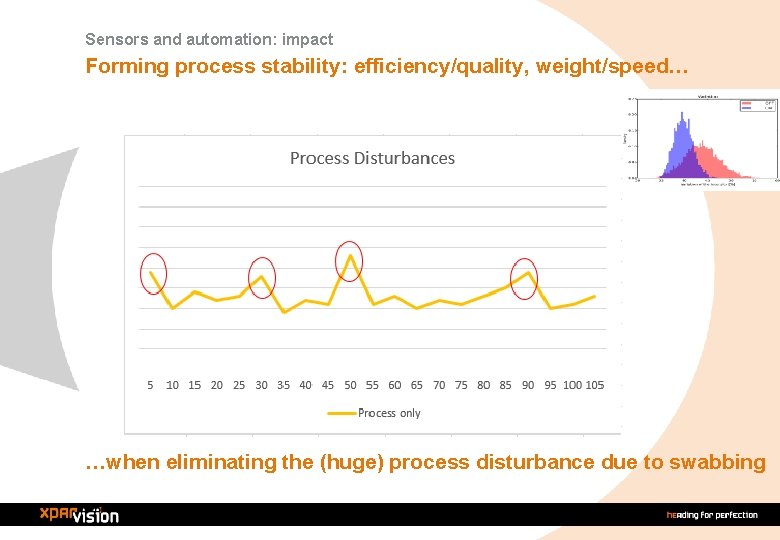
Sensors and automation: impact Forming process stability: efficiency/quality, weight/speed… …when eliminating the (huge) process disturbance due to swabbing
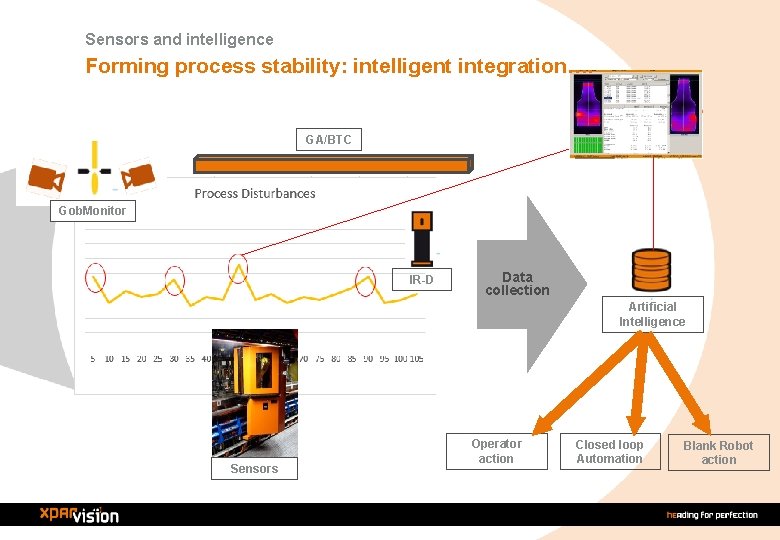
Sensors and intelligence Forming process stability: intelligent integration…. GA/BTC Gob. Monitor IR-D Data collection Artificial Intelligence Sensors Operator action Closed loop Automation Blank Robot action
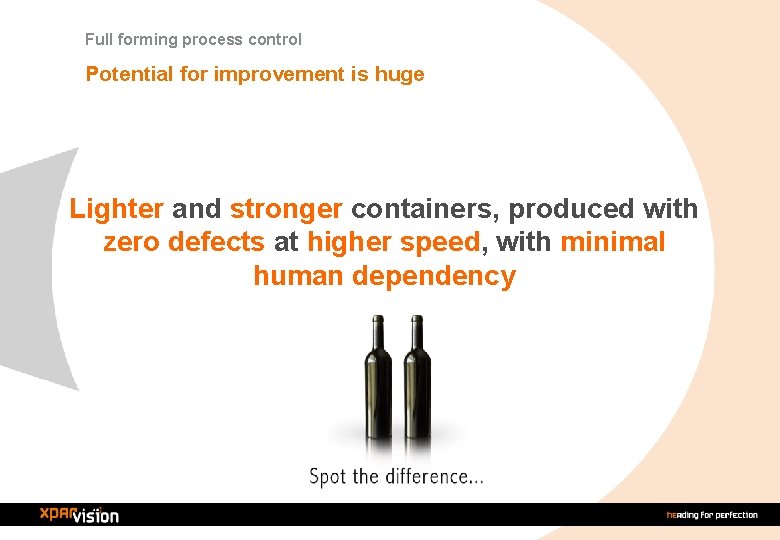
Full forming process control Potential for improvement is huge Lighter and stronger containers, produced with zero defects at higher speed, with minimal human dependency
- Slides: 24