
Glass Forensic Science Ms Mac Cormack The History



- Slides: 23
Glass Forensic Science Ms Mac. Cormack
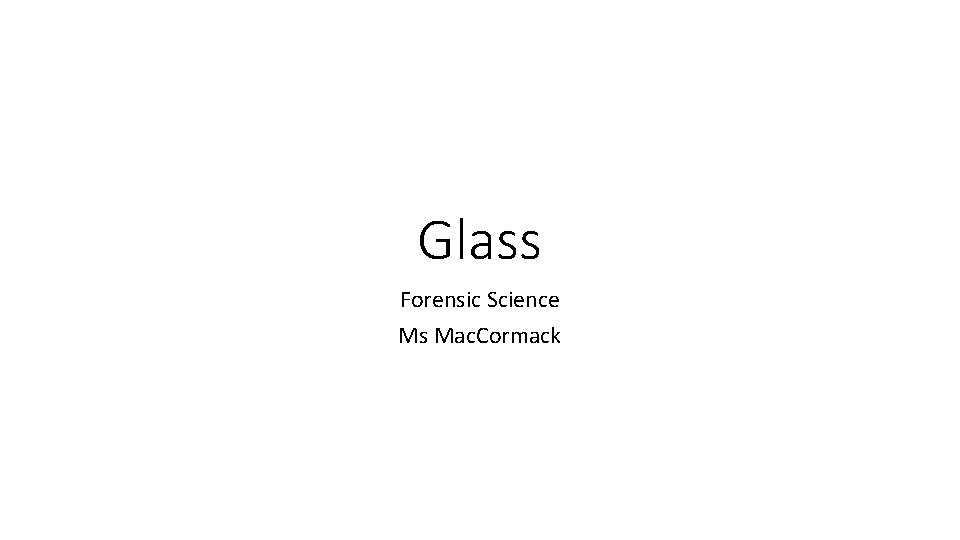
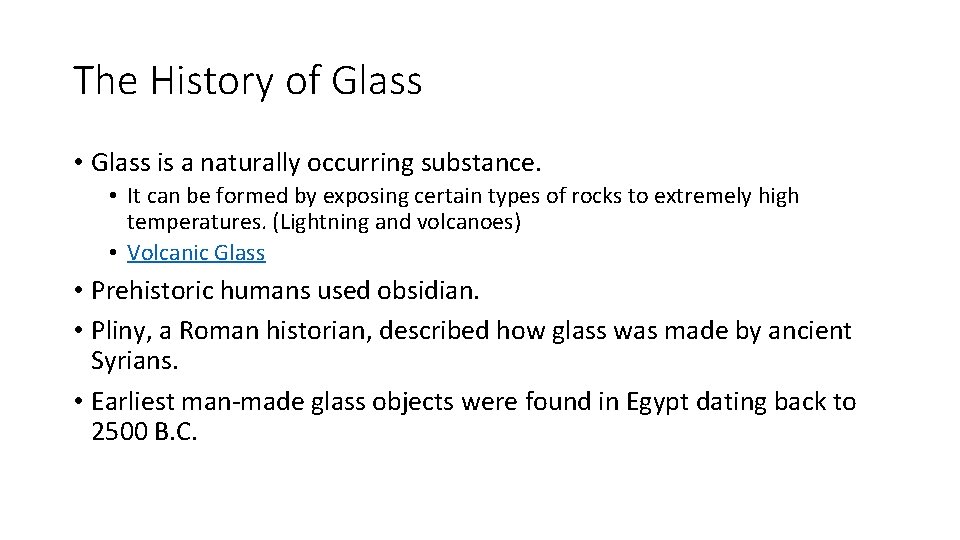
The History of Glass • Glass is a naturally occurring substance. • It can be formed by exposing certain types of rocks to extremely high temperatures. (Lightning and volcanoes) • Volcanic Glass • Prehistoric humans used obsidian. • Pliny, a Roman historian, described how glass was made by ancient Syrians. • Earliest man-made glass objects were found in Egypt dating back to 2500 B. C.
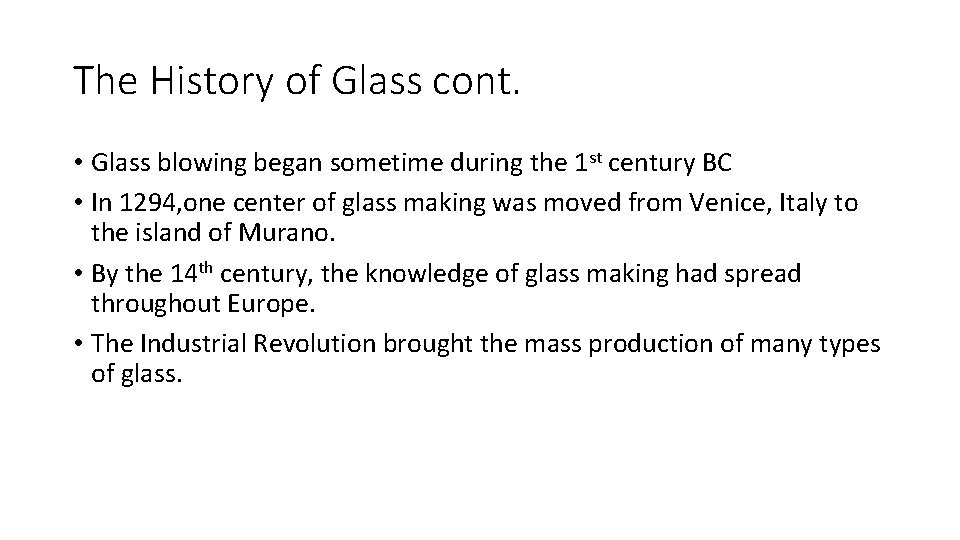
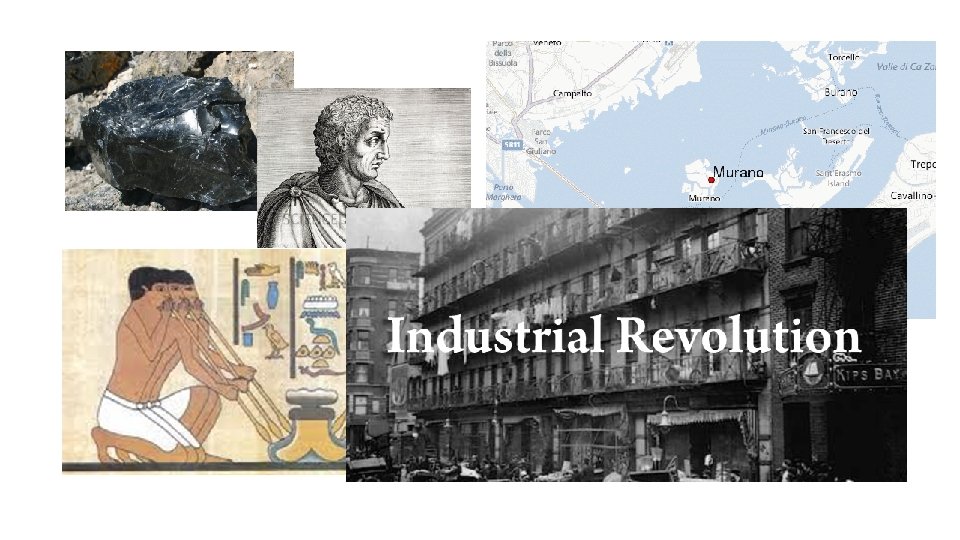
The History of Glass cont. • Glass blowing began sometime during the 1 st century BC • In 1294, one center of glass making was moved from Venice, Italy to the island of Murano. • By the 14 th century, the knowledge of glass making had spread throughout Europe. • The Industrial Revolution brought the mass production of many types of glass.
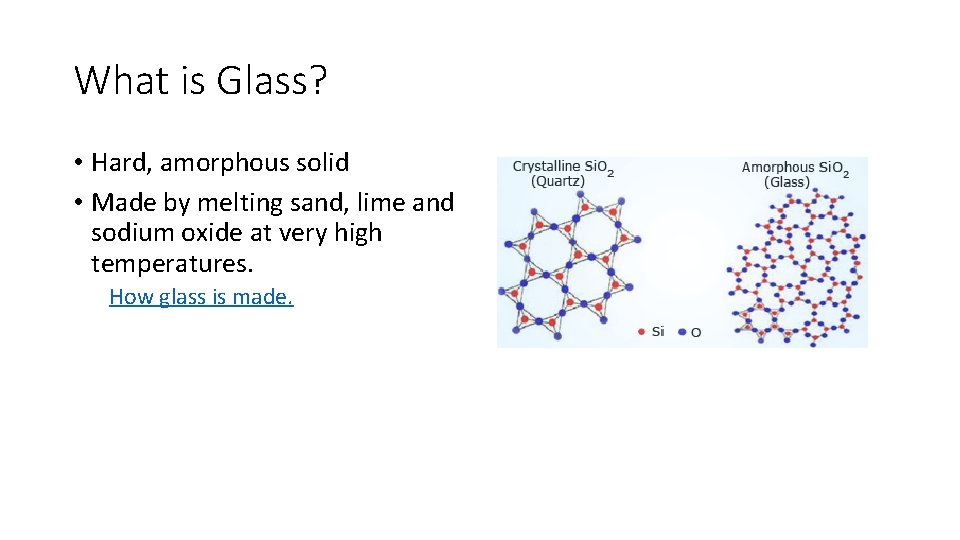
What is Glass? • Hard, amorphous solid • Made by melting sand, lime and sodium oxide at very high temperatures. How glass is made.
Types of Glass Leaded Glass • Also known as crystal • Substitutes Lead (II) Oxide for the Calcium Oxide. • Pb. O makes the glass denser • The light is bent more when light passes through it. This makes it sparkle.
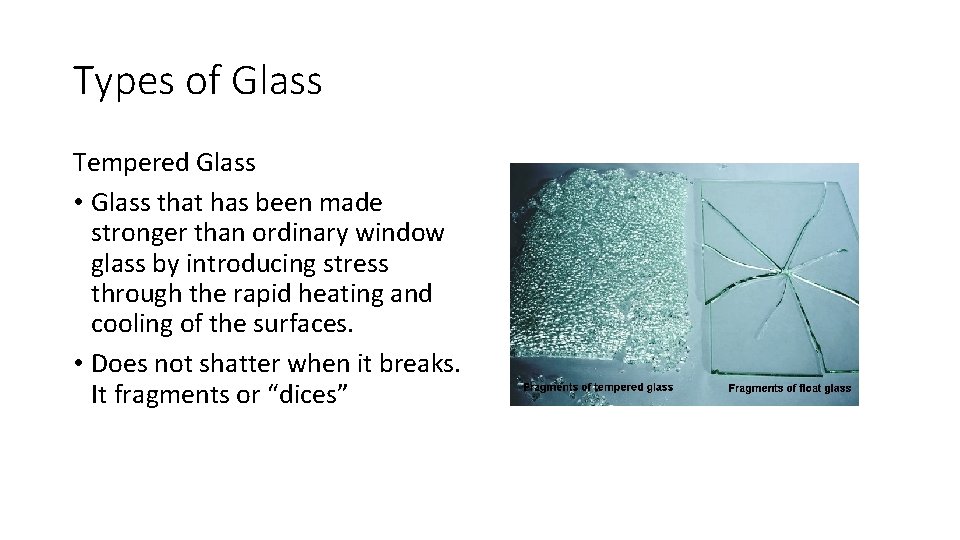
Types of Glass Tempered Glass • Glass that has been made stronger than ordinary window glass by introducing stress through the rapid heating and cooling of the surfaces. • Does not shatter when it breaks. It fragments or “dices”
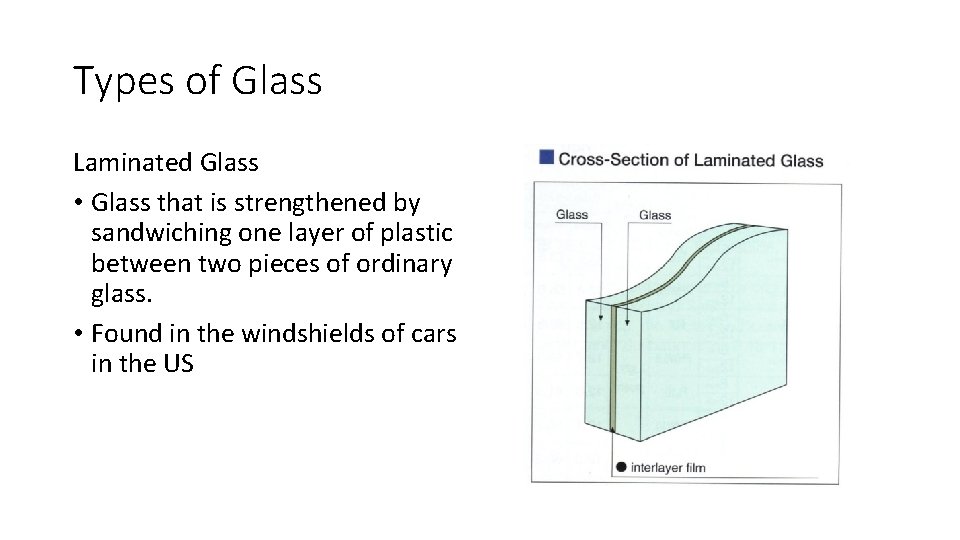
Types of Glass Laminated Glass • Glass that is strengthened by sandwiching one layer of plastic between two pieces of ordinary glass. • Found in the windshields of cars in the US
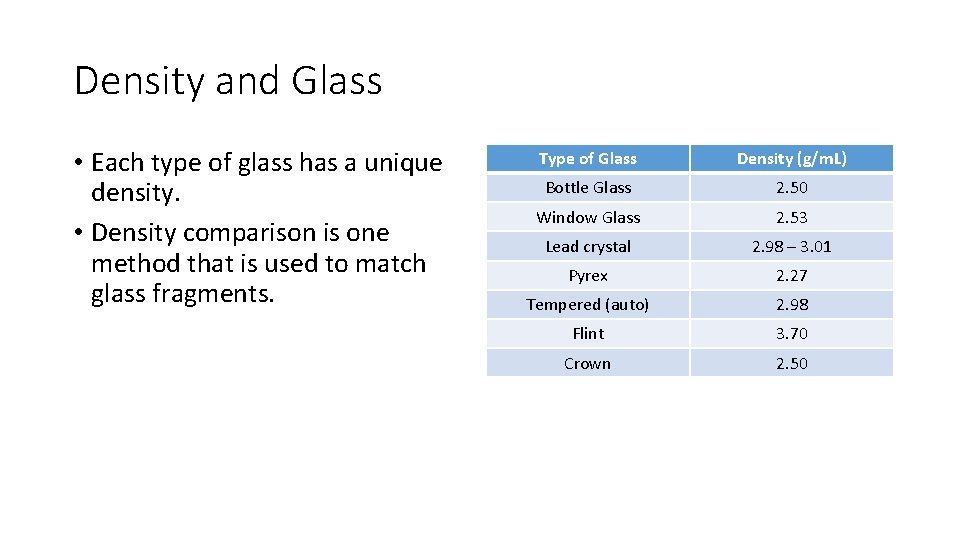
Density and Glass • Each type of glass has a unique density. • Density comparison is one method that is used to match glass fragments. Type of Glass Density (g/m. L) Bottle Glass 2. 50 Window Glass 2. 53 Lead crystal 2. 98 – 3. 01 Pyrex 2. 27 Tempered (auto) 2. 98 Flint 3. 70 Crown 2. 50
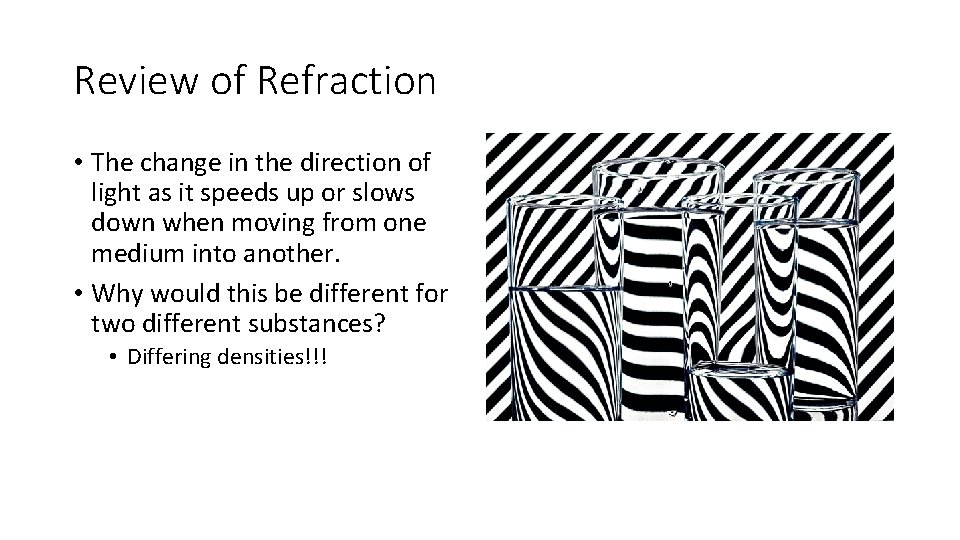
Review of Refraction • The change in the direction of light as it speeds up or slows down when moving from one medium into another. • Why would this be different for two different substances? • Differing densities!!!
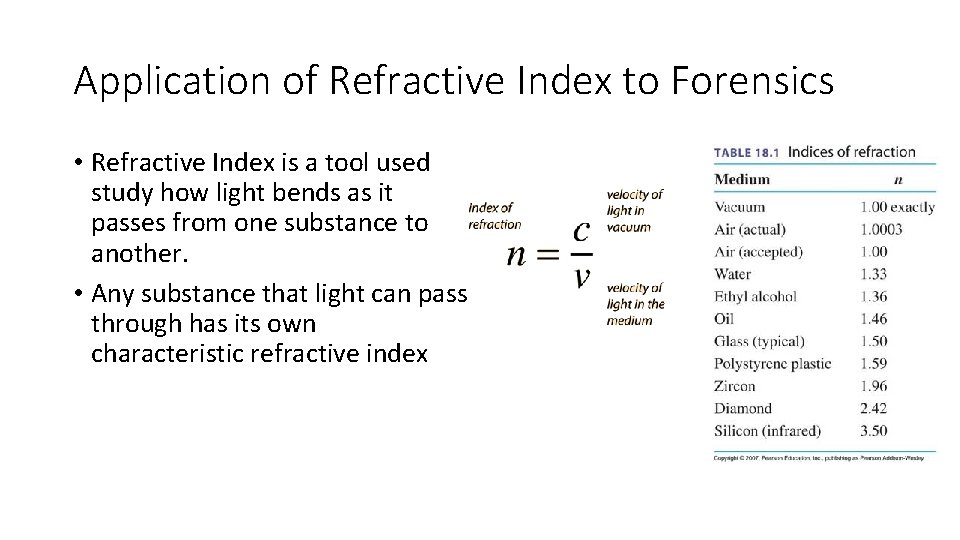
Application of Refractive Index to Forensics • Refractive Index is a tool used study how light bends as it passes from one substance to another. • Any substance that light can pass through has its own characteristic refractive index
Application of Refractive Index to Forensics • Just like density, a refractive index is an intrinsic property. • Glass manufacturers have a database containing the refractive indexes of their products. • Useful for glass fragments.
Submersion Method • Used for glass evidence found on clothing or shoes due to the small size. • Done by placing the glass fragment in a liquid of known refractive indexes. If a piece of glass and a liquid have the same refractive index, the glass fragment will seem to disappear when placed in the liquid. • Way Cool Video!!!!!
Becke Lines • Seen when a fragment of glass is submerged in a liquid and then viewed under a compound microscope. • If the refractive index of the liquid medium is different from the refractive index of the glass, a halo-like ring appears around the edge of the glass. This is a Becke Line. • Becke Lines move TOWARD the substance with the higher refractive index. • Becke Lines
Thickness of Glass • Picture frame glass is 1/8 in thick. • Window glass must be 3/32 to 1/8 in thick. • Door glass will be 3/16 to ¼ in thick.
Breaking Glass • Tempered Glass vs Pane Glass • Slow Motion Breaking Glass • Which part of the glass breaks first? • What can we tell from the glass?
Fracture Patterns in Broken Glass • Glass does have some flexibility. • When its hit, it can stretch slightly. • When it is forced to stretch too far, fracture lines appear and the glass breaks. • Glass breaks into fragments because it is an amorphous substance.
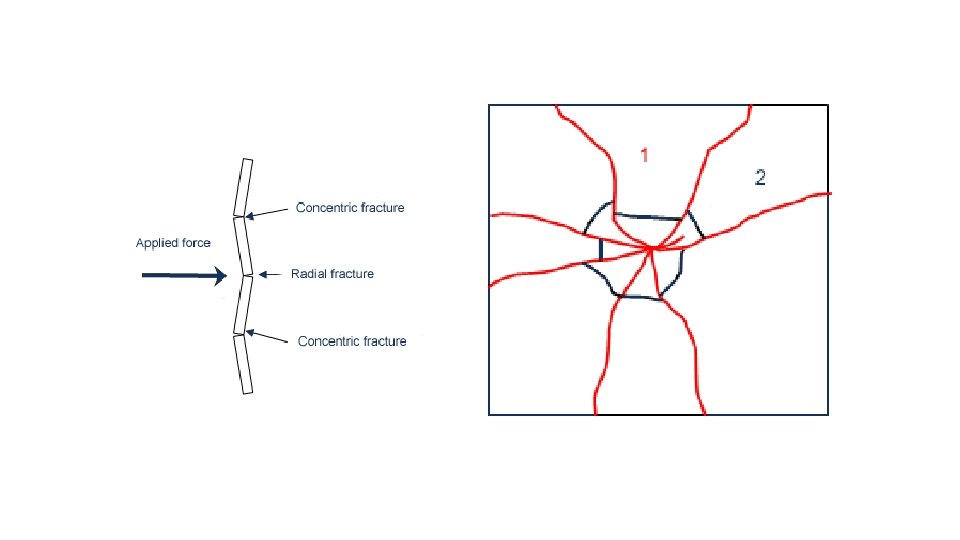
When formed? On which side of the glass? Description Diagram Radial Fracture Concentric Fracture First (Primary) Opposite the side of force or impact Lines originating from point of impact and extending to edge of glass (like spokes on a bicycle tire) Second (secondary) Same side as force or impact Series of circles one inside the other sharing the same center
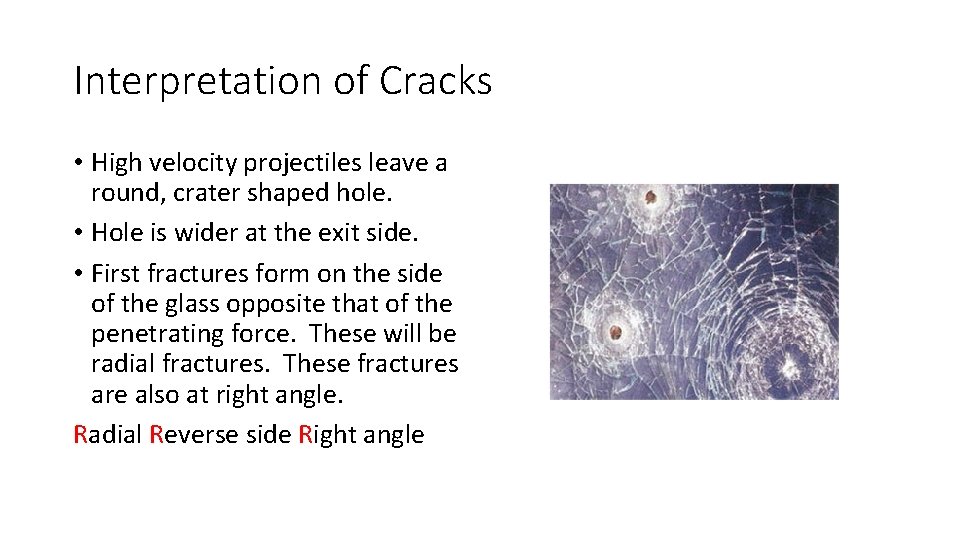
Interpretation of Cracks • High velocity projectiles leave a round, crater shaped hole. • Hole is wider at the exit side. • First fractures form on the side of the glass opposite that of the penetrating force. These will be radial fractures. These fractures are also at right angle. Radial Reverse side Right angle
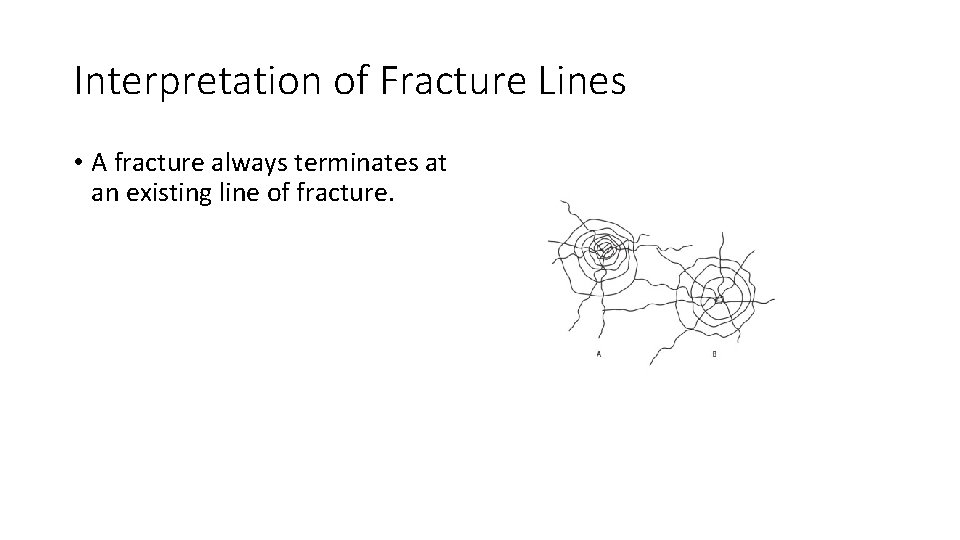
Interpretation of Fracture Lines • A fracture always terminates at an existing line of fracture.
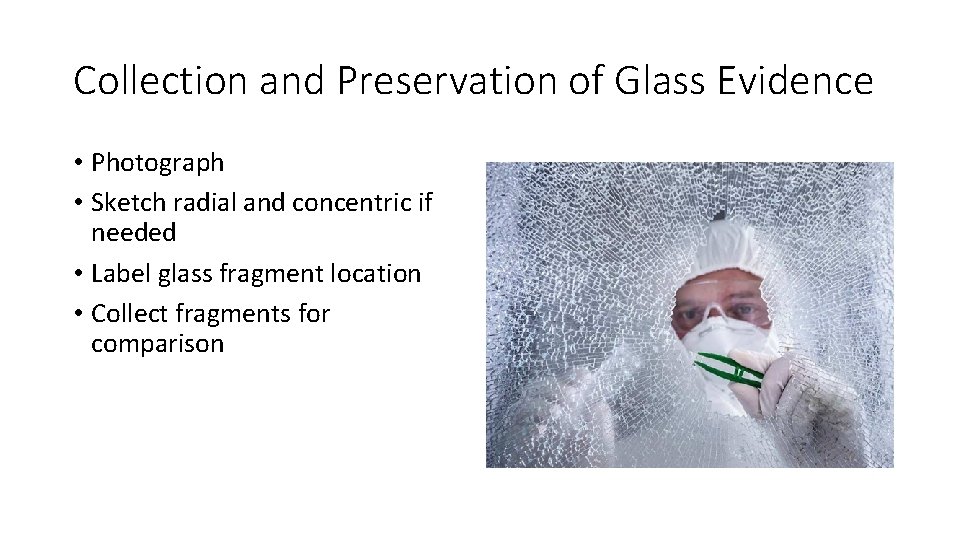
Collection and Preservation of Glass Evidence • Photograph • Sketch radial and concentric if needed • Label glass fragment location • Collect fragments for comparison
A good synopsis video • Glass Analysis