
Glass characterisation techniques used in the Resistive Plate
- Slides: 16
Glass characterisation techniques used in the Resistive Plate Chamber development B. Satyanarayana, TIFR, Mumbai For INO Collaboration B. Satyanarayana, TIFR XVII DAE-BRNS High Energy Physics Symposium, December 11 -15, 2006, IIT Kharagpur
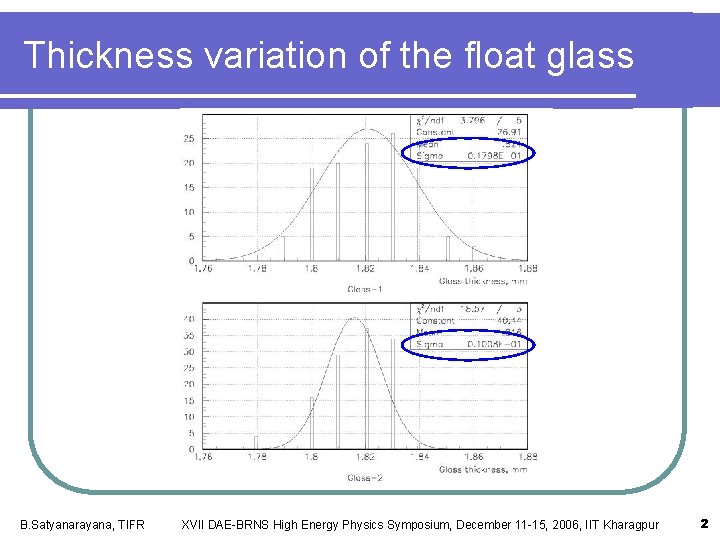
Thickness variation of the float glass B. Satyanarayana, TIFR XVII DAE-BRNS High Energy Physics Symposium, December 11 -15, 2006, IIT Kharagpur 2
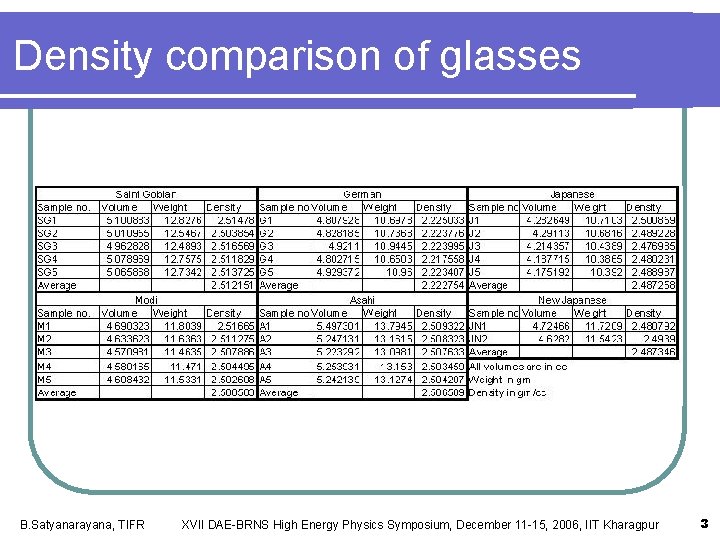
Density comparison of glasses B. Satyanarayana, TIFR XVII DAE-BRNS High Energy Physics Symposium, December 11 -15, 2006, IIT Kharagpur 3
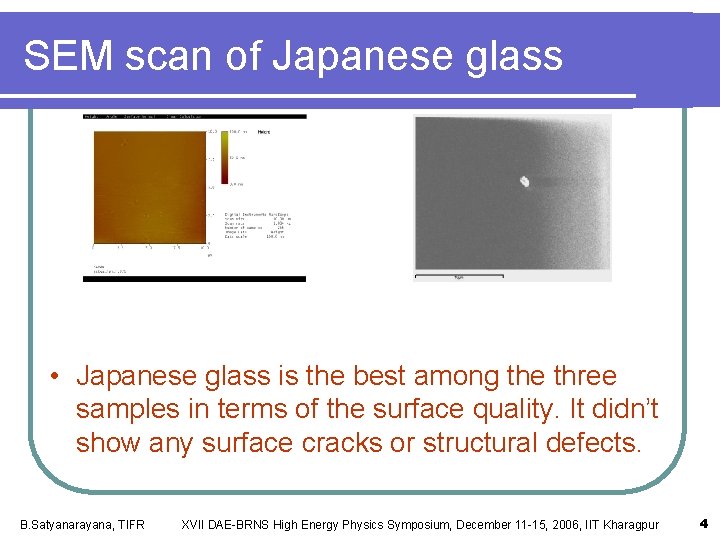
SEM scan of Japanese glass • Japanese glass is the best among the three samples in terms of the surface quality. It didn’t show any surface cracks or structural defects. B. Satyanarayana, TIFR XVII DAE-BRNS High Energy Physics Symposium, December 11 -15, 2006, IIT Kharagpur 4
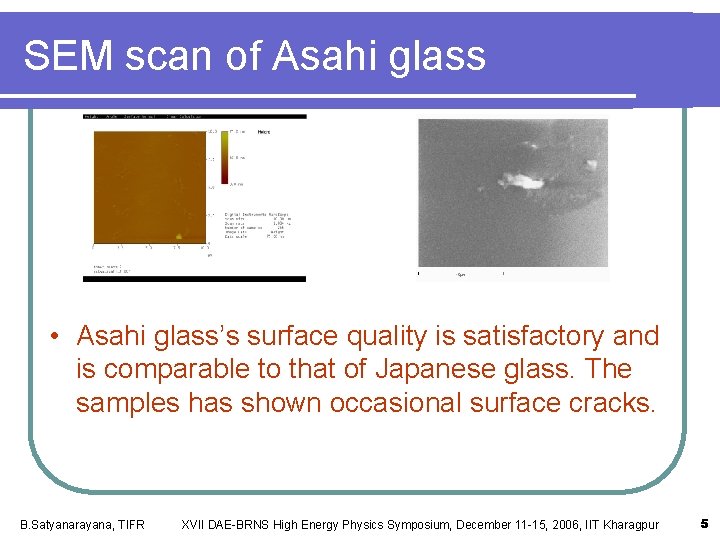
SEM scan of Asahi glass • Asahi glass’s surface quality is satisfactory and is comparable to that of Japanese glass. The samples has shown occasional surface cracks. B. Satyanarayana, TIFR XVII DAE-BRNS High Energy Physics Symposium, December 11 -15, 2006, IIT Kharagpur 5
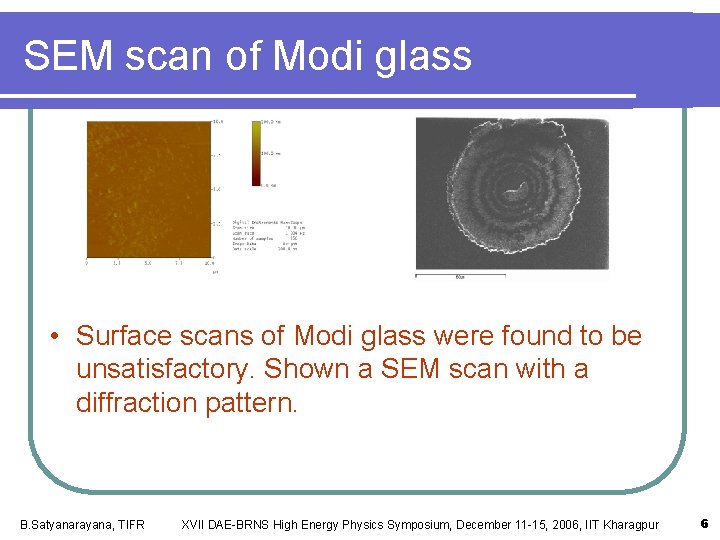
SEM scan of Modi glass • Surface scans of Modi glass were found to be unsatisfactory. Shown a SEM scan with a diffraction pattern. B. Satyanarayana, TIFR XVII DAE-BRNS High Energy Physics Symposium, December 11 -15, 2006, IIT Kharagpur 6
SEM comparison of glasses B. Satyanarayana, TIFR XVII DAE-BRNS High Energy Physics Symposium, December 11 -15, 2006, IIT Kharagpur 7
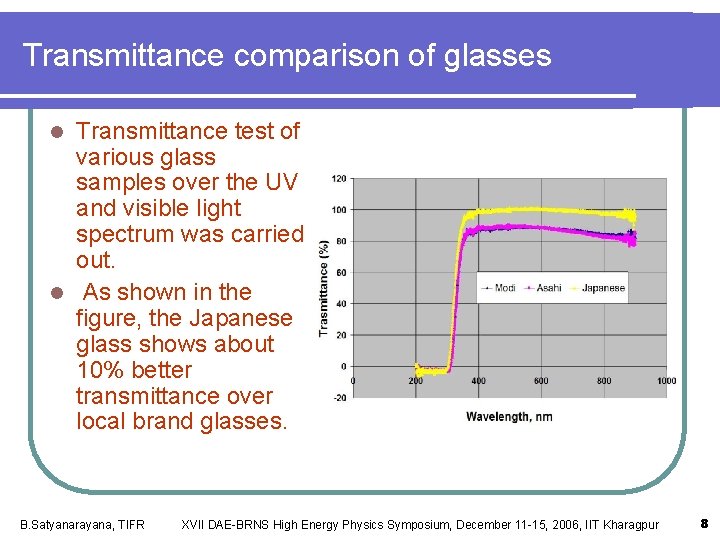
Transmittance comparison of glasses Transmittance test of various glass samples over the UV and visible light spectrum was carried out. l As shown in the figure, the Japanese glass shows about 10% better transmittance over local brand glasses. l B. Satyanarayana, TIFR XVII DAE-BRNS High Energy Physics Symposium, December 11 -15, 2006, IIT Kharagpur 8
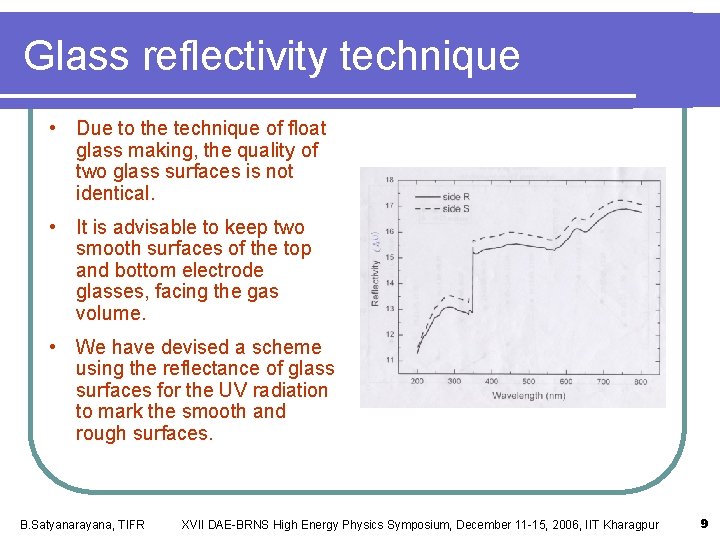
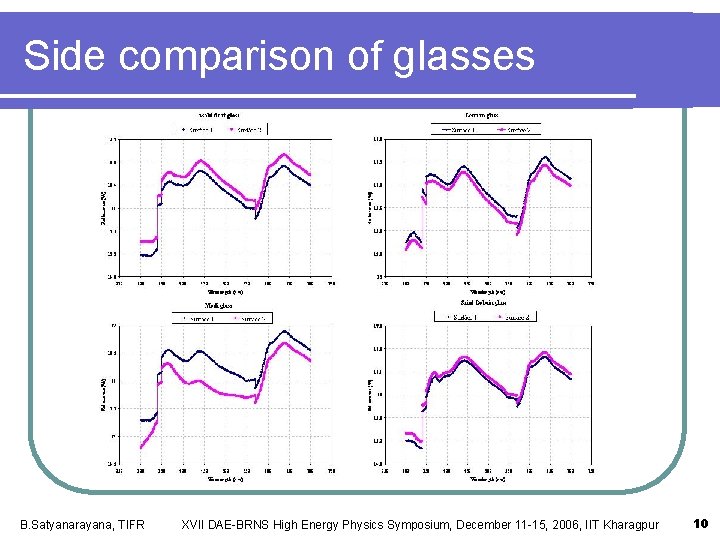
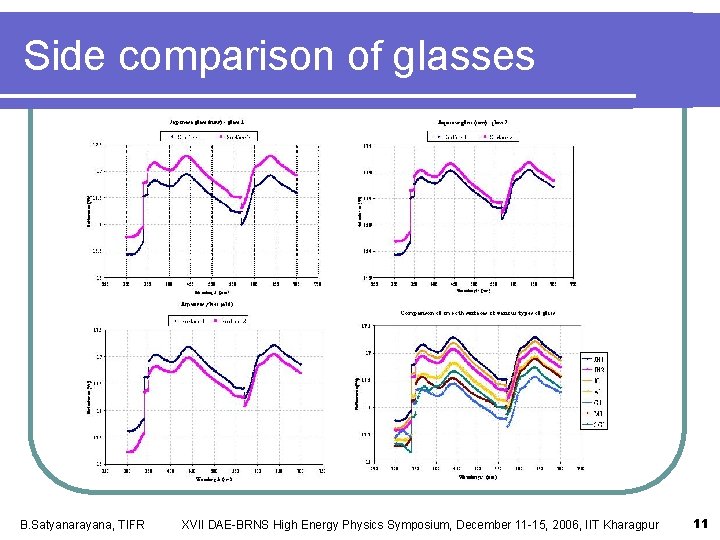
Glass reflectivity technique • Due to the technique of float glass making, the quality of two glass surfaces is not identical. • It is advisable to keep two smooth surfaces of the top and bottom electrode glasses, facing the gas volume. • We have devised a scheme using the reflectance of glass surfaces for the UV radiation to mark the smooth and rough surfaces. B. Satyanarayana, TIFR XVII DAE-BRNS High Energy Physics Symposium, December 11 -15, 2006, IIT Kharagpur 9
Side comparison of glasses B. Satyanarayana, TIFR XVII DAE-BRNS High Energy Physics Symposium, December 11 -15, 2006, IIT Kharagpur 10
Side comparison of glasses B. Satyanarayana, TIFR XVII DAE-BRNS High Energy Physics Symposium, December 11 -15, 2006, IIT Kharagpur 11
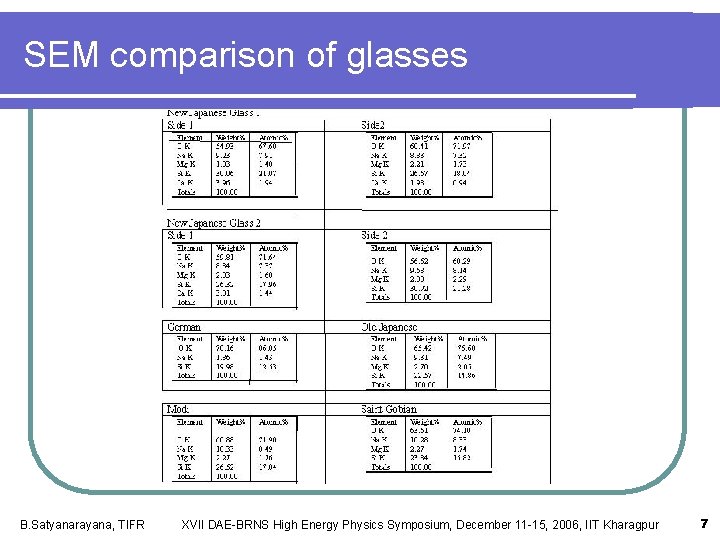
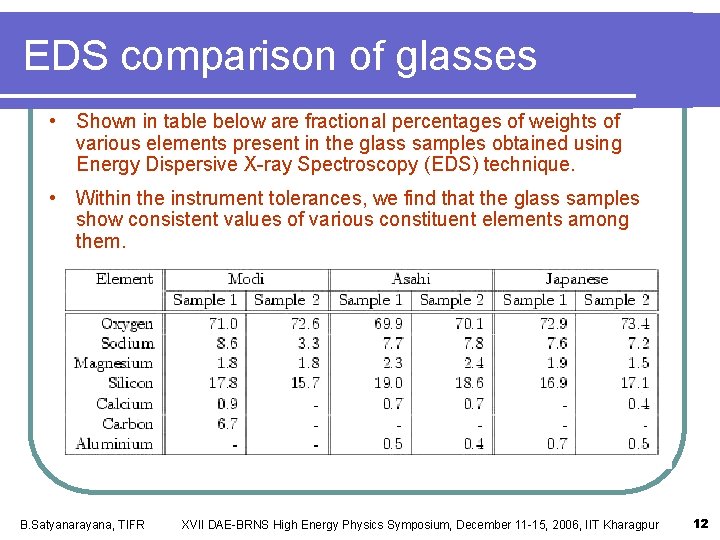
EDS comparison of glasses • Shown in table below are fractional percentages of weights of various elements present in the glass samples obtained using Energy Dispersive X-ray Spectroscopy (EDS) technique. • Within the instrument tolerances, we find that the glass samples show consistent values of various constituent elements among them. B. Satyanarayana, TIFR XVII DAE-BRNS High Energy Physics Symposium, December 11 -15, 2006, IIT Kharagpur 12
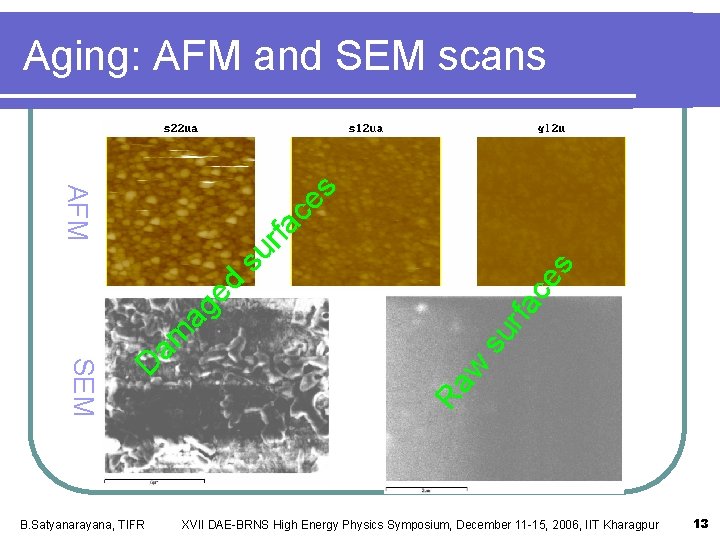
Aging: AFM and SEM scans su w Ra D SEM am ag rf a ed ce s su rf a ce s AFM B. Satyanarayana, TIFR XVII DAE-BRNS High Energy Physics Symposium, December 11 -15, 2006, IIT Kharagpur 13
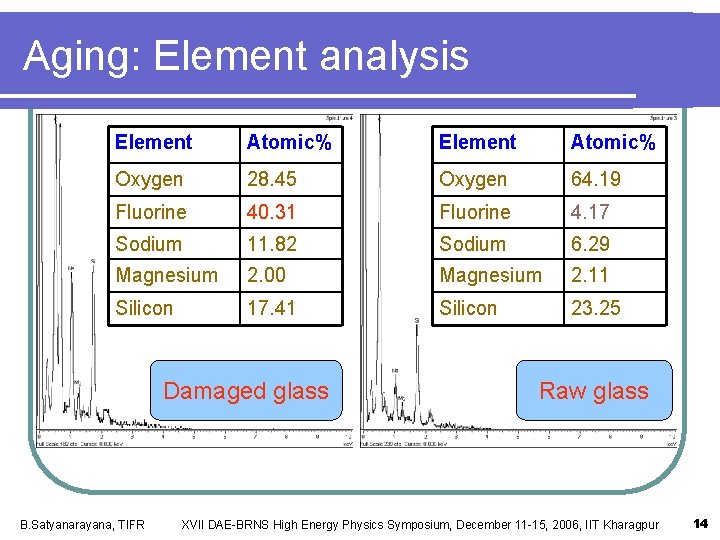
Aging: Element analysis Element Atomic% Oxygen 28. 45 Oxygen 64. 19 Fluorine 40. 31 Fluorine 4. 17 Sodium 11. 82 Sodium 6. 29 Magnesium 2. 00 Magnesium 2. 11 Silicon 17. 41 Silicon 23. 25 Damaged glass B. Satyanarayana, TIFR Raw glass XVII DAE-BRNS High Energy Physics Symposium, December 11 -15, 2006, IIT Kharagpur 14
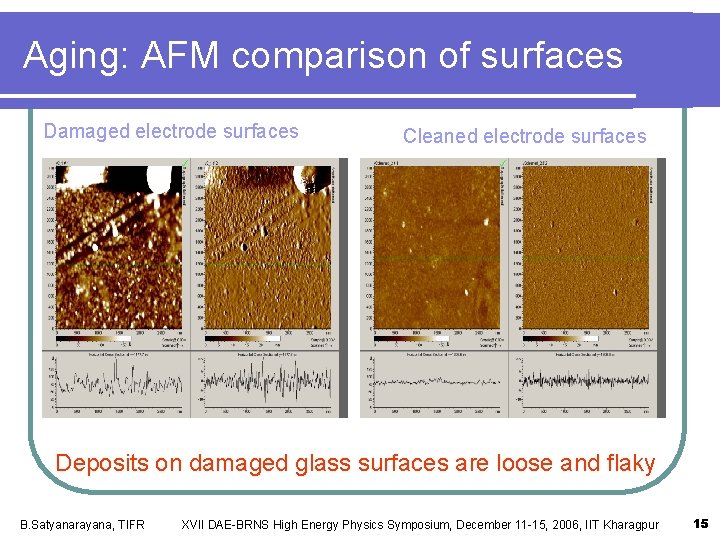
Aging: AFM comparison of surfaces Damaged electrode surfaces Cleaned electrode surfaces Deposits on damaged glass surfaces are loose and flaky B. Satyanarayana, TIFR XVII DAE-BRNS High Energy Physics Symposium, December 11 -15, 2006, IIT Kharagpur 15
Summary and outlook q Many of the material science tools were used during the development of Resistive Plate Chambers q Found useful both for characterisation of raw glass electrodes as well as for analysis of damaged samples q Will also be used during RPC production for example to determine the appropriate glass surface – rough versus smooth B. Satyanarayana, TIFR XVII DAE-BRNS High Energy Physics Symposium, December 11 -15, 2006, IIT Kharagpur 16