
Glass as evidence Glass What is glass What


- Slides: 13
Glass as evidence
Glass § § What is glass? What crimes are glass involved in? How is glass collected? How is glass analyzed in the lab?
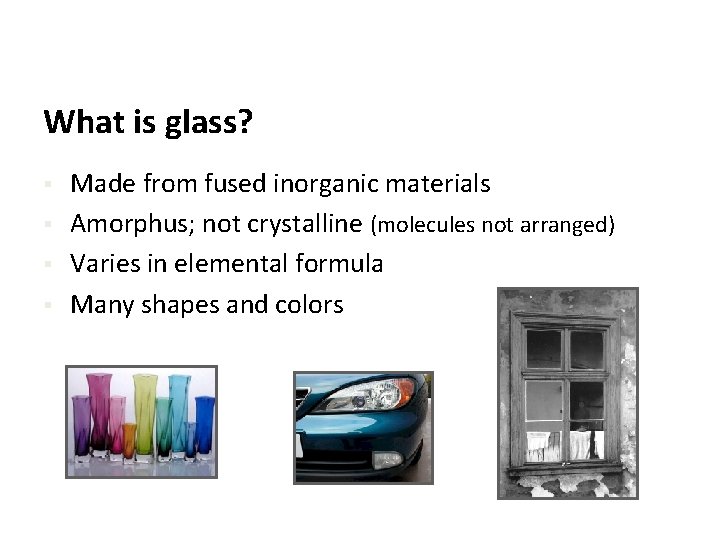
What is glass? § § Made from fused inorganic materials Amorphus; not crystalline (molecules not arranged) Varies in elemental formula Many shapes and colors
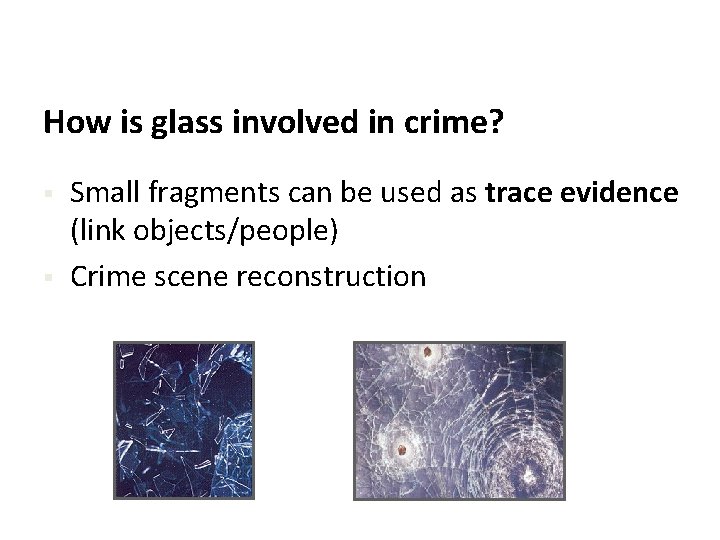
How is glass involved in crime? § § Small fragments can be used as trace evidence (link objects/people) Crime scene reconstruction
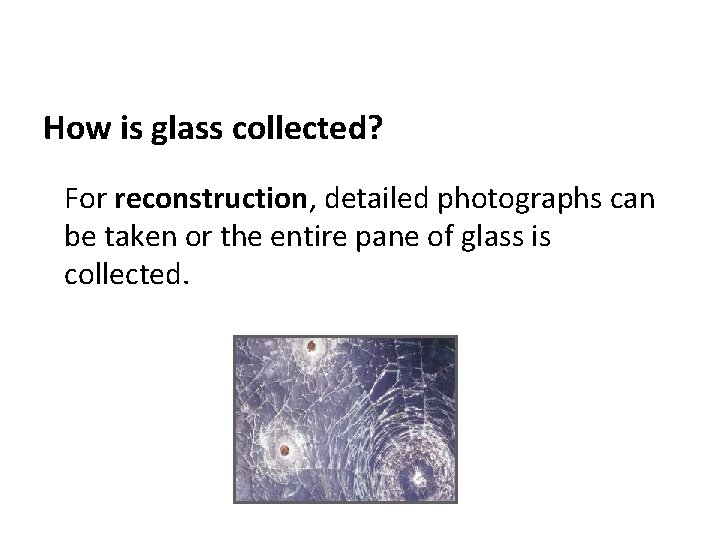
How is glass collected? For reconstruction, detailed photographs can be taken or the entire pane of glass is collected.
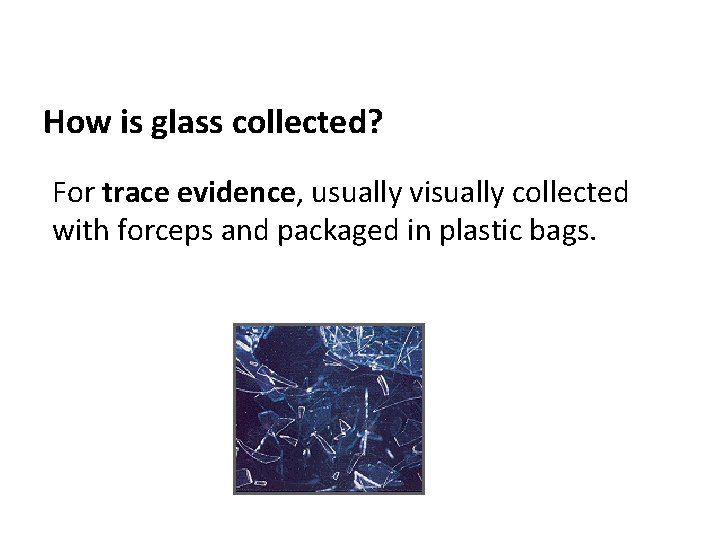
How is glass collected? For trace evidence, usually visually collected with forceps and packaged in plastic bags.
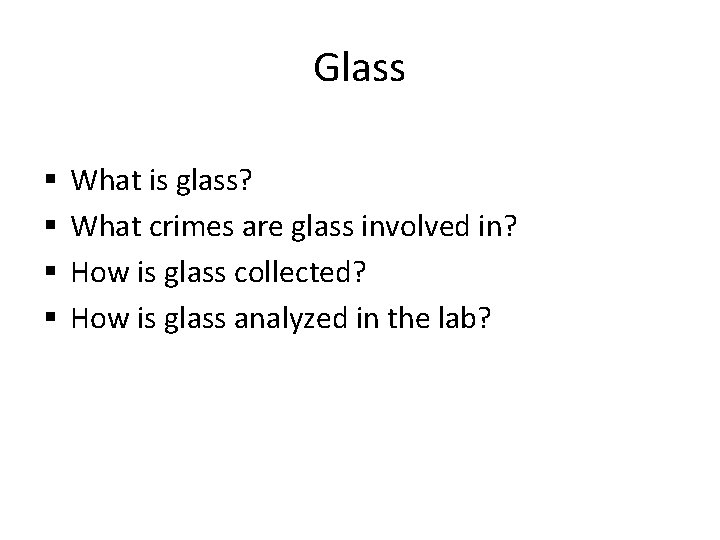
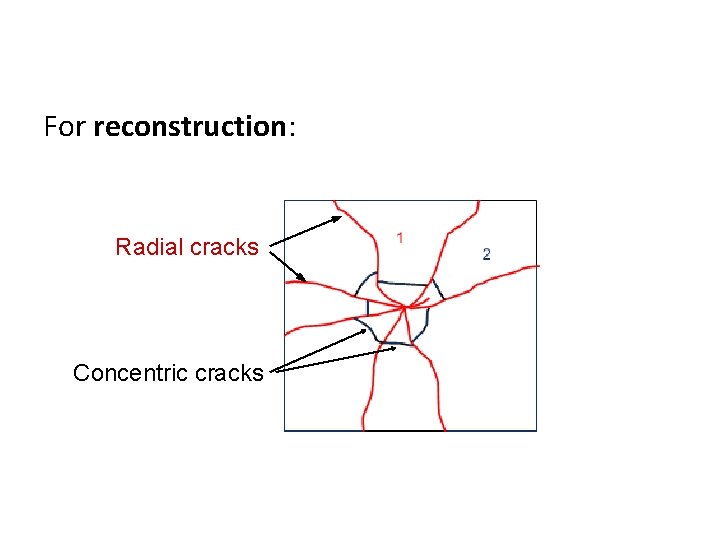
For reconstruction: Radial cracks Concentric cracks
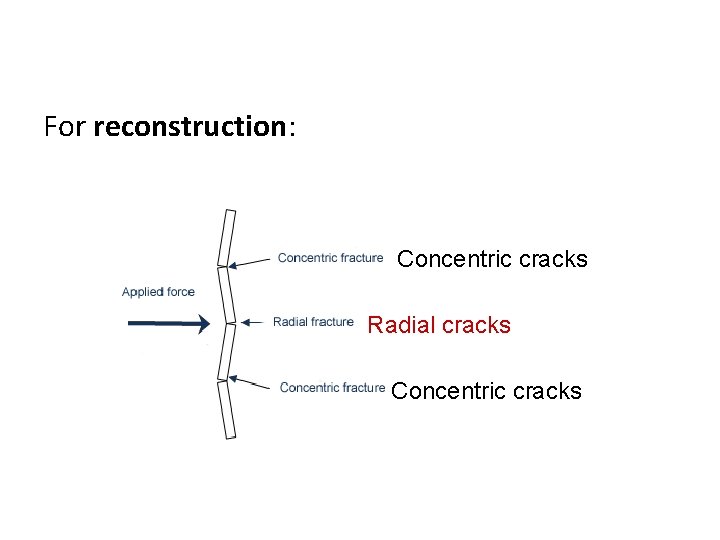
For reconstruction: Concentric cracks Radial cracks Concentric cracks
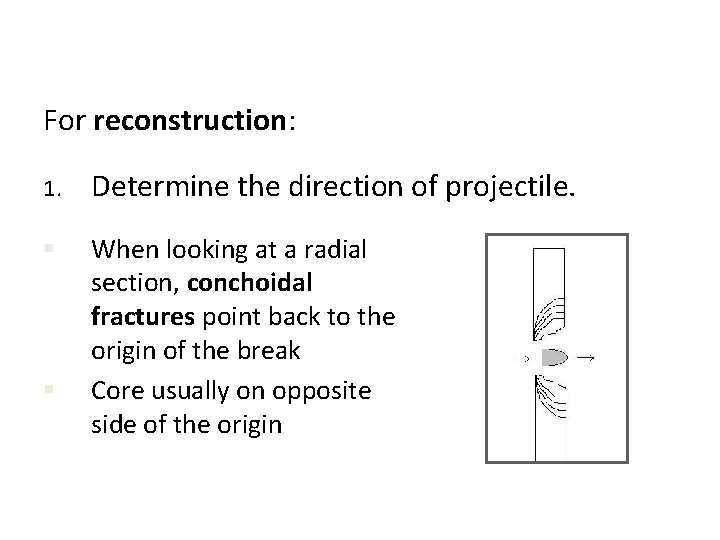
For reconstruction: 1. Determine the direction of projectile. § When looking at a radial section, conchoidal fractures point back to the origin of the break Core usually on opposite side of the origin §
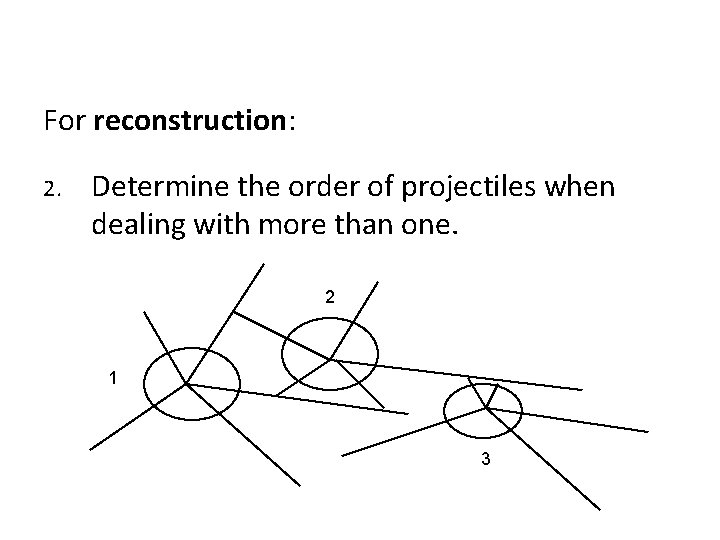
For reconstruction: 2. Determine the order of projectiles when dealing with more than one. 2 1 3
For reconstruction: 2. Determine the order of projectiles when dealing with more than one. 2 1 3
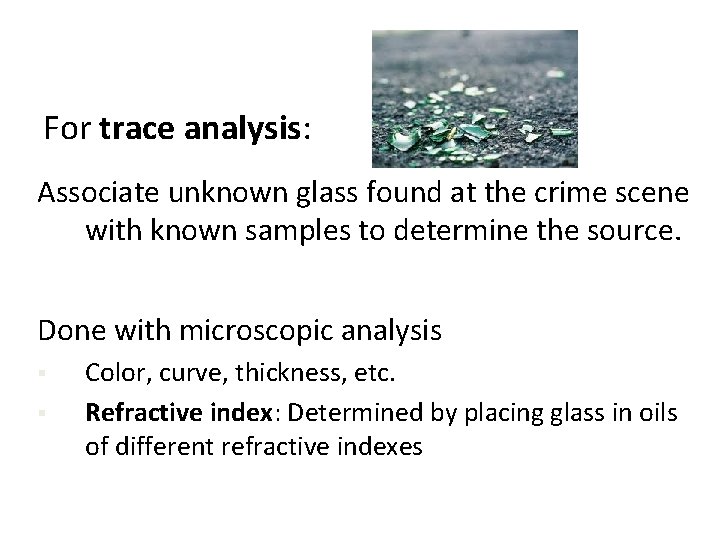
For trace analysis: Associate unknown glass found at the crime scene with known samples to determine the source. Done with microscopic analysis § § Color, curve, thickness, etc. Refractive index: Determined by placing glass in oils of different refractive indexes
Refractive index: § § Low relief = no outside line R. I. of glass and oil are similar High relief = thick outside line (Becke line) R. I. of glass and oil are different