
Glandular Epithelial Tissues A General features functions 1
- Slides: 39
Glandular Epithelial Tissues
A. General features & functions 1. Originate from lining epithelial cells that penetrate the C. T. and form secretory units 2. Epithelial cells specialized to synthesize and secrete a specific product 3. Classifications based on product distribution, structure, type of secretion, and mode of secretion
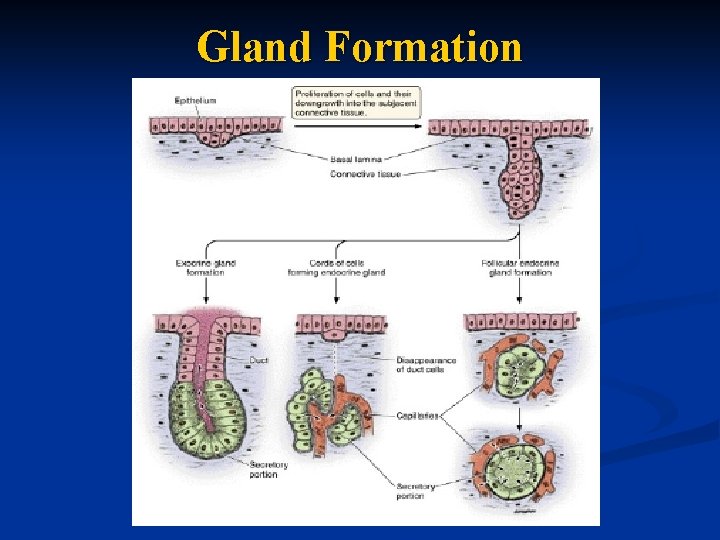
Gland Formation
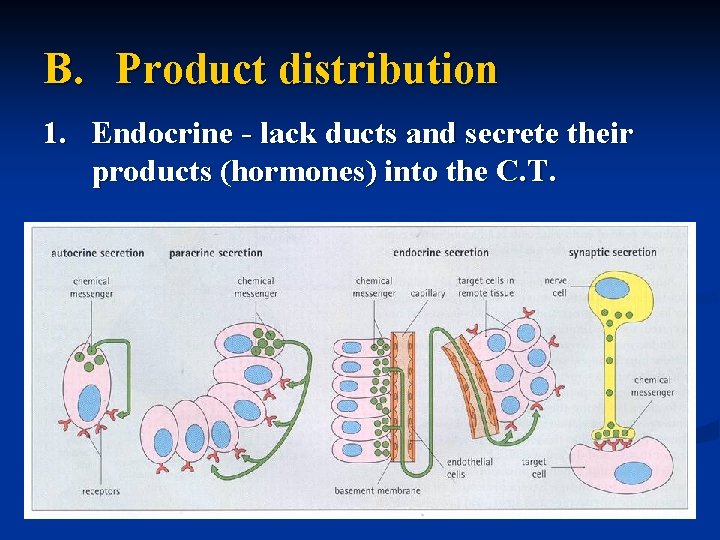
B. Product distribution 1. Endocrine - lack ducts and secrete their products (hormones) into the C. T.
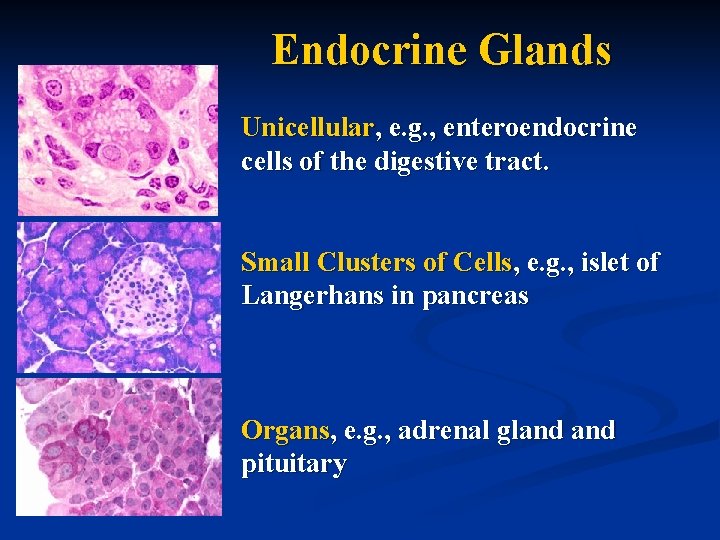
Endocrine Glands Unicellular, e. g. , enteroendocrine cells of the digestive tract. Small Clusters of Cells, e. g. , islet of Langerhans in pancreas Organs, e. g. , adrenal gland pituitary
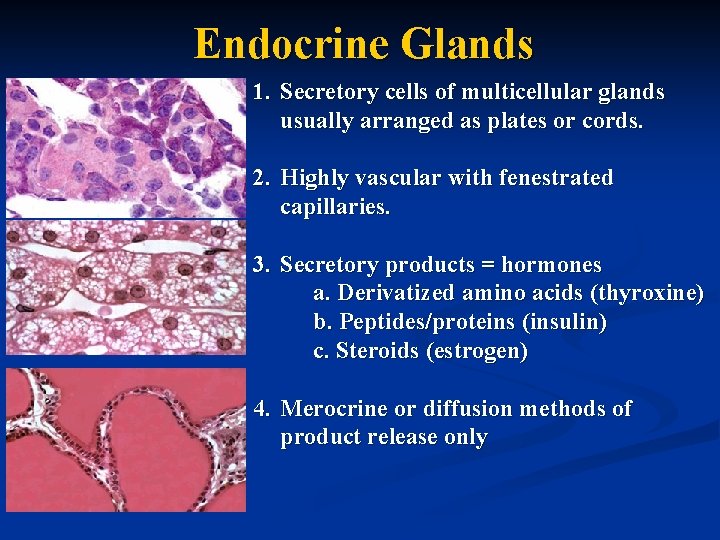
Endocrine Glands 1. Secretory cells of multicellular glands usually arranged as plates or cords. 2. Highly vascular with fenestrated capillaries. 3. Secretory products = hormones a. Derivatized amino acids (thyroxine) b. Peptides/proteins (insulin) c. Steroids (estrogen) 4. Merocrine or diffusion methods of product release only
B. Product distribution 2. Exocrine - secrete their products onto surfaces via ducts a. ducts formed by epithelial cells b. ducts may simply convey or modify the secretion by adding to or concentrating it c. individual gland cells show polarized distribution of organelles
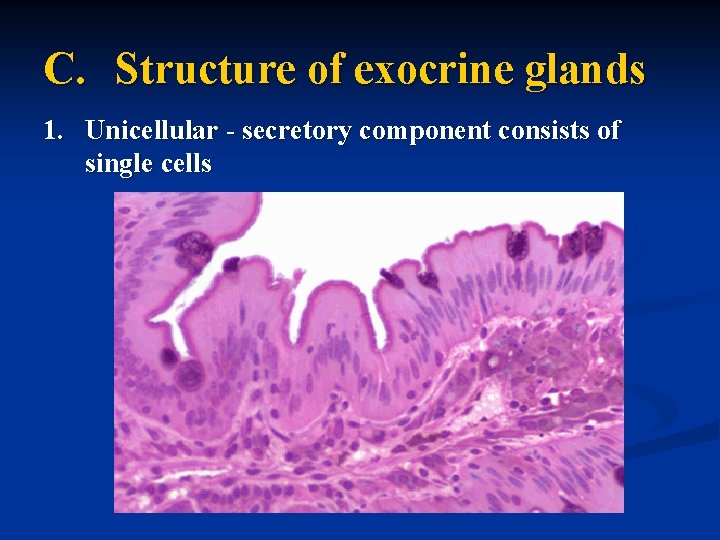
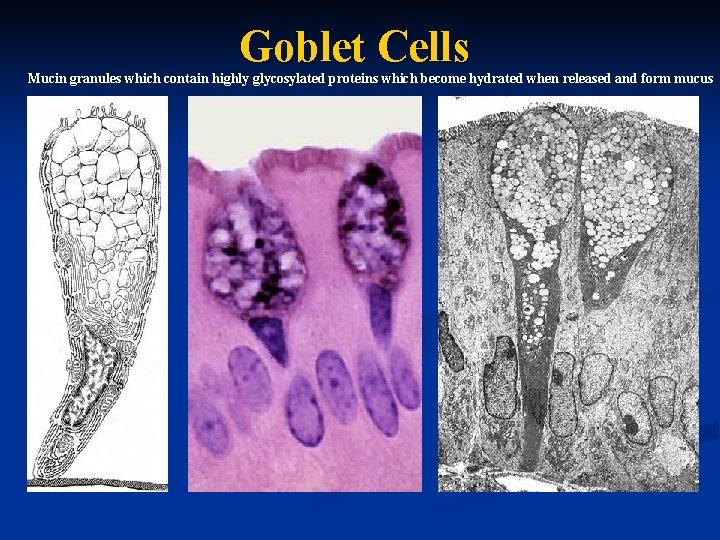
C. Structure of exocrine glands 1. Unicellular - secretory component consists of single cells
Goblet Cells Mucin granules which contain highly glycosylated proteins which become hydrated when released and form mucus
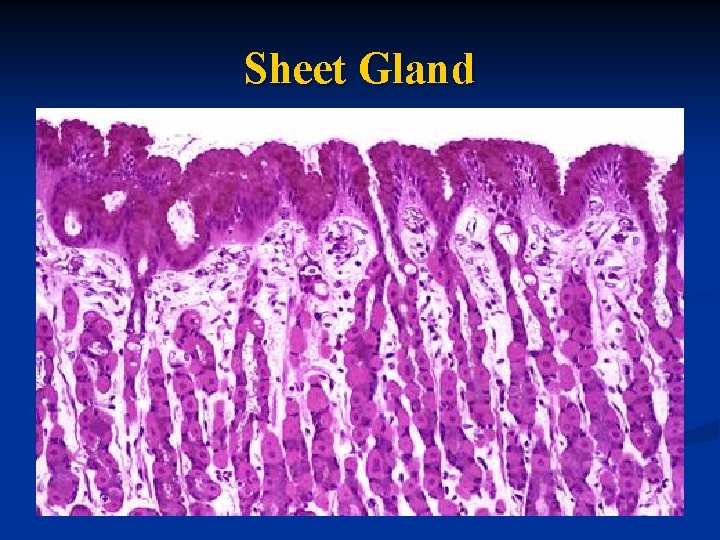
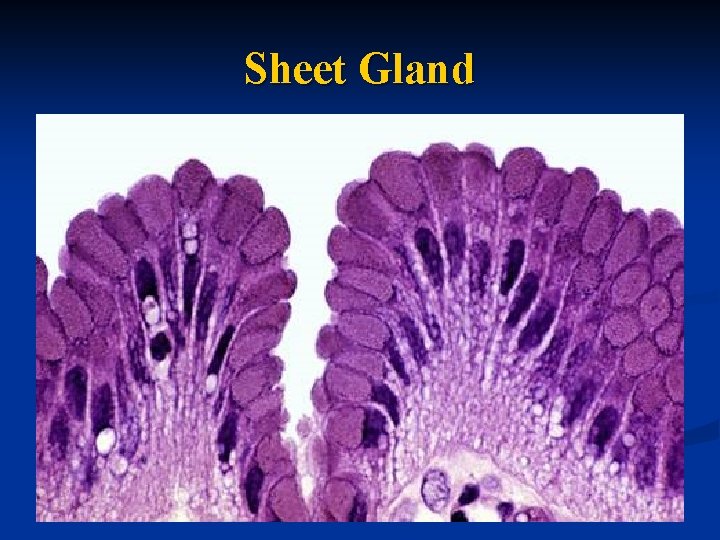
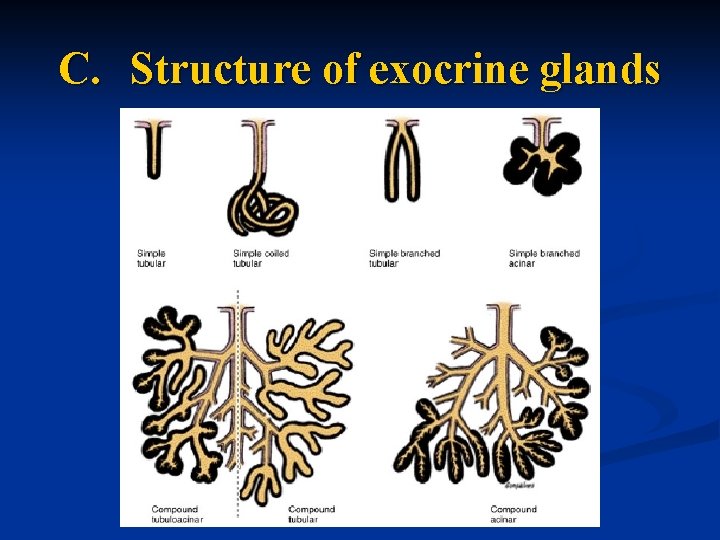
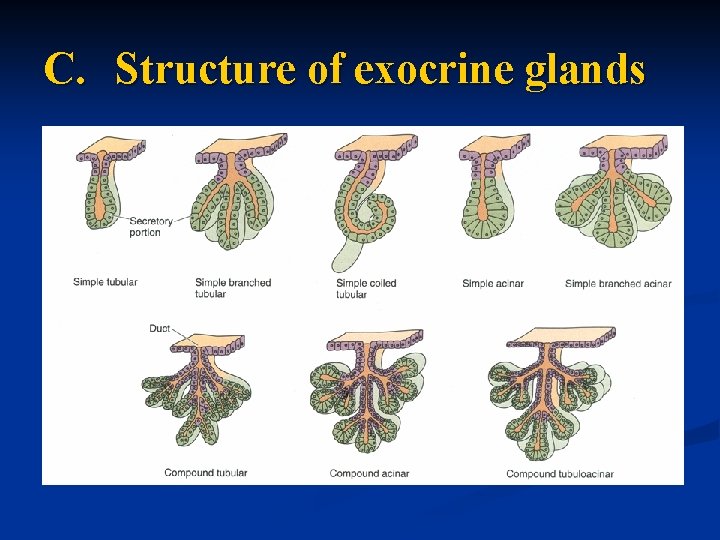
C. Structure of exocrine glands 2. Multicellular - > one cell, subclassified according to arrangement of parenchymal cells and ducts a. sheet gland -simplest arrangement, all cells secretory b. ducts - simple (unbranched) or compound (branched) c. secretory unit of the gland: 1) tubular 2) acinar (alveolar) 3) tubuloacinar (tubuloalveolar)
Sheet Gland
Sheet Gland
C. Structure of exocrine glands
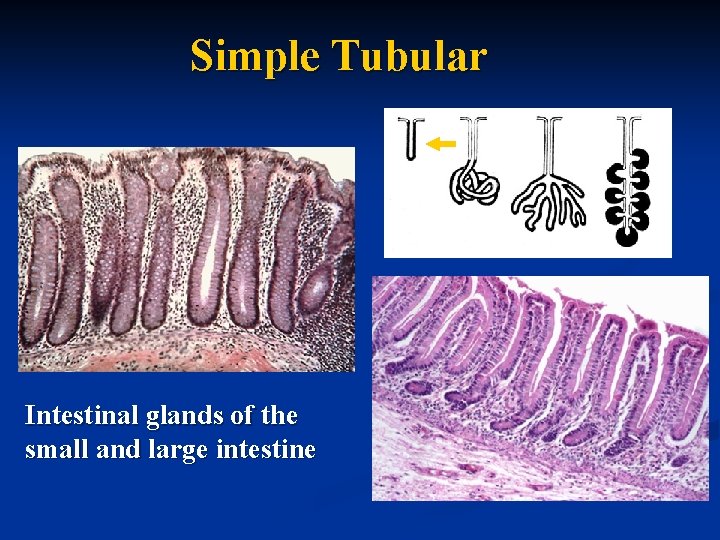
Simple Tubular Intestinal glands of the small and large intestine
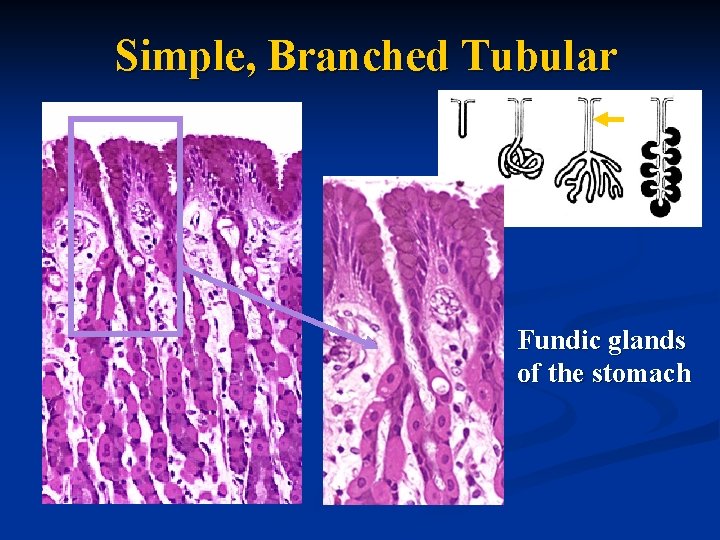
Simple, Branched Tubular Fundic glands of the stomach
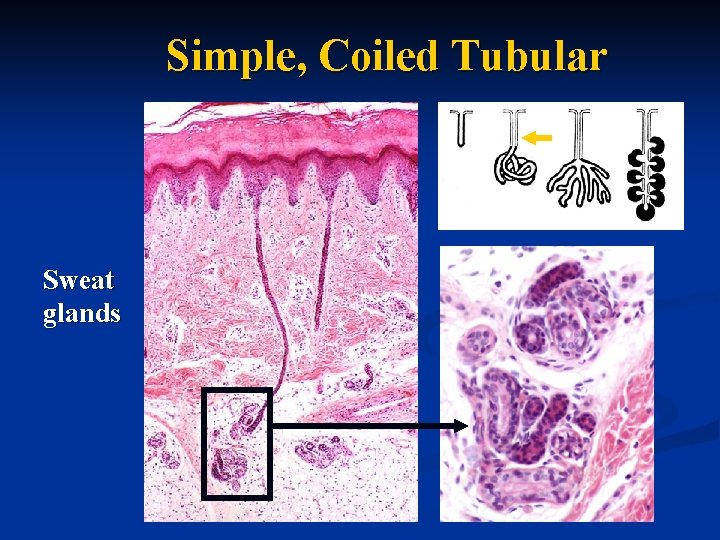
Simple, Coiled Tubular Sweat glands
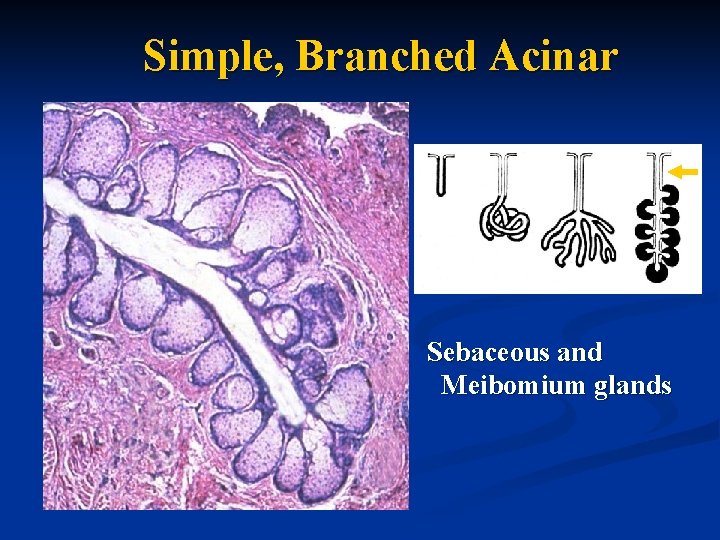
Simple, Branched Acinar Sebaceous and Meibomium glands
C. Structure of exocrine glands
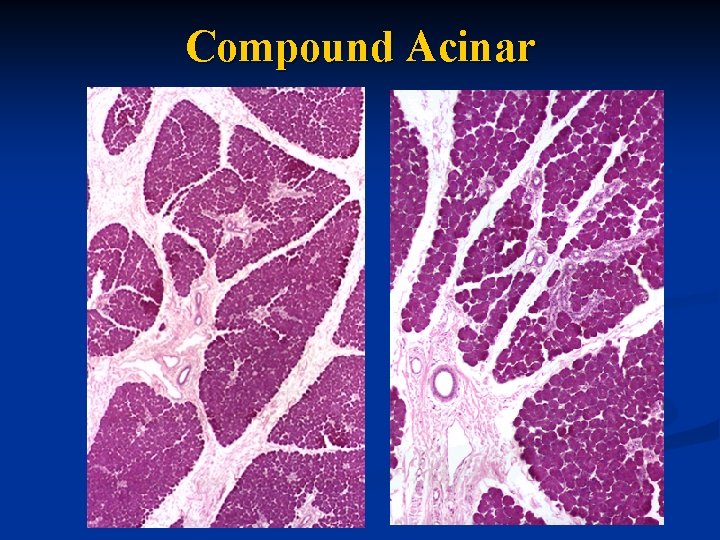
Compound Acinar
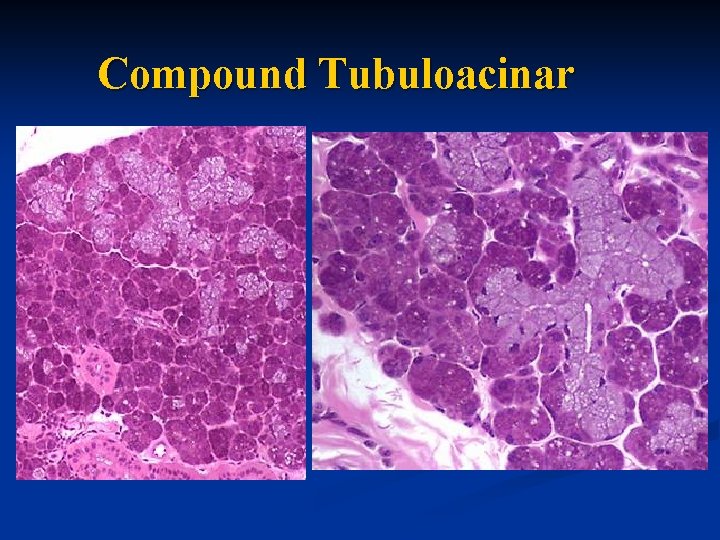
Compound Tubuloacinar
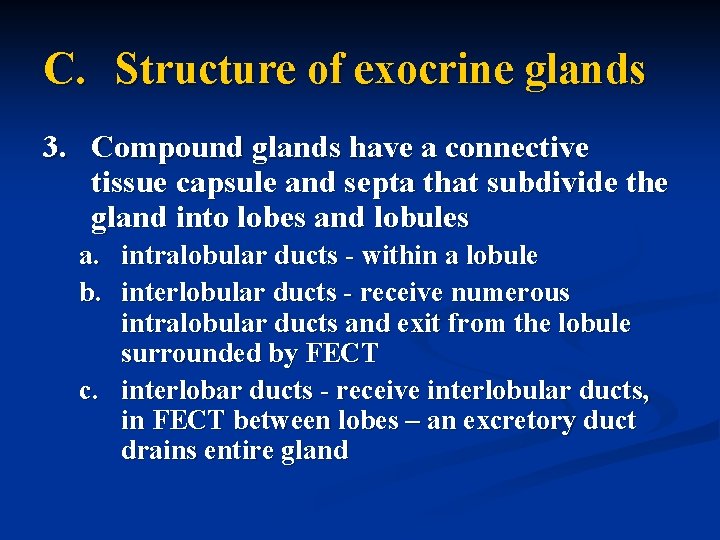
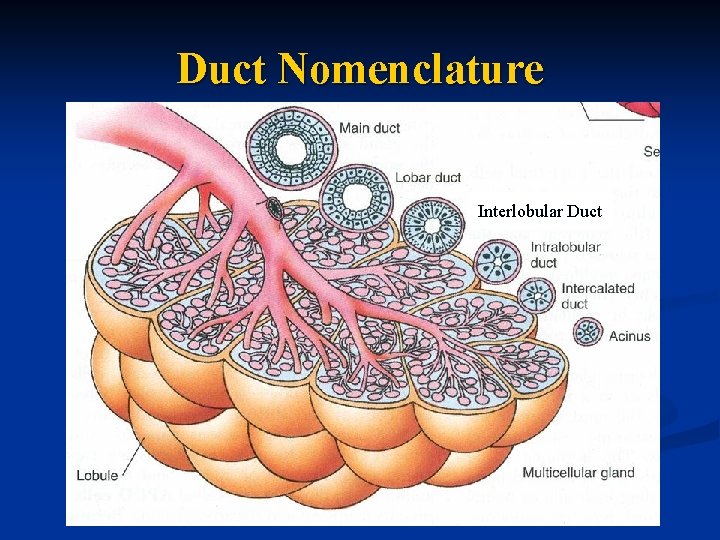
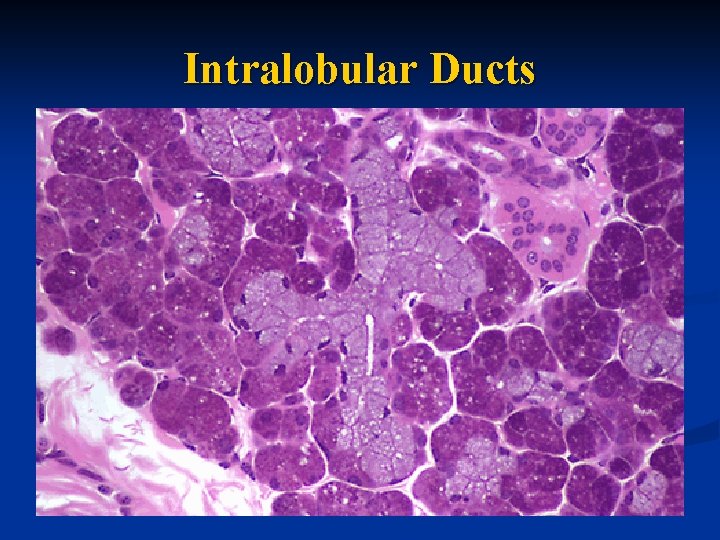
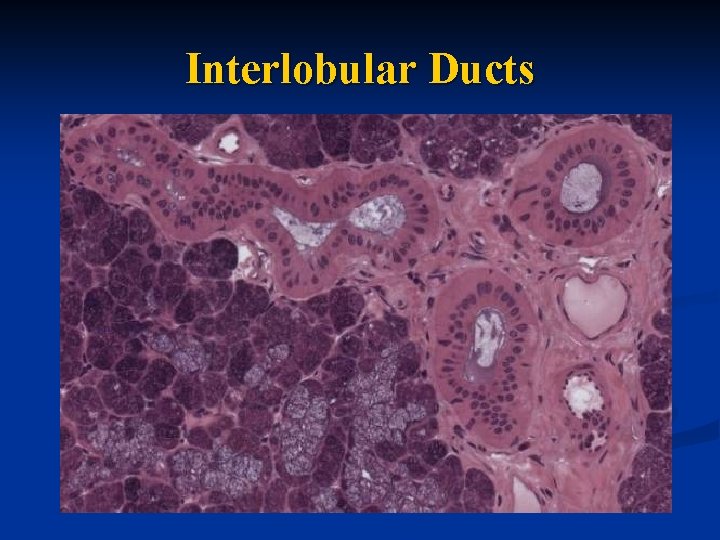
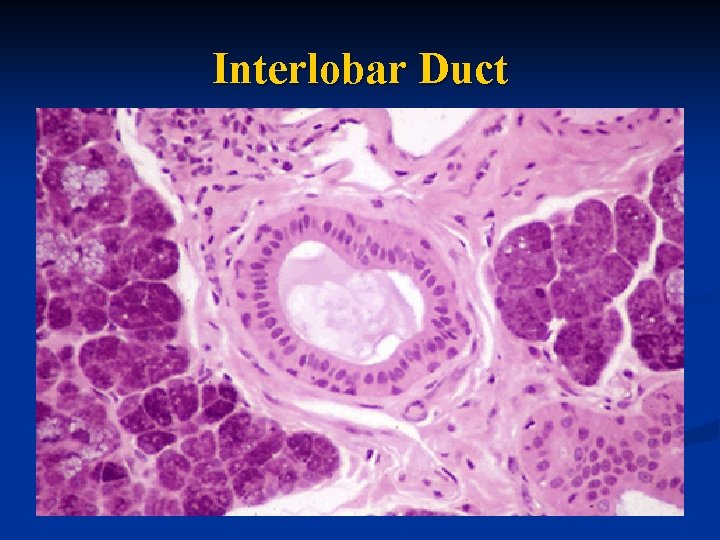
C. Structure of exocrine glands 3. Compound glands have a connective tissue capsule and septa that subdivide the gland into lobes and lobules a. intralobular ducts - within a lobule b. interlobular ducts - receive numerous intralobular ducts and exit from the lobule surrounded by FECT c. interlobar ducts - receive interlobular ducts, in FECT between lobes – an excretory duct drains entire gland
Duct Nomenclature Interlobular Duct
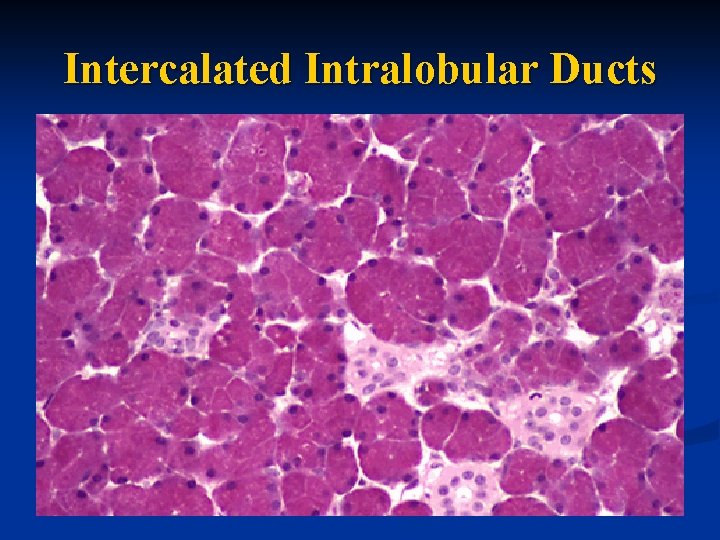
Intercalated Intralobular Ducts
Intralobular Ducts
Interlobular Ducts
Interlobar Duct
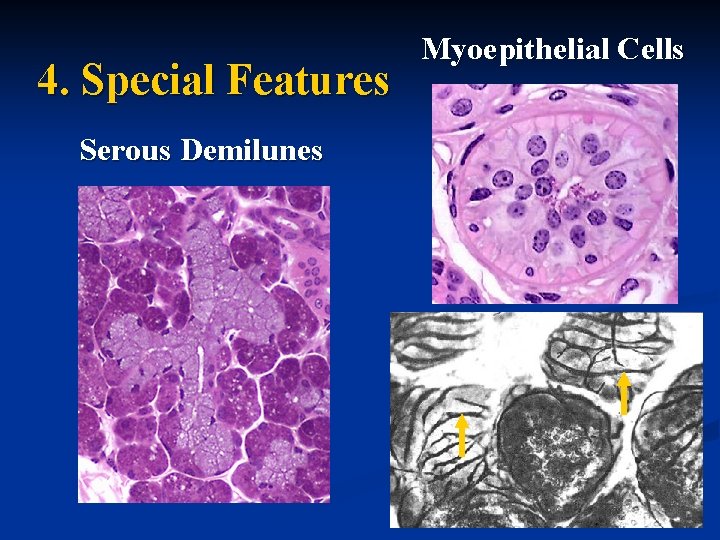
4. Special Features Serous Demilunes Myoepithelial Cells
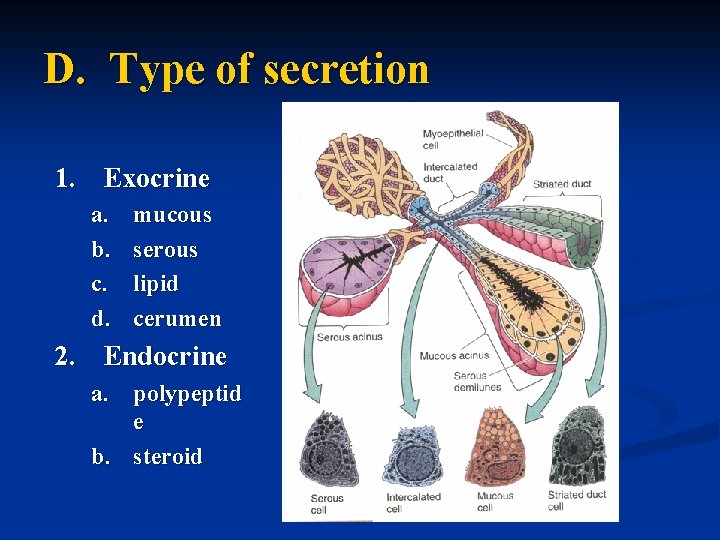
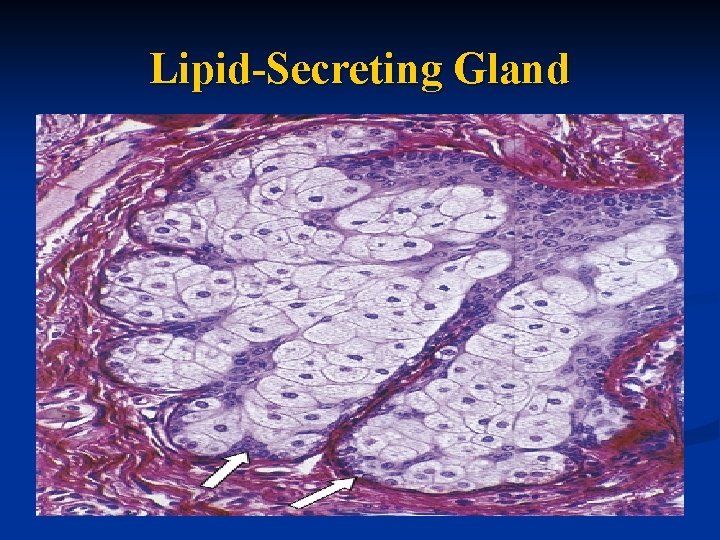
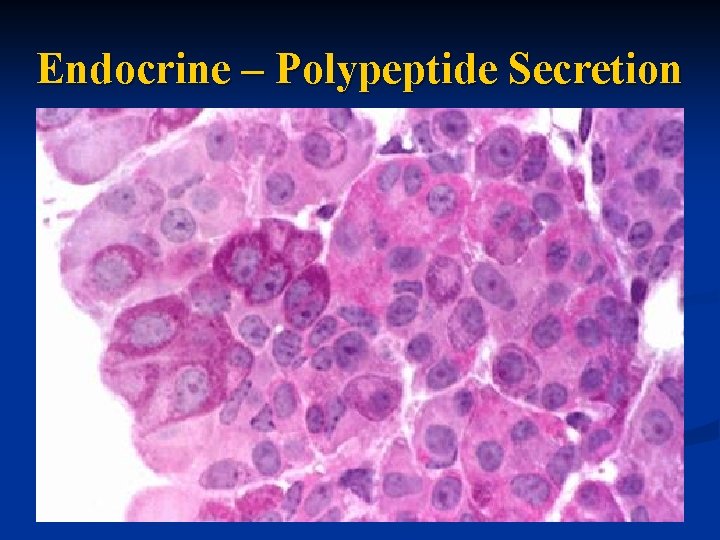
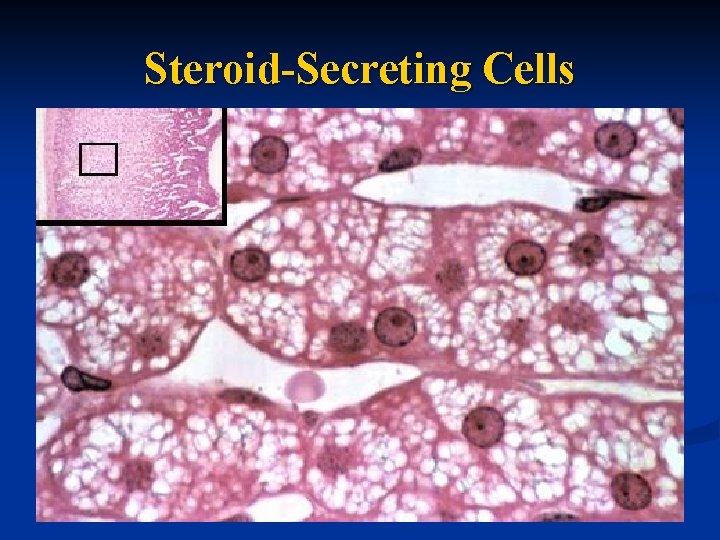
D. Type of secretion 1. Exocrine a. b. c. d. mucous serous lipid cerumen 2. Endocrine a. polypeptid e b. steroid
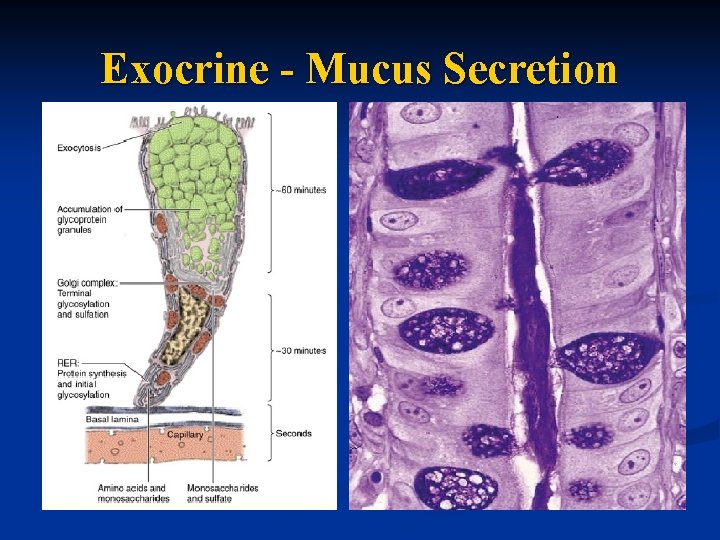
Exocrine - Mucus Secretion
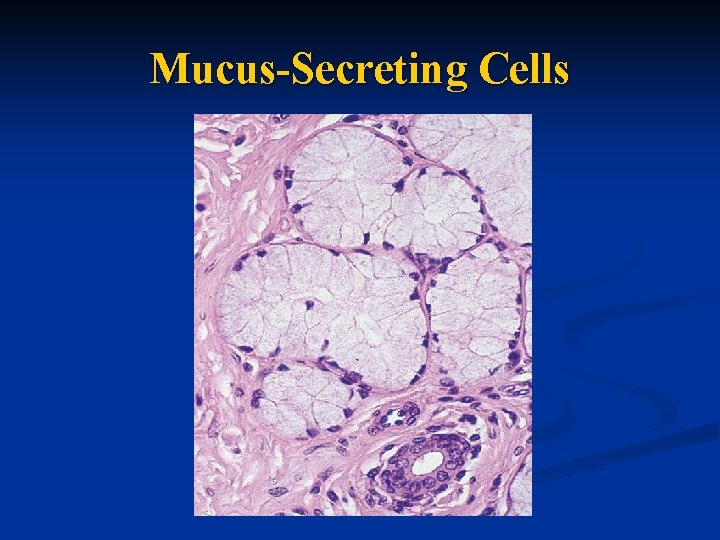
Mucus-Secreting Cells
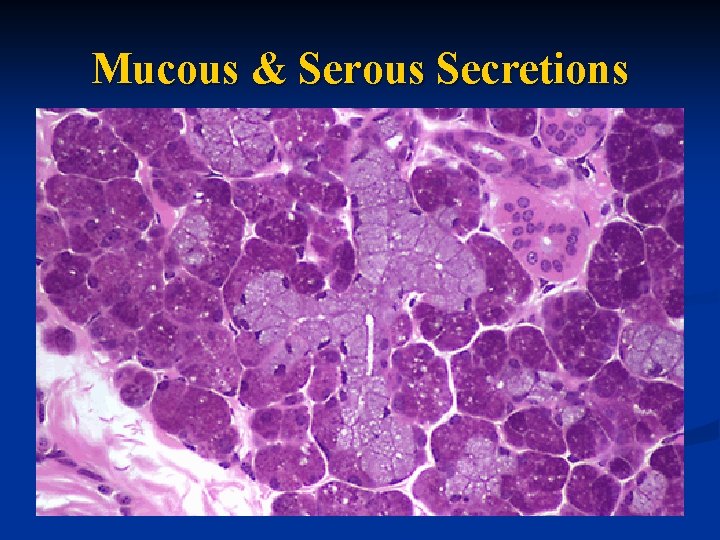
Mucous & Serous Secretions
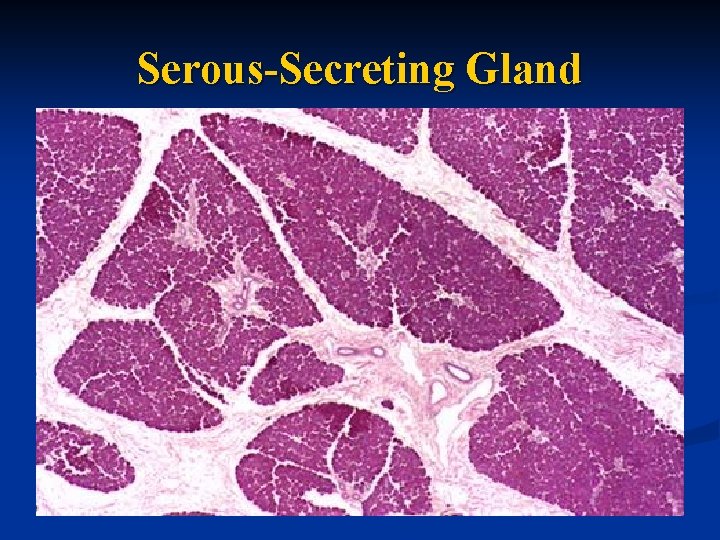
Serous-Secreting Gland
Lipid-Secreting Gland
Endocrine – Polypeptide Secretion
Steroid-Secreting Cells
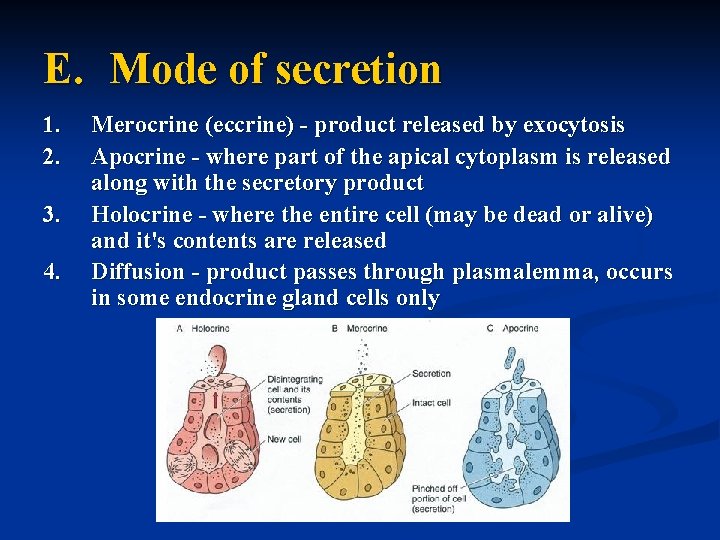
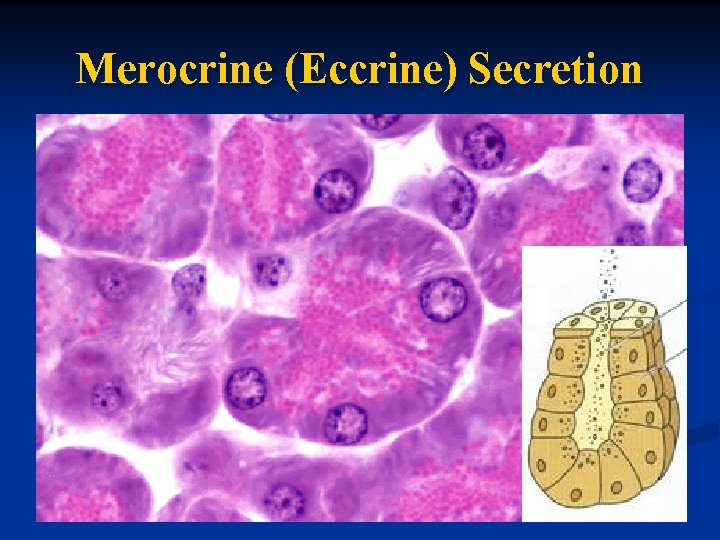
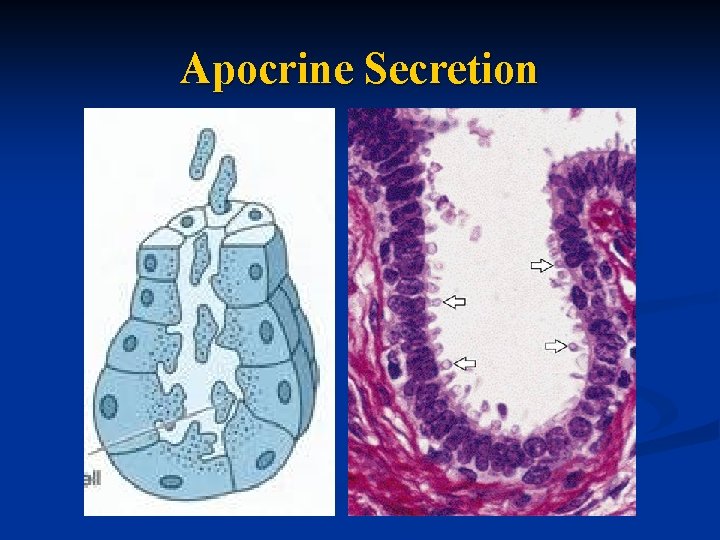
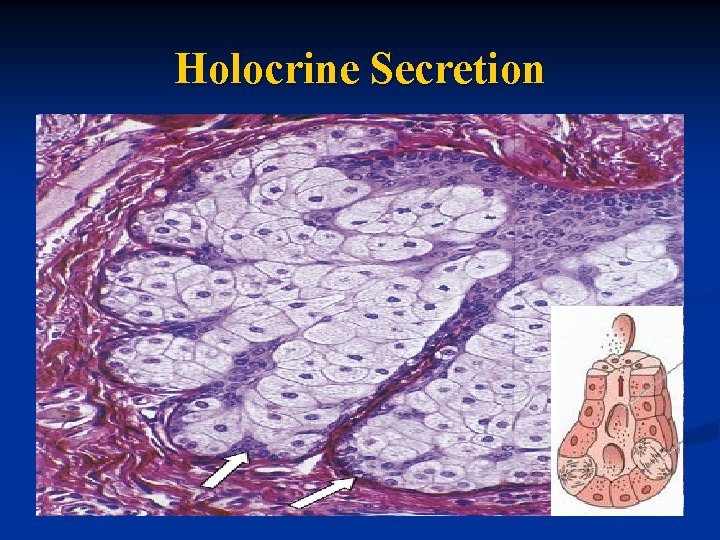
E. Mode of secretion 1. 2. 3. 4. Merocrine (eccrine) - product released by exocytosis Apocrine - where part of the apical cytoplasm is released along with the secretory product Holocrine - where the entire cell (may be dead or alive) and it's contents are released Diffusion - product passes through plasmalemma, occurs in some endocrine gland cells only
Merocrine (Eccrine) Secretion
Apocrine Secretion
Holocrine Secretion