
Glands There are two types of glands in
- Slides: 16
Glands There are two types of glands in the body: Exocrine Glands or “outside glands” release chemicals into a duct/tube/cavity or to the outside of the body. Examples are: sweat glands, sebaceous (oil) glands, salivary glands, gastric glands, lachrymal (tear) gland. Endocrine Glands also called “Ductless Glands” release their chemicals called hormones directly into the blood stream. The list of endocrine glands follows.
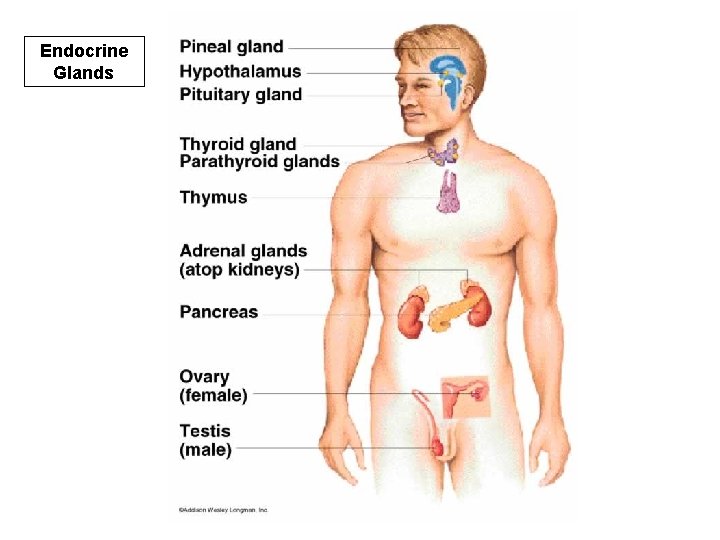
Endocrine Glands
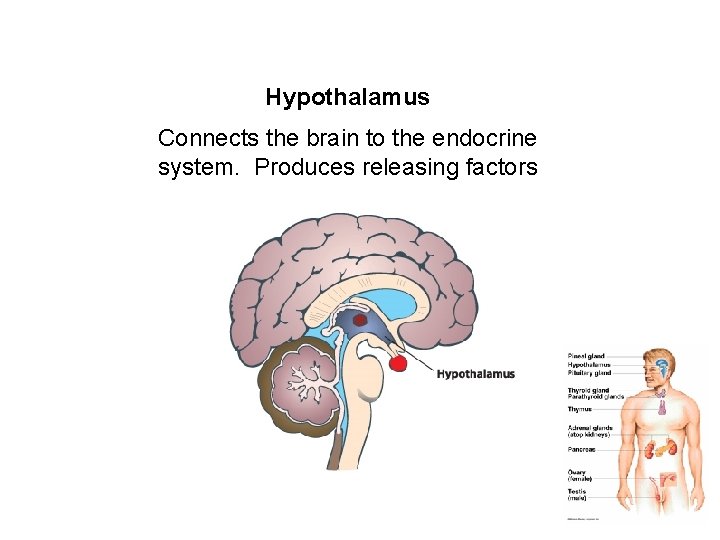
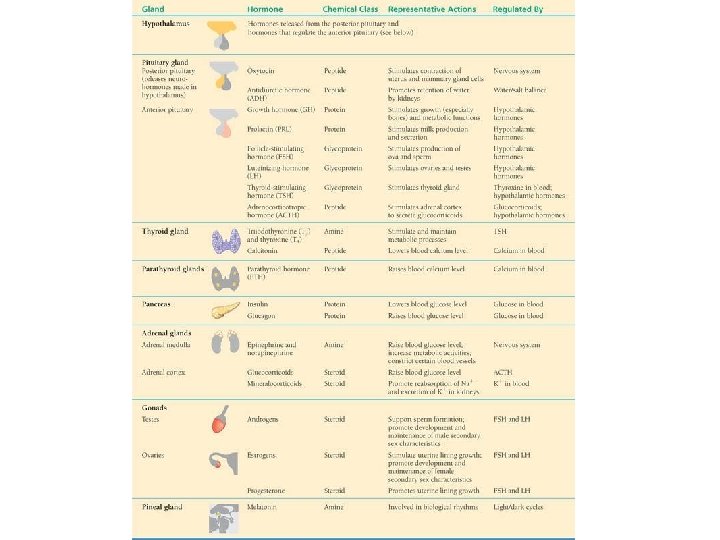
Hypothalamus Connects the brain to the endocrine system. Produces releasing factors
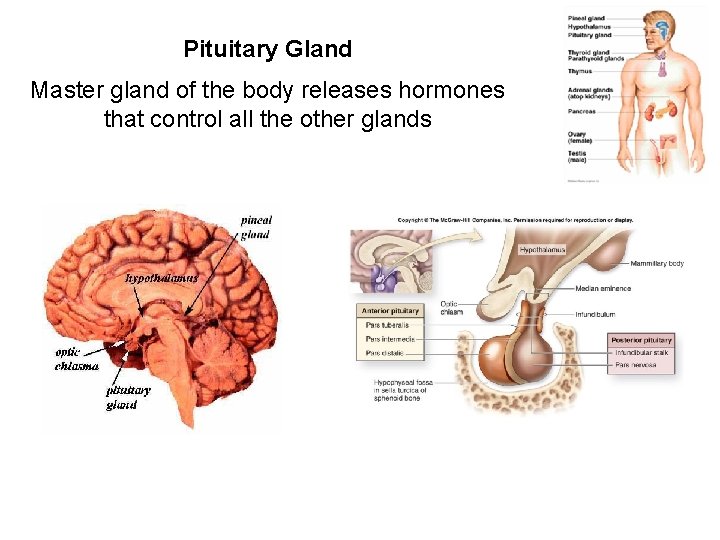
Pituitary Gland Master gland of the body releases hormones that control all the other glands
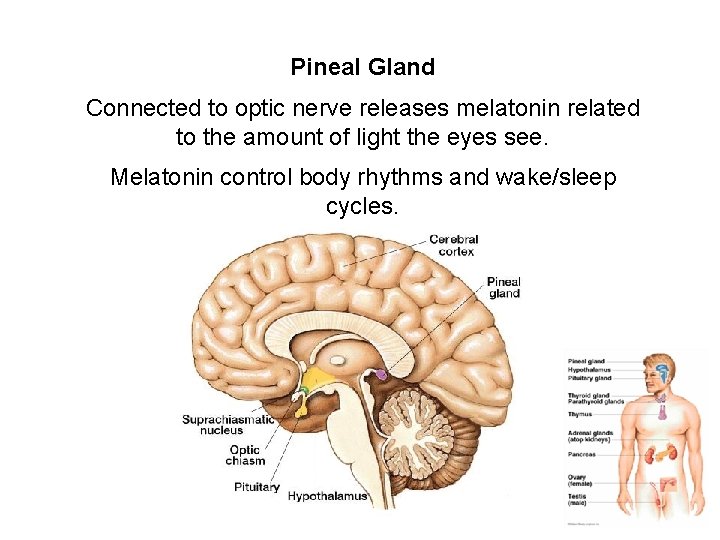
Pineal Gland Connected to optic nerve releases melatonin related to the amount of light the eyes see. Melatonin control body rhythms and wake/sleep cycles.
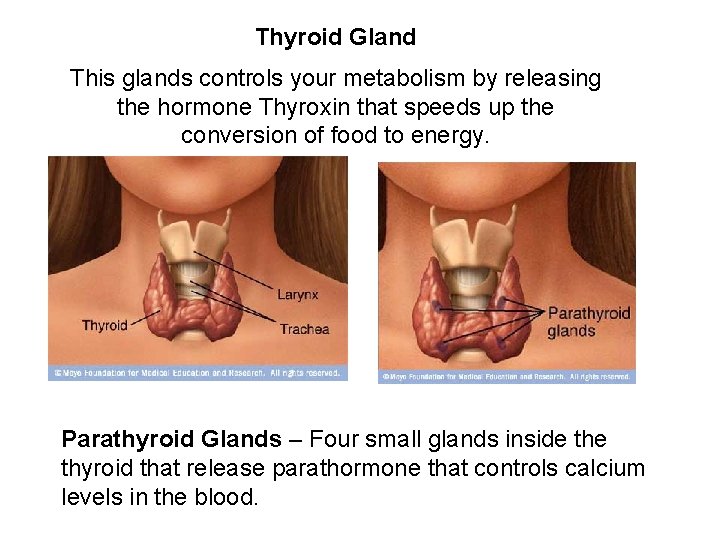
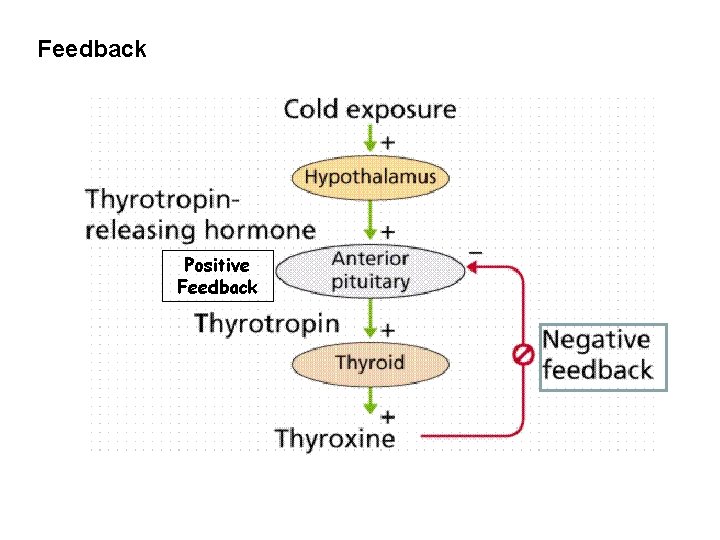
Thyroid Gland This glands controls your metabolism by releasing the hormone Thyroxin that speeds up the conversion of food to energy. Parathyroid Glands – Four small glands inside thyroid that release parathormone that controls calcium levels in the blood.
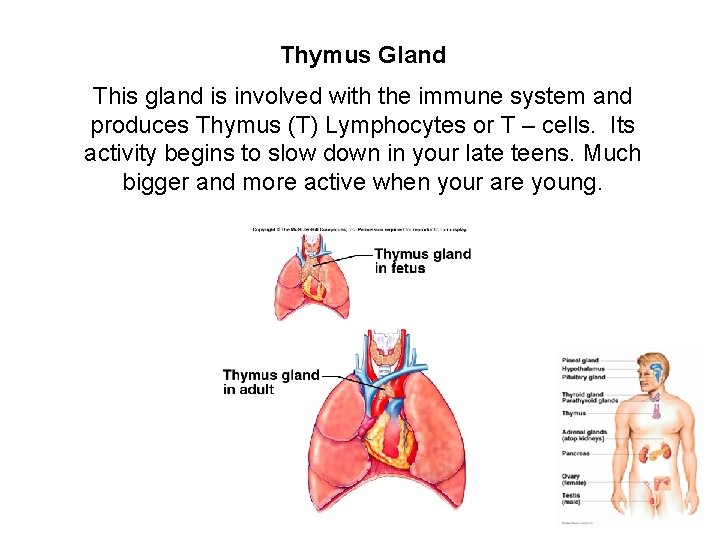
Thymus Gland This gland is involved with the immune system and produces Thymus (T) Lymphocytes or T – cells. Its activity begins to slow down in your late teens. Much bigger and more active when your are young.
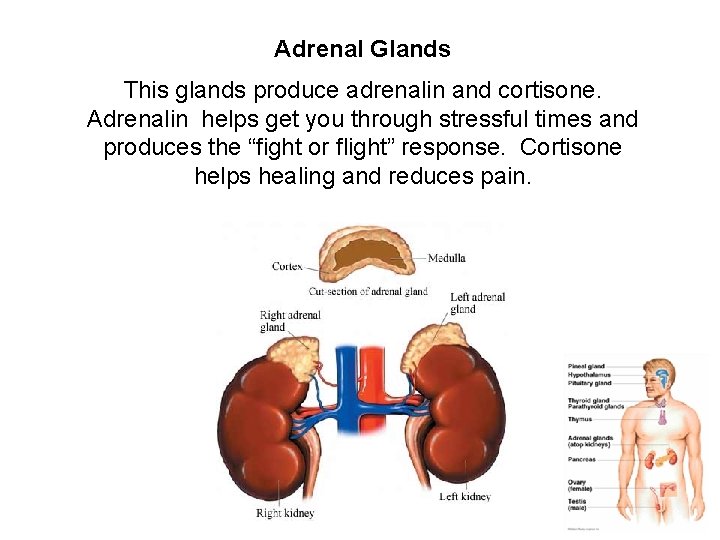
Adrenal Glands This glands produce adrenalin and cortisone. Adrenalin helps get you through stressful times and produces the “fight or flight” response. Cortisone helps healing and reduces pain.
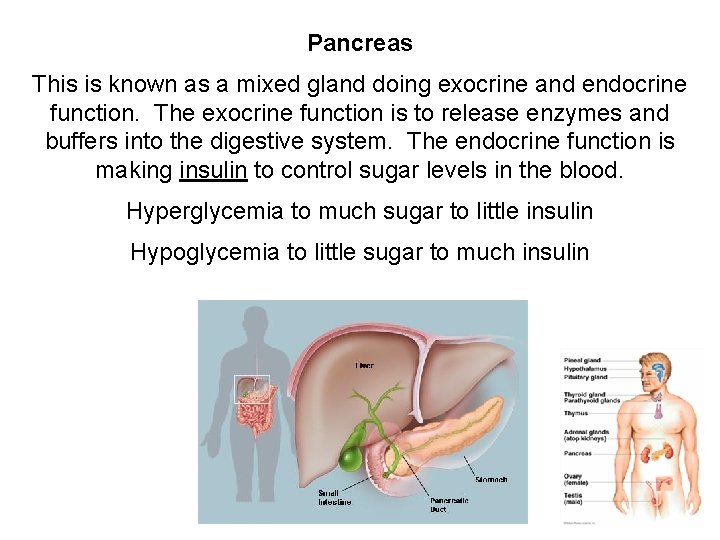
Pancreas This is known as a mixed gland doing exocrine and endocrine function. The exocrine function is to release enzymes and buffers into the digestive system. The endocrine function is making insulin to control sugar levels in the blood. Hyperglycemia to much sugar to little insulin Hypoglycemia to little sugar to much insulin
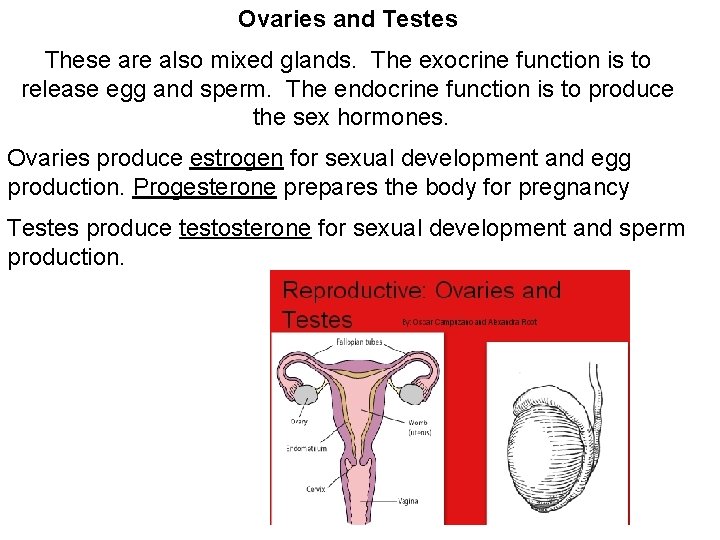
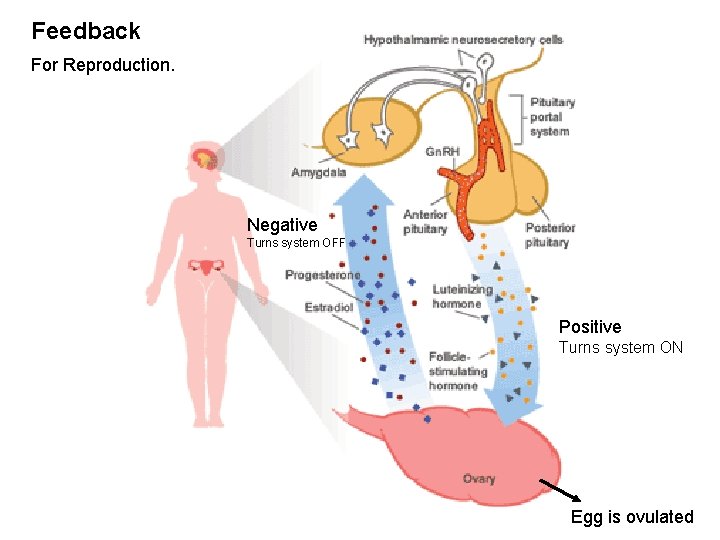
Ovaries and Testes These are also mixed glands. The exocrine function is to release egg and sperm. The endocrine function is to produce the sex hormones. Ovaries produce estrogen for sexual development and egg production. Progesterone prepares the body for pregnancy Testes produce testosterone for sexual development and sperm production.
There are two types of hormones Steroid Hormones these are small molecules that can affect every tissue in the body. ex: Estrogen & Testosterone Protein Hormones are large molecules and can only affect cells that have the proper receptors for the hormone to attach to. This tissue is called Target Tissue ex: Glucagon Liver
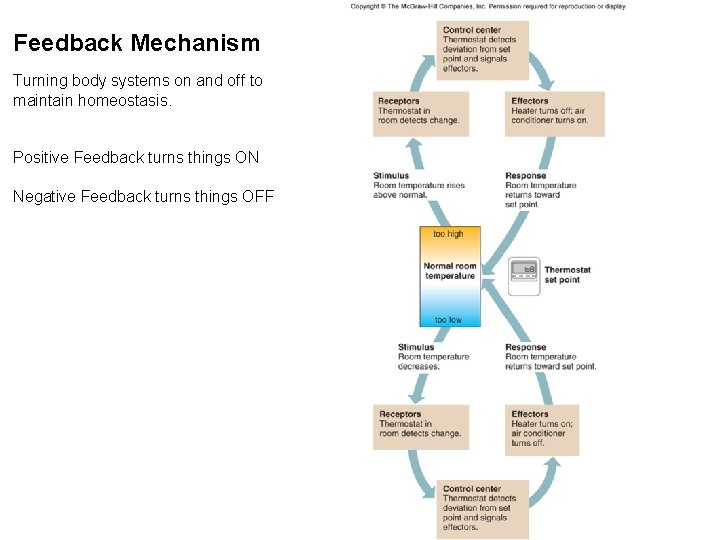
Feedback Mechanism Turning body systems on and off to maintain homeostasis. Positive Feedback turns things ON Negative Feedback turns things OFF
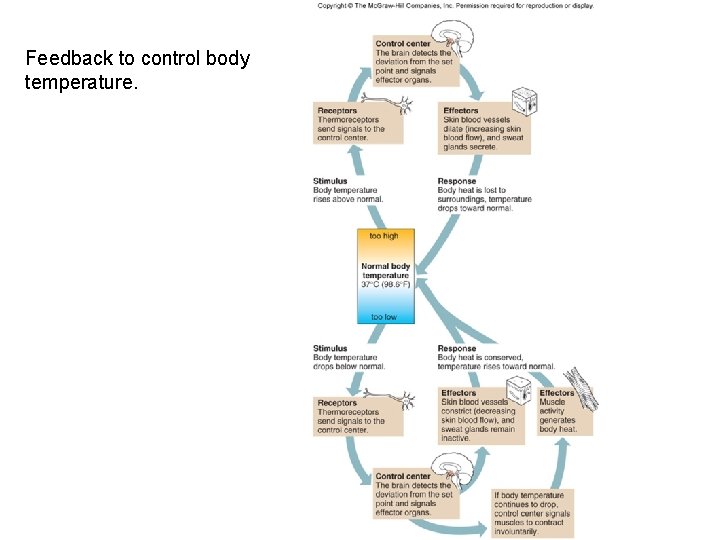
Feedback to control body temperature.
Feedback Positive Feedback
Feedback For Reproduction. Negative Turns system OFF Positive Turns system ON Egg is ovulated