
Glaciology Glacial Calving What is Calving Calving is
- Slides: 16
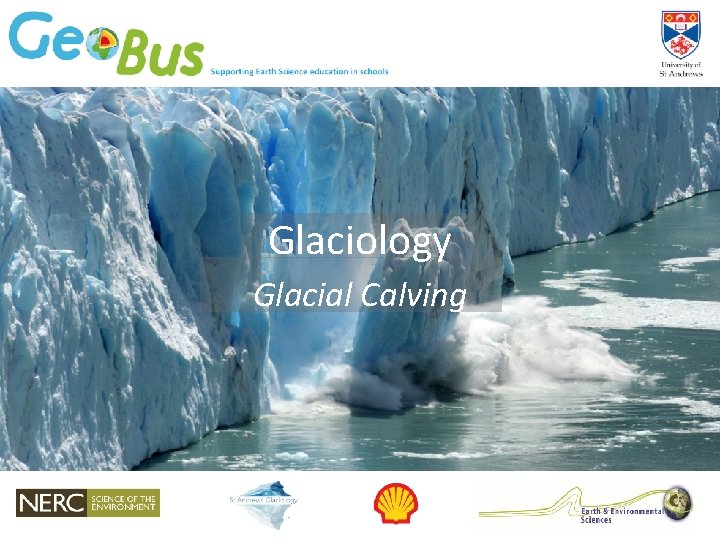
Glaciology Glacial Calving
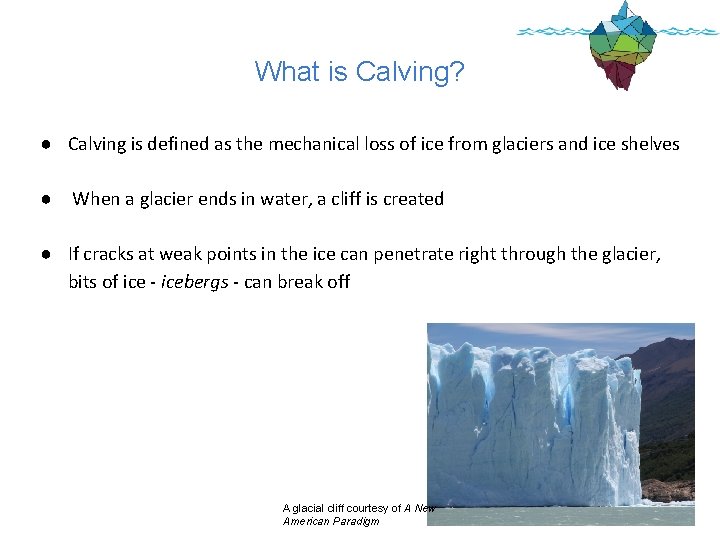
What is Calving? ● Calving is defined as the mechanical loss of ice from glaciers and ice shelves ● When a glacier ends in water, a cliff is created ● If cracks at weak points in the ice can penetrate right through the glacier, bits of ice - icebergs - can break off A glacial cliff courtesy of A New American Paradigm
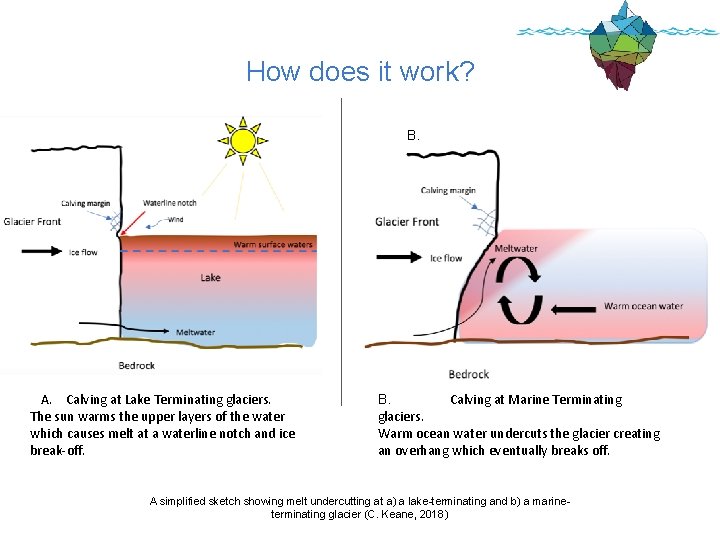
How does it work? B. A. Calving at Lake Terminating glaciers. The sun warms the upper layers of the water which causes melt at a waterline notch and ice break-off. B. Calving at Marine Terminating glaciers. Warm ocean water undercuts the glacier creating an overhang which eventually breaks off. A simplified sketch showing melt undercutting at a) a lake-terminating and b) a marineterminating glacier (C. Keane, 2018)
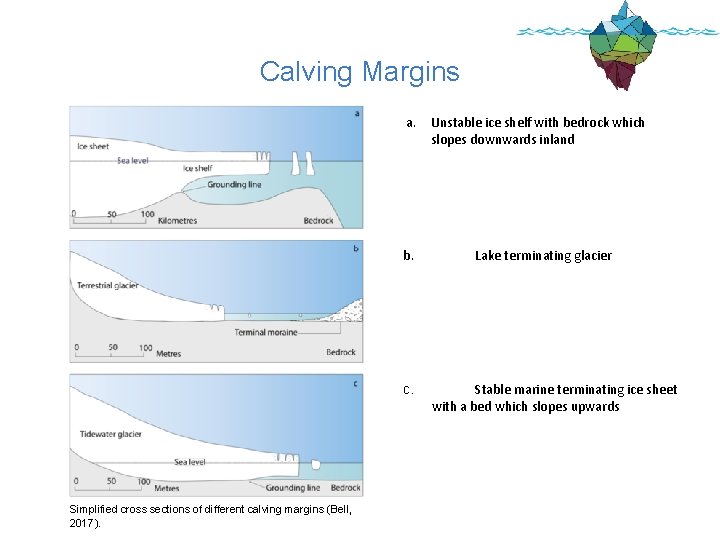
Calving Margins a. b. c. Simplified cross sections of different calving margins (Bell, 2017). Unstable ice shelf with bedrock which slopes downwards inland Lake terminating glacier Stable marine terminating ice sheet with a bed which slopes upwards
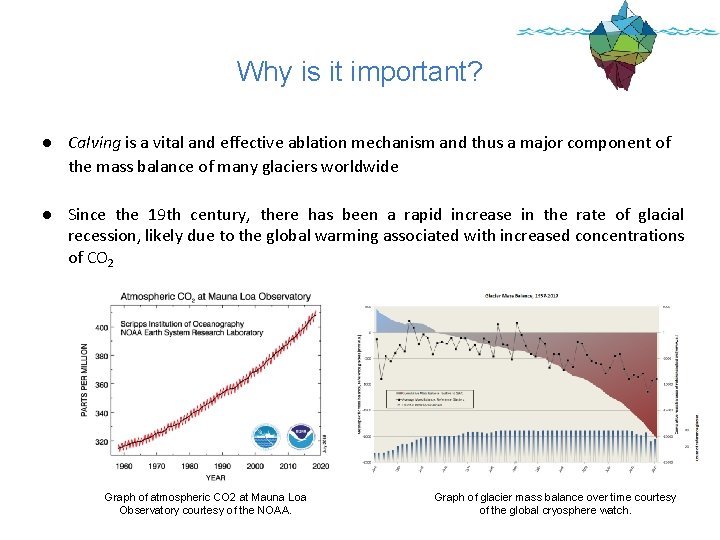
Why is it important? ● Calving is a vital and effective ablation mechanism and thus a major component of the mass balance of many glaciers worldwide ● Since the 19 th century, there has been a rapid increase in the rate of glacial recession, likely due to the global warming associated with increased concentrations of CO 2 Graph of atmospheric CO 2 at Mauna Loa Observatory courtesy of the NOAA. Graph of glacier mass balance over time courtesy of the global cryosphere watch.
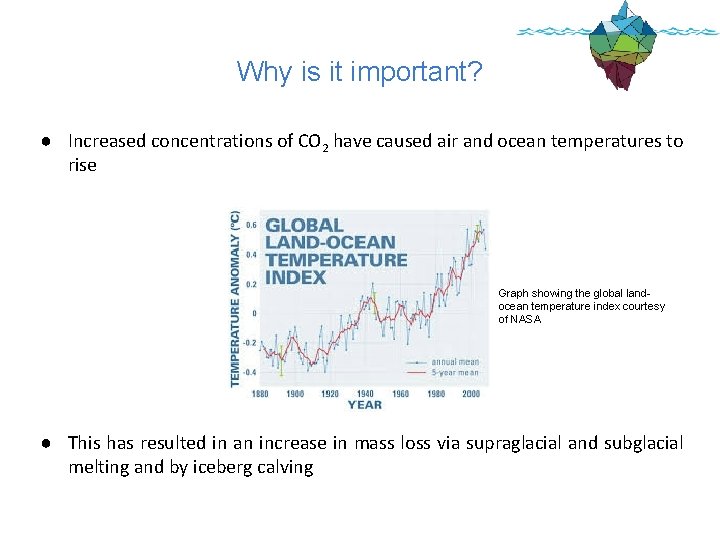
Why is it important? ● Increased concentrations of CO 2 have caused air and ocean temperatures to rise Graph showing the global landocean temperature index courtesy of NASA ● This has resulted in an increase in mass loss via supraglacial and subglacial melting and by iceberg calving
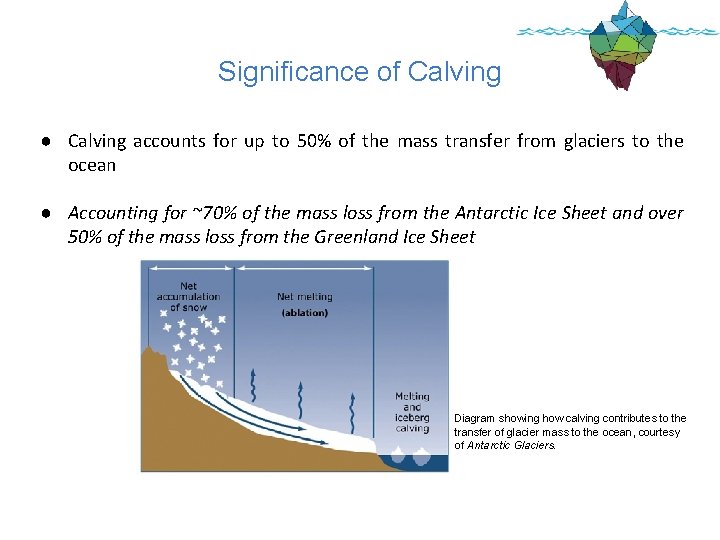
Significance of Calving ● Calving accounts for up to 50% of the mass transfer from glaciers to the ocean ● Accounting for ~70% of the mass loss from the Antarctic Ice Sheet and over 50% of the mass loss from the Greenland Ice Sheet Diagram showing how calving contributes to the transfer of glacier mass to the ocean, courtesy of Antarctic Glaciers.
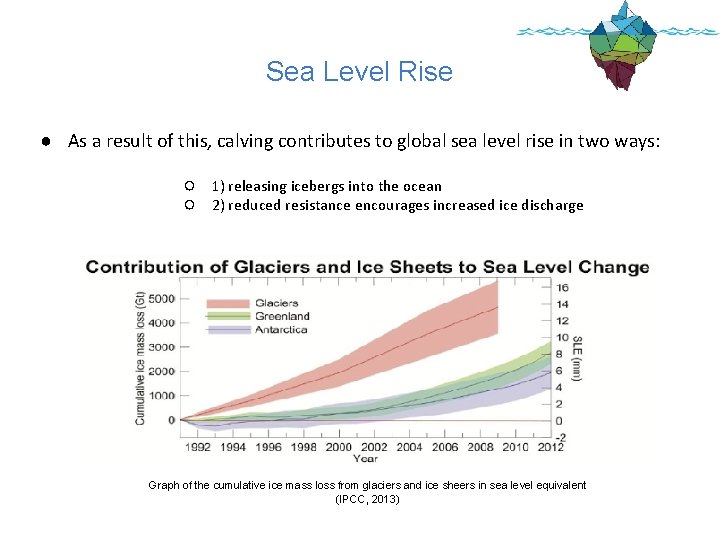
Sea Level Rise ● As a result of this, calving contributes to global sea level rise in two ways: ○ ○ 1) releasing icebergs into the ocean 2) reduced resistance encourages increased ice discharge Graph of the cumulative ice mass loss from glaciers and ice sheers in sea level equivalent (IPCC, 2013)
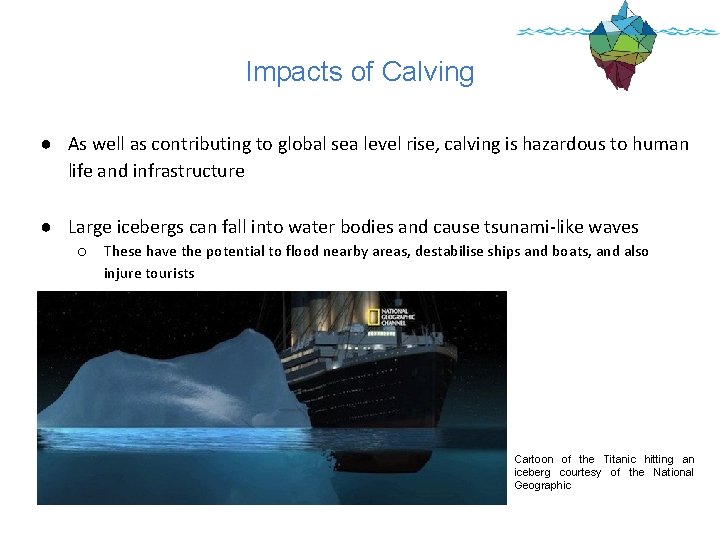
Impacts of Calving ● As well as contributing to global sea level rise, calving is hazardous to human life and infrastructure ● Large icebergs can fall into water bodies and cause tsunami-like waves ○ These have the potential to flood nearby areas, destabilise ships and boats, and also injure tourists Cartoon of the Titanic hitting an iceberg courtesy of the National Geographic
True or False Calving is the breakoff of icebergs at the front of a glacier. True or False
True or False Calving is the breakoff of icebergs at the front of a glacier. True or False
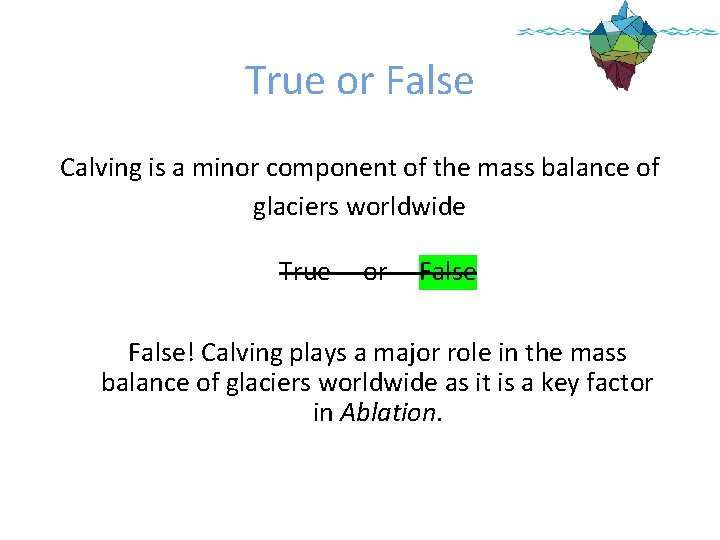
True or False Calving is a minor component of the mass balance of glaciers worldwide True or False
True or False Calving is a minor component of the mass balance of glaciers worldwide True or False! Calving plays a major role in the mass balance of glaciers worldwide as it is a key factor in Ablation.
True or False Calving has increased in line with global temperature increases, the result of increased concentrations of atmospheric CO 2 True or False
True or False Calving has increased in line with global temperature increases, the result of increased concentrations of atmospheric CO 2 True or False