
Glaciers Changing Earths Surface 5 Agents of Erosion
- Slides: 19
Glaciers Changing Earth’s Surface
5 Agents of Erosion l l l Gravity Running Water Glaciers Waves Wind
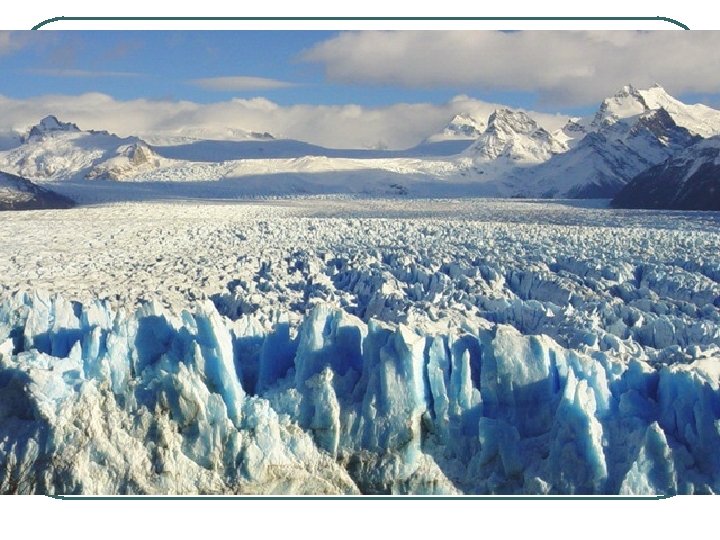
Glaciers l l Glacier – any large mass of ice that moves slowly over land. Two Types • Continental • Valley
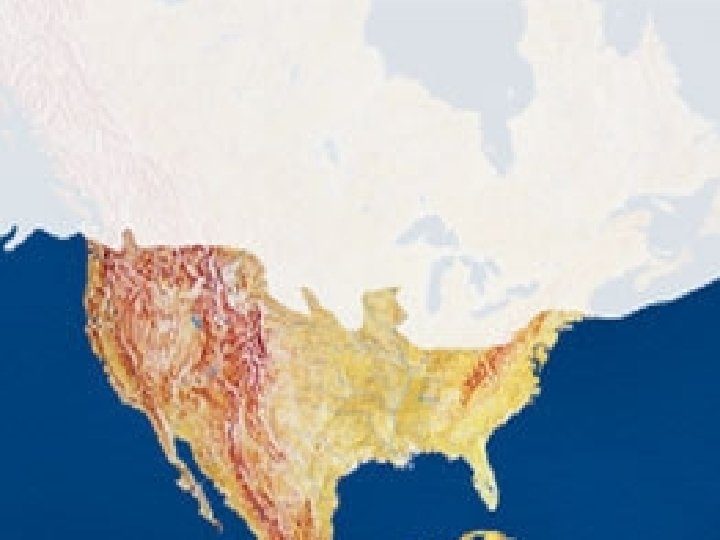
Continental Glaciers l A glacier that covers much of a continent or large island.
Ice Age l Continental glaciers have covered larger parts of Earth’s surface.
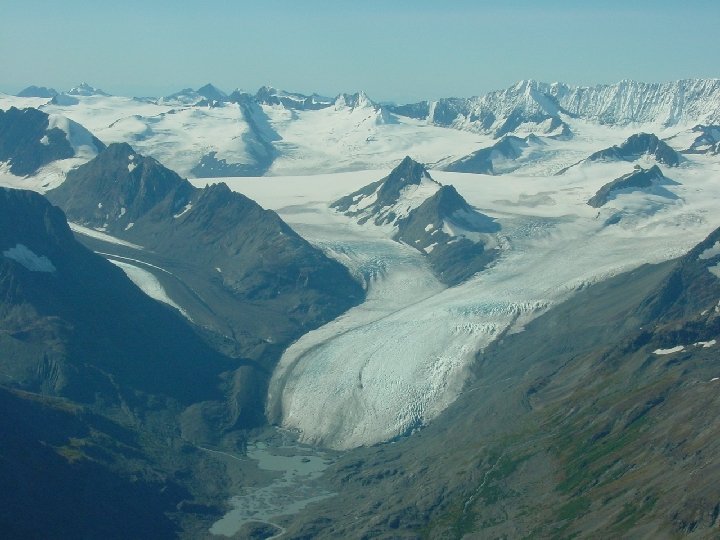
Valley Glaciers l A long, narrow glacier that forms when snow and ice build up high in a mountain valley.
Valley Glaciers l Once the depth of the snow and ice reaches more than 30 -40 meters, gravity begins to pull the glacier downhill.
Valley Glaciers l Rate – a few centimeters to a few meters per day.
Glaciers Shape the Land l l Erosion Deposition
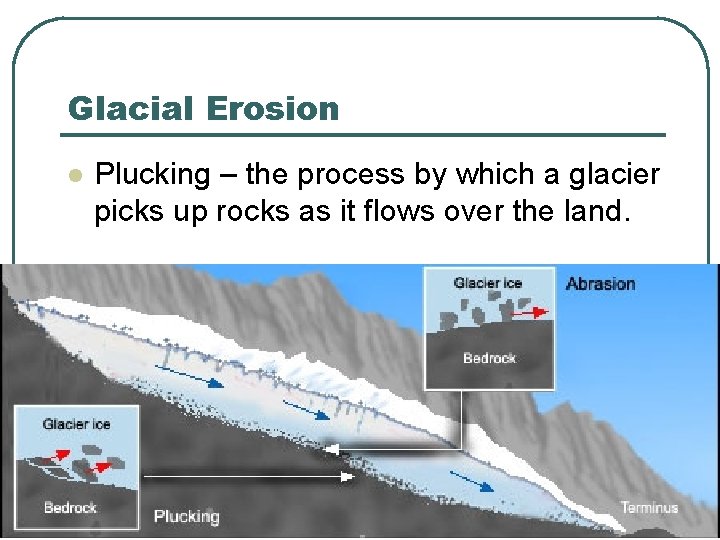
Glacial Erosion l Plucking – the process by which a glacier picks up rocks as it flows over the land.
Glacial Deposition l When a glacier melts, it deposits the sediment it eroded from the land, creating various landforms.
Till l l The mixture of sediment that a glacier deposits directly on the surface. Clay, silt, sand, gravel, and boulders
Deposition Landforms l Moraine • The till deposited at the edges of a glacier forms a ridge. l Terminal Moraine • The ridge of till at the farthest point reached • by a glacier Long Island NY is a terminal moraine from the last ice age.
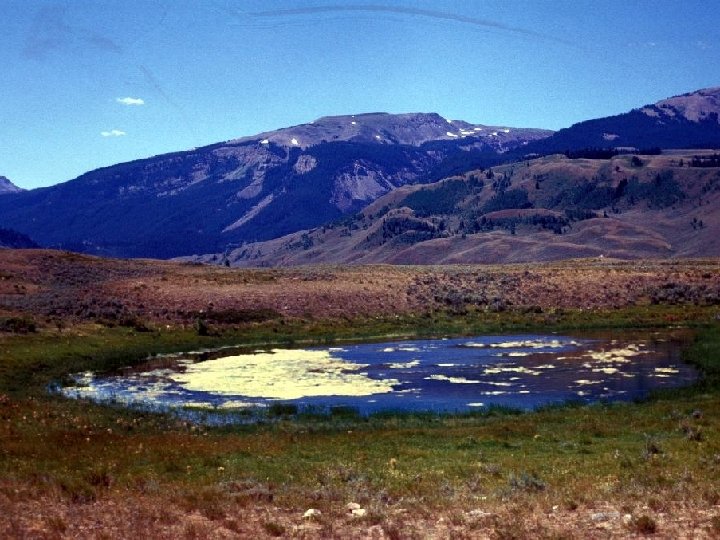
Deposition Landforms l Kettle • A small depression that forms when a chunk • of ice is left in glacial till. Kettles often fill with water. Many found in Minnesota