
Glaciers are parts of two basic cycles Hydrologic
Glaciers are parts of two basic cycles Hydrologic Rock cycle Glacier – a thick mass of ice that originates on land from the accumulation, compaction, and recrystallization of snow
Glaciers Types of glaciers Valley (alpine) glaciers Exist in mountainous areas Flows down a valley from an accumulation center at its head Ice sheets Exist on a larger scale than valley glaciers Two major ice sheets on Earth are over Greenland Antarctica
Glaciers Types of glaciers Ice sheets Often called continental ice sheets Ice flows out in all directions from one or more snow accumulation centers Other Ice types of glaciers caps Outlet glaciers Piedmont glaciers
Glaciers What if the ice on Earth melted Slightly more than 2 percent of the world’s water is tied up in glaciers Antarctic ice sheet Eighty percent of the world’s ice Nearly two-thirds of Earth’s fresh water Covers almost one and one-half times the area of the United States If melted, sea level would rise 60 to 70 meters
Formation of glacial ice Steps in the formation of glacial ice Snow is recrystallized into a much denser mass of small grains called firn Once thickness of the ice and snow exceeds 50 meters, firn fuses into a solid mass of interlocking ice crystals – glacial ice
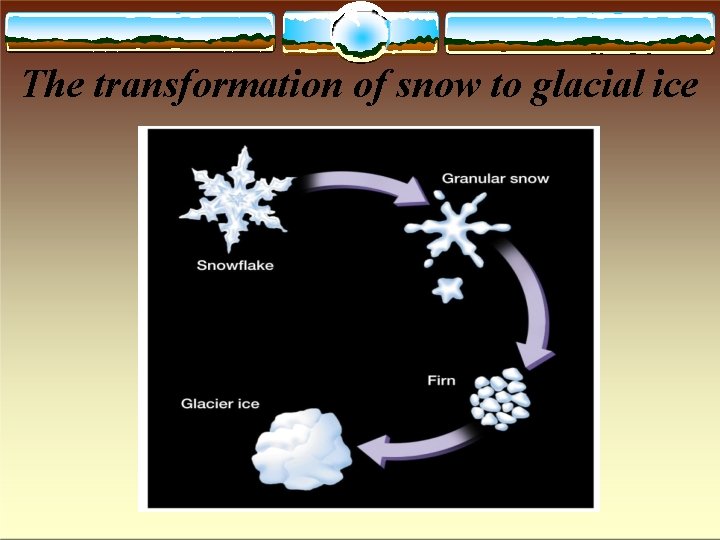
The transformation of snow to glacial ice
Movement of glacial ice Movement Two is referred to as flow basic types Plastic flow Occurs within the ice Under pressure, ice behaves as a plastic material Basal slip Entire ice mass slipping along the ground Most glaciers are thought to move by this process
Movement of glacial ice Movement Zone is referred to as flow of fracture Occurs in the uppermost 50 meters Tension causes crevasses to form in brittle ice Rates of glacial movement Average velocities vary considerably from one glacier to another
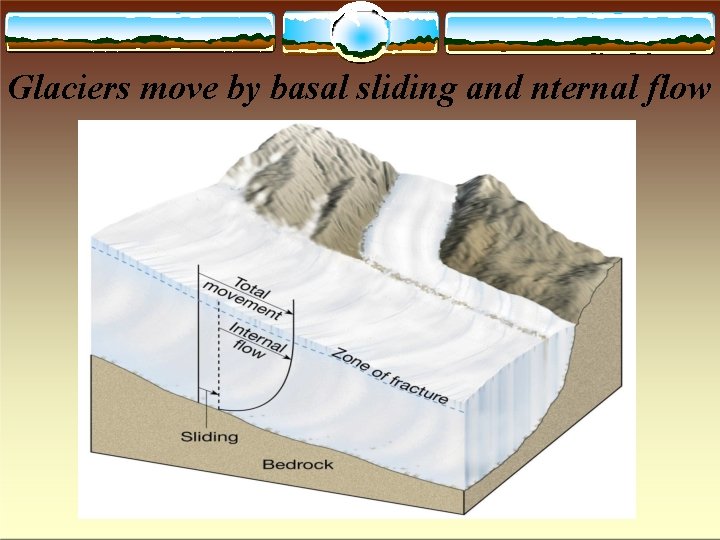
Glaciers move by basal sliding and nternal flow
Movement of glacial ice Rates of glacial movement Rates of up to several meters per day Some glaciers exhibit extremely rapid movements called surges Budget of a glacier Zone of accumulation – the area where a glacier forms Elevation of the snowline varies greatly
Movement of glacial ice Budget of a glacier Zone of wastage – the area where there is a net loss to the glacier due to Melting Calving – the breaking off of large pieces of ice (icebergs where the glacier has reached the sea)
Movement of glacial ice Budget of a glacier Balance, or lack of balance, between accumulation at the upper end of the glacier, and loss at the lower end is referred to as the glacial budget If accumulation exceeds loss (called ablation), the glacial front advances If ablation increases and/or accumulation decreases, the ice front will retreat
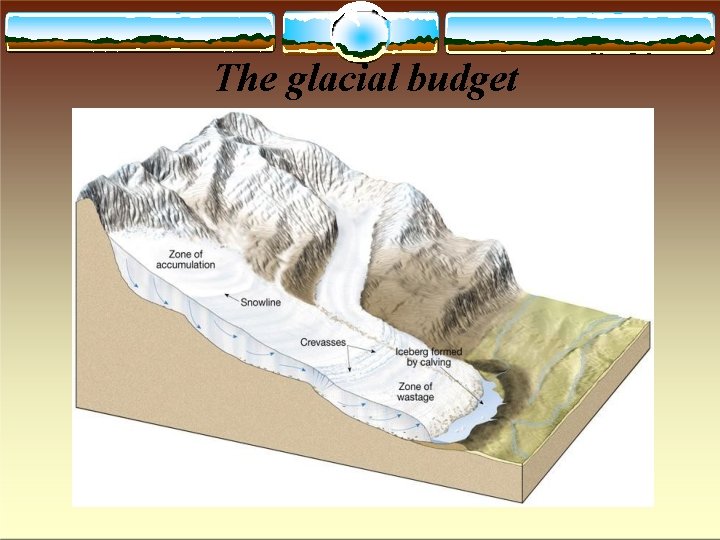
The glacial budget
Glacial erosion Glaciers are capable of great erosion and sediment transport Glaciers erode the land primarily in two ways Plucking – lifting of rocks Abrasion Rocks within the ice acting like sandpaper to smooth and polish the surface below
Glacial erosion Glacial abrasion produces Rock flour (pulverized rock) Glacial striations (grooves in the bedrock) Landforms created by glacial erosion Erosional Glacial features of glaciated valleys trough Truncated spurs Hanging valleys
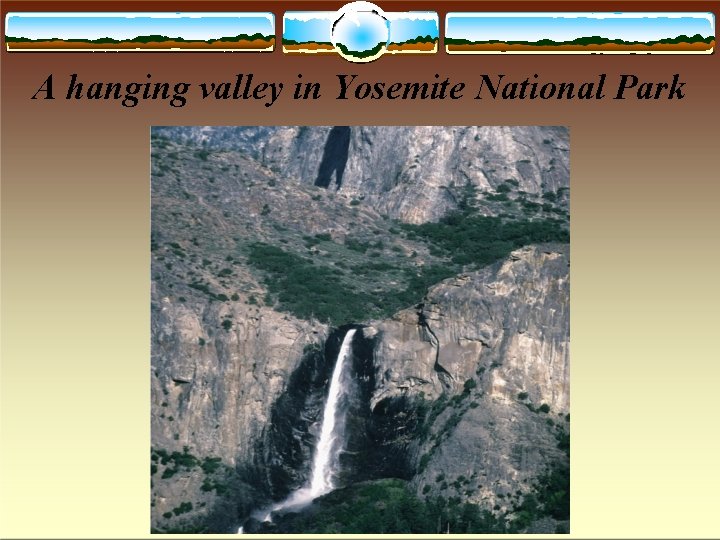
A hanging valley in Yosemite National Park
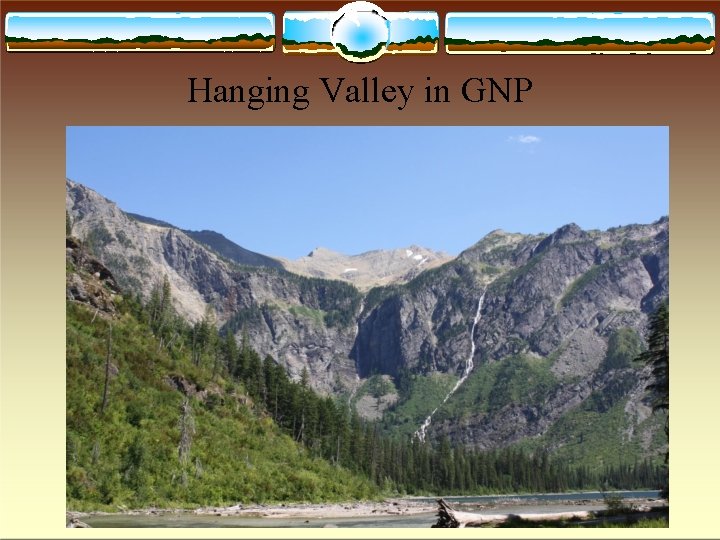
Hanging Valley in GNP
Glacial erosion Landforms created by glacial erosion Erosional Pater features of glaciated valleys noster lakes Cirques Tarns Fiords Arêtes Horns
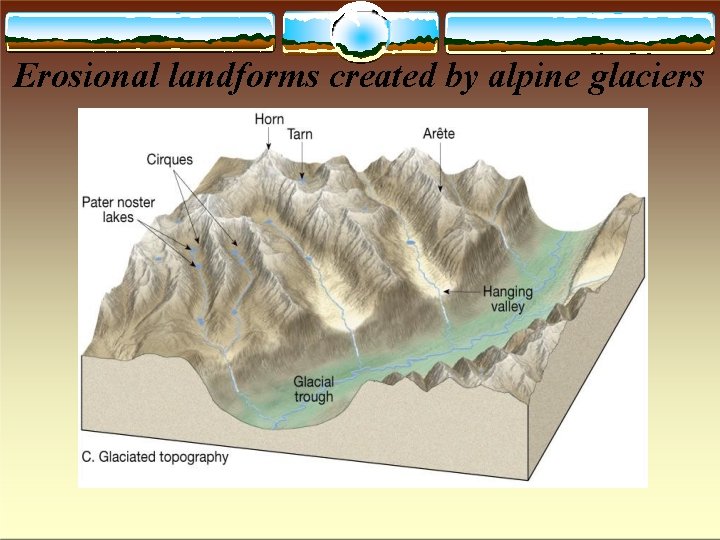
Erosional landforms created by alpine glaciers
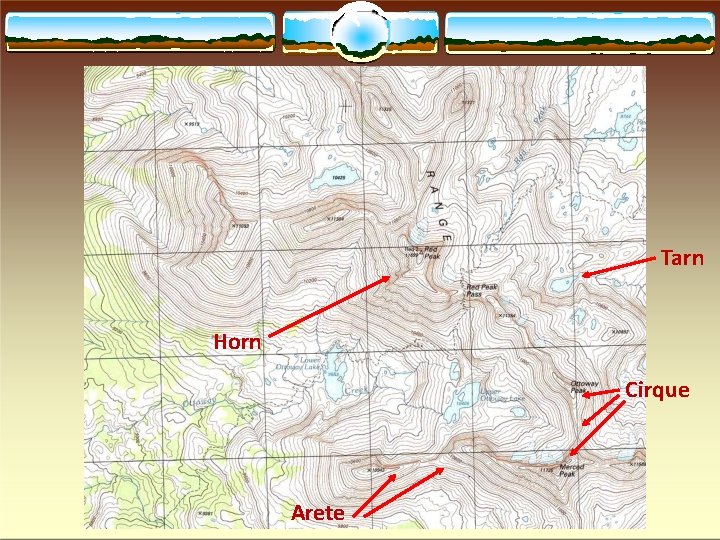
Tarn Horn Cirque Arete
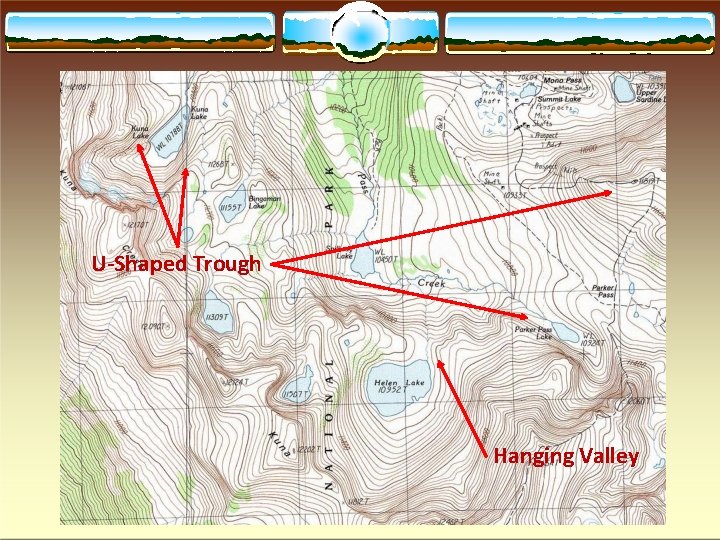
U-Shaped Trough Hanging Valley
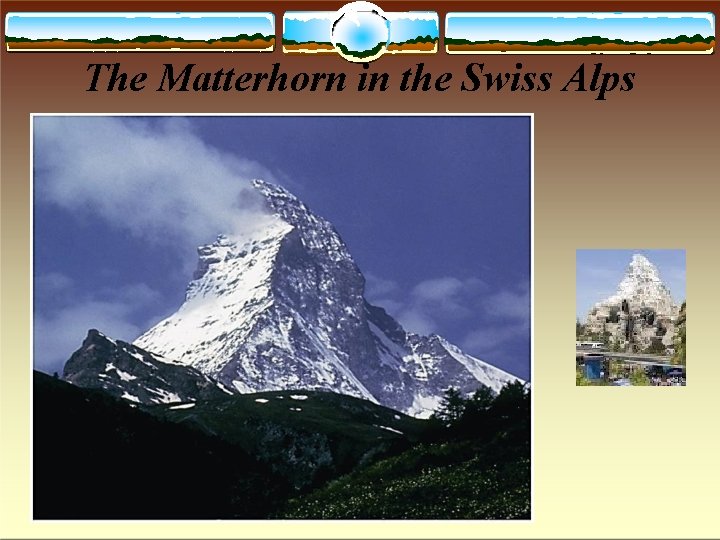
The Matterhorn in the Swiss Alps
Glacial deposits Glacial drift – refers to all sediments of glacial origin Types Till of glacial drift – material that is deposited directly by the ice Stratified drift – sediments laid down by glacial meltwater
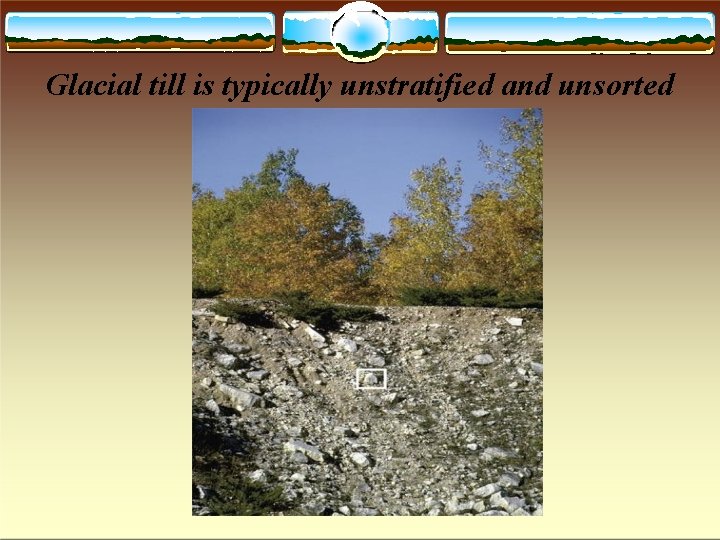
Glacial till is typically unstratified and unsorted
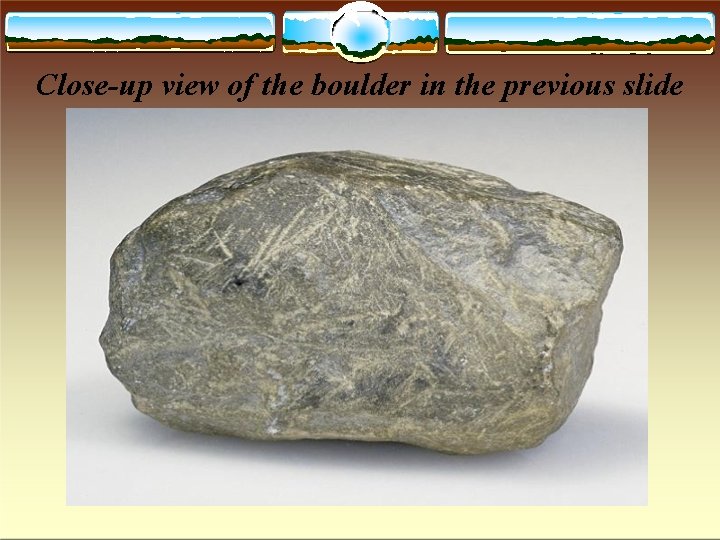
Close-up view of the boulder in the previous slide
Glacial deposits Landforms made of till Moraines Layers or ridges of till Moraines produced by alpine glaciers Lateral moraine Medial moraine Other End types of moraines moraine – terminal or recessional Ground moraine
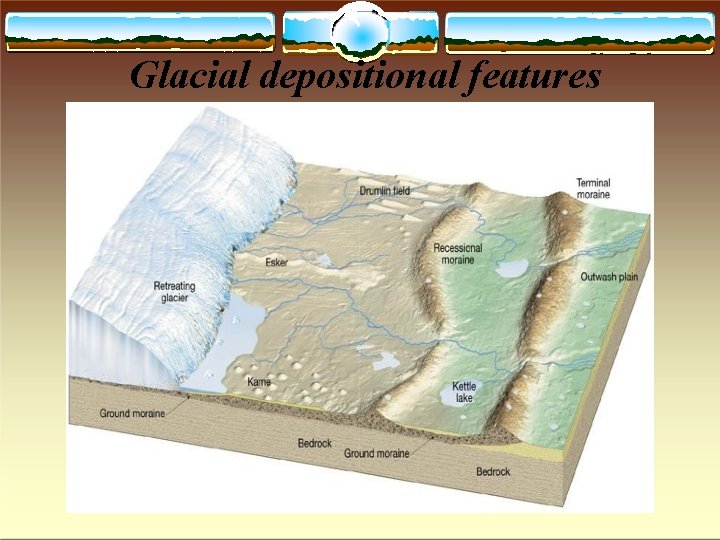
Glacial depositional features
Glacial deposits Landforms made of till Drumlins Smooth, elongated, parallel hills Steep side faces the direction from which the ice advanced Occur in clusters called drumlin fields Formation not fully understood
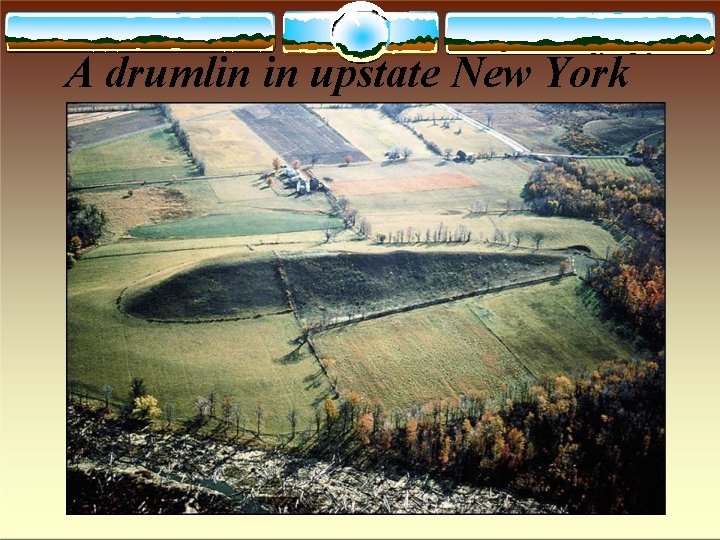
A drumlin in upstate New York
Glacial deposits Landforms made of stratified drift Outwash plains (with ice sheets) and valley trains (when in a valley) Broad ramp-like surface composed of strati-fied drift deposited by meltwater leaving a glacier Located adjacent to the downstream edge of most end moraines Often pockmarked with depressions called kettles
Glacial deposits Landforms made of stratified drift Ice-contact Deposited deposits by meltwater flowing over, within, and at the base of motionless ice Features include Kames Kame terraces Eskers
- Slides: 33