
Glaciers and Glaciation Glaciers and Glaciation What is
- Slides: 40
Glaciers and Glaciation
Glaciers and Glaciation • • • What is a Glacier? Formation and Movement Glacial Erosional Landforms Glacial Deposits Causes of Ice Ages
GEOL 131: Glaciers What is a Glacier?
GEOL 131: Glaciers What is a Glacier? • Mass of land-based ice • In motion downslope • Part of two cycles – Hydrologic – Rock
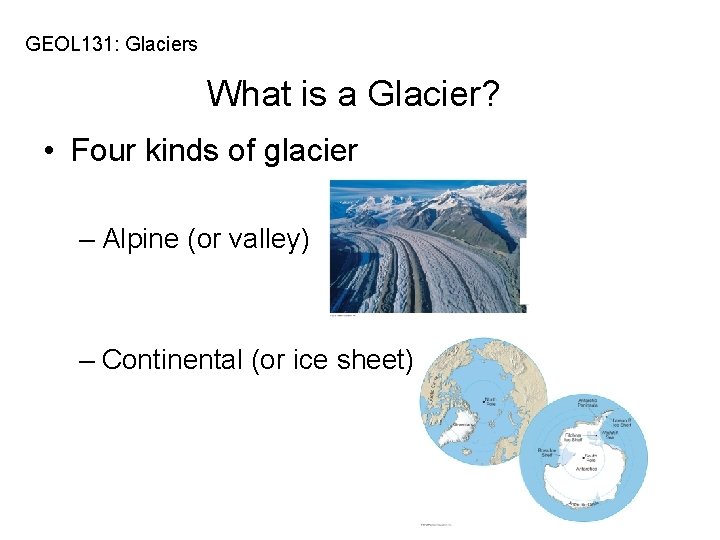
GEOL 131: Glaciers What is a Glacier? • Four kinds of glacier – Alpine (or valley) – Continental (or ice sheet)
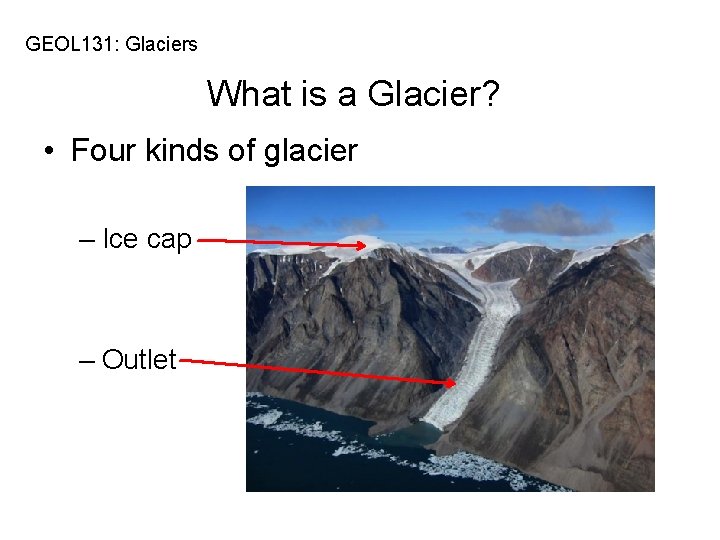
GEOL 131: Glaciers What is a Glacier? • Four kinds of glacier – Ice cap – Outlet
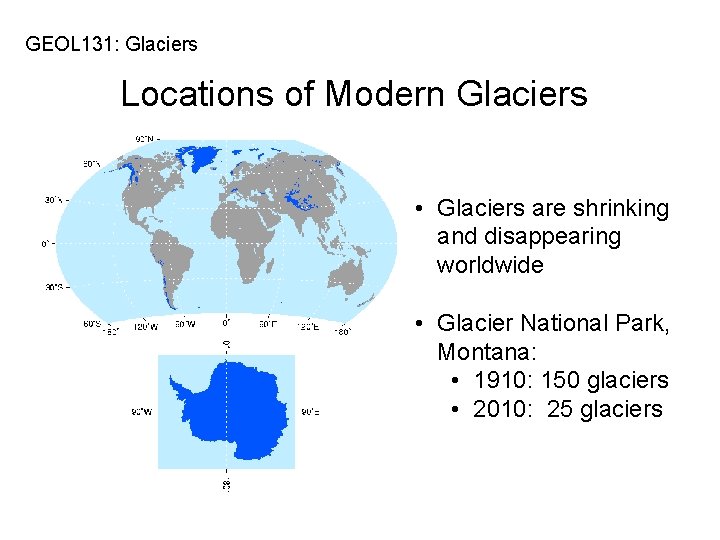
GEOL 131: Glaciers Locations of Modern Glaciers • Glaciers are shrinking and disappearing worldwide • Glacier National Park, Montana: • 1910: 150 glaciers • 2010: 25 glaciers
GEOL 131: Glaciers Formation and Movement
GEOL 131: Glaciers: Formation & Movement Formation • Accumulation of snow • Snow recrystallizes into firn – Ice crystals with texture of sand • If depth of firn reaches 160 feet, crystals fuse together
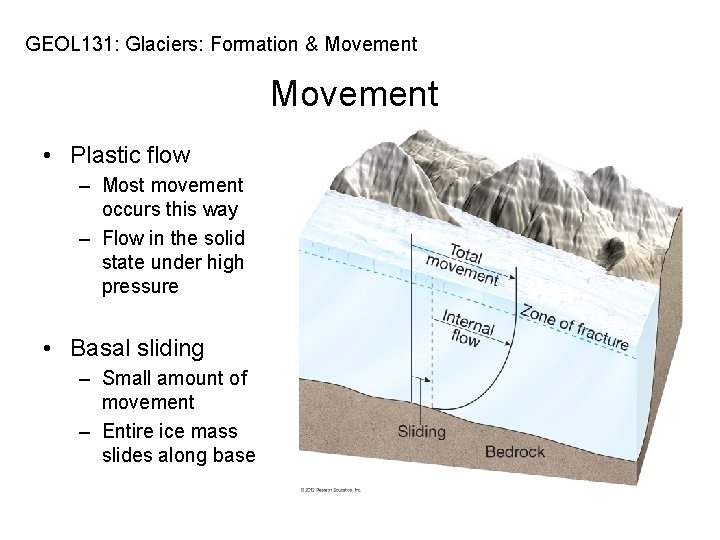
GEOL 131: Glaciers: Formation & Movement • Plastic flow – Most movement occurs this way – Flow in the solid state under high pressure • Basal sliding – Small amount of movement – Entire ice mass slides along base
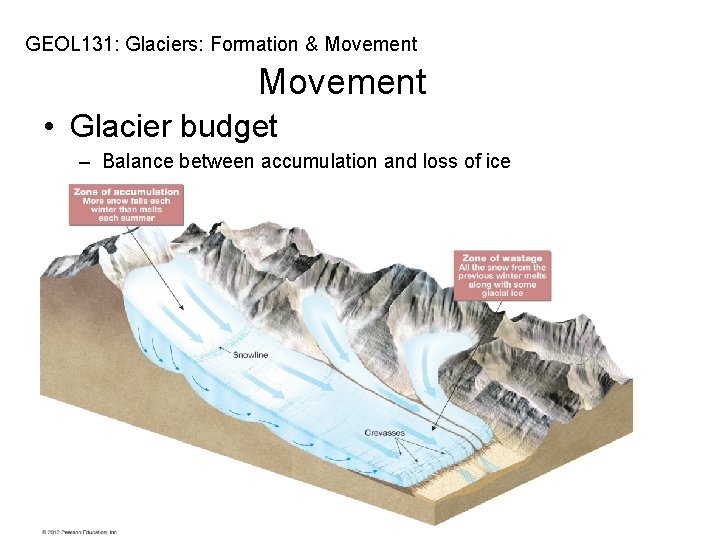
GEOL 131: Glaciers: Formation & Movement • Glacier budget – Balance between accumulation and loss of ice
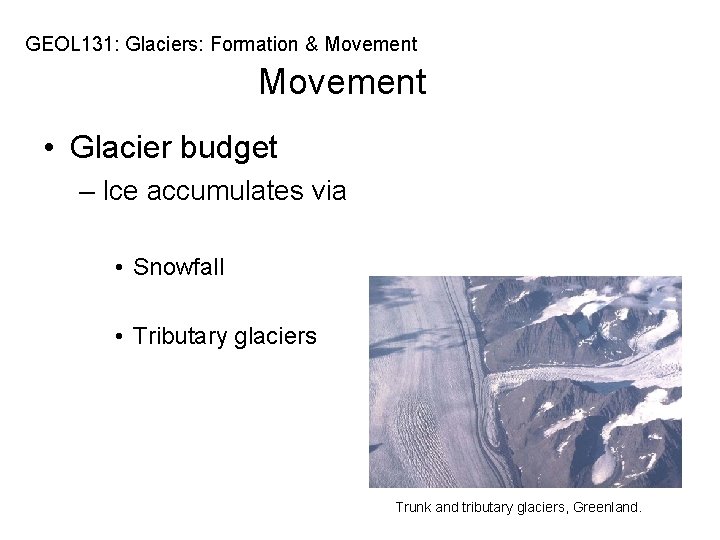
GEOL 131: Glaciers: Formation & Movement • Glacier budget – Ice accumulates via • Snowfall • Tributary glaciers Trunk and tributary glaciers, Greenland.
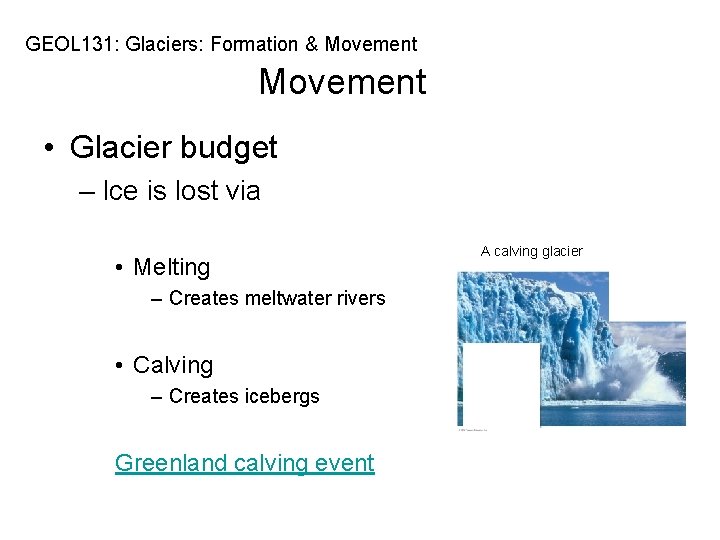
GEOL 131: Glaciers: Formation & Movement • Glacier budget – Ice is lost via • Melting – Creates meltwater rivers • Calving – Creates icebergs Greenland calving event A calving glacier
GEOL 131: Glaciers Glacial Erosion
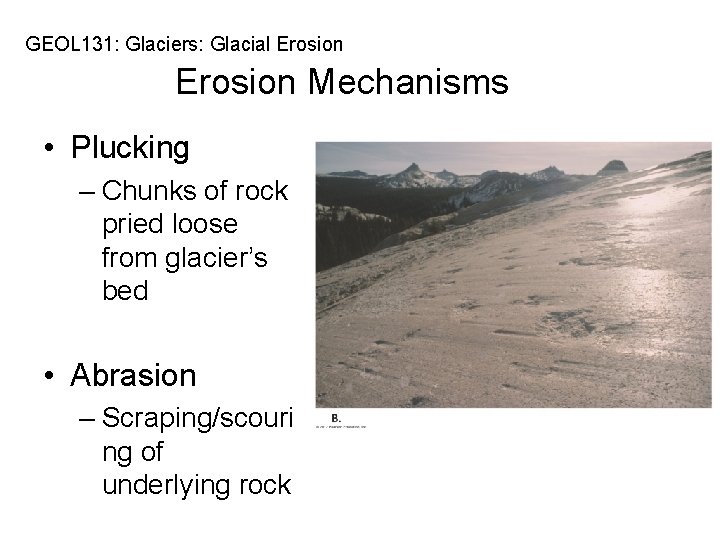
GEOL 131: Glaciers: Glacial Erosion Mechanisms • Plucking – Chunks of rock pried loose from glacier’s bed • Abrasion – Scraping/scouri ng of underlying rock
GEOL 131: Glaciers Erosional Landforms
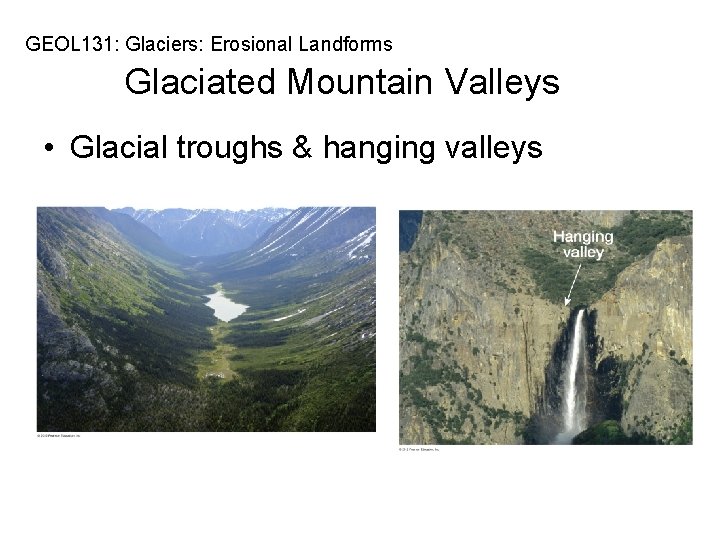
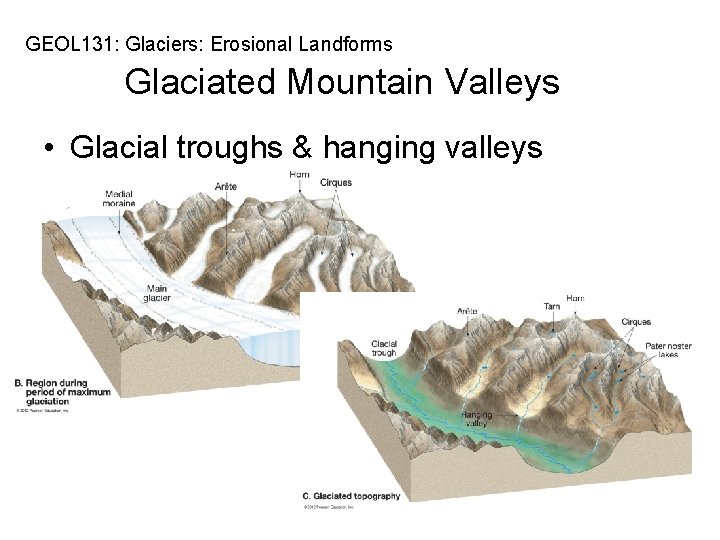
GEOL 131: Glaciers: Erosional Landforms Glaciated Mountain Valleys • Glacial troughs & hanging valleys
GEOL 131: Glaciers: Erosional Landforms Glaciated Mountain Valleys • Glacial troughs & hanging valleys
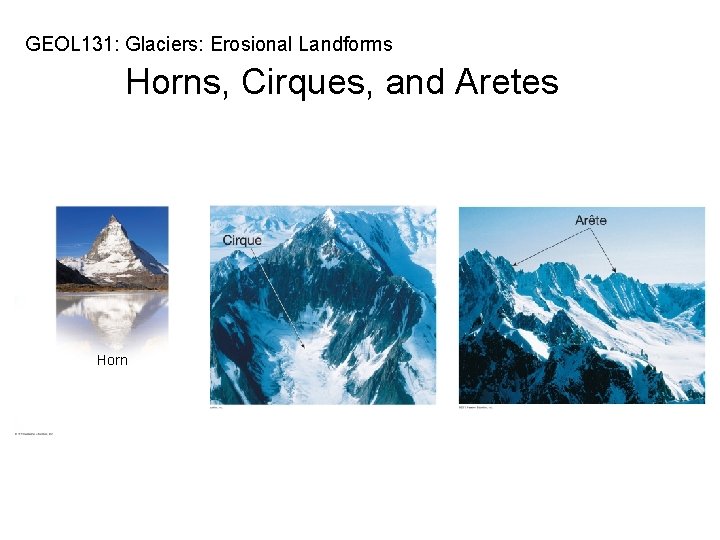
GEOL 131: Glaciers: Erosional Landforms Horns, Cirques, and Aretes Horn
GEOL 131: Glaciers Glacial Deposits
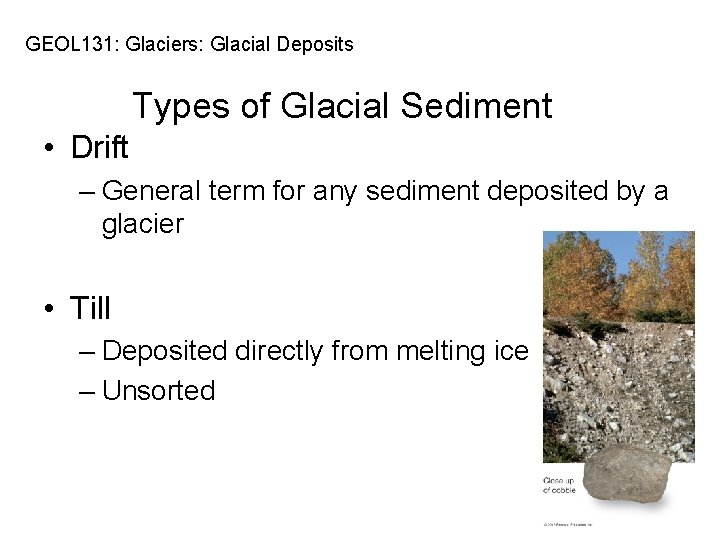
GEOL 131: Glaciers: Glacial Deposits Types of Glacial Sediment • Drift – General term for any sediment deposited by a glacier • Till – Deposited directly from melting ice – Unsorted
GEOL 131: Glaciers: Glacial Deposits Terms • Stratified drift – Deposited by meltwater rivers – Well-sorted
GEOL 131: Glaciers: Glacial Deposits Moraines • Made of till • Four kinds: – Lateral – Medial – End (terminal) – Ground
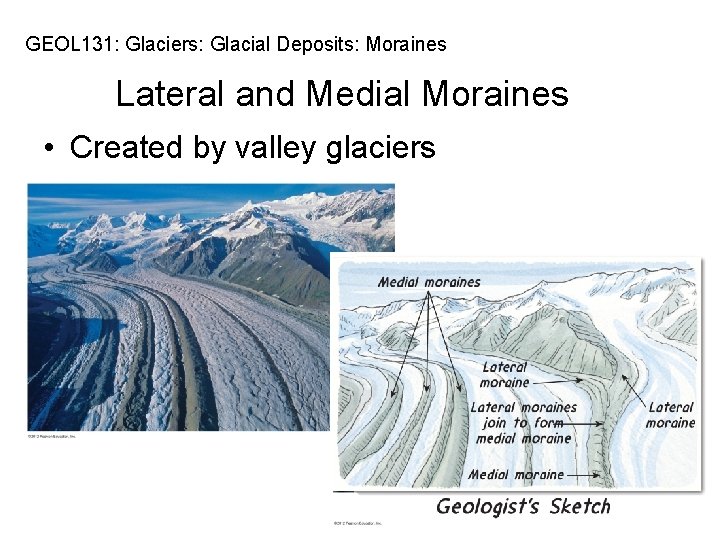
GEOL 131: Glaciers: Glacial Deposits: Moraines Lateral and Medial Moraines • Created by valley glaciers
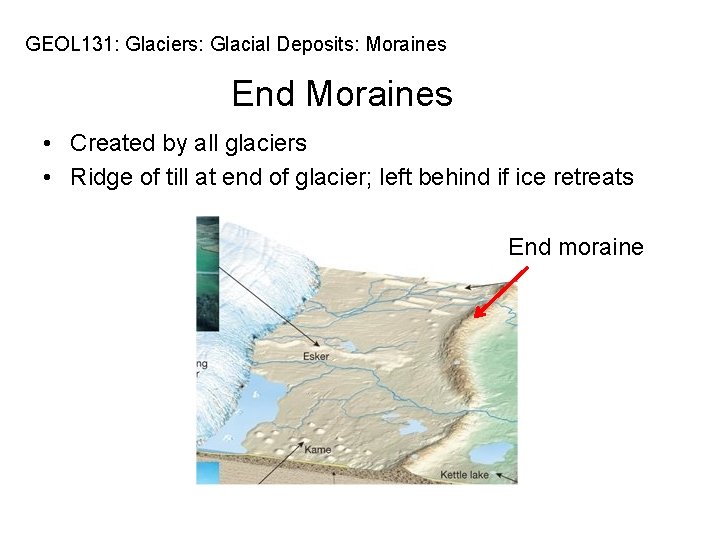
GEOL 131: Glaciers: Glacial Deposits: Moraines End Moraines • Created by all glaciers • Ridge of till at end of glacier; left behind if ice retreats End moraine
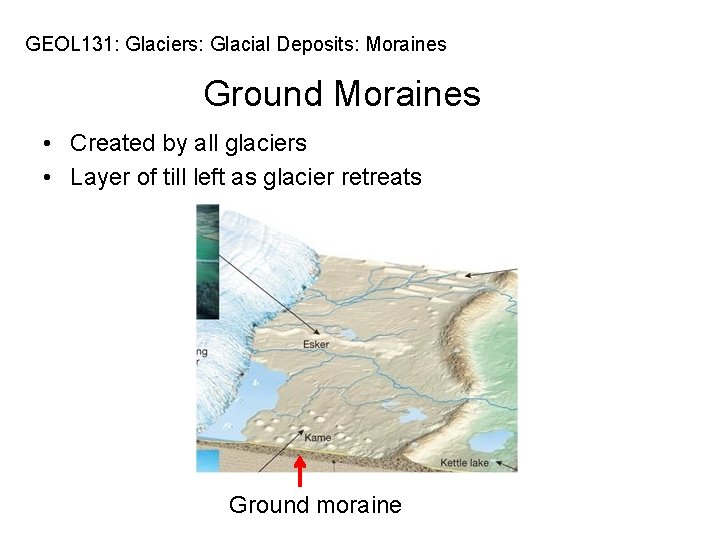
GEOL 131: Glaciers: Glacial Deposits: Moraines Ground Moraines • Created by all glaciers • Layer of till left as glacier retreats Ground moraine
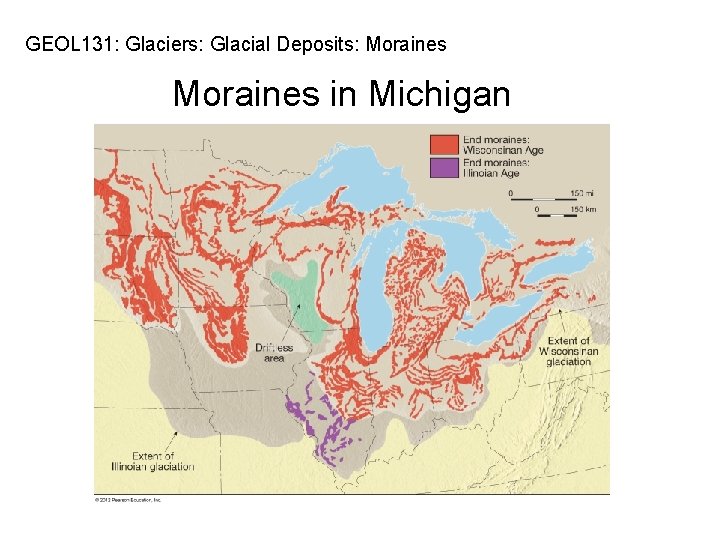
GEOL 131: Glaciers: Glacial Deposits: Moraines in Michigan
GEOL 131: Glaciers Possible Causes of Ice Ages
GEOL 131: Glaciers: Causes of Ice Ages What is an Ice Age? • Extended period of greatly expanded glaciation • Most recent Ice Age: – Began about 2 million years ago – Ended about 10, 000 years ago – Glaciers advanced and retreated many times – Michigan ice-covered until about 12, 000 yrs ago
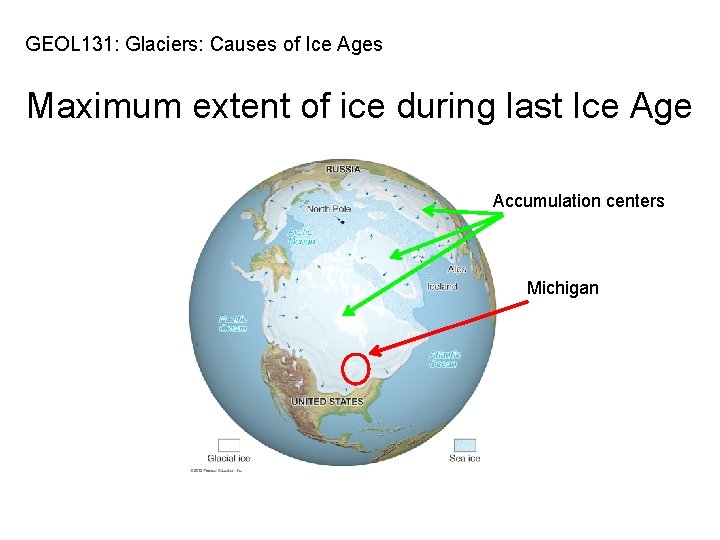
GEOL 131: Glaciers: Causes of Ice Ages Maximum extent of ice during last Ice Age Accumulation centers Michigan
GEOL 131: Glaciers: Causes of Ice Ages Possible Causes • Plate tectonic movement • Variations in Earth’s orbit • Others – Changes in atmospheric composition – Changes in Earth’s reflectivity – Cooling of ocean currents
GEOL 131: Glaciers: Causes of Ice Ages Plate Tectonic Movement • Glaciers can only exist on land • To have Ice Age, large land masses must be in polar latitudes
GEOL 131: Glaciers: Causes of Ice Ages Orbital variations • Alter intensity of cold and warm seasons • Three kinds: – Precession – Obliquity – Eccentricity
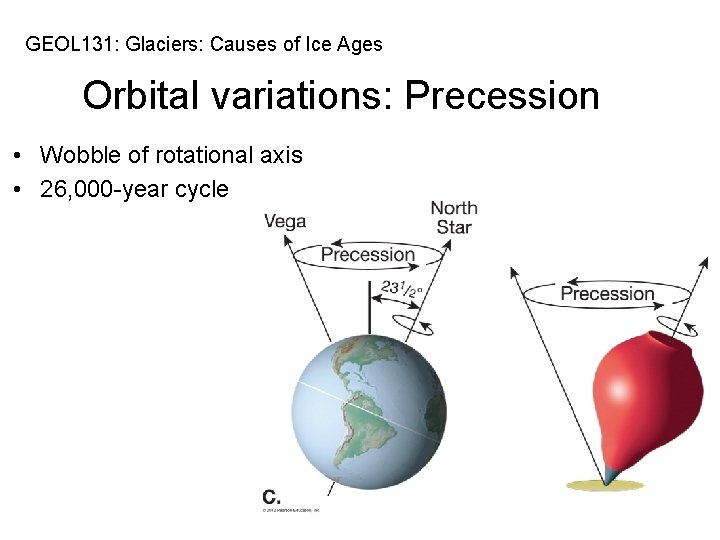
GEOL 131: Glaciers: Causes of Ice Ages Orbital variations: Precession • Wobble of rotational axis • 26, 000 -year cycle
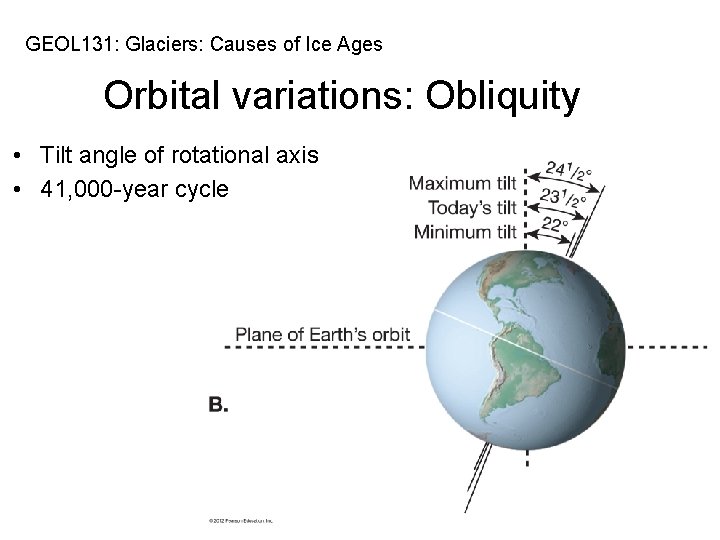
GEOL 131: Glaciers: Causes of Ice Ages Orbital variations: Obliquity • Tilt angle of rotational axis • 41, 000 -year cycle
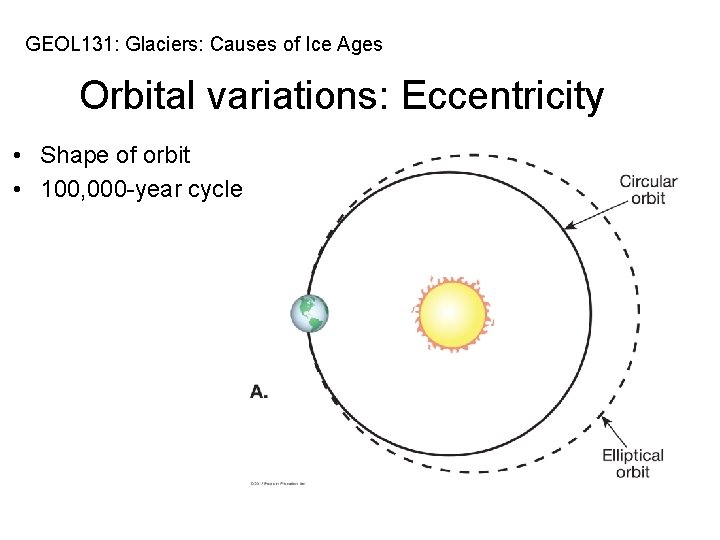
GEOL 131: Glaciers: Causes of Ice Ages Orbital variations: Eccentricity • Shape of orbit • 100, 000 -year cycle
GEOL 131: Glaciers: Causes of Ice Ages Other factors: Atmospheric composition • Greenhouse gases trap heat, keep Earth warm • Carbon dioxide, methane, water vapor • Lower concentrations = cooler global temps
GEOL 131: Glaciers: Causes of Ice Ages Other factors: Earth’s reflectivity • Earth’s surface either absorbs solar energy or reflects it • Depends on material • Lighter-colored material = more reflection = colder temps • Glaciers are light-colored, reflective
GEOL 131: Glaciers: Causes of Ice Ages Other factors: Cooling ocean currents • Ocean currents move heat from tropics to higher latitudes • If warm currents become colder, average global temp drops
End of Chapter