
GLACIERS An agent of erosion weathering and deposition

- Slides: 17
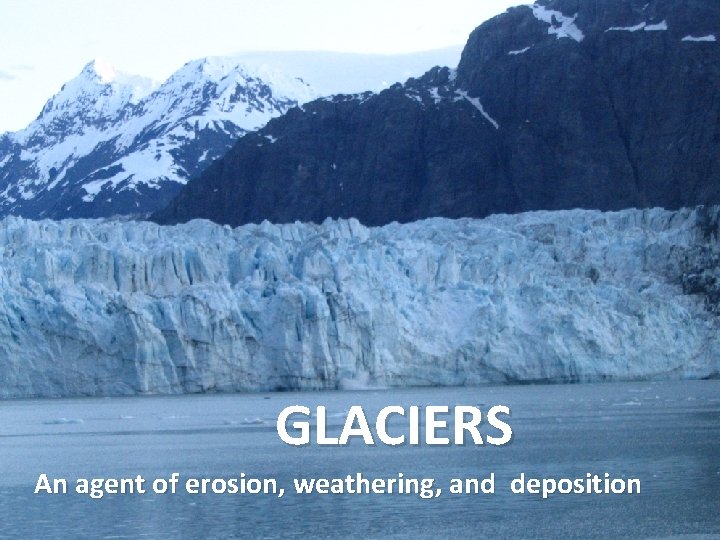
GLACIERS An agent of erosion, weathering, and deposition
What are glaciers? • Glaciers are large masses of moving ice and snow on land • They are found in areas where there is a lot of snowfall that doesn’t melt from winter to winter • As a result, a deep layer of compacted snow accumulates. This layer of snow becomes compressed into a thick sheet of ice.
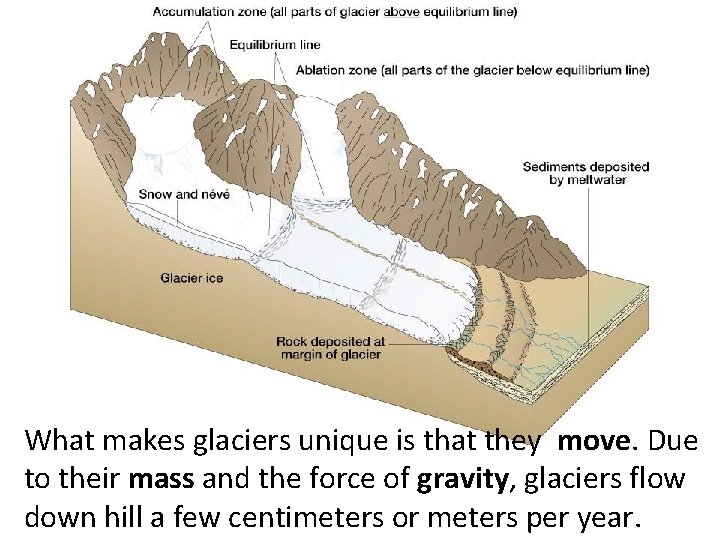
What makes glaciers unique is that they move. Due to their mass and the force of gravity, glaciers flow down hill a few centimeters or meters per year.
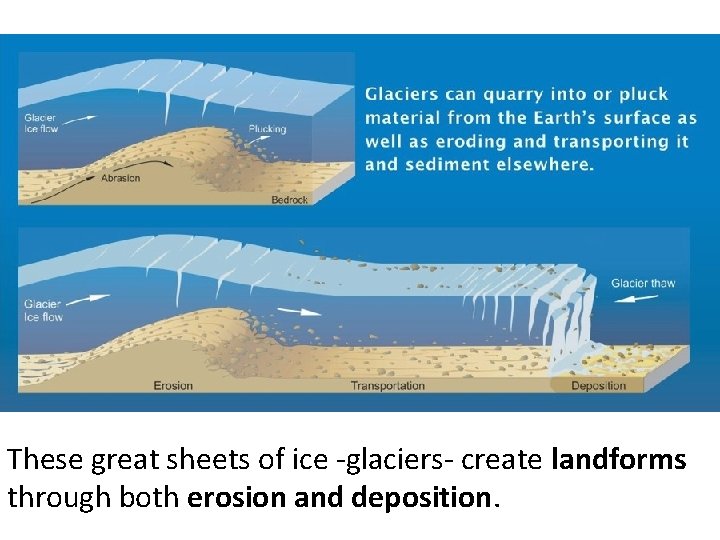
These great sheets of ice -glaciers- create landforms through both erosion and deposition.
How does a glacier work? • As the glacier grows from ice accumulation, it begins to melt on the bottom because of all the pressure from above • When it melts, it begins to slide, and the dirt and rocks underneath the glacier erode the surface that the glacier drags across • Over time, rocks and sediments carried by moving glaciers can carve or deepen valleys
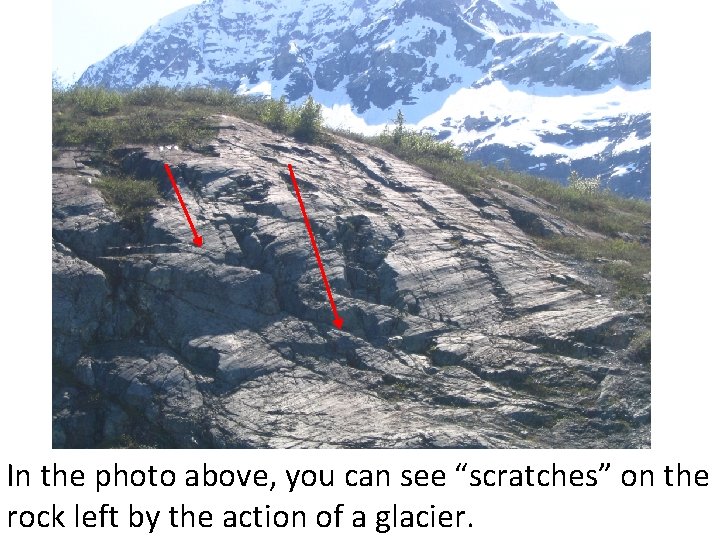
In the photo above, you can see “scratches” on the rock left by the action of a glacier.
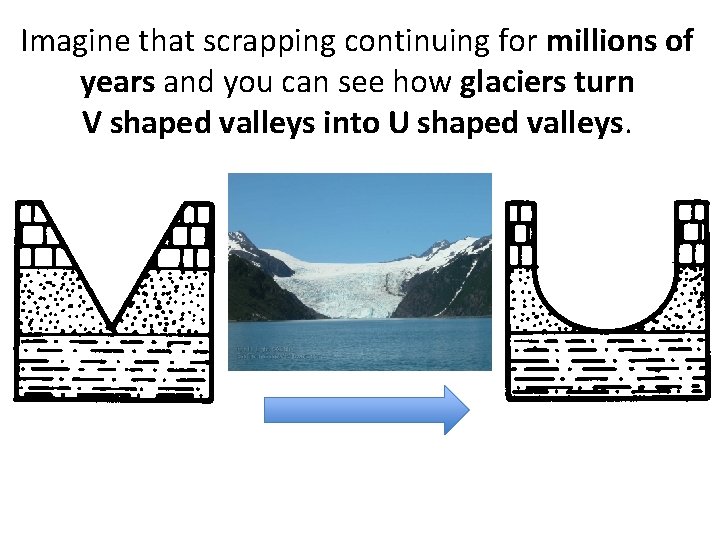
Imagine that scrapping continuing for millions of years and you can see how glaciers turn V shaped valleys into U shaped valleys.
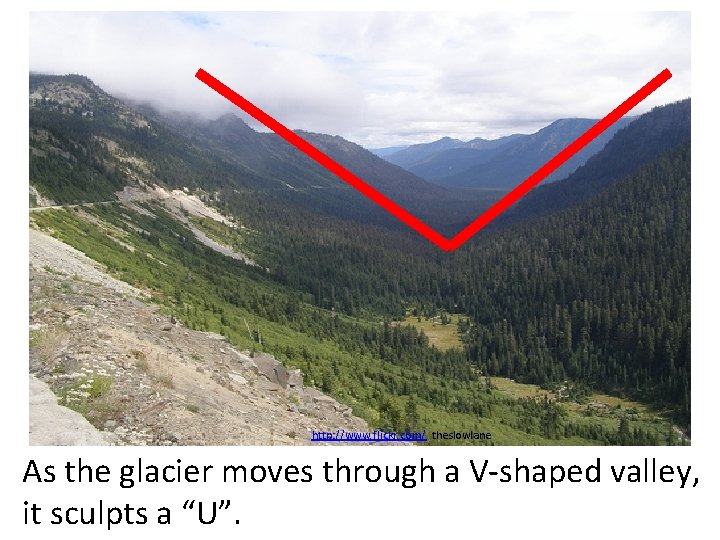
http: //www. flickr. com/ theslowlane As the glacier moves through a V-shaped valley, it sculpts a “U”.
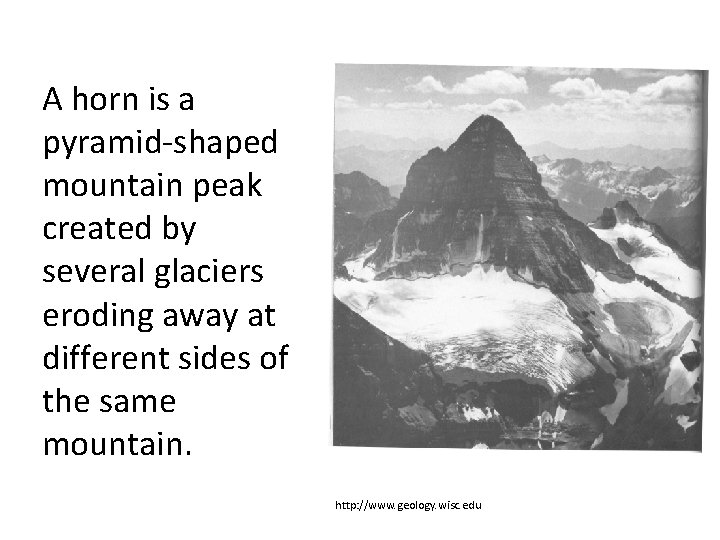
A horn is a pyramid-shaped mountain peak created by several glaciers eroding away at different sides of the same mountain. http: //www. geology. wisc. edu
How does a glacier work? • Glaciers also deposit materials, as their front end melt • The glacier continues to move, but it melts faster than it moves (retreating) • As the ice melts, it drops its load (rocks, sediment), far from where they originally were
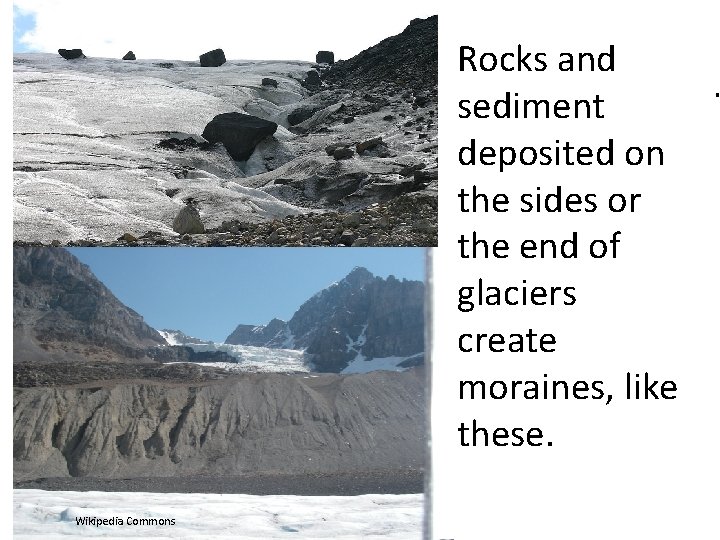
Wikipedia Commons Rocks and. sediment deposited on the sides or the end of glaciers create moraines, like these.
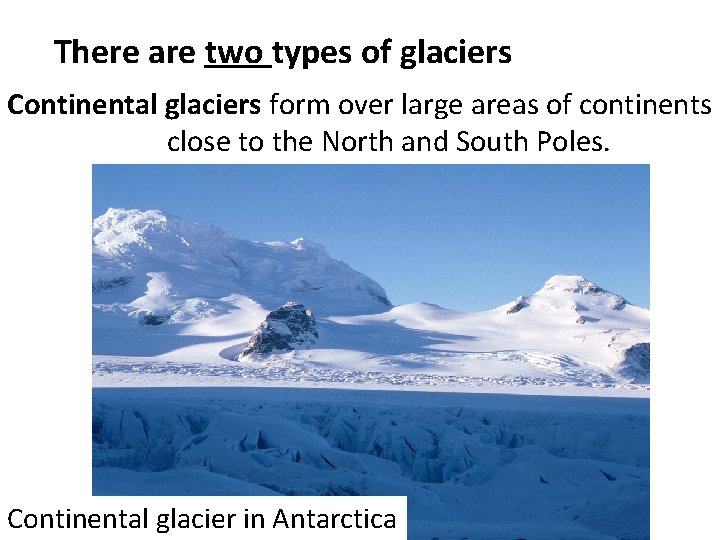
There are two types of glaciers Continental glaciers form over large areas of continents close to the North and South Poles. Continental glacier in Antarctica
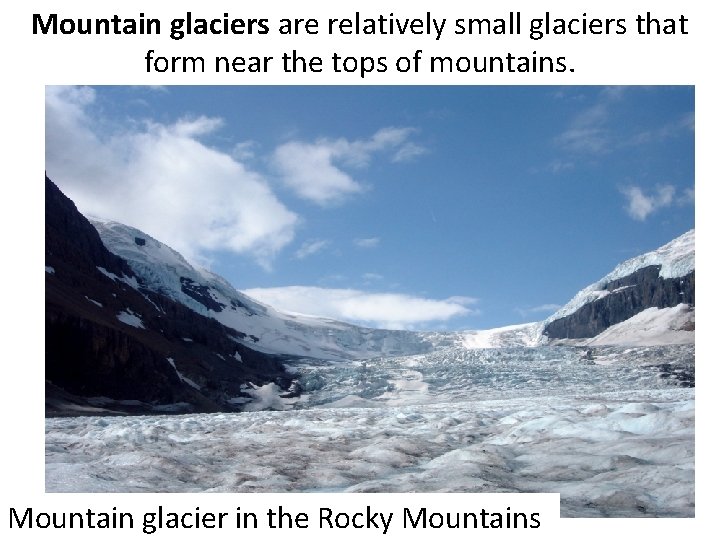
Mountain glaciers are relatively small glaciers that form near the tops of mountains. Mountain glacier in the Rocky Mountains
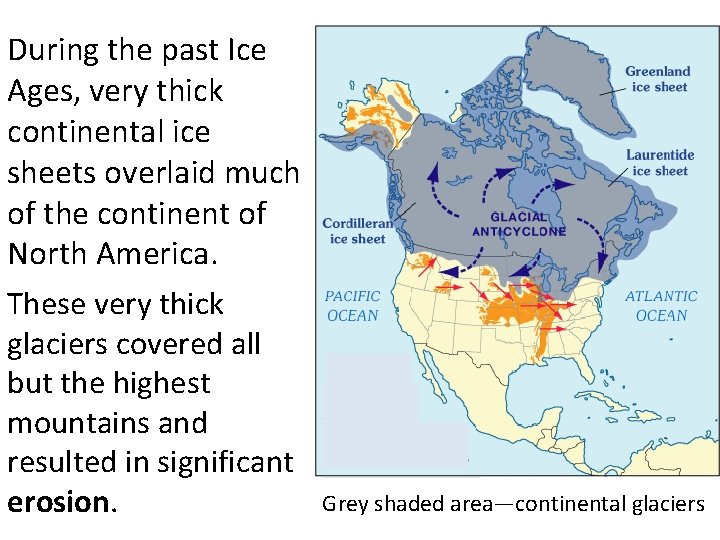
During the past Ice Ages, very thick continental ice sheets overlaid much of the continent of North America. These very thick glaciers covered all but the highest mountains and resulted in significant erosion. Grey shaded area—continental glaciers
Many lakes in North America including the Great Lakes, were created by glaciers moving over the rock and gouging out deep “holes” which filled with water when the glaciers melted.
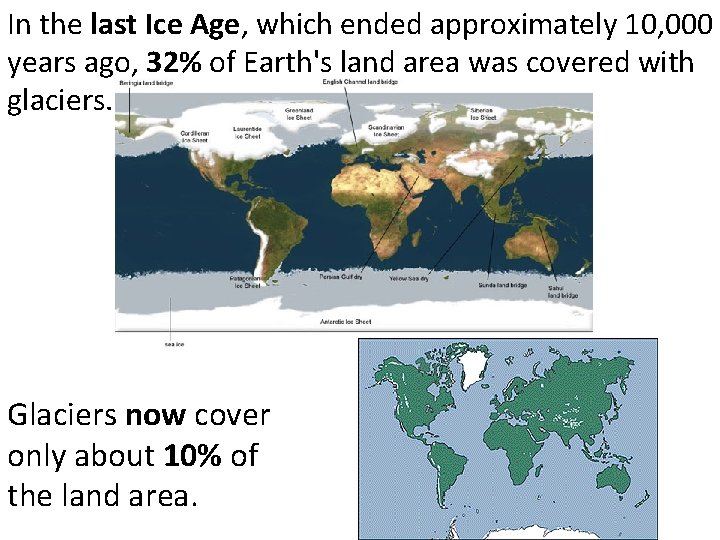
In the last Ice Age, which ended approximately 10, 000 years ago, 32% of Earth's land area was covered with glaciers. Glaciers now cover only about 10% of the land area.
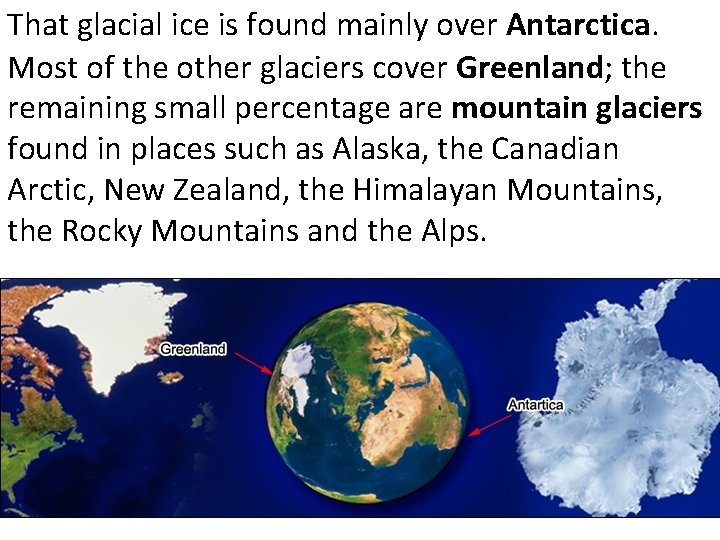
That glacial ice is found mainly over Antarctica. Most of the other glaciers cover Greenland; the remaining small percentage are mountain glaciers found in places such as Alaska, the Canadian Arctic, New Zealand, the Himalayan Mountains, the Rocky Mountains and the Alps.