
Giving an effective presentation Using Powerpoint and structuring


![MDCK cells form a lumen following a change in extracellular [Ca++ ] MDCK cells](https://slidetodoc.com/presentation_image_h2/09292fbbe33ba7c534ff17c1f2bcf3fd/image-38.jpg "MDCK cells form a lumen following a change in extracellular [Ca++ ] MDCK cells")
![MDCK cells form a lumen following a change in extracellular [Ca++ ] MDCK cells](https://slidetodoc.com/presentation_image_h2/09292fbbe33ba7c534ff17c1f2bcf3fd/image-39.jpg "MDCK cells form a lumen following a change in extracellular [Ca++ ] MDCK cells")
![MDCK cells lose their polarity in low [Ca++]](https://slidetodoc.com/presentation_image_h2/09292fbbe33ba7c534ff17c1f2bcf3fd/image-58.jpg "MDCK cells lose their polarity in low [Ca++]")
![MDCK cells regain their polarity in normal [Ca++] and reform a lumen normal [Ca++]](https://slidetodoc.com/presentation_image_h2/09292fbbe33ba7c534ff17c1f2bcf3fd/image-59.jpg "MDCK cells regain their polarity in normal [Ca++] and reform a lumen normal [Ca++]")
![MDCK cells regain their polarity in normal [Ca++] and reform a lumen normal [Ca++]](https://slidetodoc.com/presentation_image_h2/09292fbbe33ba7c534ff17c1f2bcf3fd/image-60.jpg "MDCK cells regain their polarity in normal [Ca++] and reform a lumen normal [Ca++]")
![EMK 1 is required for cell polarization Normal MDCK cells: low [Ca++] normal [Ca++]](https://slidetodoc.com/presentation_image_h2/09292fbbe33ba7c534ff17c1f2bcf3fd/image-76.jpg "EMK 1 is required for cell polarization Normal MDCK cells: low [Ca++] normal [Ca++]")
![EMK 1 is required for cell polarization EMK 1 knockdown cells: low [Ca++] normal](https://slidetodoc.com/presentation_image_h2/09292fbbe33ba7c534ff17c1f2bcf3fd/image-77.jpg "EMK 1 is required for cell polarization EMK 1 knockdown cells: low [Ca++] normal")
- Slides: 95
Giving an effective presentation: Using Powerpoint and structuring a scientific talk based on a presentation at the 2005 Pew Foundation meeting by Susan Mc. Connell Department of Biological Sciences Stanford University
We may not be experts at public speaking, but we are all experts at listening to talks
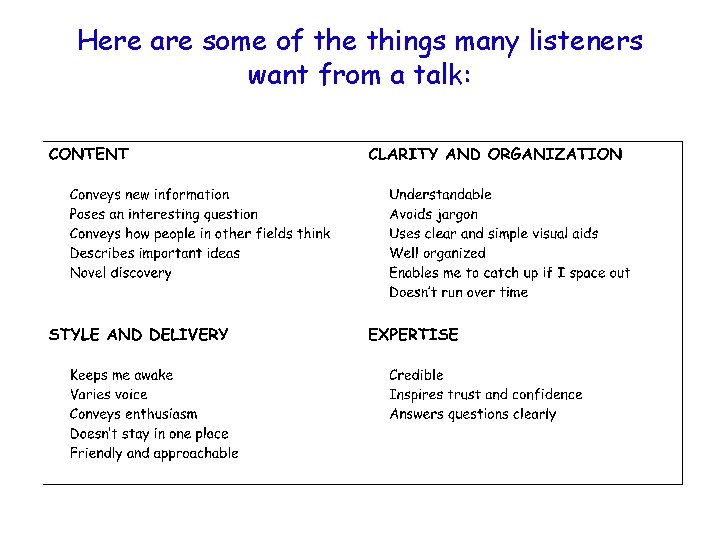
What do you want from a talk?
Before planning your talk think about its purpose, the audience you will be talking to, and the setting. Don’t assume the audience will all be experts. Never underestimate your audience! Check on the time that has been allotted to you. How big is the room?
What do you think of the following slide?
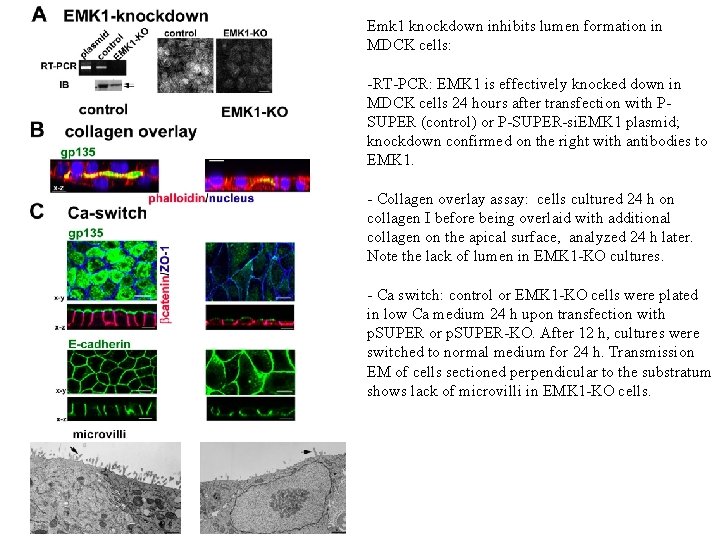
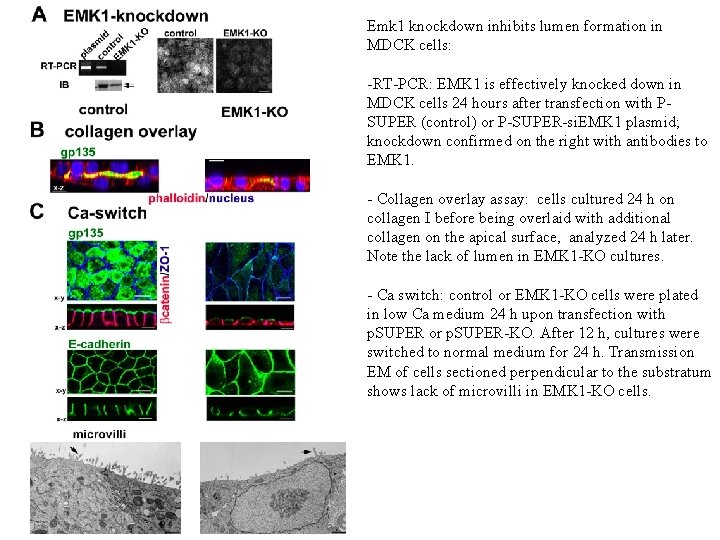
Emk 1 knockdown inhibits lumen formation in MDCK cells: -RT-PCR: EMK 1 is effectively knocked down in MDCK cells 24 hours after transfection with PSUPER (control) or P-SUPER-si. EMK 1 plasmid; knockdown confirmed on the right with antibodies to EMK 1. - Collagen overlay assay: cells cultured 24 h on collagen I before being overlaid with additional collagen on the apical surface, analyzed 24 h later. Note the lack of lumen in EMK 1 -KO cultures. - Ca switch: control or EMK 1 -KO cells were plated in low Ca medium 24 h upon transfection with p. SUPER or p. SUPER-KO. After 12 h, cultures were switched to normal medium for 24 h. Transmission EM of cells sectioned perpendicular to the substratum shows lack of microvilli in EMK 1 -KO cells.
Of course, it is far to confusing and a clear take-home message does not come across ! This presentation will take you through a strategy for presenting the data in a clear and logical way.
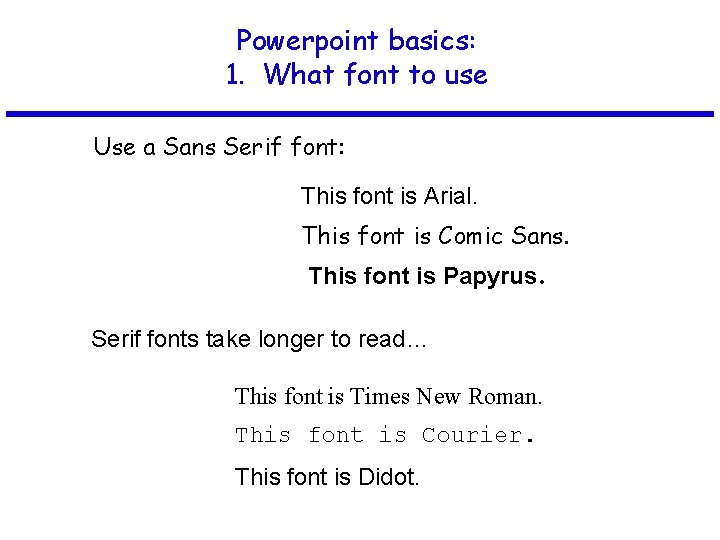
Powerpoint basics: 1. What font to use Use a Sans Serif font: This font is Arial. This font is Comic Sans. This font is Papyrus. Serif fonts take longer to read… This font is Times New Roman. This font is Courier. This font is Didot.
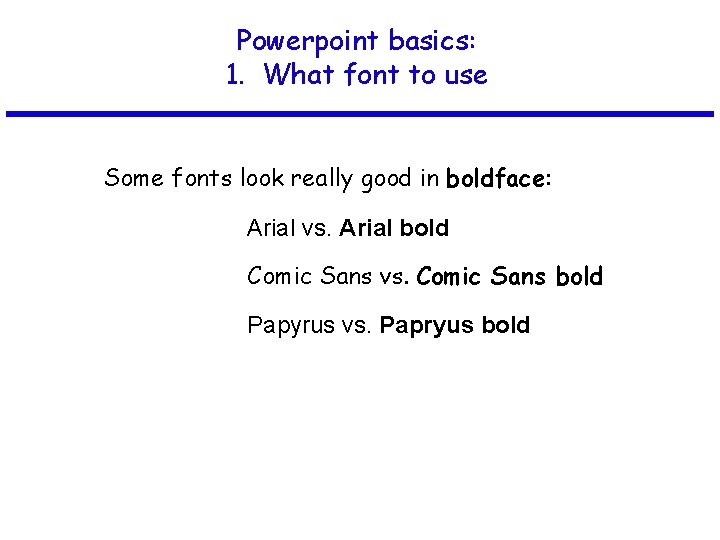
Powerpoint basics: 1. What font to use Some fonts look really good in boldface: Arial vs. Arial bold Comic Sans vs. Comic Sans bold Papyrus vs. Papryus bold
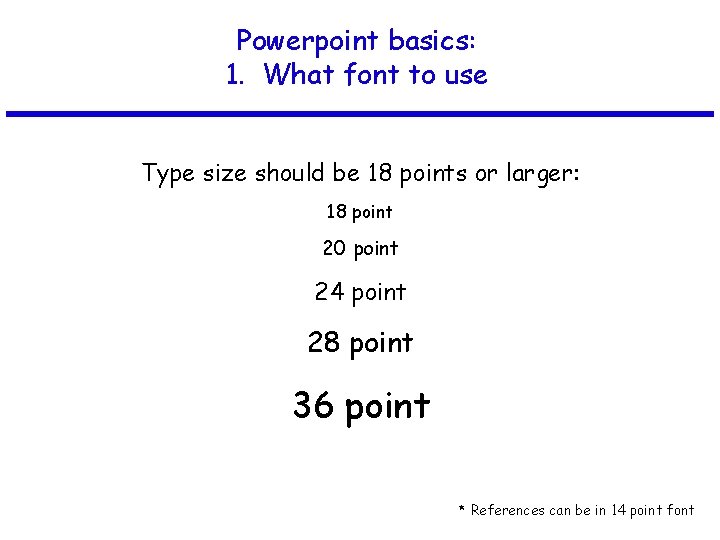
Powerpoint basics: 1. What font to use Type size should be 18 points or larger: 18 point 20 point 24 point 28 point 36 point * References can be in 14 point font
Powerpoint basics: 1. What font to use AVOID USING ALL CAPITAL LETTERS BECAUSE IT’S REALLY HARD TO READ!
Powerpoint basics: 2. Color Dark letters against a light background work.
Powerpoint basics: 2. Color Light letters against a dark background also work.
Powerpoint basics: 2. Color Many experts feel that a dark blue or black background works best for talks in a large room.
Powerpoint basics: 2. Color Dark letters against a light background are best for smaller rooms and for teaching.
Powerpoint basics: 2. Color Avoid red-green combinations because a significant fraction of the human population is red-green colorblind.
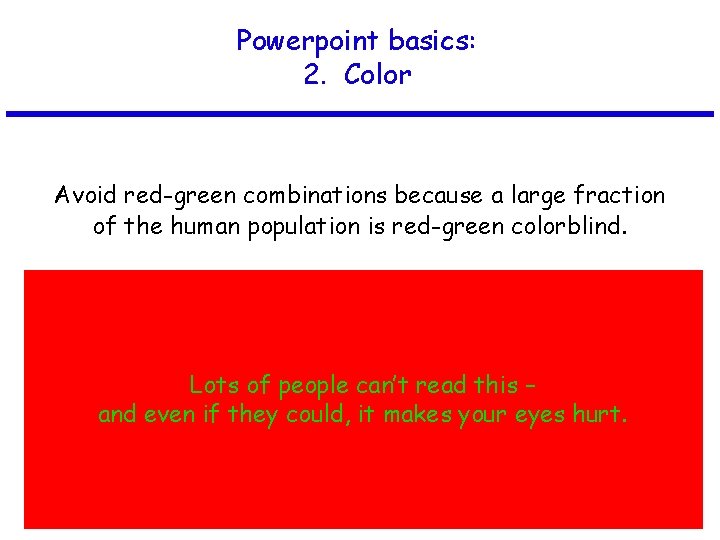
Powerpoint basics: 2. Color Avoid red-green combinations because a large fraction of the human population is red-green colorblind. Lots of people can’t read this – and even if they could, it makes your eyes hurt.
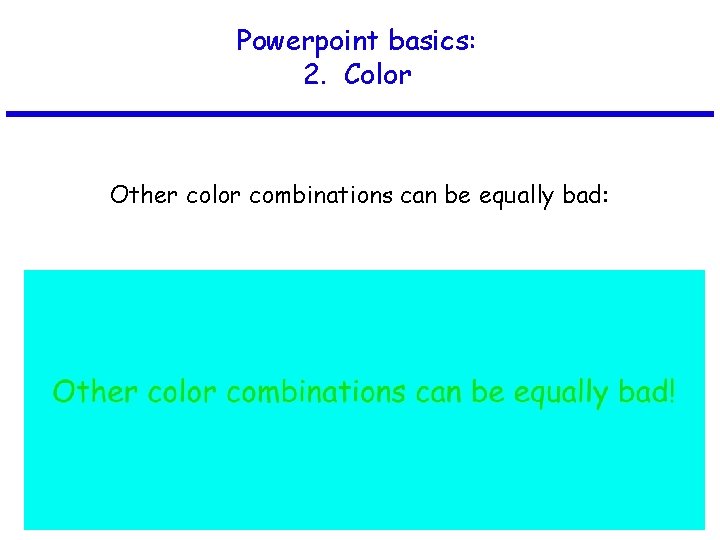
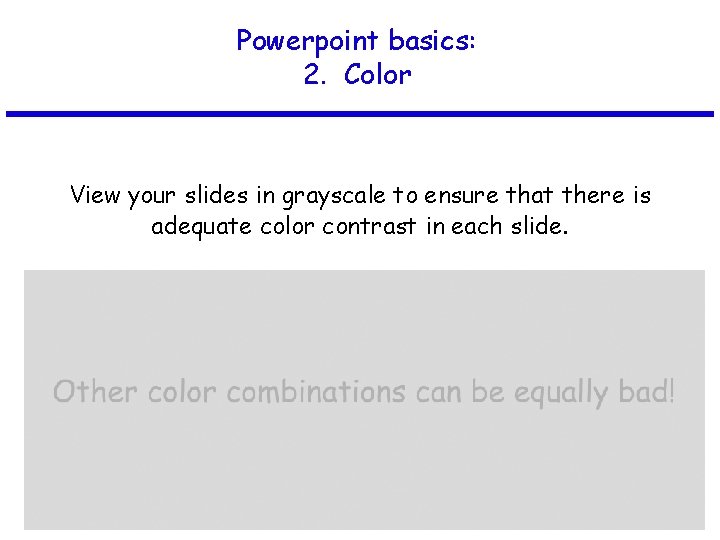
Powerpoint basics: 2. Color Other color combinations can be equally bad:
Powerpoint basics: 2. Color View your slides in grayscale to ensure that there is adequate color contrast in each slide.
Powerpoint basics: 3. Layout Keep the layout and style as consistent as possible Every slide should have a heading. Sentences are preferred if it’s possible to make a statement.
Powerpoint basics: 3. Layout Limit text blocks to no more than two lines each.
Powerpoint basics: 3. Layout The reason for limiting text blocks to two lines is that when the text block goes on and on forever, people in the audience are going to have to make a huge effort to read the text, which will preclude them from paying attention to what you are saying. Every time you lose their focus, your presentation suffers!
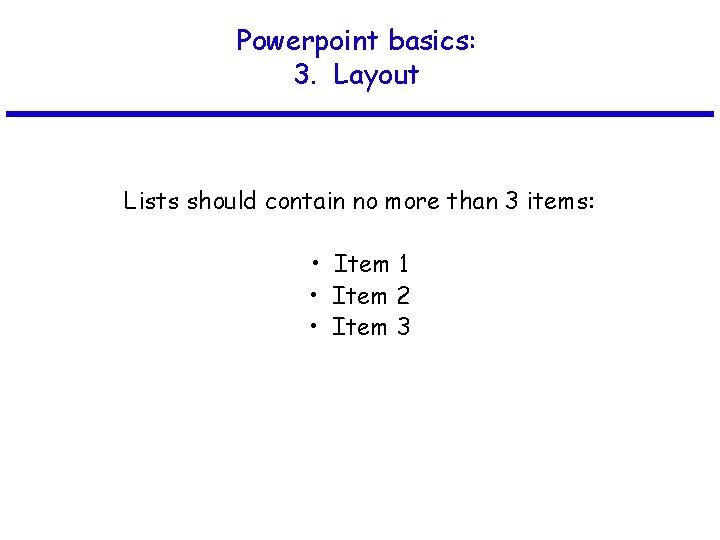
Powerpoint basics: 3. Layout Lists should contain no more than 3 items: • Item 1 • Item 2 • Item 3
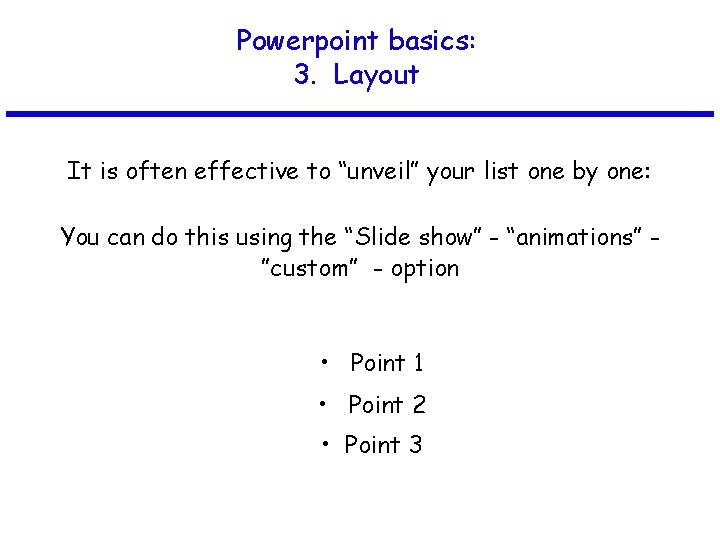
Powerpoint basics: 3. Layout It is often effective to “unveil” your list one by one: You can do this using the “Slide show” - “animations” ”custom” - option • Point 1 • Point 2 • Point 3
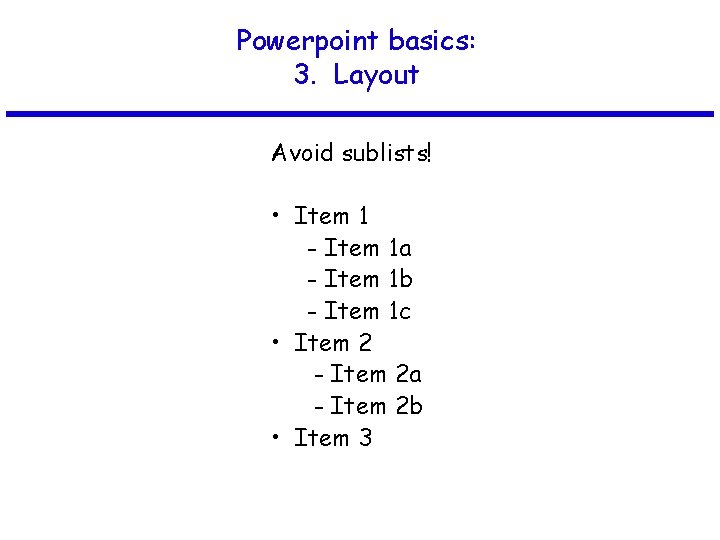
Powerpoint basics: 3. Layout Avoid sublists! • Item 1 - Item 1 a - Item 1 b - Item 1 c • Item 2 - Item 2 a - Item 2 b • Item 3
Powerpoint basics: 3. Layout Be generous with empty space.
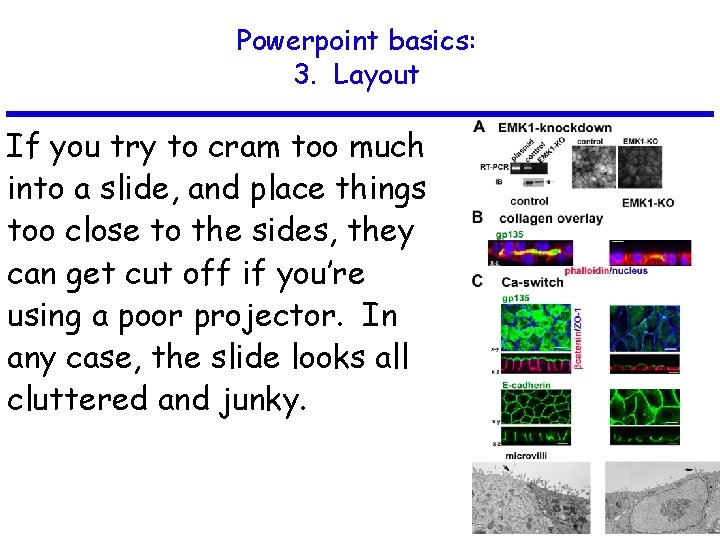
Powerpoint basics: 3. Layout If you try to cram too much into a slide, and place things too close to the sides, they can get cut off if you’re using a poor projector. In any case, the slide looks all cluttered and junky.
Powerpoint basics: 4. Style Try your best to include a simple image on every slide.
Powerpoint basics: 4. Style Limit the number of items on each slide. Each slide should make just one or two points!
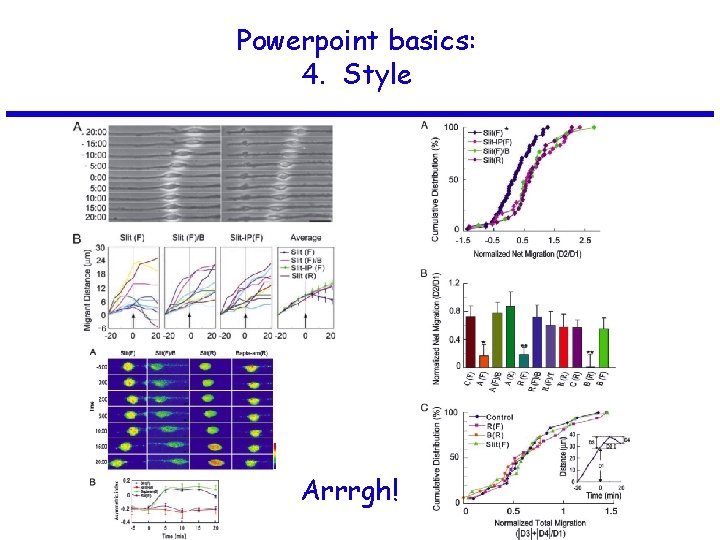
Powerpoint basics: 4. Style Arrrgh!
Powerpoint basics: 4. Style Don’t try to show too many slides. Often, less is more.
It’s very easy to use Powerpoint really badly
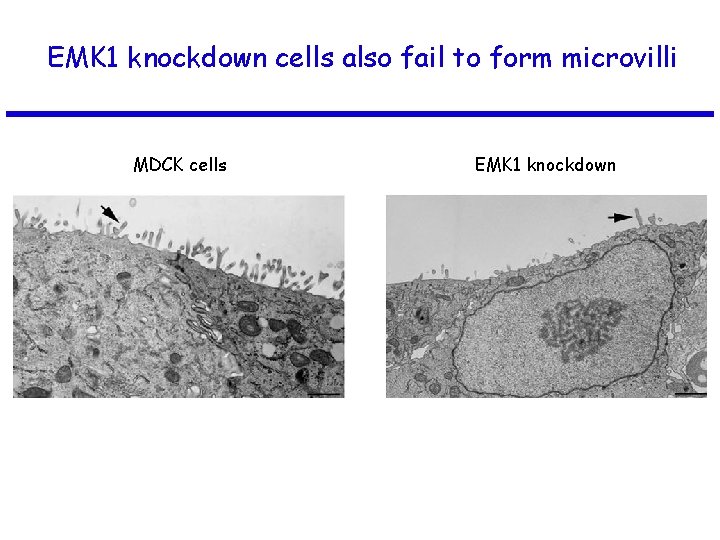
Emk 1 knockdown inhibits lumen formation in MDCK cells: -RT-PCR: EMK 1 is effectively knocked down in MDCK cells 24 hours after transfection with PSUPER (control) or P-SUPER-si. EMK 1 plasmid; knockdown confirmed on the right with antibodies to EMK 1. - Collagen overlay assay: cells cultured 24 h on collagen I before being overlaid with additional collagen on the apical surface, analyzed 24 h later. Note the lack of lumen in EMK 1 -KO cultures. - Ca switch: control or EMK 1 -KO cells were plated in low Ca medium 24 h upon transfection with p. SUPER or p. SUPER-KO. After 12 h, cultures were switched to normal medium for 24 h. Transmission EM of cells sectioned perpendicular to the substratum shows lack of microvilli in EMK 1 -KO cells.
It takes some work and forethought to use Powerpoint well
It takes some work and forethought to use Powerpoint well Let’s break down the previous slide into its minimum essential components
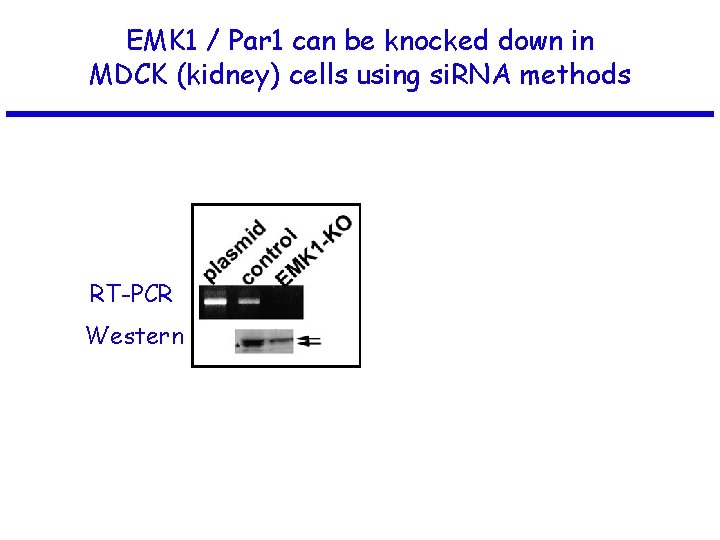
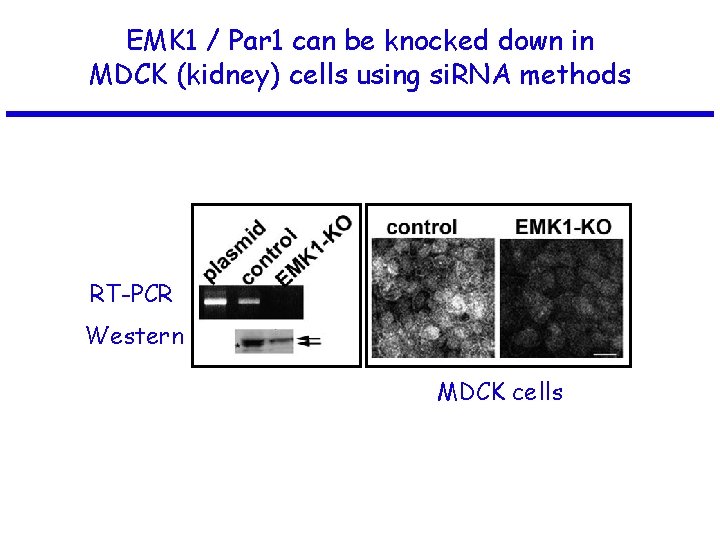
EMK 1 / Par 1 can be knocked down in MDCK (kidney) cells using si. RNA methods RT-PCR Western MDCK (kidney)cells
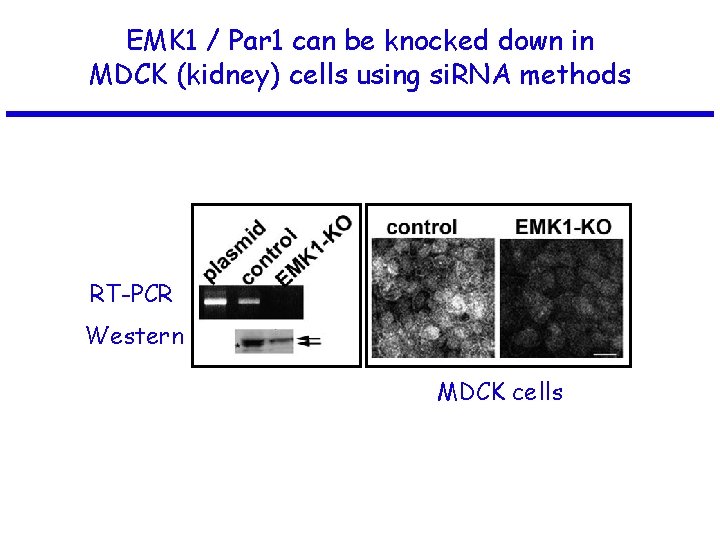
EMK 1 / Par 1 can be knocked down in MDCK (kidney) cells using si. RNA methods RT-PCR Western MDCK cells
MDCK cells form a lumen following a change in extracellular [Ca++ ] MDCK cells Surface view from lumen Side view of lumen gp 135 b-catenin ZO-1
MDCK cells form a lumen following a change in extracellular [Ca++ ] MDCK cells Surface view from lumen Side view of lumen gp 135 b-catenin ZO-1
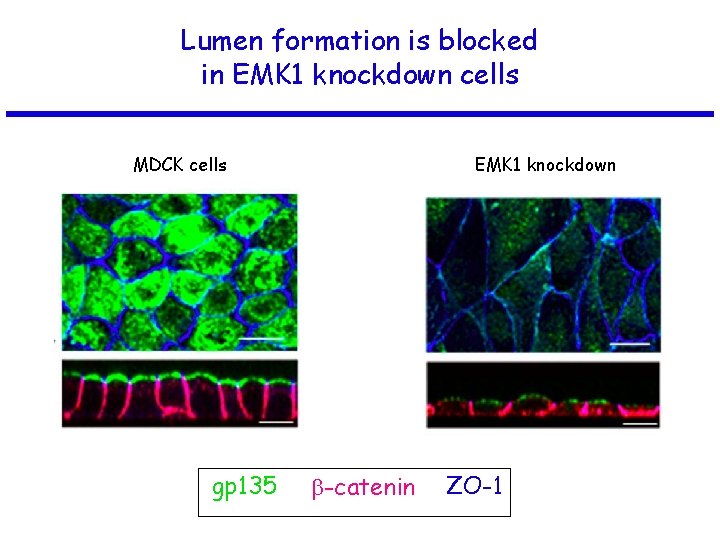
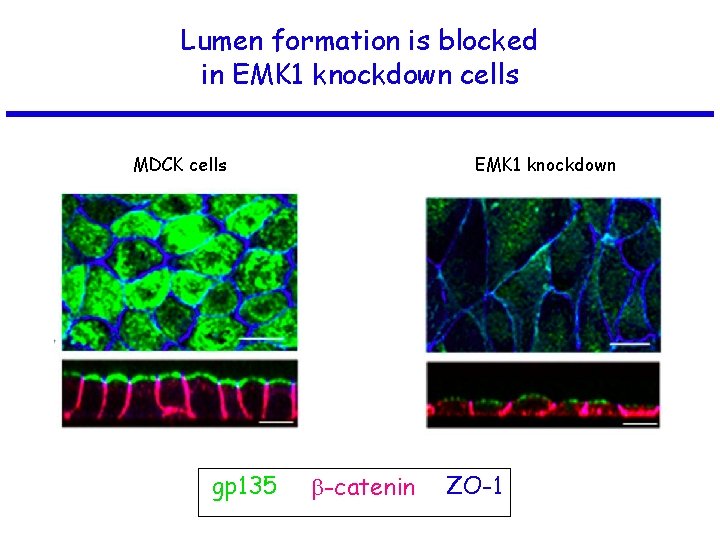
Lumen formation is blocked in EMK 1 knockdown cells MDCK cells gp 135 EMK 1 knockdown b-catenin ZO-1
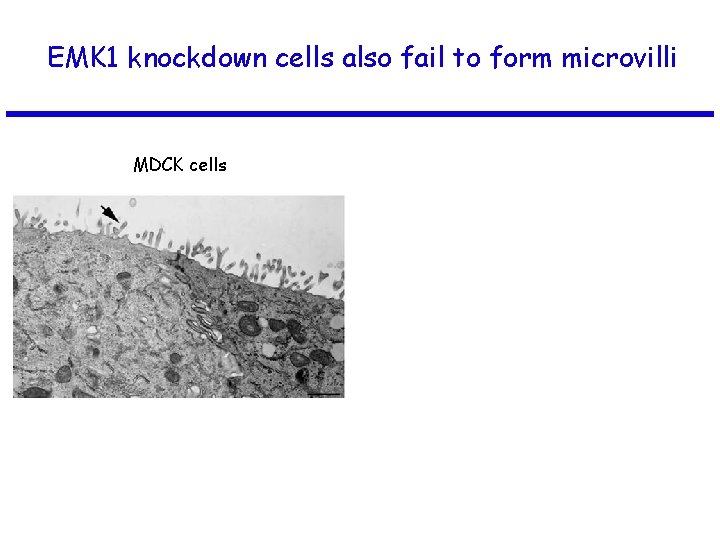
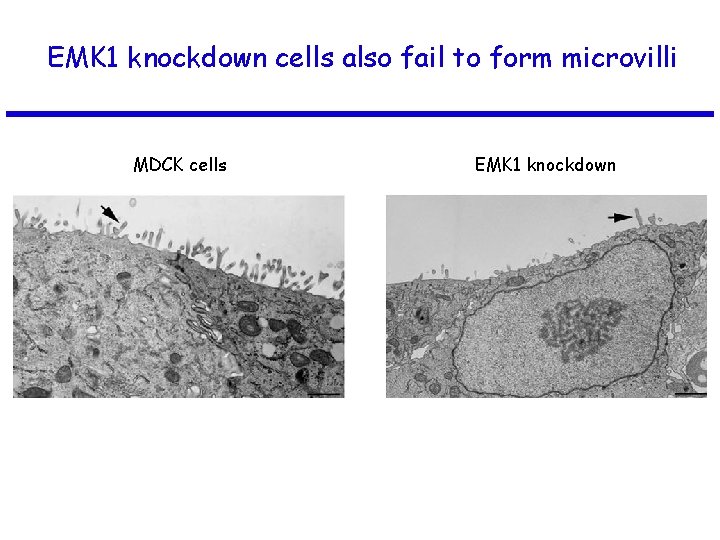
EMK 1 knockdown cells also fail to form microvilli MDCK cells EMK 1 knockdown
EMK 1 knockdown cells also fail to form microvilli MDCK cells EMK 1 knockdown
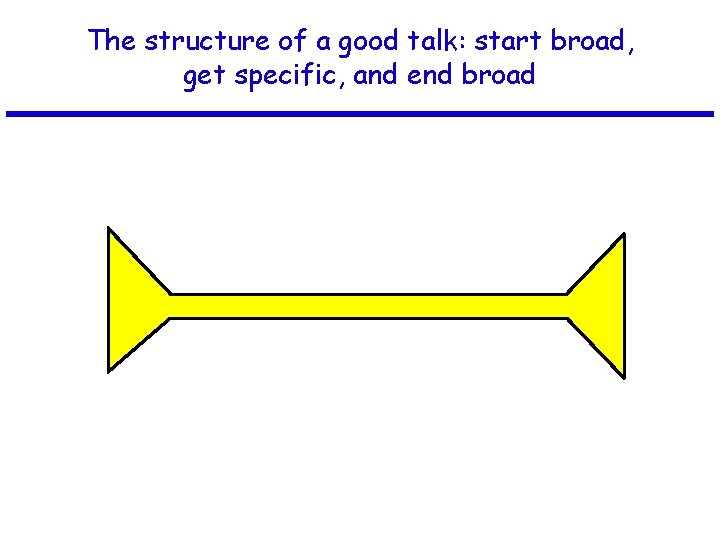
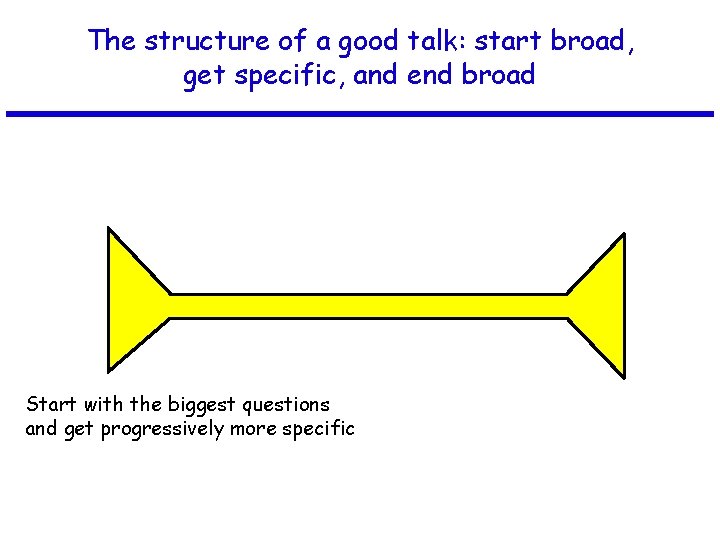
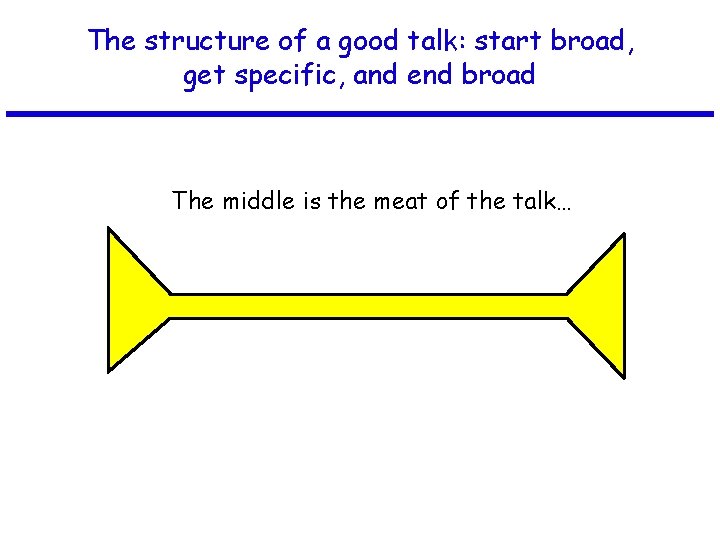
The structure of a good talk: start broad, get specific, and end broad
The structure of a good talk: start broad, get specific, and end broad
The structure of a good talk: start broad, get specific, and end broad Start with the biggest questions and get progressively more specific
A powerful tool in a talk is a “home slide” Design and introduce a “home slide” that you’ll come back to at each major transition in your talk.
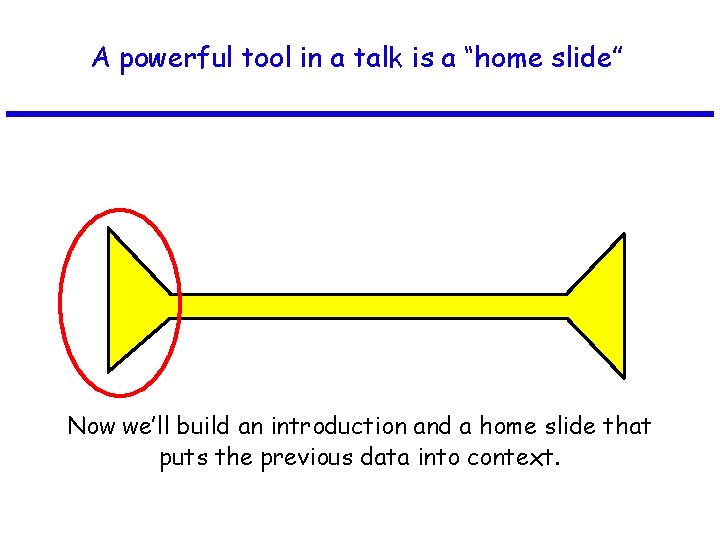
A powerful tool in a talk is a “home slide” Now we’ll build an introduction and a home slide that puts the previous data into context.
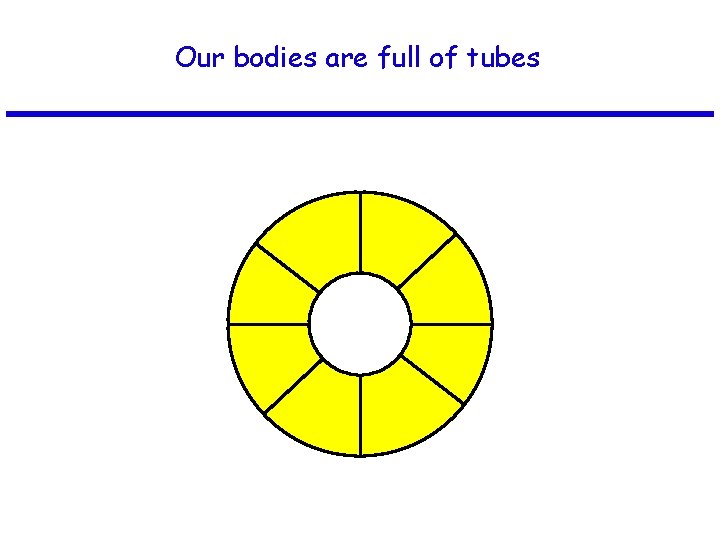
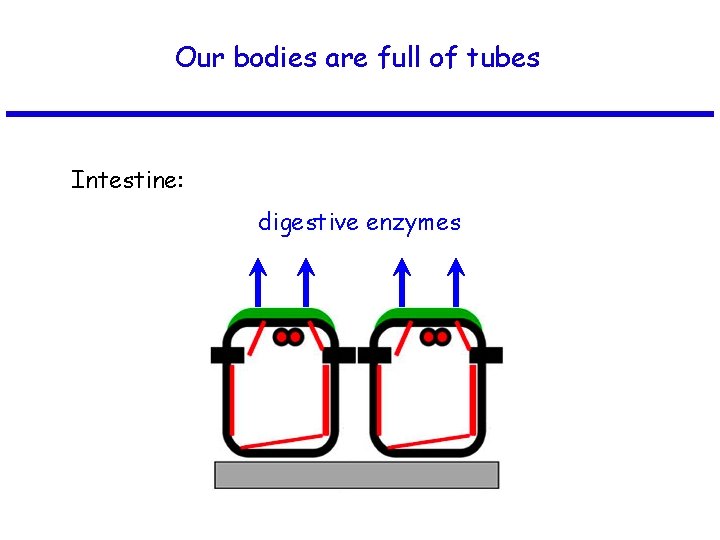
Our bodies are full of tubes
Our bodies are full of tubes Intestine: digestive enzymes
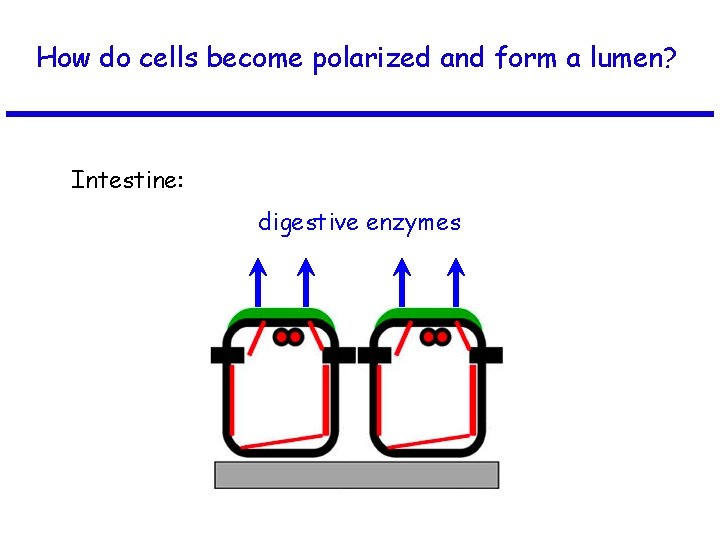
How do cells become polarized and form a lumen? Intestine: digestive enzymes
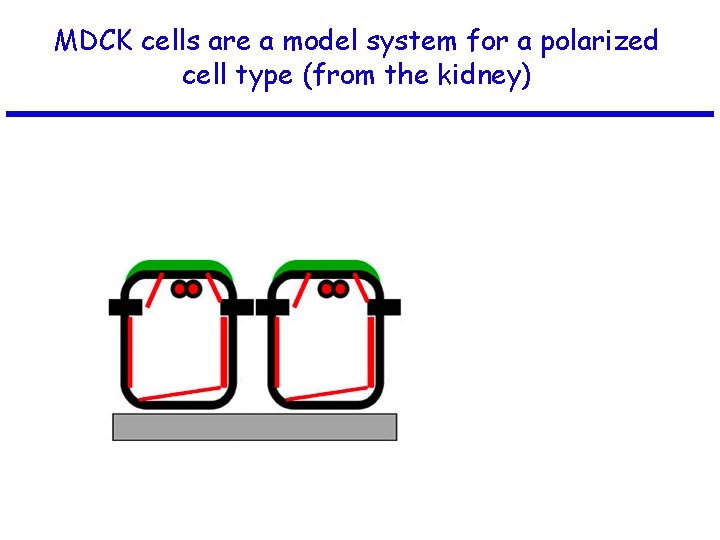
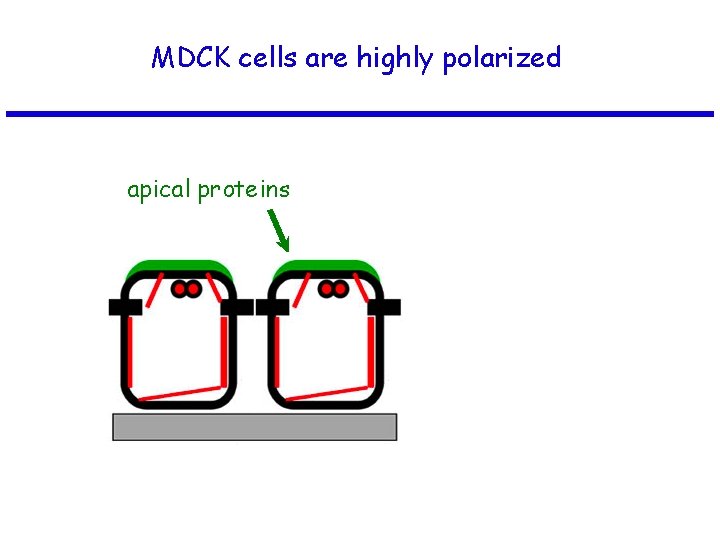
MDCK cells are a model system for a polarized cell type (from the kidney)
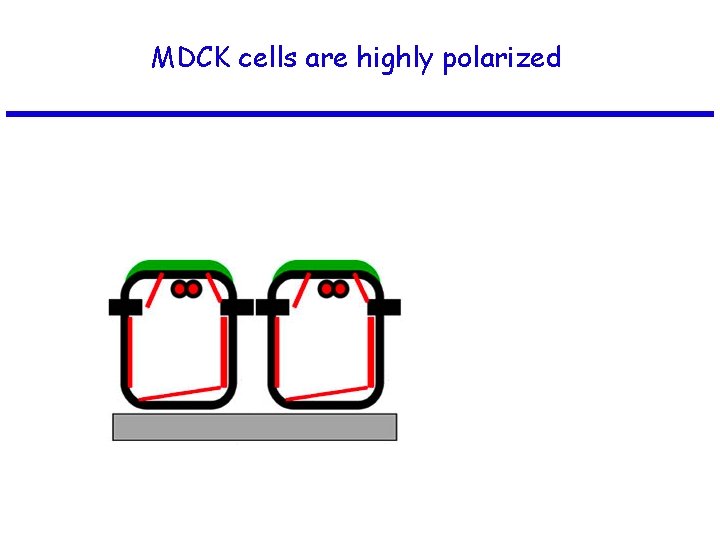
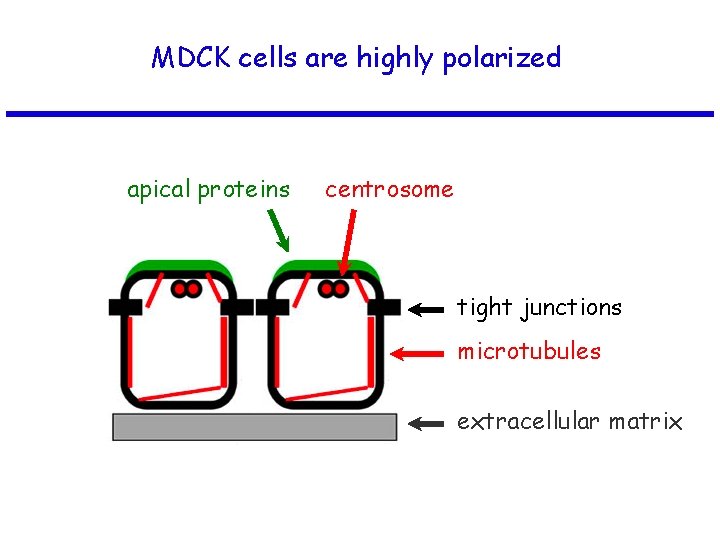
MDCK cells are highly polarized
MDCK cells are highly polarized apical proteins
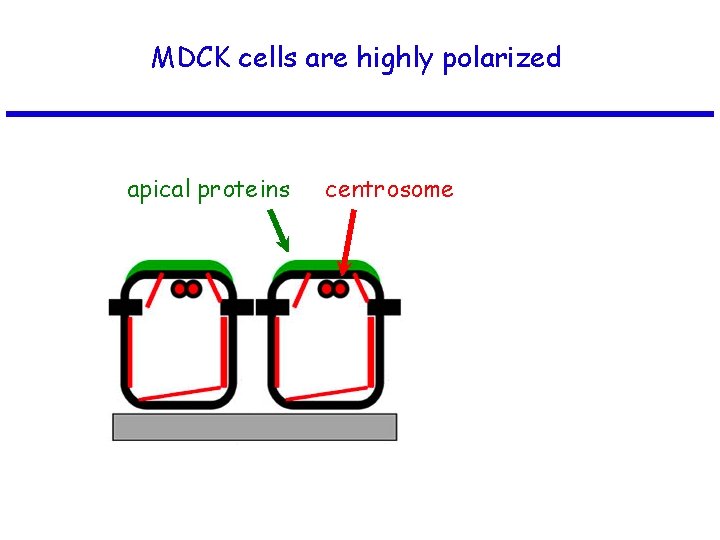
MDCK cells are highly polarized apical proteins centrosome
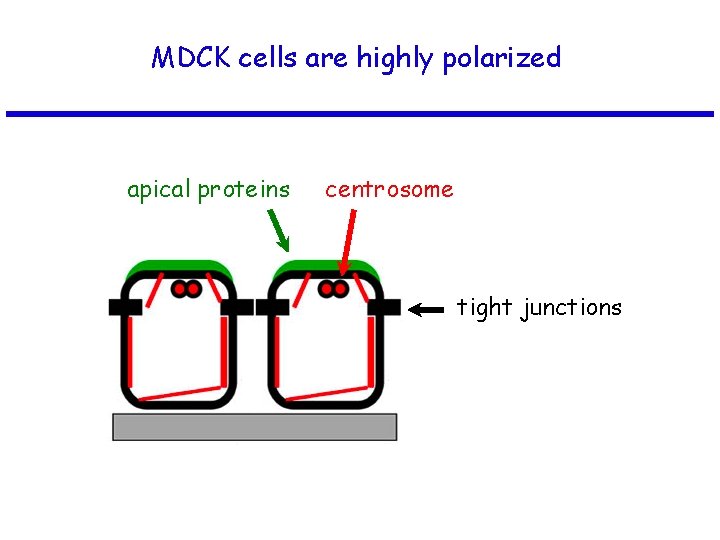
MDCK cells are highly polarized apical proteins centrosome tight junctions
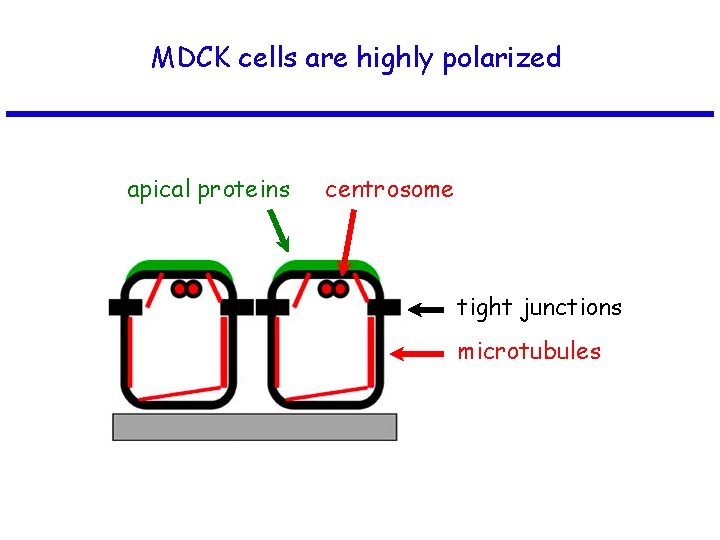
MDCK cells are highly polarized apical proteins centrosome tight junctions microtubules
MDCK cells are highly polarized apical proteins centrosome tight junctions microtubules extracellular matrix
MDCK cells lose their polarity in low [Ca++]
MDCK cells regain their polarity in normal [Ca++] and reform a lumen normal [Ca++]
MDCK cells regain their polarity in normal [Ca++] and reform a lumen normal [Ca++] time
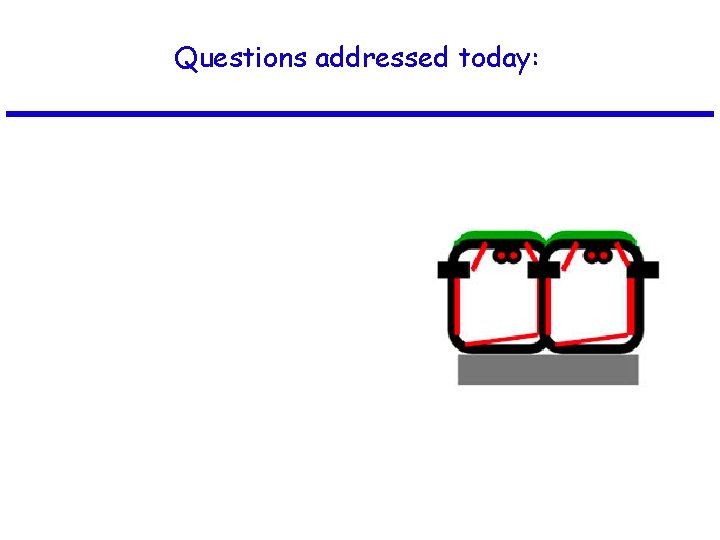
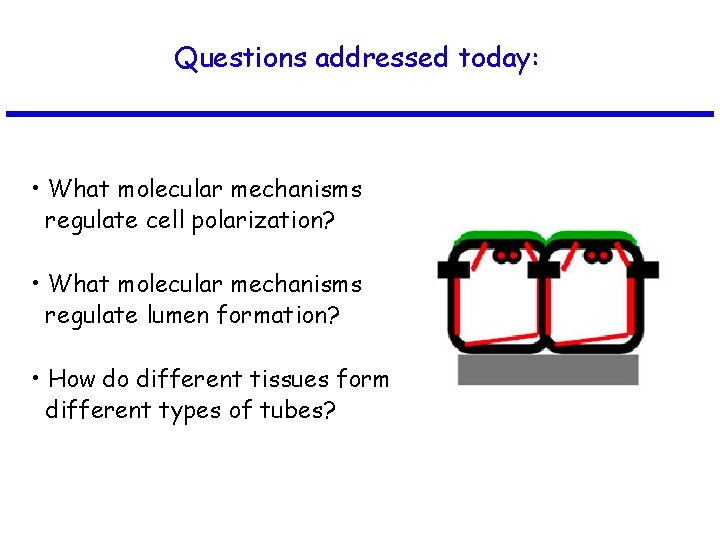
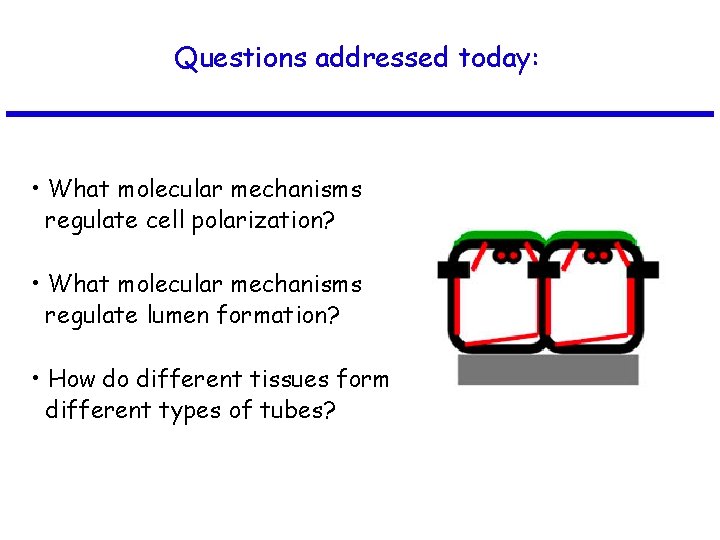
Questions addressed today:
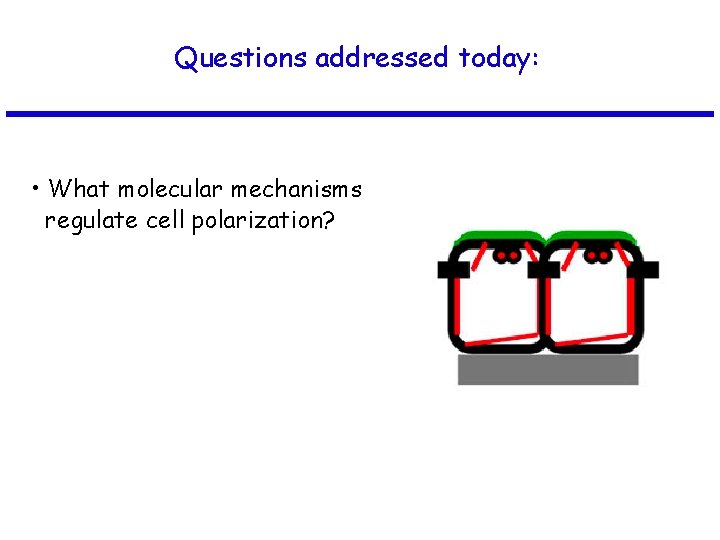
Questions addressed today: • What molecular mechanisms regulate cell polarization?
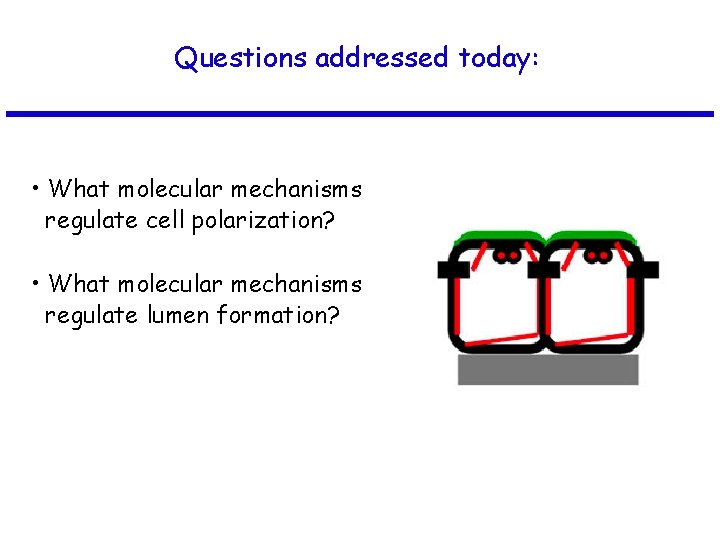
Questions addressed today: • What molecular mechanisms regulate cell polarization? • What molecular mechanisms regulate lumen formation?
Questions addressed today: • What molecular mechanisms regulate cell polarization? • What molecular mechanisms regulate lumen formation? • How do different tissues form different types of tubes?
The structure of a good talk: start broad, get specific, and end broad The middle is the meat of the talk…
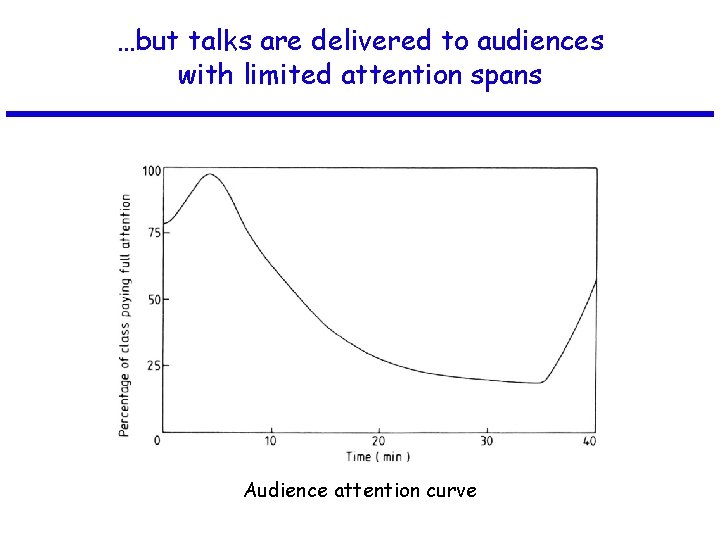
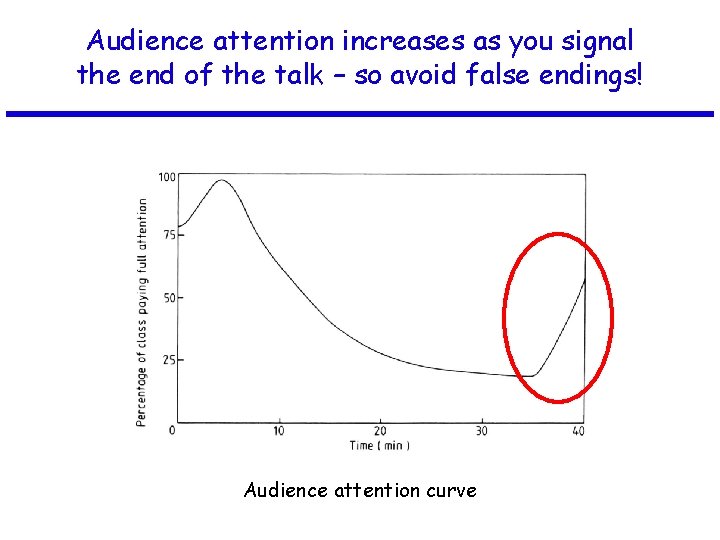
…but talks are delivered to audiences with limited attention spans Audience attention curve
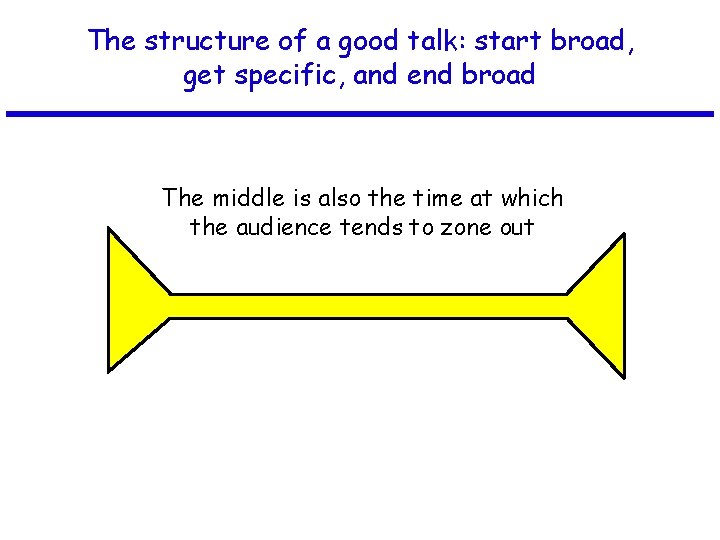
The structure of a good talk: start broad, get specific, and end broad The middle is also the time at which the audience tends to zone out
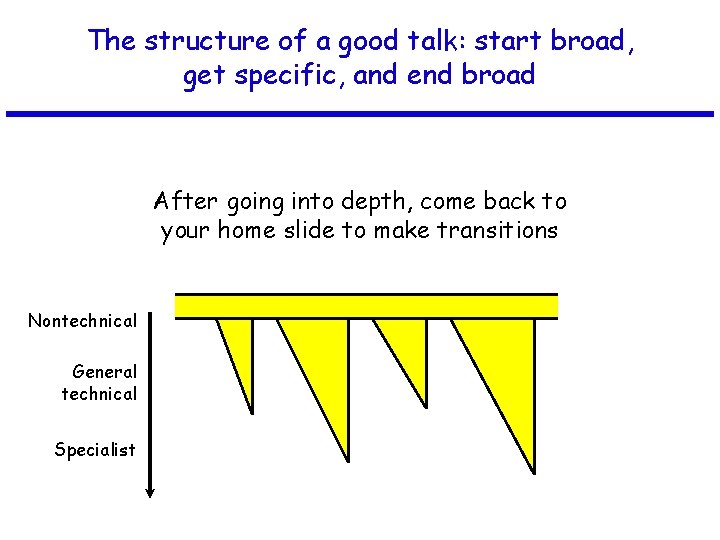
The structure of a good talk: start broad, get specific, and end broad After going into depth, come back to your home slide to make transitions
The structure of a good talk: start broad, get specific, and end broad After going into depth, come back to your home slide to make transitions Nontechnical General technical Specialist
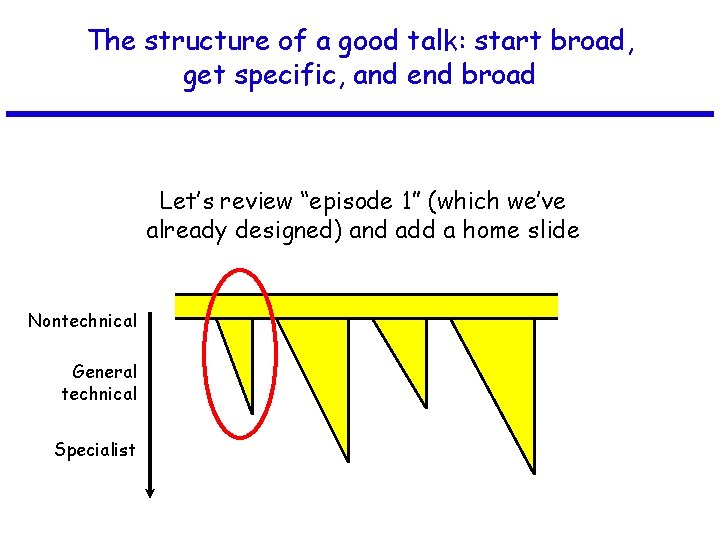
The structure of a good talk: start broad, get specific, and end broad Let’s review “episode 1” (which we’ve already designed) and add a home slide Nontechnical General technical Specialist
Questions addressed today: • What molecular mechanisms regulate cell polarization? • What molecular mechanisms regulate lumen formation? • How do different tissues form different types of tubes?
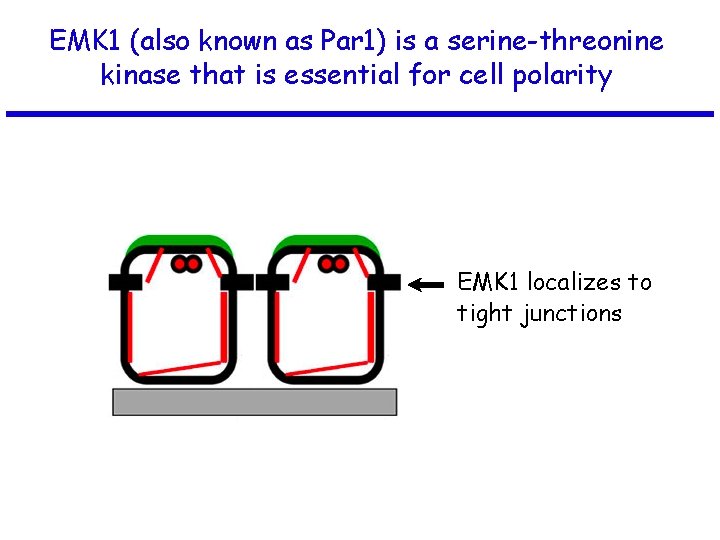
EMK 1 (also known as Par 1) is a serine-threonine kinase that is essential for cell polarity EMK 1 localizes to tight junctions
EMK 1 / Par 1 can be knocked down in MDCK (kidney) cells using si. RNA methods RT-PCR Western MDCK cells
Lumen formation is blocked in EMK 1 knockdown cells MDCK cells gp 135 EMK 1 knockdown b-catenin ZO-1
EMK 1 knockdown cells also fail to form microvilli MDCK cells EMK 1 knockdown
EMK 1 is required for cell polarization Normal MDCK cells: low [Ca++] normal [Ca++]
EMK 1 is required for cell polarization EMK 1 knockdown cells: low [Ca++] normal [Ca++]
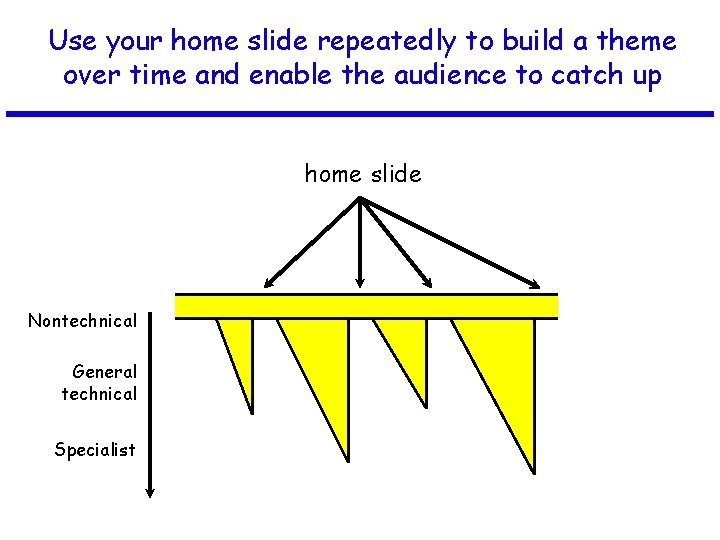
Use your home slide repeatedly to build a theme over time and enable the audience to catch up home slide Nontechnical General technical Specialist
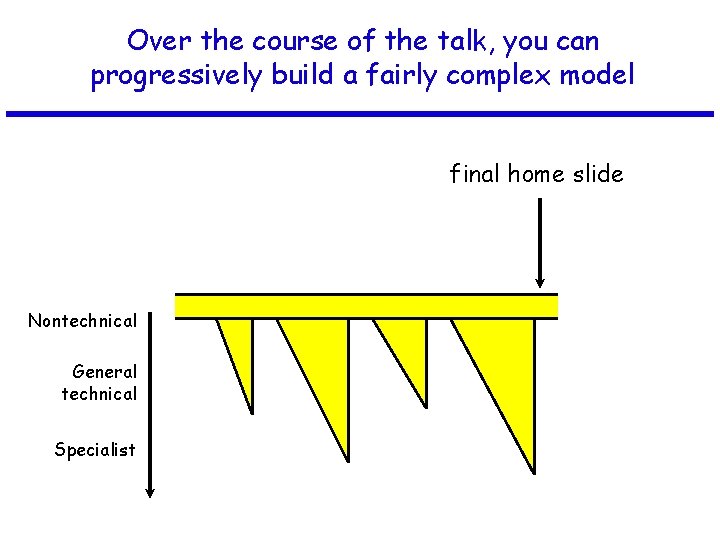
Over the course of the talk, you can progressively build a fairly complex model final home slide Nontechnical General technical Specialist
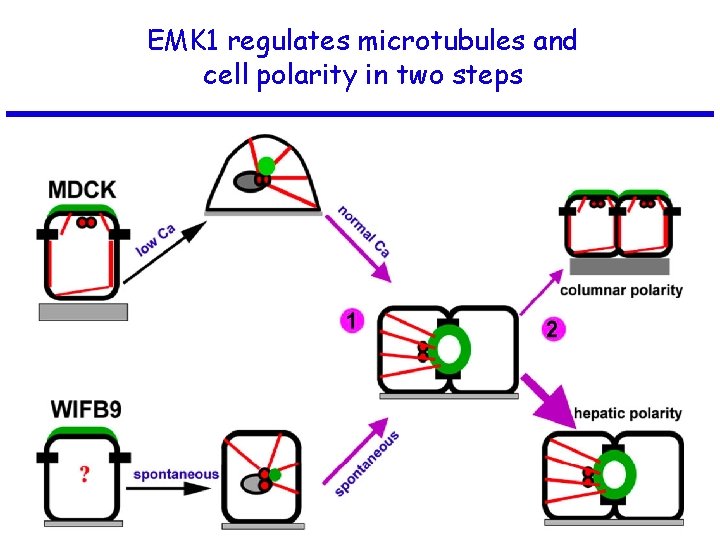
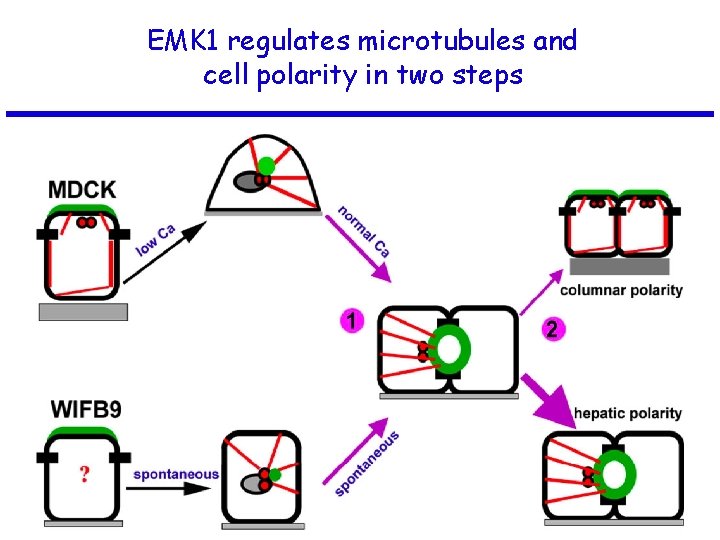
EMK 1 regulates microtubules and cell polarity in two steps
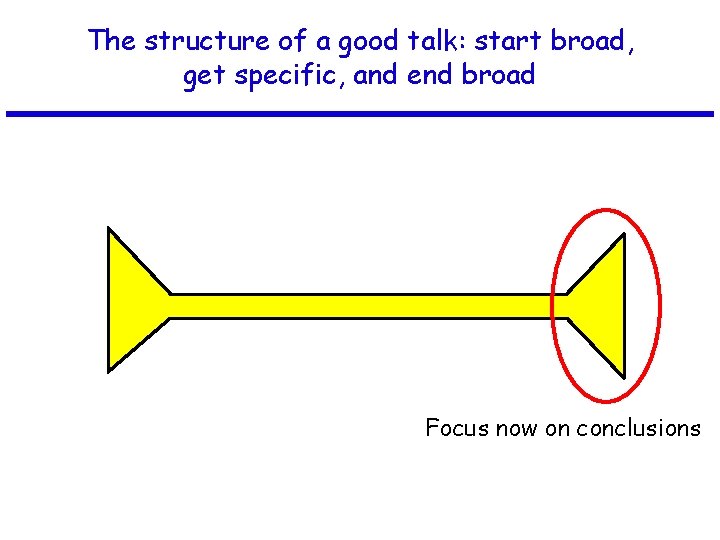
The structure of a good talk: start broad, get specific, and end broad Focus now on conclusions
Audience attention increases as you signal the end of the talk – so avoid false endings! Audience attention curve
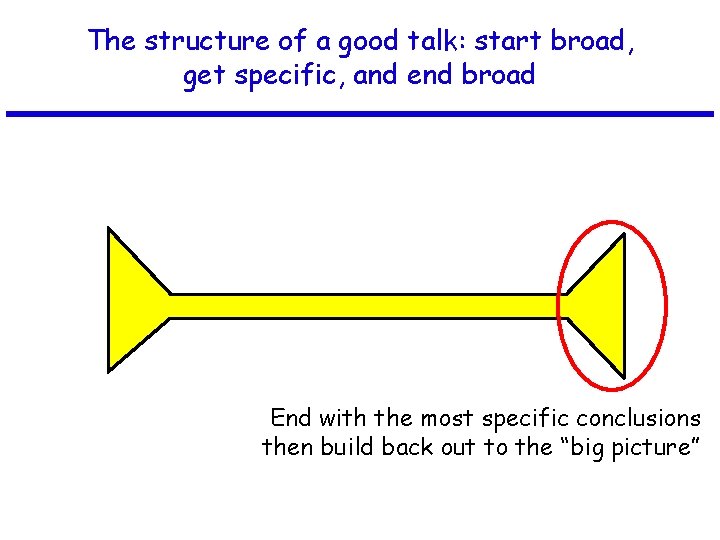
The structure of a good talk: start broad, get specific, and end broad End with the most specific conclusions then build back out to the “big picture”
EMK 1 regulates microtubules and cell polarity in two steps
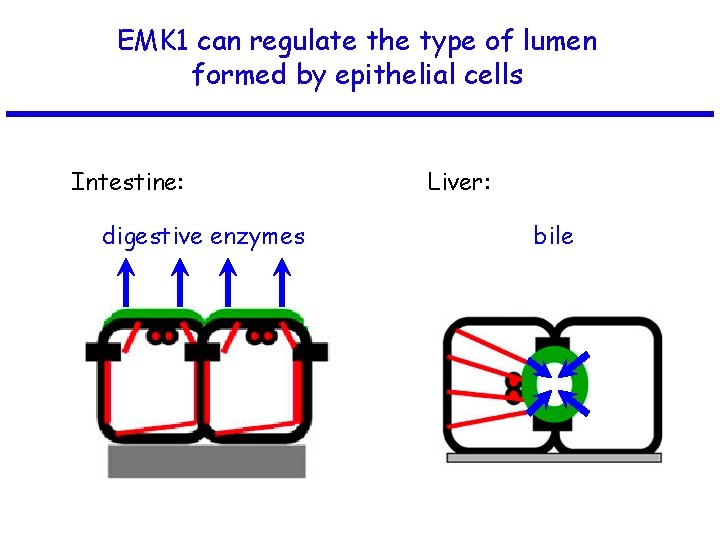
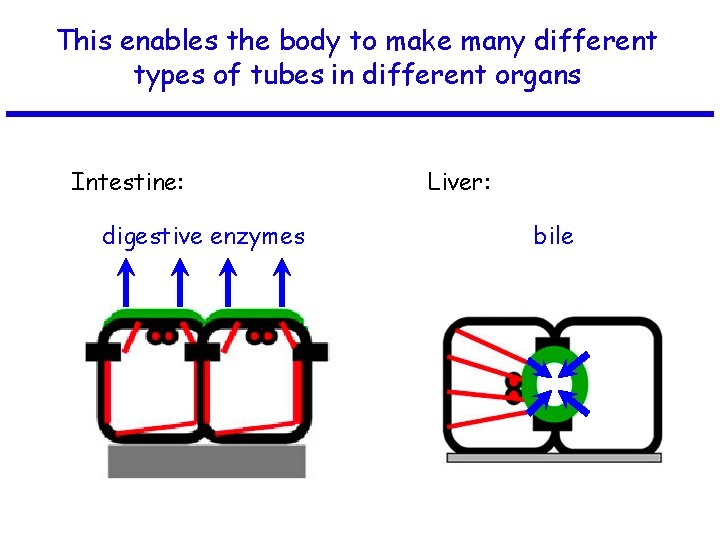
EMK 1 can regulate the type of lumen formed by epithelial cells Intestine: digestive enzymes Liver: bile
This enables the body to make many different types of tubes in different organs Intestine: digestive enzymes Liver: bile
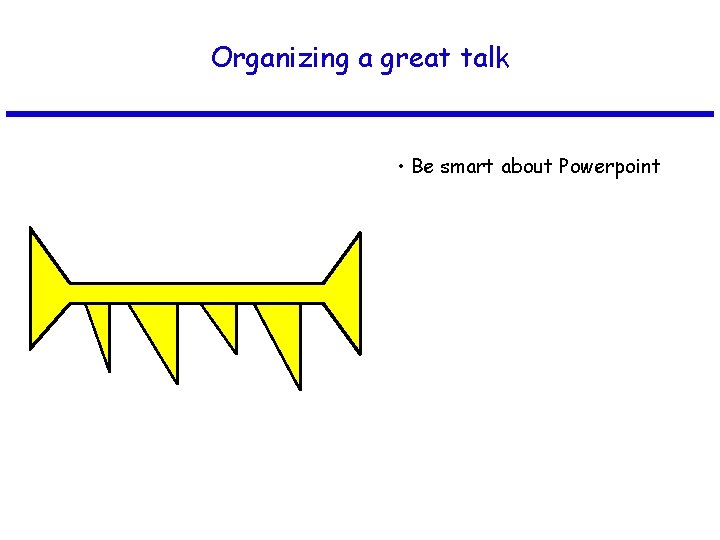
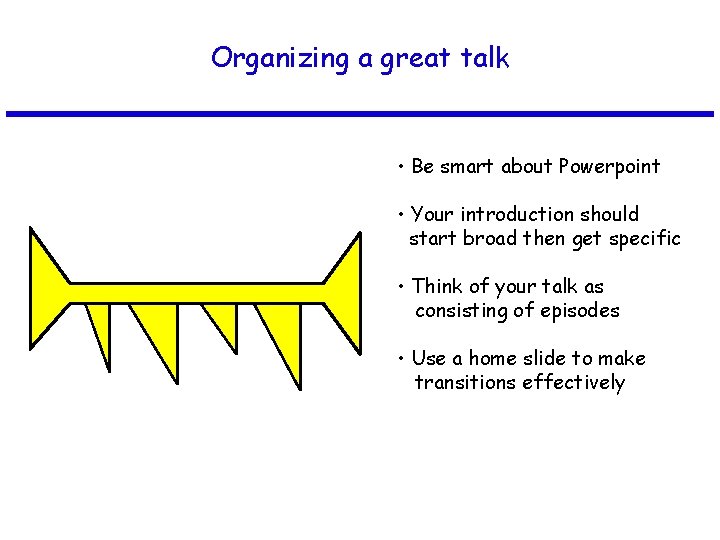
Organizing a great talk • Be smart about Powerpoint
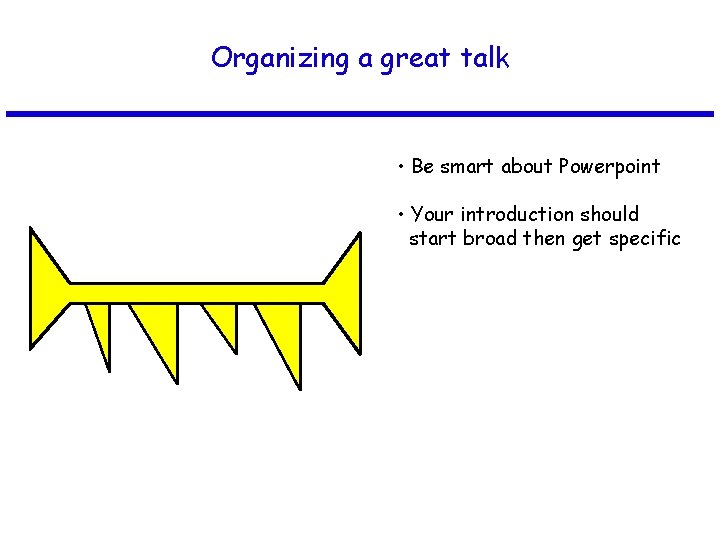
Organizing a great talk • Be smart about Powerpoint • Your introduction should start broad then get specific
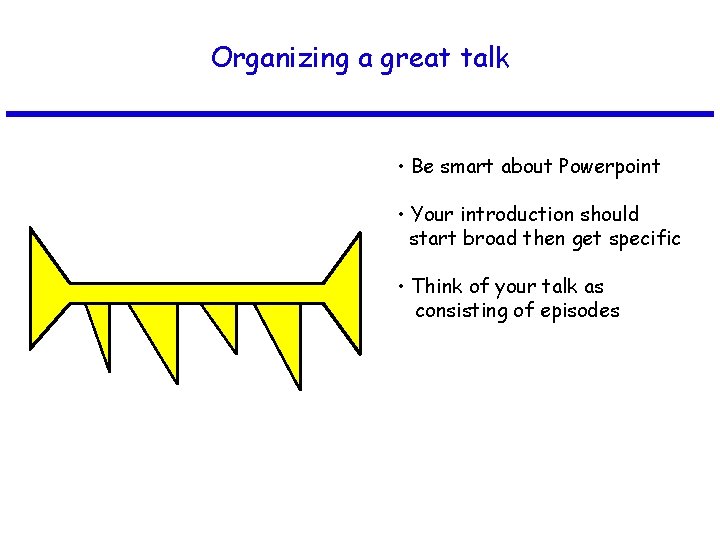
Organizing a great talk • Be smart about Powerpoint • Your introduction should start broad then get specific • Think of your talk as consisting of episodes
Organizing a great talk • Be smart about Powerpoint • Your introduction should start broad then get specific • Think of your talk as consisting of episodes • Use a home slide to make transitions effectively
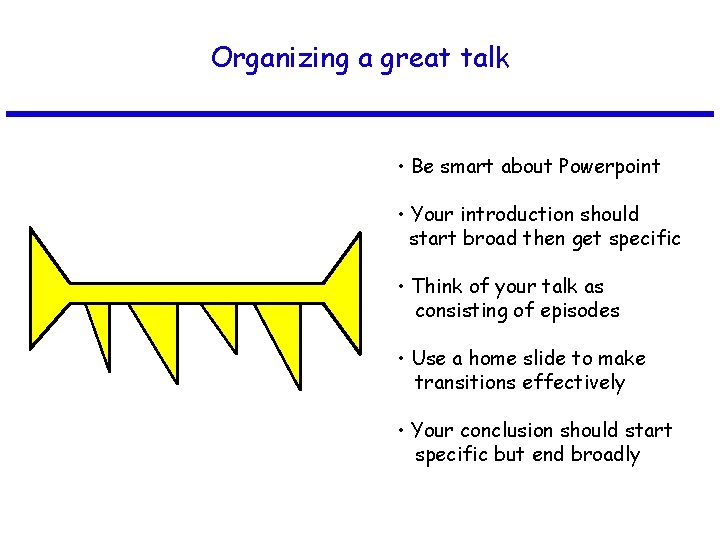
Organizing a great talk • Be smart about Powerpoint • Your introduction should start broad then get specific • Think of your talk as consisting of episodes • Use a home slide to make transitions effectively • Your conclusion should start specific but end broadly
There is more to giving a good talk than showing good slides Do face the audience and make eye contact Do be enthusiastic and vary the tone of your voice, Don’t pace up and down but also don’t stand rigid! Don’t wave your pointer all over the slide Don’t take lots of drinks- it is distracting and unprofessional
There is more to giving a good talk than showing good slides Do practice beforehand, preferably using a video camera and timer Do ask your friends (and family) for feedback Don’t use too many gimmicks
Here are some of the things many listeners want from a talk:
A great resource is The Craft of Scientific Presentations by Michael Alley