
Giving a Case Presentation l The three dimensions
- Slides: 21
Giving a Case Presentation l The three dimensions of a case l Individual Preparation l Small group discussion l Case presentation and report
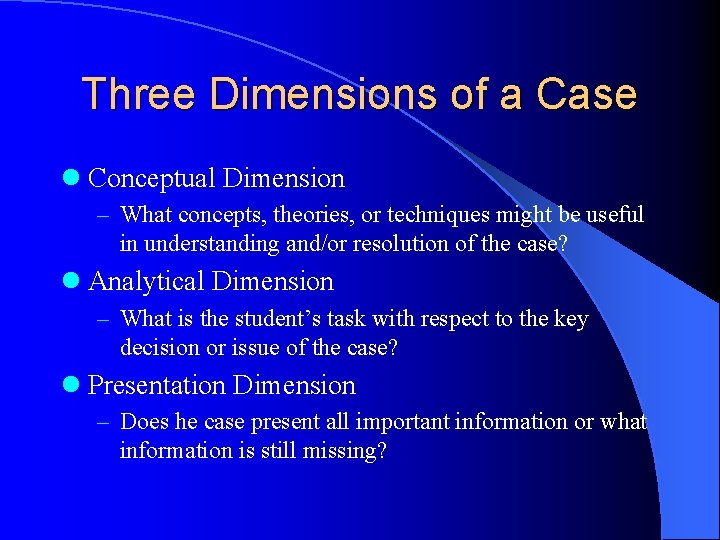
Three Dimensions of a Case l Conceptual Dimension – What concepts, theories, or techniques might be useful in understanding and/or resolution of the case? l Analytical Dimension – What is the student’s task with respect to the key decision or issue of the case? l Presentation Dimension – Does he case present all important information or what information is still missing?
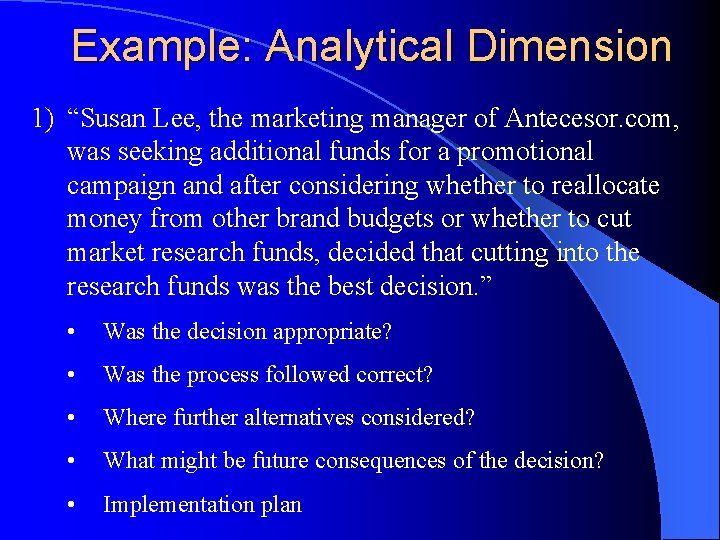
Example: Analytical Dimension 1) “Susan Lee, the marketing manager of Antecesor. com, was seeking additional funds for a promotional campaign and after considering whether to reallocate money from other brand budgets or whether to cut market research funds, decided that cutting into the research funds was the best decision. ” • Was the decision appropriate? • Was the process followed correct? • Where further alternatives considered? • What might be future consequences of the decision? • Implementation plan
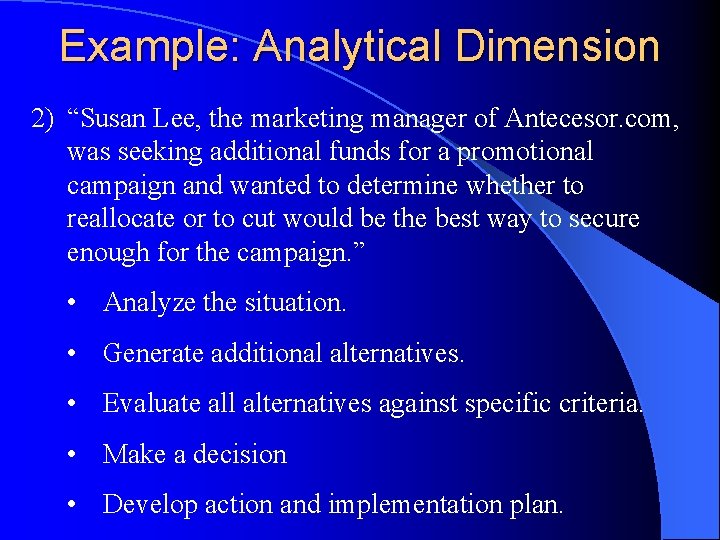
Example: Analytical Dimension 2) “Susan Lee, the marketing manager of Antecesor. com, was seeking additional funds for a promotional campaign and wanted to determine whether to reallocate or to cut would be the best way to secure enough for the campaign. ” • Analyze the situation. • Generate additional alternatives. • Evaluate all alternatives against specific criteria. • Make a decision • Develop action and implementation plan.
Example: Analytical Dimension 2) “Susan Lee, the marketing manager of Antecesor. com, was reviewing the current promotional budget. ” • Analyze the situation. • Need decisions be taken? • What alternatives might be considered? • What decision criteria should be used? • Which alternative might be preferable? • How could it be implemented? • What could be the outcome?
Individual Preparation • IMPORTANT: You are NOT Susan’s consultant! You ARE Susan Lee! Put yourself into her shoes. • Not “If I were a consultant to Susan, what would I recommend? is the question. • “What would I do if I was in her position? ” • “We decided to go with alternative X because we believe we will increase marketshare in the highmargin segment…”
How to get into a case quickly: Step 1: Read the first 3 paragraphs and the last three paragraphs of the case and then stop to reflect. Step 2: Answer for yourself the following 5 questions: • Who is the decision maker in the case that I will be identifying with, and what position, responsibilities, and title do I hold? • What appears to be my challenge and its significance of the organization? • Why has my issue arisen and why am I involved now? • When do I have to decide, resolve, act or dispose of this issue? Is the any urgency?
Step 3: Quick look at the case exhibits. Step 4: Quick review of the case subtitles. Step 5: Skim case body. Step 6: Read assignment questions. Duration of the whole exercise no more than 30 minutes!
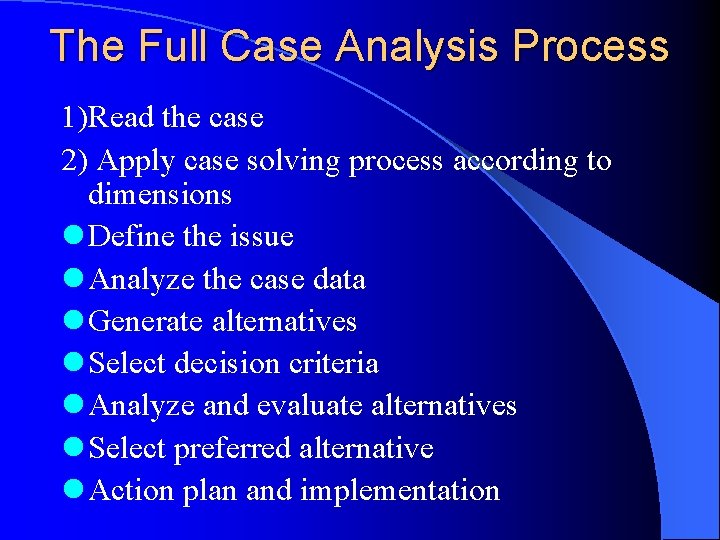
The Full Case Analysis Process 1)Read the case 2) Apply case solving process according to dimensions l Define the issue l Analyze the case data l Generate alternatives l Select decision criteria l Analyze and evaluate alternatives l Select preferred alternative l Action plan and implementation
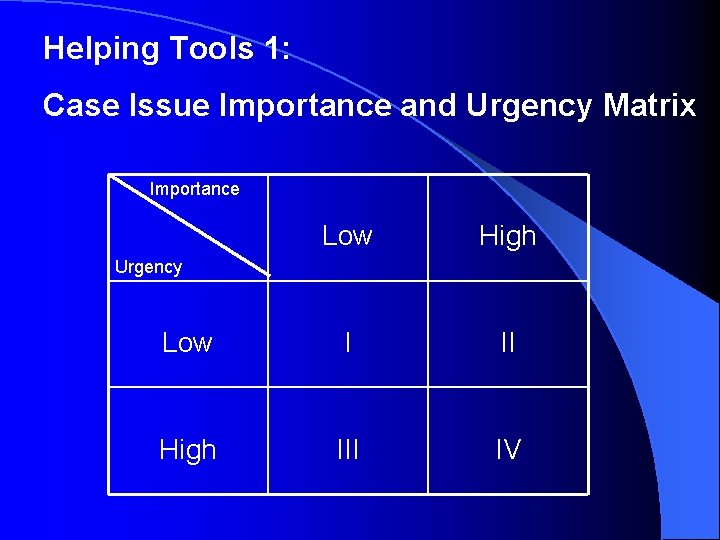
Helping Tools 1: Case Issue Importance and Urgency Matrix Importance Low High Low I II High III IV Urgency
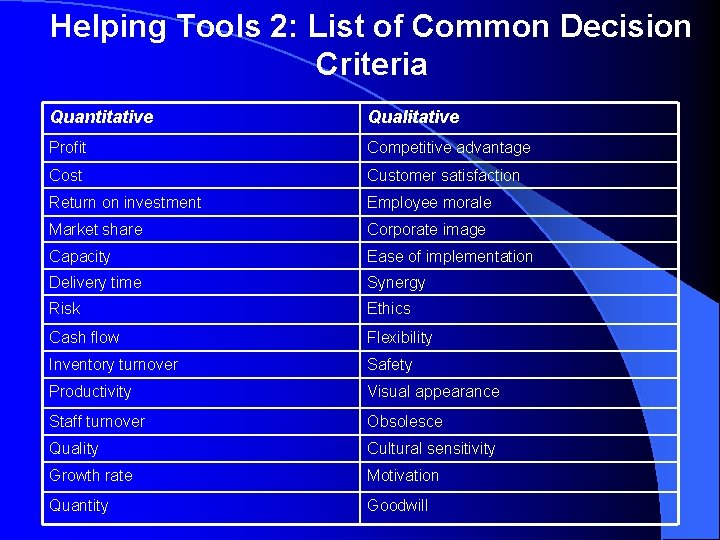
Helping Tools 2: List of Common Decision Criteria Quantitative Qualitative Profit Competitive advantage Cost Customer satisfaction Return on investment Employee morale Market share Corporate image Capacity Ease of implementation Delivery time Synergy Risk Ethics Cash flow Flexibility Inventory turnover Safety Productivity Visual appearance Staff turnover Obsolesce Quality Cultural sensitivity Growth rate Motivation Quantity Goodwill
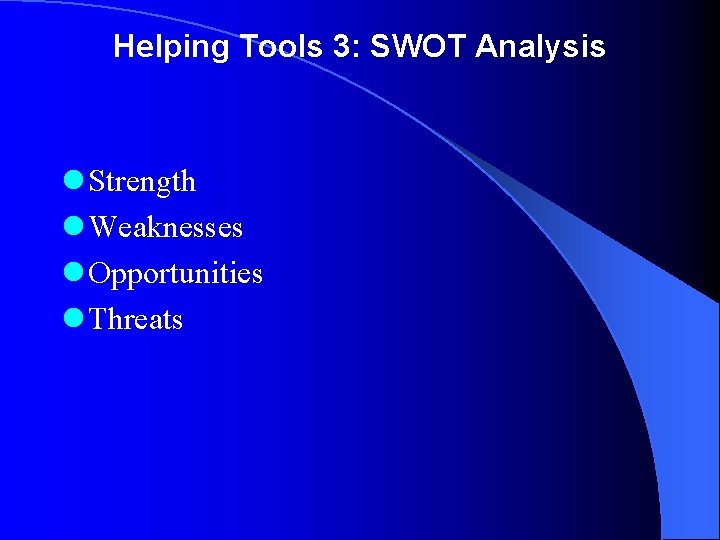
Helping Tools 3: SWOT Analysis l Strength l Weaknesses l Opportunities l Threats
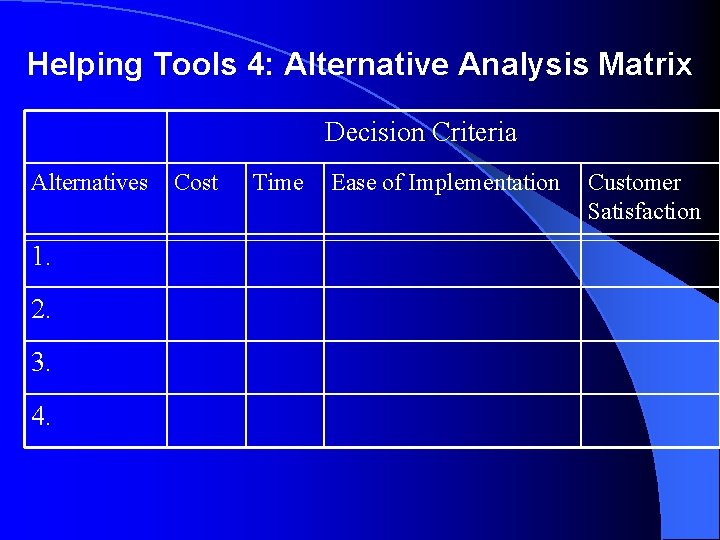
Helping Tools 4: Alternative Analysis Matrix Decision Criteria Alternatives 1. 2. 3. 4. Cost Time Ease of Implementation Customer Satisfaction
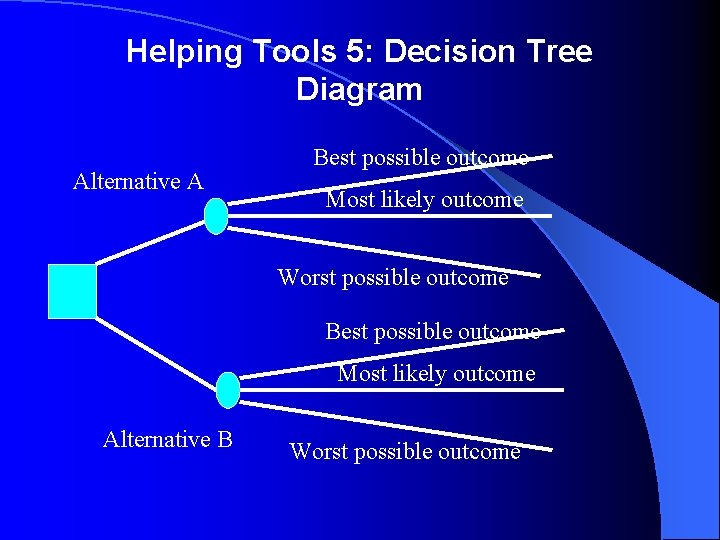
Helping Tools 5: Decision Tree Diagram Alternative A Best possible outcome Most likely outcome Worst possible outcome Best possible outcome Most likely outcome Alternative B Worst possible outcome
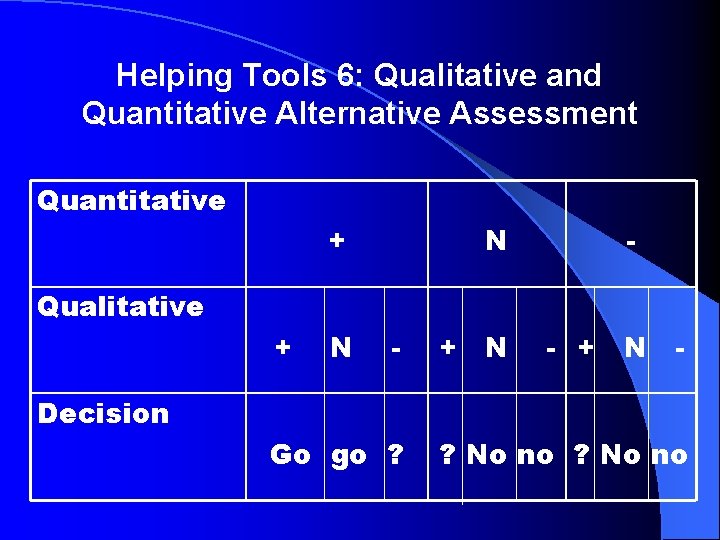
Helping Tools 6: Qualitative and Quantitative Alternative Assessment Quantitative + N - Qualitative + N - Decision Go go ? ? No no
Preparation in Small Groups 1) Quick review of the Short Cycle Process conclusions. 2) Review of Full Analysis Process conclusions. 3) Review of special difficulties. 4) Anticipation of the class discussion.
Case Presentation and Report l Organize your presentation – Have a good opening to get attention and arouse interest. – Have a good structure and “reel” class back into it from time to time. l Prepare well – It shows if you did not practice TOGETHER before you present in class. – However, do not prepare a full write-up that you read out to the class.
l Keep it simple. – Not always easy but important. Keep structure simple. – succinct slides are good. l Use quality visual aids. – Don’t go overboard. They should not distract from the presentation but support your arguments and key points. l Rehearse. – Not just the content but style of delivery, eye contact, poise, timing, linking between presenters, and use of visual aides. l Anticipate audience reactions and questions.
Evaluation Criteria of Case Report l Clear identification of the issue(s). l Soundness and accuracy of analysis. l Legitimacy, range, and evaluation of alternative. l Appropriateness and specificity of recommendations. l Appropriateness of action and implementation plans. l Consistency of logic. l Appropriate use of theory and concepts in your analysis. l Quality of written presentation.
Suggestion for Organization and Coherence of Ideas l Outline overall structure of your report. l Identify the units and subunits by headings and subheadings. l List ideas and information associated with each subheading. l Group related ideas where possible. l Arrange ideas and/or “idea groups” into logical order. l Plan exhibits. l Plan the intro and conclusion.
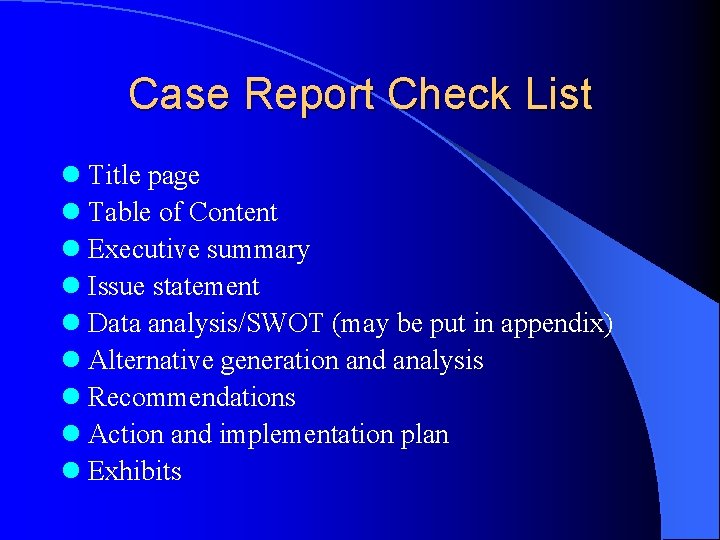
Case Report Check List l Title page l Table of Content l Executive summary l Issue statement l Data analysis/SWOT (may be put in appendix) l Alternative generation and analysis l Recommendations l Action and implementation plan l Exhibits