
GIT problems II Hemorrhoids also known as piles

GIT problems II

Hemorrhoids • also known as piles. • abnormally dilated, swollen, bulging of hemorrhoidal vessels and the overlying skin in the anorectal region.
Etiology • Anatomical (degeneration of elastic tissue), • Physiological (increased anal canal pressure), • Mechanical (increase pressure inside abdomen). Exacerbated Factors: • Constipation, inadequate dietary fiber or fluid intake. • Pregnancy is believed to precipitate hemorrhoids in susceptible women.
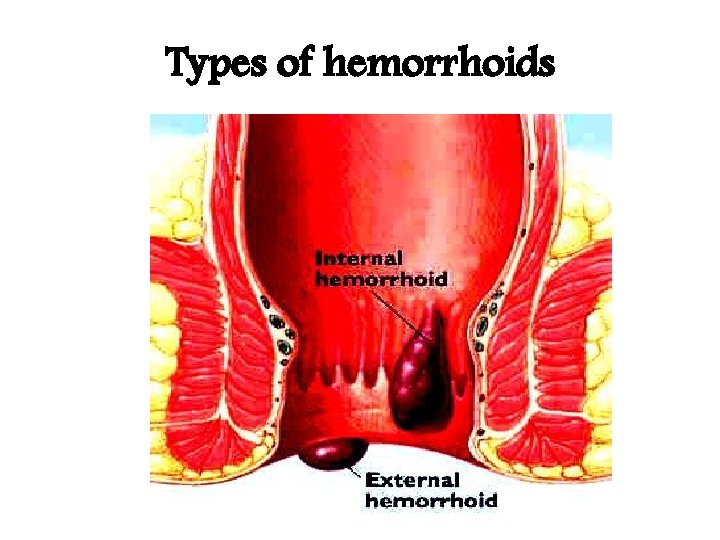
Types of hemorrhoids

Internal Haemorrhoid • Grade I, do not prolapse out of the anal canal; • Grade II, prolapse on defecation but reduce spontaneously; • Grade III, require manual reduction; and • Grade IV, cannot be reduced.
Patient Assessment (Specific questions to ask) • • • Duration and previous history Pain (not continuous) Itching (perianal area) Bleeding (with stool or not) Constipation Associated symptoms (pain, vomiting, loss of appetite, tenesmus (desire to defecate when there is no stool), seepage (involuntary passage of fecal material).
When to Refer • Duration of longer than 3 weeks. • Presence of blood in the stools. • Change in bowel habit (persisting alteration from normal bowel habit). • Suspected drug-induced constipation. • Associated abdominal pain/vomiting. • If symptoms have not improved with OTC medication after 1 week.
Management Non-pharmacological Advices Increase the amount of fiber and fluid in the diet. Avoid lifting heavy object. Avoid delaying the urge to defecate. Avoid prolonged sitting in the toilet to reduce straining and pressure on the hemorrhoids vessels. • Wash the perianal area with warm water after each bowel movement. In addition many patients find that warm bath soothes their discomfort. • •

Pharmacological Therapy
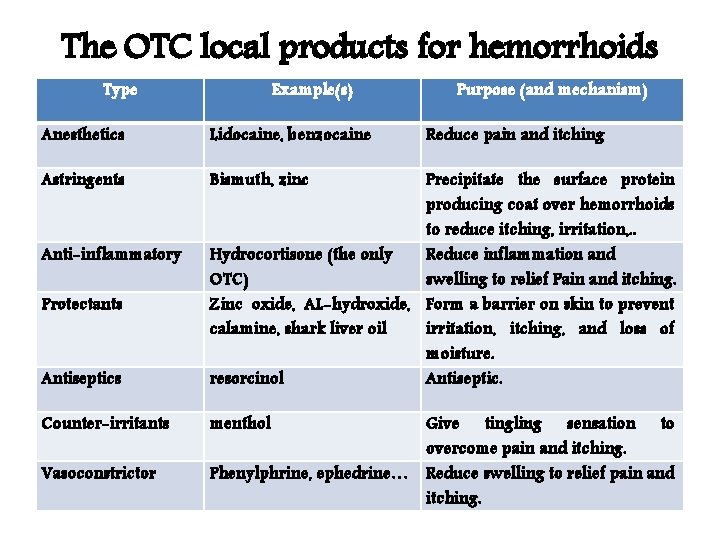
The OTC local products for hemorrhoids Type Example(s) Anesthetics Lidocaine, benzocaine Astringents Bismuth, zinc Purpose (and mechanism) Reduce pain and itching Antiseptics Precipitate the surface protein producing coat over hemorrhoids to reduce itching, irritation, . . Hydrocortisone (the only Reduce inflammation and OTC) swelling to relief Pain and itching. Zinc oxide, AL-hydroxide, Form a barrier on skin to prevent calamine, shark liver oil irritation, itching, and loss of moisture. resorcinol Antiseptic. Counter-irritants menthol Anti-inflammatory Protectants Vasoconstrictor Give tingling sensation to overcome pain and itching. Phenylphrine, ephedrine… Reduce swelling to relief pain and itching.
Laxatives • The short-term use of a laxative to relieve constipation might be considered. • A stimulant laxative (e. g. senna) could be supplied for 1 or 2 days. • dietary fiber and fluids are being increased. • For patients who cannot or choose not to adapt their diet, bulk laxatives may be used long term.

Heartburn • Gastro-esophageal reflux disease (GERD) = Reflux Esophagitis = Heartburn. • Reflux of gastric contents, particularly acid, into the esophagus. • Typically a burning discomfort/pain felt in the stomach • Unlike the stomach lining, the esophageal mucosa has no protection against gastric acid and readily irritated by acid.
Patient assessment with GERD • • • Age Symptoms Severity of pain Difficulty in swallowing and regurgitation Pregnancy
Precipitating or aggravating factors… Bending or lying down. Overweight. After large meal. Pregnancy (mechanical and hormonal influence). • It can be aggravated or even caused by belching. • •
Medication • What had been tried to treat the condition. • Some drugs may cause GERD and may also lead to an increase in existing GERD symptoms and signs: • Reduction in lower esophageal sphincter pressure (LESP) (anticholinergics, tricyclic antidepressants). • Delayed gastric emptying (calcium channel blockers). • Damage or inflammation in the esophageal (NSAID).
When to refer • • Failure to respond to antacids Pain radiating to arms Difficulty in swallowing Regurgitation Long duration Increasing severity Children
Treatment Timescale (1 week) Non-pharmacological advices Eat small and frequent meals Avoid lying down within 3 hours of a meal. Wear loose fitting clothing Avoid smoking and foods that exacerbate symptoms of GERD. • Weight reduction should be advised. • •
Pharmacological Treatment • Antacids • Alginates • H 2 antagonists (Cimetidine, Nizatidine, Famotidine and Ranitidine) • Proton pump inhibitors (Omeprazole, Lansoprazole and Esomeprazole)


Indigestion • Many patients use the terms indigestion and heartburn interchangeably. • The discomfort of dyspepsia is variably described as a pain, distension, or feeling of fullness, but is generally not burning in nature.
Patient Assessment • • • Age Symptoms (upper to lower abdominal discomfort) Diet & Smoking Details of pain/ associated symptoms Medication
Interrelated Symptoms
Duodenal Ulcer • Pain is localised to the upper abdomen, slightly to the right of the midline. • It is often possible to point to the site of pain with a single finger. • The pain is dull and is most likely to occur when the stomach is empty, especially at night. • It is relieved by food (although it may be aggravated by fatty foods) and antacids. Gastric Ulcer • It is often aggravated by food and may be associated with nausea and vomiting. • Appetite is usually reduced and the symptoms are persistent and severe. • same site of pain.
Gallstones • Stones can become temporarily stuck in the opening to the bile duct as the gall bladder contracts. • This causes severe pain (biliary colic) in the upper abdomen. • Confused with that of a duodenal ulcer. • Biliary colic may be precipitated by a fatty meal.
Gastro-oesophageal Reflux The symptoms are typically described as heartburn arising in the upper abdomen passing upwards behind the breastbone. It is often precipitated by a large meal or by bending and lying down. Irritable bowel syndrome Pain is often occur in the lower abdominal but it may be upper abdominal and therefore confused with indigestion. There is usually an alteration in bowel habit (alternating constipation and diarrhoea).
Atypical angina Angina is usually experienced as a tight, painful constricting band across the middle of the chest. Atypical angina pain may be felt in the lower chest or upper abdomen. It is likely to be precipitated by exercise or exertion. Appendicitis Starts centrally and radiates to right iliac fossa after some time. More serious disorders • Persisting upper abdominal pain with anorexia and unexplained weight loss. • Ulcers start bleeding, which may present with blood in the vomit (haematemesis) or in the stool (melaena).
When to refer • Age over 45 years if symptoms develop for first time • Symptoms are persistent (longer than 5 days) or recurrent • Pain is severe • Blood in vomit or stool • Pain worsens on effort • Persistent vomiting • Treatment has failed • Adverse drug reaction is suspected • Associated weight loss • Children
Treatment timescale 5 days • • Antacids H 2 antagonists Dimeticone Domperidone
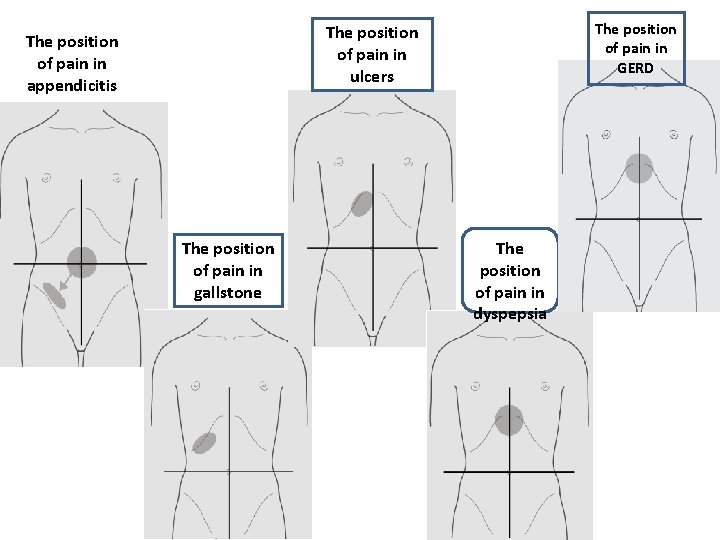
The position of pain in GERD The position of pain in ulcers The position of pain in appendicitis The position of pain in gallstone The position of pain in dyspepsia
- Slides: 31