
GIST 101 An Introduction to the Biology of
GIST 101: An Introduction to the Biology of GIST David Josephy GIST Sarcoma Life Raft Group Canada david. josephy@liferaftgroup. ca Disclaimer: I am not a physician. I am a biochemist with some experience in cancer research. Halifax; May 26, 2018
“Top Ten List” of facts and advice about GIST, for new patients https: //liferaftgroup. ca/gist-top-ten-list-for-new-patients/ 2
• What is GIST? What causes it? Who gets it? • What are the KIT and PDGFRA genes/ proteins? • How do “TKI” drugs (such as gleevec and sutent) work? Session 2, after the break … • Prospects for new drugs for treating GIST 3
What causes GIST? GIST can be inherited (“running in the family” – see later slide in this talk), but this is exceedingly rare; almost all GISTs are “sporadic” (not familial). As far as we know, sporadic GISTs occur randomly. No environmental, dietary, lifestyle, or occupational causes of GIST are known – and if there were any major risk factors, they would have been noticed by now! 5
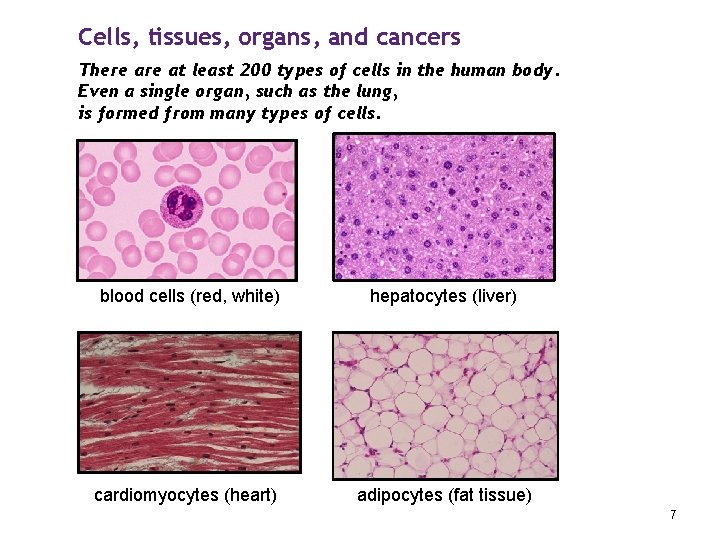
Cells, tissues, organs, and cancers There at least 200 types of cells in the human body. Even a single organ, such as the lung, is formed from many types of cells. blood cells (red, white) hepatocytes (liver) cardiomyocytes (heart) adipocytes (fat tissue) 7
Cancers can begin in (almost) any type of cell in the body. It is the type of cell from which a cancer develops that defines the biology of the cancer – and its treatment. Identifying the cell type (usually, by examining a specimen taken at surgery) is the important task of the pathologist. 8
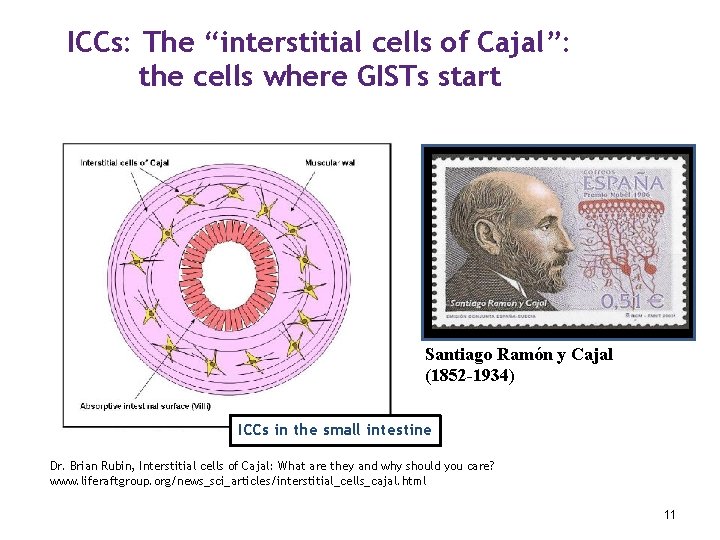
ICCs: The “interstitial cells of Cajal”: the cells where GISTs start Santiago Ramón y Cajal (1852 -1934) ICCs in the small intestine Dr. Brian Rubin, Interstitial cells of Cajal: What are they and why should you care? www. liferaftgroup. org/news_sci_articles/interstitial_cells_cajal. html 11
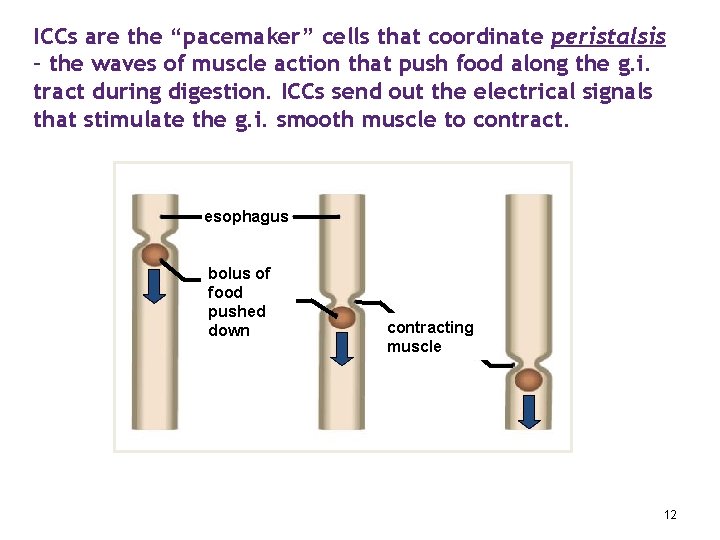
ICCs are the “pacemaker” cells that coordinate peristalsis – the waves of muscle action that push food along the g. i. tract during digestion. ICCs send out the electrical signals that stimulate the g. i. smooth muscle to contract. esophagus bolus of food pushed down contracting muscle 12
A GIST that starts in the stomach is a GIST (… not what people are usually referring to when they say “stomach cancer” – the common adenocarcinoma). A GIST that starts in the colon is a GIST (… not what people are usually referring to when they say “colon cancer” – the common colorectal carcinoma). 14
Essential concept in cancer medicine: Metastases (“mets”), wherever they occur, have the biological properties of the primary tumor. GIST mets in the liver or lung are still GISTs and must be treated as GISTs – they are not liver cancers (cancers arising from liver cells) or lung cancers. 21
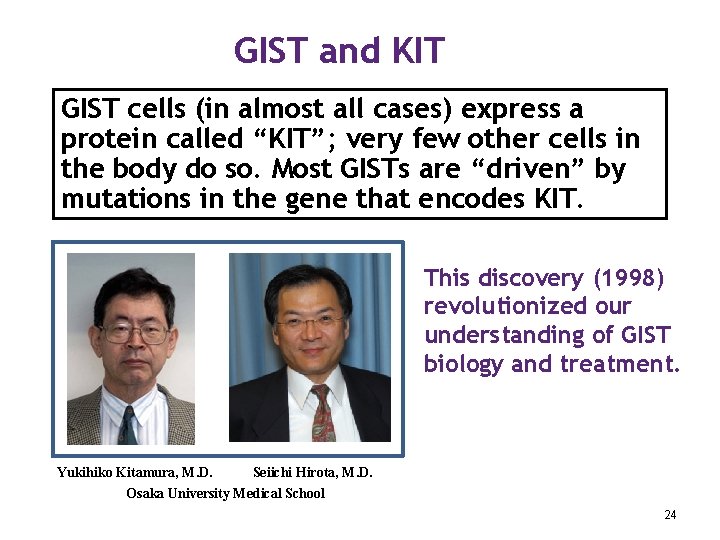
GIST and KIT GIST cells (in almost all cases) express a protein called “KIT”; very few other cells in the body do so. Most GISTs are “driven” by mutations in the gene that encodes KIT. This discovery (1998) revolutionized our understanding of GIST biology and treatment. Yukihiko Kitamura, M. D. Seiichi Hirota, M. D. Osaka University Medical School 24
Mutations that “drive” GIST In about 75% of GIST cases, there is a mutation in the KIT gene (change in the DNA sequence), causing the GIST cells to express (produce) an activated form of KIT protein that forces the cells to keep dividing. In another 10% of GISTs, the KIT gene is normal; instead, there is a mutation in a related gene, the “platelet-derived growth factor receptor alpha” (PDGFRA) gene. This was discovered in 2003. 25
“Wildtype” GIST Some GISTS do not have mutations in either the KIT or PDGFRA genes. In genetics, the “normal” (not mutant) form of a gene is called the “wild type”. So, we can call these cases “wildtype” GISTs. Really, they are just GISTs with mutations in other genes (some known and some as yet unknown). Wildtype GISTs are a small minority of GISTS. In 2011, it was discovered that about half of these “wildtype” GIST cases have mutations affecting a very different gene/protein, SDH (succinate dehydrogenase). These GISTs typically occur in children and young adults (“pediatric GIST”). 26
GIST: several diseases, not just one. As research progresses, we are learning that GIST is really a constellation of several related diseases (perhaps ten or even more) with different molecular and clinical characteristics. This makes GIST oncology a lot more complicated, but it is also bringing new hope that therapies can be targeted even more precisely to specific forms of GIST. I will focus on KIT-mutant GIST, the most common form. 27
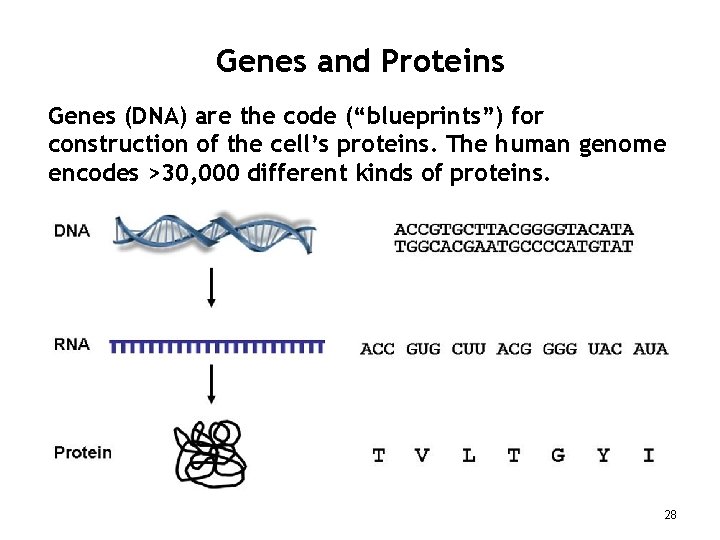
Genes and Proteins Genes (DNA) are the code (“blueprints”) for construction of the cell’s proteins. The human genome encodes >30, 000 different kinds of proteins. 28
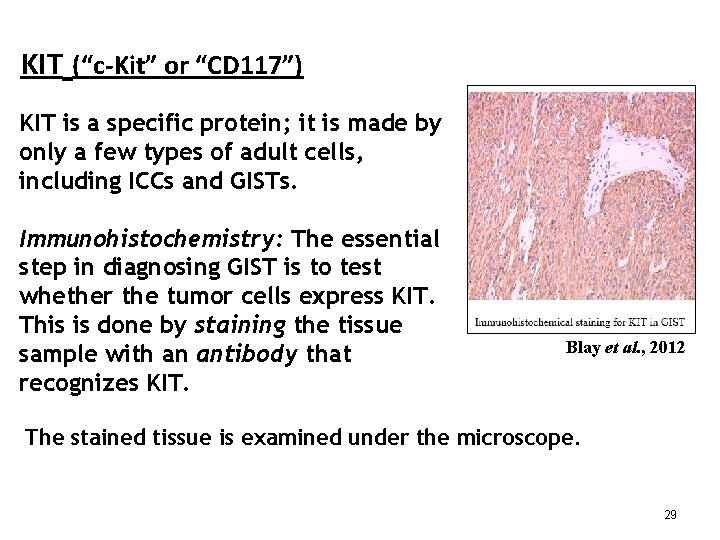
KIT (“c-Kit” or “CD 117”) KIT is a specific protein; it is made by only a few types of adult cells, including ICCs and GISTs. Immunohistochemistry: The essential step in diagnosing GIST is to test whether the tumor cells express KIT. This is done by staining the tissue sample with an antibody that recognizes KIT. Blay et al. , 2012 The stained tissue is examined under the microscope. 29
The KIT gene is an “oncogene”. An oncogene is a gene that encodes a protein product which, when mutated, can instruct the cell to keep dividing: a “stuck gas pedal”. The KIT protein is an enzyme – a “tyrosine kinase” – that acts on other proteins and thereby modulates their activities (“signal transduction cascade”). 30
In normal ICC (pacemaker) cells: A “growth factor” binds to KIT (“steps on the gas pedal”). KIT becomes active and tells the cell to grow and divide – but only in response to the growth factor. In GIST cells: The KIT gene is mutated. An altered form of KIT protein is produced. This form is “always turned on” (“stuck gas pedal”), even in the absence of the growth factor. The GIST cell keeps dividing, in an uncontrolled manner. 32
What is a mutation? Change in the DNA sequence encoding a protein. Mutations occur randomly, but natural selection causes cells carrying certain mutations to survive and grow preferentially. What does “V 654 A” mean? Because of a mutation in the GIST cell’s DNA, the 654 th amino acid residue (building block) in the KIT protein has changed from the normal valine (V) to a different residue, alanine (A). For more information, see: “Mutations and Mutation Testing” on the Life Raft Group USA web site. 33
The mutations in GIST tumors are almost always somatic – not germline – mutations. Mutation occurred in cells of the body during development or adulthood, but does not affect germ cells (egg or sperm cells) The somatic KIT mutation is carried by all of the tumor cells, but it cannot be passed on to a patient’s children 34
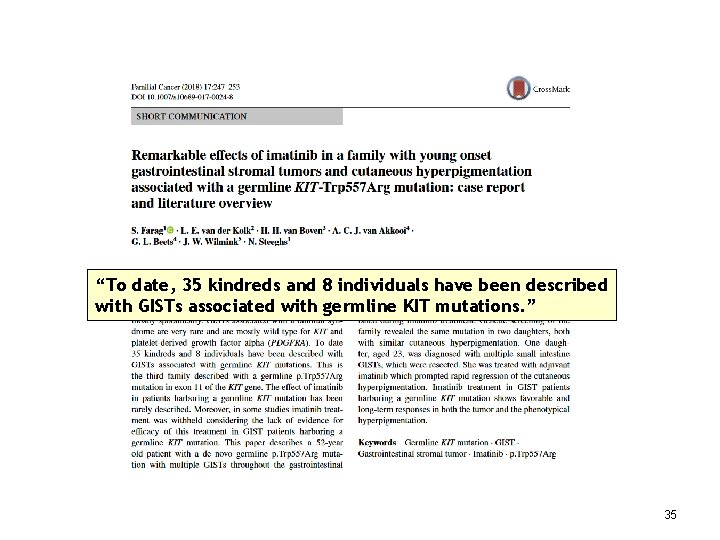
“To date, 35 kindreds and 8 individuals have been described with GISTs associated with germline KIT mutations. ” 35
Some GISTs (10 -15%) are driven by mutations in a different gene, PDGFRA, which is a “cousin” of KIT. PDGFRA = Platelet-Derived Growth Factor Receptor-α These GISTs arise almost exclusively in the stomach. KIT and PDGFRA mutations in GIST are mutually exclusive. A common mutation in PDGFRA is the “notoriously resistant” D 842 V. 40
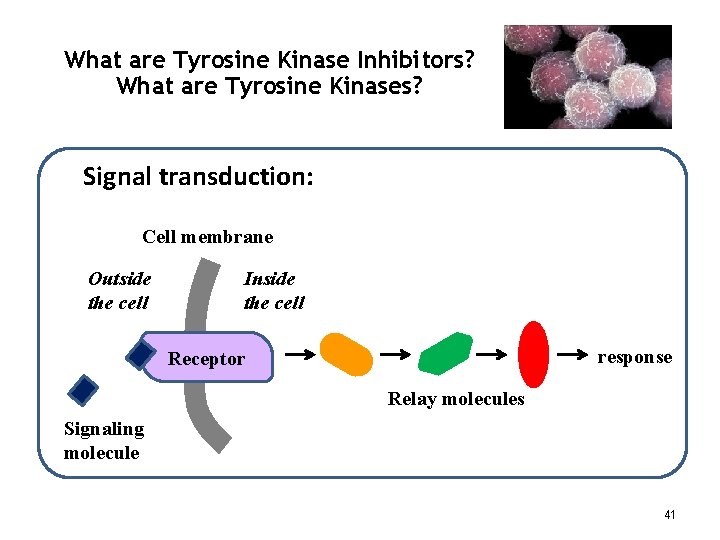
What are Tyrosine Kinase Inhibitors? What are Tyrosine Kinases? Signal transduction: Cell membrane Outside the cell Inside the cell response Receptor Relay molecules Signaling molecule 41
What are Tyrosine Kinases? The receptors and relay molecules that carry out signal transduction processes are enzymes – proteins that catalyze chemical reactions. Enzymes that use ATP to phosphorylate other proteins are called “kinases”. When the chemical change (phosphorylation) occurs on the amino acid “tyrosine”, we call the enzyme a tyrosine kinase. Many signal transduction proteins are tyrosine kinase enzymes. Dysfunctional – mutated - tyrosine kinases drive the uncontrolled proliferation of certain types of cancer cells – including most GISTs. 42
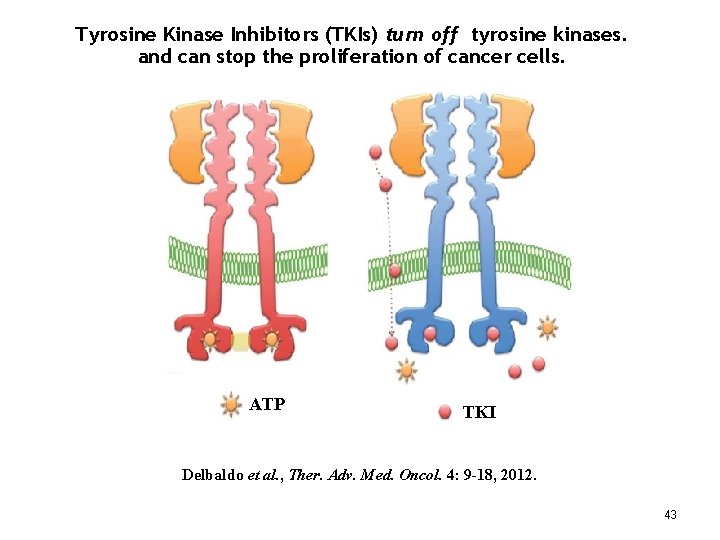
Tyrosine Kinase Inhibitors (TKIs) turn off tyrosine kinases. and can stop the proliferation of cancer cells. ATP TKI Delbaldo et al. , Ther. Adv. Med. Oncol. 4: 9 -18, 2012. 43
The “big three” TKIs approved for use in GIST: First-line: Imatinib (Gleevec – Novartis; 2001) Second-line: Sunitinib (Sutent – Pfizer; 2006) Third-line: Regorafenib (Stivarga – Bayer; 2013) 44
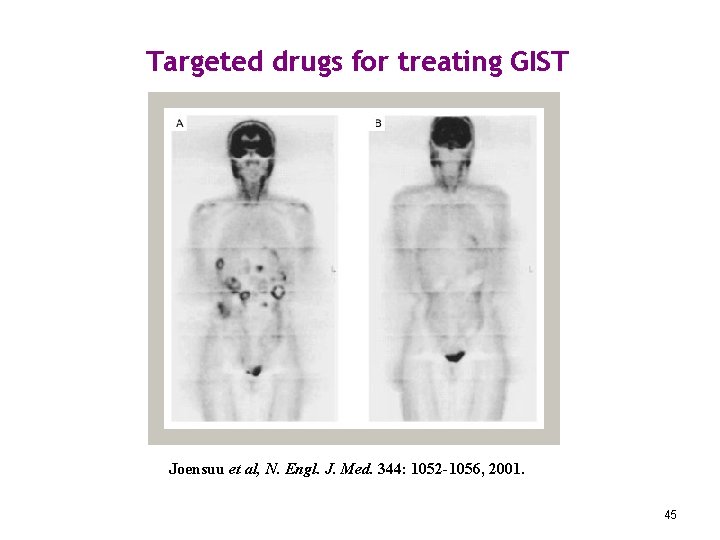
Targeted drugs for treating GIST Joensuu et al, N. Engl. J. Med. 344: 1052 -1056, 2001. 45
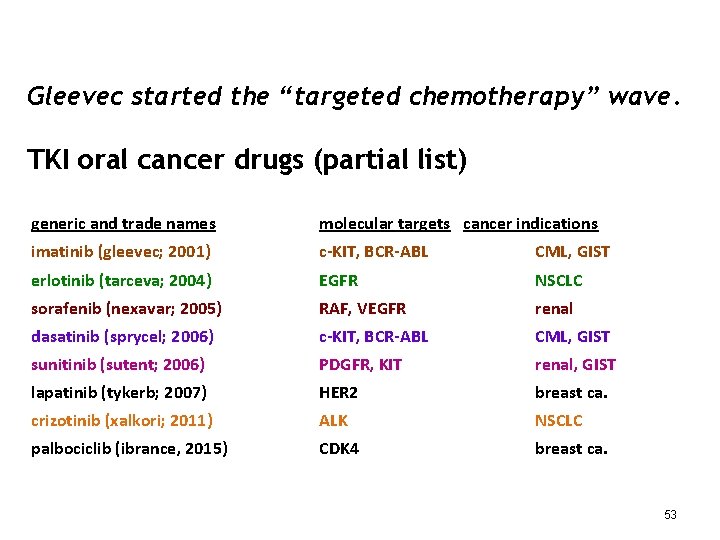
Gleevec started the “targeted chemotherapy” wave. TKI oral cancer drugs (partial list) generic and trade names molecular targets cancer indications imatinib (gleevec; 2001) c-KIT, BCR-ABL CML, GIST erlotinib (tarceva; 2004) EGFR NSCLC sorafenib (nexavar; 2005) RAF, VEGFR renal dasatinib (sprycel; 2006) c-KIT, BCR-ABL CML, GIST sunitinib (sutent; 2006) PDGFR, KIT renal, GIST lapatinib (tykerb; 2007) HER 2 breast ca. crizotinib (xalkori; 2011) ALK NSCLC palbociclib (ibrance, 2015) CDK 4 breast ca. 53
Despite imatinib’s dramatic success, additional GIST drugs are needed: Some GISTs are imatinib-resistant from the outset; e. g. , the most common PDGFRA mutation in GIST (D 842 V) is resistant to both imatinib and sunitinib. Imatinib halts the growth of most GISTs, but does not eliminate them; over time, GIST tumours tend to become imatinib-resistant, mainly due to additional mutations arising in the metastases. 55

Despite imatinib’s dramatic success, additional GIST drugs are needed: Some GISTs are imatinib-resistant from the outset; e. g. , the most common PDGFRA mutation in GIST (D 842 V) is resistant to both imatinib and sunitinib. Imatinib halts the growth of most GISTs, but does not eliminate them; over time, GIST tumours tend to become imatinib-resistant, mainly due to additional mutations arising in the metastases. 57
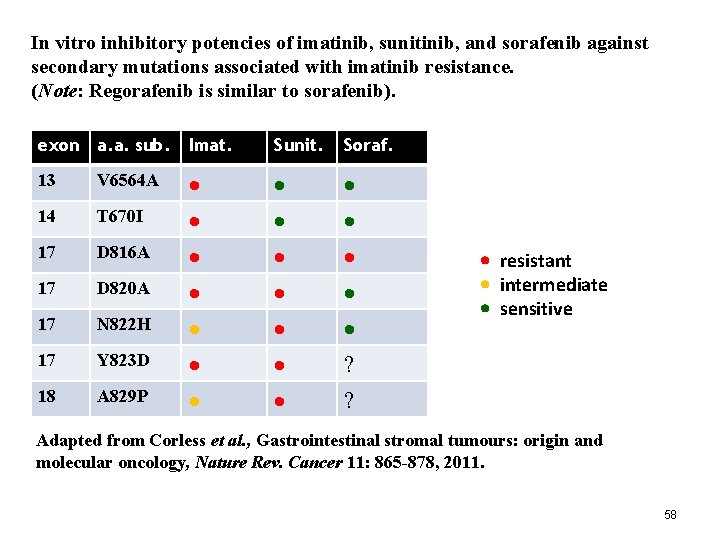
In vitro inhibitory potencies of imatinib, sunitinib, and sorafenib against secondary mutations associated with imatinib resistance. (Note: Regorafenib is similar to sorafenib). exon a. a. sub. Imat. 13 V 6564 A 14 T 670 I 17 D 816 A 17 D 820 A 17 N 822 H 17 Y 823 D 18 A 829 P Sunit. Soraf. ? ? resistant intermediate sensitive Adapted from Corless et al. , Gastrointestinal stromal tumours: origin and molecular oncology, Nature Rev. Cancer 11: 865 -878, 2011. 58
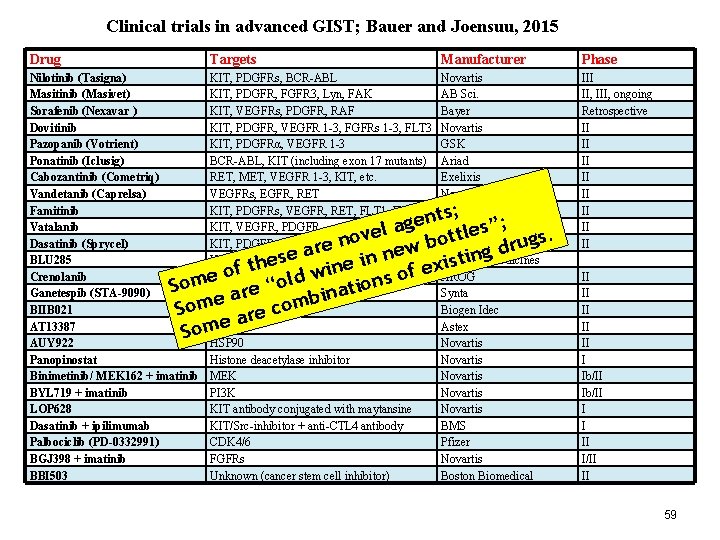
Clinical trials in advanced GIST; Bauer and Joensuu, 2015 Drug Targets Manufacturer Phase Nilotinib (Tasigna) Masitinib (Masivet) Sorafenib (Nexavar ) Dovitinib Pazopanib (Votrient) Ponatinib (Iclusig) Cabozantinib (Cometriq) Vandetanib (Caprelsa) Famitinib Vatalanib Dasatinib (Sprycel) BLU 285 Crenolanib Ganetespib (STA-9090) BIIB 021 AT 13387 AUY 922 Panopinostat Binimetinib/ MEK 162 + imatinib BYL 719 + imatinib LOP 628 Dasatinib + ipilimumab Palbociclib (PD-0332991) BGJ 398 + imatinib BBI 503 KIT, PDGFRs, BCR-ABL KIT, PDGFR, FGFR 3, Lyn, FAK KIT, VEGFRs, PDGFR, RAF KIT, PDGFR, VEGFR 1 -3, FGFRs 1 -3, FLT 3 KIT, PDGFRα, VEGFR 1 -3 BCR-ABL, KIT (including exon 17 mutants) RET, MET, VEGFR 1 -3, KIT, etc. VEGFRs, EGFR, RET KIT, PDGFRs, VEGFR, RET, FLT 1, FLT 3 KIT, VEGFR, PDGFR KIT, PDGFRs, BCR-ABL, SRC KIT D 816 V, PDGFR D 842 -mutants PDGFRA (including D 842), FLT 3 HSP 90 Histone deacetylase inhibitor MEK PI 3 K KIT antibody conjugated with maytansine KIT/Src-inhibitor + anti-CTL 4 antibody CDK 4/6 FGFRs Unknown (cancer stem cell inhibitor) Novartis AB Sci. Bayer Novartis GSK Ariad Exelixis Novartis Jiangsu Hengrui Bayer Schering, Novartis BMS Blueprint Medicines AROG Synta Biogen Idec Astex Novartis Novartis BMS Pfizer Novartis Boston Biomedical III II, III, ongoing Retrospective II II ts; n e g a s”; l e e l t v t o o gs. n b u r e r w d se a e in ne xisting e h t e in of f w o e d s l m “o So tion e a r n a i b e Som are com e Som II II II I Ib/II I I II I/II II 59
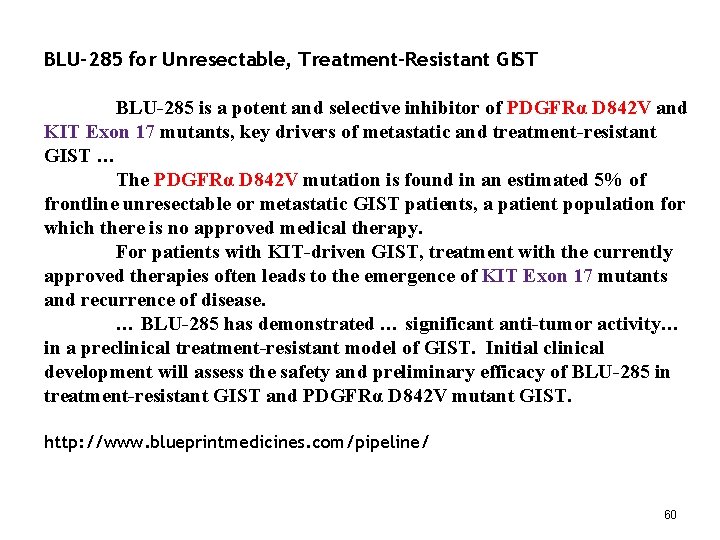
BLU-285 for Unresectable, Treatment-Resistant GIST BLU-285 is a potent and selective inhibitor of PDGFRα D 842 V and KIT Exon 17 mutants, key drivers of metastatic and treatment-resistant GIST … The PDGFRα D 842 V mutation is found in an estimated 5% of frontline unresectable or metastatic GIST patients, a patient population for which there is no approved medical therapy. For patients with KIT-driven GIST, treatment with the currently approved therapies often leads to the emergence of KIT Exon 17 mutants and recurrence of disease. … BLU-285 has demonstrated … significant anti-tumor activity… in a preclinical treatment-resistant model of GIST. Initial clinical development will assess the safety and preliminary efficacy of BLU-285 in treatment-resistant GIST and PDGFRα D 842 V mutant GIST. http: //www. blueprintmedicines. com/pipeline/ 60
Imatinib resistance in GIST is often due to additional mutations that interfere with drug binding to the ATP binding site. Can we find new drugs that act by binding to a different site on the enzyme? Several drug companies are developing agents based on this idea. 61
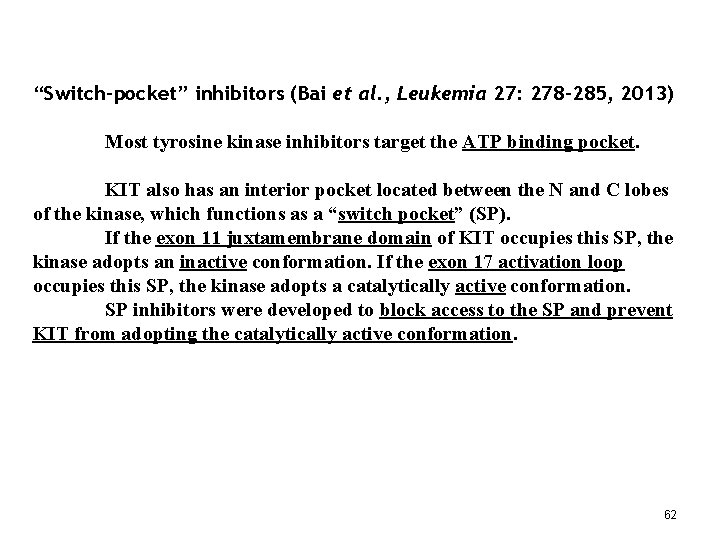
“Switch-pocket” inhibitors (Bai et al. , Leukemia 27: 278– 285, 2013) Most tyrosine kinase inhibitors target the ATP binding pocket. KIT also has an interior pocket located between the N and C lobes of the kinase, which functions as a “switch pocket” (SP). If the exon 11 juxtamembrane domain of KIT occupies this SP, the kinase adopts an inactive conformation. If the exon 17 activation loop occupies this SP, the kinase adopts a catalytically active conformation. SP inhibitors were developed to block access to the SP and prevent KIT from adopting the catalytically active conformation. 62
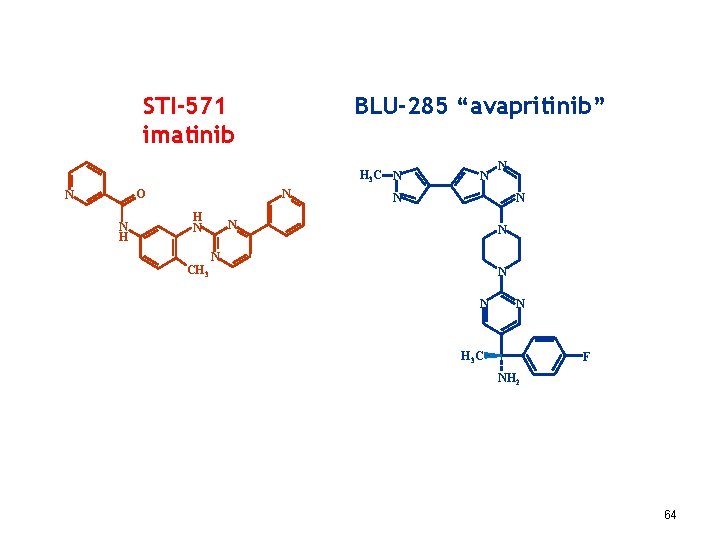
BLU-285 “avapritinib” STI-571 imatinib H 3 C N N O N N H H N N N N CH 3 N N N H 3 C F NH 2 64
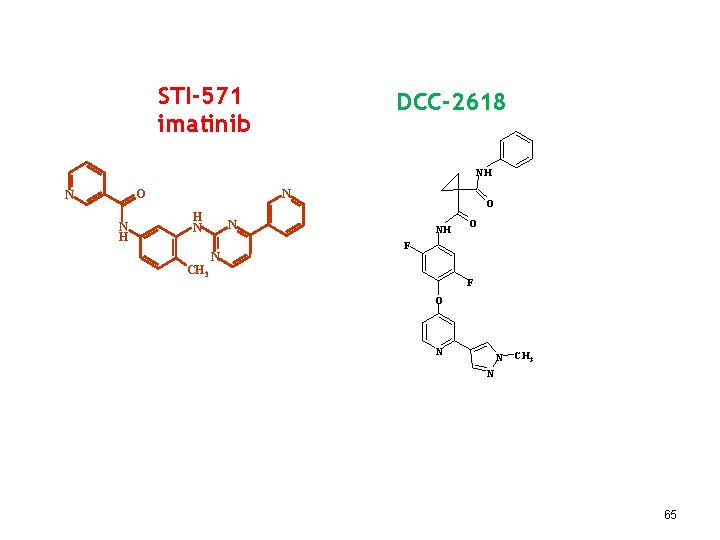
STI-571 imatinib DCC-2618 NH N O N N H H N O N N NH O F CH 3 F O N N CH 3 N 65
Deciphera: DCC-2618 was designed to improve the treatment of GIST patients by inhibiting the full spectrum of mutations in KIT and PDGFRa, including the PDGFRa D 842 V mutation that drives a subset of GIST. Instead of targeting the ATP-binding pocket, DDC-2618 binds to the switch pocket. It blocks a much wider range of mutations, including mutations in KIT exon 17 (which can cause secondary resistance) and PDGFRA D 842 V mutations. In June 2017, findings were reported from the dose escalation stage of a Phase 1 trial of DCC-2618 was well tolerated at all doses up to 400 mg daily …. The majority of those enrolled were patients with GIST who had received an average of 3. 4 prior TKI therapies. In GIST patients shown to harbor a broad range of KIT and PDGFRα mutations who received at least 100 mg of DCC-2618 daily, we observed a disease control rate of 85% (23 of 27 patients) at 8 weeks, 78% (18 of 23 patients) at 12 weeks and 60% (9 of 15 patients) at 24 weeks. … On Jan. 4, 2018, Deciphera announced the start of the Phase 3 “INVICTUS” trial of DCC-2618. This randomized trial is for GIST patients who have failed the three standard drugs for GIST, Gleevec, Sutent and Stivarga. 66
BLU-285: avapritinib 69
Plexxikon: Optimizing kinase inhibitors to treat cancer Fourth AACR International Conference on Frontiers in Basic Cancer Research; October 2015; Philadelphia “KIT inhibitors are now standard therapy for advanced GISTs … Even with multiple compounds approved, resistance mutations - in exon 17 in particular - still limit the durability of clinical benefit. We have discovered PLX 9486 as an effective inhibitor of mutant KIT, including exon 17 mutations, with the added feature of selectivity versus the wildtype KIT kinase activity. This compound shows potent activity against exon 17 mutant tumors both in vitro and in vivo. ” 75
CTOS 2017: A Phase 1 Pharmacokinetic and Pharmacodynamic Study of PLX 9486, a Novel KIT Inhibitor with Potent Activity Against Exon 17/18 Activation Loop Mutations in Patients with GIST J. Trent, University of Miami Sylvester Cancer Center, Miami, Florida, USA … G. Michelson, Clinical Development, Plexxikon, Berkeley, California, USA … Objective: PLX 9486 is a novel TKI with activity against the primary KIT mutations (ex 9 and 11) and against the activation loop mutations in ex 17 and 18. Study objective: determine maximum tolerated dose (MTD) of PLX 9486. Conclusion: PLX 9486 is a novel inhibitor of KIT with activity against difficult to treat ex resistance 17/18 mutations and demonstrates a favorable safety profile. … Expansion cohorts in GIST are planned … 76
Larotrectinib highly effective in (rare!) subset of wild-type GISTs carrying TRK mutations. June 3, 2017 -- Loxo Oncology, Inc. today announced interim clinical data from all three ongoing larotrectinib (LOXO-101) clinical trials in patients whose tumors harbor tropomyosin receptor kinase (TRK) fusions. … “Larotrectinib delivers consistent and durable responses in TRK fusion patients across all ages, regardless of tumor context, and does so with few side effects, ” said David Hyman, M. D. , chief of the early drug development service at Memorial Sloan Kettering Cancer Center, who will present the data at ASCO. “In this way, the larotrectinib TRK fusion story fulfills the promise of precision medicine, where tumor genetics rather than tumor site of origin define the treatment approach. It is now incumbent upon the clinical oncology and pathology communities to examine our testing paradigms, so that TRK fusions and other actionable biomarkers become part of the standard patient workup. ” … TRK fusions occur rarely but broadly in various adult and pediatric solid tumors, including … GIST … 77

david. josephy@liferaftgroup. ca
- Slides: 44