
GIS as a Tool in Marine Spatial Planning
- Slides: 19
GIS as a Tool in Marine Spatial Planning and Ocean Management Decision Making An Overview of Past and Ongoing Efforts to Spatially C haracterize O cean U ses Kate Longley, Project Scientist – Sea. Plan May 14, 2013 Northeast Arc Users Spring Conference
Sea. Plan Overview Sea. Plan is an independent nonprofit ocean science and policy group providing practical solutions to balance development and conservation. Sea. Plan was formed in 2006 to advance the Massachusetts Ocean Plan.
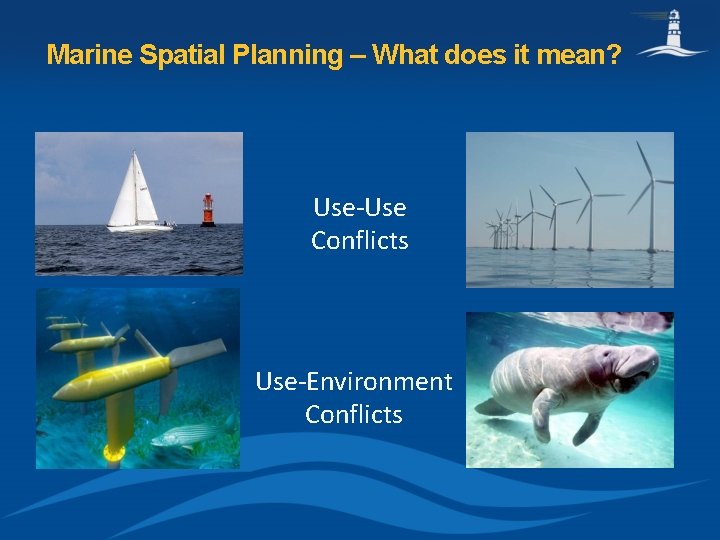
Marine Spatial Planning – What does it mean? Use-Use Conflicts Use-Environment Conflicts
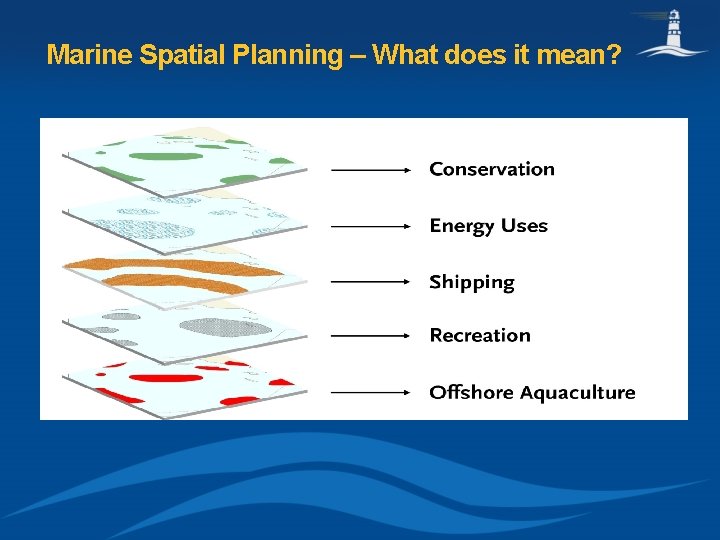
Marine Spatial Planning – What does it mean?
Marine Resource Use and Compatibility Analysis Massachusetts Ocean Plan shall “identify appropriate locations and performance standards for activities, uses, and facilities. ” -MA Oceans Act of 2008
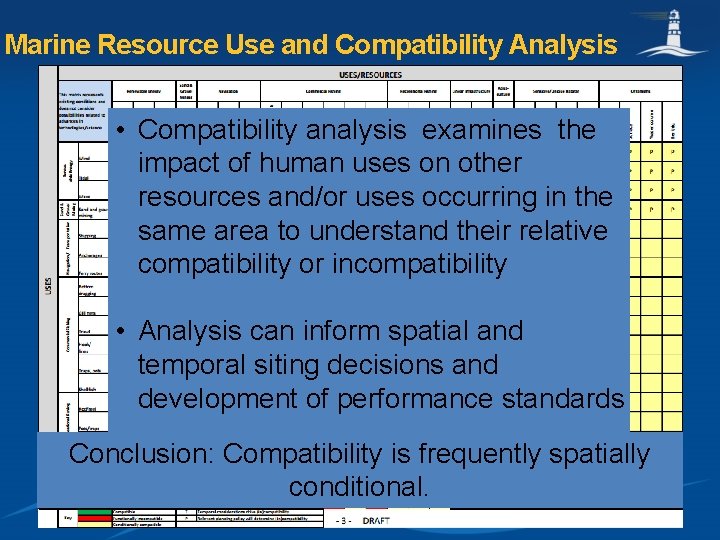
Marine Resource Use and Compatibility Analysis • Compatibility analysis examines the impact of human uses on other resources and/or uses occurring in the same area to understand their relative compatibility or incompatibility • Analysis can inform spatial and temporal siting decisions and development of performance standards Conclusion: Compatibility is frequently spatially conditional.
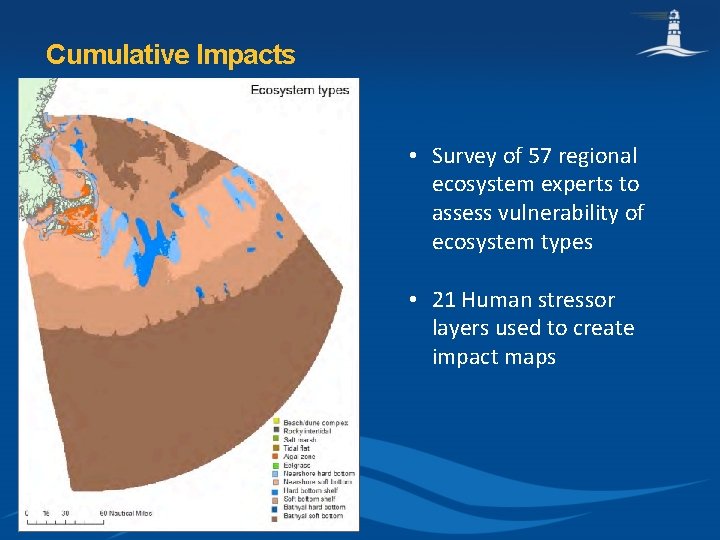
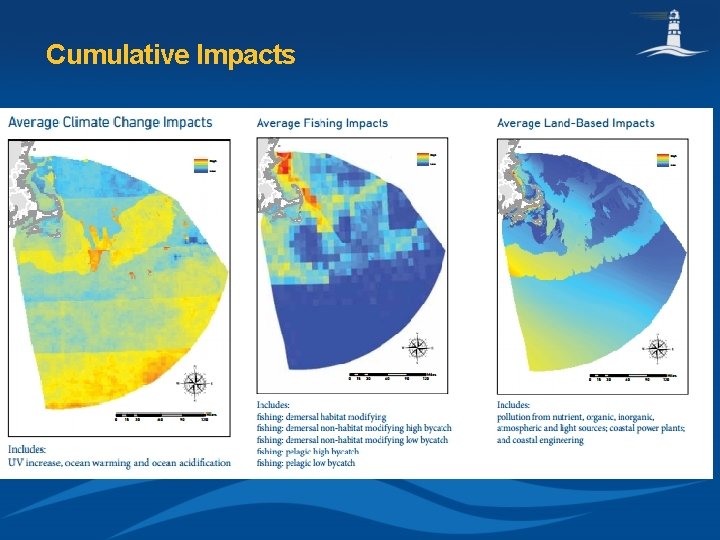
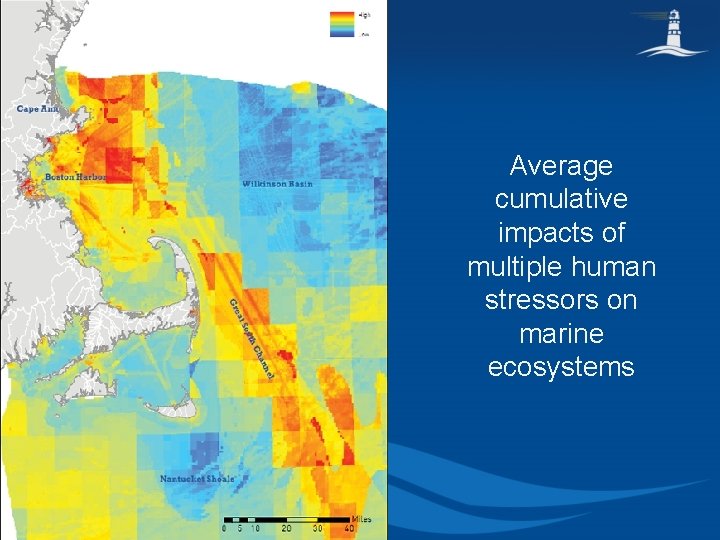
Cumulative Impacts • Survey of 57 regional ecosystem experts to assess vulnerability of ecosystem types • 21 Human stressor layers used to create impact maps
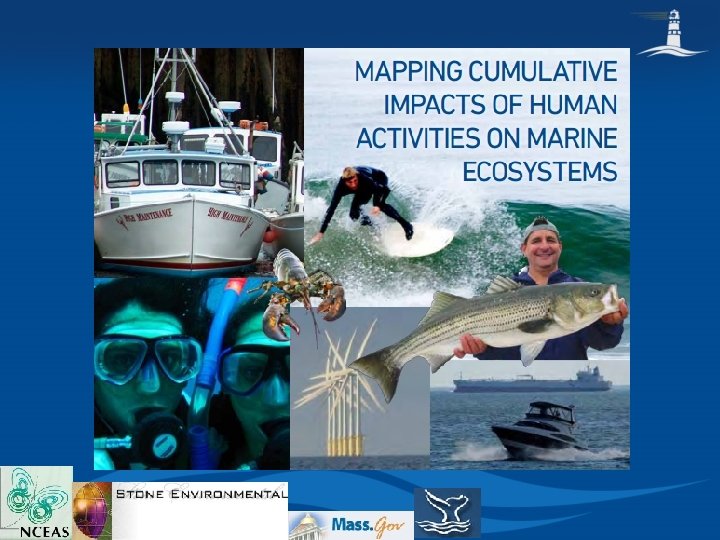
Cumulative Impacts
Average cumulative impacts of multiple human stressors on marine ecosystems
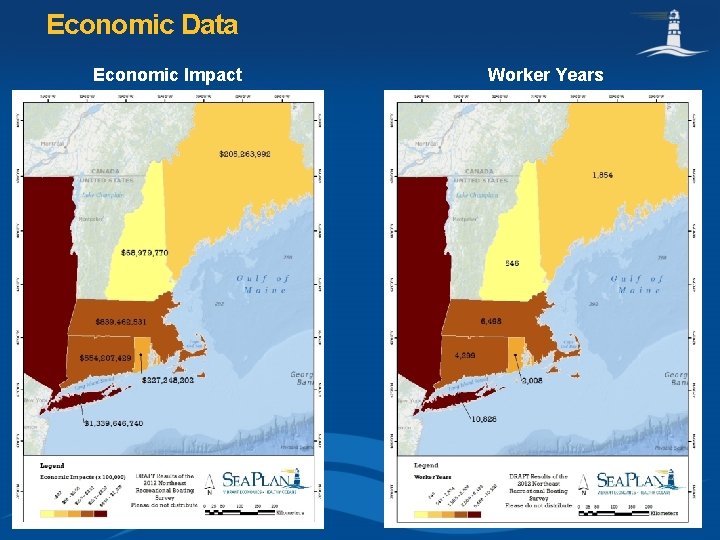
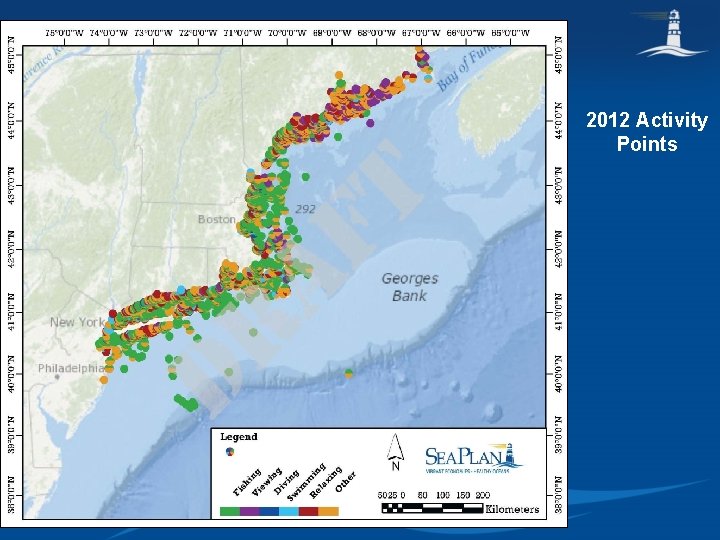
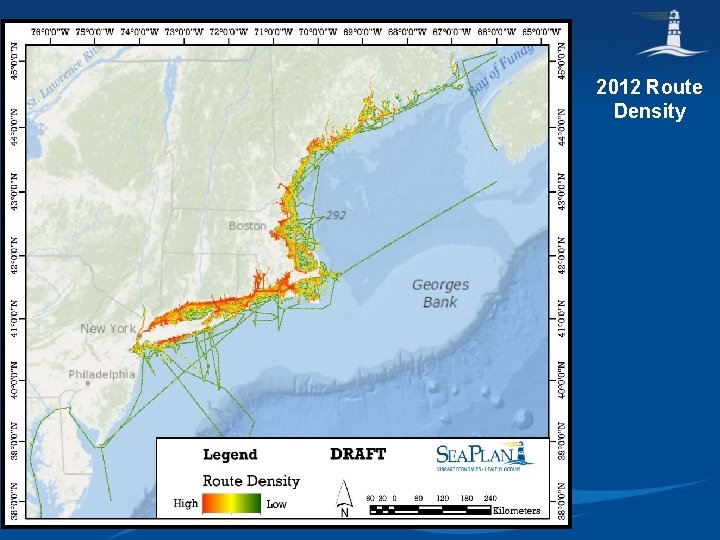
2012 Recreational Boating Survey
Methodology • Boaters responded monthly survey between May and October 2012 • Boaters mapped routes using a mapping application developed by Ecotrust • IMPLAN Modeling used to measure economic impacts and job creation
Economic Data Economic Impact Worker Years
Mapped Boater Routes 2012 Activity Points
Economic Data 2012 Route Density
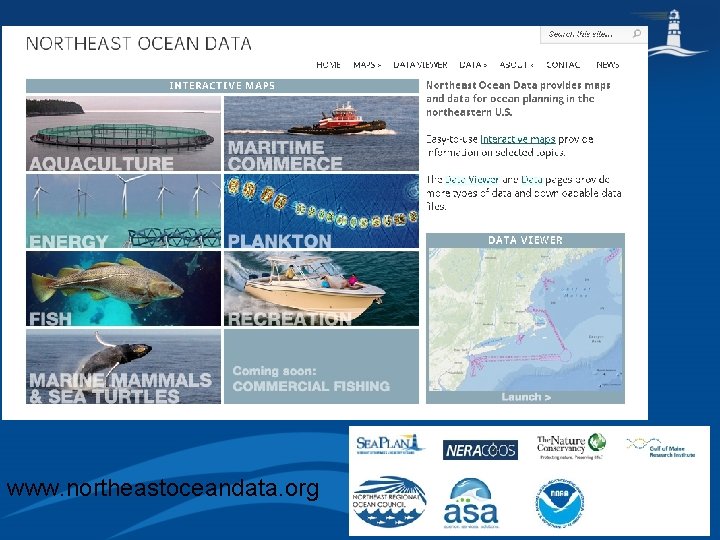
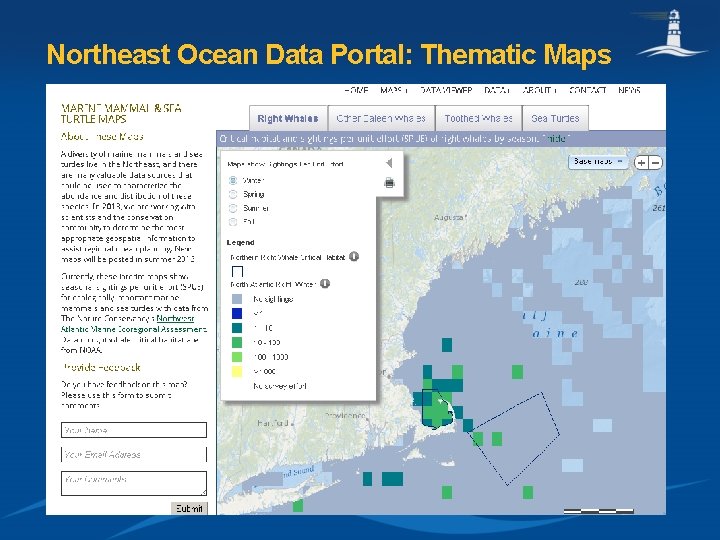
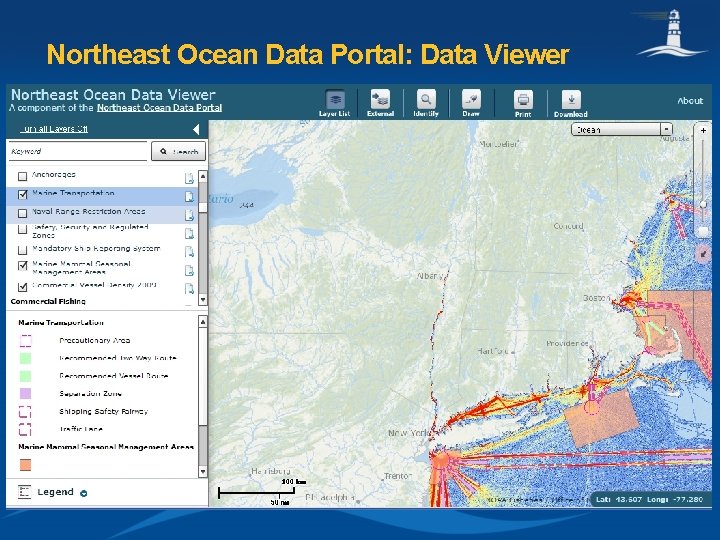
www. northeastoceandata. org
Northeast Ocean Data Portal: Thematic Maps
Northeast Ocean Data Portal: Data Viewer
Conclusions • Evaluating use compatibility will vary over space and time • Proactive ocean planning requires robust spatial data • GIS is an integral tool for the analysis and display of spatial information for ocean management purposes Questions? Klongley@seaplan. org www. seaplan. org