
Gilded Age Overview 7 Categories of the Gilded




- Slides: 39
Gilded Age Overview
7 Categories of the Gilded Age (Way to help you organize Period 6) 1. 2. 3. 4. 5. 6. 7. Industrialization Urbanization Rise of Big Business Organization of Workers and Formation of Labor Unions Westward Expansion Plight of Farmers Corruption
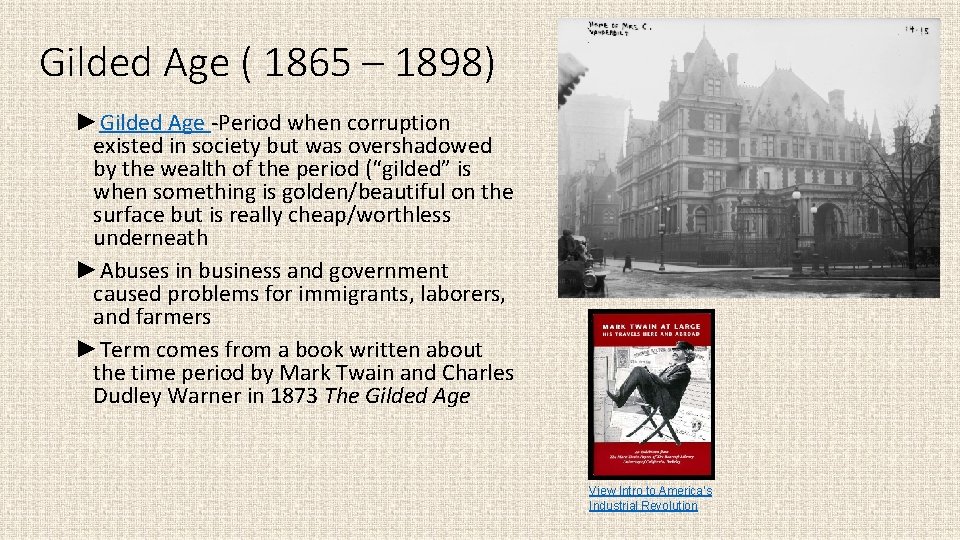
Gilded Age ( 1865 – 1898) ►Gilded Age -Period when corruption existed in society but was overshadowed by the wealth of the period (“gilded” is when something is golden/beautiful on the surface but is really cheap/worthless underneath ►Abuses in business and government caused problems for immigrants, laborers, and farmers ►Term comes from a book written about the time period by Mark Twain and Charles Dudley Warner in 1873 The Gilded Age View Intro to America’s Industrial Revolution
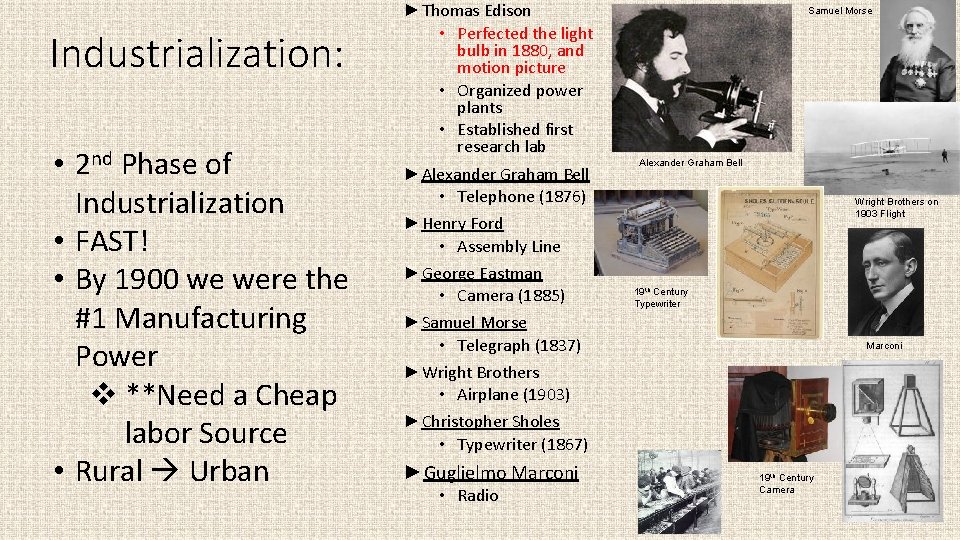
Industrialization: • 2 nd Phase of Industrialization • FAST! • By 1900 we were the #1 Manufacturing Power v **Need a Cheap labor Source • Rural Urban ►Thomas Edison • Perfected the light bulb in 1880, and motion picture • Organized power plants • Established first research lab ►Alexander Graham Bell • Telephone (1876) ►Henry Ford • Assembly Line ►George Eastman • Camera (1885) ►Samuel Morse • Telegraph (1837) ►Wright Brothers • Airplane (1903) ►Christopher Sholes • Typewriter (1867) ►Guglielmo Marconi • Radio Samuel Morse Alexander Graham Bell Wright Brothers on 1903 Flight 19 th Century Typewriter Marconi 19 th Century Camera
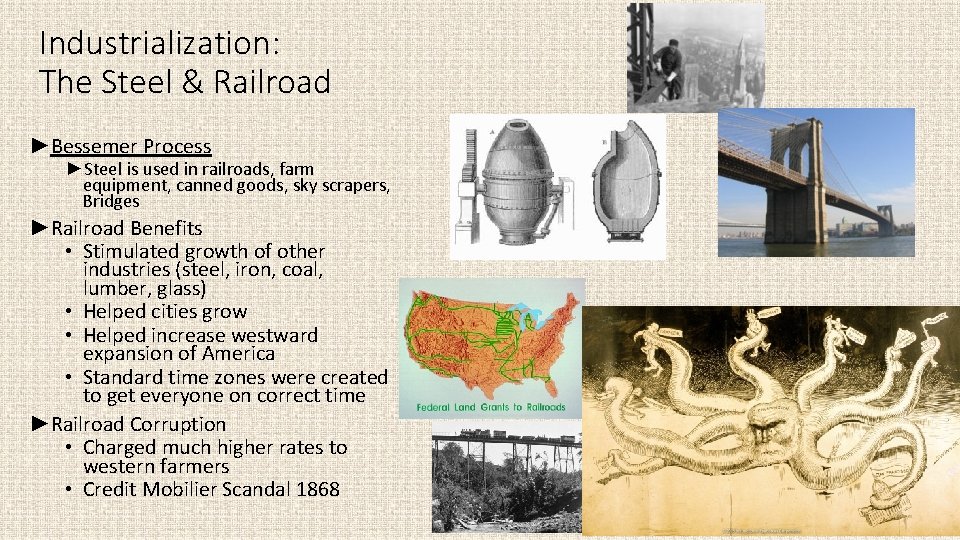
Industrialization: The Steel & Railroad ►Bessemer Process ►Steel is used in railroads, farm equipment, canned goods, sky scrapers, Bridges ►Railroad Benefits • Stimulated growth of other industries (steel, iron, coal, lumber, glass) • Helped cities grow • Helped increase westward expansion of America • Standard time zones were created to get everyone on correct time ►Railroad Corruption • Charged much higher rates to western farmers • Credit Mobilier Scandal 1868
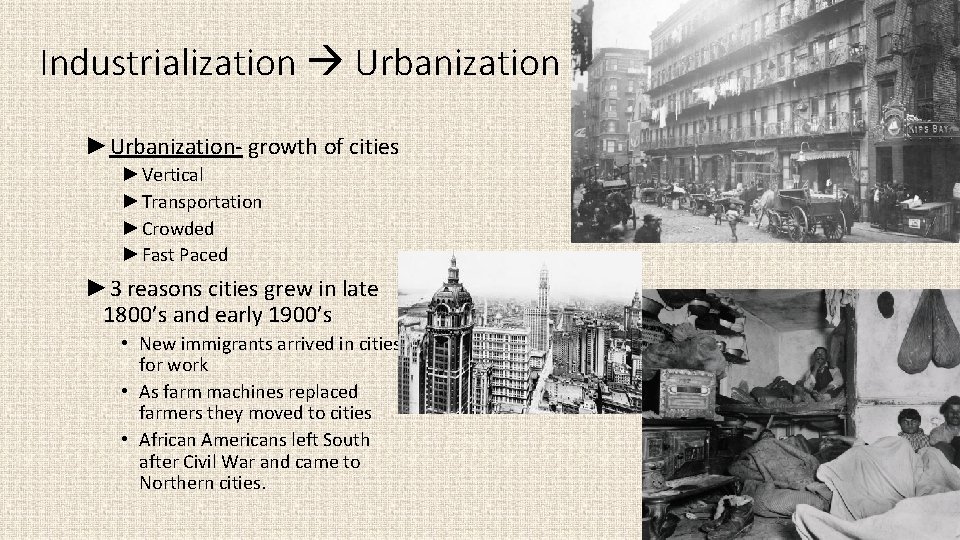
Industrialization Urbanization ►Urbanization- growth of cities ►Vertical ►Transportation ►Crowded ►Fast Paced ► 3 reasons cities grew in late 1800’s and early 1900’s • New immigrants arrived in cities for work • As farm machines replaced farmers they moved to cities • African Americans left South after Civil War and came to Northern cities.
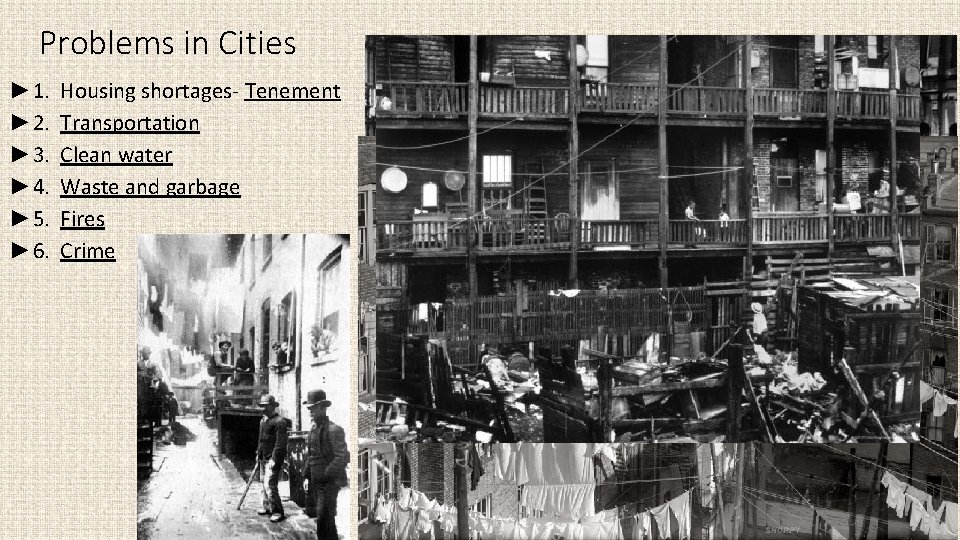
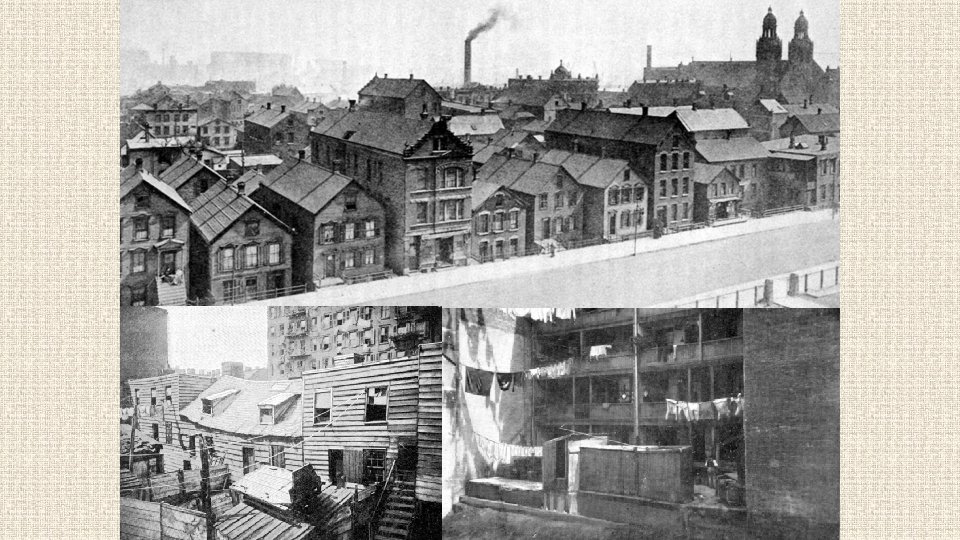
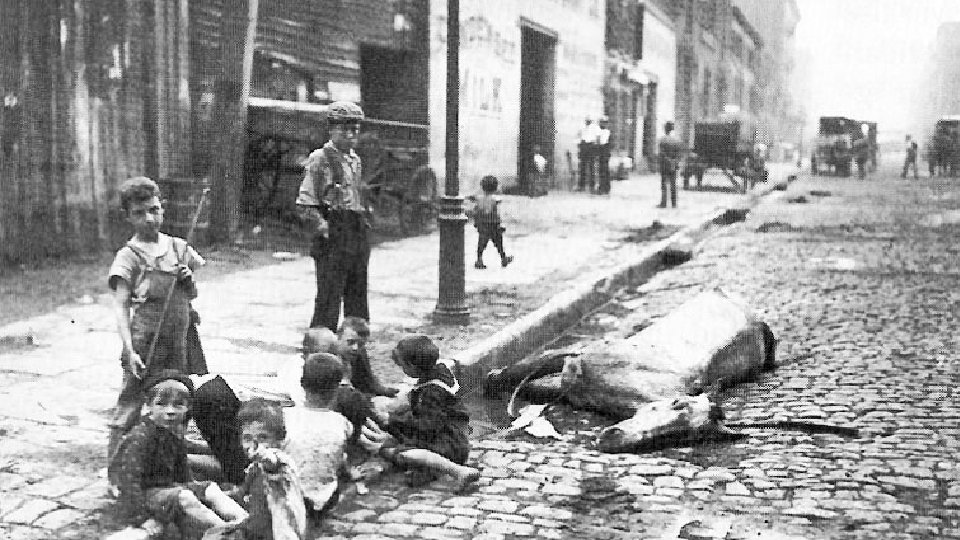
Problems in Cities ► 1. ► 2. ► 3. ► 4. ► 5. ► 6. Housing shortages- Tenement Transportation Clean water Waste and garbage Fires Crime
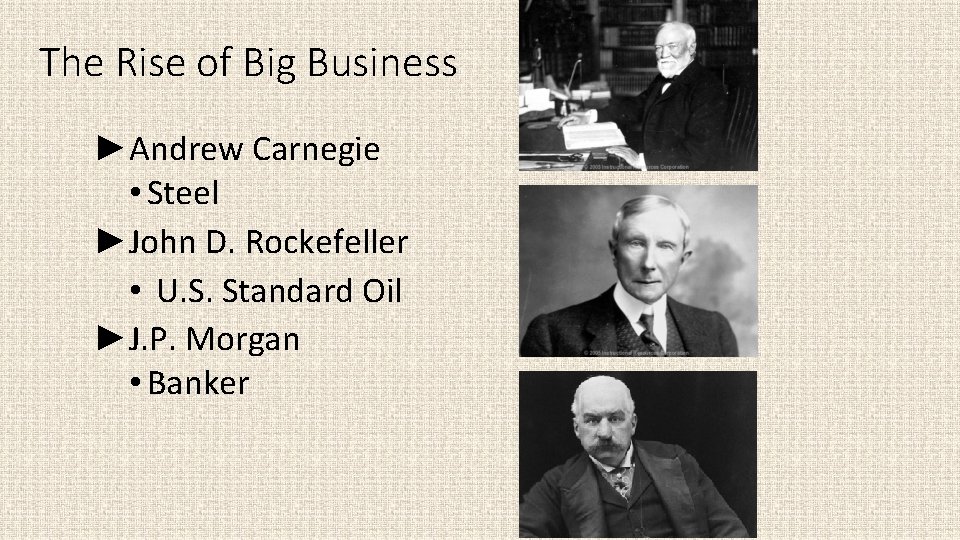
The Rise of Big Business ►Andrew Carnegie • Steel ►John D. Rockefeller • U. S. Standard Oil ►J. P. Morgan • Banker
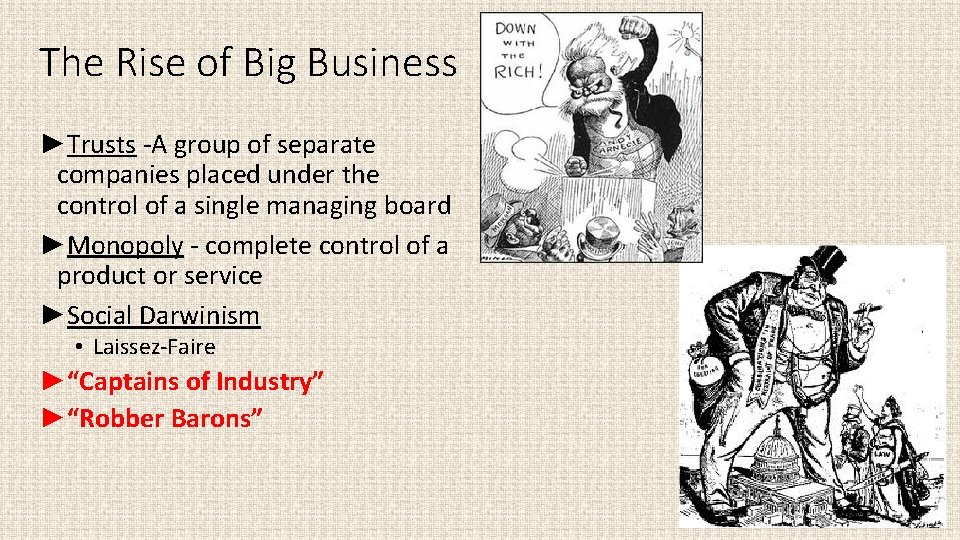
The Rise of Big Business ►Trusts -A group of separate companies placed under the control of a single managing board ►Monopoly - complete control of a product or service ►Social Darwinism • Laissez-Faire ►“Captains of Industry” ►“Robber Barons”
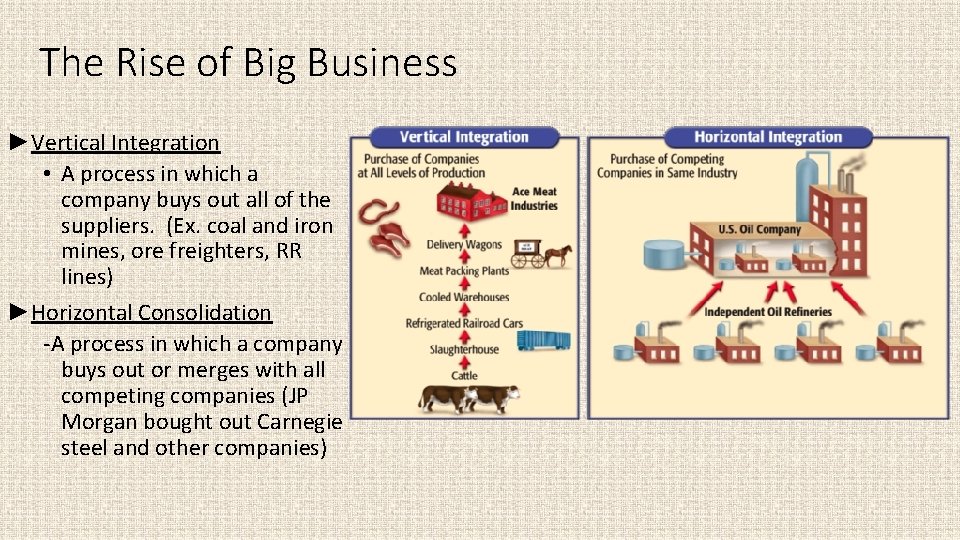
The Rise of Big Business ►Vertical Integration • A process in which a company buys out all of the suppliers. (Ex. coal and iron mines, ore freighters, RR lines) ►Horizontal Consolidation -A process in which a company buys out or merges with all competing companies (JP Morgan bought out Carnegie steel and other companies)
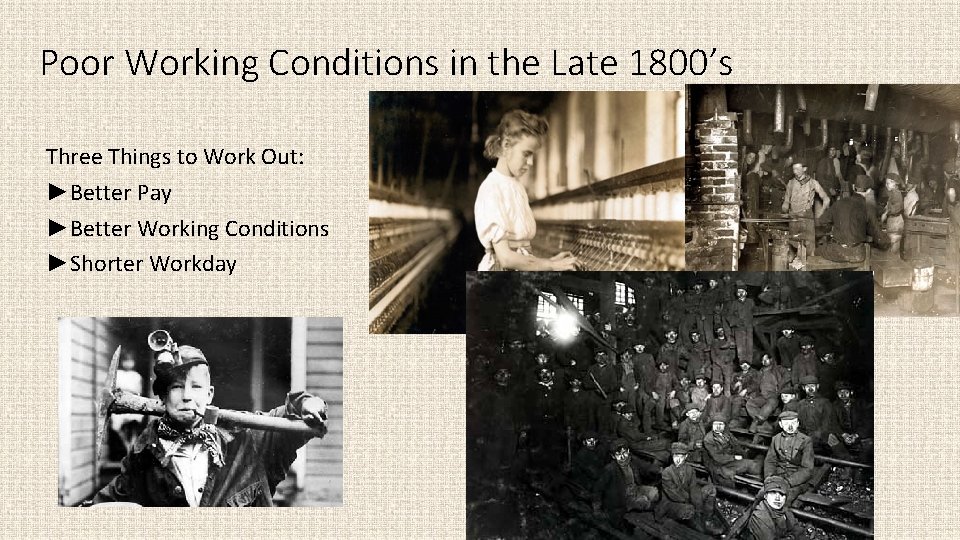
Poor Working Conditions in the Late 1800’s Three Things to Work Out: ►Better Pay ►Better Working Conditions ►Shorter Workday
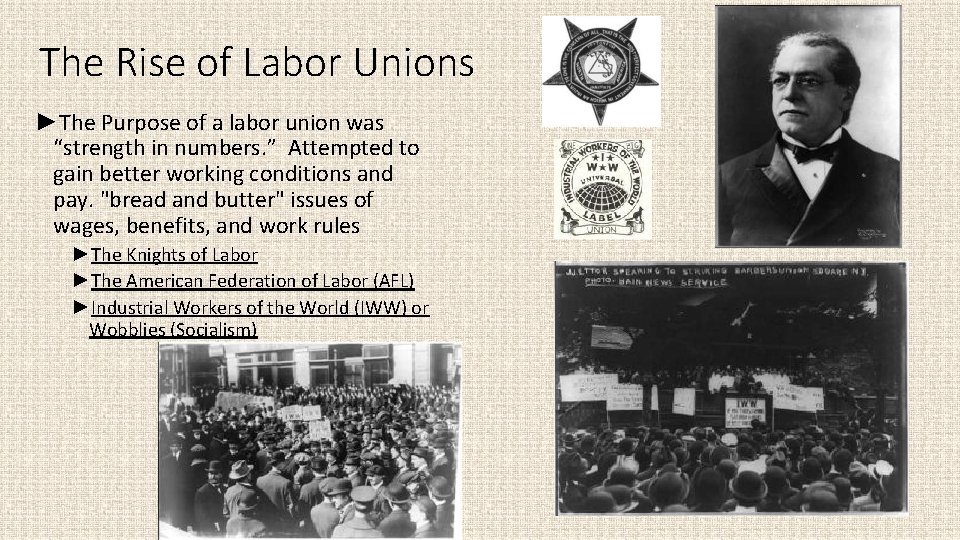
The Rise of Labor Unions ►The Purpose of a labor union was “strength in numbers. ” Attempted to gain better working conditions and pay. "bread and butter" issues of wages, benefits, and work rules ►The Knights of Labor ►The American Federation of Labor (AFL) ►Industrial Workers of the World (IWW) or Wobblies (Socialism)
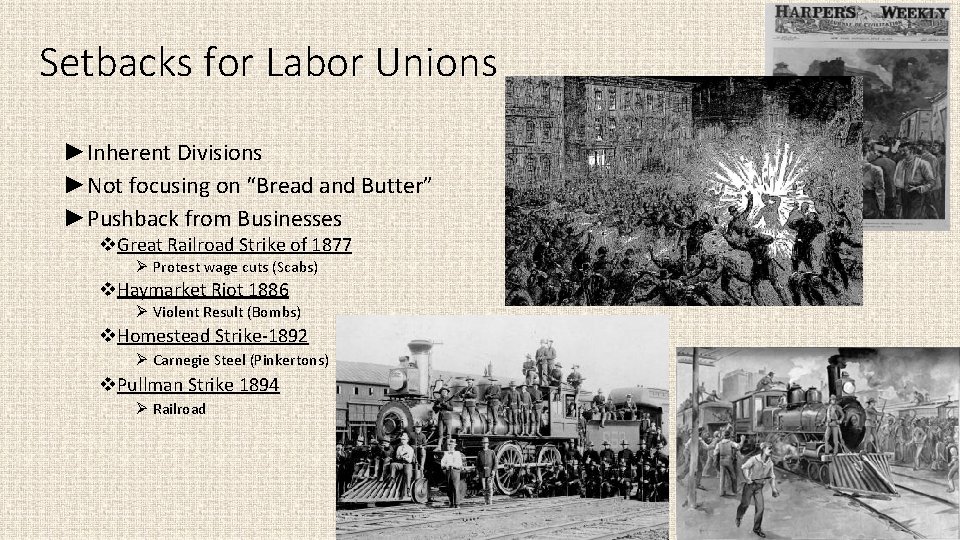
Setbacks for Labor Unions ►Inherent Divisions ►Not focusing on “Bread and Butter” ►Pushback from Businesses v. Great Railroad Strike of 1877 Ø Protest wage cuts (Scabs) v. Haymarket Riot 1886 Ø Violent Result (Bombs) v. Homestead Strike-1892 Ø Carnegie Steel (Pinkertons) v. Pullman Strike 1894 Ø Railroad
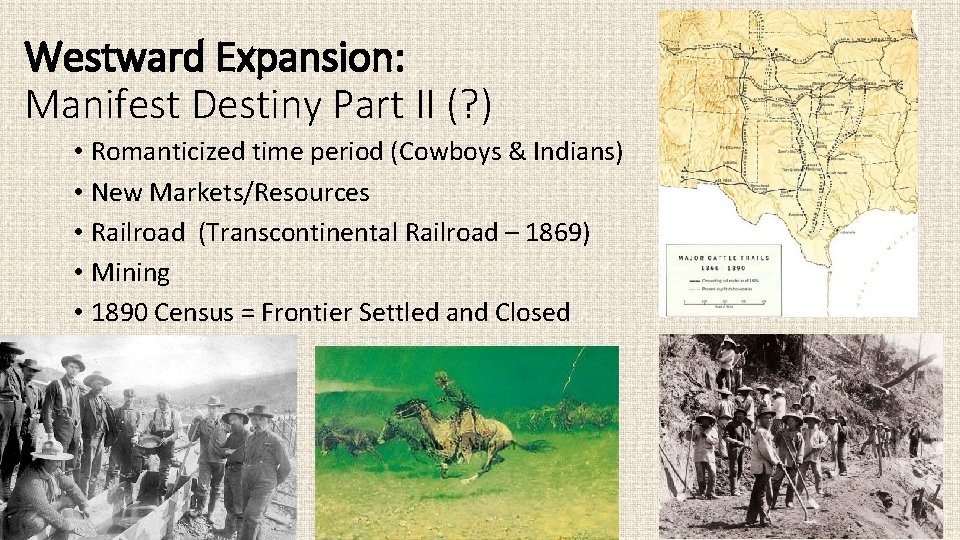
Westward Expansion: Manifest Destiny Part II (? ) • Romanticized time period (Cowboys & Indians) • New Markets/Resources • Railroad (Transcontinental Railroad – 1869) • Mining • 1890 Census = Frontier Settled and Closed
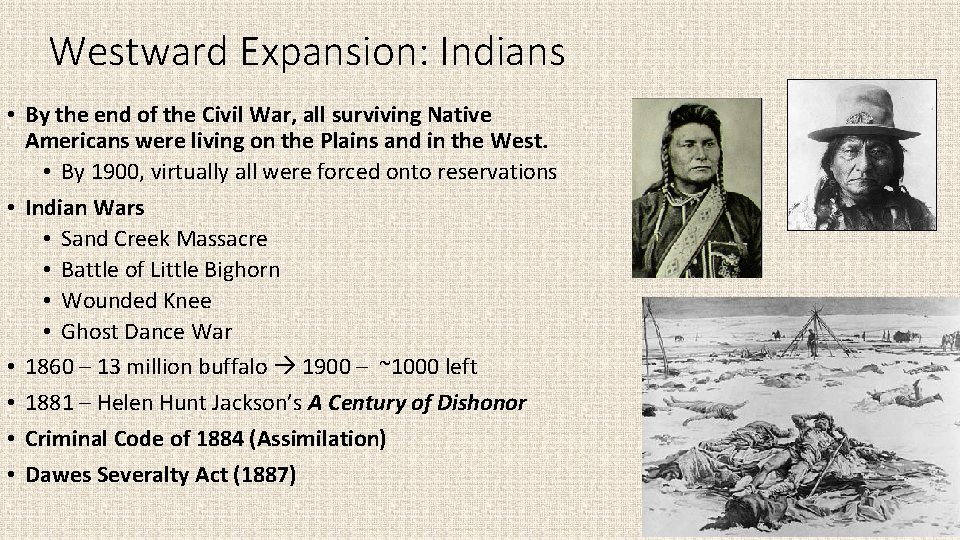
Westward Expansion: Indians • By the end of the Civil War, all surviving Native Americans were living on the Plains and in the West. • By 1900, virtually all were forced onto reservations • Indian Wars • Sand Creek Massacre • Battle of Little Bighorn • Wounded Knee • Ghost Dance War • 1860 – 13 million buffalo 1900 – ~1000 left • 1881 – Helen Hunt Jackson’s A Century of Dishonor • Criminal Code of 1884 (Assimilation) • Dawes Severalty Act (1887)
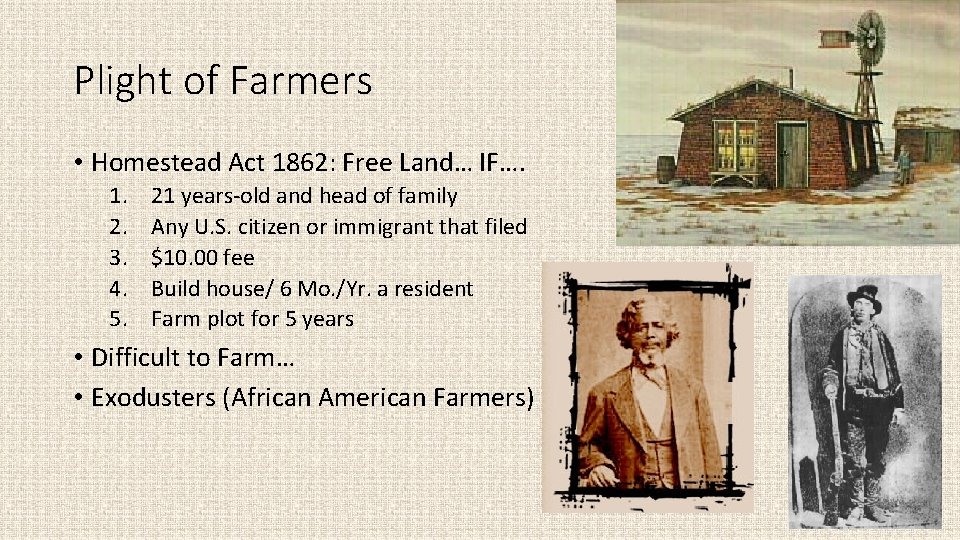
Plight of Farmers • Homestead Act 1862: Free Land… IF…. 1. 2. 3. 4. 5. 21 years-old and head of family Any U. S. citizen or immigrant that filed $10. 00 fee Build house/ 6 Mo. /Yr. a resident Farm plot for 5 years • Difficult to Farm… • Exodusters (African American Farmers)
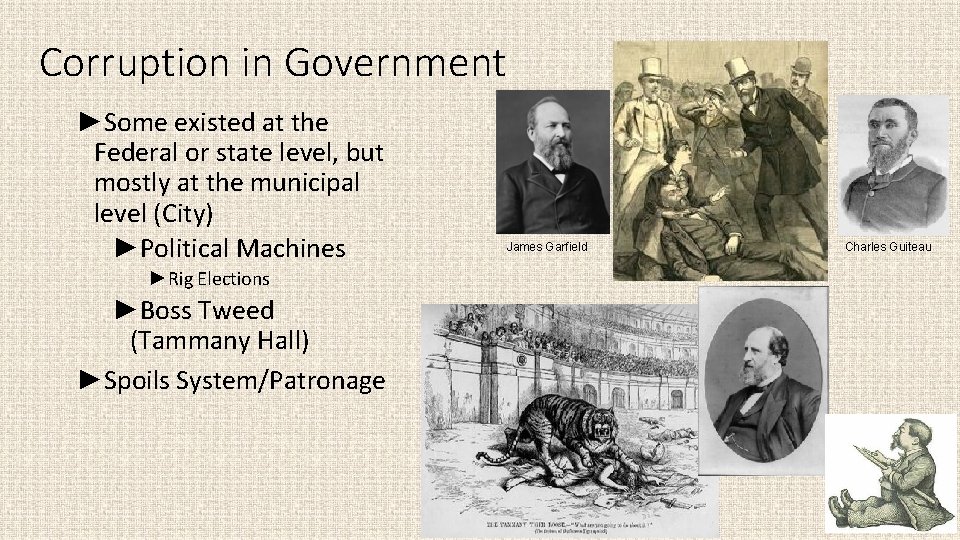
Corruption in Government ►Some existed at the Federal or state level, but mostly at the municipal level (City) ►Political Machines ►Rig Elections ►Boss Tweed (Tammany Hall) ►Spoils System/Patronage James Garfield Charles Guiteau
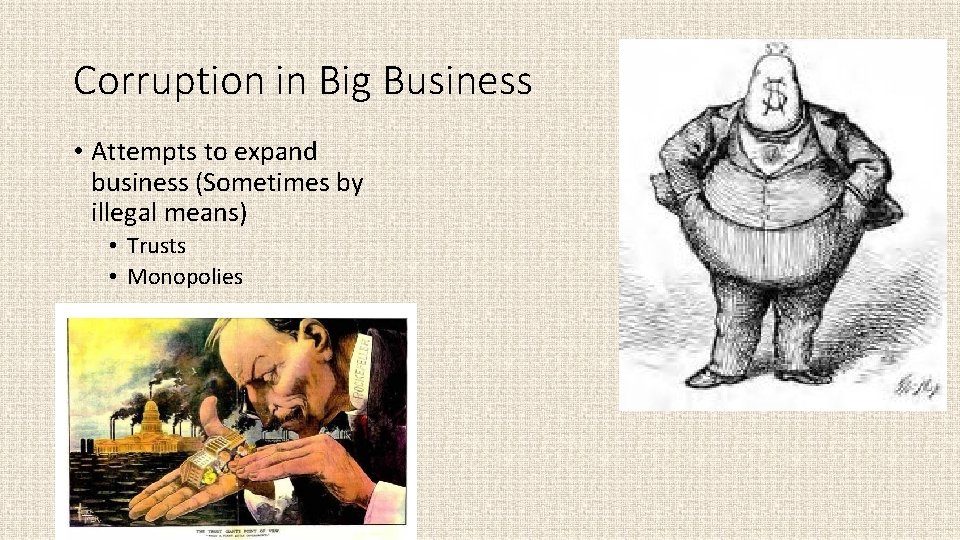
Corruption in Big Business • Attempts to expand business (Sometimes by illegal means) • Trusts • Monopolies
4 Major Social Issues 1. 2. 3. 4. Political Issues Economic Issues Social Issues Regional Issues
Political & Economic Issues
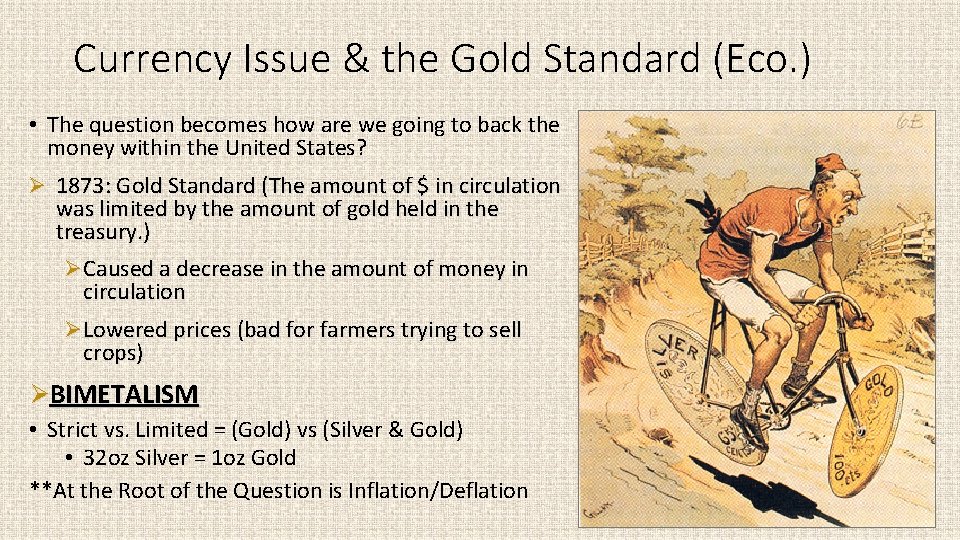
Currency Issue & the Gold Standard (Eco. ) • The question becomes how are we going to back the money within the United States? Ø 1873: Gold Standard (The amount of $ in circulation was limited by the amount of gold held in the treasury. ) ØCaused a decrease in the amount of money in circulation ØLowered prices (bad for farmers trying to sell crops) ØBIMETALISM • Strict vs. Limited = (Gold) vs (Silver & Gold) • 32 oz Silver = 1 oz Gold **At the Root of the Question is Inflation/Deflation
Money Question • Gold & Silver Money “Bimetallism” – Farmers, Debtors, and start-up Businesses • Borrow money at lower interest rates • Pay off their loans more easily • Just Gold “Gold Standard” – Bankers, Creditors, Investors, and established Businesses • Dollars backed by gold would hold their value against inflation • As the U. S. economy and population grew faster than the number of goldbacked dollars, each dollar would gain in value. • 1865 -1895 = $ increased in value by as much as 300%
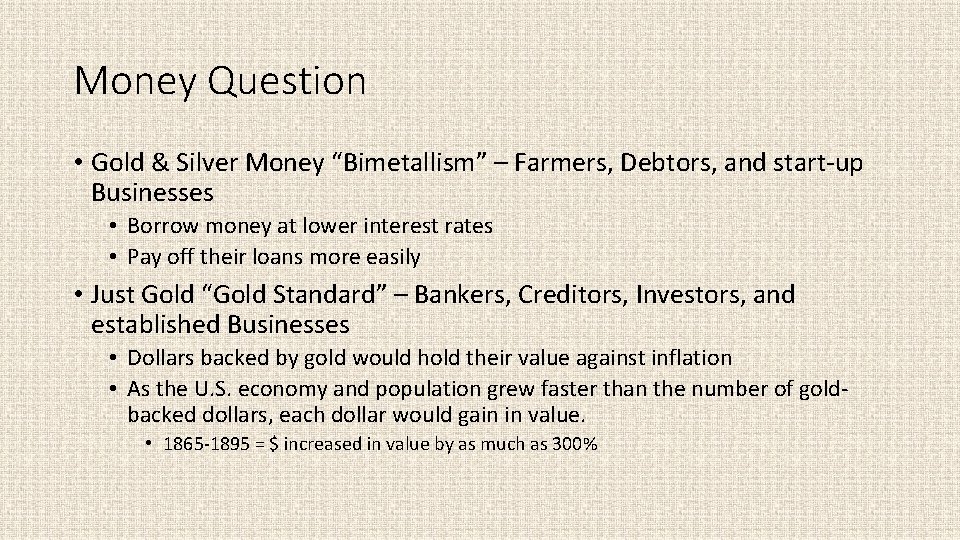
Tariffs (Eco. ) • After the Civil War, Congress raised tariffs to protect new US industries. • Big business wanted to continue this; consumers did not. • Tariffs raise prices on consumer goods • 1885 tariffs earned the US $100 mil. in surplus! (more than ½ fed. Revenue) • Other countries also started placing taxes on US Farm Products & this hurt overseas sales • From Farmers P. O. V- Industry is getting rich at the expense of rural America
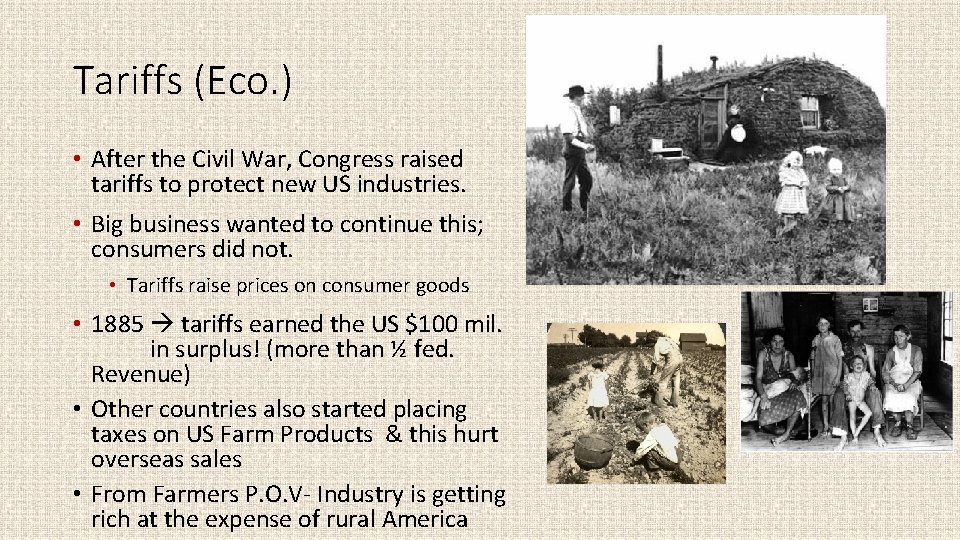
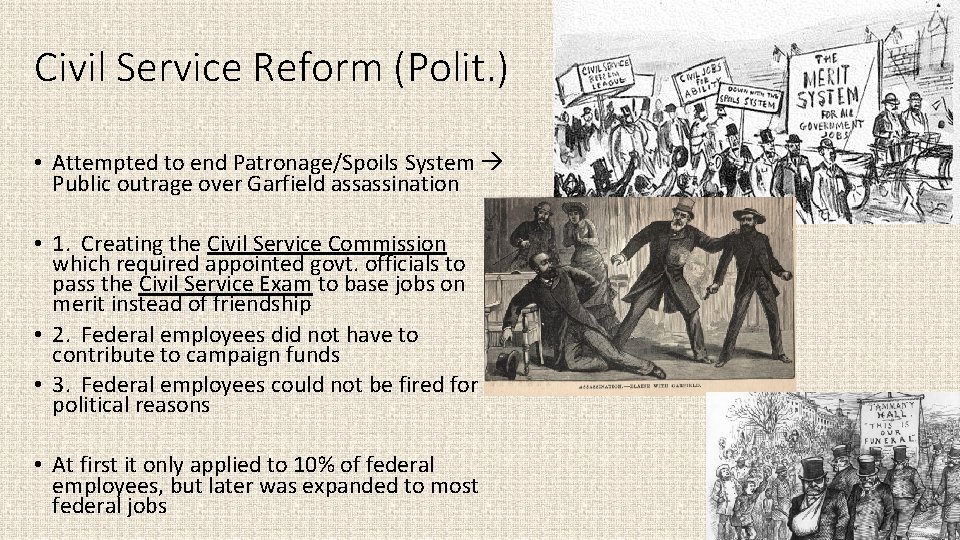
Civil Service Reform (Polit. ) • Attempted to end Patronage/Spoils System Public outrage over Garfield assassination • 1. Creating the Civil Service Commission which required appointed govt. officials to pass the Civil Service Exam to base jobs on merit instead of friendship • 2. Federal employees did not have to contribute to campaign funds • 3. Federal employees could not be fired for political reasons • At first it only applied to 10% of federal employees, but later was expanded to most federal jobs
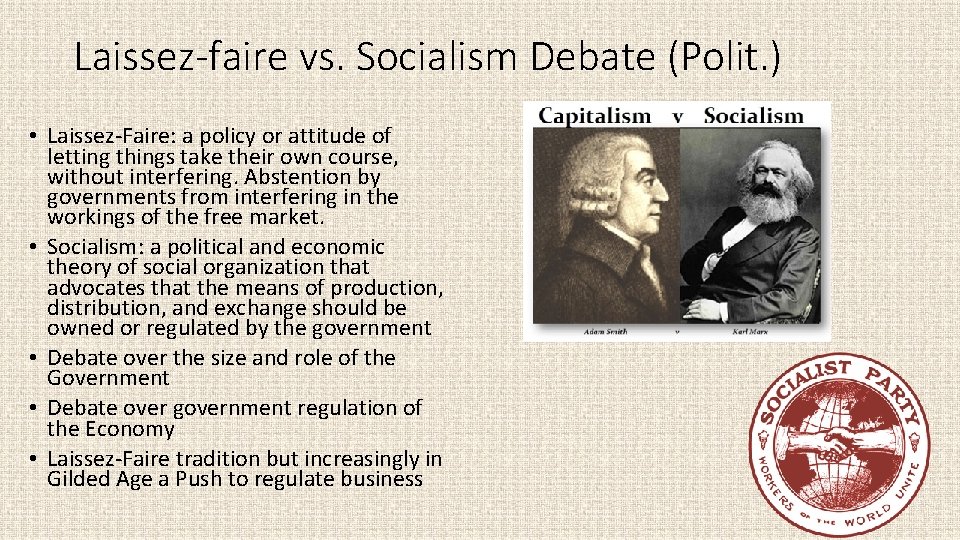
Laissez-faire vs. Socialism Debate (Polit. ) • Laissez-Faire: a policy or attitude of letting things take their own course, without interfering. Abstention by governments from interfering in the workings of the free market. • Socialism: a political and economic theory of social organization that advocates that the means of production, distribution, and exchange should be owned or regulated by the government • Debate over the size and role of the Government • Debate over government regulation of the Economy • Laissez-Faire tradition but increasingly in Gilded Age a Push to regulate business
Social Issues **These issues do not begin or end during this era… they just evolve
Women: • Antebellum Reform Movements: Temperance, Prison Reform, Abolitionism, Women’s Rights, Education Early 19 th c Women 1. Unable to vote. 2. Legal status of a minor. 3. Single could own her own property. 4. Married no control over her property or her children. 5. Could not initiate divorce. 6. Couldn’t make wills, sign a contract, or bring suit in court without her husband’s permission. • Cult of Domesticity = Slavery • 2 nd Great Awakening inspires women to improve society • The Abolition Movement • In 1840 s there’s a split in the abolitionist mvt. Over women’s role in it • The 15 th Amendment (Caused a split) • National Woman’s Suffrage Association – Susan B. Anthony & Elizabeth Cady Stanton [Refused to support] • American Woman’s Suffrage Association – Lucy Stone [supported] • Minor v. Hapersett (1875) • By 1910 women had the right to vote in Wyoming, Utah, Idaho, Colorado, and Washington. **Women become more active in the late 1800 s in spite of societal limitations
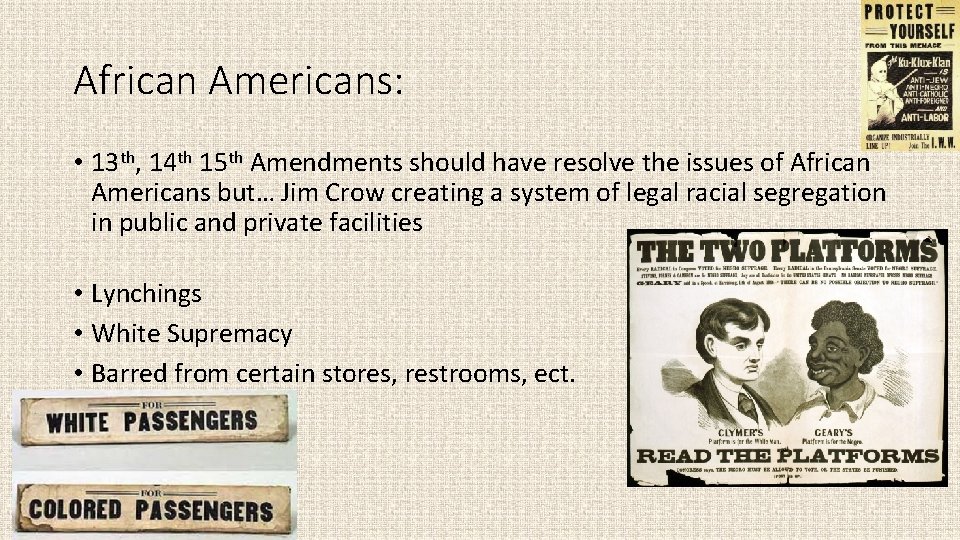
African Americans: • 13 th, 14 th 15 th Amendments should have resolve the issues of African Americans but… Jim Crow creating a system of legal racial segregation in public and private facilities • Lynchings • White Supremacy • Barred from certain stores, restrooms, ect.
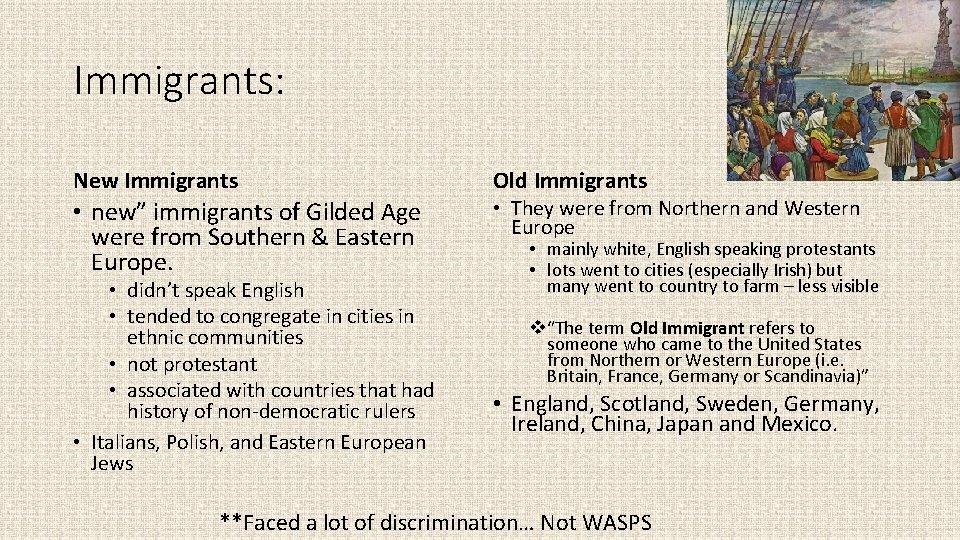
Immigrants: New Immigrants • new” immigrants of Gilded Age were from Southern & Eastern Europe. • didn’t speak English • tended to congregate in cities in ethnic communities • not protestant • associated with countries that had history of non-democratic rulers • Italians, Polish, and Eastern European Jews Old Immigrants • They were from Northern and Western Europe • mainly white, English speaking protestants • lots went to cities (especially Irish) but many went to country to farm – less visible v “The term Old Immigrant refers to someone who came to the United States from Northern or Western Europe (i. e. Britain, France, Germany or Scandinavia)” • England, Scotland, Sweden, Germany, Ireland, China, Japan and Mexico. **Faced a lot of discrimination… Not WASPS
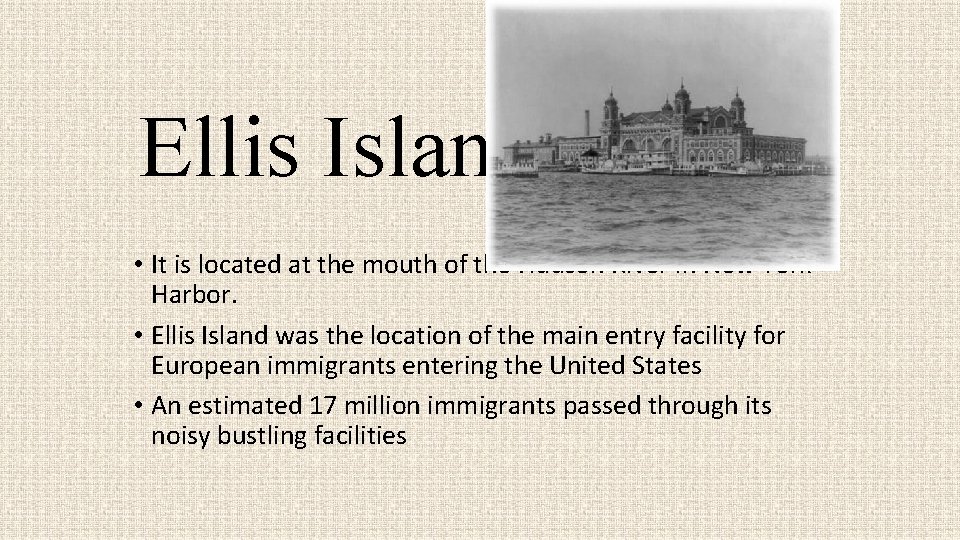
Ellis Island • It is located at the mouth of the Hudson River in New York Harbor. • Ellis Island was the location of the main entry facility for European immigrants entering the United States • An estimated 17 million immigrants passed through its noisy bustling facilities
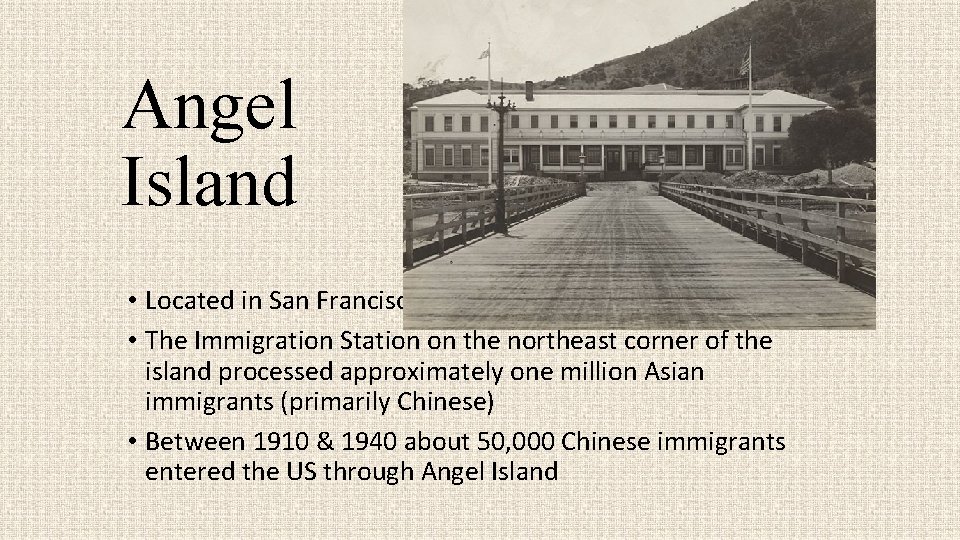
Angel Island • Located in San Francisco Bay • The Immigration Station on the northeast corner of the island processed approximately one million Asian immigrants (primarily Chinese) • Between 1910 & 1940 about 50, 000 Chinese immigrants entered the US through Angel Island
Regional Issues North, South, West
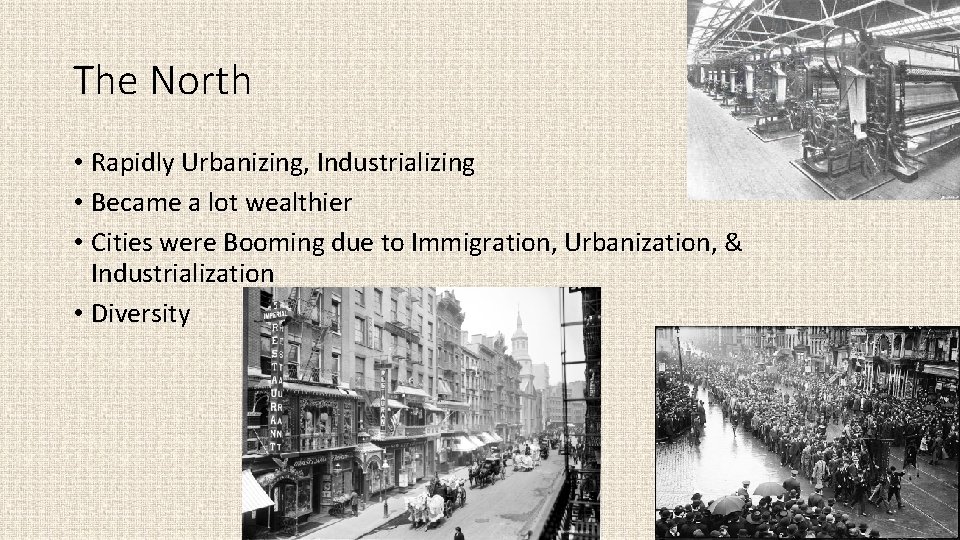
The North • Rapidly Urbanizing, Industrializing • Became a lot wealthier • Cities were Booming due to Immigration, Urbanization, & Industrialization • Diversity
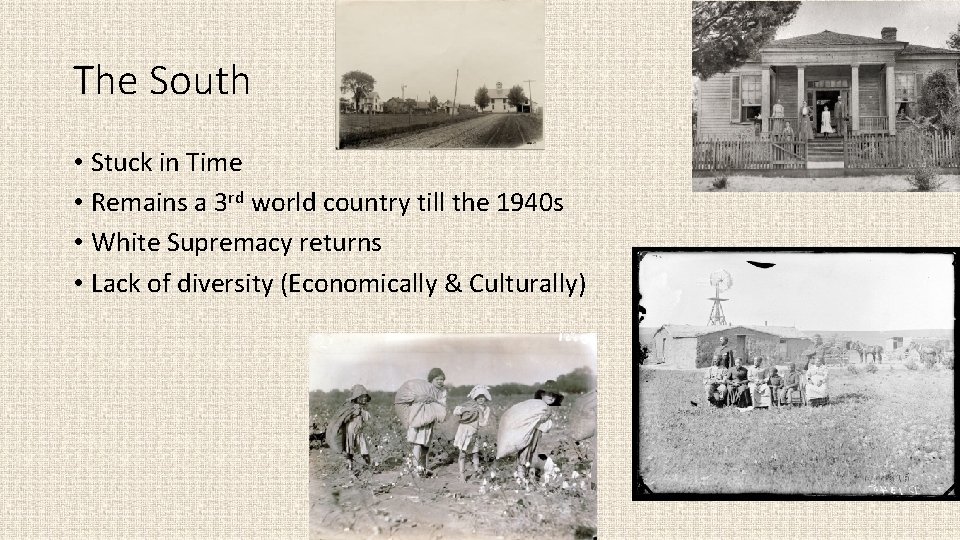
The South • Stuck in Time • Remains a 3 rd world country till the 1940 s • White Supremacy returns • Lack of diversity (Economically & Culturally)
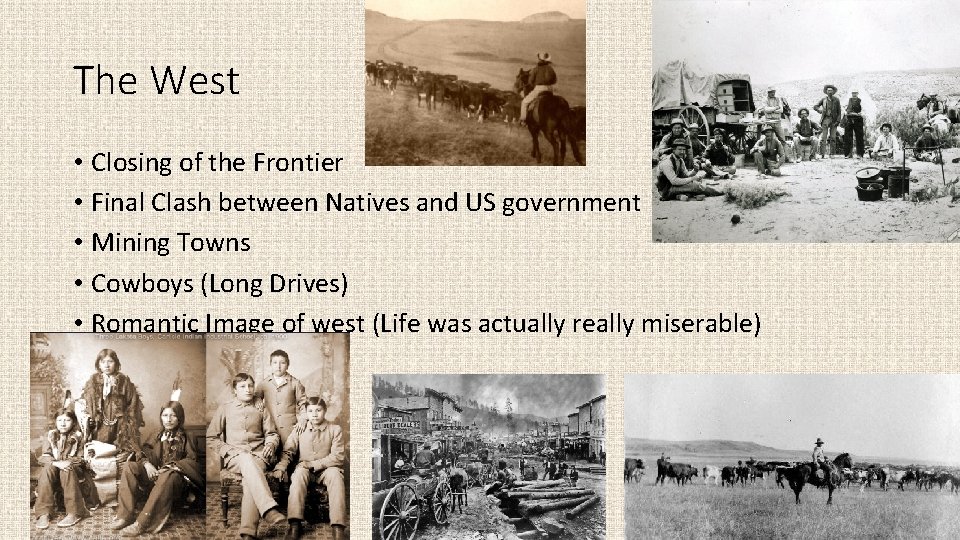
The West • Closing of the Frontier • Final Clash between Natives and US government • Mining Towns • Cowboys (Long Drives) • Romantic Image of west (Life was actually really miserable)
Robber Baron or Captain of Industry? • Robber Baron • late-nineteenth-century industrialists, especially those who ostentatiously displayed their wealth • Wealthy manipulator of Government, paying corrupt officials to enact laws the support business= congress- tariffs • Squeezing out competition unfairlycreating monopolies and then enacting unfair rates or prices on consumers (RR-farmers) • Exploiters of the working class- who pay the workers as little as possible and reap huge profits • Captain of Industry • • • Or “Industrial Statesman” Capitalist leaders helped the country more They deserve the riches they create They provide progress, jobs Drive technology Deserve the riches they create • "Millionaires are the bees that make the most honey and contribute most to the hive even after they have gorged themselves full. "--Andrew Carnegie
1876 -1890’s 6 Pres 4 were Republicans • Hayes- (Repub) 1876 - disputed election Secret Deal, ie. , Reconstruction Compromise of 1876, did not run again in 1880. • Garfield (Repub) 1881, Assassinated by Guiteau, Office Seeker, • Arthur- VP under Garfield, allegations of corruption earlier in career, supported Civil Service Reform, not nominated for the next election • Cleveland (Dem) close election against corrupt Blaine (Repub), lots of Mudslinging, adultery… pro-capitalist, low tarriff • Harrison- (Repub) 1888, close election, pro-tariff and big business • Cleveland (Dem) 1892 - Runs and wins again • Mc. Kinley (Repub) 1896 - Extremely pro business, pro- gold standard- will advocate strong laissez faire attitude in government, supported by the supreme court