
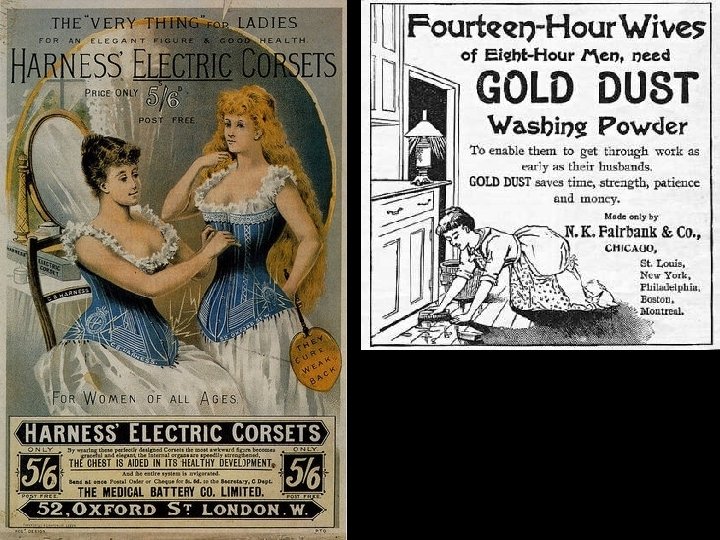
Gilded Age Advertisements Both from 1890 s Second

Gilded Age Advertisements

Both from 1890 s


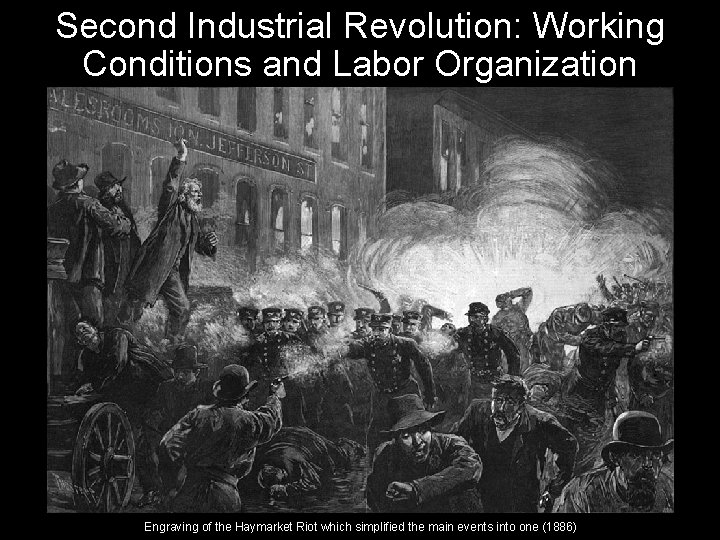
Second Industrial Revolution: Working Conditions and Labor Organization Engraving of the Haymarket Riot which simplified the main events into one (1886)
“Those who work in the mills ought to own them. ” - Lowell Millworkers’ statement, Lowell, MA, 1880 s
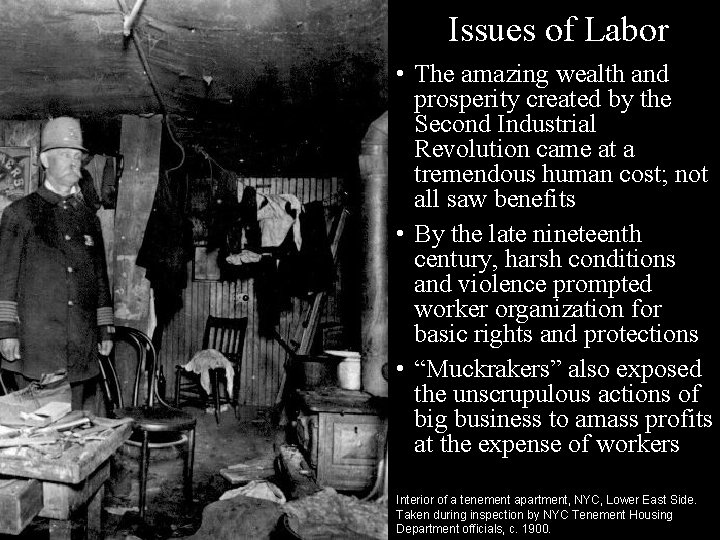
Issues of Labor • The amazing wealth and prosperity created by the Second Industrial Revolution came at a tremendous human cost; not all saw benefits • By the late nineteenth century, harsh conditions and violence prompted worker organization for basic rights and protections • “Muckrakers” also exposed the unscrupulous actions of big business to amass profits at the expense of workers Interior of a tenement apartment, NYC, Lower East Side. Taken during inspection by NYC Tenement Housing Department officials, c. 1900.
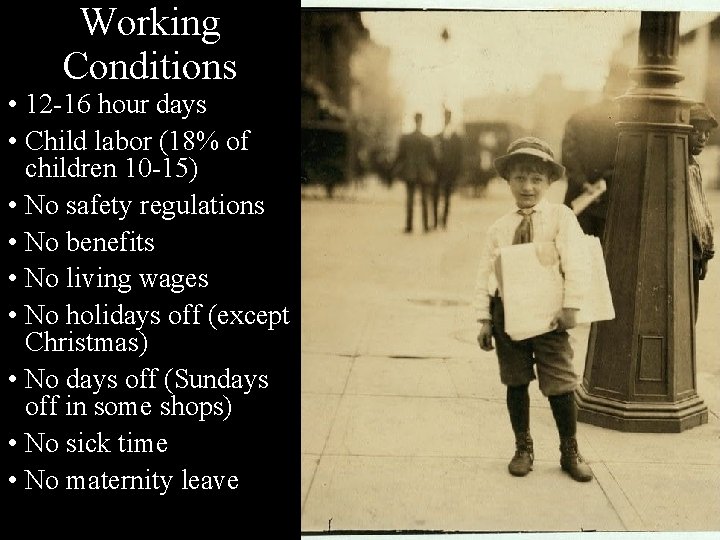
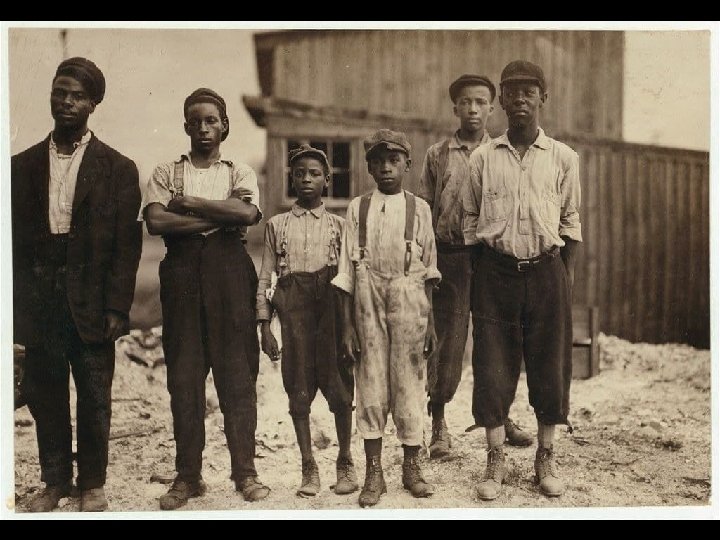
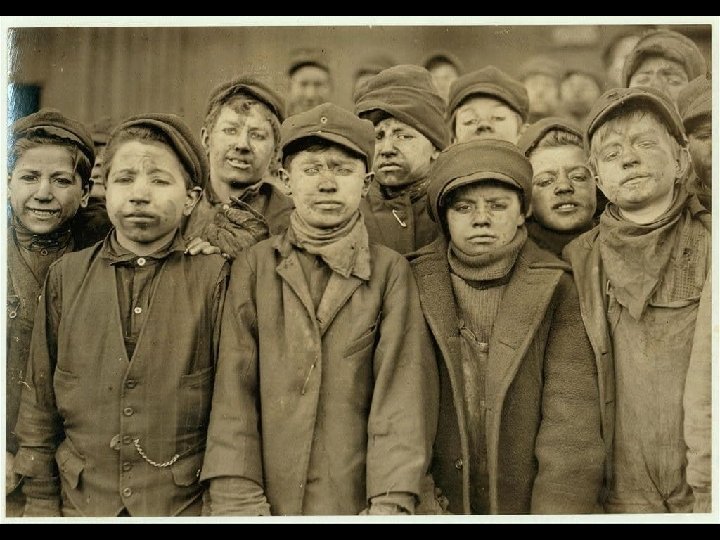
Working Conditions • 12 -16 hour days • Child labor (18% of children 10 -15) • No safety regulations • No benefits • No living wages • No holidays off (except Christmas) • No days off (Sundays off in some shops) • No sick time • No maternity leave
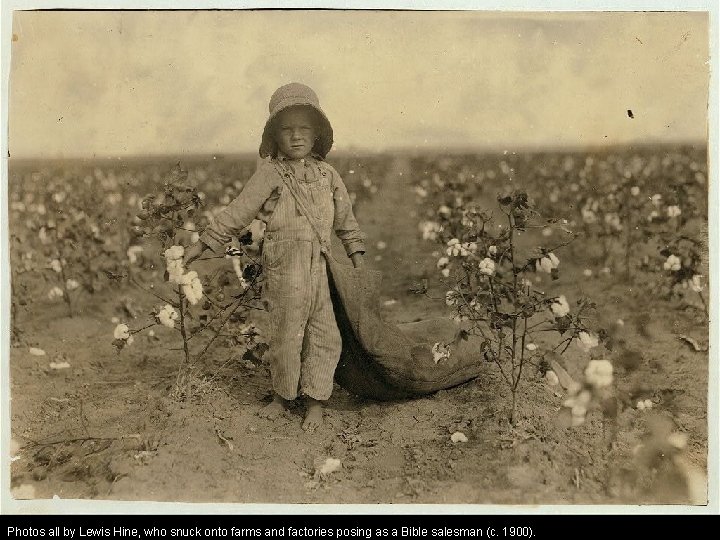
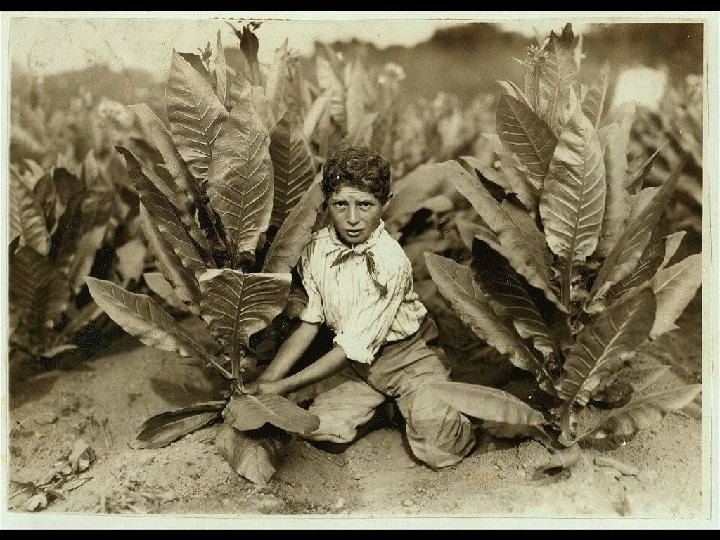
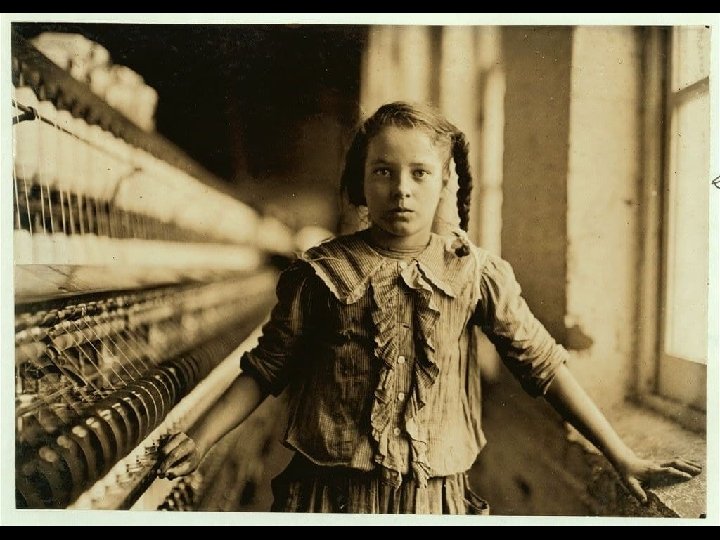
Photos all by Lewis Hine, who snuck onto farms and factories posing as a Bible salesman (c. 1900).

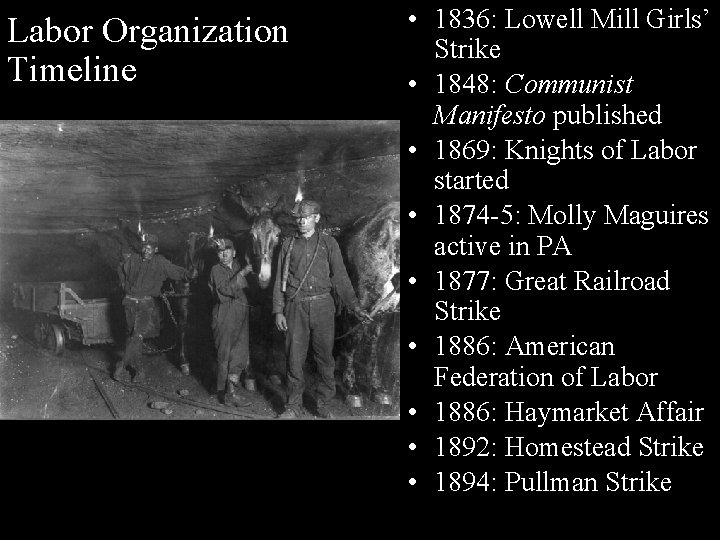
Labor Organization Timeline • 1836: Lowell Mill Girls’ Strike • 1848: Communist Manifesto published • 1869: Knights of Labor started • 1874 -5: Molly Maguires active in PA • 1877: Great Railroad Strike • 1886: American Federation of Labor • 1886: Haymarket Affair • 1892: Homestead Strike • 1894: Pullman Strike
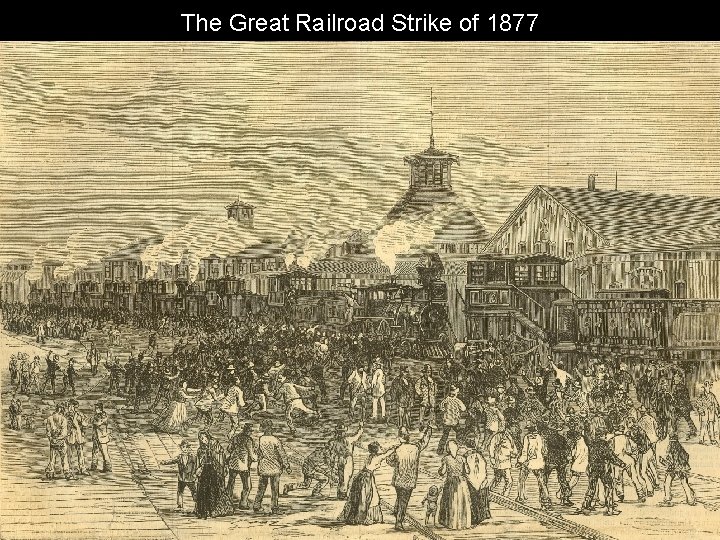
The Great Railroad Strike of 1877
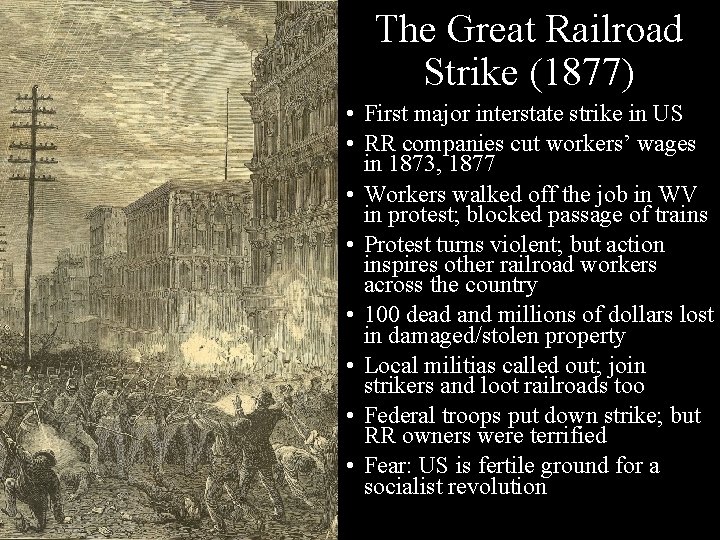
The Great Railroad Strike (1877) • First major interstate strike in US • RR companies cut workers’ wages in 1873, 1877 • Workers walked off the job in WV in protest; blocked passage of trains • Protest turns violent; but action inspires other railroad workers across the country • 100 dead and millions of dollars lost in damaged/stolen property • Local militias called out; join strikers and loot railroads too • Federal troops put down strike; but RR owners were terrified • Fear: US is fertile ground for a socialist revolution
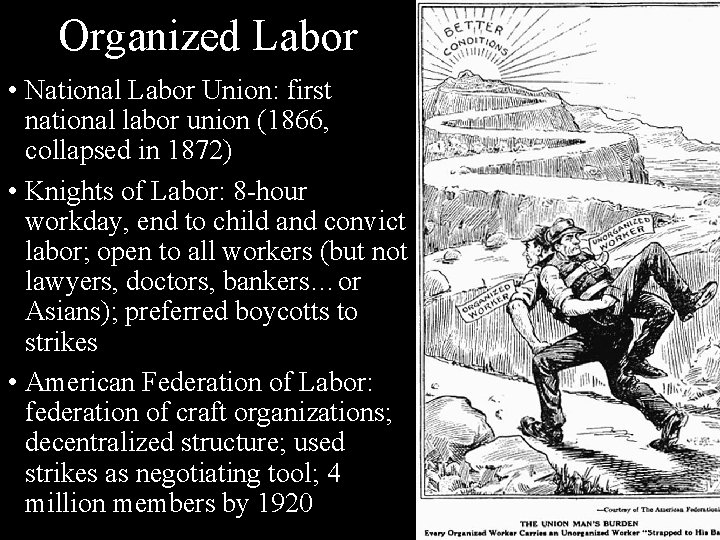
Organized Labor • National Labor Union: first national labor union (1866, collapsed in 1872) • Knights of Labor: 8 -hour workday, end to child and convict labor; open to all workers (but not lawyers, doctors, bankers…or Asians); preferred boycotts to strikes • American Federation of Labor: federation of craft organizations; decentralized structure; used strikes as negotiating tool; 4 million members by 1920
“Robber barons” vs. “Bomb-throwing Anarchists”
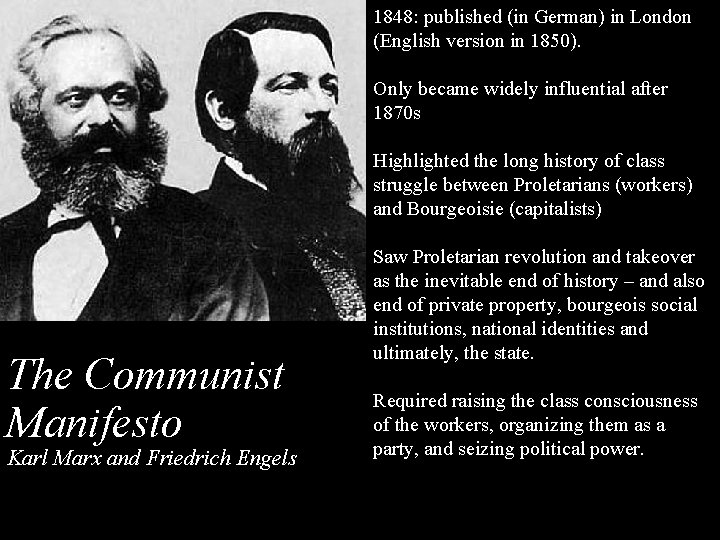
1848: published (in German) in London (English version in 1850). Only became widely influential after 1870 s Highlighted the long history of class struggle between Proletarians (workers) and Bourgeoisie (capitalists) The Communist Manifesto Karl Marx and Friedrich Engels Saw Proletarian revolution and takeover as the inevitable end of history – and also end of private property, bourgeois social institutions, national identities and ultimately, the state. Required raising the class consciousness of the workers, organizing them as a party, and seizing political power.
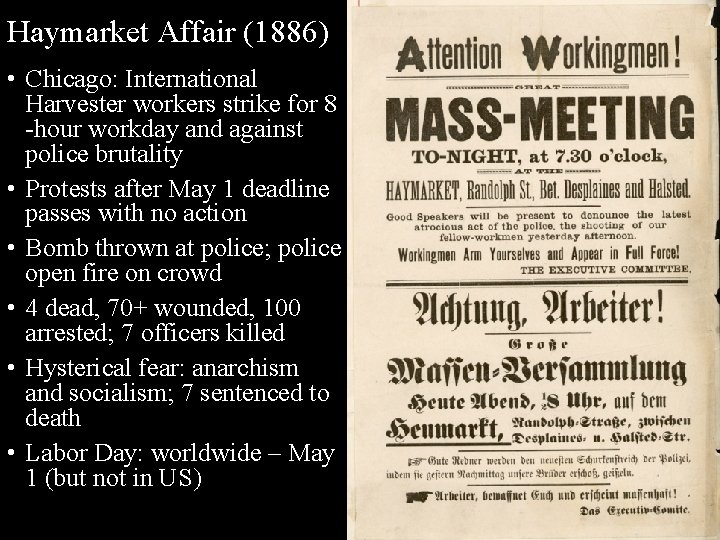
Haymarket Affair (1886) • Chicago: International Harvester workers strike for 8 -hour workday and against police brutality • Protests after May 1 deadline passes with no action • Bomb thrown at police; police open fire on crowd • 4 dead, 70+ wounded, 100 arrested; 7 officers killed • Hysterical fear: anarchism and socialism; 7 sentenced to death • Labor Day: worldwide – May 1 (but not in US)
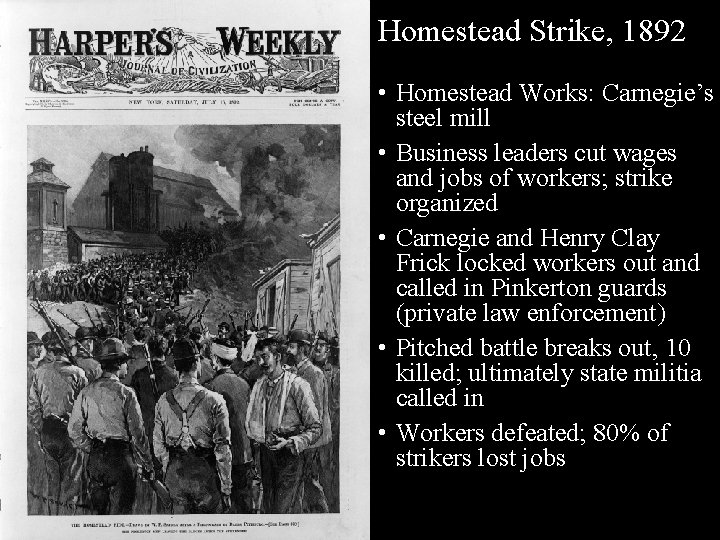
Homestead Strike, 1892 • Homestead Works: Carnegie’s steel mill • Business leaders cut wages and jobs of workers; strike organized • Carnegie and Henry Clay Frick locked workers out and called in Pinkerton guards (private law enforcement) • Pitched battle breaks out, 10 killed; ultimately state militia called in • Workers defeated; 80% of strikers lost jobs
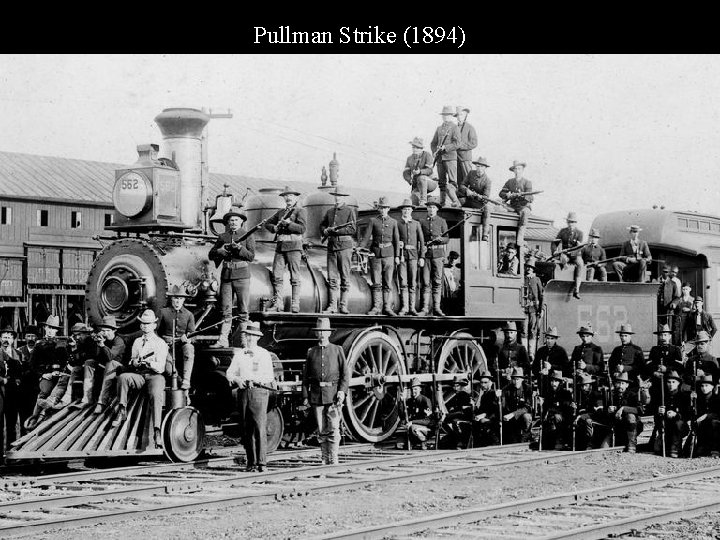
Pullman Strike (1894)
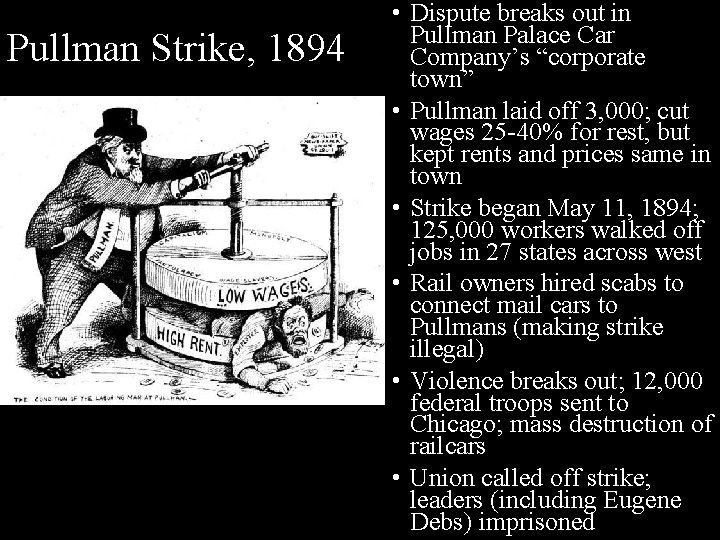
Pullman Strike, 1894 • Dispute breaks out in Pullman Palace Car Company’s “corporate town” • Pullman laid off 3, 000; cut wages 25 -40% for rest, but kept rents and prices same in town • Strike began May 11, 1894; 125, 000 workers walked off jobs in 27 states across west • Rail owners hired scabs to connect mail cars to Pullmans (making strike illegal) • Violence breaks out; 12, 000 federal troops sent to Chicago; mass destruction of railcars • Union called off strike; leaders (including Eugene Debs) imprisoned
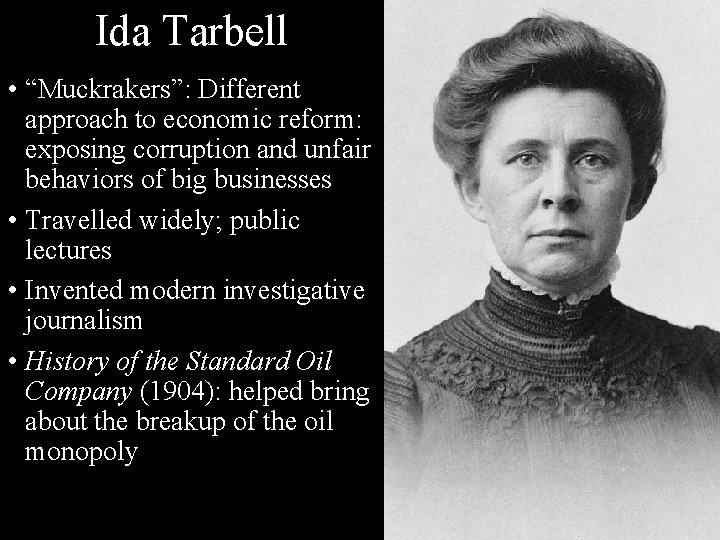
Ida Tarbell • “Muckrakers”: Different approach to economic reform: exposing corruption and unfair behaviors of big businesses • Travelled widely; public lectures • Invented modern investigative journalism • History of the Standard Oil Company (1904): helped bring about the breakup of the oil monopoly
Next Class • Urban Paradise: Science, Technology and the American City • Readings: • Shi and Tindall, Ch. 19, pp. 699 -704 • Primary Source: Early NYC Subway maps (link on blog) • Take a look at the website and click on a few of the maps from 1900 -1910. The New York City MTA did not yet exist (and NYC itself only gained its modern structure as five boroughs in 1898) – it was instead a handful of independent railroad companies, such as the Interborough Rapid Transit and the Brooklyn-Manhattan Rapid Transit Subway, which merged over the decades. As you look, how do these maps reflect changes in the way that NYC residents think about a sense of “place” and what their city means?
- Slides: 29